
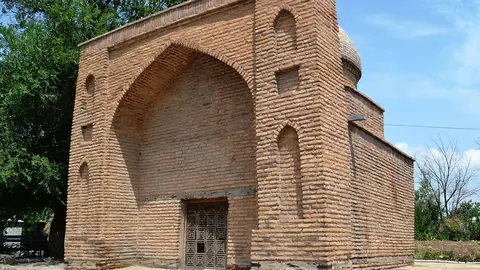
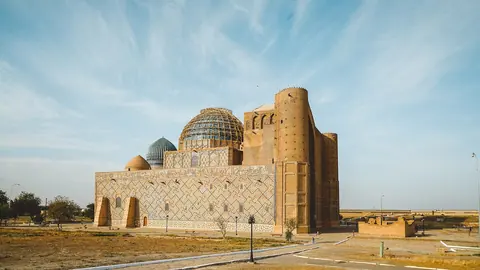
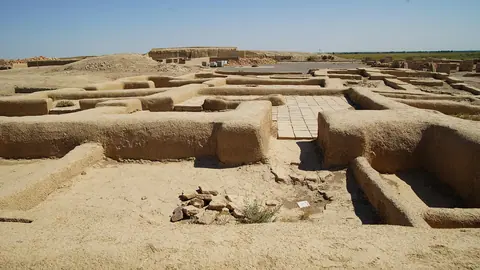
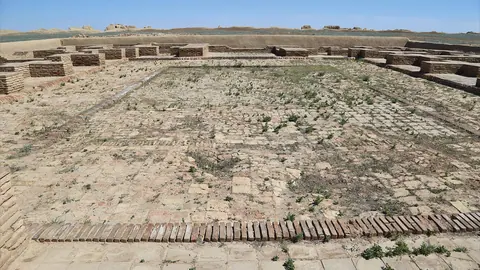
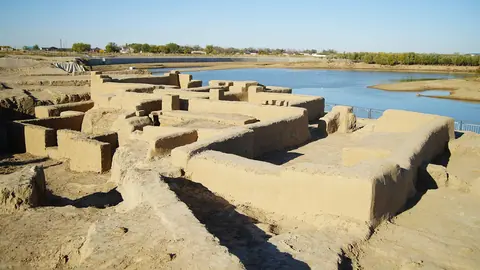


The Silk Road in Kazakhstan was never one road. It splits into at least three corridors: through Zhetysu below the Tian Shan, along the Syr Darya, and by the Caspian and the Ural River. UNESCO has listed only the first. If you have planned your trip around Otrar and Sauran, you will be in the second corridor, which is still on the tentative list, though for a visitor that changes very little.
The three corridors at a glance
UNESCO itself notes that itineraries were never static, as towns rose and fell. The split is useful mostly for telling you which part of a very large country you are in.
| Corridor | Where in Kazakhstan | Includes | Status |
|---|---|---|---|
| Chang’an-Tianshan | Zhetysu: Ili, Chu and Talas valleys | 8 sites, out of 33 across three countries | listed, 2014 |
| Fergana-Syrdarya | Turkistan and Kyzylorda regions | 9 components: Otrar, Sauran, Yassy-Turkestan, Sygnak and others | tentative, 2021 |
| Volga-Caspian | Atyrau, Mangystau, West Kazakhstan | 3 components: Saraychik, Kyzylkala, Zhayik | tentative, 2021 |
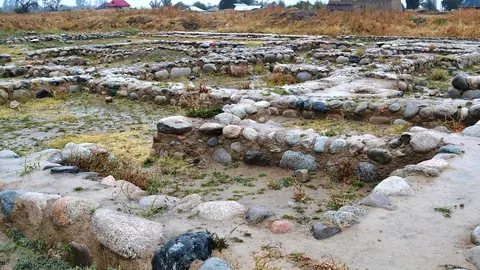
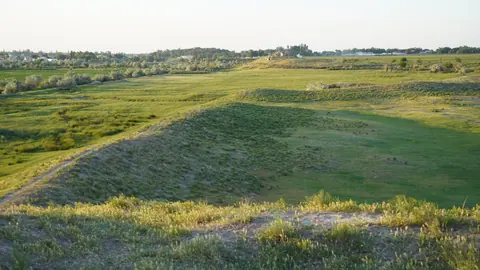
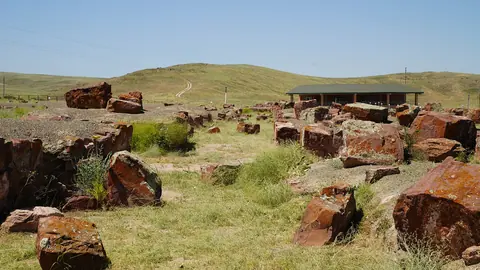
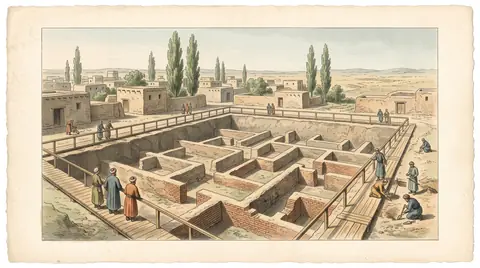
The listed section runs about 5,000 km from Chang’an to Zhetysu. It took shape between the 2nd century BC and the 1st century AD, flourished from the 6th to the 14th century and stayed a major trade route until the 16th. Elsewhere it includes capitals, Buddhist cave temples and stretches of the Great Wall. In Kazakhstan, the components are ruined towns.
Which of the eight listed sites you can realistically reach
Only three have a guide on this site, and we could not confirm the visiting procedure for any of the others. Figures are our own straight-line measurements from UNESCO’s coordinates, so the drive will be longer.
| Site | Nearest city, km in a straight line | Our guide |
|---|---|---|
| Kostobe | Taraz, 16 | yes |
| Talgar | Almaty, 27 | yes |
| Akyrtas | Taraz, 36 | yes |
| Ornek | Taraz, 64 | no |
| Kulan | Taraz, 113 | no |
| Kayalyk | Taldykorgan, 164 | no |
| Aktobe (Stepninskoe) | Taraz, 220 | no |
| Karamergen | Taldykorgan, 234 | no |
Start with the top three. For fees and access to every Kazakh component, see our study of UNESCO sites: how to get there.
Three short trips instead of one long drive
Most foreign visitors already pass through Almaty, Shymkent or Turkistan, so add one section to the trip you have. Connecting all of them means long transfers past very little that is signed.
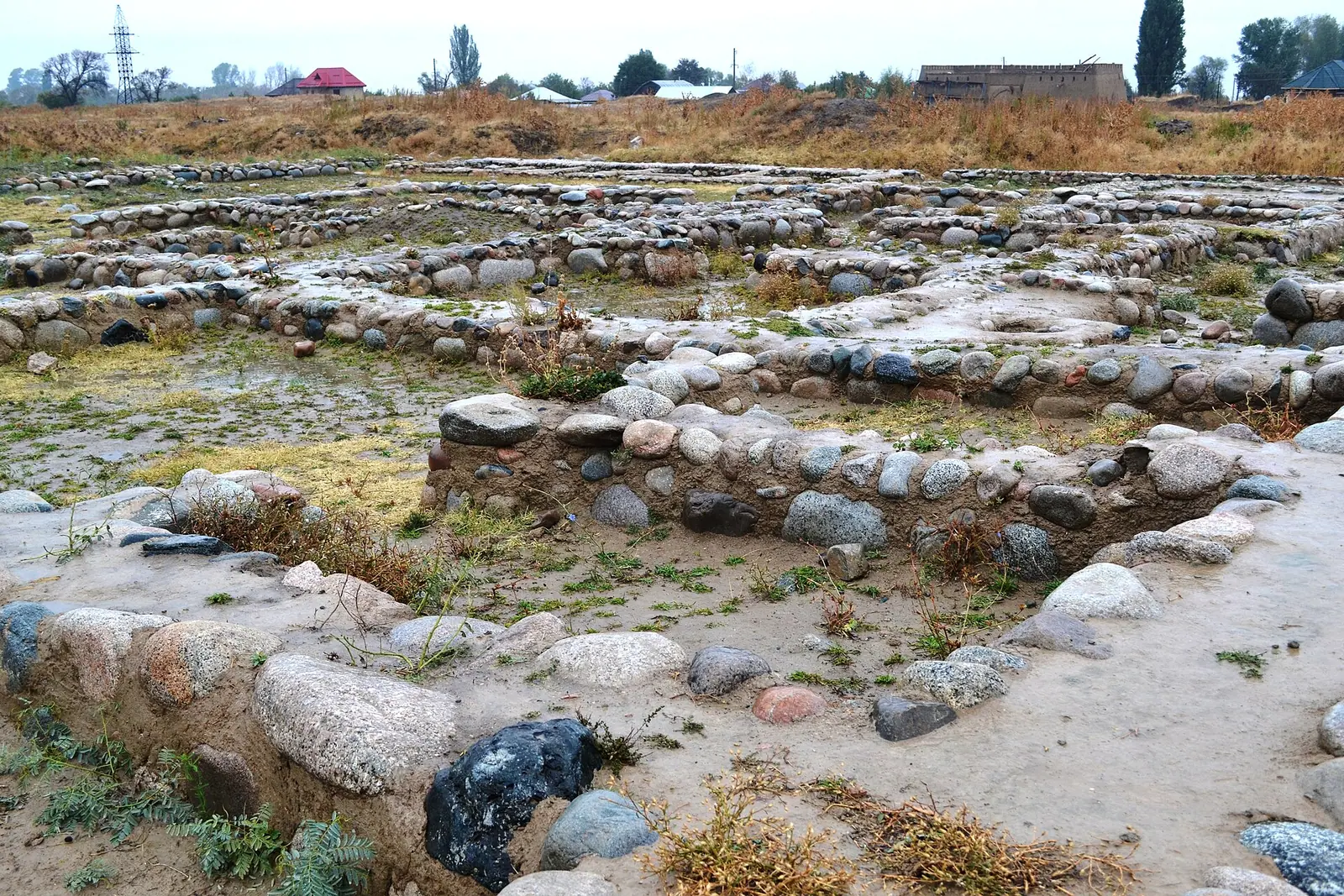
- From Almaty, half a day. Talgar settlement. Bring the guide, as foundations say little by themselves.
- From Taraz, a full day by car. The dig in ancient Taraz, then Kostobe and Akyrtas.
- From Shymkent or Turkistan, two days. Sairam, the Yasawi mausoleum, Otrar and Sauran. Go in spring or autumn, as summer on the Syr Darya is very hot.
Saraishyk near Atyrau is a separate trip, in the far west. For what survives at each town, read about the ancient cities of Kazakhstan. For a longer loop, see the South Kazakhstan itinerary.
- Access, fees and road conditions for Kayalyk, Karamergen, Aktobe, Kulan and Ornek.
- When UNESCO might consider the tentative corridors.
- A single authoritative map of caravan routes across Kazakhstan.