
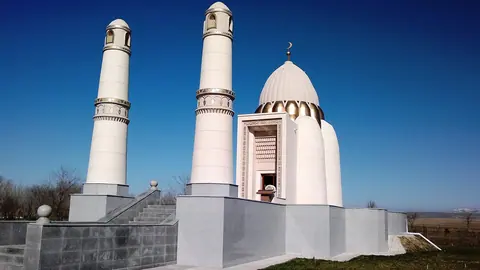
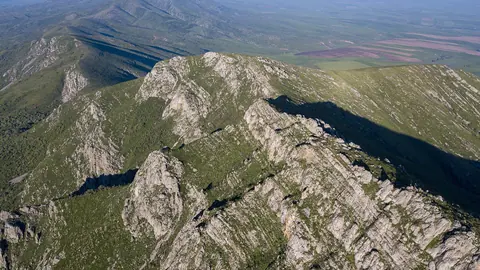
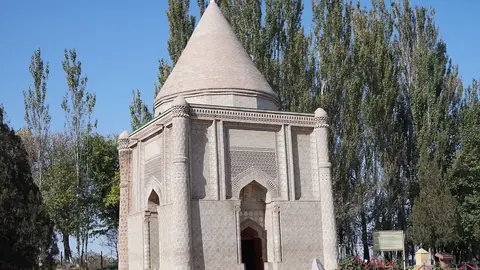
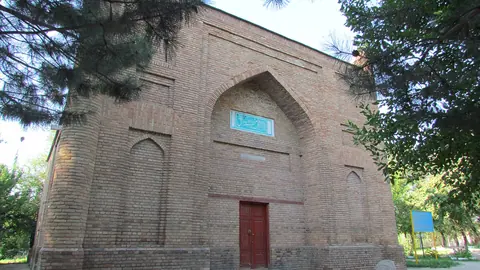
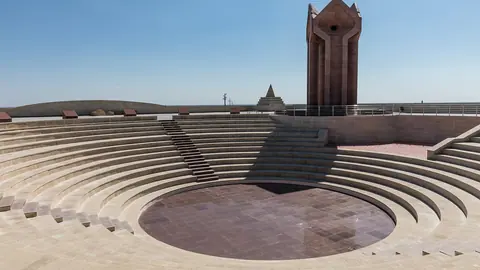


The sacred places of Kazakhstan are mostly mausoleums of saints, rock-cut mosques and carved rock sites, and many still draw pilgrims. The densest group lies in the far south around Turkistan, Shymkent and Taraz, with a second, much more remote pair in the Mangystau desert near Aktau. Spring and early autumn suit nearly all of them.
The south holds most of the shrines
Most of the sites in this collection sit in a band across southern Kazakhstan, within a day trip of Shymkent, Turkistan or Taraz. Almaty is the base for the rock carvings and the Zharkent mosque, Aktau for the underground mosques, and Astana and Pavlodar each have a large modern mosque. The same area holds Akmeshit Cave, Baidibek Ata Mausoleum and Ordabasy Hill.
The table sorts the main options by base city. Distances are as given on each place page; straight-line figures are marked, and road distance will be longer. Where a figure is not marked, the place page does not say how it was measured.
| Site | Base | Distance | What it is | Peak months |
|---|---|---|---|---|
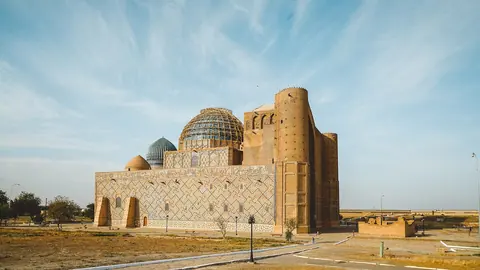
| Yasawi Mausoleum, Turkistan | Shymkent | 160 km | Late-14th-c. mausoleum, UNESCO 2003 | Apr, May, Oct |
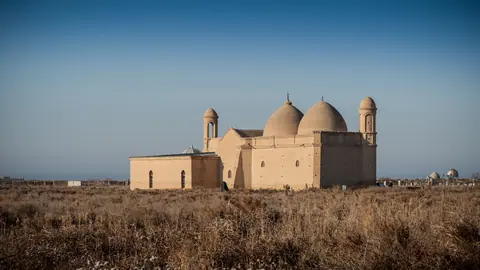
| Arystan Bab | Turkistan | about 50 km, straight line | Tomb of Yasawi’s teacher | Apr–May, Sep–Oct |
| Ukash Ata | Turkistan | about 35 km | Tomb and 22–25 m well | Apr–May, Sep–Oct |
| Sairam | Shymkent | about 15 km, straight line | Yasawi’s parents’ graves | May, Sep |
| Domalak Ana | Shymkent | about 60 km, straight line | 12 m domed shrine, grave of 1456 | Apr, May, Sep |
| Kazygurt | Shymkent | about 34 km, straight line | Ridge of the Noah’s Ark legend | May, Sep |
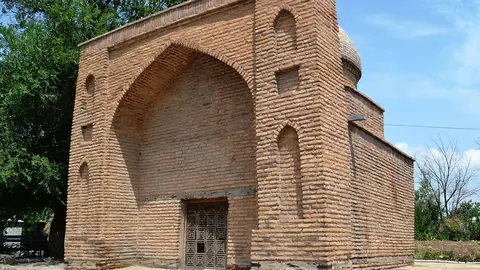
| Aisha Bibi | Taraz | about 15 km, straight line | 11th–12th-c. terracotta tomb | May, Sep |
| Karakhan | Taraz | 1 km, straight line | Karakhanid tomb, rebuilt 1906 | Apr–May, Sep–Oct |
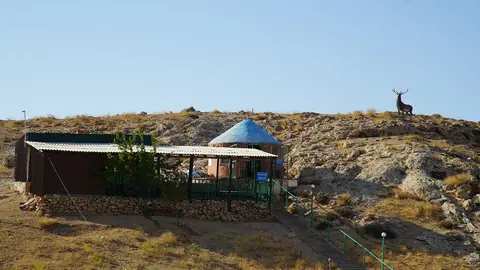
| Tekturmas | Taraz | about 5 km, straight line | Hilltop shrine, rebuilt 2001–2002 | Apr–May, Sep–Oct |
| Beket-Ata | Aktau | 280–285 km | Underground mosque, UNESCO 2026 | Apr, May, Sep |
| Shopan-Ata | Aktau | about 179 km, straight line | Rock-cut mosque and necropolis | Apr, Oct |
| Tamgaly | Almaty | 170–180 km | About 5,000 petroglyphs, UNESCO 2004 | Apr–Oct, no single peak |
| Tamgaly Tas | Almaty | about 92 km, straight line | Tibetan Buddhist carvings | Apr, May, Sep |
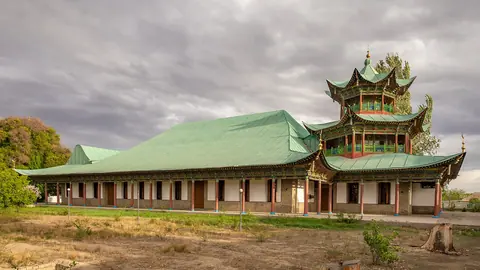
| Zharkent Mosque | Almaty | about 270 km, straight line | Chinese-style wooden mosque, 1895 | May, Sep |
If you only have a few days in the south, base yourself in Turkistan or Shymkent: six of these sites lie within about 60 km of one or the other.
The Yasawi circuit follows a set order
Pilgrims traditionally visit Arystan Bab near ancient Otrar before the Yasawi mausoleum in Turkistan. Legend makes Arystan Bab the teacher of Khoja Ahmed Yasawi; the present building, about 35 by 12 metres, was rebuilt in 1909.
The Turkistan mausoleum itself has an 18.2 m dome and was Kazakhstan’s first UNESCO World Heritage Site. The ruins of Sauran and Otrar lie 40–60 km from the city, so the circuit fills a full day or more.
Two more sites tie into the same story. Sairam, now a district of Shymkent and linked by most researchers to medieval Isfijab, holds the graves of Yasawi’s parents among monuments dated from the 9th to the 18th centuries. Ukash Ata, about 35 km from Turkistan, has a long tomb and a deep well where, by legend, only a person without sin draws the bucket up full.
Taraz has three tombs within a few kilometres
Taraz works as a compact half-day for shrine visitors, because Karakhan, Tekturmas and Aisha Bibi lie 1 km, about 5 km and about 15 km in a straight line from Taraz. What differs is how much is original.
Aisha Bibi, a 7.6 by 7.6 m tomb of the 11th–12th centuries, keeps its carved terracotta facade and is still visited by newlyweds. The Karakhan mausoleum mostly dates from 1906, built partly with the original bricks. Tekturmas on its hill above the Talas is a 2001–2002 building on a site with a far older history. If original fabric matters to you, Aisha Bibi is the one to prioritise.
Mangystau’s rock mosques take real planning
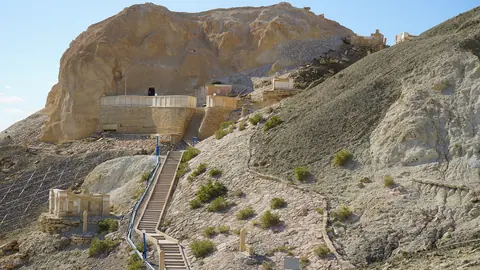
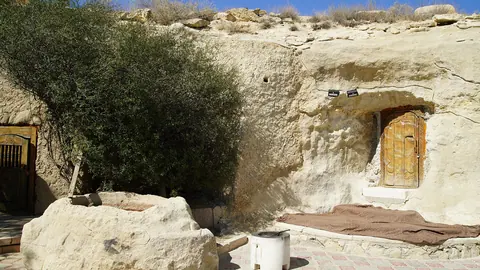
Beket-Ata is the longest trip in this collection: 280–285 km from Aktau and 4–5 hours’ drive to a mosque cut into a chalk cliff at Oglandy on the edge of the Ustyurt plateau. Shopan-Ata, a cave mosque in a ravine wall with graves from the 10th to the 19th century, lies on the way.
Both became part of the UNESCO listing of Mangystau’s rock mosques in 2026. Photography is not allowed inside Beket-Ata, and there is a pilgrims’ guesthouse. Treat this as a long trip from Aktau rather than a quick outing.
Near Almaty the sacred sites are carved rock
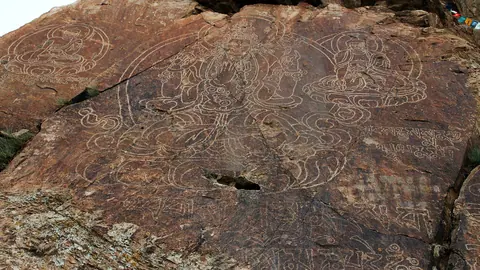
From Almaty the options are rock art rather than tombs. Tamgaly Tas, about 92 km in a straight line north of the city near Konaev, has Tibetan Buddhist images and prayer texts on boulders above the Ili River, dated 1677–1771. It is protected but unguarded, with open access.
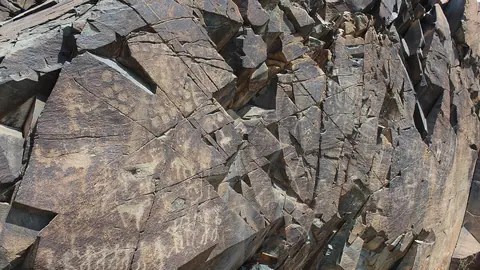
Tamgaly, 170–180 km northwest and 3–4 hours’ drive, holds about 5,000 carvings from the Bronze Age to the Middle Ages, with a ticket sold at the museum-reserve. Further east, the Zharkent mosque of 1895 has an upturned Chinese roof and a 19 m minaret, about 270 km from Almaty in a straight line.
Outliers in the north, west and centre
A few sites stand alone and suit travellers already in that region. Hazret Sultan in Astana opened in 2012, has 77 m minarets and a dome described as the largest in the country, about 4 km from the centre in a straight line. Pavlodar’s Mashkhur Zhusup mosque has four 63 m minarets and room for 1,500. In the north, the 2017 sacred list also names the Abylai Khan Residence in Petropavl.
The Korkyt Ata memorial, a 1980 monument shaped like a kobyz that sounds in the wind, is about 200 km from Kyzylorda. Abat-Baitak, about 92 km in a straight line from Aktobe, has more than 200 carved kulpytas around an 11-sided drum mausoleum. Bektau-Ata, 60–70 km north of Lake Balkhash, pairs a saint’s cave with pink granite peaks.
Spring and early autumn suit the south
There is no single climate for a collection this wide, but the season ratings on each page agree on a pattern. The southern shrines peak in April–May and September–October, and July in Turkistan reaches highs of about +36 °C.
| Region | Good window | Weak months |
|---|---|---|
| Turkistan, Shymkent, Taraz | Apr–May, Sep–Oct | Jul–Aug heat, winter |
| Mangystau | Apr–May, Sep–Oct | Summer, winter |
| Almaty region | Apr–May, Sep | Midsummer, winter |
| Astana, Pavlodar | May–Sep | Nov–Mar |
| Bektau-Ata, Abat-Baitak, Kazygurt | May, Sep | Dec–Feb (rated closed) |
If you can travel only in summer, the northern city mosques fit that better than the southern circuit. Korkyt Ata has no peak season on its page; wind is the factor to check.
The full published list of 100 rows is on our page about the sacred map of Kazakhstan.
- Public transport to individual shrines, including Korkyt Ata, Beket-Ata and Abat-Baitak
- Opening hours and entry rules at each mausoleum and mosque
- Dress and photography rules at shrines other than Beket-Ata
- Road conditions on the Aktau to Beket-Ata route
- Whether English-speaking guides are available at the sites