


The sights of Zhetysu Region cover sand dunes, painted clay hills, Bronze Age rock art, mountain gorges, a Chinese-style mosque and thermal sanatoria. Those with an Almaty figure lie between about 130 and 380 km in a straight line from the city; the pages for Kapal-Arasan, Zharkent-Arasan and Eshkiolmes give no distance from Almaty. May and September suit most of them. In midsummer the mountain sights are at their best, while the Altyn-Emel desert gets very hot, up to +43 °C on July days at Aktau.
Zhetysu is three separate trips, not one
Treat Zhetysu as three clusters. The Altyn-Emel desert has the Singing Dune, Aktau, Katutau and the Besshatyr mounds. The Dzungarian Alatau mountains around Tekeli and Lepsinsk have the gorges, Burkhan-Bulak and Lake Zhasylkol. Zharkent in the east has a historic mosque and radon springs nearby. Linking all three in one short visit means long drives, so most travellers pick one or two.
The table compares the main places. Distances are straight-line figures from Almaty, as given on each place page. Road distances will be longer.
| Place | What it is | From Almaty | Best months | Trip length |
|---|---|---|---|---|
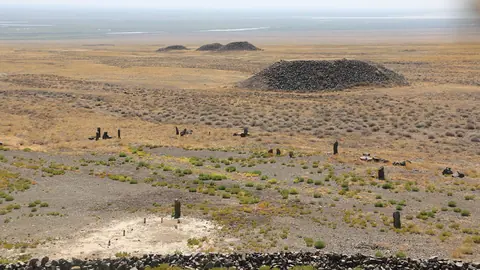
| Besshatyr | 31 Saka burial mounds | ~131 km line | May, Sep | Day |
| Katutau | Volcanic ridge, Tiger Mountains | ~210 km line | May, Sep | Day |
| Tekeli | Former mining town, gorges | ~235 km line | Jun–Sep | Day |
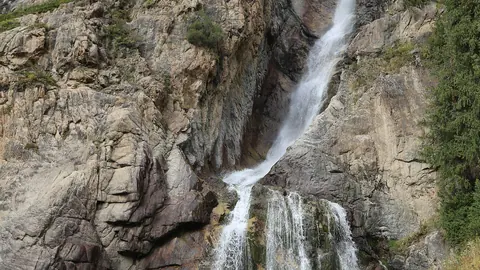
| Burkhan-Bulak | 168 m waterfall | ~270 km line | Jul–Aug | Day |
| Zharkent Mosque | Wooden mosque, 1895 | ~270 km line | May, Sep | Weekend |
| Lake Zhasylkol | Mountain lake, walk-in | ~378 km line | Jul–Sep | Weekend |
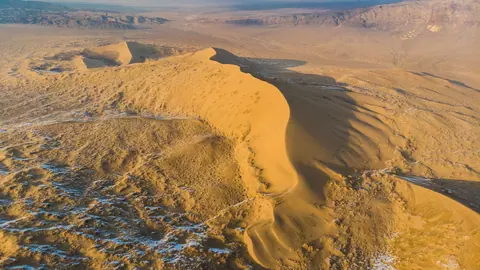
| Singing Dune | Sand mountain, 120–150 m | 250 km to Basshi* | Apr–May, Sep–Oct | Weekend |
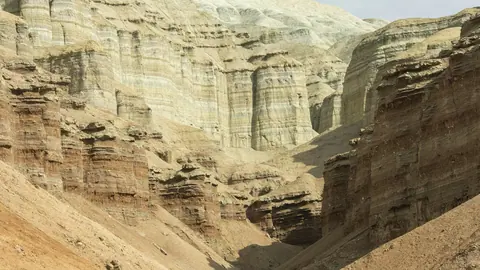
| Aktau mountains | Banded clay hills, fossils | 250 km to Basshi* | Apr–Jun, Aug–Oct | Weekend |
*The Altyn-Emel pages give the distance to the park village of Basshi. The sights lie a further 35–40 km (dune) and 70–120 km (Aktau) beyond it.
Altyn-Emel: dunes, painted hills and Saka mounds
Altyn-Emel National Park is the most varied single stop, and the park is the only way in to several of these sights. The Singing Dune is a sand mountain 120–150 m high and 1.5–3 km long between the Big and Small Kalkan ridges. It only makes its sound when the sand is dry.
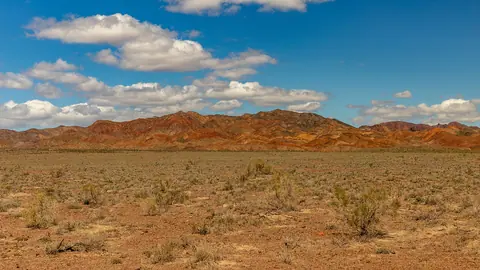
Further out, the Aktau mountains are banded clay hills where fossils of ancient rhinos and crocodiles have been found. The deposits are 60–70 million years old. The dark volcanic Katutau ridge lies 40 km from Aktau and rises to 1,630–1,720 m, depending on the source. The clay Tiger Mountains sit in its south-eastern foothills.
The park charges an entry fee per day. The Aktau page puts July daytime highs at up to +43 °C, so a summer visit means early starts or a different month. Besshatyr is the history stop inside the park: 31 mounds from the 6th to 4th centuries BC, the largest 17 m high and about 105 m across.
The Dzungarian Alatau: a waterfall and a lake you walk to
The mountain cluster suits travellers who want green gorges rather than desert, and it works only in the warm months. Tekeli is a small former lead-mining town where three mountain rivers meet, at 950–1,600 m. Above it in the Kora River gorge is Burkhan-Bulak, a waterfall dropping 168 m over four cascades, of which three are visible. It is described as the tallest waterfall in Kazakhstan. The Tekeli page also mentions Kelinshektas, an old Buddhist stone nearby.
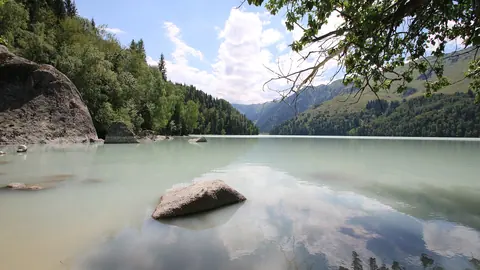
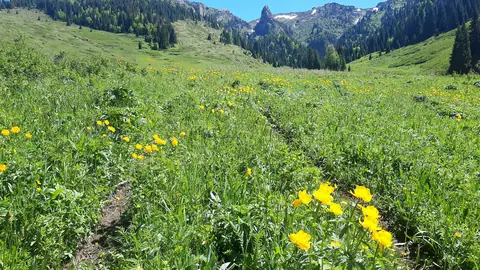
Lake Zhasylkol near Lepsinsk is the most remote pick, about 378 km in a straight line from Almaty. The lake lies at about 1,630 m. Its title page describes it as formed when an earthquake-triggered rockfall blocked a river, and its colour shifts. The last stretch is on foot, roughly 10 km along a forested valley close to the Chinese border. Winter ratings for both places are zero, so plan these for June to September.
Zharkent and the hot springs: the slower side of Zhetysu
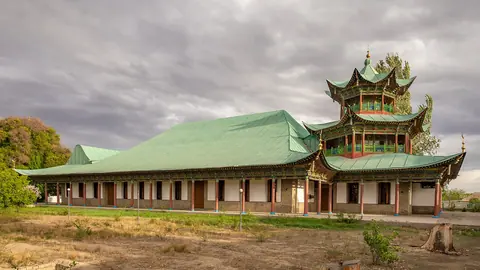
The east of the region suits a trip built around culture and warm water rather than hiking. The Zharkent Mosque was built in 1895 by a Chinese architect and Uyghur craftsmen, funded by the local community. It has an upturned Chinese roof, a wooden frame without nails, spruce columns and a 19 m minaret. It has been a protected monument since 1982 and now works as a museum.
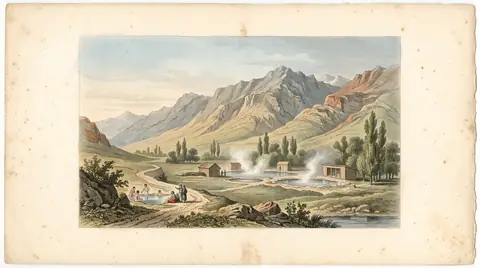
About 40 km from Zharkent, Zharkent-Arasan is a village and sanatorium in a gorge at about 1,100 m, using radon water at 37–53 °C. The water was first raised in 1952 and the clinic opened in 1967. Kapal-Arasan, about 100 km from Taldykorgan at 975 m, is a thermal sanatorium open all year. By Wikipedia it is the oldest resort institution in Kazakhstan, with its sanatorium dated to 1886. Both are medical institutions rather than casual bathing spots.
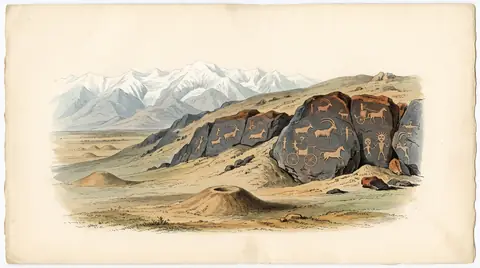
The Eshkiolmes ridge holds more than 4,000 Bronze Age petroglyphs, which show clothing and tools. It has been on UNESCO’s tentative list since 1998. Its best season is only an estimate: spring or autumn.
Which months work for which places
May and September are the only months when the desert, the history sites and most of the mountains are all rated good or better. Midsummer belongs to the mountains. Winter leaves mainly the sanatoria and Zharkent town.
| Season | Rated best | Weak or closed |
|---|---|---|
| Dec–Feb | Thermal sanatoria (rated good) | Singing Dune, Burkhan-Bulak, Zhasylkol, Besshatyr |
| Mar–May | Singing Dune, Aktau (Apr–May), Besshatyr, Zharkent (May), Zharkent-Arasan | Zhasylkol, Burkhan-Bulak only possible |
| Jun–Aug | Burkhan-Bulak, Tekeli, Zhasylkol (Jul–Aug) | Singing Dune, Besshatyr only possible; Aktau hot |
| Sep–Oct | Singing Dune, Aktau, Besshatyr, Katutau, Zharkent (Sep), Zharkent-Arasan | Burkhan-Bulak and Zhasylkol fade after September |
If you can travel only once, September combines desert, history and mountains. If your dates are fixed in July or August, base yourself near Tekeli or Lepsinsk and keep Altyn-Emel for an early morning.
What stands in the way without a car
Distance is the main obstacle. Nothing on this list is close to Almaty, and several pages flag gaps in transport information. The Tekeli page notes there are no passenger trains. The Burkhan-Bulak page states that access details are unconfirmed. Zhasylkol ends in a roughly 10 km walk. The Altyn-Emel sights lie 35–120 km beyond the park village, so you need transport inside the park as well as to it.
We could not confirm bus routes, road conditions or whether the sanatoria take short-stay visitors. Read each place page for its own list of open questions before you plan around it.
- Public transport to Tekeli, Lepsinsk, Zharkent and Basshi: we could not confirm any bus routes or schedules.
- Road and track conditions to Burkhan-Bulak and inside Altyn-Emel, where sights lie 35–120 km from Basshi.
- Whether border-zone or park permits are needed for the Lake Zhasylkol trail near the Chinese border.
- Whether Kapal-Arasan and Zharkent-Arasan accept short visits or only full sanatorium stays.
- Opening hours of the Zharkent Mosque museum.