
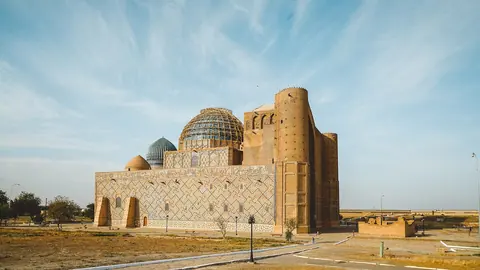


Turkistan, Kazakhstan is best known for the late-14th-century Mausoleum of Khoja Ahmed Yasawi, the country’s first UNESCO World Heritage Site (2003). Around it, the Turkistan Region holds the ruined Silk Road cities of Otrar and Sauran, active pilgrim shrines, a canyon in a national park and a spa area on hot mineral water. Most sights suit spring and autumn, and most are day trips from either Turkistan city or Shymkent.
Turkistan Region is a southern, two-base destination
The region lies in southern Kazakhstan along the border with Uzbekistan, and its sights split into two clusters. The historic cluster sits around Turkistan city: Arystan Bab and Otrar are about 50 km in a straight line away, Sauran about 46 km, and Ukash Ata is given as about 35 km, without saying whether by road or in a straight line. The second cluster is reached from Shymkent: Sairam is on the city’s eastern edge, Kazygurt is about 34 km in a straight line, Domalak Ana about 60 km and Mashat Canyon about 63 km.
Turkistan itself is given as 160 km from Shymkent, so a visitor short on time should pick one base rather than shuttle between them. We could not confirm public transport to any of the outlying sites, nor how far the region is from Almaty or Astana. A traveller without a car and without Russian should assume that the rural shrines, ruins and the canyon need arranged transport, and check this before committing.
The Turkistan circuit: one mausoleum, two ruined cities, two shrines
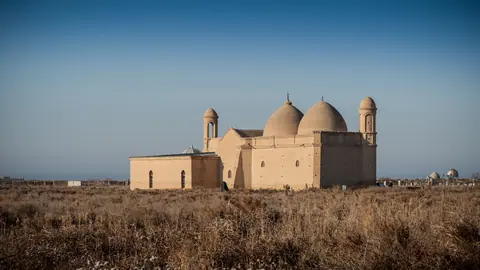
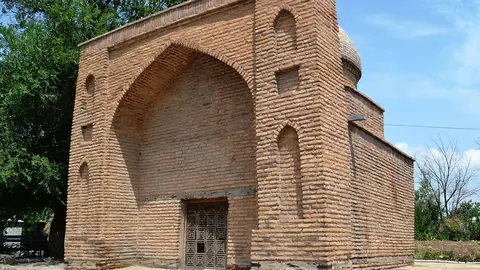
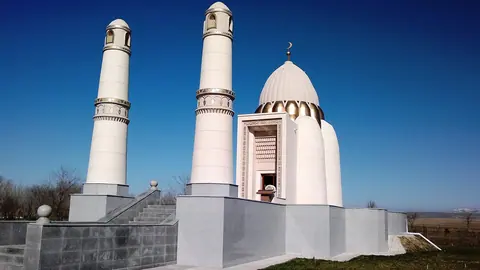
The core of any visit is the Yasawi Mausoleum in Turkistan, crowned by a dome 18.2 m across. Tradition sets an order: pilgrims first go to Arystan Bab, the mausoleum and memorial mosque over the grave of the man legend calls Yasawi’s teacher, and only then to Turkistan. The present Arystan Bab building, about 35 × 12 m, was rebuilt in 1909 and has been protected since 1982.
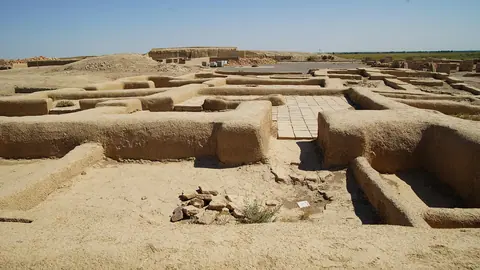
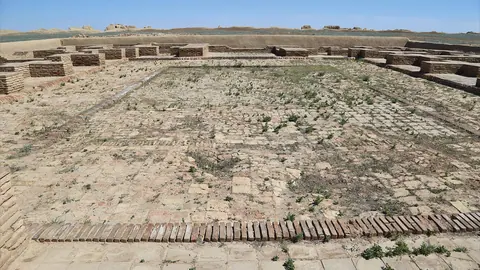
The two ruined cities are different experiences. Otrar is a grassy, excavated mound up to 18 m high, one of the largest cities of medieval Central Asia until Genghis Khan’s army besieged it in 1219; excavations have run since 1969. Sauran keeps more visible structure: an oval of mud-brick walls 800 × 550 m with gates, tower stumps and the remains of a congregational mosque, once a seat of the White Horde. Distances differ slightly between summaries: Otrar is about 50 km in a straight line from Turkistan and 57 km by another figure, Sauran 46 km in a straight line or 40–45 km.
Ukash Ata, north of Turkistan in the Karatau foothills, is a shrine with a long tomb and a well about 22–25 m deep. Legend says only a person without sin pulls the bucket up full. It has been a protected monument since 2019.
Around Shymkent: Sairam, Kazygurt and Domalak Ana are sacred places first
The Shymkent-side sights are mostly places of worship, and they reward a visitor who comes with that in mind. Sairam is a living mud-brick district of Shymkent, linked by most researchers to medieval Isfijab, with the graves of Yasawi’s parents and mausoleums dated from the 9th to the 18th centuries. It is the easiest stop in the whole region, since it lies about 15 km in a straight line from central Shymkent.
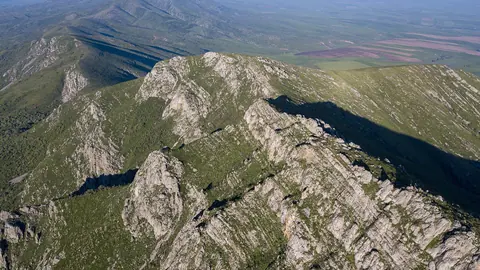
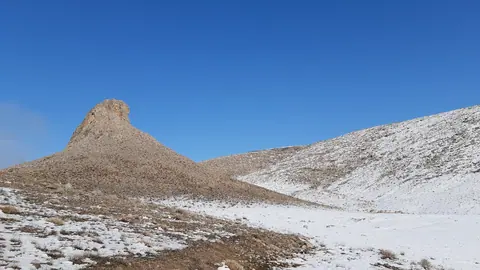
Kazygurt is a low limestone ridge with a summit at 1,768 m, where Kazakh legend says Noah’s Ark came to rest; pilgrims visit its holy sites every year. Domalak Ana is a 12 m domed mausoleum over a grave dated 1456, in the Balabogen river valley 2 km south of the village of Akbastau. It is a revered pilgrimage site rather than an attraction, so expect worshippers, not visitor facilities.
Nature, water and a spa stay round out the list
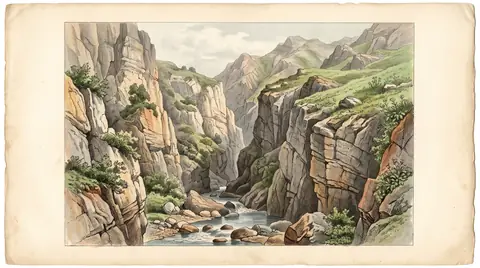
Three places are about landscape rather than monuments. Mashat Canyon is the gorge of the Mashat river inside a 26,971 ha branch of the Sayram-Ugam National Park, and little is published about it. Karatau Reserve protects 34,300 ha of the central Karatau ridge, rising to 2,176 m, and is known for endemic plants and the Karatau argali, a wild mountain sheep. We could not confirm whether visitors may enter it.
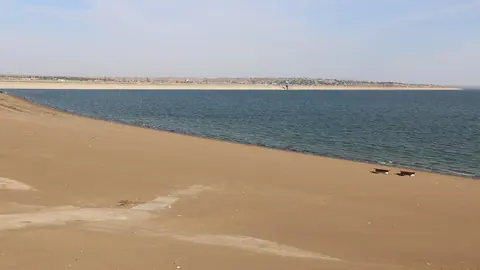
Shardara is Kazakhstan’s third-largest reservoir, about 80 km long and 25 km wide, on the Syr Darya at the Uzbek border, about 183 km in a straight line from Shymkent. It does not freeze in winter, but visitor services are thin and border access should be checked. Saryagash is the one place built for a longer stay: sanatoriums run on mineral water at 37–50 °C from a well about 1,400 m deep, struck in 1946 by geologists looking for oil. Most are in Kokterek, 14–16 km from the town and roughly 127–130 km from Shymkent.
How the places compare
The table sets out what each place is, where you start from and how long it takes, so you can see which ones share a base and a season.
| Place | What it is | Start from | Straight-line distance | Trip | Best months |
|---|---|---|---|---|---|
| Yasawi Mausoleum | UNESCO mausoleum | Turkistan | in the city | day | Apr–May, Oct |
| Arystan Bab | Pilgrim mausoleum | Turkistan | ~50 km | day | Apr–May, Sep–Oct |
| Otrar | Excavated ruined city | Turkistan | ~50 km | day | Apr, Oct |
| Sauran | Walled ruined city | Turkistan | ~46 km | half day to weekend | Apr–May, Sep–Oct |
| Ukash Ata | Shrine and well | Turkistan | ~35 km (not stated as straight-line) | weekend | Apr–May, Sep–Oct |
| Karatau Reserve | Mountain reserve | Turkistan | ~61 km | weekend | May, Sep |
| Sairam | Historic district, mausoleums | Shymkent | ~15 km | day | May, Sep |
| Kazygurt | Sacred limestone ridge | Shymkent | ~34 km | day | May, Sep |
| Domalak Ana | Pilgrim mausoleum | Shymkent | ~60 km | day | Apr–May, Sep |
| Mashat Canyon | River canyon | Shymkent | ~63 km | day | May–Jun, Sep |
| Shardara | Reservoir | Shymkent | ~183 km | weekend | May, Sep |
| Saryagash | Thermal spa area | Shymkent | Kokterek ~127–130 km | long stay | Apr–May, Sep–Oct |
With two or three days, the Turkistan cluster gives the densest history. With one day from Shymkent, Sairam plus Kazygurt or Domalak Ana is the realistic pairing.
When to go: April–May and September–October
Spring and autumn are the best months for almost every place in the region, and summer is the weak season. July highs in Turkistan are about +36 °C, and the ruins of Otrar and Sauran are open ground. Mashat Canyon is the exception that holds up into June. Winter is quiet: Saryagash stays a sensible spa option, while Shardara, Kazygurt, Mashat and Karatau are rated off-season in December, January and February.
| Period | What it suits |
|---|---|
| Jan–Feb | Saryagash spas; shrines possible; mountains and reservoir off |
| March | Turkistan, Otrar, Sauran and shrines become good |
| April–May | Peak for nearly everything: ruins, shrines, Kazygurt, Karatau, Shardara |
| June | Mashat Canyon at its best; most other sites only fair |
| July–August | Heat; only Mashat stays good, the rest are merely possible |
| September–October | Second peak for ruins, shrines, Shardara and Saryagash |
| Nov–Dec | Turkistan and Arystan Bab still good in November; Saryagash good |
If you can choose only one month, May gives the widest choice, with September a close second.
- Public transport or shared taxis from Turkistan and Shymkent to Otrar, Sauran, Arystan Bab, Ukash Ata, Domalak Ana and Mashat Canyon.
- Road distances and travel times from Almaty or Astana to Turkistan and Shymkent.
- Opening hours, entry fees and dress rules at the Yasawi Mausoleum and other shrines.
- Whether visitors may enter Karatau Reserve and what permit is needed.
- Border-zone access rules around Shardara Reservoir and Saryagash.