


Karaganda, Kazakhstan is the base for a region of open steppe in the centre of the country, and its best-known sights near the city are tied to Soviet labour camps. Two memorial sites lie about 33–34 km in a straight line from the city. The granite massifs, a forest lake and the long Lake Balkhash further out are summer trips that take a weekend.
Where Karaganda is and what kind of trip the region demands
Karaganda lies in central Kazakhstan, in the Saryarka steppe. Buiratau National Park sits between Astana and Karaganda, about 131 km in a straight line from Astana, so the region is within reach of the capital. We could not confirm road distances or travel times from Almaty or Astana.
The places split cleanly by effort. Karlag in Dolinka and the Spassk memorial are day trips from the city and can be visited in any month, though May–September is easier. Kyzylarai (232 km) and Shaitankol (171 km) lie far from Karaganda in a straight line and are weekend trips; Bektau-Ata is 60–70 km north of Balkhash. For Kyzylarai, public transport could not be confirmed and a car is the realistic plan. Without a car and without Russian, the two memorial sites are the easiest to fit into a trip.
Seven places compared
The table sorts the region’s places by how far they are from a base city and when they are rated best. Distances are straight lines, so roads will be longer.
| Place | What it is | Distance (straight line) | Best months | Trip length |
|---|---|---|---|---|
| Karlag museum, Dolinka | Former Gulag camp centre, museum since 2001 | 34 km from Karaganda | May–June, September | Day |
| Spassk memorial | Cemetery of POW camp No. 99 | about 33 km from Karaganda | May–September | Day |
| Shaitankol | Small lake in pine forest | 171 km from Karaganda | June–August | Weekend |
| Kyzylarai | Red granite massif, highest point of Saryarka | 232 km from Karaganda | June–August | Weekend |
| Bektau-Ata | Pink granite peaks, revered cave | 60–70 km north of Balkhash | May, September | Weekend |
| Buiratau National Park | Low ridges, argali, relict woods | 131 km from Astana | June, August | Day from Astana |
| Lake Balkhash | 600 km steppe lake | about 400 km from Almaty | June–August | Weekend |
If you have one free day in Karaganda, the two history sites close to the city are the practical choice. The nature sites only pay off if you can give them two days.
History near the city: Karlag and Spassk
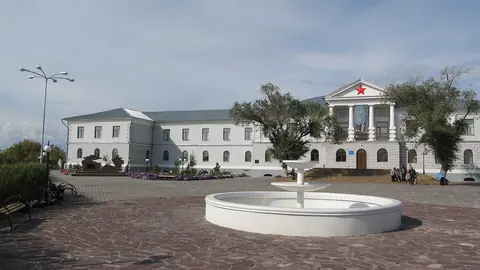
The best-known history site near the city is the Karlag museum in Dolinka, at the former administrative centre of one of the largest Gulag camps. The camp covered roughly 300 by 200 km of steppe and ran for almost thirty years. The museum has worked since 2001; we could not confirm its opening hours.
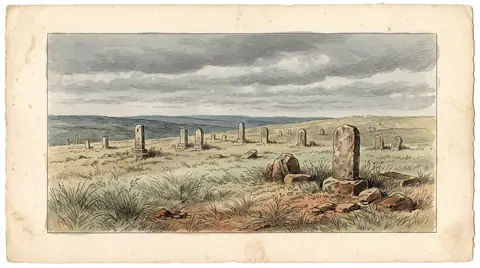
The Spassk memorial is a cemetery in the village of Spassk beside the M-36 highway. It holds 5,152 prisoners of war and internees of the Second World War, as well as prisoners of Karlag and post-war camps. More than a dozen nations have raised their own monuments here; one summary counts 15 or more countries. It is outdoors, so the weather matters more than at the museum. Both are places of mourning, and a quiet, unhurried visit fits them.
Granite in the steppe: Kyzylarai and Bektau-Ata
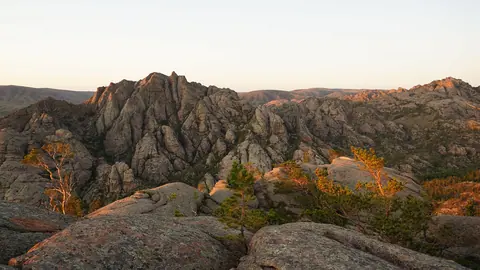
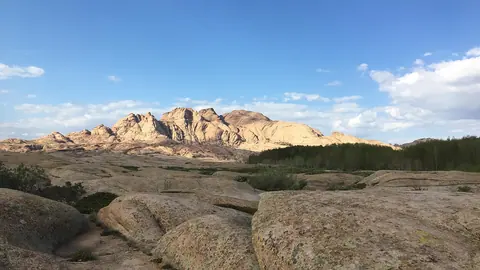
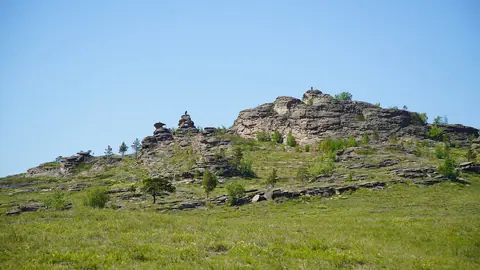
Two granite massifs rise from the flat steppe, and both mix nature with older history. Kyzylarai reaches 1,565 m at Aksoran, the highest summit of Saryarka. It has pine woods, argali, the Bronze Age burial grounds of Begazy and mausoleums from the era of the Kazakh–Dzungar wars. The village of Shabanbay Bi serves as the base.
Bektau-Ata is smaller, topping out at 1,213–1,214 m, with pink granite, rock pools and a cave with water linked to a legend of the saint Atabek. It is a zoological sanctuary in IUCN category IV. The cave is revered, so treat it as a sacred site rather than a curiosity. Because it lies 60–70 km north of Balkhash, it pairs naturally with a lake trip.
Lakes and quieter country
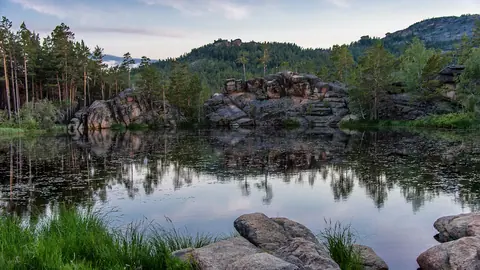
Shaitankol, the Devil’s Lake, is a pool of about 60 by 40 m at roughly 1,200 m in pine forest, some 5 km from the town of Karkaraly. It is known for a legend of a cross thrown into the water, dated in one telling to 1905. It is small, so come for the forest setting rather than a big view.
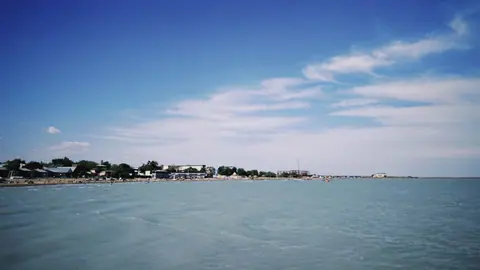
Lake Balkhash is the opposite in scale: about 600 km long, with an average depth of 5.8 m. Its western half is nearly fresh and cloudy, the eastern half salty and bluish. Buiratau, on the Astana side, protects low ridges, salt lakes, relict alder and birch woods and an isolated herd of around 200 argali, with four routes and a small entry fee.
Karaganda weather and when to go
We could not confirm temperature or rainfall figures for Karaganda itself, so the guidance here comes from the season ratings of each place. The nature sites are rated off or barely possible from November to March, and best from June to August. Lake Balkhash is frozen from November to early April.
| Period | History sites near Karaganda | Nature sites |
|---|---|---|
| December–March | Possible | Mostly off; Balkhash under ice |
| April | Good | Possible at best |
| May–June | Best | Good to best; Bektau-Ata best in May |
| July–August | Good to best | Best for lakes, Kyzylarai, Shaitankol |
| September | Best | Good; Bektau-Ata best again |
| October–November | Possible to good | Mostly possible or off |
For a mixed trip, late May, June or September covers both groups well. In winter, plan around the Karlag museum and accept that the steppe sites are largely out of season.
- Temperature and rainfall figures for Karaganda city
- Opening hours of the Karlag museum in Dolinka
- Public transport from Karaganda to Dolinka, Spassk, Karkaraly and Kyzylarai
- Road distances and travel times from Astana and Almaty
- Current entry fee and route rules at Buiratau National Park