
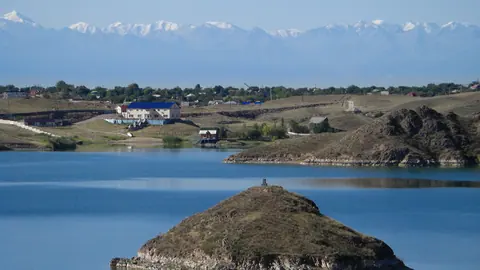
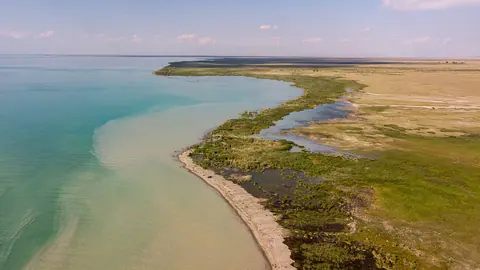
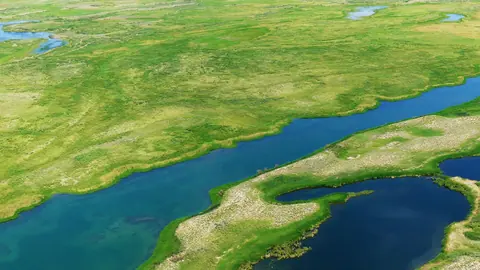
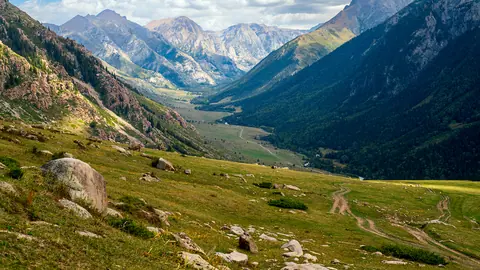
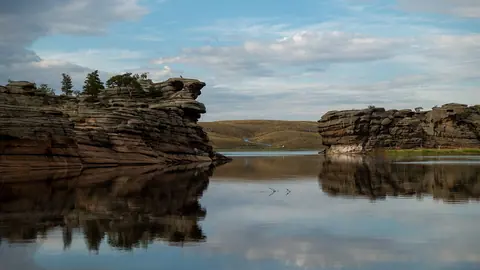
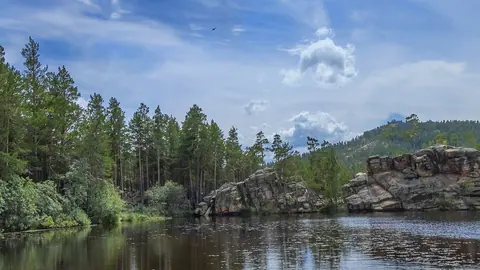
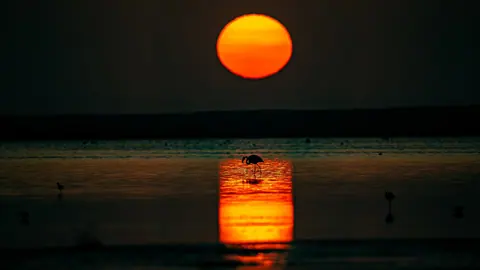


Kazakhstan’s lakes range from cold turquoise mountain water near Almaty to huge steppe and desert lakes, salt lakes with flamingos and pine-fringed lakes among granite hills. For summer swimming, head to Kapshagay, Alakol, Zhasybay or Imantau; the swimming season by month and the beaches near Almaty, Astana and Pavlodar are covered in beach lakes in Kazakhstan: where to swim. For mountain colour, go to Kaindy, Kolsai and Big Almaty Lake, ideally July to September. For birds, go to Tengiz from May to October. For the remotest and quietest water, go to Markakol or Rakhmanov lake in the Altai, and allow at least three or four days.
Kazakhstan lakes at a glance: 15 places compared
The table lists 15 lakes in geographical order: the south-east around Almaty first, then the Altai, then the north and centre. Every figure comes from the matching park page on this site, where each fact is referenced.
| # | Lake | Region | From nearest city | Swimming | Season |
|---|---|---|---|---|---|
| 1 | Kaindy | Almaty region | Almaty ≈ 284 km | no, about 6 °C | summer |
| 2 | Kolsai | Almaty region | Almaty 275–300 km | not confirmed | Jul–Sep |
| 3 | Big Almaty Lake | Ile-Alatau | 15 km on foot from the road | banned | Jul–Aug |
| 4 | Issyk | Almaty region | Almaty ≈ 40 km | not confirmed | warm season |
| 5 | Kapshagay | Almaty region | Almaty 70 km | yes | Jun–Sep |
| 6 | Alakol | Zhetysu and Abai regions | Almaty 9–10 h | yes, on beaches | Jun–Aug |
| 7 | Balkhash (Ile-Balkhash) | Almaty region | reserve office in Bakanas | — | by arrangement |
| 8 | Zhasylkol and Akkol | Zhetysu region | Topolevka | — | check |
| 9 | Markakol | East Kazakhstan | Oskemen ≈ 400 km | not confirmed | Jun–Aug |
| 10 | Rakhmanov lake | East Kazakhstan | Oskemen ≈ 380 km to Katon-Karagay | hot springs | Jul–Aug |
| 11 | Borovoe (Burabay) | Akmola region | Astana ≈ 257 km | not confirmed | Jun–Aug |
| 12 | Zerenda, Imantau, Shalkar | Akmola and North Kazakhstan | Kokshetau ≈ 45–60 km | yes, Imantau | Jun–Aug |
| 13 | Zhasybay (Bayanaul) | Pavlodar region | Pavlodar ≈ 230 km | yes | Jun–Aug |
| 14 | Shaitankol (Karkaraly) | Karaganda region | Karaganda ≈ 220 km | — | Jun–Aug |
| 15 | Tengiz (Korgalzhyn) | Akmola and Karaganda regions | Astana ≈ 130 km | no, reserve | May–Oct |
“Not confirmed” means we could not find a reliable statement on swimming. A dash means the question is not the main one for that place or has not been checked. The season column follows the season bars on our park pages. For beach lakes it is an editorial guide, not a park rule.
The biggest and the most famous lakes in Kazakhstan are two different lists. By area the top places go to water few people visit for the view. For the famous pictures, travellers head to Kaindy, Kolsai and Big Almaty Lake. We found no ranking of fame.
| Lake | Area, km² | What it means for a trip |
|---|---|---|
| Caspian Sea | 371,000 (whole water body) | the coast at Aktau and Atyrau |
| Aral Sea | 17,160 (the area has changed greatly; the list gives no date) | not a beach trip |
| Balkhash | 16,996 | half fresh, half salty; section 7 |
| Alakol | 2,650 | beaches; section 6 |
| Zaysan | 1,810 | far east of the country |
| Tengiz | 1,382 | flamingos; section 15 |
| Markakol | 455 | Altai taiga; section 9 |
Areas are from Wikipedia’s list of lakes of Kazakhstan. Guidebooks repeat a figure of about 48,000 lakes in the country; we found no government count. The full list by area, with depth and salinity for 15 lakes, is in a separate ranking.
1. Lake Kaindy: the sunken forest (sometimes searched as Kandy lake)
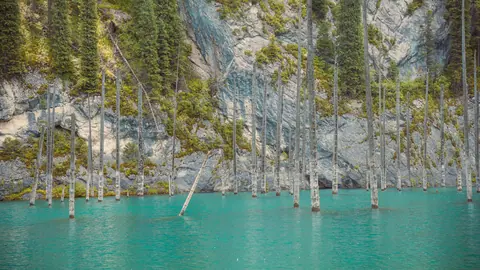
Kaindy is a lake about 400 m long in a gorge near Saty village, and its draw is the drowned spruce forest. The lake formed after the 1911 earthquake, when a limestone rockslide dammed the valley and the water rose over the trees. The trunks of Tian Shan spruce still stand above the surface.
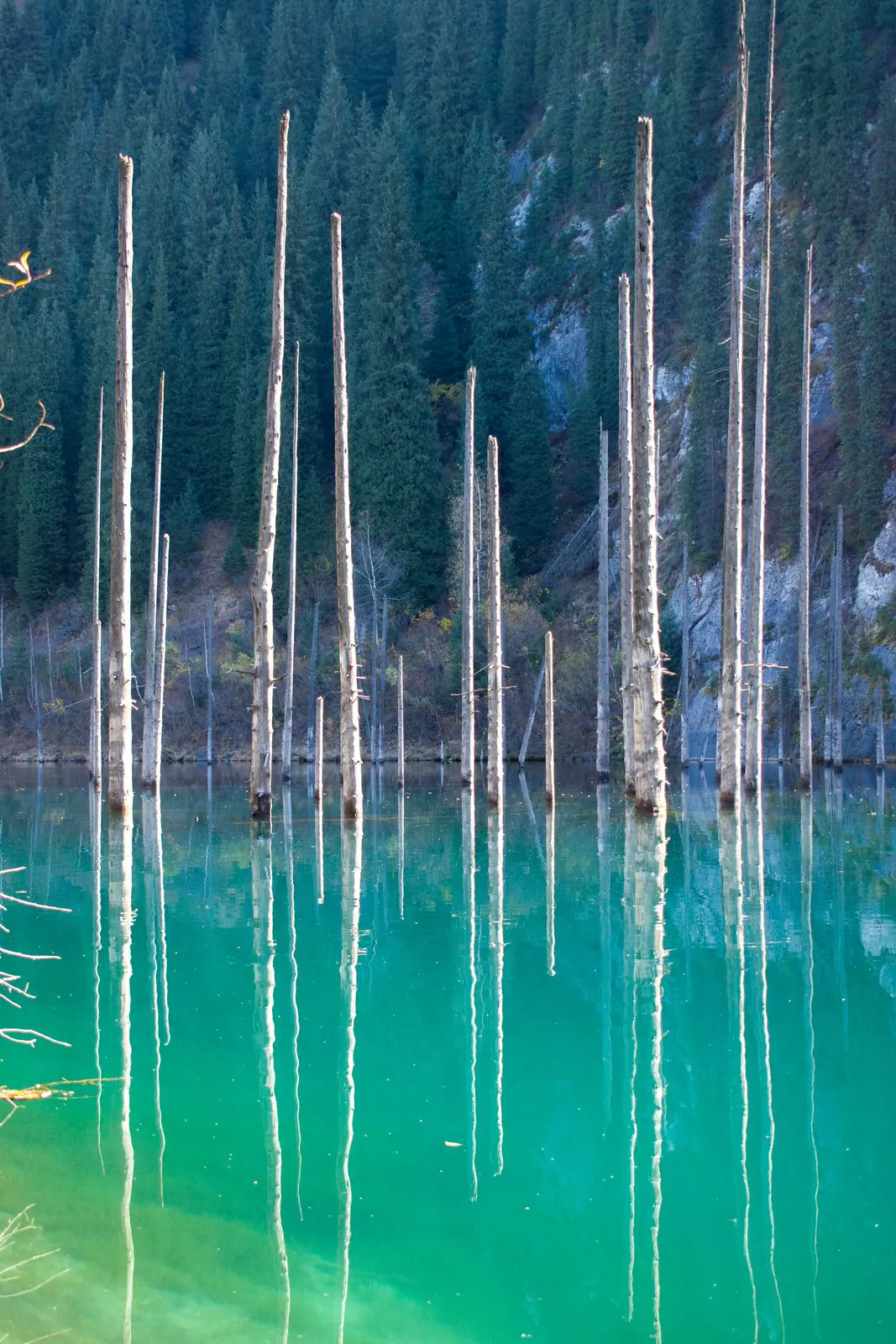
It is about 284 km and 5–7 hours from Almaty. The last 10 km of access road were rebuilt in 2026, and the park announced the road’s technical opening on 4 November 2026 without saying how visitor traffic will run. From the car park you walk about 1.5 km. Go in summer or early autumn in dry weather, because rain washes out the track. The water stays around 6 °C even in summer, so this is a place to look at rather than swim in. Most people pair it with Kolsai over two days. See our Lake Kaindy guide.
Lake Kaindy in winter and November. In winter the lake freezes over (NUR.KZ), and the spruce trunks stand locked in the ice. Do not walk on it. Nobody publishes an official winter status for the gorge road, so if you are going between November and March, check with Kolsai Lakes National Park first. Lake Kaindy is part of that park.
2. Kolsai Lakes: three lakes in a staircase
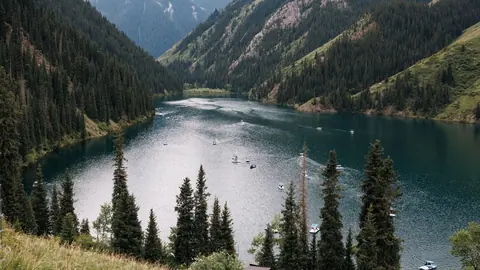
Kolsai is three lakes, one above the other: the lower lake at 1,818 m, the middle one at 2,252 m and the upper one at 2,850–2,900 m. You can drive to the lower lake. A trail of 7.35–7.8 km runs along the shore and through spruce forest to the middle lake, with about 470 m of climbing and 3–4 hours going up.
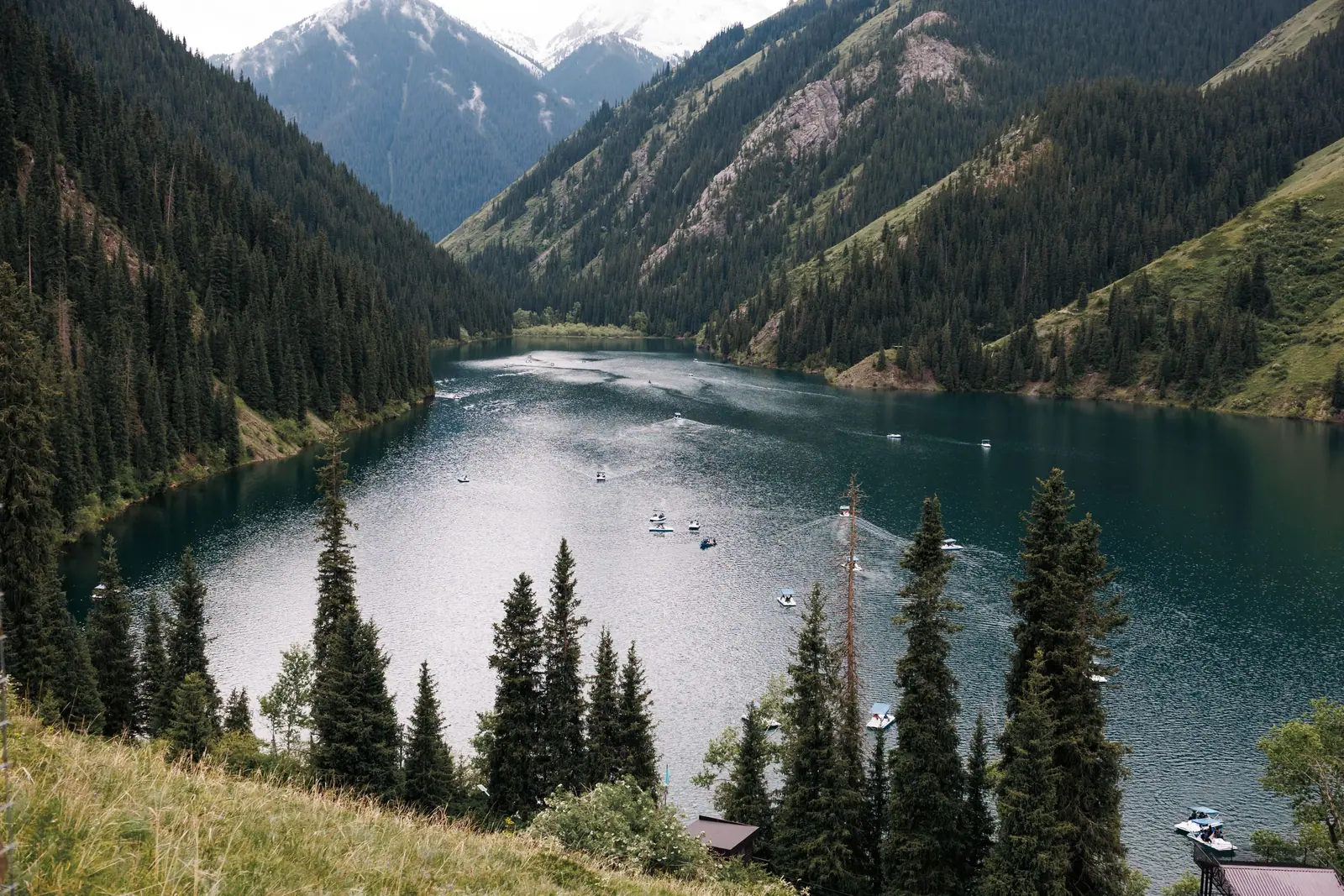
Almaty is 275–300 km away, about five hours by road. The trail is open April to October, and July to September is the easiest time to hike. People stay in Saty, which had 90 guesthouses in 2023. No border-zone permit is needed for the lower and middle lakes, even for foreigners. See Kolsai Lakes.
3. Big Almaty Lake: the lake above the city, now reached on foot
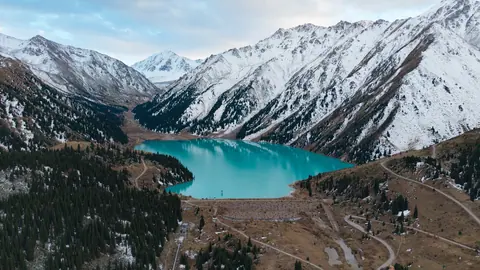
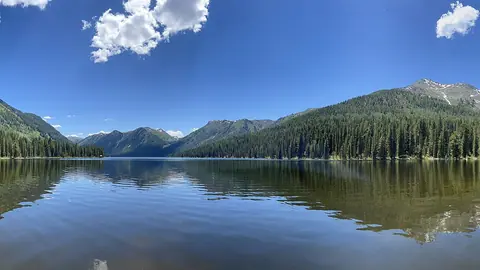
Big Almaty Lake lies at 2,511 m, 1.6 km long and 30–40 m deep. Sovetov peak (4,317 m), Ozerny and Turist rise above it. The colour of the water changes through the year and is brightest in July and August.
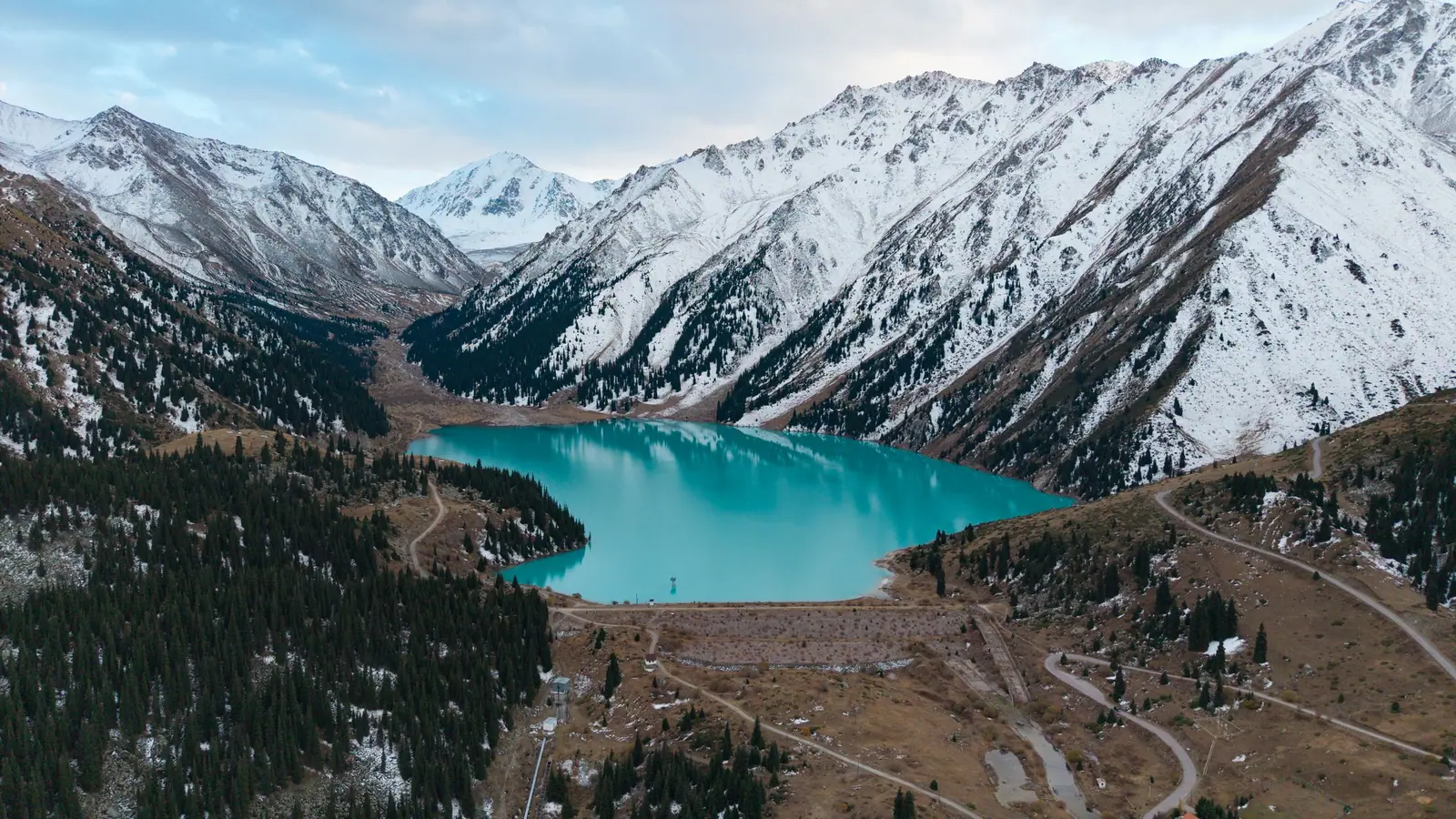
The road has been closed to private cars since 2020, and since 30 April 2026 to motorcycles and electric transport, including e-scooters. That means a walk of about 15 km and 4–6 hours up. The lake supplies Almaty’s drinking water, so swimming, fishing and going down to the shore without permission are banned. Plan it as a hiking day, not a picnic by the water. See our Big Almaty Lake guide.
Big Almaty Lake in November. In late October and early November 2026 the water had not yet frozen and looked deep azure under the snowy peaks, while the air at the lake already felt like winter (Zakon.kz, 2 November 2026). A new 5.3 km trail is being built along the climb, due to be finished in November–December 2026, and part of it is already open. You walk from the upper checkpoint, and border guards may check documents, so carry your passport.
4. Lake Issyk: a day trip with a fee dispute
Issyk lies 40 km east of Almaty at around 1,715 m. Wikipedia gives figures from 1,707 to 1,759 m. On 7 July 1963 a mudflow broke the lake’s natural dam and emptied it. The dam was later repaired and the lake partly refilled.
It is an easy day out from Almaty. Since December 2024 the lake has been run by a private trust manager. NUR.KZ reports that in summer 2025 the local authority ruled that company’s visitor charges unlawful. The only legal fee is the one at the national park eco-post. The road may close in winter during the avalanche period. See Lake Issyk.
5. Kapshagay: summer water near Almaty
Kapshagay reservoir is Almaty’s main beach escape, 70 km from the city on the A3 highway. The town of Konaev stands on its western shore. By Wikipedia, it is 180 km long and up to 22 km wide, and filling began in 1970.
The water reaches 22–28 °C in July and August and 18–20 °C in May, June and September. People come for a day or a weekend, and the shore has holiday camps, guesthouses and town beaches, some of them paid. The reservoir freezes in winter. See Kapshagay.
6. Alakol: a salt lake for a beach holiday of several days
Alakol is a salt lake of 2,696 km², up to 54 m deep, in the east of the country. People swim at the beaches of Akshi, Koktuma and Kabanbay, which lie outside the Alakol reserve. The Araltobe islands, home to a colony of a relict gull, are closed from May to September.
From Almaty it is about 9–10 hours by car or bus. Wikipedia also mentions a seasonal train to Koktuma in June–August. With that much travel each way, a weekend trip makes little sense, so plan several days. See the Alakol reserve. Beaches, weather by month and the road to the lake are in our guide to Lake Alakol.
7. Balkhash: one lake, fresh in the west and salty in the east
Balkhash stretches for about 600 km, and Wikipedia gives its area as 16,400 to 18,200 km² depending on the year. The western part is nearly fresh, at about 0.74 g/L. The eastern part is saltier, at 3.5–6 g/L, and the two are joined by the Uzynaral strait, about 3.5 km wide. The Ili river brings 73–80% of all inflow.
The Ile-Balkhash reserve covers the Ili delta and the southern shore. On 31 July 2026 the tigress Ümit was released into the wild here, and on 31 October 2026 the male Amur followed her (Ministry of Ecology). This is not a place to wander on your own: visits are arranged with the reserve office in Bakanas. See Ile-Balkhash.
8. Zhasylkol and Akkol: lakes of the Dzungarian Alatau
These lakes lie in Zhongar-Alatau National Park. Route No. 3, the same one that leads to wild Sievers apple forests, reaches the lower Zhasylkol lake. The Shumsky glacier and Akkol lake are reached from the visitor centre in Topolevka village, Sarkand district. It opened in July 2026 with a hotel and two guesthouses for up to 60 people.
See Zhongar-Alatau National Park.
9. Markakol: a taiga lake at the end of a gravel road
Markakol is a mountain lake 38 × 19 km and 455 km² in area, at 1,447 m between the Kurchum and Azutau ranges. It is up to 27 m deep and has a single outflow, the Kalzhyr river. The endemic lenok called uskuch lives in the lake, and larch taiga surrounds it.
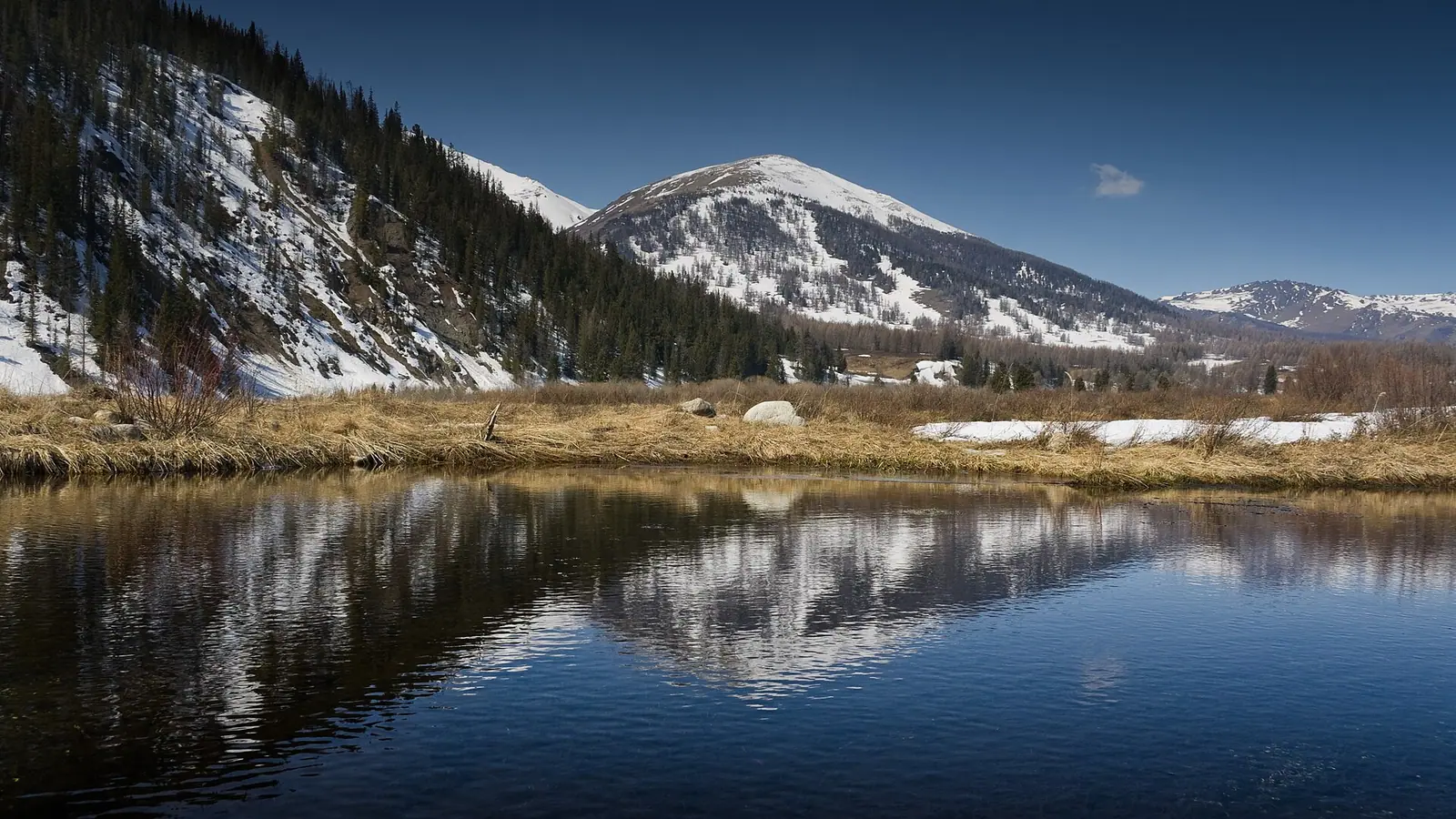
It is about 400 km and roughly 11 hours one way from Oskemen (Ust-Kamenogorsk). The tarmac ends at Markakol village. After that come more than 50 km of gravel with a hairpin section, so you need a 4x4. Go in summer, as the lake usually freezes from around 20 November. No border-zone permit is required. See the Markakol reserve.
10. Rakhmanov lake: hot springs near the China and Russia borders
Rakhmanov lake lies in Katon-Karagay National Park in the southern Altai, below Belukha, and is known for the thermal springs beside it. About 80 m downstream on the Arasan river, at around 1,760 m, the Rakhmanov springs emerge: radon water at 34–41 °C. The river leaving the lake forms the Arasan waterfall. China is 9 km away and Russia 20 km.
From Oskemen to Katon-Karagay village is about 380 km, roughly five hours. In 2026 the last 13 km of the access road were described as hard going for an ordinary car. Government Decree No. 356 exempts the lake from the permit regime for foreigners, but carry your ID. July and August are the easiest months. See Katon-Karagay National Park.
11. Borovoe: Burabay among the pines
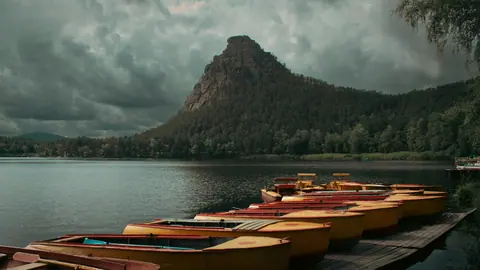
Lake Borovoe covers about 11 km² and measures 4.5 × 3.9 km, but it is shallow: 7 m at most and 3.4 m on average. The Zhumbaktas rock, known as the Sphinx, rises about 20 m out of the water, facing the Okzhetpes cliff.
Astana is about 257 km and three hours away. Under the park’s fee schedule the high season runs from 1 May to 30 September, and weekend entry costs more, so weekdays are calmer. Beyond the lake, walkers climb Mount Kokshe (947 m) or take the 8 km Bolektau trail, with views over Borovoe and Bolshoye Chebachye. See Burabay National Park.
12. Zerenda, Imantau and Shalkar: three different Kokshetau lakes
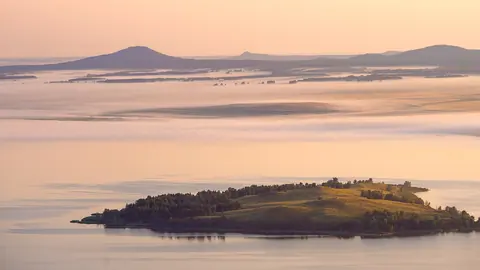
Kokshetau National Park has a fresh swimming lake, a salt lake and a village lake within one trip. Zerenda covers 9.61 km², is up to 6.8 m deep and has a village on its shore 45 km from Kokshetau city. Imantau is fresh and over 13 km long, and people swim, fish and take boats to an island 4 km offshore. Shalkar is salty, 12 × 3 km and up to 15 m deep, with a rocky, pine-covered southern shore.
The park is about 60 km and 1.5 hours from Kokshetau. It has 14 trails and 5 routes, and two or three days let you see several lakes. See Kokshetau National Park.
13. Zhasybay: the clearest lake of Bayanaul
Bayanaul, founded in 1985, is Kazakhstan’s first national park, and of its four freshwater lakes Zhasybay is the clearest. It covers 4 km² and is up to 14.7 m deep, almost twice the depth of Borovoe. It lies 6 km from Bayanaul village among granite shapes such as Kempirtas. The largest lake in the park, Sabyndykol, has a village with shops on its shore.
Pavlodar is about 230 km away. Entry is 0.15 MCI (≈ $1.44 / 648.8 ₸) per walker and 0.4 MCI (≈ $3.84 / 1,730 ₸) per car. Swimming is mostly a summer activity. See Bayanaul National Park.
14. Shaitankol: a small hiking lake in Karkaraly
Shaitankol is a walk, not a beach: a small lake of about 60 × 40 m at roughly 1,200 m. It lies 5 km west of Karkaralinsk among pines and granite slabs stacked in layers. The trail to it is the most popular in the park. Other lakes in the hills include Samal, Basseyn, Ulkenkol and Kishikol.
Karaganda is about 220 km away. Entry is 0.2 MCI (≈ $1.92 / 865 ₸) per walker and 0.5 MCI (≈ $4.81 / 2,162.5 ₸) per car. The warm season suits hiking, with July averaging 18–20 °C. See Karkaraly National Park.
15. Tengiz: the flamingo lake of Korgalzhyn
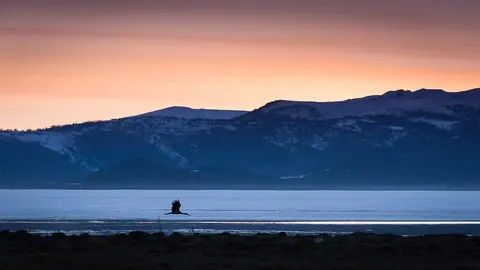
Tengiz is the salty, endorheic lake of the Korgalzhyn reserve, about 130 km from Astana, and a place to see flamingos. It holds one of the largest flamingo breeding colonies in Central Asia: an aerial count published in 2017 found 18,000 birds. Together with Naurzum, the reserve has been part of the UNESCO site Saryarka since 2008.
You cannot roam freely. Visits are only with a guide on the reserve’s routes from Korgalzhyn village, May to October. The Flamingo route is 155 km long. Whether the colony can be seen in a given year depends on water levels. See the Korgalzhyn reserve.
Kazakhstan’s lakes in November and winter
Most of the country’s lakes freeze, so from November the list changes from swimming and hiking to looking at ice. Only facts from the sections above:
| Lake | What November to March brings |
|---|---|
| Kaindy | frozen lake, icy gorge road; check the road in Saty, stay off the ice |
| Big Almaty Lake | still unfrozen in early November 2026; the road walk is under snow with avalanche risk later in winter |
| Issyk | the road may close in the avalanche period |
| Kapshagay | the reservoir freezes |
| Markakol | usually freezes from around 20 November |
| Beach lakes (Alakol, Zhasybay, Imantau) | off season until June |
For a winter trip from Almaty, the canyon and the ski resorts are easier bets than the lakes; see Kazakhstan in winter.
Which Kazakh lake suits your trip
| If you want | Go to | Keep in mind |
|---|---|---|
| Summer swimming | Kapshagay, Alakol, Imantau, Zhasybay | Kapshagay works as a day trip from Almaty; Alakol needs several days; month by month in where to swim |
| Mountain colour and photos | Kaindy, Kolsai, Big Almaty Lake | Water stays cold; Big Almaty Lake is now a 15 km walk |
| A view of Khan Tengri | Tuzkol, 70 km east of Kegen | A shallow salt lake; the peak shows only on a clear day |
| Birds | Tengiz in Korgalzhyn, the Tentek delta at Alakol | Tengiz only with a guide, May to October |
| Solitude and a long road | Markakol, Rakhmanov lake, Zhasylkol | Rough last sections; allow three or four days |
| Closest to Astana | Tengiz, Borovoe | Borovoe is calmer on weekdays |
| Closest to Almaty | Big Almaty Lake, Issyk, Kapshagay | Issyk’s road may close in the avalanche period |
Lakes near Almaty also appear in where to go from Almaty.
Before you go: fees, cold water and border areas
Most of these lakes sit inside national parks or reserves, which means entry fees, set routes and, in the east, border rules.
- Park fees are set in MCI by Order No. 232. Our fee calculator converts them to tenge for the current year.
- Mountain lakes stay cold even in August. Do not plan to swim at Kaindy or Kolsai.
- The Altai and the east are border areas. Check where you need a border-zone permit.
- For a packing and checking list, see what to check before visiting a park.
Rivers are covered separately under rivers of Kazakhstan, and lake birds under birdwatching in Kazakhstan.
Frequently asked questions
Which lakes can I visit near Almaty?
Where can you swim in Kazakhstan's lakes?
When is the season for lakes in Kazakhstan?
Where can I see flamingos in Kazakhstan?
Do I need a border-zone permit for the lakes?
What is the biggest and the most famous lake in Kazakhstan?
Does Lake Kaindy freeze in winter?
How far is Lake Kaindy from Almaty?
Sources
- Lake Kaindy — Wikipedia
- Kolsai Lakes — Wikipedia (Russian)
- Weekend route: Kolsai and Kaindy — Kolesa.kz, 26.06.2020
- Big Almaty Lake — Wikipedia (Russian)
- Big Almaty Lake in 2026 — AIR Press, 18.10.2026
- Issyk (lake) — Wikipedia (Russian)
- Is it legal to charge for visiting Lake Issyk — NUR.KZ, 18.08.2025
- Kapchagay Reservoir — Wikipedia (Russian)
- Balkhash — Wikipedia (Russian)
- Ile-Balkhash reserve — Wikipedia (Russian)
- Alakol — Wikipedia (Russian)
- Visitor centre opens in Zhongar-Alatau National Park — 24.kz, 16.07.2026
- Markakol — Wikipedia (Russian)
- Rakhmanov Springs — Ruwiki
- Borovoe (lake) — Wikipedia (Russian)
- Zerenda (lake) — Wikipedia (Russian)
- Zhasybay — Wikipedia (Russian)
- Shaitankol — Wikipedia (Russian)
- Korgalzhyn Nature Reserve — Wikipedia (Russian)
- Government Decree No. 356 (border zone)
- Order of the Minister of Ecology of Kazakhstan No. 232, 02.10.2024
- List of lakes of Kazakhstan — Wikipedia
- Big Almaty Lake: winter is coming — Zakon.kz, 02.11.2026 (in Russian)
- BAO road: park explains why the ban stays — Tengrinews, 18.11.2025 (in Russian)
- Kaindy road only partly paved — Kursiv, 21.07.2026 (in Russian)
- Lake Kaindy: history and how to get there — NUR.KZ, 04.04.2023 (in Russian)
- Kolsai Koldery national park: technical opening of the road to Lake Kaindy, 4 November 2026 (in Russian)
- Ministry of Ecology of Kazakhstan: second tiger, Amur, released into the wild, 2 November 2026 (in Russian)