
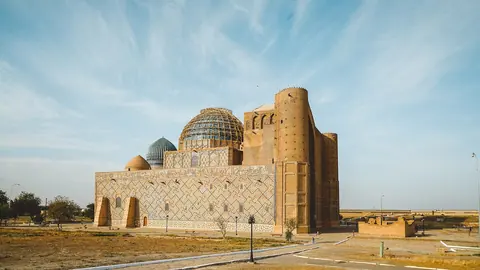


Turkistan, Kazakhstan, is known for the late-14th-century Mausoleum of Khoja Ahmed Yasawi, the country’s first UNESCO World Heritage Site (2003), and it makes a natural base for the medieval sites around it. Sauran, Otrar, Arystan Bab and Ukash Ata all lie between about 35 and 50 km in a straight line from the city. This page sorts those and the longer trips by distance, theme and season, so you can decide how many days to give the area.
Four sites within about 50 km make the core of any visit
The closest trips from Turkistan cluster tightly: a shrine to the north, a walled city on the plain, and a pair of sites around ancient Otrar. Together with the Yasawi Mausoleum itself, they cover the main reasons travellers come to this corner of Kazakhstan.
| Place | Straight line from Turkistan | What you see | Best months |
|---|---|---|---|
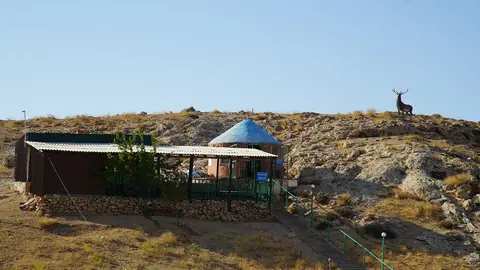
| Ukash Ata | about 35 km | Long tomb and a well 22–25 m deep | Apr–May, Sep–Oct |
| Sauran | about 46 km | Oval of mud-brick walls, 800 × 550 m | Apr–May, Sep–Oct |
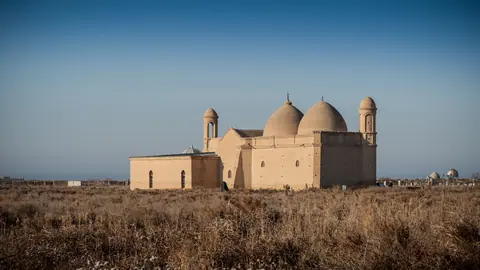
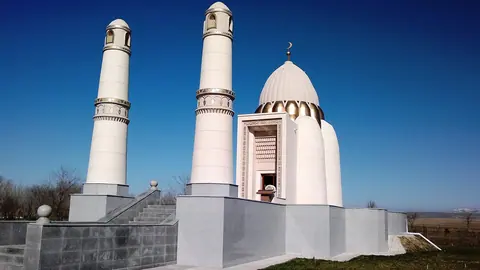
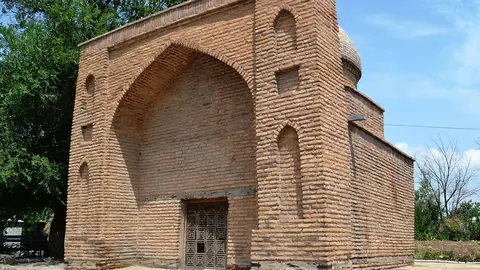
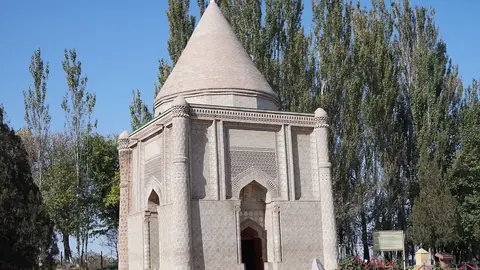
| Arystan Bab | about 50 km | Brick mausoleum and memorial mosque, about 35 × 12 m | Apr–May, Sep–Oct |
| Otrar | about 50 km | Excavated mound up to 18 m high | April and October |
The practical reading: if you have one full day after the city, Arystan Bab and Otrar sit next to each other, and Sauran is in the same general range. Distances differ slightly between pages: the Turkistan page gives Sauran as 40–45 km and Otrar as 57 km without saying whether those are road figures, while the place pages give 46 km and 50 km in a straight line. Treat all of them as rough, not as driving distances.
Pilgrims visit Arystan Bab before the Yasawi Mausoleum
By tradition, pilgrims go first to the Arystan Bab Mausoleum, the grave of the man legend calls Yasawi’s teacher, and only then to Turkistan. The building there was rebuilt in 1909 and has been protected since 1982.
If you want to follow that order, plan the Otrar side first and the city second. Ukash Ata adds another pilgrim layer: legend says only a person without sin pulls the bucket up full from its well. Further afield, Sairam on the edge of Shymkent holds the graves of Yasawi’s parents, about 166 km in a straight line from Turkistan, so the family story can stretch across a longer route.
These are active places of worship, not attractions built for visitors. Behave as you would at any shrine, and expect to share the space with families and pilgrims.
Otrar and Sauran show two different kinds of ruin
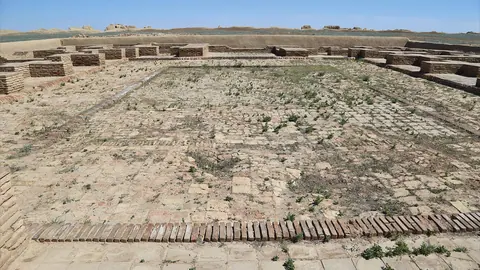
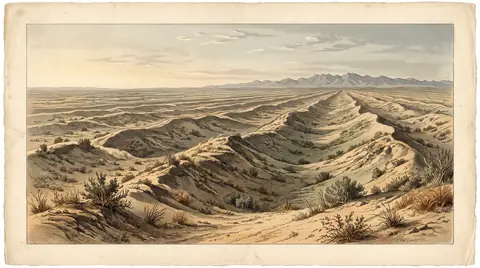
Sauran is the better choice for walls you can read as a city, Otrar for history and excavation. Sauran keeps its oval of eroded walls with gates, tower stumps and traces of a cathedral mosque; it was a caravan town and a seat of the White Horde.
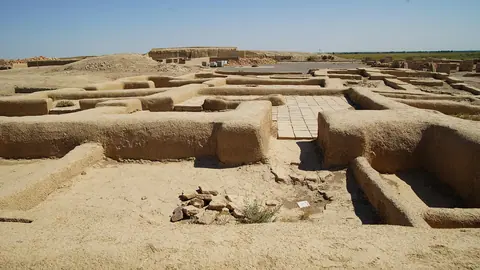
Otrar was one of the largest cities of medieval Central Asia until Genghis Khan’s army besieged it in 1219. What remains is a grassy mound up to 18 m high, excavated since 1969. Otrar is mostly a mound and excavated quarters rather than standing buildings. Both are open ruin sites, which matters in summer.
Longer trips across Turkistan Region and beyond
Past the 50 km ring, trips become overnight or long-day undertakings, and several lie closer to Shymkent or Taraz than to Turkistan. The table lists straight-line distances from Turkistan; real road distances will be longer.
| Place | Straight line from Turkistan | Type | Trip length on its page |
|---|---|---|---|
| Karatau Reserve | about 61 km | Mountains, wild argali | Weekend |
| Domalak Ana | about 124 km | Shrine, 12 m mausoleum | Day |
| Sairam | about 166 km | Ancient town, mausoleums | Day |
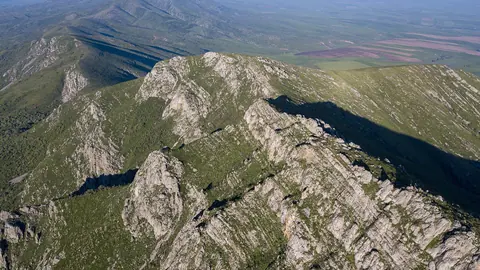
| Kazygurt | about 181 km | Limestone ridge, Noah’s Ark legend | Day |
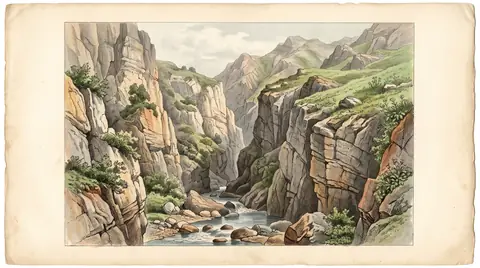
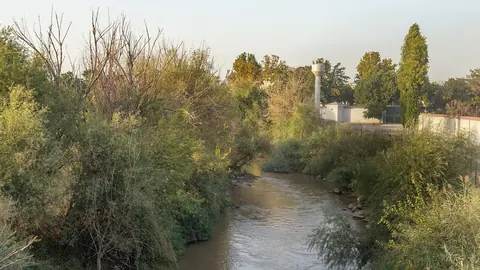
| Mashat Canyon | about 194 km | River gorge | Day |
| Saryagash | about 217 km | Hot mineral water spas | Long |
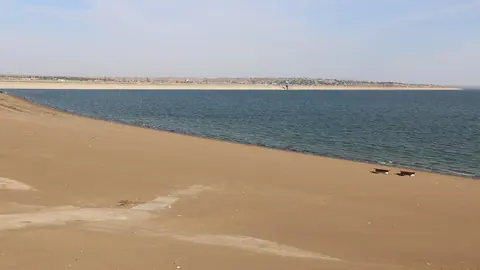
| Shardara | about 234 km | Large reservoir | Weekend |
| Aisha Bibi | about 246 km | Carved terracotta tomb | Day |
| Moiynkum | about 299 km | Sand desert | Weekend |
The day and weekend labels come from each place’s own page and assume a start from Shymkent or Taraz, not Turkistan. Karatau Reserve is the nearest nature option, but visitor access is something we could not confirm. For the Taraz group (Aisha Bibi, Karakhan, Tekturmas, ancient Taraz) it makes more sense to move base than to drive out and back.
When to go: April–May and September–October
Almost every site on this list rates spring and autumn as the best time, and July highs in Turkistan run at about +36 °C. Open ruins like Sauran and Otrar are hardest in that heat.
| Period | What it suits | What to expect |
|---|---|---|
| Dec–Feb | Saryagash spas; brief city visits | Most sites rated only possible; Karatau, Kazygurt, Mashat and Shardara rated off in mid-winter |
| Mar | City and nearby shrines | Conditions improving; sites rated good |
| Apr–May | Everything near Turkistan | Peak season for Sauran, Otrar, Arystan Bab, Ukash Ata |
| Jun–Aug | Mashat Canyon; early starts only for ruins | July highs about +36 °C in Turkistan |
| Sep–Oct | Ruins, shrines, Karatau, Moiynkum | Second peak season |
| Nov | Shrines, Arystan Bab, Saryagash | Falling back to possible for most |
Mashat Canyon is the one place whose summer rating stays reasonable through July and August, and Saryagash is the only one rated good in winter.
What is hard without a car or Russian
We could not confirm public transport, taxi options or road conditions to any of these sites. Most are rural ruins or shrines on the plain or in the Karatau foothills, and the site pages describe them as day or weekend trips by road, so assume you will need a hired driver or a car.
Opening hours and entry rules are also unconfirmed for the ruins and shrines. Karatau Reserve and Shardara, which sits on the Uzbek border, both carry an explicit warning to check access before going. If you cannot arrange transport, the Yasawi Mausoleum in the city itself is the one sight here that needs no extra planning.
- Public transport, taxis or shared cars from Turkistan to Sauran, Otrar, Arystan Bab and Ukash Ata
- Road distances and driving times, as only straight-line distances were available
- Opening hours, entry rules and any dress requirements at the shrines and ruins
- Visitor access and permit rules for Karatau Reserve
- Access near the Uzbek border at Shardara