


Trips from Shymkent split into three groups: shrines and hills on the city’s edge, the Silk Road ruins around Turkistan, and the Karakhanid tombs of Taraz. Most are heritage or pilgrimage sites, and nearly all are rated highest in April–May and September–October. A canyon, a spa town, a reservoir, a reserve and a desert add the nature side.
Seventeen trips compared at a glance
The table ranks every trip by straight-line distance from Shymkent, so read it as a guide to effort, not as road kilometres. The four places within about 65 km are marked as day trips, as are Otrar, Arystan Bab, Aisha Bibi and Turkistan at 120–151 km. From Ancient Taraz at about 157 km onward, the trips are marked as weekends.
| Place | Straight line from Shymkent | Type | Trip length | Peak months |
|---|---|---|---|---|
| Sairam | ~15 km | Mausoleums, old town | Day | May, Sep |
| Kazygurt | ~34 km | Ridge, holy sites | Day | May, Sep |
| Domalak Ana | ~60 km | Shrine | Day | Apr–May, Sep |
| Mashat Canyon | ~63 km | River gorge | Day | May–Jun, Sep |
| Saryagash | ~103 km | Thermal spa | Long | Apr–May, Sep–Oct |
| Otrar | ~120 km | Ruined city | Day | Apr, Oct |
| Arystan Bab | ~122 km | Mausoleum | Day | Apr–May, Sep–Oct |
| Aisha Bibi | ~143 km | Terracotta tomb | Day | May, Sep |
| Turkistan | ~151 km | UNESCO mausoleum | Day | Apr–May, Oct |
| Ancient Taraz | ~157 km | Buried city | Weekend | Apr–May, Sep–Oct |
| Karakhan | ~159 km | Rebuilt tomb | Weekend | Apr–May, Sep–Oct |
| Tekturmas | ~161 km | Hilltop shrine | Weekend | Apr–May, Sep–Oct |
| Karatau Reserve | ~168 km | Mountains, wildlife | Weekend | May, Sep |
| Ukash Ata | ~178 km | Well and shrine | Weekend | Apr–May, Sep–Oct |
| Shardara | ~183 km | Reservoir | Weekend | May, Sep |
| Sauran | ~198 km | Walled ruins | Weekend | Apr–May, Sep–Oct |
| Moiynkum | ~253 km | Sand desert | Weekend | Apr–May, Sep |
Close to the city: Sairam, Kazygurt, Domalak Ana and Mashat
Four trips sit within about 65 km in a straight line and suit a single day. Sairam is now a district of Shymkent, a mud-brick town linked by most researchers to medieval Isfijab, with mausoleums dated from the 9th to the 18th centuries, including the graves of Khoja Ahmed Yasawi’s parents.
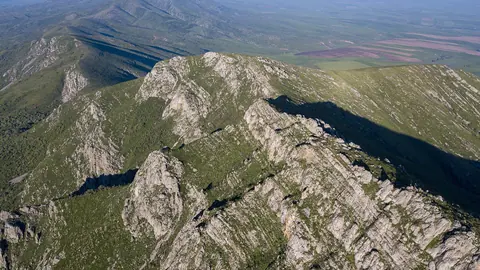
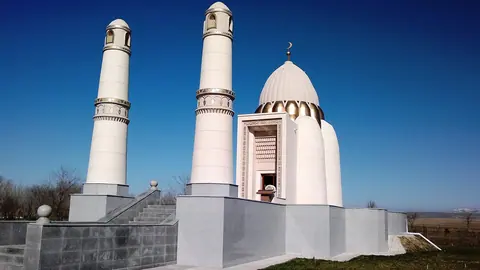
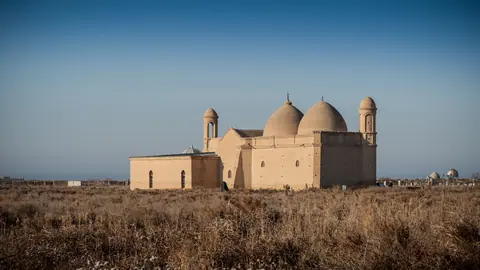
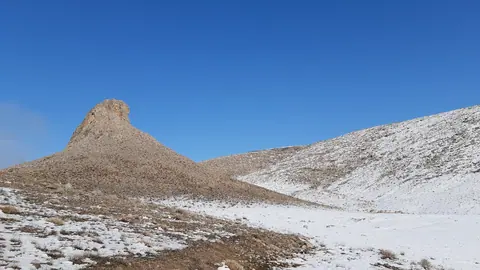
Kazygurt is a low limestone ridge with a summit of 1,768 m, where Kazakh legend places the resting spot of Noah’s Ark. Domalak Ana is a 12-metre domed mausoleum over a grave dated 1456, in rural Turkistan Region. Both are active pilgrimage sites, so dress and behave as you would at any shrine.
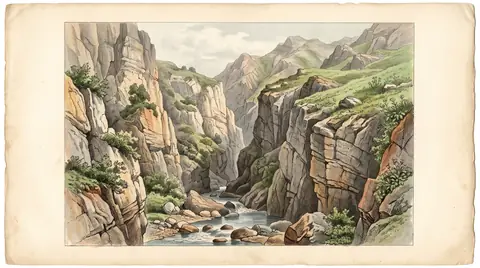
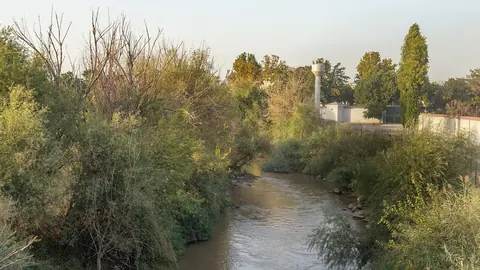
Mashat Canyon is the odd one out: a river gorge inside a 26,971 ha branch of the Sayram-Ugam National Park. Little is published about it, and it is the only nearby trip still rated best in June.
The Turkistan circuit: Yasawi, Otrar, Arystan Bab, Sauran and Ukash Ata
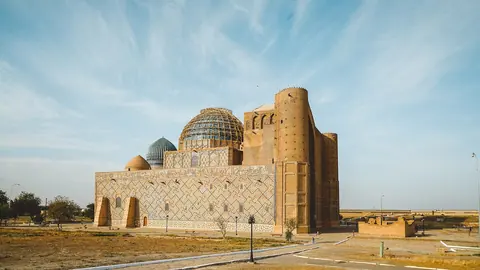
Turkistan is the centre of this group. The late-14th-century Mausoleum of Khoja Ahmed Yasawi, with an 18.2 m dome, became Kazakhstan’s first UNESCO World Heritage Site in 2003. Our pages give its distance from Shymkent as about 151 km in a straight line and, elsewhere, as 160 km, so treat it as roughly 150–160 km.
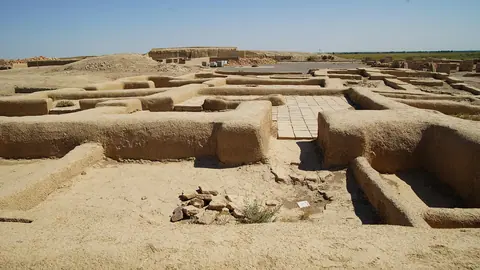
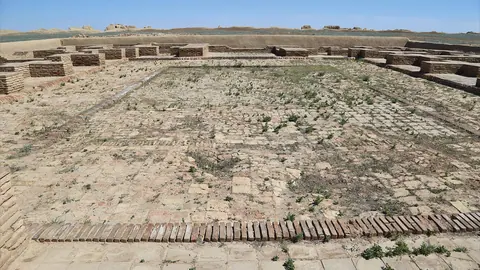
Around it lie four side trips. Otrar, besieged by Genghis Khan’s army in 1219, is now an excavated mound up to 18 m high; it is listed as 50 km or 57 km from Turkistan depending on the page. Arystan Bab, the tomb of the man legend calls Yasawi’s teacher, is where pilgrims traditionally stop before Turkistan. Sauran is an oval of mud-brick walls 800 × 550 m, and Ukash Ata is a shrine with a well about 22–25 m deep.
Otrar and Arystan Bab are the closest of these to Shymkent, at about 120 km in a straight line. Sauran and Ukash Ata lie 198 km and 178 km from Shymkent but only 46 km and about 35 km from Turkistan, so they make more sense from a base there.
The Taraz group: three tombs and a buried city
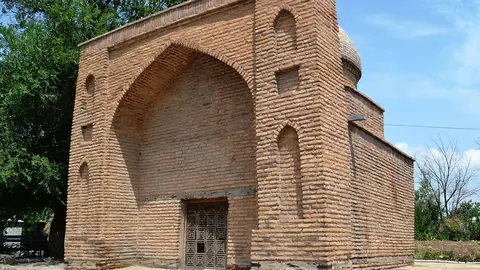
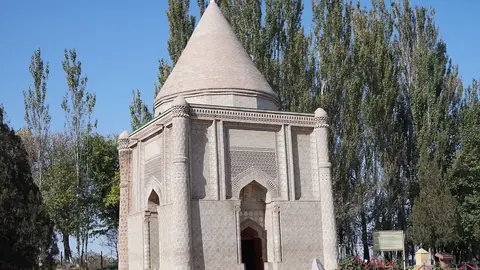
Taraz has four sites in or near the city, about 143–161 km in a straight line from Shymkent. Aisha Bibi, 15 km in a straight line from Taraz, is a 7.6 × 7.6 m tomb from the 11th–12th centuries faced with carved terracotta, still visited by newlyweds.
Know what you are seeing before you go. The Karakhan Mausoleum mostly dates from 1906, built partly with original bricks, and the Tekturmas tomb was built in 2001–2002 on an older site. Ancient Taraz lies under the city centre, a Karakhanid capital burnt by the Mongols in 1220. For its opening hours and entry, we could not confirm details.
Farther out: spa water, a reservoir, a reserve and a desert
These four need more planning than the heritage sites. Saryagash is a spa area on the Uzbek border whose hot mineral water, 37–50 °C, was struck in 1946 by geologists looking for oil; most sanatoriums are in Kokterek village, roughly 127–130 km from Shymkent.
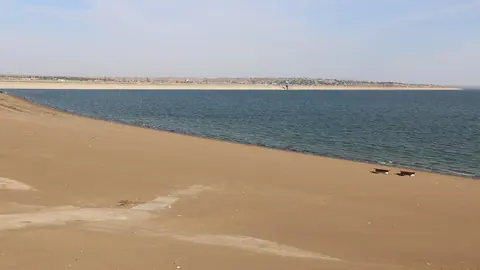
Shardara is Kazakhstan’s third-largest reservoir, about 80 km long, on the Uzbek border with few confirmed visitor services. Karatau Reserve protects 34,300 ha of ridge up to 2,176 m, home to the Karatau argali, but we could not confirm visitor access. Moiynkum is a 500 km belt of sand ridges up to 70 m high, with access details unconfirmed.
Shymkent weather and the trip calendar
Spring and autumn are the windows for almost every trip from Shymkent. April–May and September–October carry the top ratings across the heritage sites, while July and August drop to ‘possible’ at most of them; the Turkistan page gives July daytime highs of about +36 °C. Deep winter is off for Kazygurt, Mashat, Karatau and Shardara.
| Season | What works | What is hard |
|---|---|---|
| Dec–Feb | Saryagash spas, Sairam and Taraz sites, rated possible | Kazygurt, Mashat, Karatau, Shardara rated off |
| Mar–May | Everything; April and May are peak for ruins and shrines | Mashat rated good only from May |
| Jun–Aug | Mashat Canyon in June; Saryagash | Open ruins in heat around +36 °C at Turkistan |
| Sep–Oct | Peak for nearly all 17 trips | November ratings drop back |
Saryagash is the one trip rated good right through winter, which makes it the cold-month fallback.
Getting around without a car
We could not confirm buses, trains or road conditions to any of these places, and none of our pages lists transport schedules. The practical reading of the table is that Sairam is a city district and the Taraz tombs sit in or beside a large city, so they are the easiest to reach without your own vehicle. Mashat, Karatau, Shardara and Moiynkum are remote and lightly documented, so plan transport and access before committing.
- Train and bus schedules between Almaty, Shymkent, Turkistan and Taraz
- Road conditions and public transport to Mashat Canyon, Kazygurt and Domalak Ana
- Visitor access rules for Karatau Reserve
- Border-zone access at Shardara Reservoir
- Opening hours and entry rules at Ancient Taraz and the mausoleums