Where Kazakhstan hits −40°C: cold days in 20 cities over 35 years
Weather stations recorded −40 °C or lower in 9 of 20 Kazakh cities over 35 winters, most often in Oskemen, Semey and Pavlodar. The south barely reaches −20 °C. For travel, wind with snow matters as much as the thermometer, and Karaganda gets the most of it.
Verified: 2026-11
Kazakhstan reaches −40 °C in the north and east, and not every winter. Between 1991 and 2025, weather stations recorded −40 °C or lower in 9 of 20 regional capitals, most often in Oskemen (12 of 18 winters), Semey (10 of 35) and Pavlodar (8 of 35). The south barely knows −20 °C: Shymkent and Turkistan see it on fewer than two days a winter. If you are planning a winter trip, latitude decides almost everything.
ERA5 (models=era5) via Open-Meteo, charyn.kz calculation
In ERA5 reanalysis, the four coldest cities average 9–10 days a winter at −30 °C or below and Astana about 7. Almaty, Shymkent, Turkistan and Aktau did not get a single such day in 35 winters. ERA5 smooths cold extremes, and stations usually log one and a half to two times as many such days (table below), so treat the chart as a ranking rather than an exact count.
Where Kazakhstan gets to −40°C: stations against reanalysis
Stations recorded −40 °C or lower in Oskemen, Semey, Pavlodar, Astana, Kokshetau, Petropavl, Karaganda, Kostanay and Aktobe. The lowest reading in the records is −46 °C in Pavlodar on 16 December 2012.
ERA5 (models=era5) via Open-Meteo, charyn.kz calculation; stations usually read lower, by up to 6 °C
The lowest ERA5 minimum over 35 winters. Eight northern and eastern cities drop below −41 °C; four cities in the south and on the Caspian never reach −28 °C. Stations read lower almost everywhere; their values are in the table.
| City | Station distance from centre | Station low, °C | Winters with −40 °C at the station | Days down to −30 °C a winter: station | Same, ERA5 |
|---|---|---|---|---|---|
| Pavlodar | 13 km | −46.0 (16 Dec 2012) | 8 of 35 | 13.5 | 9.4 |
| Oskemen | 13 km | −45.0 (19 Jan 2010) | 12 of 18 | 22.4 | 11.3 |
| Karaganda | 22 km | −44.0 (2 Jan 2006) | 4 of 35 | 11.2 | 5.4 |
| Astana | 17 km | −43.0 (16 Dec 2012) | 5 of 35 | 12.4 | 6.8 |
| Petropavl | 11 km | −43.0 (24 Jan 2006) | 5 of 21 | 11.4 | 9.2 |
| Kostanay | 5 km | −43.0 (24 Jan 2006) | 3 of 35 | 8.3 | 4.7 |
| Kokshetau | 1 km | −42.6 (28 Nov 1998) | 5 of 35 | 7.1 | 6.5 |
| Semey | 5 km | −42.6 (7 Jan 2001) | 10 of 35 | 10.8 | 9.3 |
| Aktobe | 5 km | −41.5 (30 Dec 2002) | 1 of 35 | 4.6 | 1.6 |
| Zhezkazgan | 1 km | −39.9 (15 Feb 1994) | 0 of 35 | 5.0 | 2.8 |
| Oral (Uralsk) | 15 km | −38.7 (12 Feb 1994) | 0 of 35 | 3.7 | 1.5 |
| Atyrau | 1 km | −36.0 (25 Jan 2006) | 0 of 33 | 0.3 | 0.2 |
| Taraz | 7 km | −36.0 (13 Dec 2023) | 0 of 18 | 0.8 | 0.7 |
| Turkistan | 5 km | −31.0 (17 Feb 1994) | 0 of 35 | 0.1 | 0 |
| Almaty | 1 km | −30.0 (10 Dec 2001) | 0 of 29 | 0.1 | 0 |
| Shymkent | 10 km | −27.0 (21 Jan 2008) | 0 of 28 | 0 | 0 |
| Aktau | 10 km | −23.0 (14 Feb 1994) | 0 of 28 | 0 | 0 |
NOAA GSOD stations within 30 km of the city centre, daily minimum from synoptic reports. The ERA5 column covers the same winters as the station, using only years with at least 330 days of reports. Oskemen and Taraz station records start in 2007, Petropavl in 2005. Taldykorgan and Konaev have no station within 30 km and the Kyzylorda record is too short, so they are not shown.
Oskemen stands out. ERA5 gives it −40 °C in 5 winters of 35; the station logged it in 12 of 18, with twice as many −30 °C days. The city sits in the Irtysh valley, and a reanalysis grid cell averages about 25 km of terrain. We did not investigate the cause, but for valley cities the station figure is the safer one to plan with.
Month by month: January is the core of the cold
Severe cold clusters from December to February, peaking in January almost everywhere. In November and March, −30 °C is rare even in the north, less than one day a month.
| City | Nov | Dec | Jan | Feb | Mar | Winter |
|---|---|---|---|---|---|---|
| Oskemen | 0.7 | 2.1 | 3.8 | 2.7 | 0.4 | 9.7 |
| Pavlodar | 0.7 | 1.8 | 4.6 | 2.2 | 0.1 | 9.4 |
| Semey | 0.7 | 1.5 | 4.3 | 2.5 | 0.2 | 9.2 |
| Petropavl | 0.4 | 2.5 | 3.7 | 2.0 | 0.1 | 8.7 |
| Astana | 0.6 | 1.5 | 2.7 | 1.8 | 0.3 | 6.9 |
| Kokshetau | 0.3 | 1.6 | 2.6 | 1.5 | 0.2 | 6.2 |
| Karaganda | 0.5 | 1.3 | 1.8 | 1.5 | 0.2 | 5.3 |
| Kostanay | 0.1 | 1.4 | 1.8 | 1.5 | 0.1 | 4.9 |
| Zhezkazgan | 0 | 0.6 | 1.1 | 0.9 | 0 | 2.6 |
| Aktobe | 0.1 | 0.3 | 0.5 | 0.7 | 0 | 1.6 |
| Oral (Uralsk) | 0 | 0.3 | 0.6 | 0.6 | 0 | 1.5 |
Average days a month with a minimum of −30 °C or lower, ERA5, 35 winters. Southern and western cities with fewer than 0.7 such days a winter are left out. For a January trip to the north, expect 3–5 days at −30 °C in an average month and up to three weeks in a severe one.
Average January minimums in ERA5: Pavlodar −20.4 °C, Petropavl −19.8, Oskemen and Semey −19.4, Astana −18.9, Karaganda −17.9, Almaty −8.1, Shymkent −4.7, Aktau −2.8. North and south differ by about 15 °C in January.
No two winters alike
The number of cold days swings more from winter to winter than the average changes over decades. In Semey, ERA5 gives 0 days at −30 °C in 2006/07 and 31 days in 2009/10.
ERA5 (models=era5) via Open-Meteo, charyn.kz calculation
The coldest winter in the series for the country as a whole was 2009/10: the 20 cities together logged 209 days at −30 °C, three times the average of 68. Next came 2005/06 (153) and 2010/11 (136). Many record lows in ERA5 and at stations fall in two cold waves: 18–25 January 2006 and 16–17 December 2012.
Whether frosts are declining depends on how you cut the series. Northern cities have more −30 °C days in the second half (2009/10–2025/26) than in the first (1991/92–2008/09): 11.2 against 8.3 in Oskemen, 7.7 against 5.9 in Astana. The whole gain comes from three severe winters in a row, 2009/10–2011/12. Without them Oskemen averages 8.1, the same as the first half. Almaty is the opposite case: days down to −15 °C there have halved, see Almaty in winter by numbers.
For travel, wind matters as much as temperature
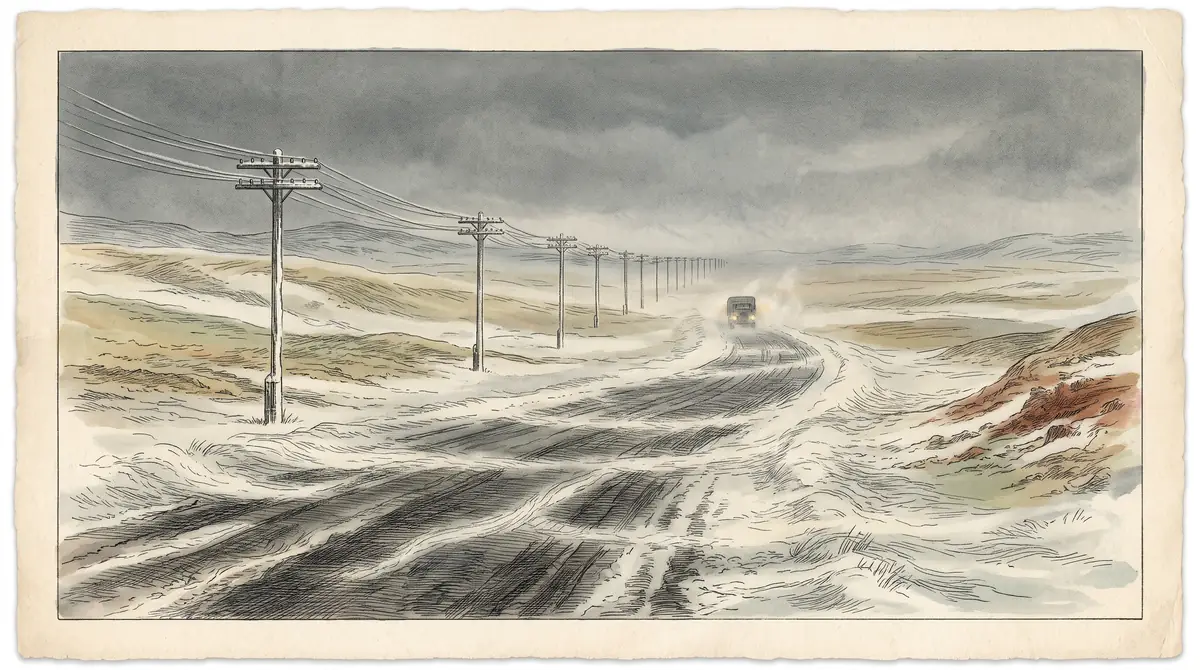
Days with at least 1 cm of snowfall and wind of 40 km/h or more are most frequent in Karaganda, about 7 a winter, then Aktobe (4.4) and Astana (2.1). Oskemen and Semey, the coldest by thermometer, average less than one.
ERA5 (models=era5) via Open-Meteo, 1991/92–2025/26, charyn.kz calculation
This is a rough stand-in for a blizzard built from daily ERA5 values, not a blizzard as meteorologists define it, and grid-cell wind is usually weaker than on an open highway. Days with a mean temperature of −15 °C or lower and wind of 30 km/h or more are also most common in Karaganda (4.8 a winter), Aktobe (3.5) and Pavlodar (2.6). On such days the cold feels harsher than the thermometer shows. We found no statistics on weather-related road closures, so we did not link these numbers to them.
What this means for a trip:
- North and centre in January: dress for −30 °C and leave slack in travel plans. For long intercity legs, compare the road with trains in Kazakhstan.
- The south is mild. Shymkent, Turkistan and Almaty rarely see −20 °C, which makes winter city trips in the south easier. Ideas for the season: Kazakhstan in winter.
- Mountains are a separate story. Altitude and avalanches change everything; see winter in the mountains.
For month-by-month weather in the two largest cities, see Astana weather and Almaty weather.
A documentary on winter roads in Kazakhstan, published in October 2026. The year and places of filming are not stated, so treat it as an impression rather than a report on current conditions.
How we calculated
Reanalysis. Daily minimum and mean temperature, maximum 10 m wind and snowfall from ERA5 through the Open-Meteo archive with an explicit models=era5, for the centre coordinates of 20 cities, 1 July 1991 to 30 June 2026. Winters run July to June, giving 35 winters (1991/92–2025/26). Open-Meteo adjusts temperature to the point’s elevation using a digital elevation model. Thresholds are inclusive: −20, −30, −35 and −40 °C.
Stations. From the NOAA ISD station list we took the nearest active station within 30 km of each city. Daily minimums from NOAA GSOD were converted from Fahrenheit. Winter averages use only years with at least 330 days of reports. Station record lows are searched over all days from 1991 to August 2025, where the download ends.
Blizzard proxy: a day with 1 cm or more of snowfall and maximum wind of 40 km/h or more in ERA5. It is meant for comparing cities with each other.
Search interest, Ubersuggest, 9 November 2026: kazakhstan in winter about 2,400 searches a month worldwide, kazakhstan winter temperature 140, coldest place in kazakhstan 50 with a December–January peak of 110.
Scripts and raw API responses are kept with the project. The per-city result is in the CSV file.
What we don’t know
How to cite
Link to this page with: “charyn.kz, from ERA5 (Open-Meteo) and NOAA GSOD stations, November 2026”. If you quote days at −30 °C, say whether the number is from reanalysis or a station, because they can differ twofold. Licence CC BY 4.0.
Frequently asked questions
What is the coldest place in Kazakhstan?
How cold is Kazakhstan in winter?
Does Astana really get to −40°C?
What is the coldest month in Kazakhstan?
Is southern Kazakhstan cold in winter?
Are Kazakh winters getting warmer?
Can I download the data?
Sources
Read also
 Almaty in winter by numbers: smog, snow and cold days
 Direct flights to Kazakhstan: where they come from and how long they take
 Earthquakes in Almaty: 50 years of seismic data around the city
 Hotel occupancy in Kazakhstan by region and resort area, 2025–2026
 How foreign visitors spend money in Kazakhstan: survey data by country
 Kazakhstan vs Uzbekistan vs Kyrgyzstan: a data comparison for travellers