Money in Kazakhstan: currency, cards, cash
The national currency is the tenge. Cards work almost everywhere in cities; out on the steppe you need cash.
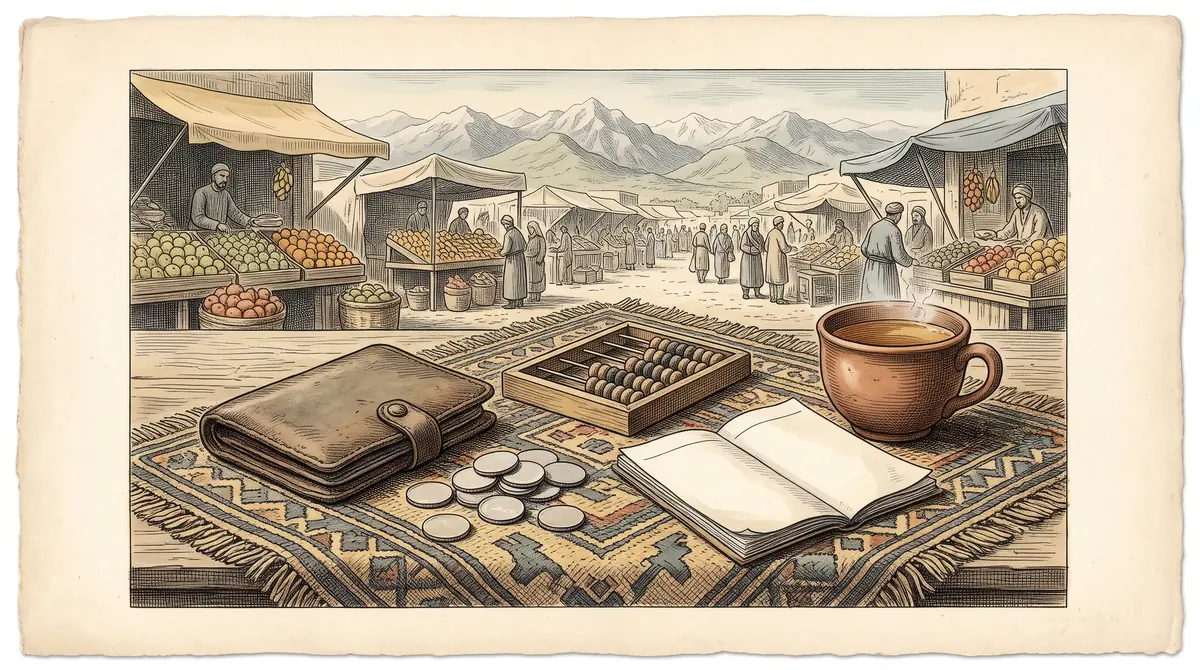
Kazakhstan’s currency is the tenge, written with the sign ₸ and coded KZT internationally. Budget every payment in tenge, in Almaty and Astana as much as on the steppe. Cards work well in the big cities, but for a national park such as Charyn you should carry cash.
What currency does Kazakhstan use: the tenge (₸, KZT)
The national currency of the Republic of Kazakhstan is the tenge. Its sign is ₸ and its international code is KZT.
| What you need to know | Answer |
|---|---|
| Name | Tenge |
| Sign | ₸ |
| Currency code | KZT |
| Coins | 1, 2, 5, 10, 20, 50, 100, ≈ $0.44 (200 ₸) |
| Banknotes, current series | 500, 1,000, 2,000, 5,000, 10,000, ≈ $44 (20,000 ₸) |
| Currency of Almaty and of Astana | Tenge, the same as the rest of the country |
For a traveller the point is simple: prices, receipts and park fees are all in tenge. Plan to arrive with tenge or a way to get it. Do not expect to pay in rupees, dirhams, pounds or any other currency: the currency law (Article 6) bans foreign-currency transactions between residents, with listed exceptions, so local sellers work in tenge.
The National Bank says coins must be accepted at face value for all kinds of payment. Since 25 December 2025 it has also been issuing 500-tenge notes in a new Saka Style series, so you may see two designs of the same note. We could not confirm whether the older 200-tenge note is still in everyday use, because National Bank notices from different years list different sets. When you leave, you may take out foreign cash worth up to USD 10,000 per person, and not more even with a declaration (Presidential Decree No. 830); this and other export rules are in what to buy in Kazakhstan.
Cards work in Almaty and Astana, less so outside them
In Almaty, Astana and other large cities, card payment is well established. Shops and cafes take cards, and so do taxis and public transport.
Outside the cities the picture changes. The further you get from infrastructure, the more likely it is that you will need cash.
| Where you are | Cards | Cash |
|---|---|---|
| Almaty, Astana, other large cities | Widely accepted in shops, cafes, taxis, public transport | Useful as a backup |
| Smaller places away from infrastructure | Less reliable the further you go | Increasingly needed |
| National park checkpoint | Not confirmed | Bring it |
A drive into the steppe with only a card is a risk.
For a national park trip, bring cash
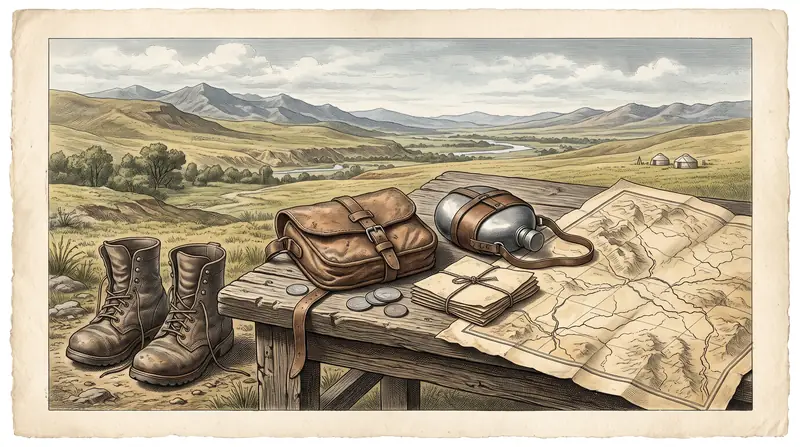
The advice for a national park is unambiguous: bring cash. Entry is paid at the checkpoint when you arrive, and that is not a place where you want to discover your card is useless.
Until this is confirmed, treat the checkpoint as cash-only and carry enough tenge for entry and the car fee for your whole group.
How much cash to bring for a day trip to Charyn
For two people driving to Charyn for the day, work out the total in the calculator. Entry and the car fee are set in MCI; fuel and food depend on you.
| Item | Amount |
|---|---|
| Entry, 2 people | 0.4 MCI (≈ $3.84 / 1,730 ₸) |
| Car | 0.7 MCI (≈ $6.73 / 3,027.5 ₸) |
| Fuel, ~400 km | depends on your car and the pump price |
| Food brought along | your choice |
Fuel is the largest and most variable line. The range depends mostly on your car. Entry and the car fee are the part you will pay at the checkpoint, which is why that share at least should be in cash. The full breakdown with caveats is on the prices page. For what foreign visitors spend on a whole trip, see the survey of visitor spending: half of it goes on getting to Kazakhstan.
Why park entry prices change every January
Park tariffs are set in MCI units, so the tenge price changes automatically each January when the unit is revised. A figure you read last year may already be out of date.
The tariffs come from an order of the Ministry of Ecology and Natural Resources dated 2 October 2024. How the unit works is explained on the MCI page.
Converting rupees, dirhams, pounds and other currencies to tenge
We do not publish exchange rates for the tenge against the Indian rupee, UAE dirham, Saudi riyal or pound. The same goes for the Singapore, Australian and Canadian dollars, the peso and any other currency. Rates move too fast for a guide page to stay accurate, so check a live rate the day you travel. The National Bank of Kazakhstan publishes official rates every working day; an exchange office or your card issuer will apply its own.
In practice this means two checks before you fly: whether your own bank card will work in Kazakhstan, and what it charges for foreign payments and cash withdrawals.
Frequently asked questions
What is the currency of Kazakhstan?
Do I need cash for a national park?
What money do they use in Kazakhstan?
Can I pay in US dollars or euros in Kazakhstan?
What is the Kazakhstan currency code?
Sources
- National Bank of Kazakhstan: circulation of tenge coins (in Russian)
- National Bank of Kazakhstan: issue of the 20,000 tenge banknote (in Russian)
- National Bank of Kazakhstan: 500 tenge banknotes of the Saka Style series (in Russian)
- Law of the Republic of Kazakhstan No. 167-VI on currency regulation and control, Article 6 (Russian text)
- National Bank of Kazakhstan: official exchange rates
- Order of the Ministry of Ecology and Natural Resources of 2 October 2024 — protected area tariffs
Read also
 The MCI: the figure behind most prices in Kazakhstan
 SIM cards and eSIM in Kazakhstan: biometrics, IMEI, operators
 What to check before visiting a national park
 Entrance tariffs for every protected area in Kazakhstan
 Fines in Kazakhstan: traffic penalties in MCI, with article numbers
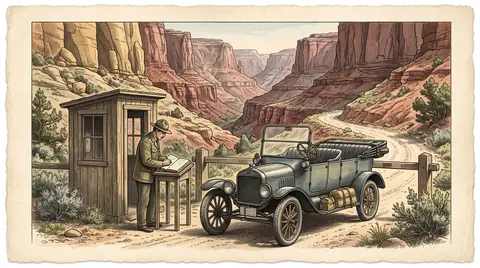 Kazakhstan national park fee calculator