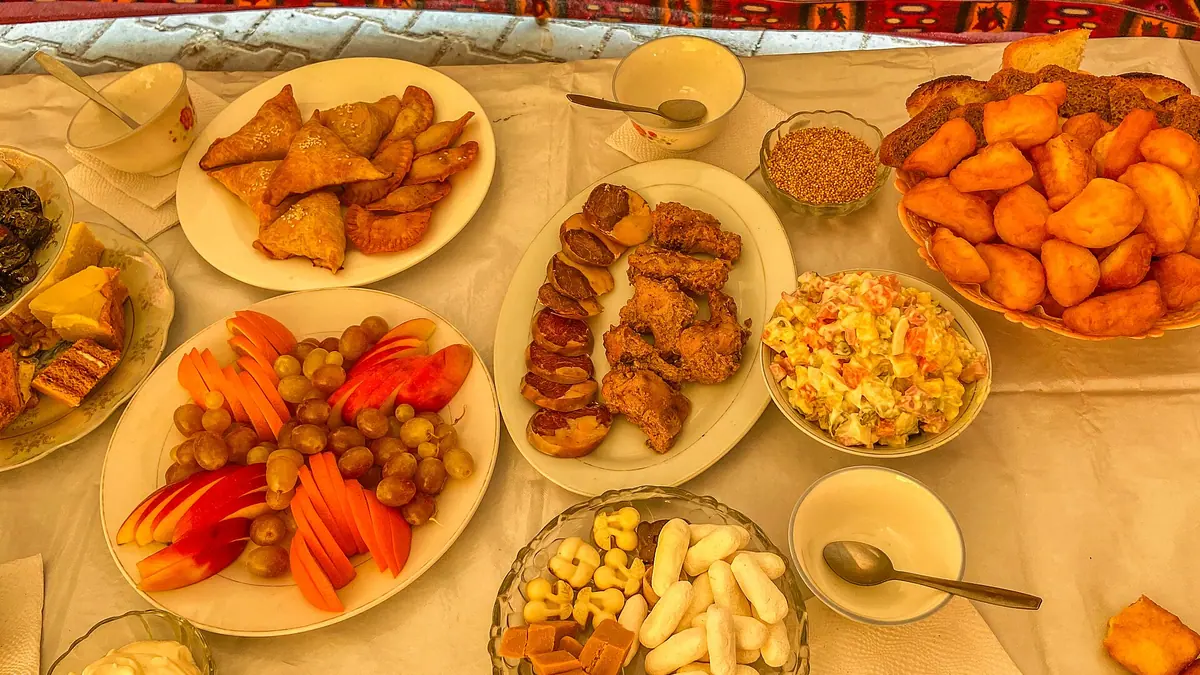
Kazakhstan food in photos
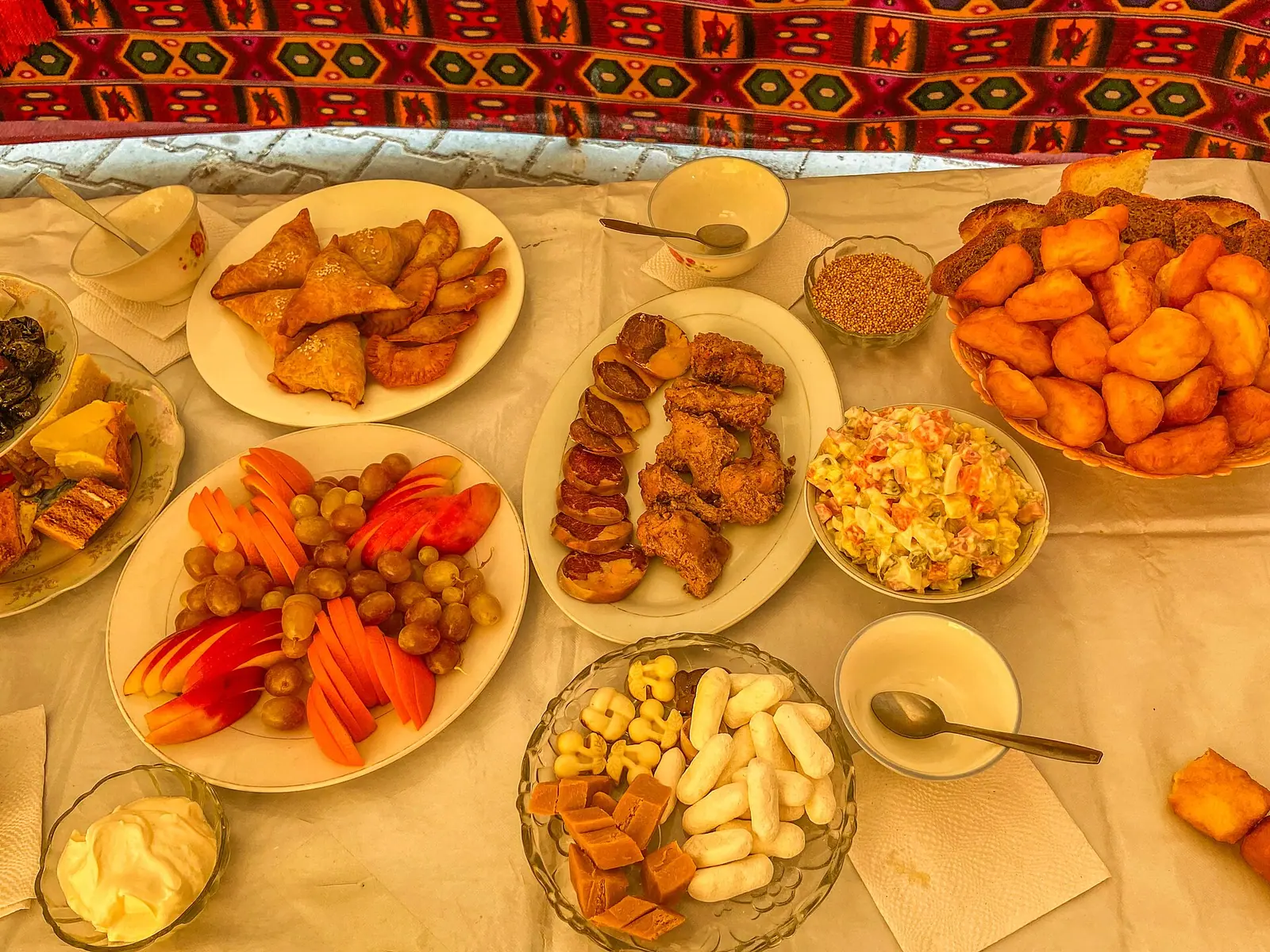
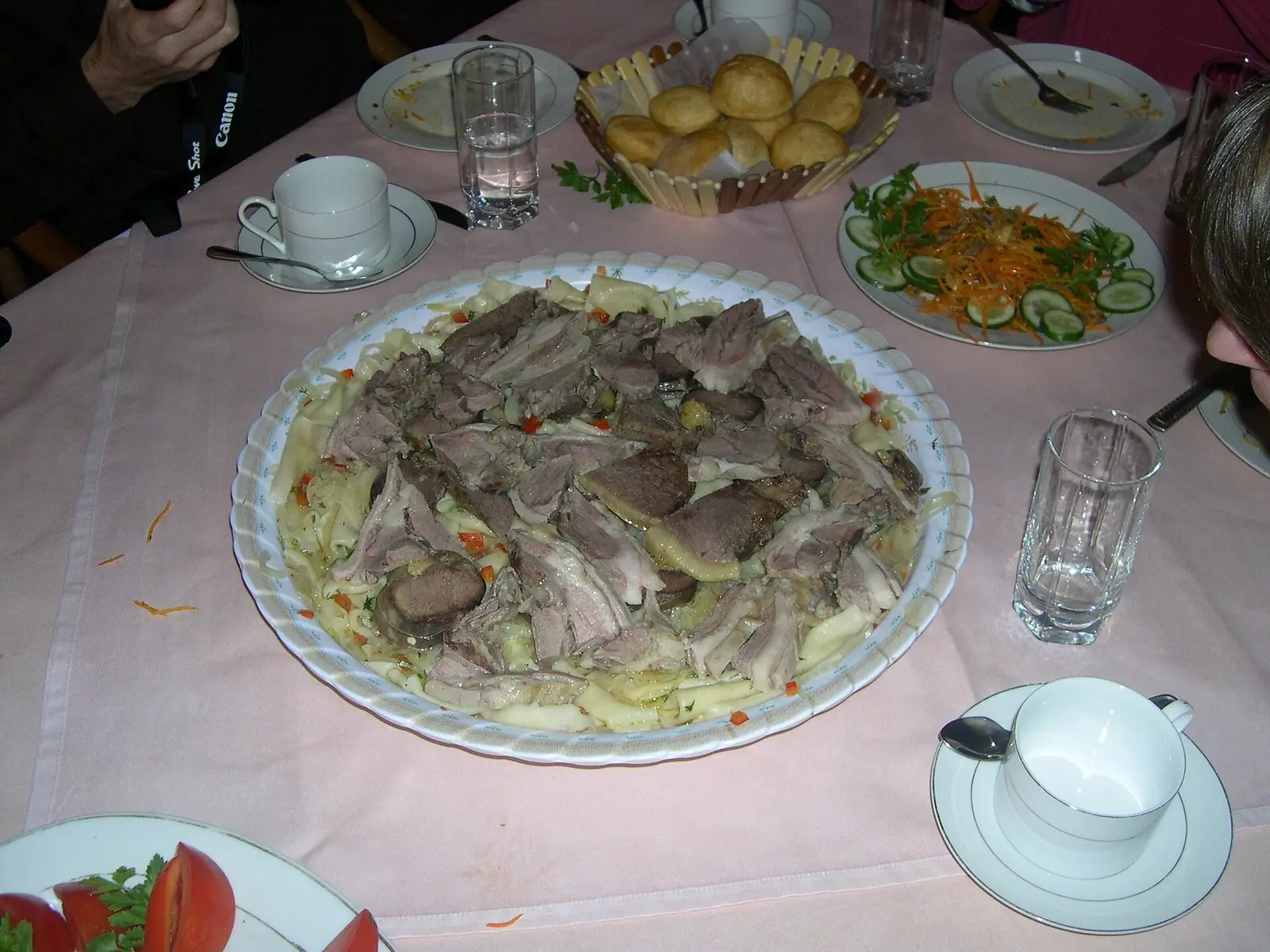
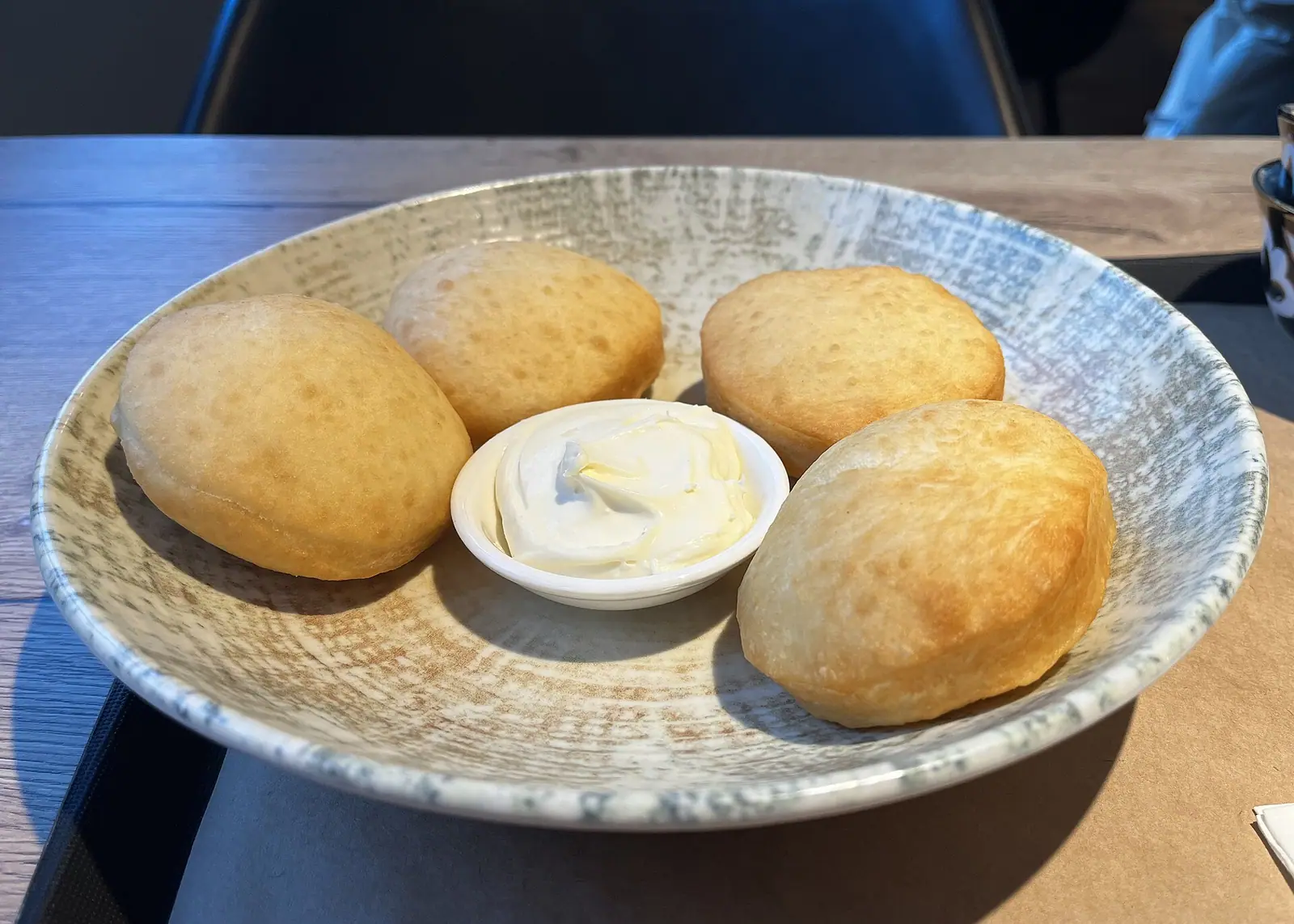
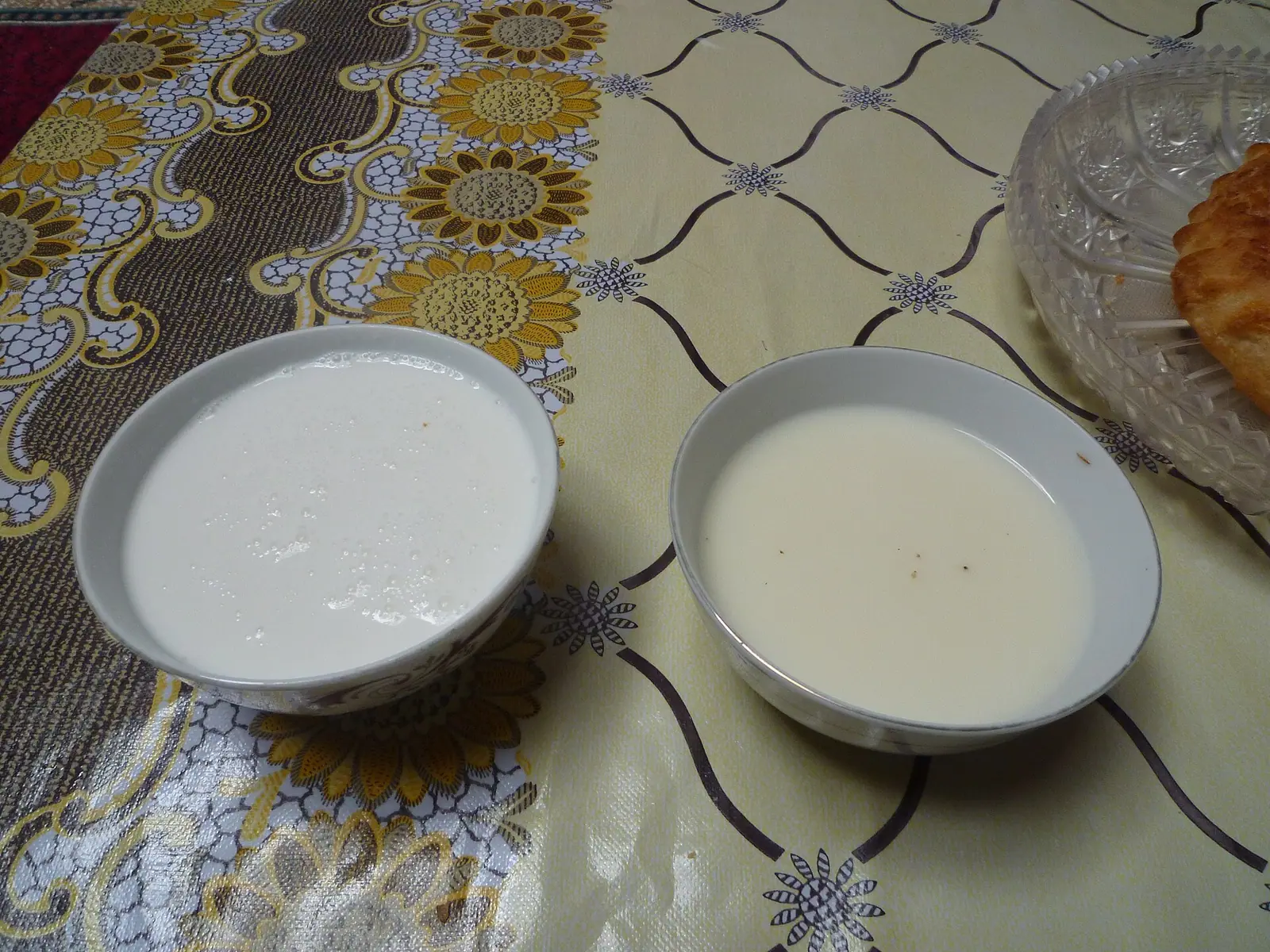
Real photos by travellers (Pexels, Unsplash, Wikimedia Commons); author and licence are given in each caption.
Kazakhstan food comes from a herding past: boiled meat, sour milk and fried bread, salted and dried to last. Order beshbarmak for the national dish, kazy if you want to try horse, and baursak with tea. Vegetarians will struggle, and raw dairy is the one real risk. The table below is the short menu to keep on your phone.
Traditional Kazakhstan food in one table
These are the Kazakh national dishes you are most likely to meet, with the Cyrillic you will see. Spelling in Latin letters varies a lot, so showing the Cyrillic often works better.
| On the menu | In Cyrillic | What it is | Worth knowing |
|---|---|---|---|
| Beshbarmak, et | бешбармак, ет | Boiled meat on thin sheets of boiled dough | National dish; recipes differ by region |
| Sorpa | сорпа | Meat broth in a bowl | Often comes with beshbarmak |
| Kazy | қазы | Horse meat sausage | Boiled and served sliced |
| Shuzhuk | шұжық | Horse meat sausage | Listed beside kazy among horse dishes |
| Kuyrdak | қуырдақ | Roast of offal (heart, liver, kidneys) with onion | Wikipedia calls it another national dish |
| Palau | палау | Rice with meat, carrot and onion | Kazakh take on pilaf |
| Manty | мәнті | Steamed dumplings with spiced lamb or beef | Served with butter, sour cream or onion sauce |
| Samsa | самса | Pastry with a meat filling | Easy snack |
| Baursak | бауырсақ | Fried dough balls | Goes with tea |
| Shelpek | шелпек | Fried flat cake | Also made in memory of ancestors |
| Kurt | құрт | Dry, salty balls of sour milk | Dried, so it keeps |
| Nauryz kozhe | наурыз көже | Soup of seven ingredients | Made for the spring holiday Nauryz |
The sources add a practical point: traditional cooking leans on boiling, and meat often comes in large pieces. Expect a filling meat dish.
Beshbarmak, and how it gets served
This dish is the most widely known Kazakh food, and Wikipedia treats it as the national dish of Kazakhstan. The name means five fingers, from eating by hand. Wikipedia also records a dispute over whether that name is authentic, and Russian Wikipedia gives et, simply “meat”, as the Kazakh word.
At a home or a celebration the serving has rules. The host cuts and hands out meat in order of the guests’ standing, and elders and honoured guests receive the prime cuts. If that happens to you, take what you are given and let the host lead. Other table customs, from the seat of honour to tea and the sheep’s head, are in our guide to Kazakh culture and customs.
For anyone looking up Kazakh food recipes, the method is simple: boil the meat, cook thin dough in the broth, then top with meat and onion sauce. We publish no exact recipe because we have not found one from a source we would rely on.
Horse meat: what to expect
Horse is part of traditional Kazakh food. Wikipedia counts four animals in the cuisine (horses, camels, cows and sheep), with horse the main festive meat, and sheep and cow more common every day.
Three things are useful to know:
- Sausage is the easy way in. A platter of sliced horse meat is a traditional starter.
- It is often on the table anyway. Beshbarmak may use horse or mutton, so ask if it matters to you. The word for horse meat in Russian is “konina”.
- It is not compulsory. Russian Wikipedia says horse is now eaten less often than beef and mutton.
You can see it sold in the Green Bazaar in Almaty: Wikivoyage illustrates its food section with horse sausage being made there.
What to drink, and the one risk to take seriously
Tea is everywhere and is a cheap order alongside food. The fermented drinks are stronger than they look.
| Drink | What it is | Alcohol or taste |
|---|---|---|
| Kumis (қымыз) | Fermented mare’s milk | Up to 6% alcohol; tart and sour |
| Shubat (шұбат) | Fermented camel’s milk | Sour |
| Ayran (айран) | Sour milk | Sour, drunk year-round |
| Tea | Often strong | Commonly served with food |
The cost of a mistake here is a real illness. The CDC names unpasteurized milk and dairy as a route for brucellosis, and its advice is plain: if you are not sure a dairy product is pasteurized, skip it. This is general advice and the CDC does not single out Kazakhstan, but it applies to home-made kumis and market cheese when you cannot tell how they were made.
For water, Australia’s Smartraveller advises boiled or bottled water in rural areas. More on this is in our medicine and water guide.
Eating as a vegetarian
Expect difficulty, and plan around it. Wikivoyage warns that a dish without visible meat is very likely to be cooked in meat stock. It suggests buying from markets and cooking yourself, and looking for Korean-style salads at bazaars.
Some Kazakh eateries will make a meat-free meal if you ask in Russian. A useful phrase to show on your phone: «без мяса и без мясного бульона» (no meat and no meat broth). Dairy, bread and fried dough are the easiest local items. Baursak and shelpek contain no meat in the descriptions we read, though we could not check the fat used for frying.
Where to try it in Almaty and beyond
Markets are the easiest place to start without a booking or menu problem. We do not name restaurants here, because this guide does not recommend businesses.
- Almaty markets. The Green Bazaar sells spices, ready food and fresh produce, which makes it the simple answer for food in Almaty. Its own page says what is known about hours.
- Cheap local canteens. Wikivoyage says Almaty has plenty of inexpensive Kazakh places that serve shashlik, soup and salad. Menus in English are rare outside some popular spots in Almaty, so keep the table above handy.
- Turkistan. Wikivoyage recommends local kurt from the main bazaar, covered in our Turkistan guide. We found no Kazakh ban on taking kurt out; the limit is your destination’s customs rules, as explained in what to buy in Kazakhstan.
- In a yurt or a home. Staying in a yurt in Kazakhstan may include meals, but ask when booking.
What we could not confirm
- Reliable dated prices for a typical meal: no source with a date, so no figure here
- Which restaurants currently serve horse or kumis, and where kumis is pasteurized
- Differences in food between Astana and Almaty beyond what is here: we found no source on that
- The state of city tap water from an official source
Frequently asked questions
What is the national dish of Kazakhstan?
Do people in Kazakhstan really eat horse?
What is kurt?
Is Kazakh food halal?
How much does food cost in Kazakhstan?
Sources
Read also
 Almaty to Issyk-Kul: routes via Korday or Kegen, distance and border
 Kazakh culture and customs: what visitors should know
 Kazakhstan border crossings: which ones foreigners can use
 Kazakhstan time zone: one zone, UTC+5, since 1 March 2024
 What to buy in Kazakhstan: souvenirs and export rules
 Accessible nature in Kazakhstan: wheelchairs, strollers and older travellers