Zharkent Mosque, a Chinese-style mosque on Kazakhstan's eastern edge: when to go, month by month
- January: possible
- February: possible
- March: possible
- April: good
- May: best time
- June: good
- July: possible
- August: good
- September: best time
- October: good
- November: possible
- December: possible
May and September have mild days around 25 °C, July averages about 31.5 °C and winter days sit near freezing.
Zharkent Mosque, a Chinese-style mosque on Kazakhstan's eastern edge: why go
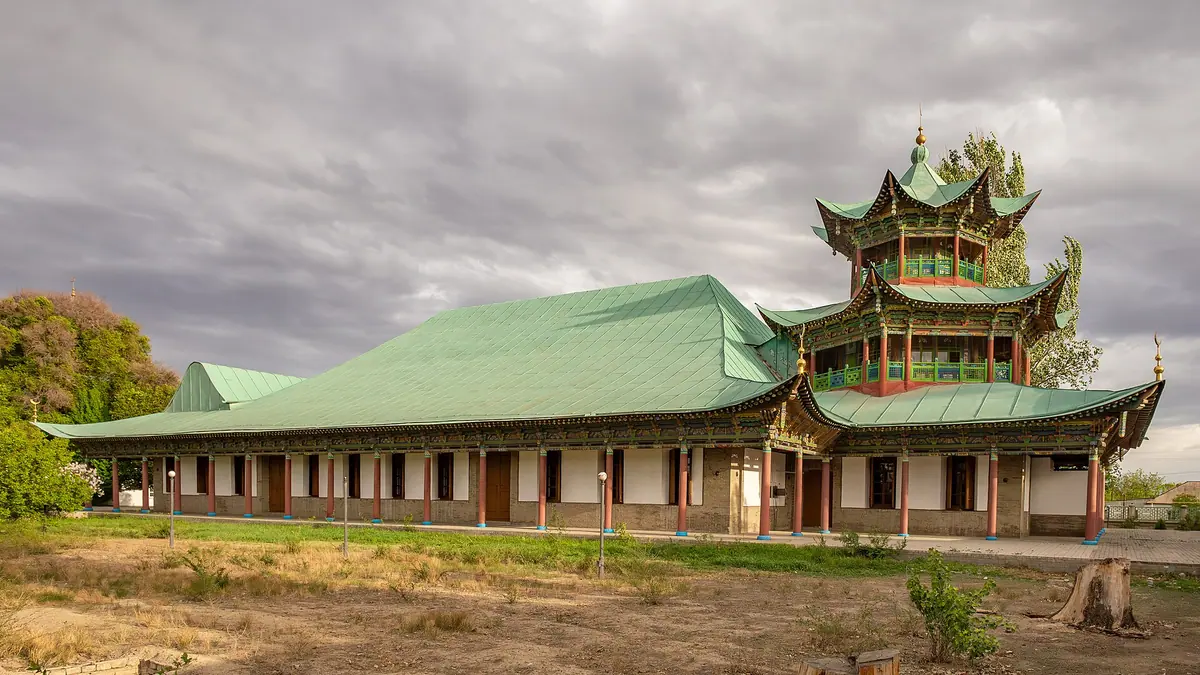
Zharkent Mosque's upturned roof
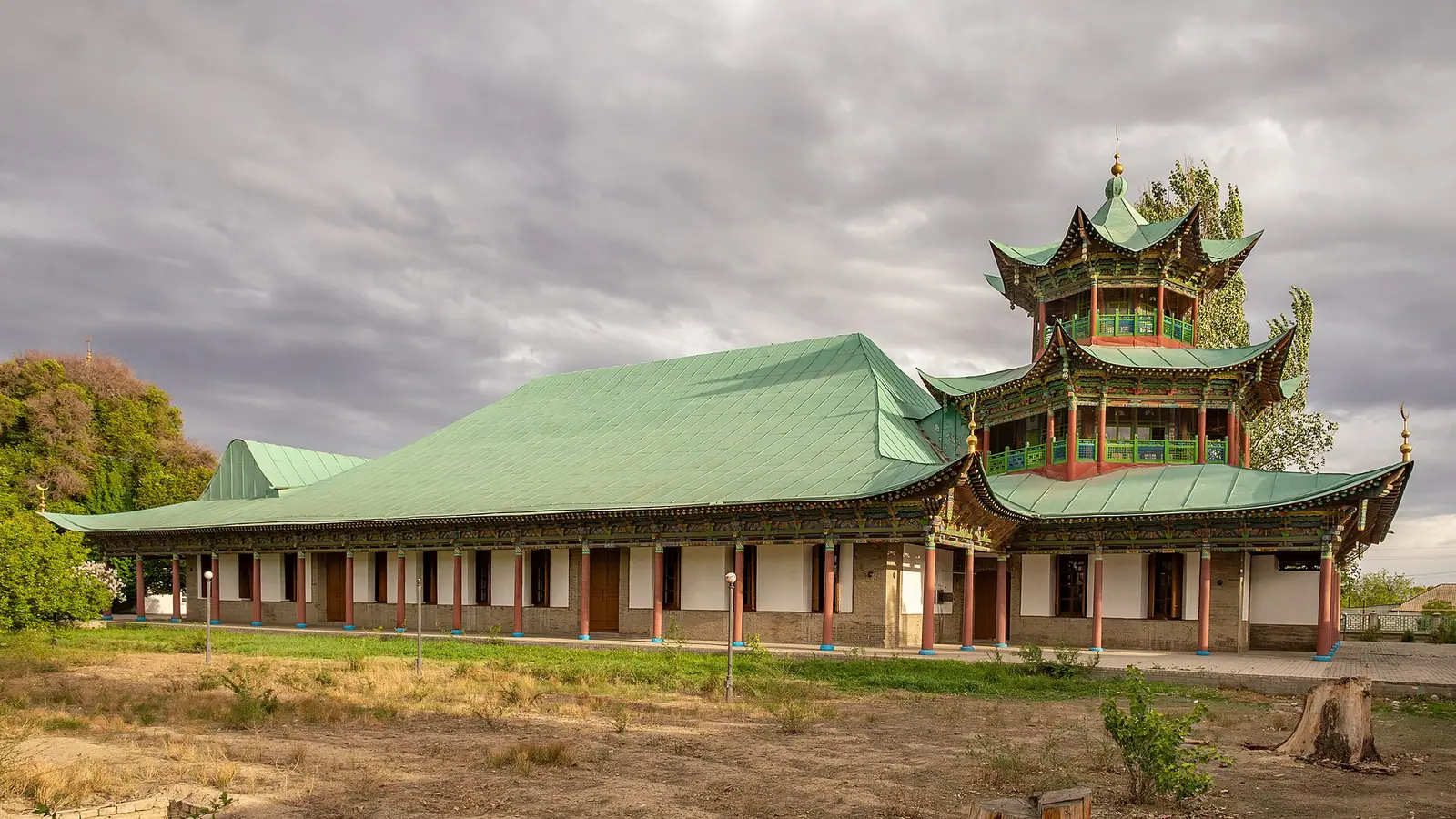
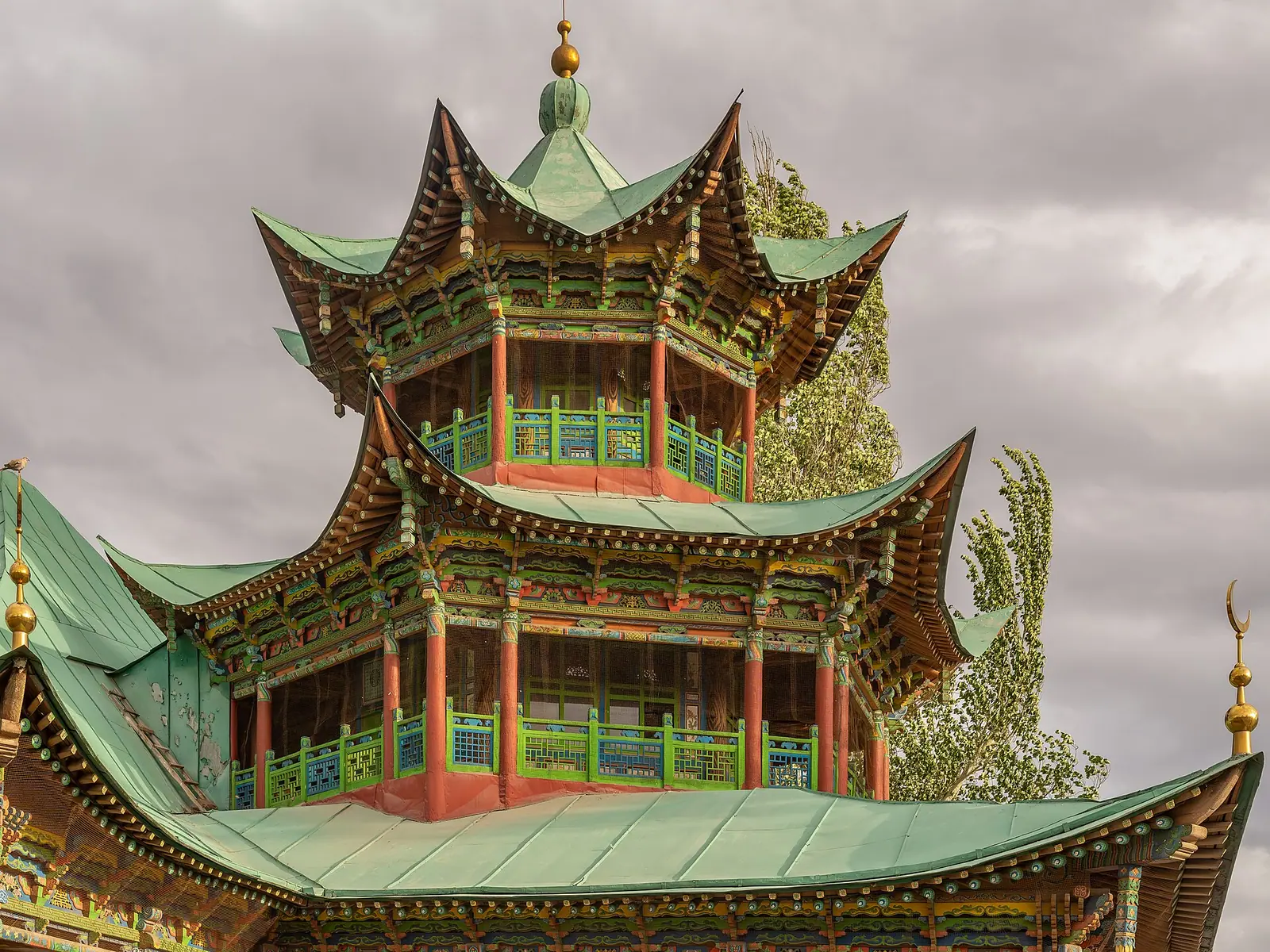
The soaring roof with eaves curved upwards comes from Chinese temple building, set on a Central Asian mosque plan with a 19 m minaret.
From granary to museum
In Soviet times the mosque served as a warehouse, granary, barracks, cinema and teahouse before restoration in 1975–1978 and a museum in 1978.
A long trip east from Almaty
Zharkent is about 270 km from Almaty in a straight line; the Zharkent-Arasan springs lie about 25 km away and Charyn about 112 km.
Mild May and September in Zharkent
Average daytime highs are near 25 °C in May and September, against about 31.5 °C in July and around 0 °C in January.
Birds and fish in a mosque
Among the plant motifs and Arabic script of the painted interior are images of birds, fish and animals, including fantastic creatures.
Zharkent Mosque, a Chinese-style mosque on Kazakhstan's eastern edge in photos
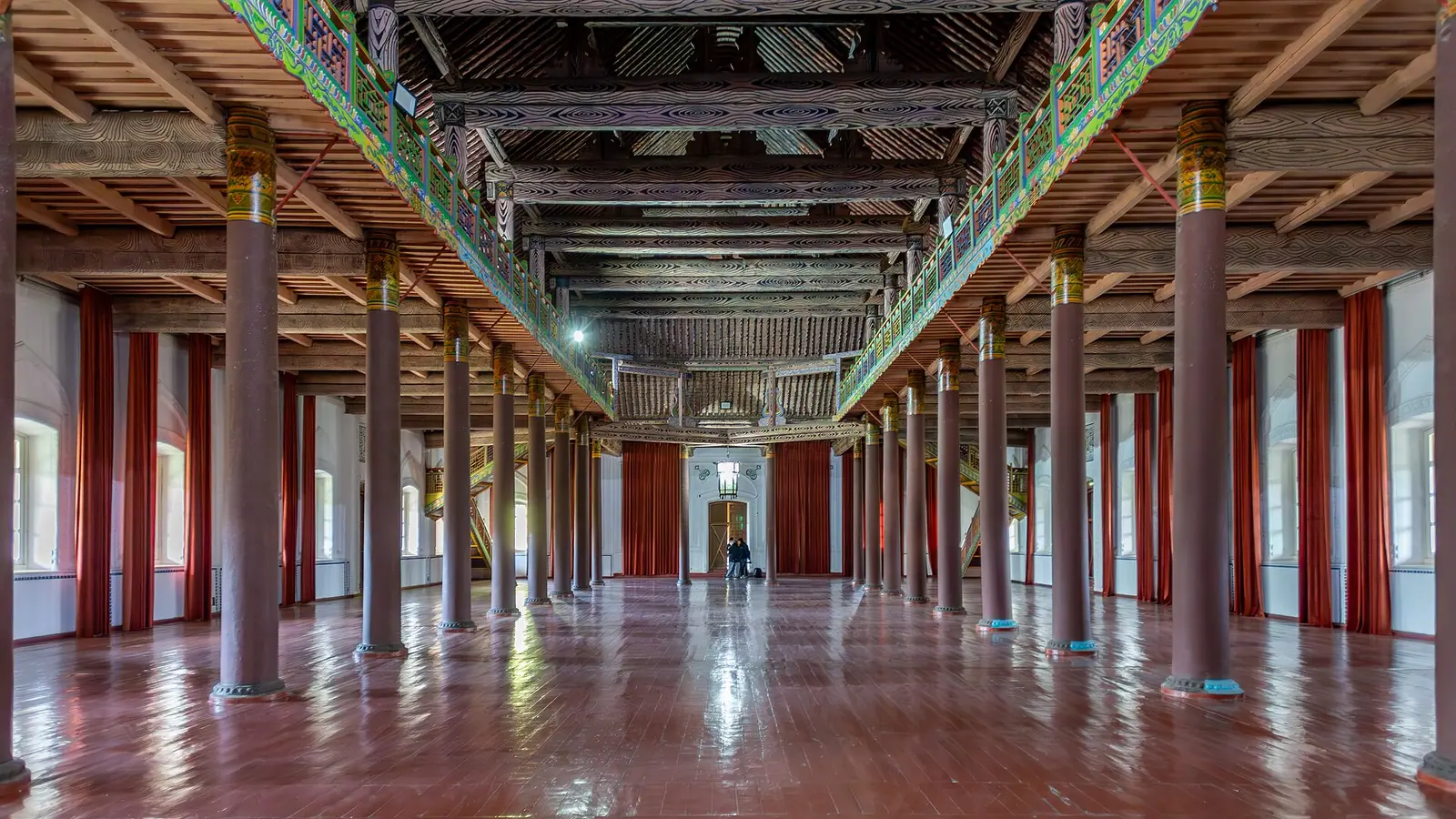
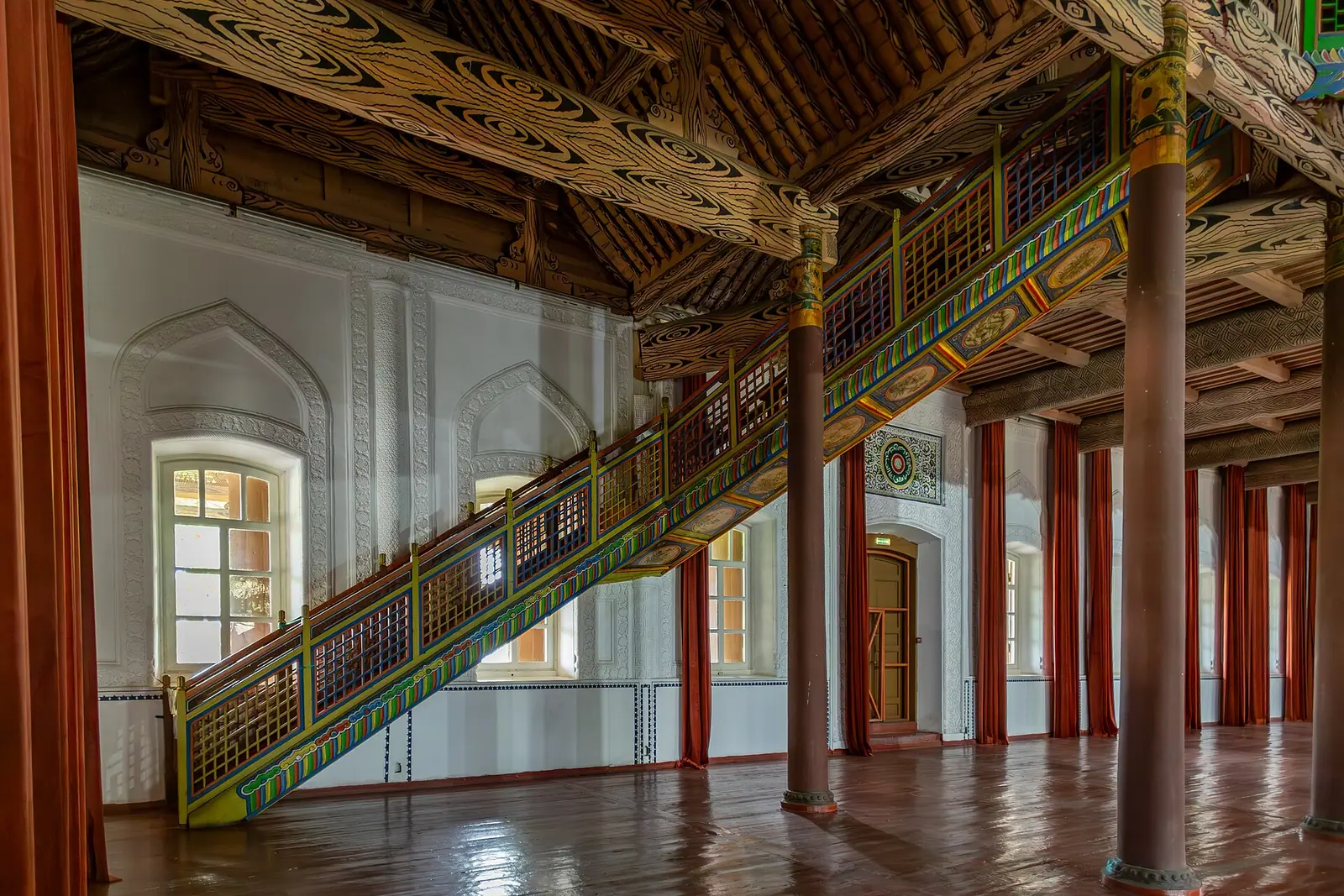
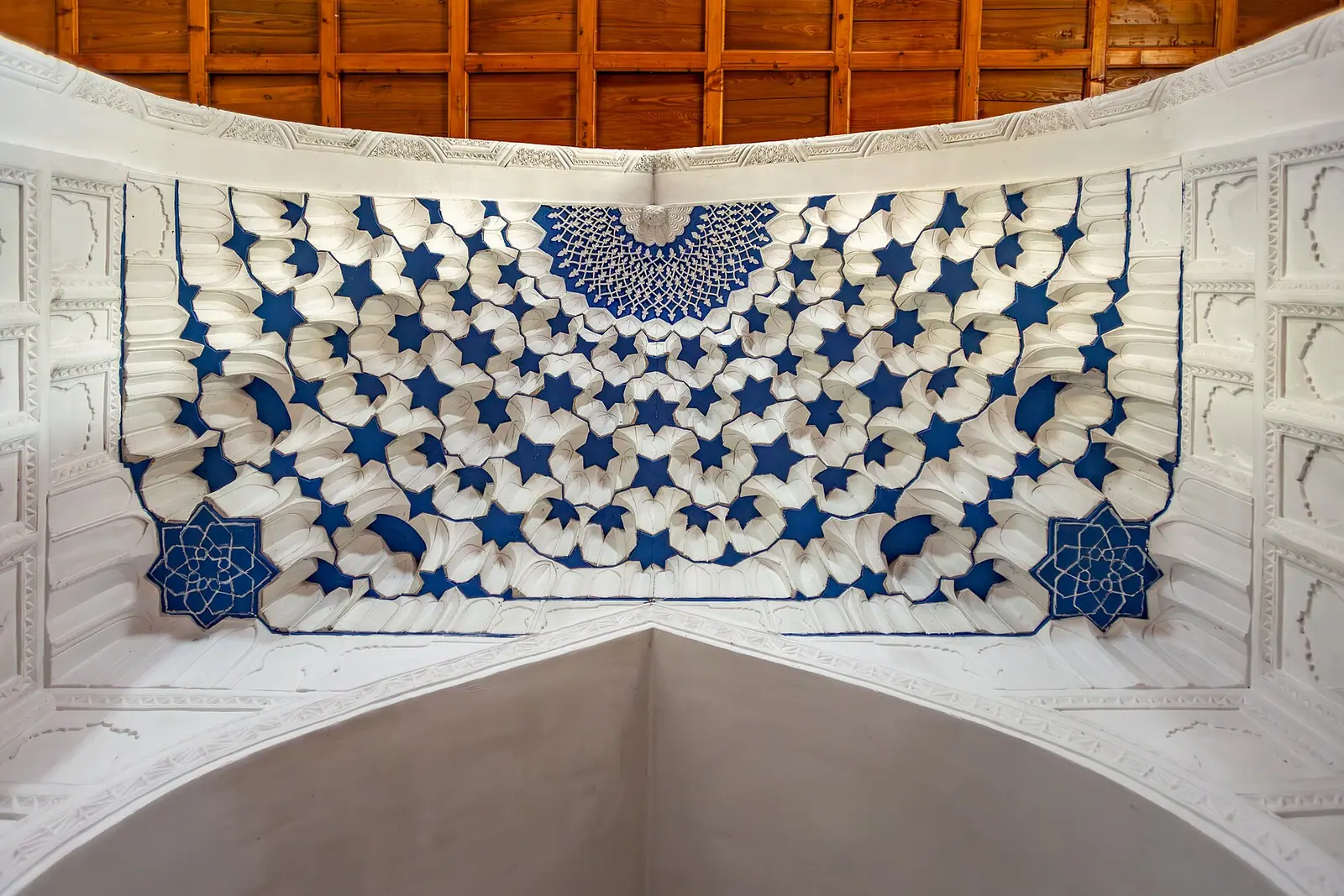
Real photos by travellers (Pexels, Unsplash, Wikimedia Commons); author and licence are given in each caption.
Zharkent Mosque is a timber mosque completed in 1895 in the town of Zharkent, in Kazakhstan’s Zhetysu region, designed by a Chinese architect and built with Uyghur craftsmen. It looks more like a Buddhist temple than a Central Asian mosque, and that blend is the reason to come. Zharkent lies about 270 km in a straight line from Almaty, so for most visitors it is a long day trip or part of a route east.
What makes Zharkent Mosque different
The mosque is in the Central Asian style, with elements of a Buddhist temple and Chinese influence in the roof. The roof has eaves curved upwards at the ends, and the minaret is 19 m high and ringed by 52 columns. Inside, the main hall is covered in wood carving and polychrome painting: plant motifs, Arabic script, Uyghur ornament and, less expected in a mosque, images of birds, fish and animals, some of them fantastic.
The structure itself is the second point of interest. The frame is formed by 122 wooden posts tied by beams, and no nails were used in joining the columns and other wooden parts. The 52 gallery columns that ring the building are made of Tian Shan spruce.
| Feature | Figure |
|---|---|
| Footprint | 28 × 54 m |
| Height of mosque | 14.5 m |
| Height of minaret | 19 m |
| Gallery columns | 52, Tian Shan spruce |
| Wooden posts in the frame | 122 |
| Floors | 2 |
| Stone boundary wall | 2.3 m high, gates on the south and north |
| Roof | tin |
These numbers tell you the scale: this is a compact complex, not a vast one.
Who built it, and what happened to it
The mosque was a community project. In 1887 the merchant Vali Akhun Yuldashev proposed a new mosque to Zharkent’s Muslim community, made the first contribution and organised donations. The Chinese master Hon Pike, also called Mukan, led the design and decoration, helped by Uyghur craftsmen including Hassan Imanov, Tair Ismailov and Nasretdin Kary. A legend recorded in Wikipedia says he worked without pay because he had long wanted to build a mosque in Chinese style and could not get permission at home.
| Years | Event |
|---|---|
| 1887 | Proposal at a community meeting |
| 1892–1895 | Main mosque and portal with tower built |
| 1903–1905 | Small mosque, madrasah and wall added |
| 1910 | Strong earthquake: both decorative towers fall, domes crack |
| Soviet period | Used as warehouse, granary, border guard barracks, cinema and teahouse |
| 1975–1978 | Restoration |
| 24 March 1978 | Architectural and art museum opened by government order |
| 1982 | State protection as a monument of republican significance |
| 2001–2004 | Roof and main portal reconstructed |
The dates for the second building phase differ slightly: the Russian and English Wikipedia give 1903–1905, the Kazakh Wikipedia 1902–1905. The roof and main portal were reconstructed in 2001–2004.
How the complex is laid out
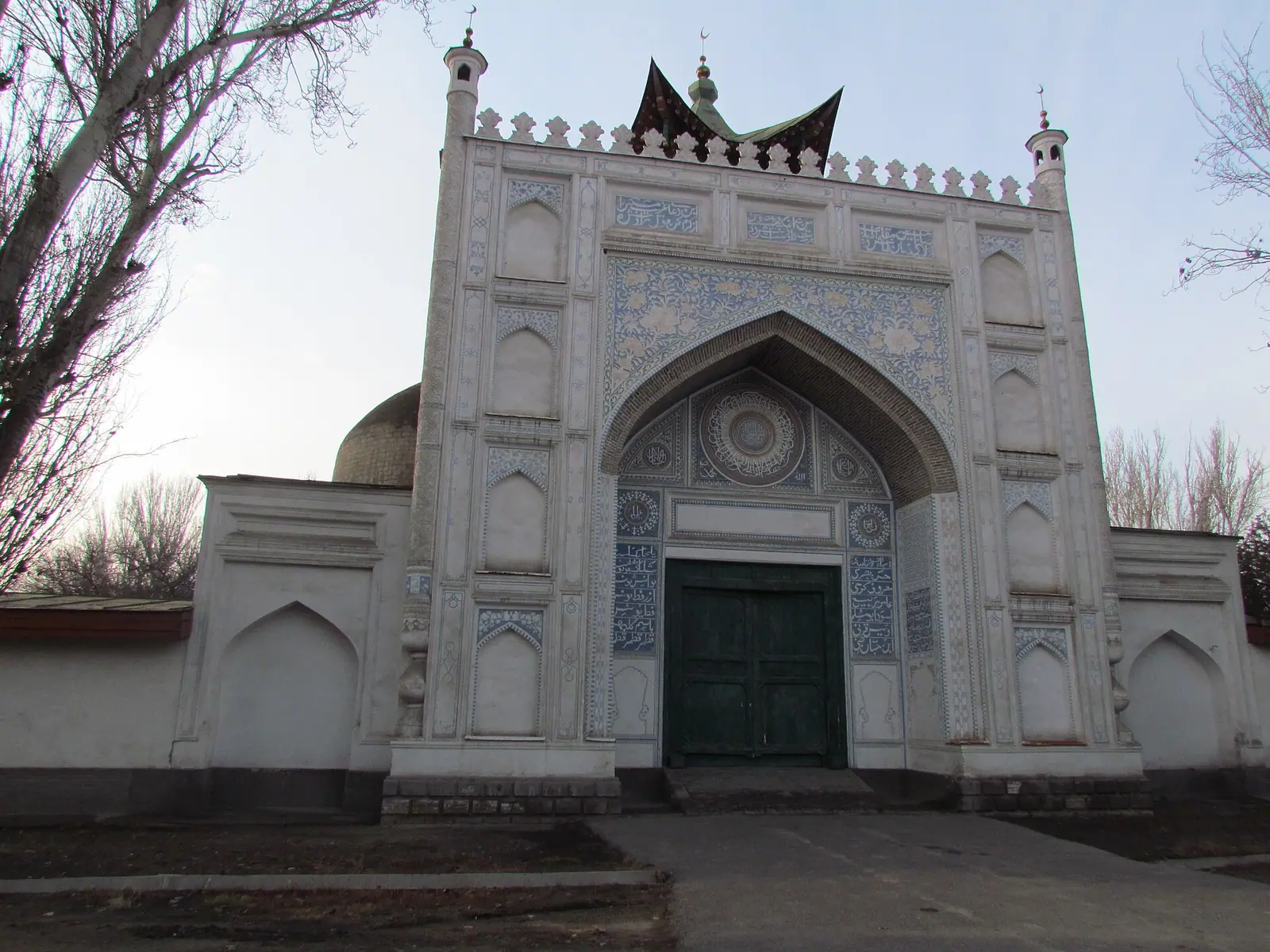
The Friday mosque stands at the centre of a walled rectangle, raised on a platform of fired grey brick and surrounded by garden. The Kazakh Wikipedia describes the main entrance as a traditional Central Asian portal with a pointed arch, topped on the courtyard side by a two-storey hexagonal tower in Chinese form.
A small mosque sits in the north-eastern corner with its own courtyard; it once served as the neighbourhood mosque. The madrasah, with 14 rooms, is by the main gate and now holds the museum’s exhibition and work rooms. It had been used as housing and as a cinema, and its original look was brought back during restoration.
Getting there from Almaty
Zharkent is in the Zhetysu region, about 270 km from Almaty, 237 km from Konaev and 160 km from Taldykorgan, all in a straight line. Road distances will be longer. We could not confirm bus or train schedules, road conditions or journey times, so check these locally before you commit to a day trip.
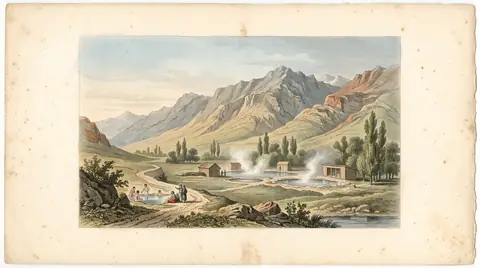
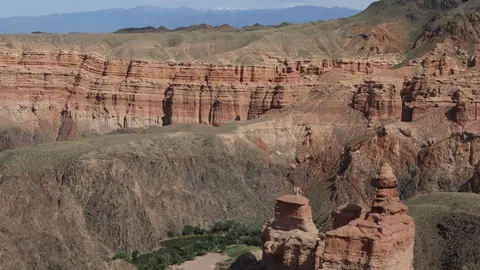
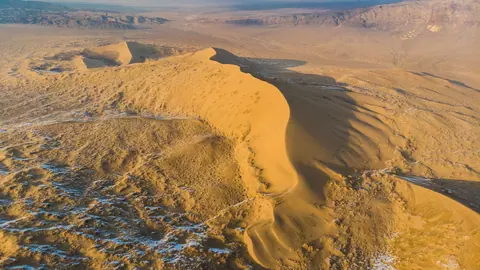
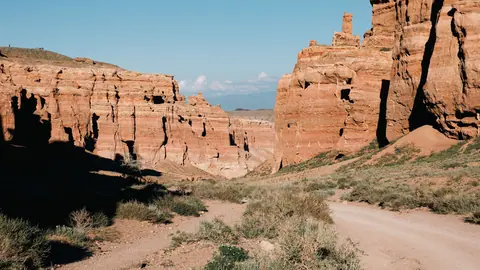
Combining the mosque with places on the same side of the region makes the distance more worthwhile: the Zharkent-Arasan hot springs are about 25 km away in a straight line, while Charyn Canyon and the Singing Dune in Altyn-Emel are both a little over 110 km away.
When to visit Zharkent
May and September have the mildest daytime highs, near 25 °C.
Day high, °C / Night low, °C · Rain/snow, mm
A computed reanalysis normal for these coordinates, not weather station records.
Monthly figures
| Month | Day high, °C | Night low, °C | Rain/snow, mm |
|---|---|---|---|
| Jan | 0.6 | -10.7 | 15.5 |
| Feb | 2.8 | -7.9 | 15.7 |
| Mar | 12.5 | -0.6 | 18.3 |
| Apr | 20.7 | 6.8 | 32 |
| May | 25.5 | 11.6 | 21.7 |
| Jun | 28.8 | 16.1 | 25.9 |
| Jul | 31.3 | 17.7 | 14.3 |
| Aug | 29.8 | 15.9 | 19.4 |
| Sep | 25.4 | 10.5 | 11.4 |
| Oct | 18 | 3.8 | 16.1 |
| Nov | 8.2 | -2.5 | 30.2 |
| Dec | 2.8 | -7.6 | 15.7 |
These are ERA5 reanalysis normals for 2011–2020 at a grid point at 631 m, not a weather station. May averages around 25 °C by day and September about 25 °C, both comfortable. July reaches about 31.3 °C on average, hot for an open courtyard at midday. Winter is cold: January days hover near 1 °C with nights around −11 °C. Precipitation is low all year, with no month above about 27 mm, so rain rarely decides the trip.
Visiting with respect
Zharkent Mosque is a sacred building as well as a museum, so treat the interior as a place of worship. We could not confirm whether prayers are held there today, what dress is expected, or whether photography is allowed inside. Modest clothing and asking at the entrance before taking pictures are the safe defaults.
- Current opening hours and days of the museum
- Entry fee and whether tickets are needed
- Whether the mosque is used for prayer today, and the expected dress code
- Bus or train connections from Almaty and road travel time
- Rules on photography inside the main hall
If you are starting from Almaty, compare the notes on the Central Mosque in Almaty, including dress and Friday timing.
Zharkent Mosque, a Chinese-style mosque on Kazakhstan's eastern edge: tips before you go
- Pair the mosque with the Zharkent-Arasan hot springs, about 25 km away in a straight line, to justify the long drive from Almaty.
- In July average highs reach about 31.5 °C, so the open courtyard is more comfortable earlier in the day.
- Look for the 52 spruce gallery columns and the joints of the timber frame, assembled without nails.
- Visit the former madrasah by the main gate: its 14 rooms now hold the museum's exhibitions.
More to see nearby


Frequently asked questions
Who designed Zharkent Mosque?
When was Zharkent Mosque built?
Is it true the mosque was built without nails?
How far is Zharkent Mosque from Almaty?
Is Zharkent Mosque a museum?
Sources
Read also
 Almaty Zoo in Kazakhstan: opening hours and how to visit
 Ayusai Gorge, Almaty: visitor centre and waterfall trail
 Gorelnik Gorge above Medeu: waterfalls, trail and season
 Kamenskoe Plateau above Almaty: observatory and trails
 Pervomaiskie Ponds near Almaty: location, swimming, season
 Saty village: base for the Kolsai and Kaindy lakes