Verified: 2026-10
Turkestan: when to go, month by month
- January: possible
- February: possible
- March: good
- April: best time
- May: best time
- June: possible
- July: possible
- August: possible
- September: good
- October: best time
- November: good
- December: possible
Spring and autumn: July highs average about +36 °C, and the ruins have no shade.
Turkestan: why go
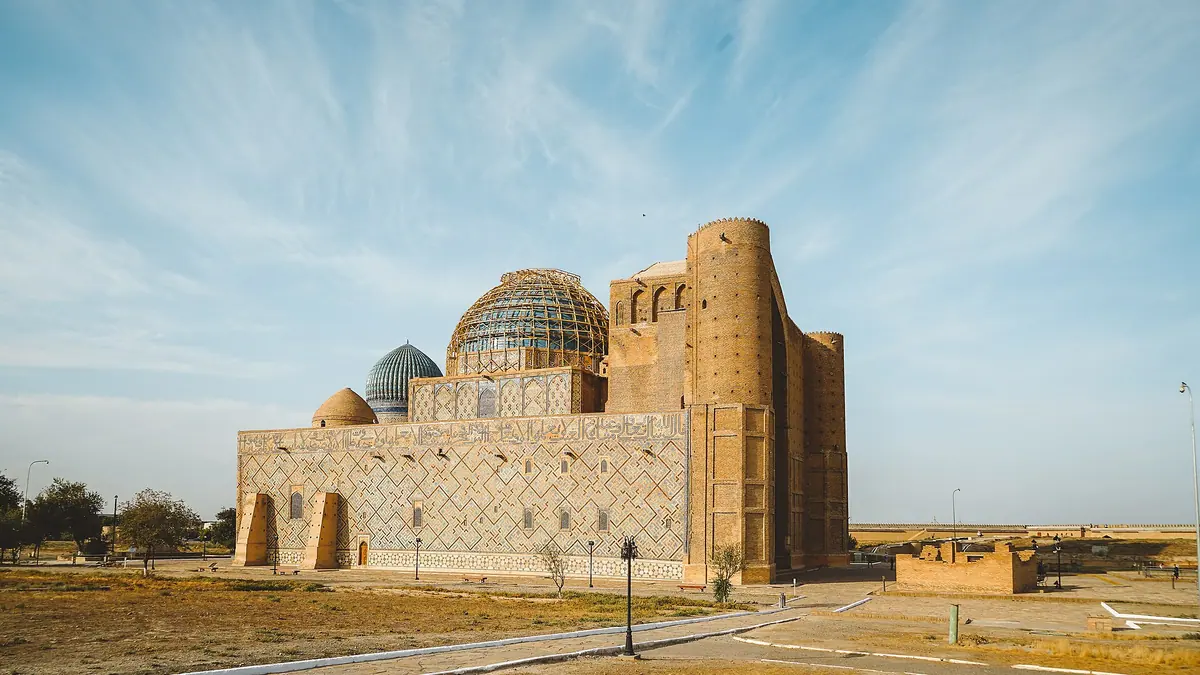
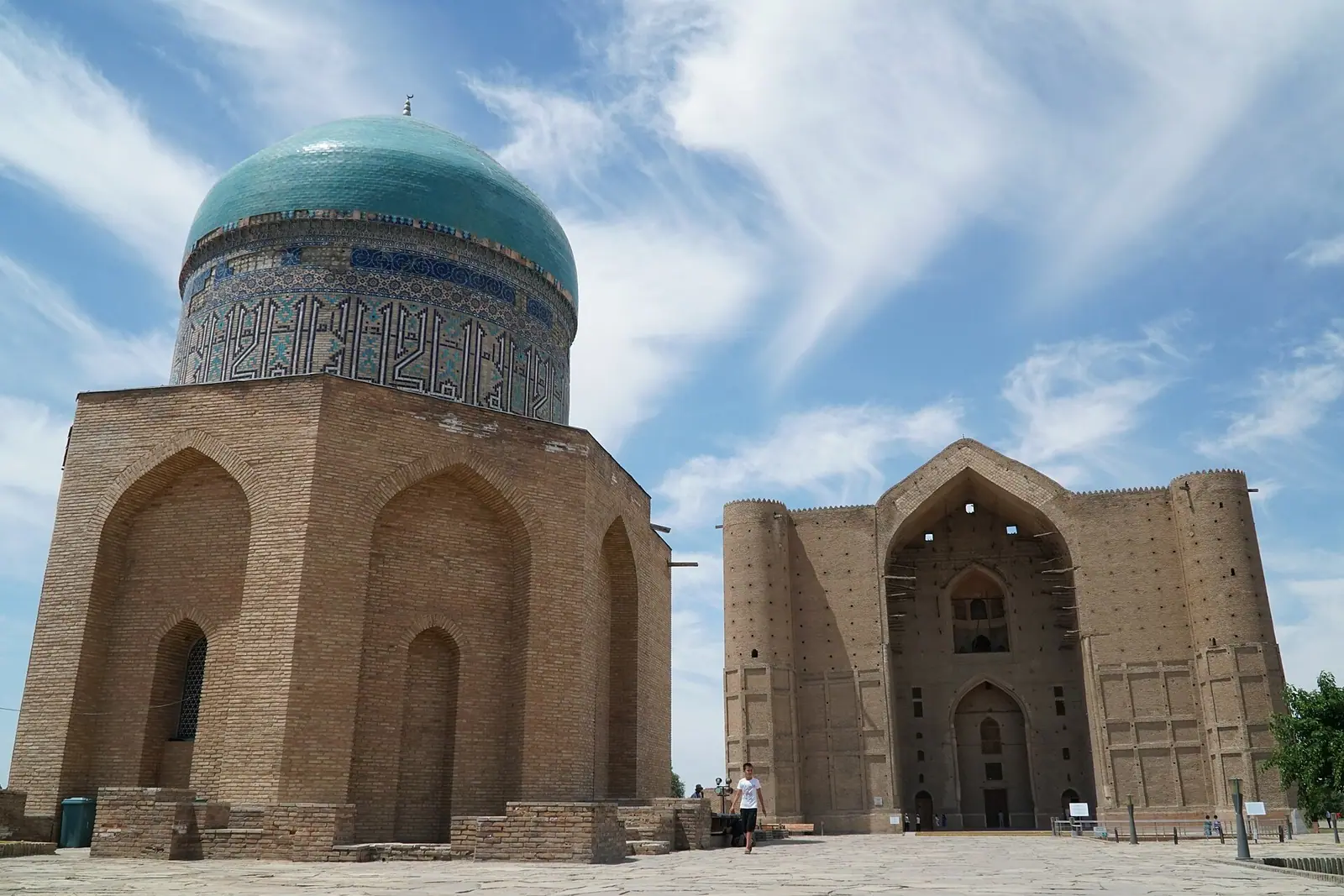
Mausoleum of Khoja Ahmed Yasawi
Built on Timur's orders in the late 14th century and left unfinished at his death in 1405; Kazakhstan's first UNESCO World Heritage Site (2003).
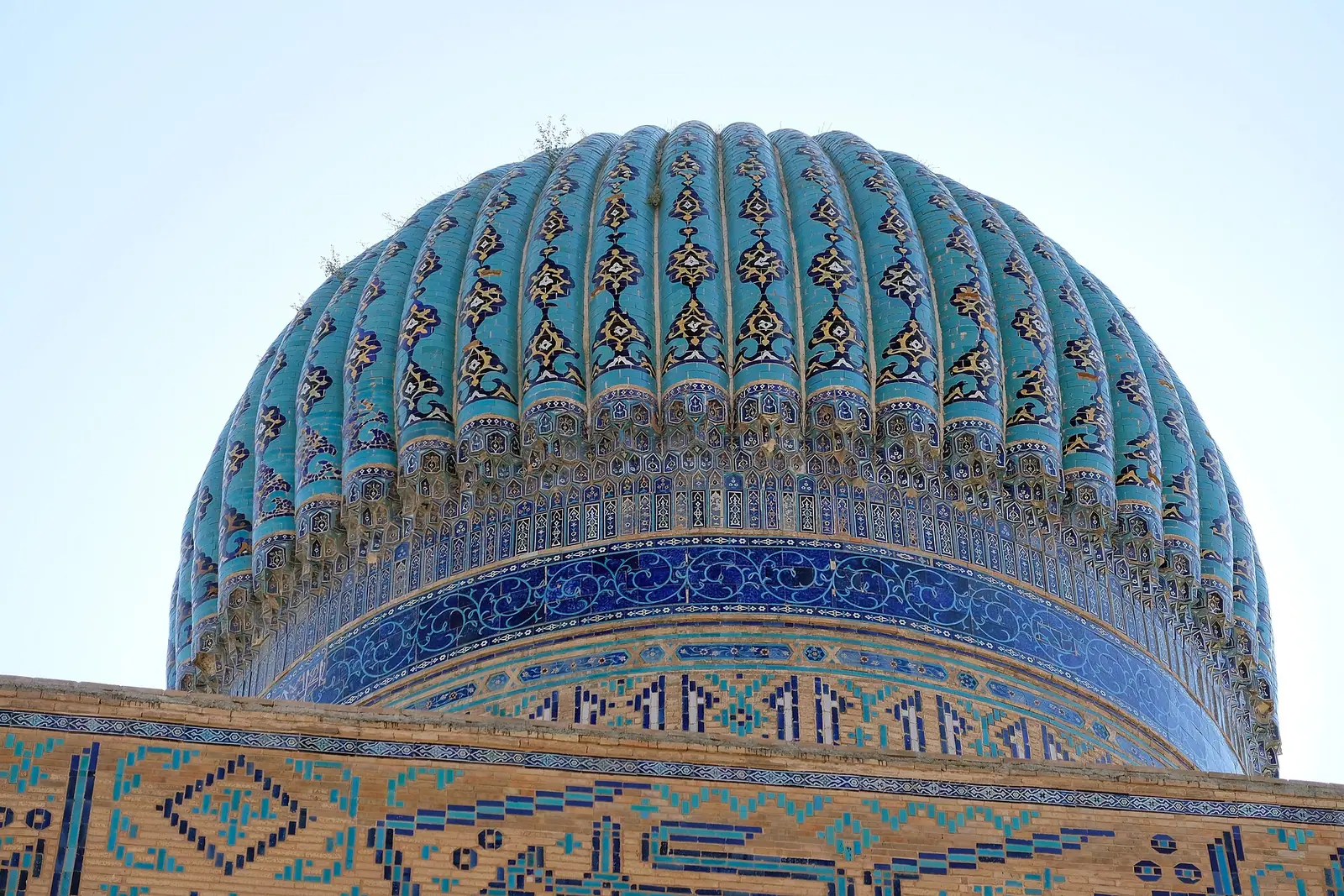
An 18.2 m dome and the Taikazan
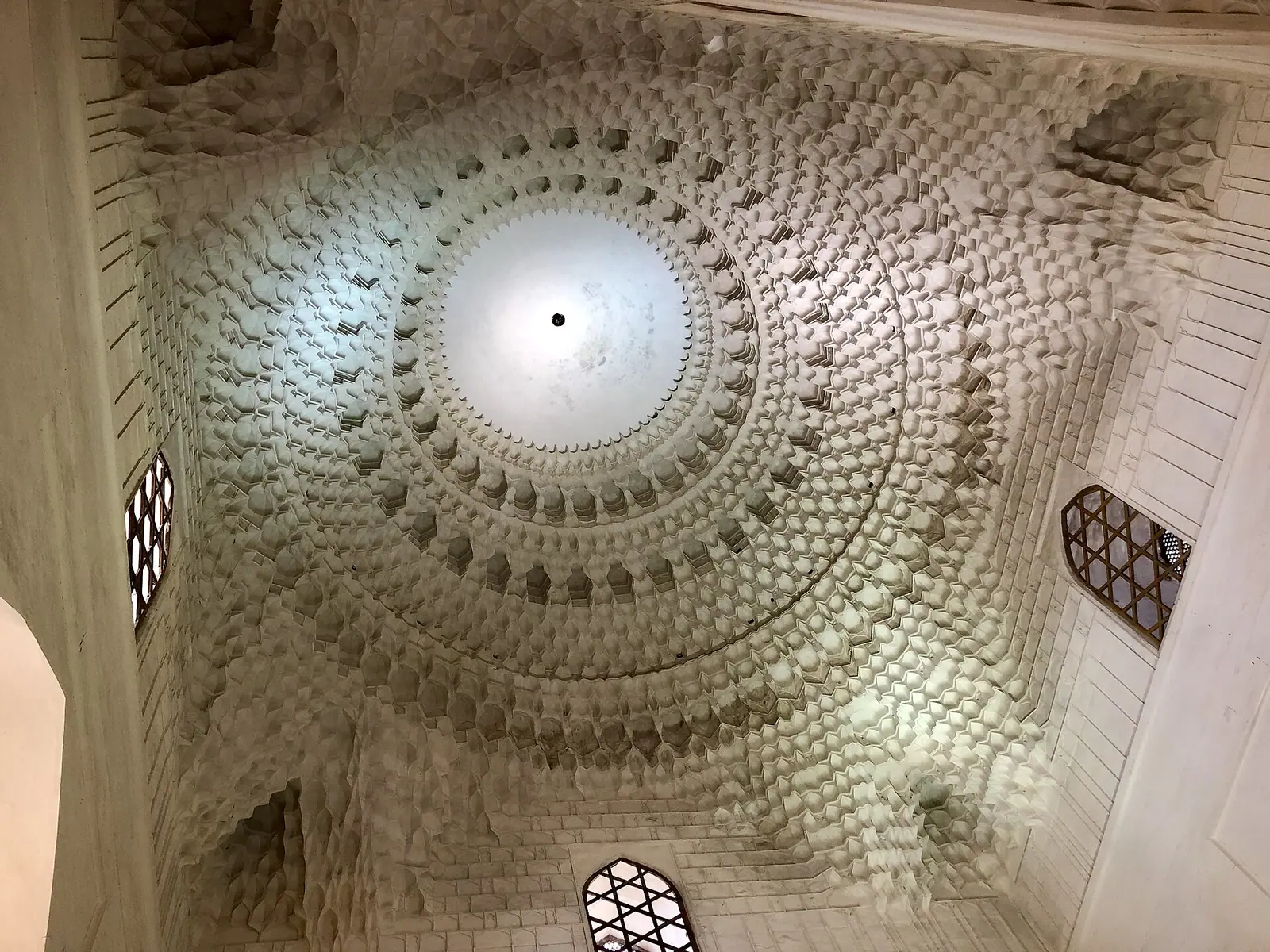
The main hall's dome is the largest surviving brick dome in Central Asia; beneath it stands the two-tonne Taikazan cauldron cast in 1399.
The Yasawi dome restoration, 2026
Since February 2026 entry is via turnstiles, and since May the 2019–2020 tiles have been coming off the dome; the historic dome itself is intact.
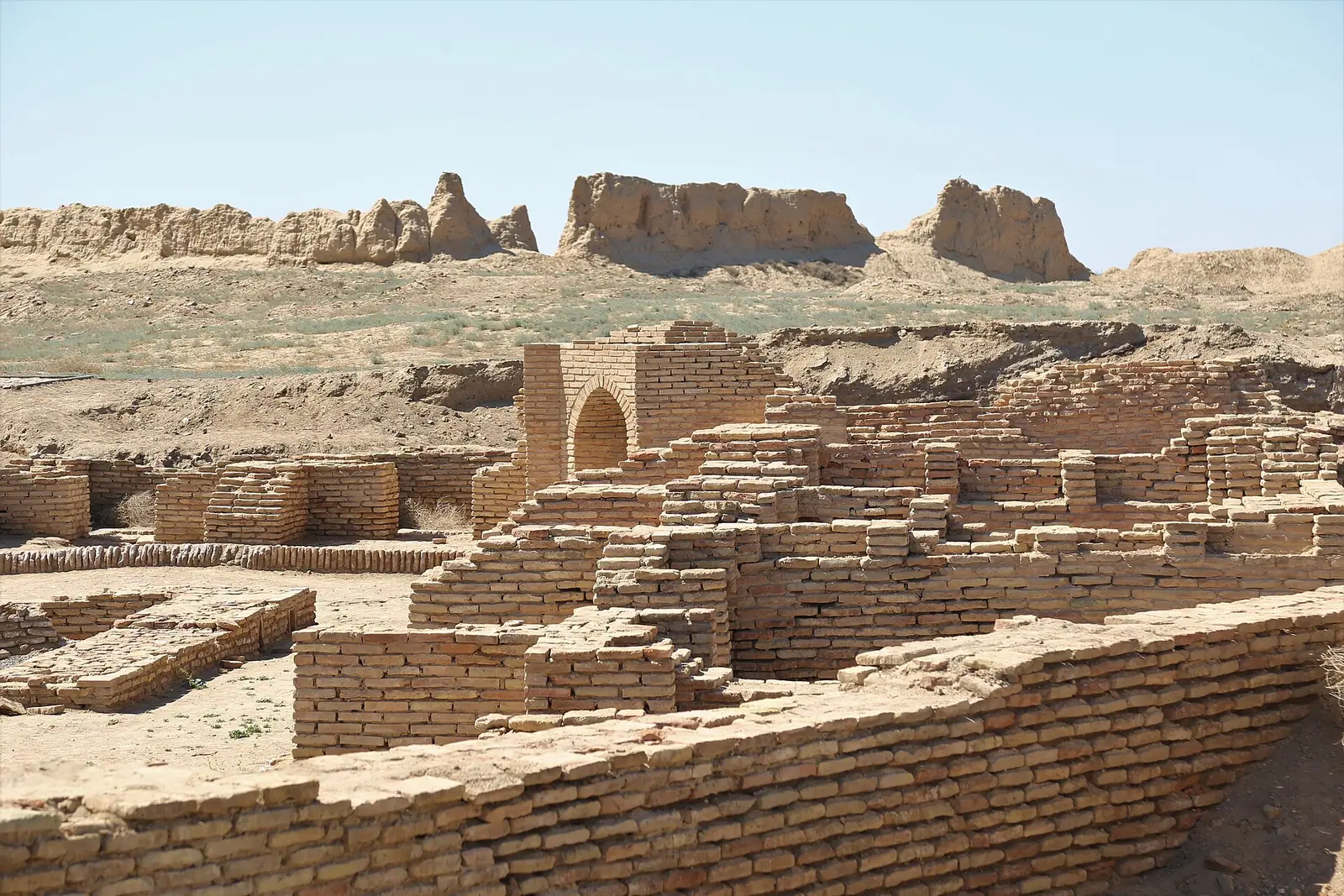
Sauran behind seven walls
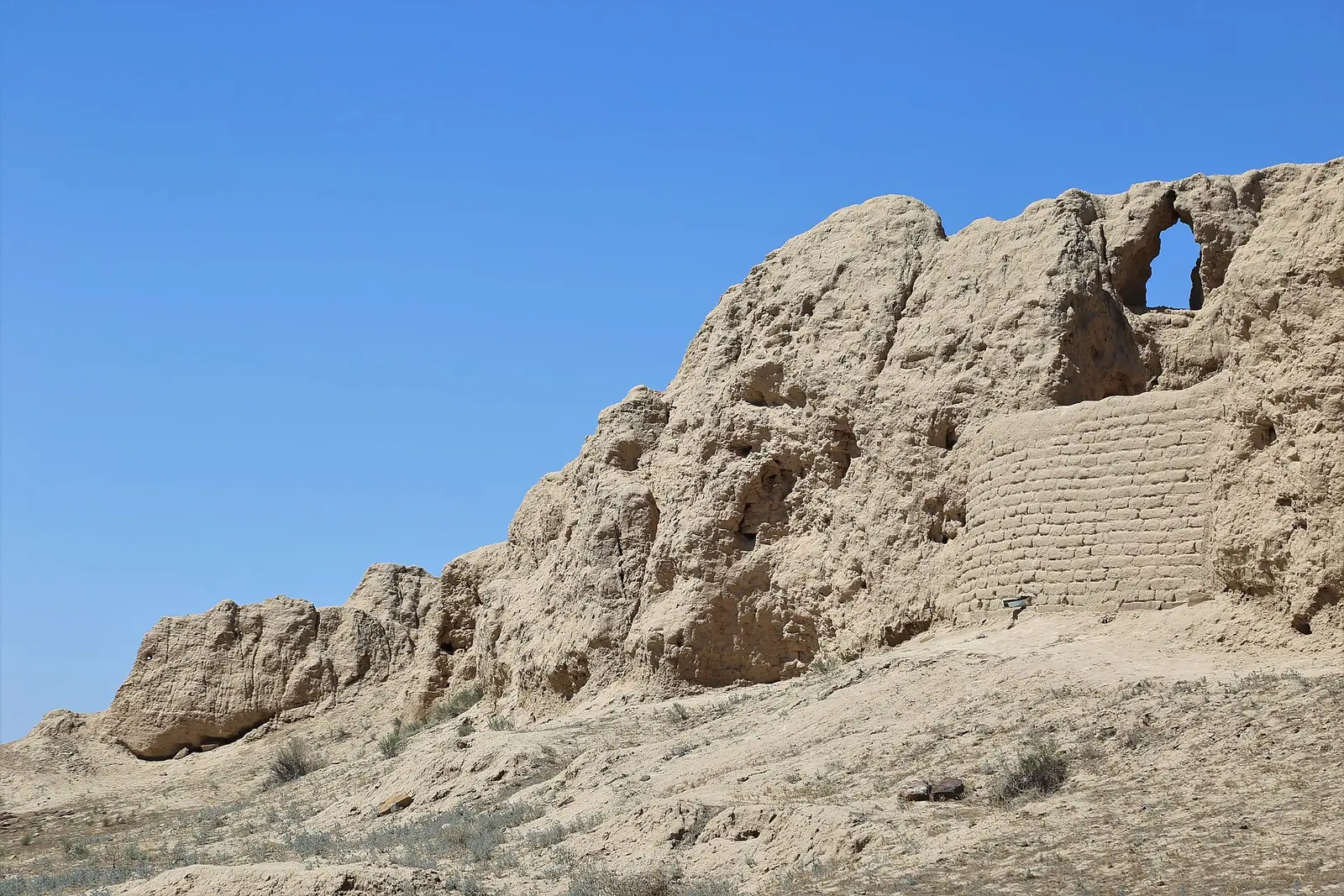
Ruins 40–45 km from Turkestan: a 13th-century White Horde capital fed by about 120 km of karez channels; restoration began in August 2026.
Otrar and Arystan Bab
Otrar, 57 km south, held out against a six-month Mongol siege in 1219; nearby is the Arystan Bab Mausoleum, which pilgrims traditionally visit first.
Turkestan in photos
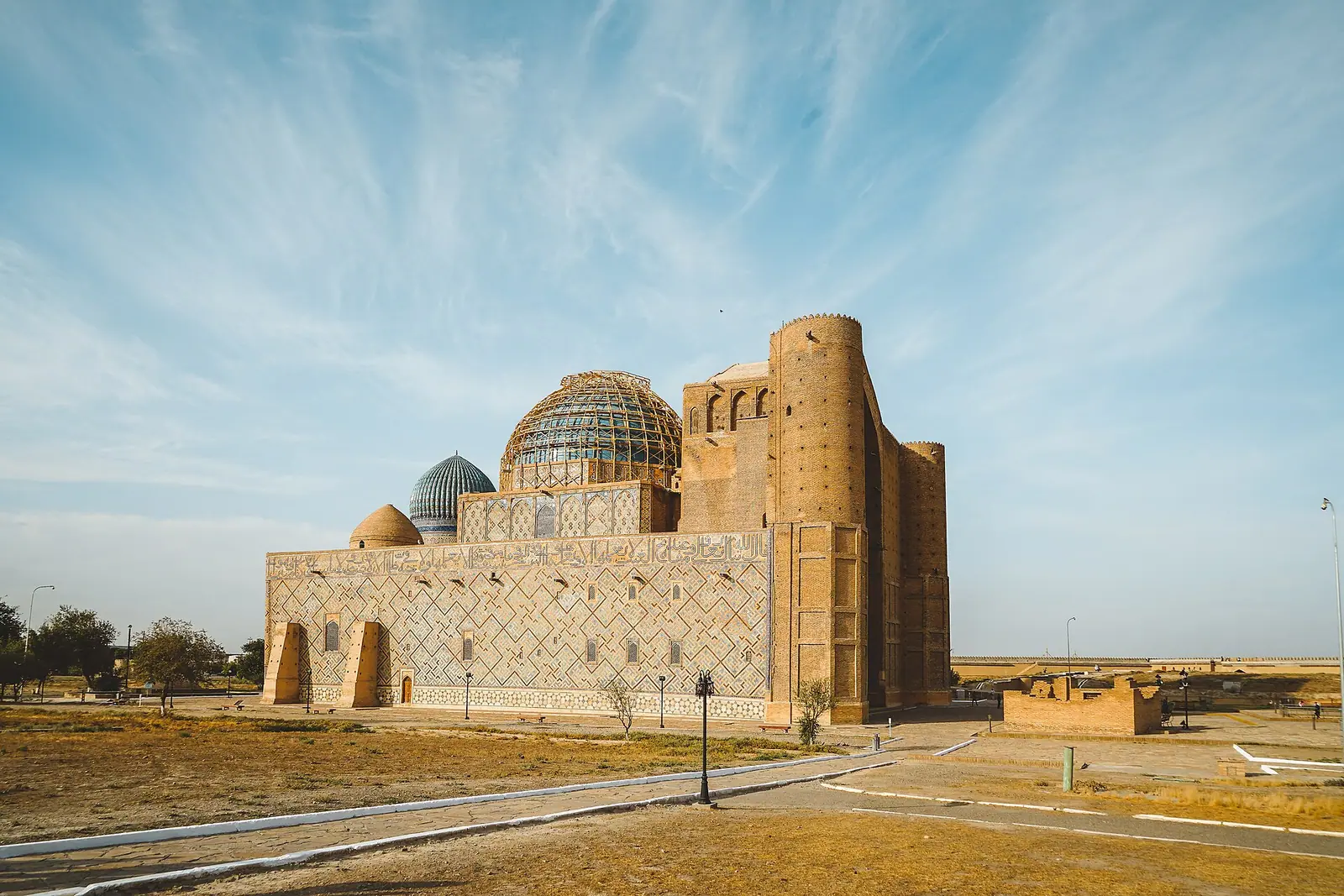
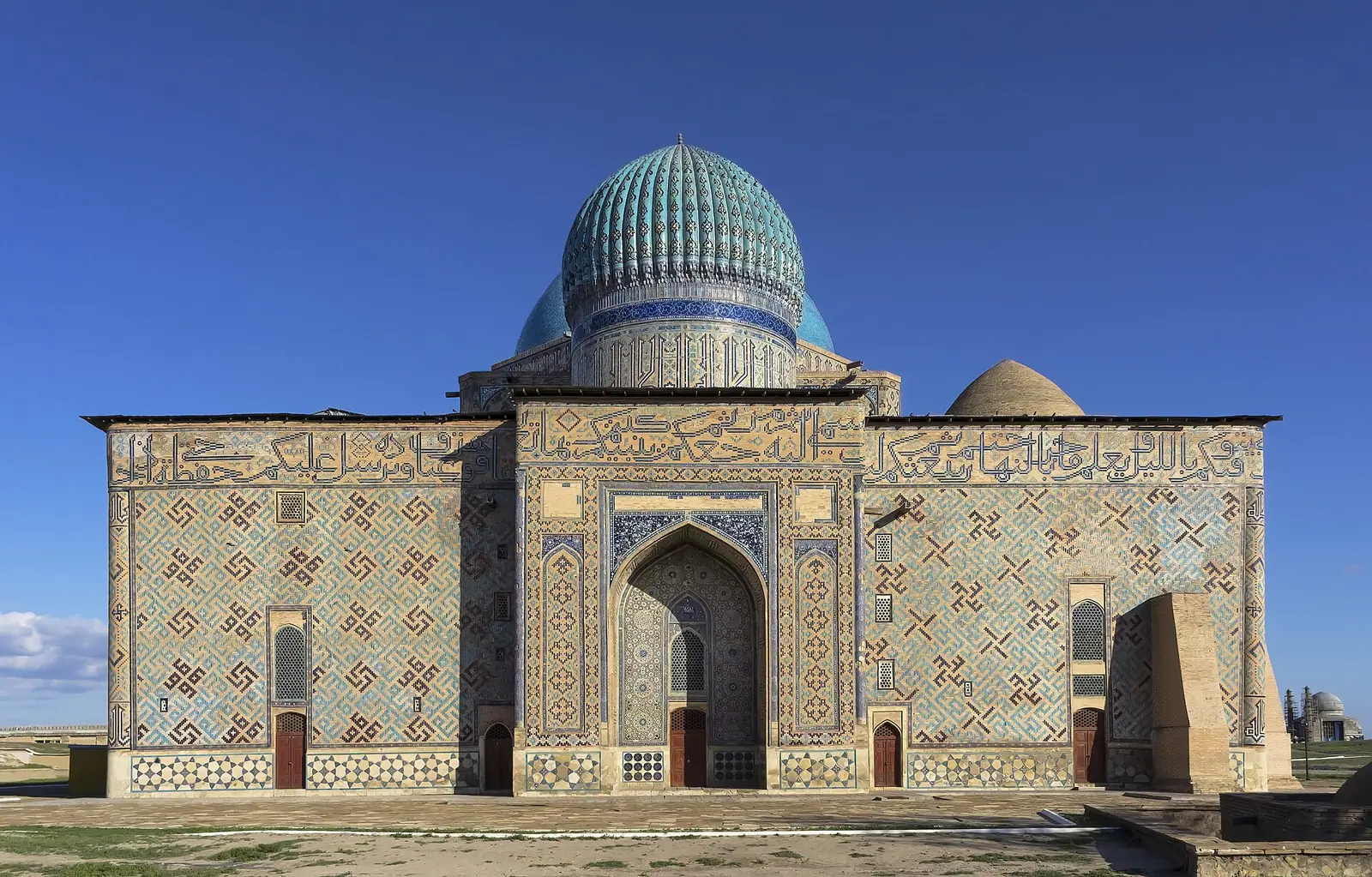
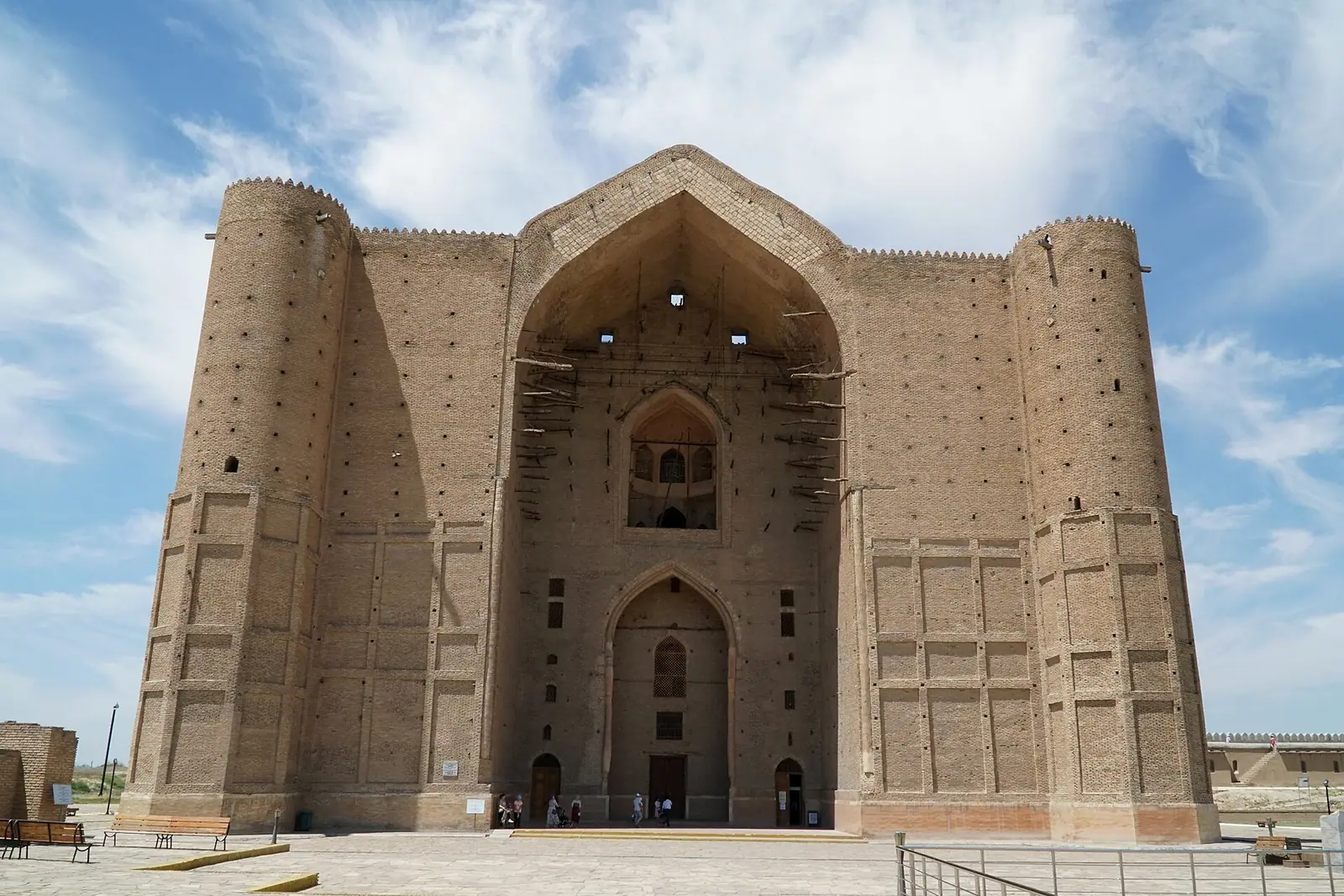
Real photos by travellers (Pexels, Unsplash, Wikimedia Commons); author and licence are given in each caption.
Turkestan is a city in southern Kazakhstan, capital of Turkestan Region since 2018, 160 km northwest of Shymkent. People come for the Mausoleum of Khoja Ahmed Yasawi, raised on Timur’s orders at the end of the 14th century, which in 2003 became Kazakhstan’s first entry on the UNESCO World Heritage List. Around the city are the ruins of Sauran (about 40–45 km) and Otrar (57 km) and the Arystan Bab Mausoleum. Come in spring or autumn — July highs average around +36 °C. The mausoleum’s dome is under restoration in 2026, so check access arrangements before you go.
The Mausoleum of Khoja Ahmed Yasawi
Khoja Ahmed Yasawi was a Sufi poet and preacher who died in 1166. His grave drew pilgrims for centuries, and English Wikipedia describes Turkestan as having become a “second Mecca” for Central Asian Muslims. The building you see was commissioned by Timur. Sources give different start dates: English Wikipedia says 1389, Russian Wikipedia around 1397, after Timur’s victory over Tokhtamysh. Work stopped when Timur died in 1405, and the mausoleum was never finished. Later, the Bukharan ruler Abdullah Khan II paid to complete the entrance portal.
| Fact | Value | Source |
|---|---|---|
| UNESCO inscription | 2003, site no. 1103, criteria i, iii, iv | English Wikipedia |
| Construction began | 1389 or around 1397 | English and Russian Wikipedia |
| Footprint | 45.8 × 62.7 m (other figures: about 46.5 × 65.5 m) | English; Russian Wikipedia |
| Main hall dome | 18.2 m across — the largest surviving brick dome in Central Asia | English Wikipedia |
| Entrance portal | about 37.5 m high | Russian Wikipedia |
| Taikazan cauldron | about 2 t, 2.2 m across, cast in 1399 | Russian Wikipedia |
The heart of the building is the Kazandyk hall under the great dome. It holds the Taikazan, a bronze water cauldron cast in 1399 by a master from Tabriz. It spent decades in the Hermitage from 1934 and came back to the mausoleum in 1988. The upper floor was never completed and is closed to visitors.
The mausoleum is the centrepiece of the Azret Sultan museum-reserve, which also includes the mausoleum of Rabia Sultan Begim (Timur’s great-granddaughter), the Yesim Khan mausoleum, a medieval bathhouse and the underground Khilvet retreat.
The 2026 dome restoration
Since 15 February 2026 the grounds have been fenced and visitors enter through two turnstiles (Kazinform). In May, workers began removing the glazed tiles laid on the main dome in 2019–2020, which had cracked and started peeling; on 27 May the state restoration agency Kazrestavratsiya took down the unsafe sections, and the main entrance was fenced off. In July the Ministry of Culture said the outer layer is not part of the original structure, the historic dome survives intact, and work continues on a minimal-intervention basis.
Tickets and free entry
A new price list approved by the Ministry of Culture took effect on 10 June 2026 (Kazinform). One ticket covers the mausoleum grounds, the Yasawi museum and the Hall of Rare Exhibits.
- Visitors from outside the CIS now pay more than twice the previous price; CIS citizens pay more too.
- Prices for Kazakhstan citizens did not change.
- Free entry applies to preschool children, people with group I and II disabilities (plus one companion), certain veterans, mothers awarded the Altyn Alqa and Kumis Alqa pendants, one teacher with a school group and one guide accompanying a group.
We do not quote tenge amounts because price lists change; check at the ticket office.
What else to see in Turkestan
- Rabia Sultan Begim Mausoleum, inside the Azret Sultan complex.
- Khilvet, an underground prayer retreat in the same complex.
- Gauhar Ana Mausoleum, listed by Russian Wikipedia among the city’s monuments.
- Keruen-Saray, a tourist complex opened in 2021, which English Wikipedia calls the largest in Central Asia.
- The 1905 railway station, itself a listed building.
Sauran: the city of seven walls
The Sauran ruins sit on the border of Turkestan and Kyzylorda regions, 40–45 km from Turkestan (Tengrinews, 2018). The city appears in sources from the 10th century, became the capital of the White Horde in the 13th century and passed to the Kazakh Khanate in the late 16th. According to Tengrinews, the pre-Mongol city had a moat and seven walls, and the later town moved about 3 km. Water arrived through karez — underground channels some 120 km long, with shafts every 5–7 m. The city faded by the early 18th century.
In August 2026 restorers started work on Sauran’s khanaka and madrasah, replacing broken bricks and reinforcing masonry (24KZ). Tengrinews describes the road from Turkestan as paved.
Otrar and the Arystan Bab Mausoleum
The Otrar site lies 57 km south of Turkestan and 120 km northwest of Shymkent, where the Arys River joins the Syr Darya, next to Talapty village (Wikipedia). The oasis flourished from the 1st to the 13th century. In 1219 the city held out against a Mongol siege for six months, until a resident opened the gates at night. Otrar (Farab) is linked to the philosopher al-Farabi. Otrar is not a World Heritage Site, although UNESCO, Kazakhstan and Japan ran a joint conservation project here in 2001–2004.
Nearby, by the village of Shauldyr, stands the Arystan Bab Mausoleum, dedicated to Yasawi’s teacher. The current building dates from a 1909 rebuild of an 18th-century structure. Legend says Timur was told in a dream to build a mausoleum over Arystan Bab first, so pilgrims traditionally visit here before Yasawi.
Getting to Turkestan
| Option | What we know | Source |
|---|---|---|
| By air | Hazrat Sultan airport (HSA), opened September 2020, 15–16 km northeast of the centre; FlyArystan flights to Almaty and Astana | English Wikipedia |
| By road from Shymkent | 160 km, about two hours | Wikipedia |
| By train | the city is on the railway; from Almaty the trip takes nearly 20 hours | Russian and English Wikipedia |
To reach Sauran and Otrar without your own car you will need a driver; we found no public transport to the sites in our sources.
When to visit Turkestan
The climate is dry, with about 214 mm of precipitation a year. Russian Wikipedia gives a July mean of +28.7 °C and a January mean of −3.1 °C; English Wikipedia puts the average July high at +36.4 °C, with summer records between +46.5 and +47.9 °C. The ruins have no shade, so spring and autumn are far more comfortable. In summer, do Sauran and Otrar early in the morning.
Turkestan pairs well with nature in the south: Aksu-Zhabagly and Sayram-Ugam are both near Shymkent. Run through our before you go checklist.
Etiquette at the mausoleum
The Yasawi Mausoleum is an active pilgrimage site. Dress modestly, keep your voice down and give worshippers space. By tradition, pilgrims do not enter the tomb chamber but pray at its entrance (Wikipedia). Kazakhstan’s newest UNESCO site with a pilgrimage character is the rock mosques of Mangystau, inscribed in 2026.
Turkestan: tips before you go
- Check with the Azret Sultan museum-reserve whether the main entrance is open: the dome is under restoration.
- In summer, head to Sauran and Otrar early in the morning: the ruins have no shade.
- The mausoleum is a pilgrimage site: dress modestly and do not disturb worshippers.
- Tickets for foreigners more than doubled from 10 June 2026 — check the price at the ticket office.
More to see nearby


Frequently asked questions
When was the Yasawi Mausoleum added to the UNESCO list?
Who built the Mausoleum of Khoja Ahmed Yasawi?
Can I visit the mausoleum right now?
How much is the entrance ticket for foreigners?
How far are Sauran and Otrar from Turkestan?
How do I get to Turkestan?
When should I visit Turkestan?
Sources
- Mausoleum of Khoja Ahmed Yasawi — Wikipedia
- Мавзолей Ходжи Ахмеда Ясави — Russian Wikipedia
- Turkistan (city) — Wikipedia
- Туркестан (город) — Russian Wikipedia
- Hazrat Sultan International Airport — Wikipedia
- Отрар — Russian Wikipedia
- Мавзолей Арыстан-Баба — Russian Wikipedia
- Behind seven walls: the secrets of ancient Sauran — Tengrinews, 9 Sep 2018 (in Russian)
- Restoration of the ancient Sauran site begins — 24KZ, 6 Aug 2026 (in Russian)
- Yasawi Mausoleum ticket for foreigners more than doubles — Kazinform, 12 Jun 2026 (in Russian)
- Yasawi Mausoleum dome under restoration: Ministry of Culture explains — Kazinform, 28 May 2026 (in Russian)
- Is the Yasawi dome at risk? New survey data — Kazinform, 30 Jul 2026 (in Russian)