Tekturmas Mausoleum in Taraz: when to go, month by month
- January: possible
- February: possible
- March: good
- April: best time
- May: best time
- June: good
- July: possible
- August: possible
- September: best time
- October: best time
- November: possible
- December: possible
May and September bring highs of about 25°C, while July and August average over 31°C with little shade, and winter highs hover near freezing.
Tekturmas Mausoleum in Taraz: why go
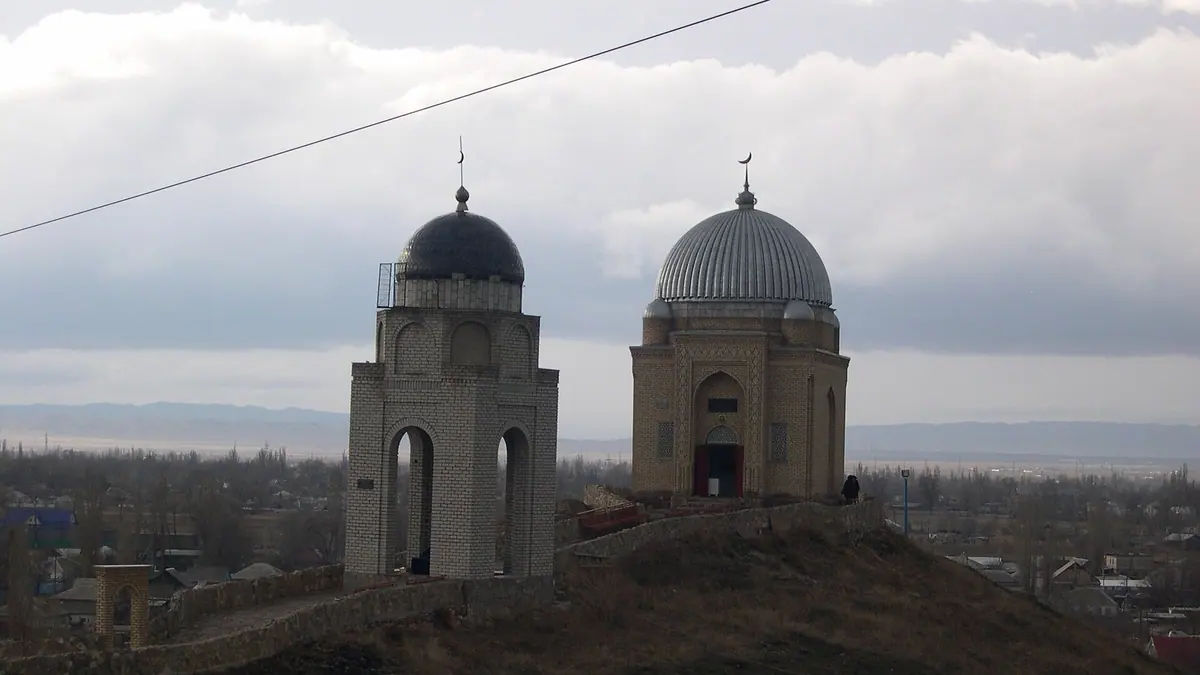
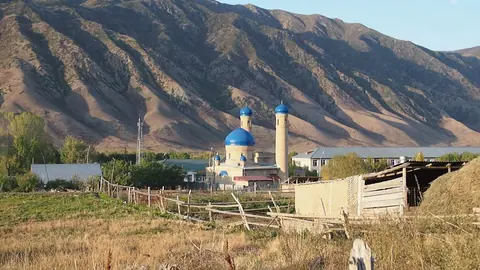
Tekturmas mausoleum on the hilltop
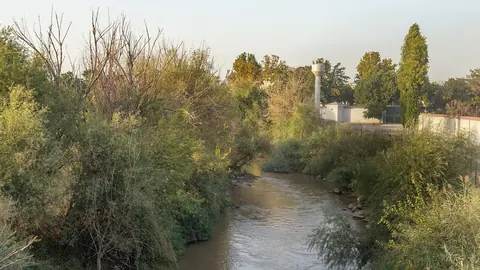
A domed tomb rebuilt in 2001–2002 from an old photograph, standing on Tekturmas hill above the right bank of the Talas river.
Layers of the Tekturmas necropolis
Around the tomb, researchers found Zoroastrian ossuary burials and medieval Christian and Muslim graves from different periods.
Reaching Tekturmas from Taraz
The hill is on the south-eastern edge of Taraz, about 5 km in a straight line from the centre and about 446 km from Almaty.
Tekturmas in spring and autumn
May and September average highs of about 25.5°C, against 33.5°C in July, when rainfall drops to around 5.5 mm a month.
A name older than the rebuilt tomb
In 1864 Mikhail Chernyaev wrote of the grave of a saint called Tek-Turmas, after whom the heights themselves were named.
Tekturmas Mausoleum in Taraz in photos
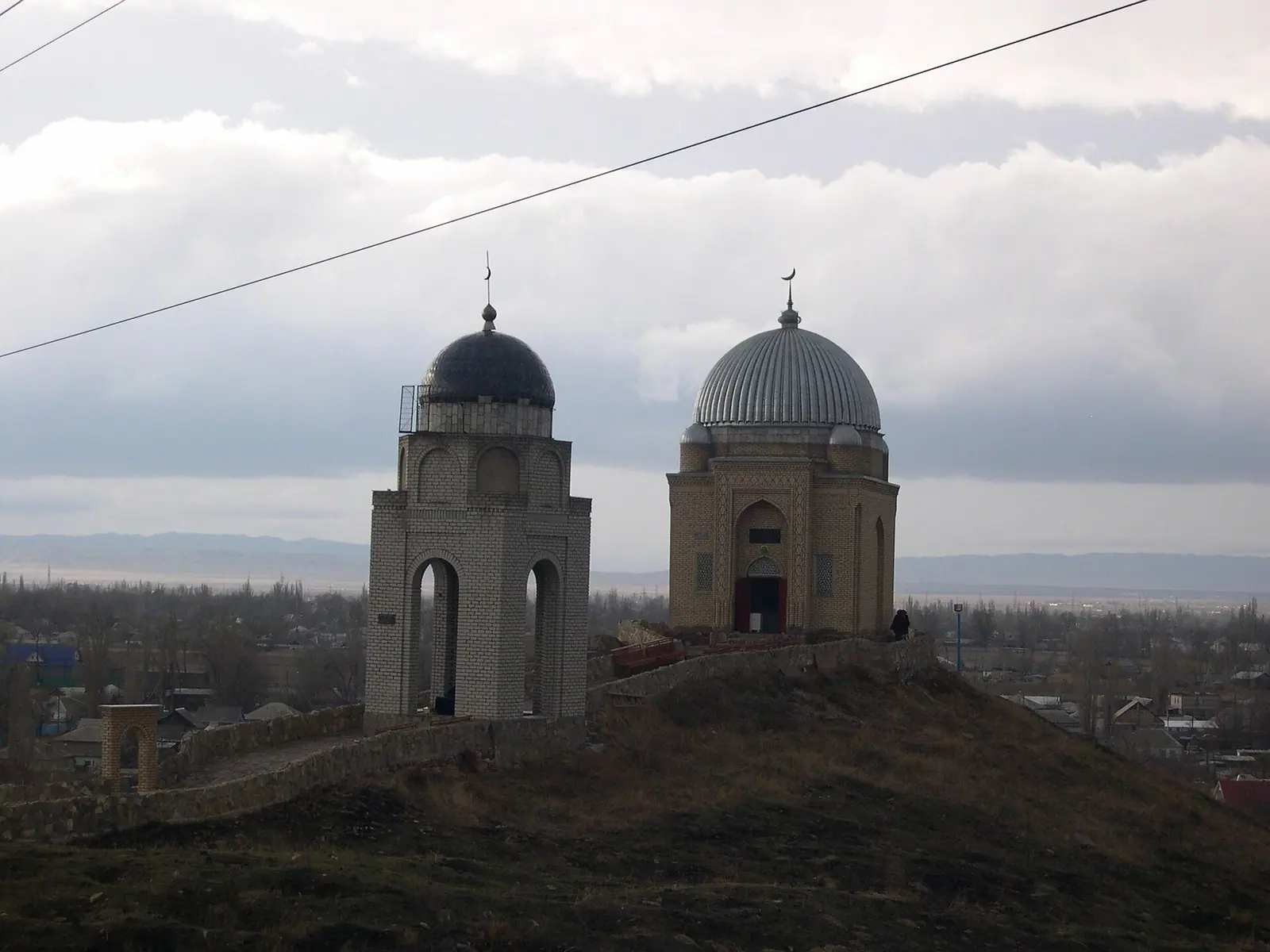
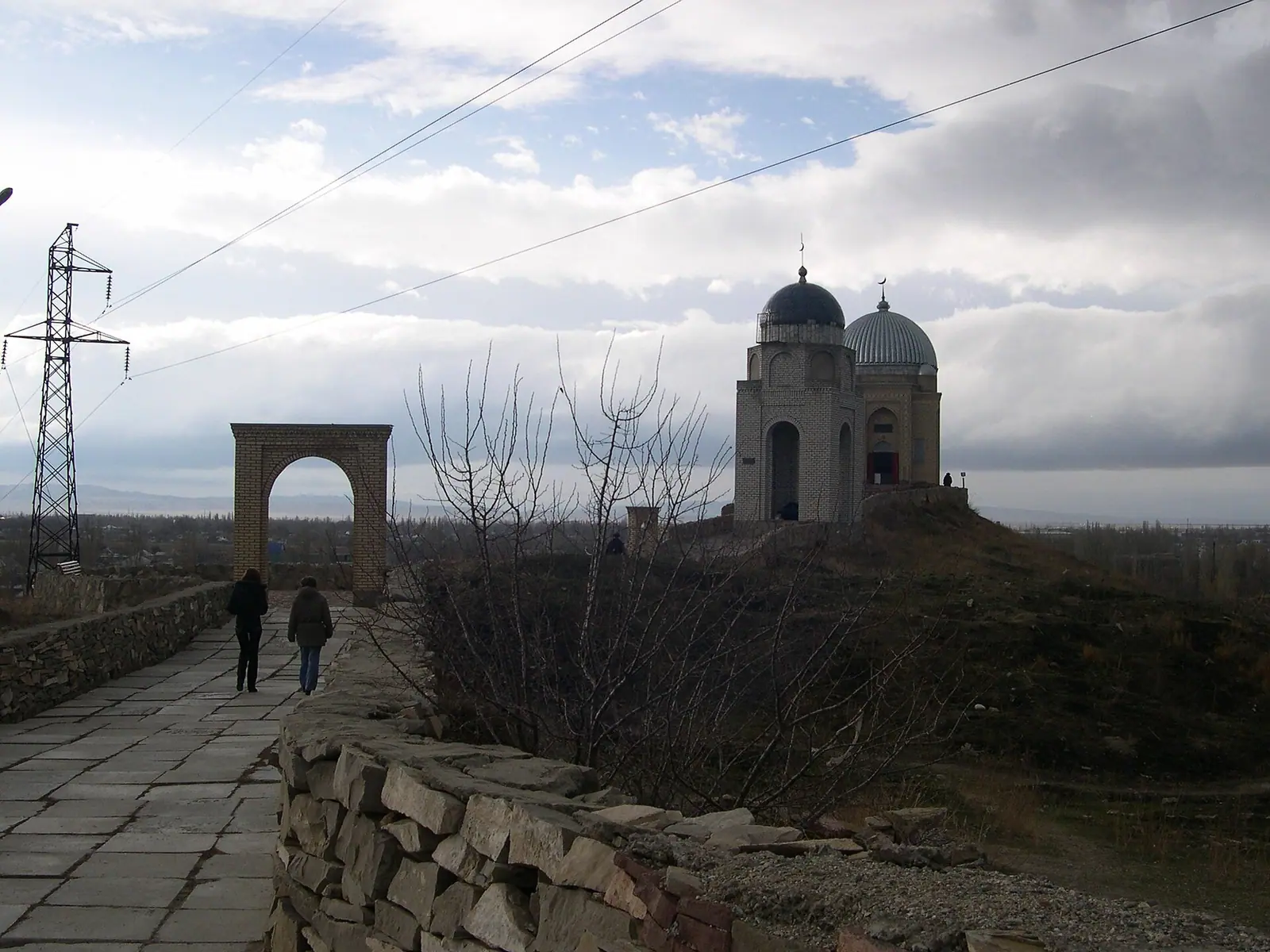
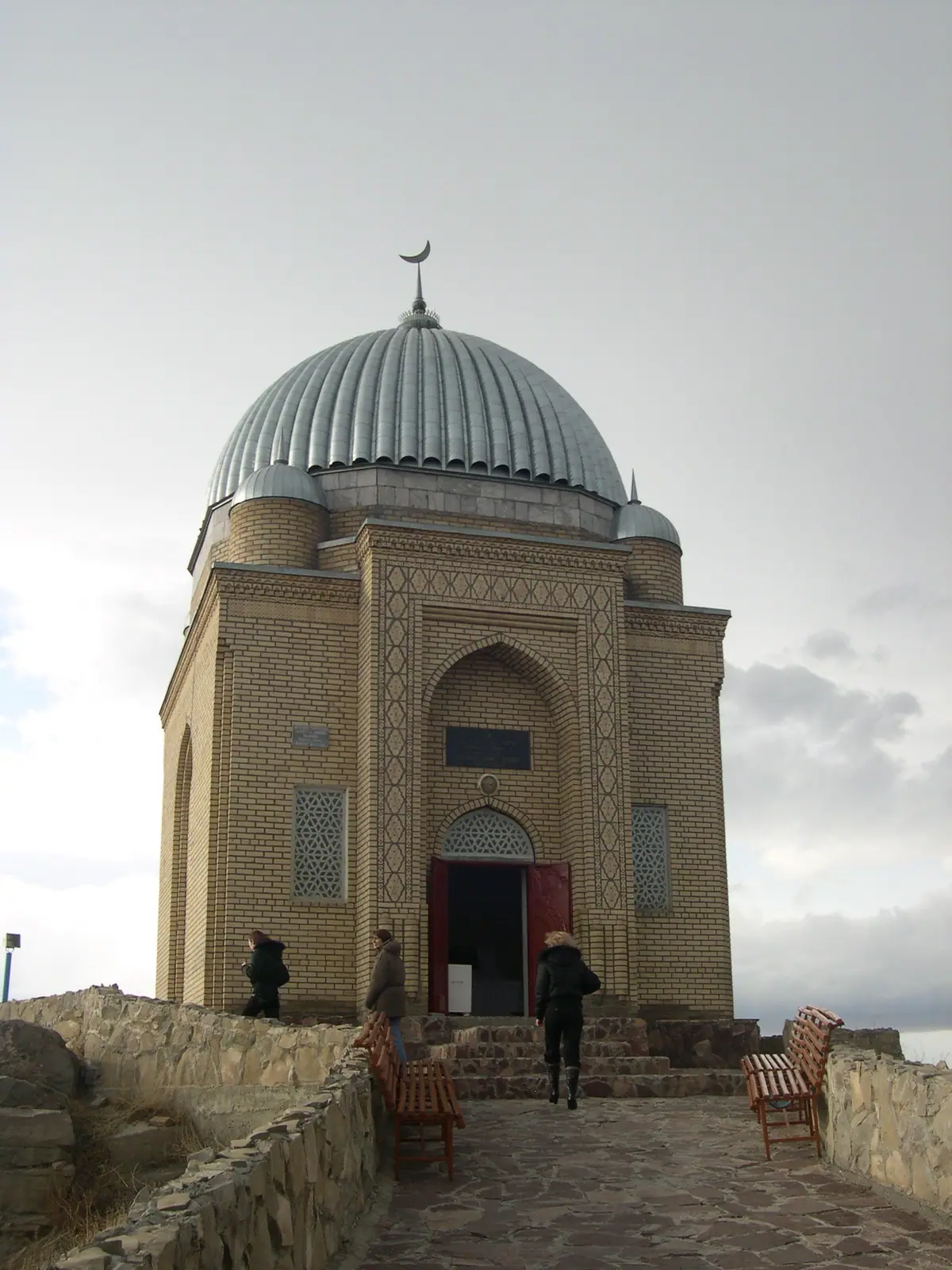
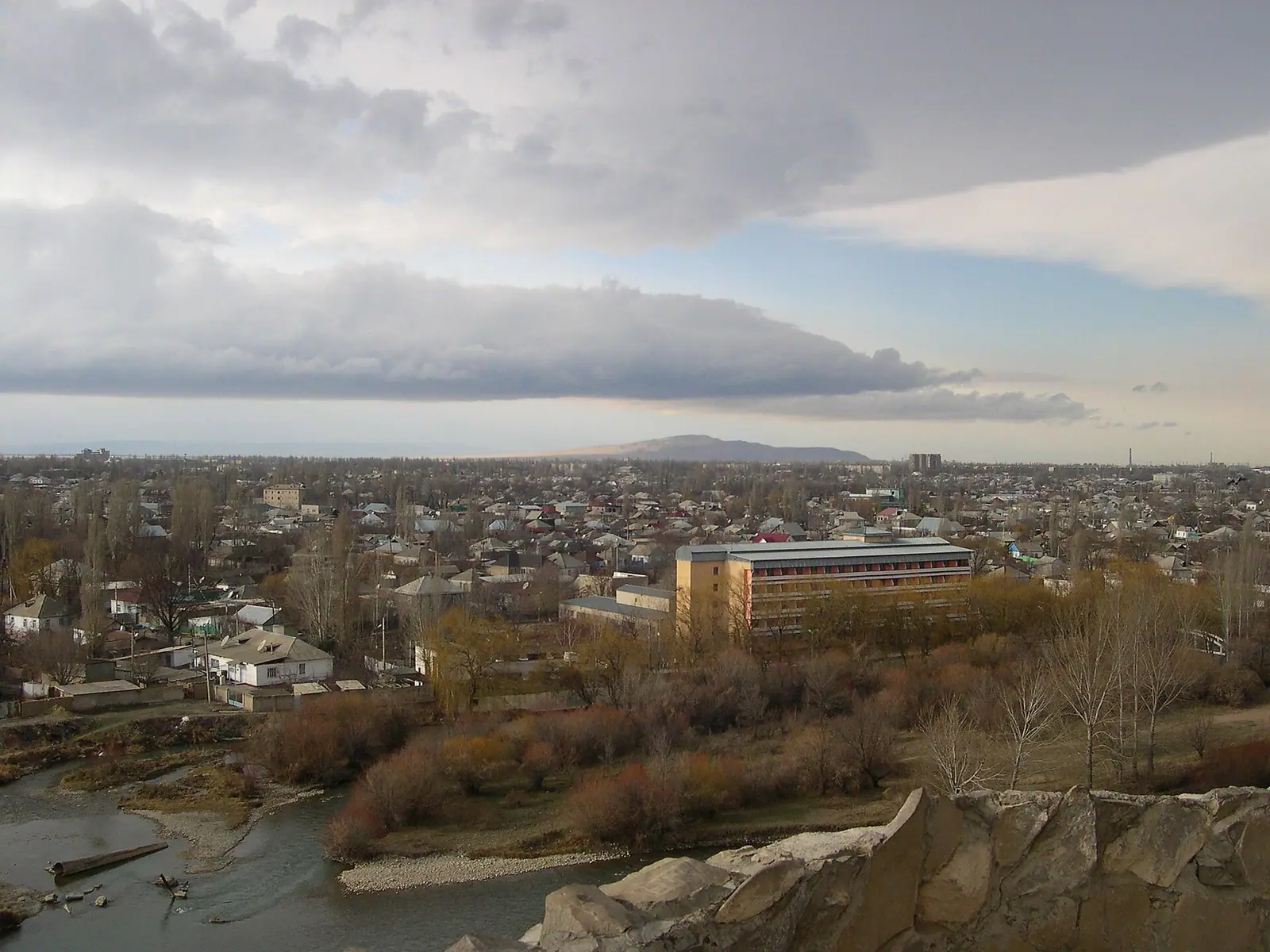
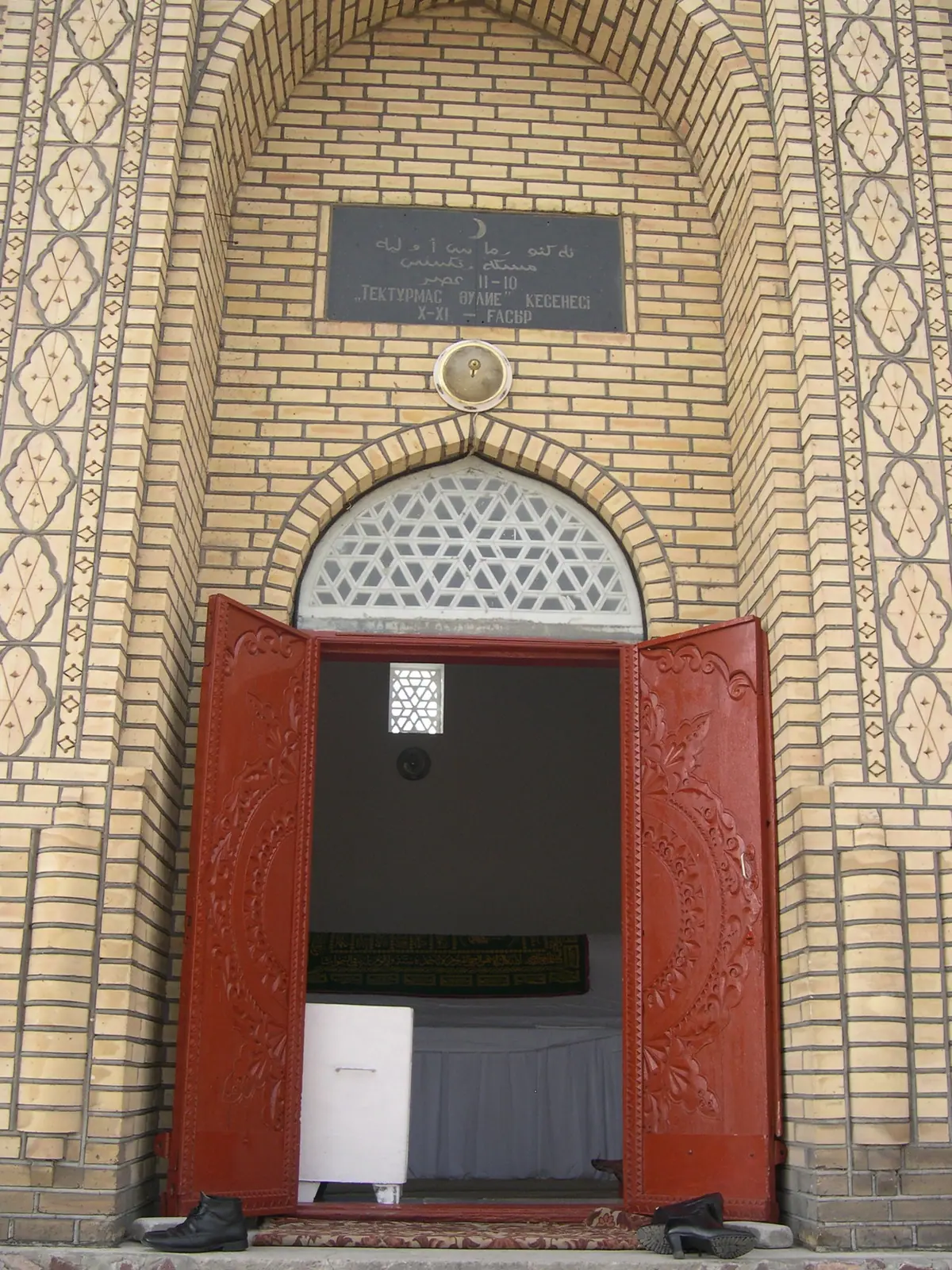
Real photos by travellers (Pexels, Unsplash, Wikimedia Commons); author and licence are given in each caption.
The Tekturmas Mausoleum stands on top of Tekturmas hill, on the south-eastern edge of Taraz, on the right bank of the Talas river. Locals honour it as the burial place of the saint Sultan Mahmud-khan, also called Tekturmas-ata. The original 14th–15th century tomb was taken down in 1935, so what stands now is a reconstruction from 2001–2002. It makes a short visit for anyone already in Taraz, not a destination worth a long detour on its own.
Where Tekturmas is and what kind of trip it is
Tekturmas is part of Taraz itself, a city in Zhambyl Region in the far south of Kazakhstan. The hill lies about 5 km in a straight line from the city centre point. Almaty is about 446 km away in a straight line and Shymkent about 161 km, so most foreign visitors will see it as a stop on an overland route between Almaty and the south, not as a day trip from Almaty.
The visit is short: a hilltop, a rebuilt domed tomb and the old burial ground around it. We could not confirm how to get from central Taraz to the hill by public transport. We also could not confirm whether a path or road leads to the top, so plan on asking locally or taking a taxi.
| Key fact | Detail |
|---|---|
| Location | South-eastern edge of Taraz, right bank of the Talas, top of Tekturmas hill |
| Original building | 14th–15th century, architect unknown |
| Who is buried here, by tradition | Sultan Mahmud-khan (Tekturmas-ata) |
| Current building | Reconstruction, 2001–2002 |
| Protection | Listed monument of republican significance since 1982 |
You are visiting a living shrine and an archaeological hill, not a surviving medieval building.
The building you see is a 21st-century reconstruction
Nothing of the medieval mausoleum stands today. In 1935 it was taken apart down to its foundations, and the bricks went for construction. The only record of how it looked is a late 19th-century photograph. The Russian Wikipedia dates it to the 1890s, and the Kazakh Wikipedia to the 1880s.
That photograph shows a square building of fired brick with a dome. It had pilasters at the corners and traces of plaster on the walls. The arched entrance faced west, towards Taraz. Only one decorated terracotta tile was ever found. From it, the archaeologist Mikhail Masson dated the building to the 15th century. The Kazakh Wikipedia instead puts its construction at the start of the 14th century.
The sources also give different accounts of the rebuild. The Russian Wikipedia says a tomb designed by A. Itenov went up in 2001 for Taraz’s 2000th anniversary. It adds that architect Nurlybek Baekeev carried out a reconstruction from the old photograph in 2002, and judges the result less expressive than the original facades. The Kazakh Wikipedia credits the 2002 rebuild to entrepreneur A. Momyshev, who paid for it himself. Either way, treat the current dome as an interpretation of a lost building, not a restored original.
Tekturmas-ata and the legend of the hill
By tradition, the mausoleum was built over the grave of Sultan Mahmud-khan, known as Tekturmas-ata. He is remembered for his part in spreading Islam in the region, and local people have long honoured him as a saint (auliye).
The name of the saint and the name of the hill are tied together. In 1864 the Russian commander Mikhail Chernyaev wrote about “the grave of a saint named Tek-Turmas, from whom these heights got their name”. That year the mausoleum was damaged when Russian troops took Aulie-Ata, during Kokand shelling of a river crossing near the heights.
When the tomb was dismantled in 1935, local people built a small structure next to the grave so they could keep performing ziyarat, the pilgrimage visit to a saint’s tomb. The site has stayed a place of devotion through every change to the building. Visitors should behave as they would at any working shrine.
A burial ground older than Islam
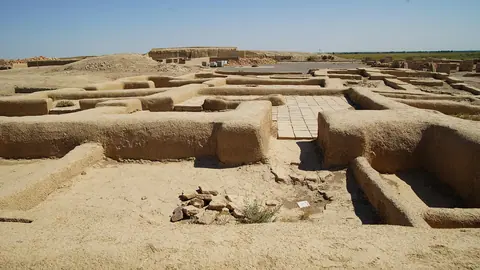
The hill matters to historians for more than the tomb. The necropolis around the mausoleum was used over different periods. Researchers found Zoroastrian ossuary burials there, which held bones after the flesh was gone, as well as medieval Christian and Muslim graves.
The site was studied by Vasily Kallaur in the late 19th century and surveyed by G. I. Patsevich in 1939–1940. The Kazakh Wikipedia adds that the area around the tomb was fenced in 1986 and given a plaque.
| Year | What happened |
|---|---|
| 14th–15th c. | Mausoleum built (date disputed) |
| 1864 | Damaged during Kokand shelling of a river crossing |
| Late 19th c. | Studied by Kallaur, photographed |
| 1935 | Dismantled for bricks |
| 1939–1940 | Surveyed by Patsevich |
| 1982 | Listed as a monument of republican significance |
| 1986 | Fenced, plaque installed |
| 2001–2002 | Rebuilt |
No medieval masonry survives on the hill.
When to go: spring and early autumn
May and September are the comfortable months for a hilltop stop at Tekturmas. July is hot and dry, and winter days barely rise above freezing. The figures below are computed ERA5 reanalysis normals for 2011–2020 at a grid point at 627 m, not weather-station readings. We could not confirm the height of the hill itself.
Day high, °C / Night low, °C · Rain/snow, mm
A computed reanalysis normal for these coordinates, not weather station records.
Monthly figures
| Month | Day high, °C | Night low, °C | Rain/snow, mm |
|---|---|---|---|
| Jan | 2.2 | -6.5 | 36 |
| Feb | 3.4 | -6.2 | 36.2 |
| Mar | 12.1 | 1.2 | 58 |
| Apr | 19.2 | 7.2 | 63.2 |
| May | 25.7 | 12 | 36.5 |
| Jun | 31 | 16.7 | 21.5 |
| Jul | 33.6 | 18.9 | 6 |
| Aug | 31.8 | 17 | 8.3 |
| Sep | 25.8 | 11.2 | 7.4 |
| Oct | 17.5 | 4.6 | 34.5 |
| Nov | 7 | -3 | 46.1 |
| Dec | 2.5 | -6.3 | 31.6 |
In July, average highs reach about 33.6°C, and August is close behind at 31.8°C. Rain almost stops from June to September, with only 6.0 mm in July. There is little shade on an open hill, so come early in the morning. May averages about 25.7°C and September about 25.8°C, both easier for walking. April is the wettest month at about 63 mm. From December to February, average lows are around −7°C and highs around 2–4°C. Winter visits are still possible for a short stop.
Combining Tekturmas with the rest of southern Kazakhstan
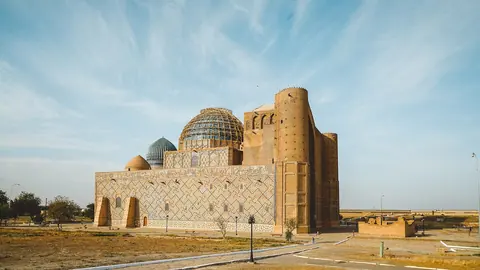
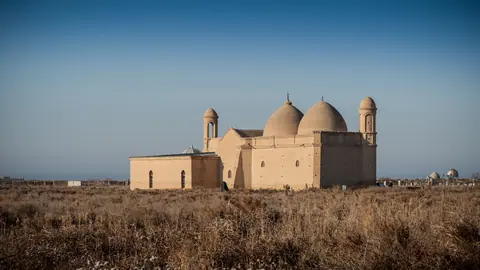
Taraz lies between Almaty and the Shymkent and Turkistan areas. That makes Tekturmas easy to add to a route of shrines and old cities. The Mausoleum of Khoja Ahmed Yasawi in Turkistan is about 261 km away in a straight line. The tomb of Arystan Bab and the ruins of Otrar are both about 255 km from Tekturmas. The walled city of Sauran is about 304 km away.
Compared with those sites, Tekturmas is small and heavily rebuilt. Its value lies in the legend, the old burial ground and the location above the Talas, not in its architecture.
- How to reach the hill from central Taraz by public transport, and whether there is a road or footpath to the top
- Opening hours, any entry fee, and rules for entering the tomb or taking photos
- What the ‘Tekturmas ethno-historical complex’ contains today and whether it covers the hill
- The elevation of the hill compared with the 627 m climate grid point
Tekturmas Mausoleum in Taraz: tips before you go
- Dress modestly and keep your voice low near the grave: local people still come here for ziyarat, the visit to a saint's tomb.
- July highs average about 33.5°C with almost no rain, so climb early in the morning and carry water up the hill.
- The arched entrance of the original building faced west towards Taraz.
- Pair the stop with Turkistan: it is about 261 km away in a straight line, and Shymkent about 161 km, on the same southern route.
More to see nearby


Frequently asked questions
Who is buried at Tekturmas?
Is the Tekturmas Mausoleum original?
How old is the Tekturmas site?
Where is Tekturmas in Taraz?
Can visitors go inside or pray at Tekturmas?
Sources
Read also
 Almaty Zoo in Kazakhstan: opening hours and how to visit
 Ayusai Gorge, Almaty: visitor centre and waterfall trail
 Gorelnik Gorge above Medeu: waterfalls, trail and season
 Kamenskoe Plateau above Almaty: observatory and trails
 Pervomaiskie Ponds near Almaty: location, swimming, season
 Saty village: base for the Kolsai and Kaindy lakes