Spassk Memorial, the prisoner-of-war cemetery outside Karaganda
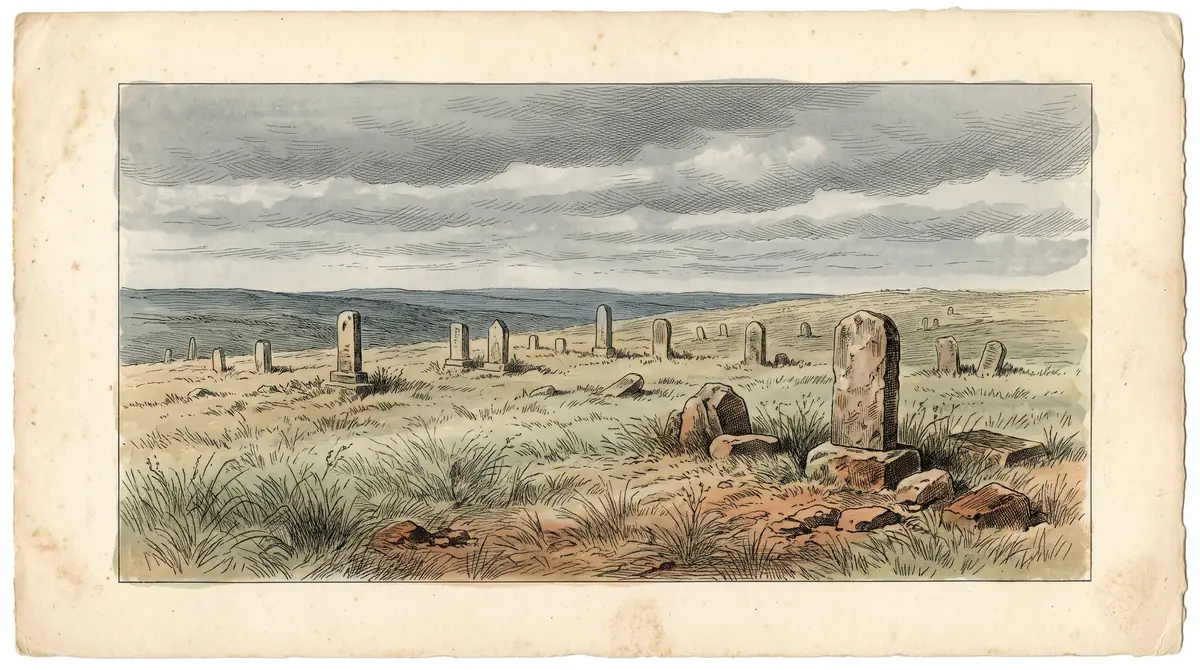
A memorial cemetery in the village of Spassk where 5,152 prisoners of war and internees of the Second World War lie, alongside victims of Soviet repression. More than a dozen nations have since raised their own monuments here.
Spassk Memorial, the prisoner-of-war cemetery outside Karaganda: when to go, month by month
- January: possible
- February: possible
- March: possible
- April: good
- May: best time
- June: best time
- July: best time
- August: best time
- September: best time
- October: good
- November: possible
- December: possible
An open-air memorial that can be visited year-round in principle; we have no climate data for this point, so the warmer months are marked as easier only by the nature of an outdoor site.
Spassk Memorial, the prisoner-of-war cemetery outside Karaganda: why go
Spassk Memorial cemetery
A burial ground for 5,152 prisoners of war and internees of many nations, plus Soviet prisoners of Karlag and the later Steppe camp branches.
Camp No. 99, founded 1941
Created on 5 July 1941 on a former copper smelter site, it was the largest POW camp in Soviet Kazakhstan, holding 66,000 to 70,000 people over time.
Reaching Spassk from Karaganda
The village lies by the M-36 highway about 33 km in a straight line from Karaganda; Wikipedia articles put the camp 30 or 45 km from the city.
Visiting Spassk in the open air
All monuments stand outdoors. We could not confirm climate normals, opening hours or facilities, so check the weather and access before setting out.
A Philippines marker at Spassk
The Kazakh Wikipedia lists the Philippines among countries with memorial signs here; the Russian article does not, so confirm it on site.
The Spassk Memorial is a cemetery and history monument in the village of Spassk, Karaganda region, where prisoners of war and internees of the Second World War are buried together with repressed Soviet citizens. It sits beside the M-36 highway about 33 km in a straight line from Karaganda. It suits travellers who want to understand the camp history of central Kazakhstan rather than see landscapes.
Where Spassk is: a short hop from Karaganda
Spassk is a village in Abay district of Karaganda region, right by the international M-36 highway that runs from Yekaterinburg to Almaty. Karaganda is the obvious base. Astana is about 222 km away in a straight line, so a visit from the capital means a long day or an overnight in Karaganda.
The two Wikipedia articles disagree on the distance. The Russian one puts the old camp 30 km from Karaganda; the Kazakh one says 45 km south of the city. Our computed straight-line figure is about 33 km. The road distance will be longer than the straight line.
| Key data | Figure |
|---|---|
| Location | Spassk village, Abay district, Karaganda region |
| Road | Beside the M-36 (Yekaterinburg–Almaty) |
| From Karaganda | about 33 km straight line; 30 or 45 km by Wikipedia |
| From Astana | about 222 km straight line |
| Buried POWs and internees | 5,152 |
| Camp founded | 5 July 1941 |
For a foreign visitor the table says one thing: this is a short trip out of Karaganda, not a destination on its own.
What happened here: Camp No. 99
Spassk was the site of Camp No. 99, the largest prisoner-of-war and internee camp in Soviet Kazakhstan. It was the first of four such camps set up in Karaganda region after the war began, created on 5 July 1941 on the base of a local branch of Karlag, the Karaganda labour camp system. That branch itself occupied the grounds of the former Spassk copper smelter.
Figures for how many people passed through vary: from 66,160 (or 66,746) up to 70,000 prisoners of war and internees. By the start of mass repatriation the camp had 24 sub-sites, including Spassk, Temirtau, Saran, Dubovka, Fyodorovka and several coal mines, built to hold up to 30,000 people.
Prisoners built much of Karaganda. Their work included mine No. 38 with its processing plant, mines No. 105 and 106, the Summer Theatre (since demolished, now the site of the Seifullin Kazakh Drama Theatre) and a trauma hospital that still operates as the regional centre of traumatology and orthopaedics.
Who is buried at the Spassk Memorial
The cemetery holds 5,152 prisoners of war and internees: Germans, Japanese, Romanians, Austrians, Poles, Italians, Finns, Czechs, Slovaks, Hungarians and others. It also holds Soviet prisoners of the Spassk branch of Karlag from before 1941, and after 1948 convicts of the Spassk branches of the Steppe, Lugovoy and Peschany camps.
The Kazakh Wikipedia adds that foreign soldiers were held in the Peschany camp at Spassk, and lists Moldovans and Lithuanians among later prisoners. This is a burial ground first and a monument second, and visitors are expected to treat it that way.
The national monuments, in the order they appeared
After the Soviet Union collapsed, foreign governments began placing memorials to their own citizens, and the site grew into a field of national monuments. Japan was the first. The timeline below helps if you are looking for a specific country’s marker.
| When | Monument |
|---|---|
| First, before or in 1994 | Japan |
| 1994 | France, Italy, Finland |
| 1995 | Germany |
| Later, dates not given | Crosses from Poland, Hungary, Lithuania, Ukraine, Armenia, Russia, Romania |
| 2004 | Memorial to victims of political repression of all nationalities |
| After 2004 | Stele to Russian citizens repressed under Stalin in central Kazakhstan |
| May 2014 | Belarusians |
| 31 May 2015 | Estonians, and Spaniards of the Blue Division |
The Kazakh Wikipedia also lists the Philippines among the countries with a memorial sign here, which the Russian article does not mention. It describes a monument shaped like a shanyrak, the crown of a yurt roof, raised by people of Karaganda for all victims of political repression who died on Kazakh soil. By mid-2013 work was under way to add the complex to the historical heritage register; we could not confirm whether that has been completed.
Planning a visit without a car or Russian
We could not confirm any public transport to Spassk, opening hours, entry rules or on-site facilities. Without a car, the realistic approach is to arrange a driver from Karaganda and agree a waiting time in advance.
Locals will know the place as Спасск (Spassk). Our sources do not say what languages the signage uses; we could not confirm whether there is English information on site. The memorials stand in the open, and we have no climate data for this point, so check the forecast before you go.
Fitting Spassk into a central Kazakhstan route
Spassk pairs naturally with Karaganda itself, where the prisoner-built trauma hospital still operates. Other places on this site are far away: Lake Balkhash is about 353 km in a straight line, and the granite hills of Ulytau about 470 km. Both make sense only as separate legs of a longer overland trip through the region.
Luglag and its Spassk division appear in our table of the Gulag in Kazakhstan.
- Public transport or shared taxis from Karaganda to Spassk
- Opening hours, entry rules and whether the site is staffed
- Whether there is English signage or guiding on site
- Whether the complex was added to the heritage register after 2013
- Whether a Philippine memorial sign stands at the site
Spassk Memorial, the prisoner-of-war cemetery outside Karaganda: tips before you go
- Use Karaganda as your base: Spassk is about 33 km away in a straight line, beside the M-36 Yekaterinburg–Almaty highway.
- Looking for your country's monument? Japan came first, France, Italy and Finland in 1994, Germany in 1995, Estonia and Spain in 2015.
- Ask drivers for Спасск (Spassk), a village in Abay district of Karaganda region, and agree a waiting time for the return.
- This is a cemetery for over 5,000 people: keep voices low and do not climb on crosses or memorials.
More to see nearby


Frequently asked questions
Is the Spassk Memorial worth visiting?
How many people are buried at Spassk?
Which countries have monuments at Spassk?
How far is Spassk from Astana?
Sources
Read also
 Almaty Zoo in Kazakhstan: opening hours and how to visit
 Ayusai Gorge, Almaty: visitor centre and waterfall trail
 Gorelnik Gorge above Medeu: waterfalls, trail and season
 Kamenskoe Plateau above Almaty: observatory and trails
 Pervomaiskie Ponds near Almaty: location, swimming, season
 Saty village: base for the Kolsai and Kaindy lakes