Lake Shaitankol: when to go, month by month
- January: off season
- February: off season
- March: possible
- April: possible
- May: good
- June: best time
- July: best time
- August: best time
- September: good
- October: possible
- November: possible
- December: off season
June to August are the only months with daytime highs around 20 °C, while November to March stay below freezing.
Lake Shaitankol: why go
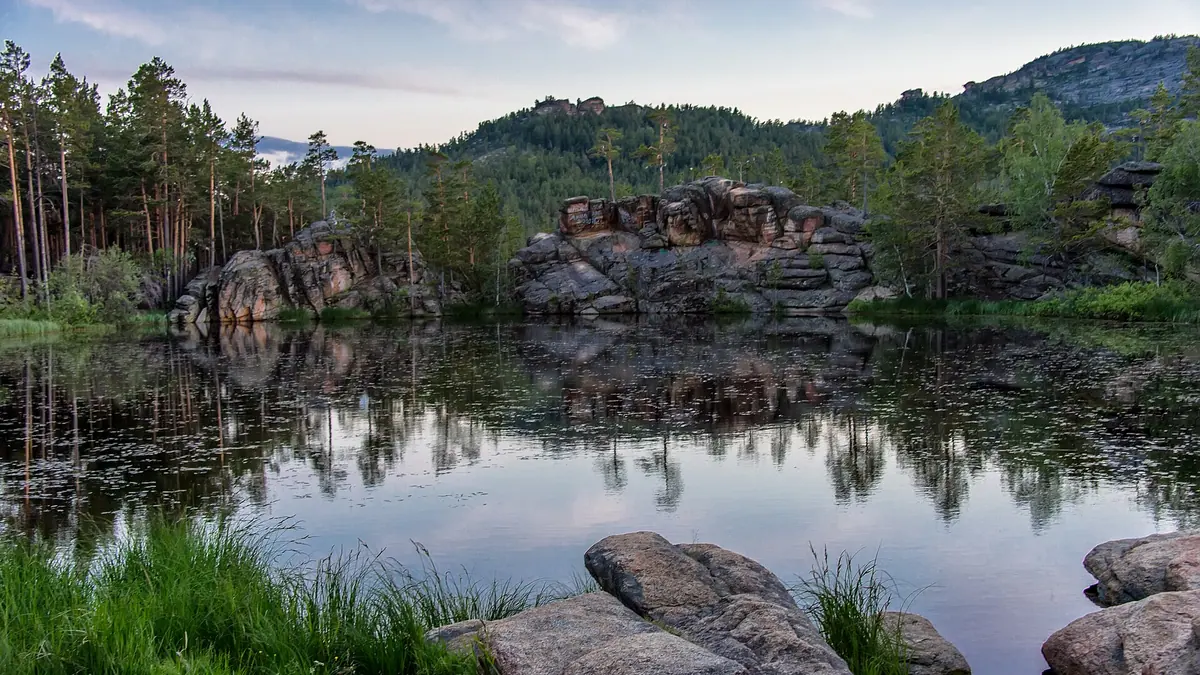
Shaitankol's granite bowl
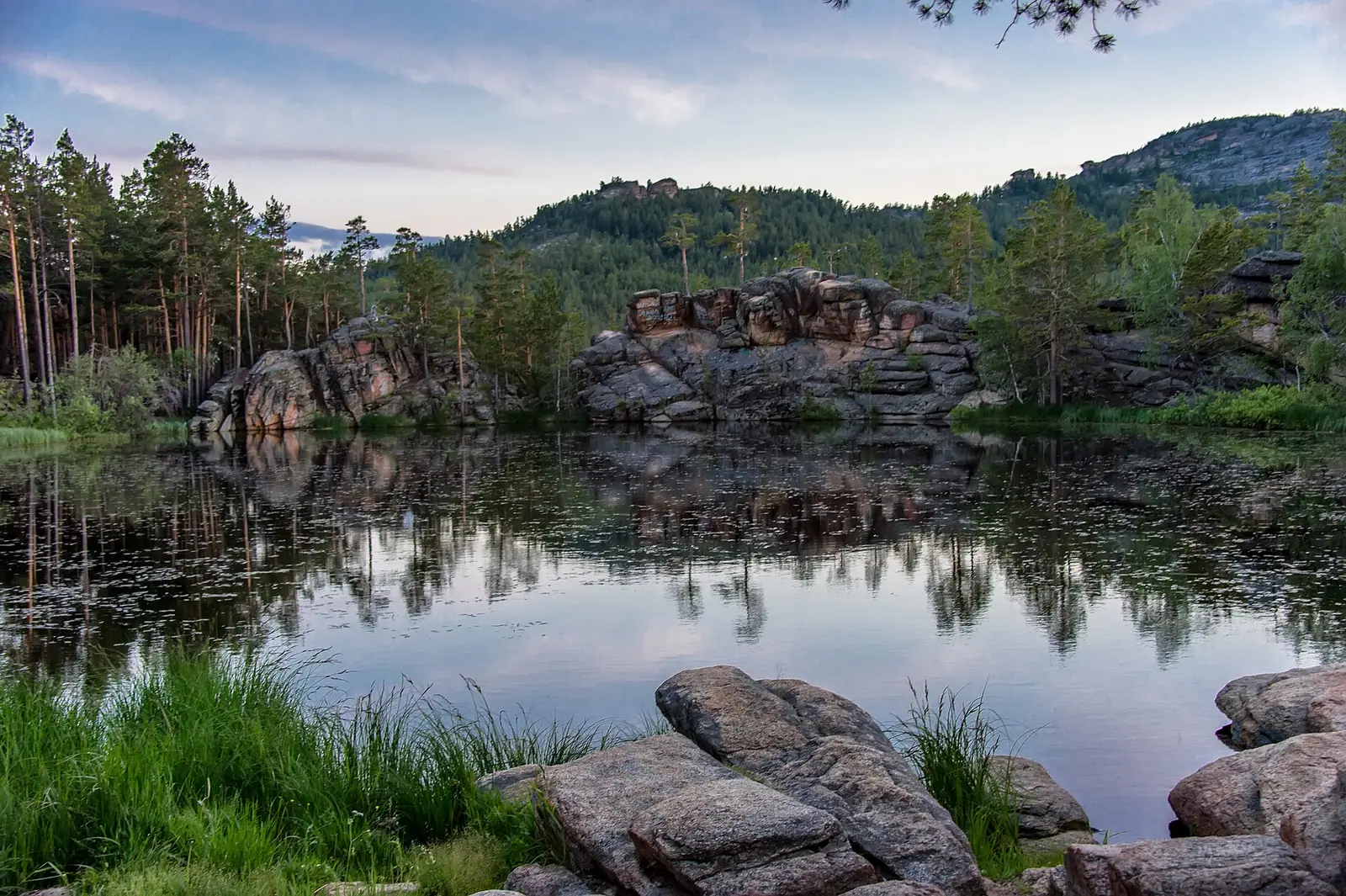
A pool about 60 m long and 40 m wide, walled on three sides by layered granite cliffs 10 m and higher, with clear water over a stony bottom.
Pine forest around Shaitankol
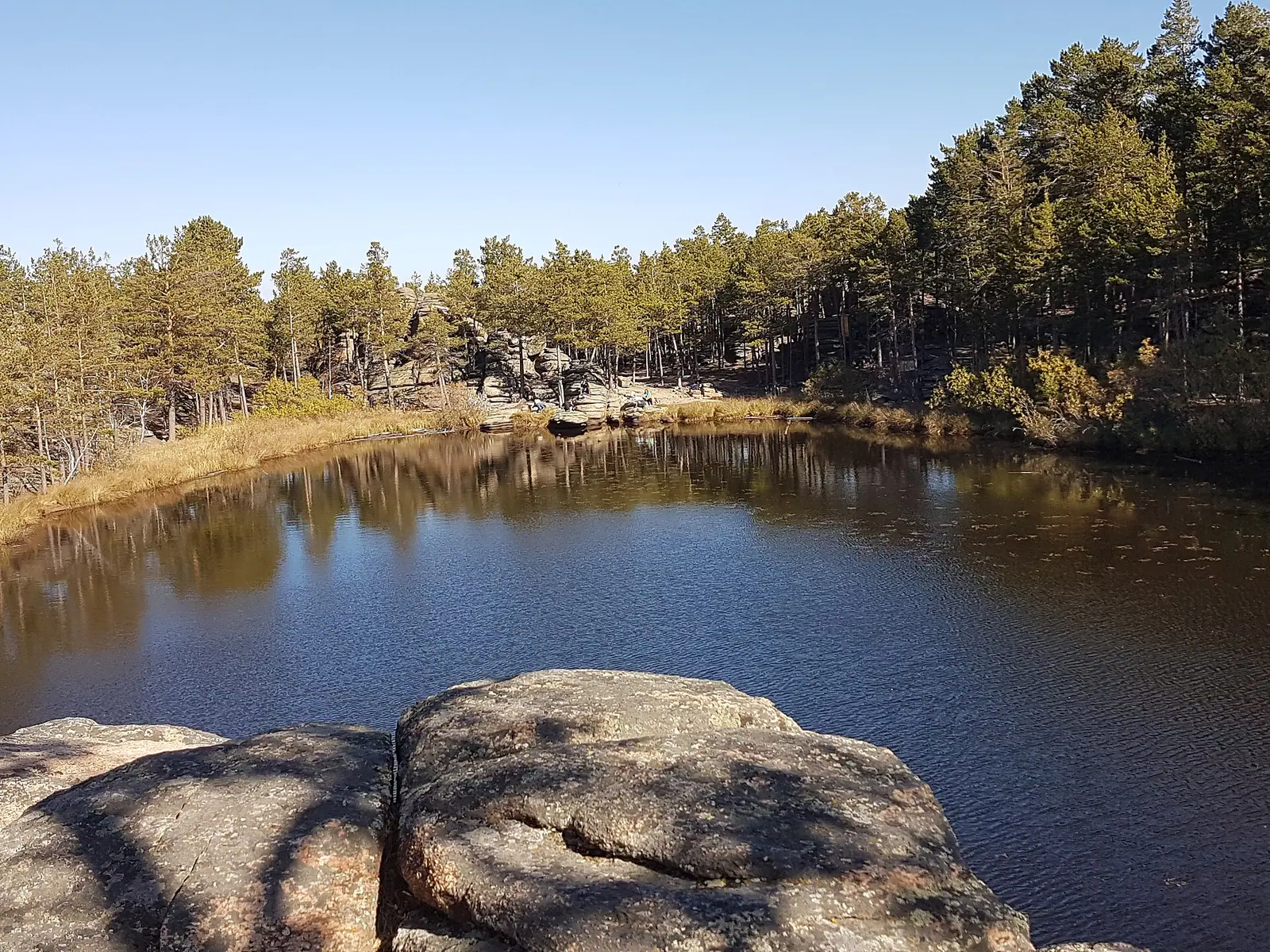
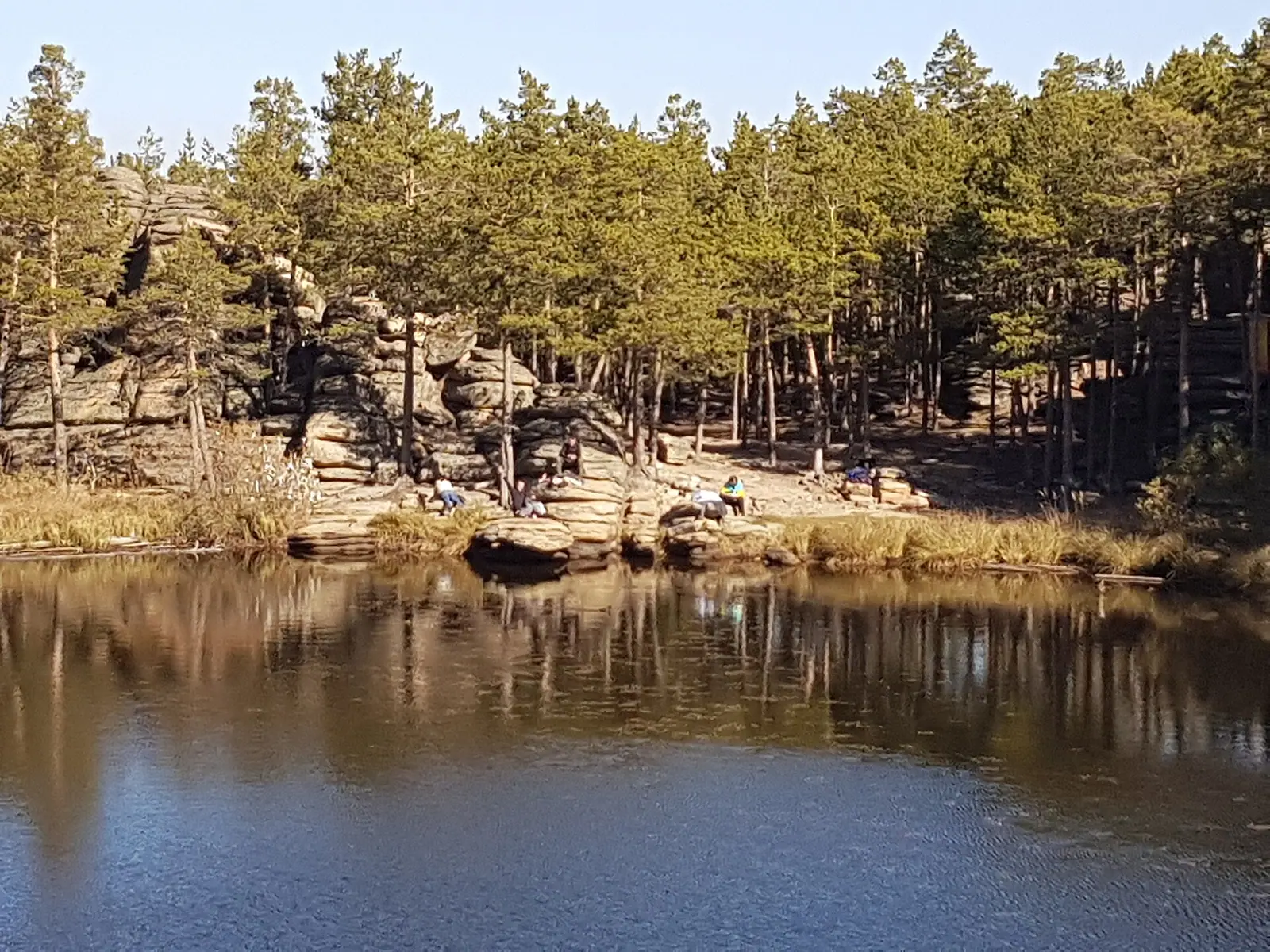
Pine, birch, poplar and raspberry crowd the shores. Their shade keeps the lake from evaporating, and in wet years it overflows through a channel to the south.
A short hop from Karkaraly
The lake is about 5 km from Karkaraly, which is itself about 171 km in a straight line from Karaganda, so plan it as part of a stay in town.
Summer at Shaitankol
June to August brings highs around 20–21 °C at roughly 1,200 m, but July is the wettest month with about 78 mm of precipitation.
The cross seen in 1999
A former park head recalls bringing cosmonaut Toktar Aubakirov here in 1999, when Aubakirov's son spotted a large cross lying on the lake bottom.
Lake Shaitankol in photos
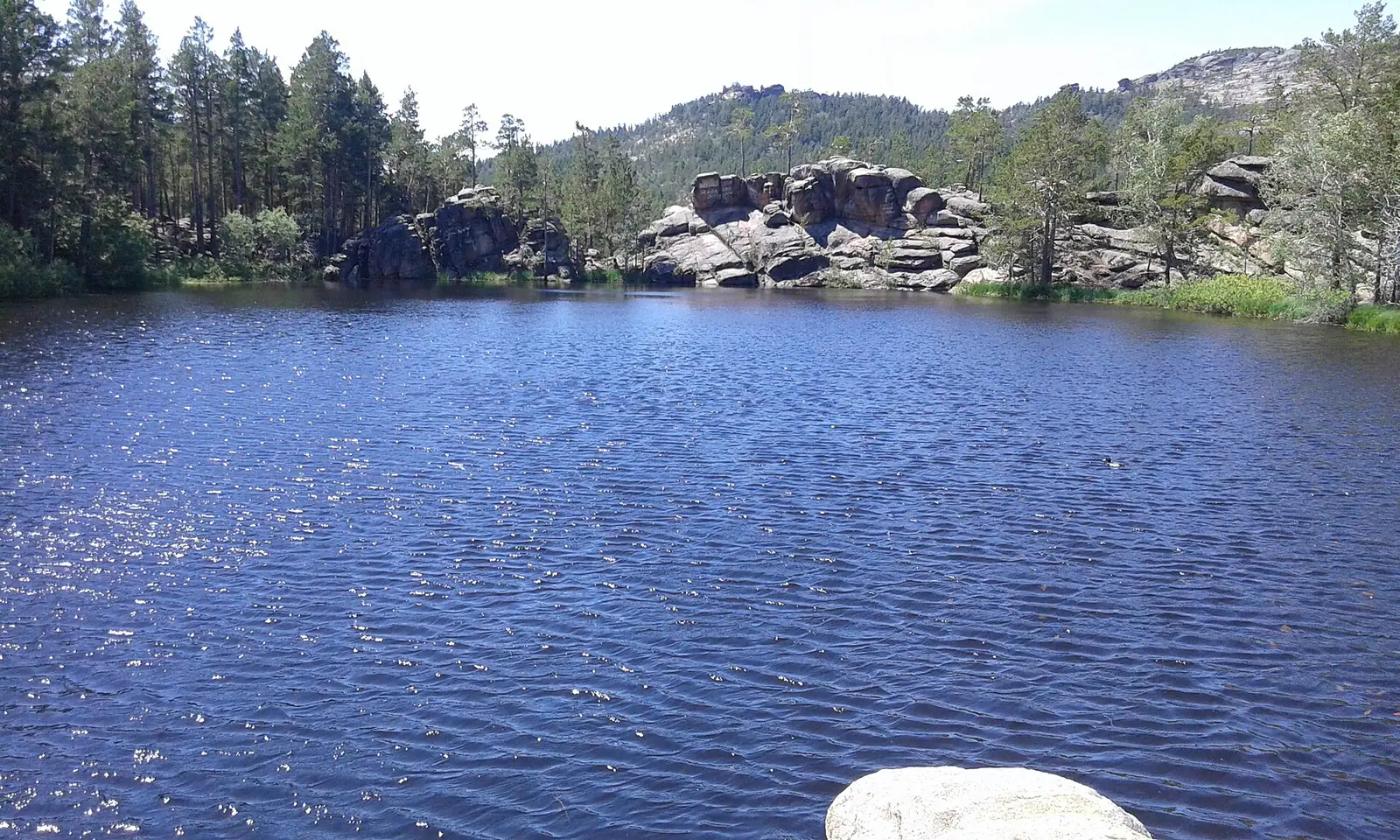
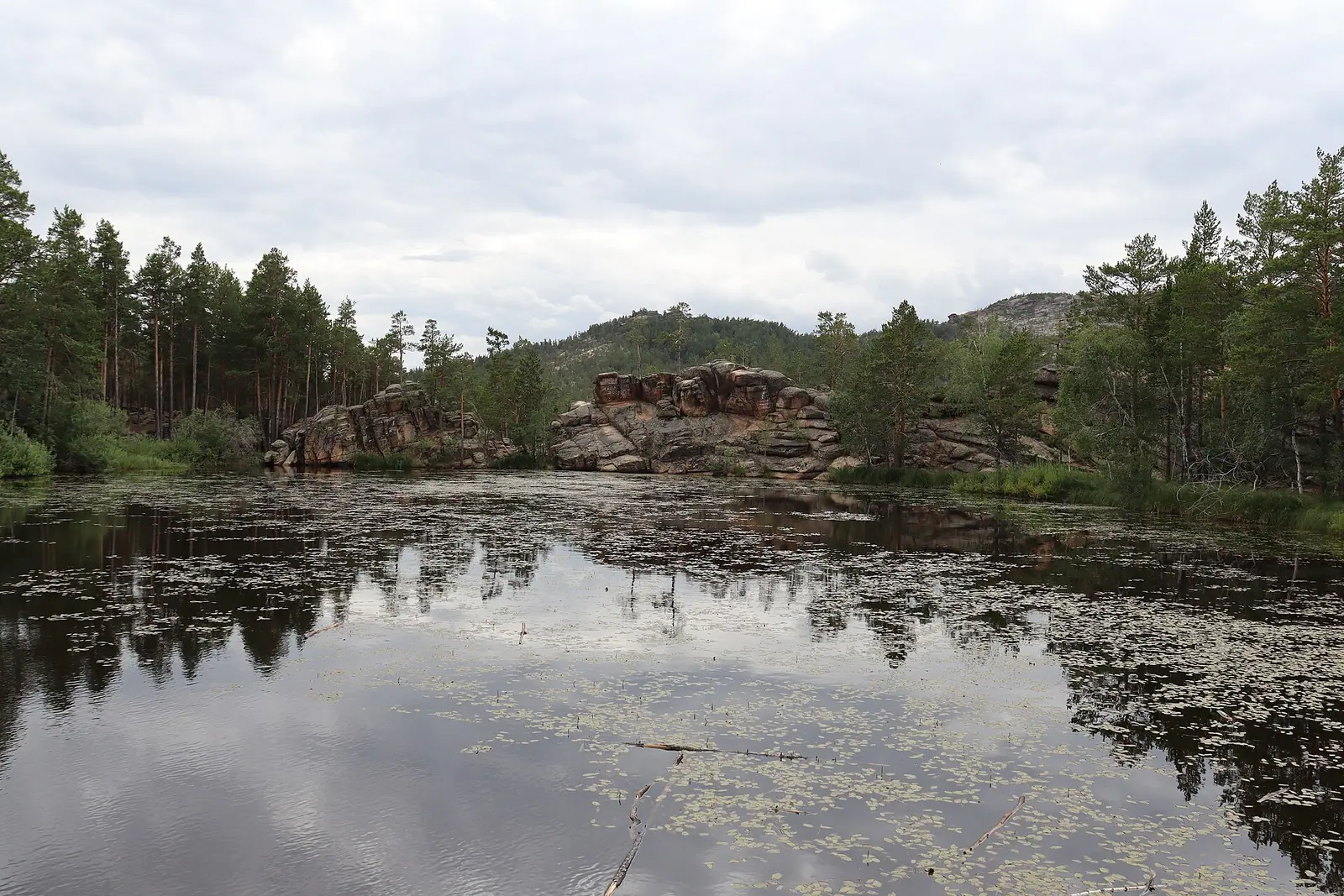
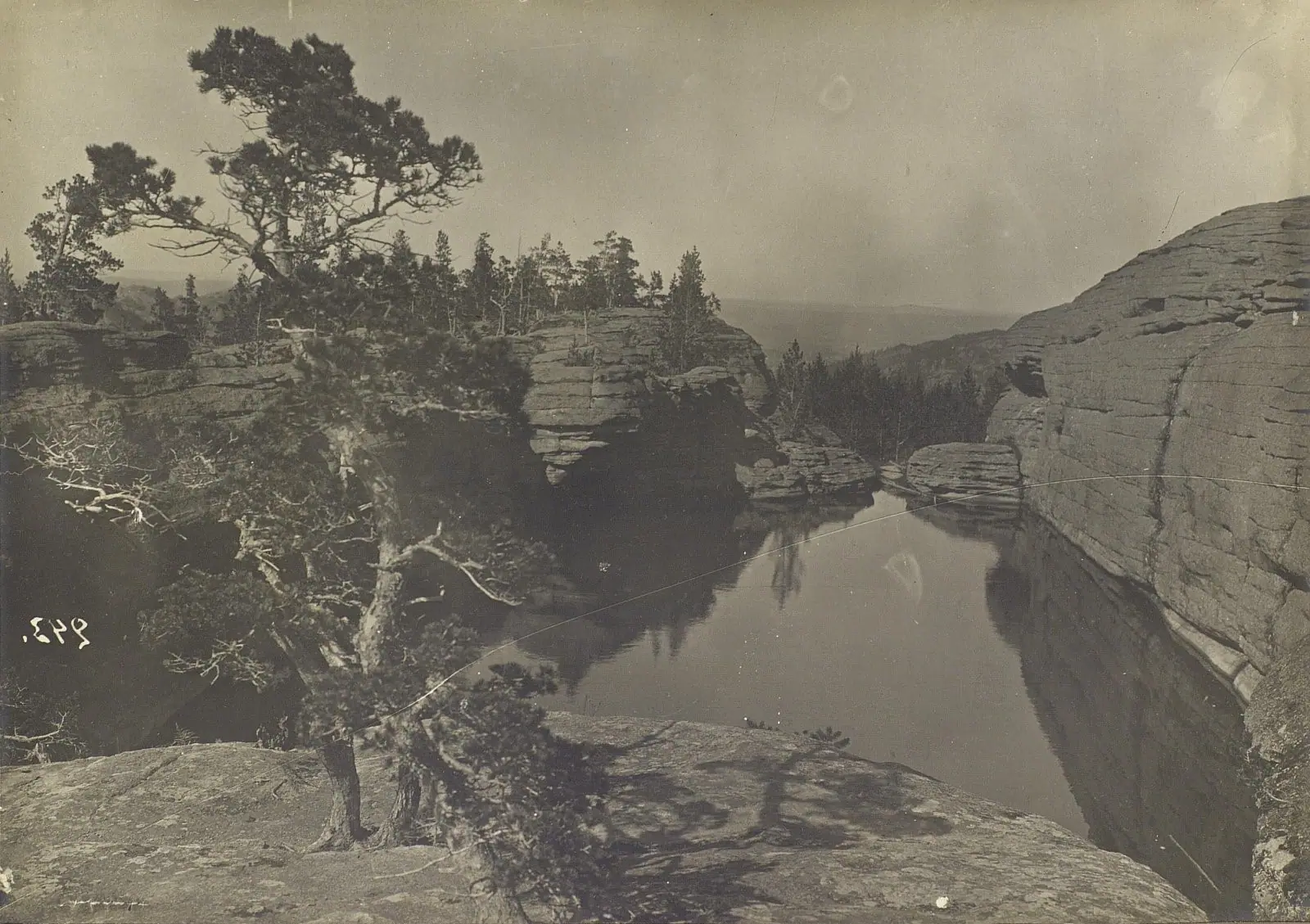
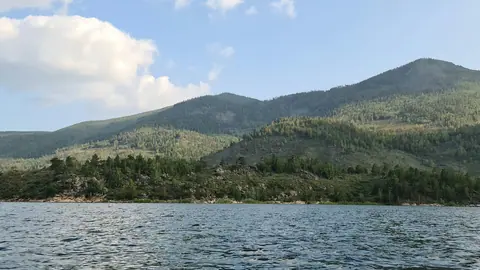
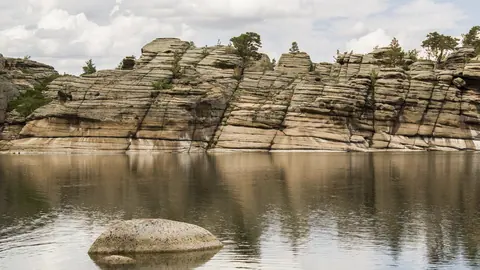
Real photos by travellers (Pexels, Unsplash, Wikimedia Commons); author and licence are given in each caption.
Lake Shaitankol is a small lake about 5 km from the town of Karkaraly in Kazakhstan’s Karaganda Region. It is surrounded by weathered granite cliffs and pine forest. It is a short side trip from Karkaraly rather than a destination in its own right, and its main draw is a local legend about a cross that was thrown into the water.
Where Shaitankol is and what kind of trip it takes
Shaitankol sits among granite cliffs on Bugyly mountain near Karkaraly. The nearest large city among the reference points is Karaganda, about 171 km in a straight line. Astana is about 341 km in a straight line and Pavlodar about 340 km. Road distances will be longer.
The lake is best treated as part of a stay in Karkaraly. The lake is only 5 km from town, so it can easily fill a half day once you are there. We could not confirm public transport to Karkaraly, a marked trail from town to the lake, or whether English is spoken locally. A traveller with no car and no Russian should plan the Karaganda to Karkaraly leg in advance.
A pool, not a big lake: the key figures
Shaitankol is tiny. The Kazakh Wikipedia gives it as 60 m long and 40 m wide, with an average depth of 2 m, at about 1,200 m above sea level on Bugyly mountain. The English Wikipedia says the depth remains unknown, so treat the 2 m figure with some care. Even the direction from town differs between sources.
| Point | What sources say |
|---|---|
| Distance from Karkaraly | 5 km; west (Russian Wikipedia) or southwest (English and Kazakh Wikipedia) |
| Size | 60 m long, 40 m wide (Kazakh Wikipedia) |
| Depth | average 2 m (Kazakh Wikipedia); unknown (English Wikipedia) |
| Elevation | about 1,200 m, on Bugyly mountain (Kazakh Wikipedia) |
| Water source | snowmelt (Russian); groundwater and precipitation (English); snow and rain (Kazakh) |
| Shores | granite cliffs 10 m and higher on the south, west and north sides |
A walk around such a small pool takes little time.
Granite cliffs and pine forest around the water
The lake is enclosed by half-ruined layered granite that the Russian Wikipedia likens to a “layer cake”. The rocks are overgrown with pine. The Kazakh Wikipedia lists pine, birch, poplar, raspberry and other shrubs. It says this thick forest shades the water and protects it from heavy evaporation.
The water is described as clear, with a stony bottom that does not let water seep away. The lake does not dry out. In wet years excess water spills over and runs off through a trough-like channel on the southern shore. The Kazakh Wikipedia also notes that the lake appears in Sabit Mukanov’s poem “Sulushash” and that in summer it is a well-known place to relax.
The Shaitankol legend: Devil’s Lake and the sunken cross
The name means “Devil’s Lake”, and in Russian it is also called Chyortovo. Many folk tales surround it. People say that some visitors have seen devils, a mysterious old man and other visions here.
The best-known story is dated by local recollection to 1905. At the request of local residents, Bishop Mikhail set up a cross on the western shore and renamed the lake Holy Lake. The cross later disappeared and the old name returned. Some say someone threw the cross into the water, where it is said to remain.
The Kazakh Wikipedia adds a later account from Tiyshbek Tokhmetov, who for many years headed the Karkaraly national park. He recalls that in 1999 he brought Toktar Aubakirov, Kazakhstan’s first cosmonaut, to the lake. Aubakirov’s son then shouted that he could see a large cross lying on the bottom. A further story tells of a rash that troubled Aubakirov afterwards and that cleared only after he returned and bathed in Shaitankol. These are recollections and legends, recorded as such.
When to go to Shaitankol
June to August is the comfortable window, with daytime highs around 20 to 21 °C. The figures below are computed ERA5 reanalysis normals for 2011 to 2020 at a grid point at 1,139 m, close to the lake’s reported 1,200 m, so they are only a rough guide to conditions at the lake itself.
Day high, °C / Night low, °C · Rain/snow, mm
A computed reanalysis normal for these coordinates, not weather station records.
Monthly figures
| Month | Day high, °C | Night low, °C | Rain/snow, mm |
|---|---|---|---|
| Jan | -12.7 | -21.2 | 7.8 |
| Feb | -10.8 | -20.1 | 13.5 |
| Mar | -2.9 | -11.7 | 22.5 |
| Apr | 9.8 | -1.9 | 34.4 |
| May | 15.2 | 2.3 | 31.6 |
| Jun | 20.2 | 8.8 | 54.8 |
| Jul | 21.2 | 10.2 | 72.3 |
| Aug | 20.2 | 8.1 | 44.7 |
| Sep | 14.2 | 2.2 | 26 |
| Oct | 5.8 | -3.9 | 35.2 |
| Nov | -5.2 | -13.2 | 26.5 |
| Dec | -10.4 | -18.3 | 15.1 |
Summer is also the wettest time. July averages about 72 mm of precipitation and June about 55 mm, so pack a rain layer. Nights stay cool even in July, with lows near 10 °C. May and September are possible but chilly, with highs of about 15 °C and 14 °C and lows near 2 °C. From November to March daytime highs stay below freezing, and January lows average about -21 °C.
| Period | Days / nights | What it means |
|---|---|---|
| June to August | about 20–21 °C / 9–11 °C | Main season; showers likely |
| May, September | about 14–15 °C / 3 °C | Quieter, cold mornings |
| April, October | about 6–10 °C / near or below 0 °C | Cold; possible frost |
| November to March | below 0 °C / down to about -19 °C | Deep winter |
If you are combining central Kazakhstan lakes, Zerenda has a similar pine-and-hill setting further north. Lake Balkhash is about 320 km in a straight line to the south.
- Public transport from Karaganda to Karkaraly and from town to the lake
- Whether a marked trail leads from Karkaraly to Shaitankol
- Whether the lake lies within Karkaraly National Park and any entry fee or permit rules
- Whether swimming is allowed and safe, given the unconfirmed depth
Lake Shaitankol: tips before you go
- Base yourself in Karkaraly: the lake is only about 5 km away, while Karaganda is about 171 km in a straight line.
- Pack a rain layer for summer: July averages about 78 mm of precipitation, the wettest month of the year.
- Bring a warm top even in July, as night lows average about 11 °C at the reanalysis grid point.
- Sort out the Karaganda to Karkaraly leg before you go; we could not confirm buses or English signage.
More to see nearby

Frequently asked questions
What does Shaitankol mean?
What is the Shaitankol legend?
How far is Lake Shaitankol from Karkaraly?
How deep is Shaitankol?
Sources
Read also
 Burabay or Bayanaul: which to choose for a northern summer
- Trips from Karaganda, Kazakhstan: Gulag memorials, granite hills and steppe lakes
- What to see around Karaganda, Kazakhstan: Gulag memory, granite hills and steppe lakes
- Trips from Pavlodar: where to go and how far each place is
 Lake Zhasybay: a clear lake inside the Bayanaul hills of north-east Kazakhstan
 Lake Toraigyr: a small mountain lake in Bayanaul National Park