Verified: 2026-10
Saryagash: when to go, month by month
- January: good
- February: good
- March: good
- April: best time
- May: best time
- June: good
- July: possible
- August: possible
- September: best time
- October: best time
- November: good
- December: good
The sanatoriums are open all year; summer in the south is hot, so spring and autumn suit walks and day trips better.
Saryagash: why go
Saryagash hot mineral water
Lightly mineralised hot water: 49–50 °C per the Soviet Encyclopedia, 37–42 °C per welcome.kz (2025), used for baths and drinking cures.
Drilling for oil, finding Saryagash
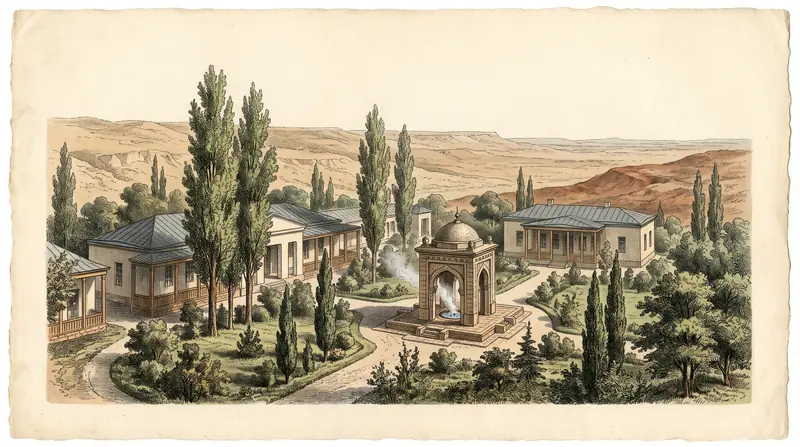
In 1946 oil geologists on the Keles hit hot water at 1,400 m; the first 250-bed spa complex opened at the end of 1963.
Kokterek, the resort village
Most Saryagash sanatoriums are in Kokterek, once called Kazminvody, 14–16 km from town; Tengrinews counted over 40 resort zones in 2020.
By train to Saryagash station
The station is on the Tashkent–Arys line, with direct trains from Almaty, Astana, Shymkent and Taraz and a 20–30 minute taxi to the spas.
Saryagash without a border permit
Decree No. 356 names the town among those where border-zone permits for foreigners are waived; you still need ID.
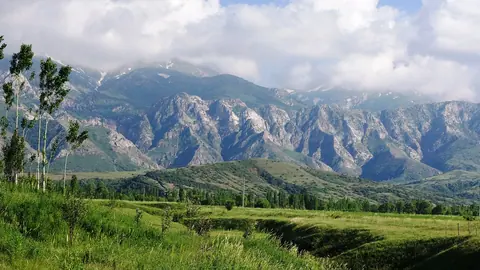
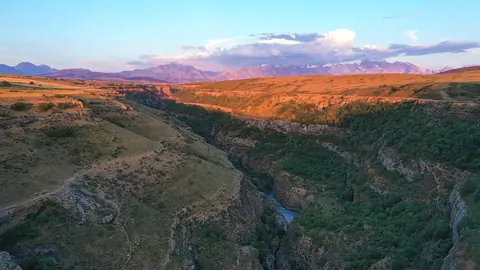
Saryagash in photos
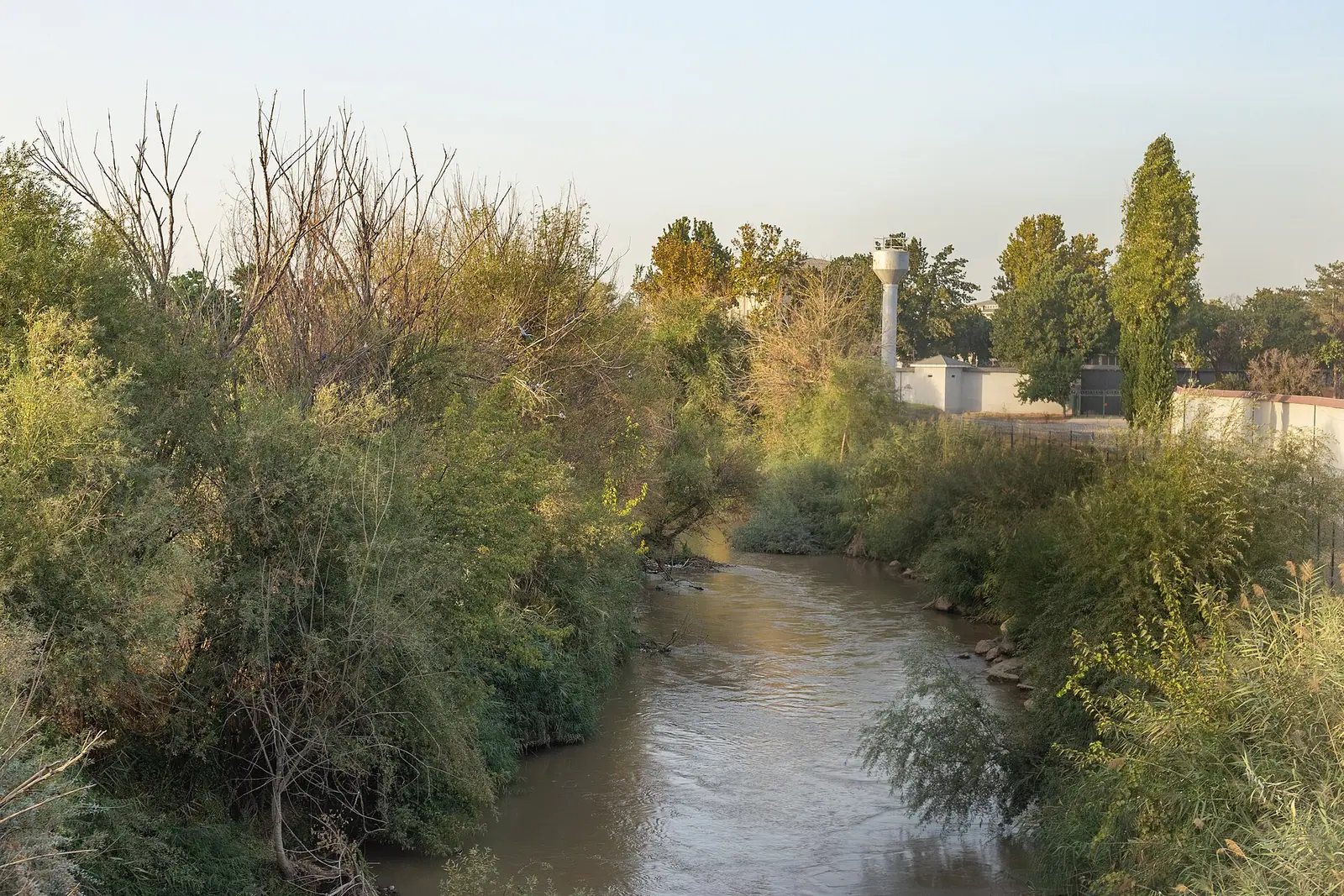
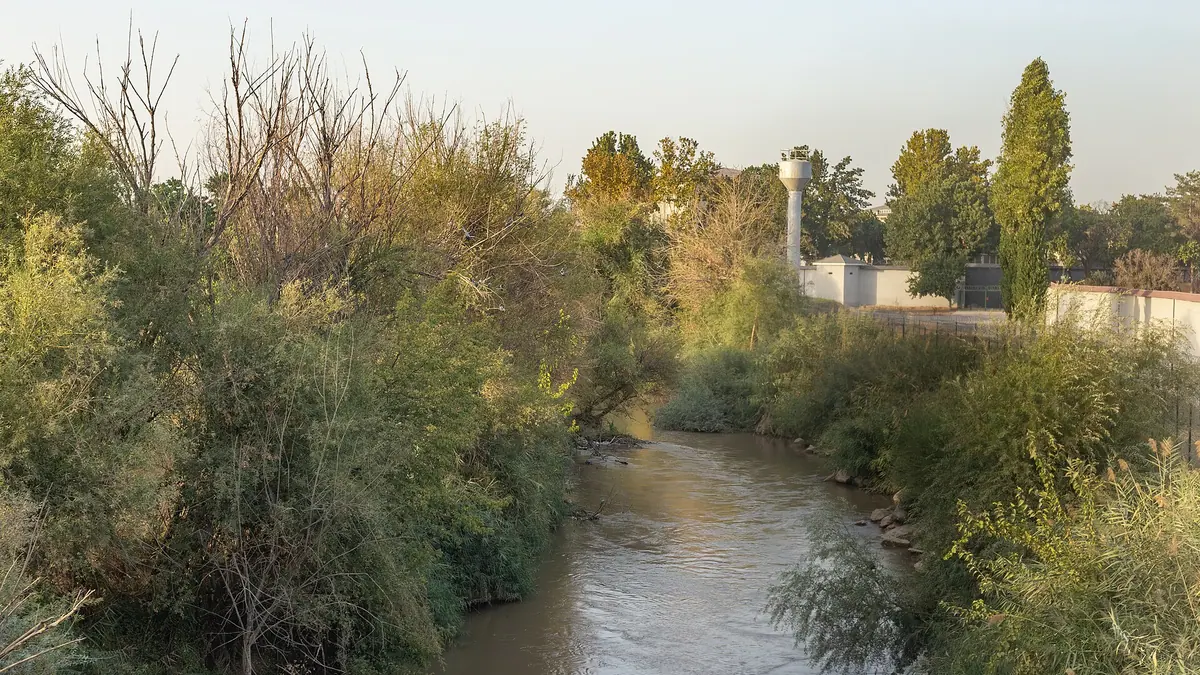
Real photos by travellers (Pexels, Unsplash, Wikimedia Commons); author and licence are given in each caption.
Saryagash is a spa resort in southern Kazakhstan, on the Uzbek border, where sanatoriums use hot mineral water tapped by a well about 1,400 m deep. The name covers both a district town in Turkistan Region and the resort itself, which is mostly in the village of Kokterek, 14–16 km from town. It is about 130 km from Shymkent and a few dozen kilometres from Tashkent across the border.
Saryagash is a sanatorium resort, not an open-air hot spring
If you picture natural pools in the open, adjust your expectations. Saryagash is a cluster of medical complexes with rooms, meals, mineral baths and treatments prescribed by a doctor. When people in Kazakhstan say they are “going to Saryagash”, they usually mean this resort, not the town.
The town of Saryagash is the centre of the district of the same name. It became a town in 1968 and was called Saryagach until 1997, according to Russian Wikipedia. On 1 October 2023 it had 62,030 residents. It has mineral water bottling plants and is known above all for sanatorium treatment.
The spa area is the village of Kokterek, which used to be called Kazminvody. Tengrinews (2020) puts almost all the sanatoriums there, 15–16 km from town beside the spring; the welcome.kz guide (2025) gives 14 km. So if you book a room, check whether it is in town or in Kokterek.
The table below gathers the key figures. Several of them differ between sources, so ranges are shown where they do.
| Parameter | Value |
|---|---|
| Where | Saryagash District, Turkistan Region, on the Uzbek border |
| Spa area | Kokterek village (formerly Kazminvody), 14–16 km from town |
| Shymkent to Saryagash | about 130 km; Kokterek sanatorium 127 km |
| Tashkent to Saryagash | 10 km (Russian Wikipedia); about 25 km (English Wikipedia); station 20 km north of Tashkent (Great Soviet Encyclopedia) |
| Depth of the first well | about 1,400 m |
| Water temperature | 49–50 °C (Great Soviet Encyclopedia); 37–42 °C (welcome.kz, 2025) |
| Number of sanatoriums | 27 (Inbusiness, 2018); over 40 resort zones (Tengrinews, 2020) |
What is in the Saryagash mineral water, and what it is used for
The water is hot and lightly mineralised, but its exact chemistry depends on which source you read. The Great Soviet Encyclopedia described a thermal sodium bicarbonate water at 49–50 °C with silicic and naphthenic acids, used for both baths and drinking. Tengrinews (2020) also calls it sodium bicarbonate and lightly mineralised, and singles out vanadium. The welcome.kz guide (2025) gives a different formula, sulphate-calcium-sodium, and a temperature of 37–42 °C.
The gap is not surprising: sanatoriums have their own wells, and the measurements come from different years. Arman sanatorium, for example, draws from its own well 1,861.4 m deep, according to Tengrinews. If the composition matters for your condition, ask the sanatorium for the analysis of its own well.
According to Inbusiness (2018), the main healing factor is self-flowing mineral water from an underground source. The resort treats disorders of:
- the digestive tract, liver and gall bladder;
- the kidneys and bladder;
- the spine and joints;
- the skin;
- gynaecological and urological conditions.
Tengrinews adds drinking cures for chronic liver disease, metabolic disorders and mild diabetes. It also lists contraindications: an active stomach ulcer, internal bleeding and problems with oesophageal passage. Treatment is prescribed by the sanatorium doctor, not chosen from a travel guide.
How a failed oil search became a spa: the history of Saryagash
The resort exists because geologists did not find oil. According to Tengrinews, in 1946 a team from the SredAzneftrazvedka trust was drilling on the left bank of the Keles river when a well at 1,400 m produced hot mineral water instead. The resort then grew in steps:
- 1949: staff of the Semashko Uzbek Research Institute of Balneology and Physiotherapy began studying the water;
- 1951: a pool was built by one of the wells for treatments under medical supervision;
- 1954: a 75-bed residential block and a bath building opened;
- 1958: Dinmukhamed Kunaev, then chairman of the Council of Ministers of the Kazakh SSR, proposed building a sanatorium;
- 1 March 1959: the foundation stone was laid;
- end of 1963: the first full complex, with 250 beds, opened.
A local legend predates the drilling. The holy elder Isa-ata, who lived here in the 17th century, is said to have foretold that his descendants would find great wealth in this land. His mausoleum stands 6 km from Saryagash sanatorium (Tengrinews, 2020).
Getting to Saryagash: via Shymkent, by train or from Tashkent
For most travellers the simplest route is through Shymkent, about 130 km from the resort. From elsewhere in Kazakhstan people take the train to Saryagash station and then a taxi or sanatorium transfer. Visitors starting in Uzbekistan come through Tashkent, which is very close but across an international border.
The table sums up the options. Note that the last leg, from the station or town to Kokterek, is a separate 14–16 km trip.
| From | Distance | Transport |
|---|---|---|
| Shymkent | about 130 km; 127 km to Kokterek sanatorium | minibuses from the railway and bus stations; taxi |
| Almaty, Astana, Taraz | not given | direct trains to Saryagash station |
| Saryagash station to sanatoriums | 14–16 km to Kokterek | taxi 20–30 minutes; sanatorium transfer |
| Tashkent | 10–25 km to the town (sources differ) | via border checkpoints |
| Bishkek, Turkestan, Kyzylorda | not given | regular buses |
By train. Saryagash station lies on the Tashkent–Arys line (Great Soviet Encyclopedia). Welcome.kz (2025) mentions direct trains from Almaty, Astana, Shymkent and Taraz. Many sanatoriums collect guests from the station or the nearest airport, so arrange a transfer when you book.
By minibus from Shymkent. According to Inbusiness (2018), minibuses to Saryagash leave from Shymkent’s railway station and bus station. If your sanatorium is in Kokterek, ask whether the driver goes to the village or whether you will need to change in town.
No border-zone permit is needed, but check the Uzbek crossings
Foreign visitors do not need a border-zone permit for the town of Saryagash. Kazakh Government Decree No. 356 names it among the towns where the border regime for foreigners entering with permits is waived (item 9 of the list, together with Aktau, Atyrau, Uralsk, Ridder and Taraz). Our guide to border-zone permits explains the rule and what it does not change. Keep your passport or other identity document with you.
If you are arriving from Tashkent, or plan a side trip into Uzbekistan, the crossings matter more. According to BES.media (July 2026), the Zhibek Zholy checkpoint in Saryagash District has been under reconstruction since May 2025 and is due to be commissioned by the end of 2026. In August 2026 the district akimat still described it as under construction and named Kaplanbek and Kazygurt as the operating checkpoints. Confirm which crossing is open on your dates.
When to go to Saryagash: open all year, easiest in spring and autumn
The sanatoriums work year-round, since a treatment course does not depend on the weather; WeProject (2024) calls the resort suitable for any season. The weather matters more for walks in the park and day trips. April–May and September–October are the comfortable months for that.
Summer in southern Kazakhstan is hot. At the nearest major weather station, in Shymkent, the average July high is 34.1 °C, and there is almost no rain from June to September. Winter days average about +5 to +7 °C, but this is the wettest part of the year.
Day high, °C / Night low, °C · Rain/snow, mm
The weather station is in Shymkent, about 130 km from the resort; conditions in Saryagash and Kokterek may differ.
Monthly figures
| Month | Day high, °C | Night low, °C | Rain/snow, mm |
|---|---|---|---|
| Jan | 5.2 | -4.8 | 77.5 |
| Feb | 7.2 | -3.4 | 90.2 |
| Mar | 14.1 | 2.7 | 81.1 |
| Apr | 20.5 | 8.2 | 73.6 |
| May | 26 | 12.6 | 56.3 |
| Jun | 31.5 | 16.7 | 23.6 |
| Jul | 34.1 | 18.6 | 9.9 |
| Aug | 33.4 | 17.6 | 3.5 |
| Sep | 28 | 12.6 | 8.9 |
| Oct | 20.3 | 6.8 | 38.7 |
| Nov | 12.3 | 1.3 | 74.1 |
| Dec | 6.6 | -3.3 | 76.8 |
Source: Shymkent — Wikipedia, climate data (Pogoda.ru.net, NOAA)
If you want to combine your stay with Turkestan or the mountains above Shymkent, spring and autumn are clearly better. Heat at exposed monuments is far more tiring than in a shaded sanatorium park.
Sanatoriums at Saryagash: how many, which ones, how long to stay
Sources count the sanatoriums differently. Inbusiness wrote of 27 operating in 2018; Tengrinews in 2020 counted more than 40 resort zones, about a third of them opened in the previous five years. The most widely known is the Saryagash complex, which according to Inbusiness received about 20,000 guests a year.
Other names mentioned by WeProject and Tengrinews:
| Sanatorium | Detail given |
|---|---|
| Kokterek | specialises in the digestive tract |
| Arman | founded in 1982; own well 1,861.4 m deep |
| Altyn Bulak | opened in 2002, 103 ha |
| Ak Tilek, Ak-Zhaiyk, Salma Karavan | named without further detail |
We do not quote prices. They are set per day and depend on the sanatorium, room category, season and treatments, and the figures published in the press in 2018–2024 are out of date. Inbusiness advised planning for at least 21 days, the course length sanatorium doctors prescribe. Paid medical services beyond the package are charged separately.
What to see near Saryagash between treatments
Places to visit close by and further afield:
- Isa-ata Mausoleum, 6 km from Saryagash sanatorium (Tengrinews, 2020).
- Saryagash town park: WeProject (2024) mentions a central park with a lake, Al-Farabi Square and Kunaev Boulevard.
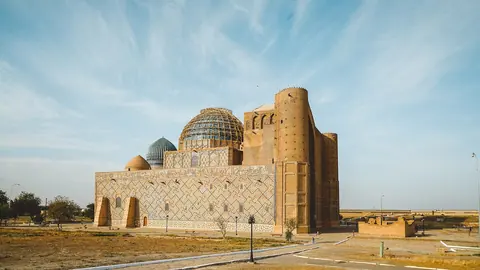
- Turkestan, with the Mausoleum of Khoja Ahmed Yasawi, Sauran and Otrar. According to Tengrinews, Arman sanatorium ran excursions to Turkestan, Shymkent, Tashkent and Samarkand.
- Sayram-Ugam National Park and Aksu-Zhabagly, the mountains above Shymkent, for getting out into nature after your course.
Practical tips before you travel to Saryagash
- Book your sanatorium in advance and arrange a transfer from the station or airport at the same time, as both Inbusiness and welcome.kz advise.
- Bring your medical records. The sanatorium doctor prescribes treatments, and with contraindications some of them will not be given.
- Drink the mineral water on the doctor’s schedule, not as much as you like: drinking cures have contraindications too.
- If you plan to cross into Uzbekistan, check which checkpoints are open on your travel dates.
Other healing springs in Kazakhstan include Alma-Arasan near Almaty, Chundzha in Almaty Region and Rakhmanov Springs in the Altai. Our general checklist is in before you go.
Saryagash: tips before you go
- Arrange a transfer from the station or airport with your sanatorium when you book.
- Bring your medical records: the sanatorium doctor prescribes baths and drinking cures.
- A sanatorium course usually runs at least 21 days, so plan your time off accordingly.
- Coming via Tashkent? Check which border crossings are open: Zhibek Zholy is being rebuilt.
More to see nearby


Frequently asked questions
Where is the Saryagash resort?
How do I get to Saryagash from Shymkent?
How far is Saryagash from Tashkent?
How hot is the water in Saryagash?
How much does a stay at a Saryagash sanatorium cost?
When is the best time to go to Saryagash?
Do I need a border-zone permit to visit Saryagash?
Sources
- Сарыагаш — Википедия
- Saryagash — Wikipedia
- Сарыагач — Большая советская энциклопедия (booksite.ru)
- Здесь искали нефть, но нашли совсем другие богатства. Как сбылось пророчество о Сарыагаше — Tengrinews, 10.05.2020
- Сколько стоит отдохнуть в санаториях Сарыагаша — Inbusiness.kz, 05.08.2018
- Почему точно стоит приехать в Сарыагаш и чем здесь заняться — WeProject, 24.06.2024
- Санатории рядом с Шымкентом: от горных курортов до термальных комплексов — WeProject, 09.04.2026
- Hot springs of Kazakhstan: where they are, what they are good for and how to get there — welcome.kz, 27.07.2025
- Таможенный пост «Жибек жолы» на границе с Узбекистаном откроют до конца года — BES.media, 09.07.2026
- В Сарыагашском районе рассмотрены вопросы развития приграничной инфраструктуры — акимат Сарыагашского района, 03.08.2026
- Decree of the Government of Kazakhstan No. 356 of 16.04.2014 — limits of the border strip and border zone
- Shymkent: climate data 1991–2020 — Wikipedia (Pogoda.ru.net, NOAA)
Read also
- Hot springs in Kazakhstan: how to choose between six thermal spas
 Chundzha (Shonzhy): hot springs of the Uygur district
 Alma-Arasan: the hot springs of Prokhodnaya gorge above Almaty
 Kapal-Arasan: a thermal spring sanatorium in the village of Arasan
 Zharkent-Arasan: radon hot springs in the Zhetysu mountains
 Rakhmanov Springs: radon hot springs in the Altai