Sairam: when to go, month by month
- January: possible
- February: possible
- March: possible
- April: good
- May: best time
- June: good
- July: possible
- August: possible
- September: best time
- October: good
- November: possible
- December: possible
April-May and September offer mild highs of about 19-26 °C, while July averages around 33 °C and winter nights fall below freezing.
Sairam: why go
Sairam's Yasawi family shrines
Khoja Ahmed Yasawi was born in Sairam, and his father Ibrahim-ata and mother Karashash-ana are buried here, making the town a pilgrimage stop.
Isfijab, the White City
Karakhanid dirhams of 1013-14 and 1016-17 call Isfijab Madinat al-Baida, the White City; excavations suggest the medieval town ran about 10 km east to west.
A short hop from Shymkent
Sairam lies about 15 km in a straight line from Shymkent, so it works as a half-day outing, though we could not confirm a public bus route.
September in Sairam
September averages a high near 26 °C with under 10 mm of rain, drier than spring and far cooler than July's average high of about 33 °C.
Mud brick, no Soviet blocks
English Wikipedia notes that Sairam has kept its mud-brick architecture and lacks Soviet-style buildings, while new mausoleums are still being built.
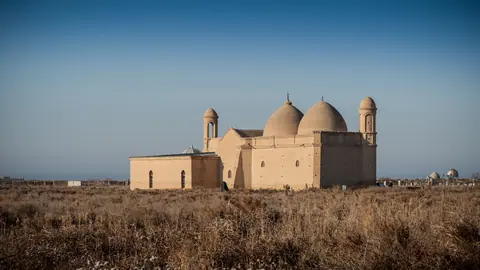
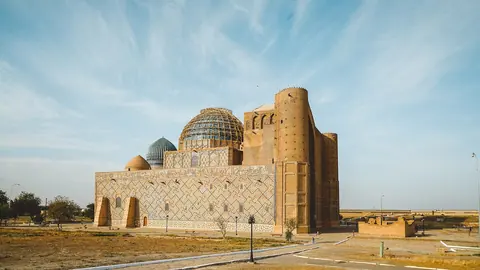
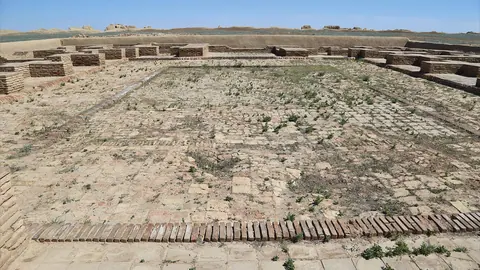
Sairam in photos
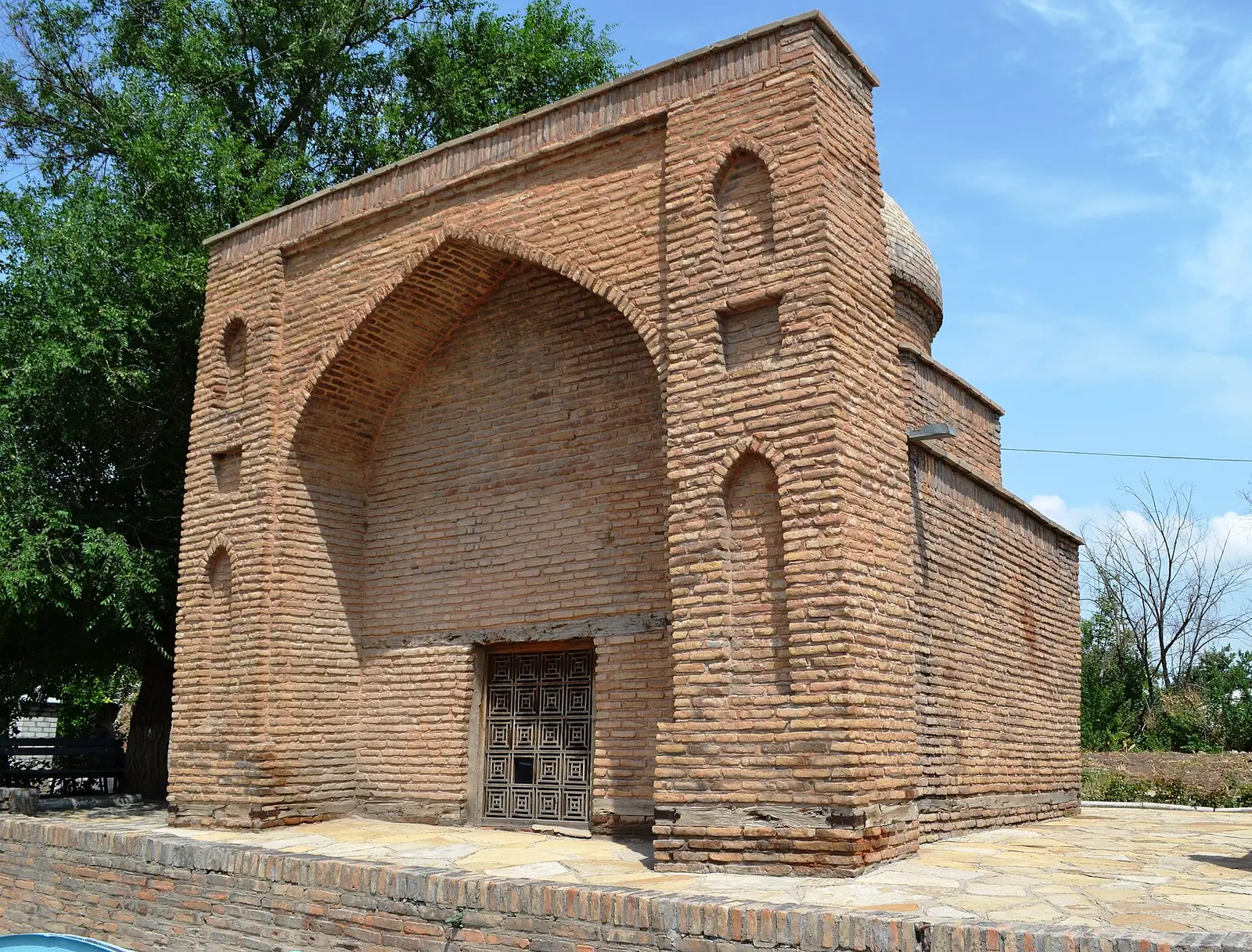
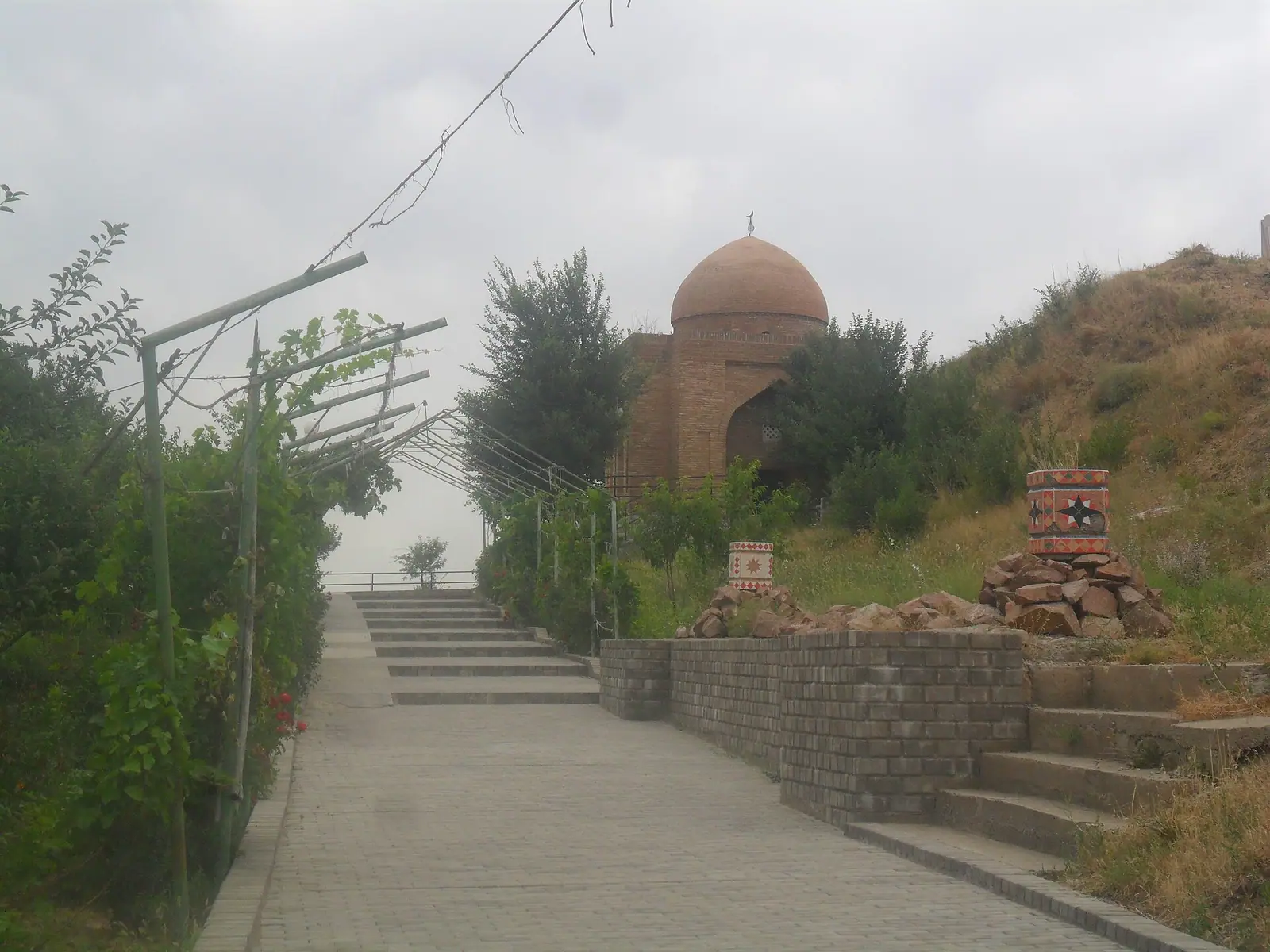
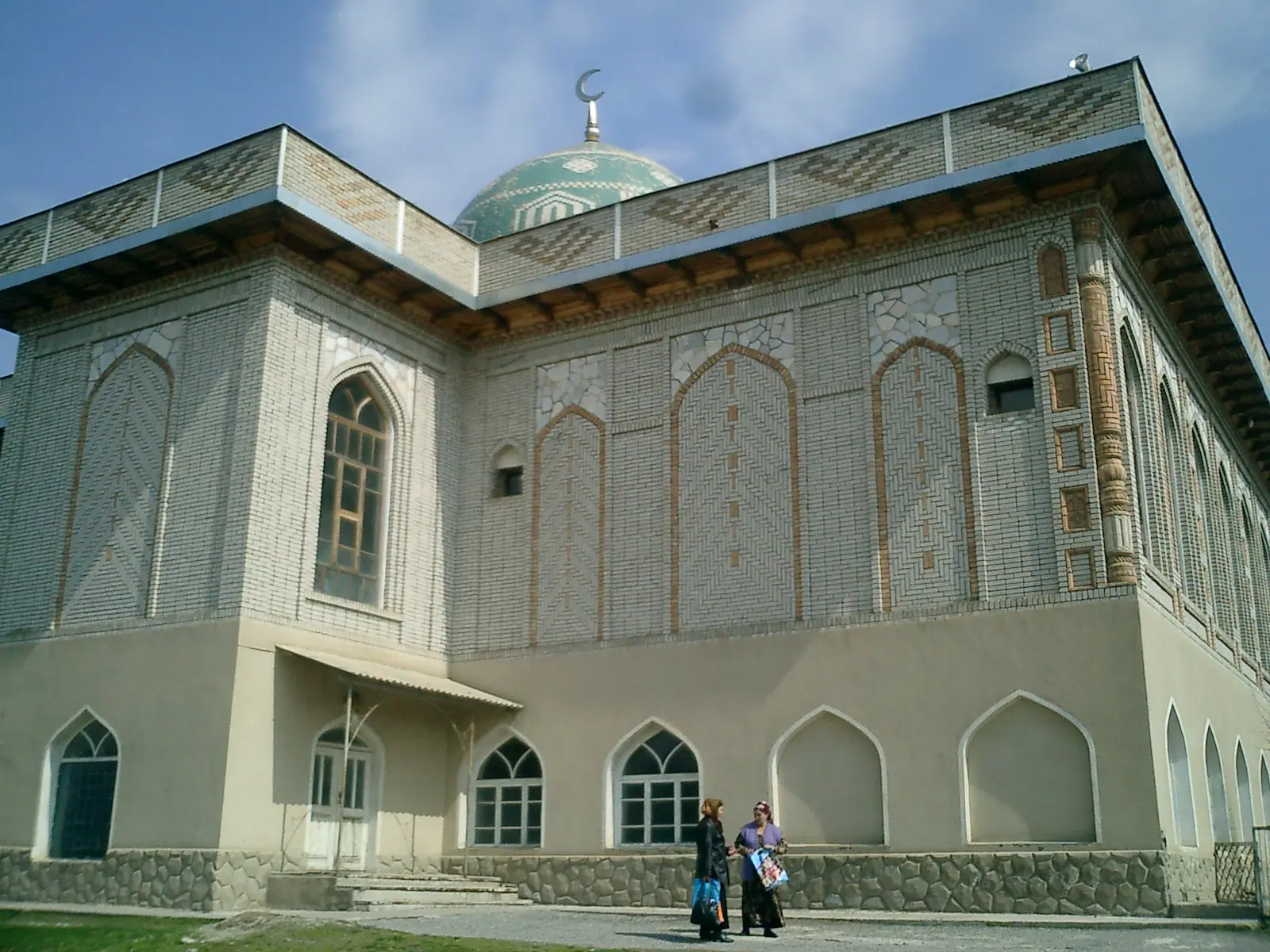
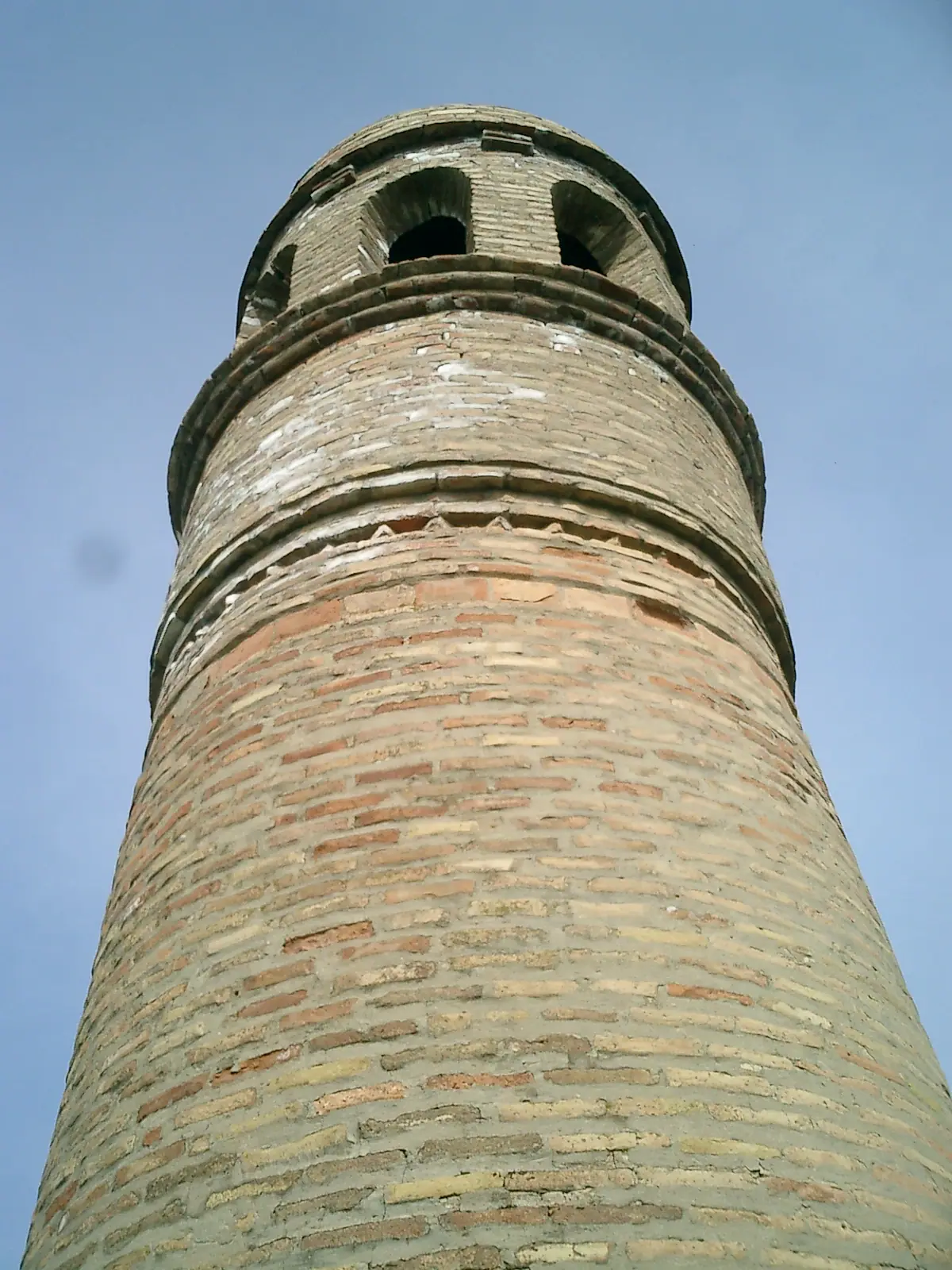
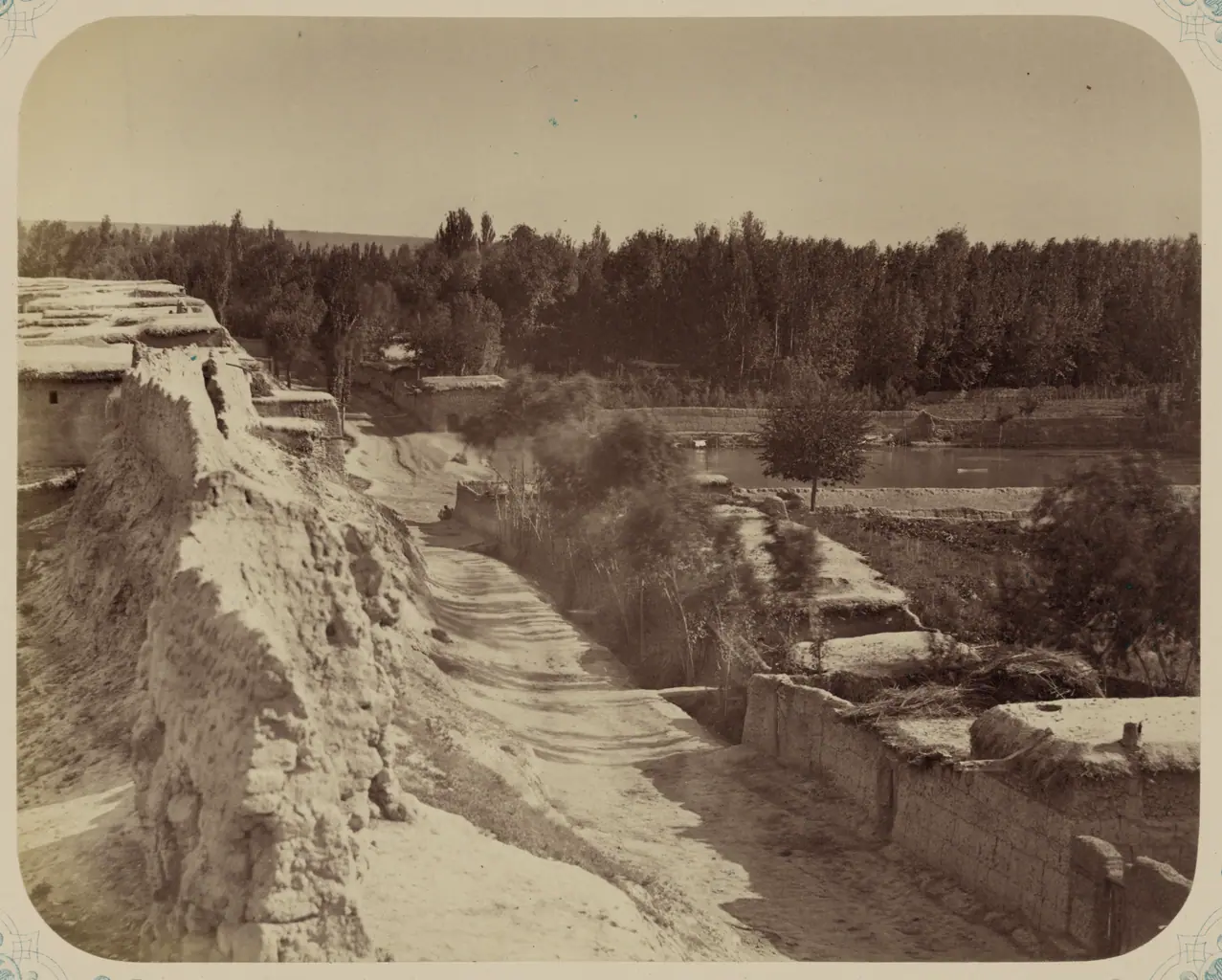
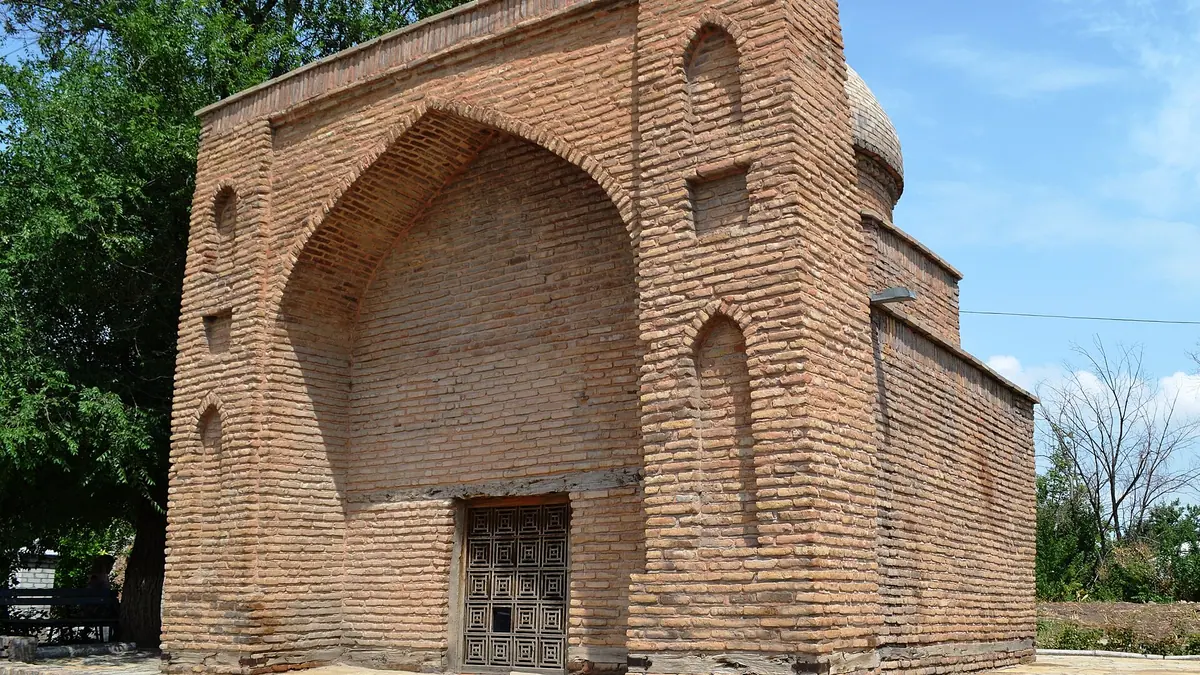
Real photos by travellers (Pexels, Unsplash, Wikimedia Commons); author and licence are given in each caption.
Sairam (also spelled Sayram) is an old town on the Sayram Su river, now a residential district of Shymkent in southern Kazakhstan, about 15 km in a straight line from the city. Most researchers identify it with Isfijab, a Silk Road trading city, and it is revered as the birthplace of the Sufi Khoja Ahmed Yasawi and the burial place of his parents. It suits a half-day visit from Shymkent rather than a trip in its own right.
Where Sairam is and what kind of trip it demands
Sairam sits on the eastern side of Shymkent, roughly 600 km in a straight line from Almaty, and about 166 km in a straight line from Turkistan. It is a populated town of around 30,000 people by the 2009 census figures on Wikipedia, with schools, colleges, a mosque, a local history museum and a regional Uzbek drama theatre running since 2003.
What draws visitors is the old fabric. English Wikipedia notes that Sairam has kept its mud-brick architecture and has almost no Soviet-style building, with many pre-20th-century mausoleums and new ones still being built. Expect a town with sacred sites scattered through it, not a fenced archaeological park.
The sources disagree on when Sairam joined Shymkent: Russian and Kazakh Wikipedia give 2014, English Wikipedia gives 2018. Either way, it now falls inside the city of Shymkent, in its Karatau district.
| Key data | |
|---|---|
| Location | Eastern Shymkent, on the Sayram Su river |
| Straight-line distances | Shymkent ~15 km, Taraz ~147 km, Turkistan ~166 km |
| Population | 30,887 (2009, English Wikipedia); 32,757 (2009, Kazakh Wikipedia) |
| Older name | Isfijab (Ispijab), used until the Mongol conquest |
| Age of monuments | 9th to 18th centuries |
| Status | Residential district of Shymkent |
Isfijab to Sairam: a frontier town that changed hands many times
Sairam matters because it stood for centuries on the line between irrigated farmland and the nomad pastures of the steppe, which made it a trading hub and a prize. The Chinese pilgrim Xuanzang mentioned Isfijab in 629. Under the Samanids it had a mint and was ringed with walls; under the Karakhanids its coins carried a second name, Madinat al-Baida, the White City.
The identification with Isfijab is not unanimous. Bartold, Baipakov and others placed Isfijab here, while Masson, Bernshtam and Ageeva located it at other sites in the region. Recent excavations led by B. A. Baitanaev concluded that Sairam is Isfijab, with the medieval city stretching about 10 km east to west. Archaeologists have not found layers older than the 9th century, although the town marked its 3,000th anniversary in 1999.
| Period | What happened |
|---|---|
| 629 | Xuanzang mentions Isfijab |
| 840 / 893 | Samanid control (sources give different dates) |
| 980s-1141 | Karakhanid rule, local mint |
| 1220 | Taken by Mongol forces |
| 1223 | Genghis Khan meets his sons near Sairam |
| 1404 | Timur grants the town to his grandson Ulugbek |
| 1513 | Passes to the Kazakh Khan Kasym |
| 1680s, 1723 | Captured by the Zunghars |
| 1809/1810-1864 | Kokand Khanate |
| 1864 | Joined to the Russian Empire |
The decline came after 1759, when trade routes shifted away and the rise of Chimkent (today’s Shymkent) took over its role as the region’s market.
The mausoleums: what to look for in Sairam
The main reason to come is the cluster of shrines connected with Khoja Ahmed Yasawi, whose great mausoleum stands in Turkistan. Sairam is named as his birthplace, and both his father and mother are buried here. These are places of pilgrimage, so dress modestly and follow the lead of local visitors.
| Site | Why it matters |
|---|---|
| Ibrahim-ata | Grave of Yasawi’s father |
| Karashash-ana | Grave of Yasawi’s mother |
| Abdul-Aziz-Baba mausoleum | Architectural monument in Sairam |
| Padishah Malik Baba mazar | Called the oldest of the town’s mausoleums by Kazakh Wikipedia |
| Local history museum | Medieval finds from the town |
A manuscript called the Nasabname says Iskak-bab, leader of the Muslim force, founded a Friday mosque in Sairam, which local tradition treats as the first mosque in present-day Kazakhstan. That is a claim from one manuscript, not an archaeological finding. We could not confirm which of the buildings can be entered, or whether the museum keeps regular hours.
When to go to Sairam
Spring and early autumn are the comfortable windows; midsummer is hot and winter is cold and wet. The figures below are computed normals for 2011-2020 from the ERA5 reanalysis at a grid point at 681 m, not readings from a local weather station.
Day high, °C / Night low, °C · Rain/snow, mm
A computed reanalysis normal for these coordinates, not weather station records.
Monthly figures
| Month | Day high, °C | Night low, °C | Rain/snow, mm |
|---|---|---|---|
| Jan | 3.8 | -4.5 | 81.5 |
| Feb | 5.4 | -3.6 | 83.3 |
| Mar | 13 | 2.9 | 104.3 |
| Apr | 19.2 | 8.2 | 112.5 |
| May | 24.9 | 12.9 | 67.3 |
| Jun | 29.3 | 16.4 | 25 |
| Jul | 32.3 | 18.5 | 6 |
| Aug | 31.1 | 17.3 | 8 |
| Sep | 26.1 | 12.4 | 9.8 |
| Oct | 18.4 | 6.1 | 43.4 |
| Nov | 9.4 | -0.5 | 77.2 |
| Dec | 4 | -4.6 | 78 |
April and May bring average highs of about 19-25 °C, but they are also the wettest months, with around 70-110 mm of rain a month, so lanes between mud-brick houses can be muddy. September is the steadiest choice: highs near 26 °C and under 10 mm of rain. July averages a high of about 32 °C with almost no rain, which is hard going on foot between shrines with little shade. From December to February highs sit around 4-5 °C and nights drop below freezing.
| Season | What to expect |
|---|---|
| Mar-May | Mild, green, the wettest time of year |
| Jun-Aug | Dry and hot, July highs around 32 °C |
| Sep-Oct | Warm to mild and dry, the easiest walking weather |
| Nov-Feb | Cold, nights below zero, regular rain or snow |
Shrines are visited all year, so winter is possible if you dress for frost.
Getting there without a car: what we could not confirm
Sairam is close to Shymkent, which makes it the obvious base, but we could not confirm a bus route, its frequency or where it stops in Sairam. Sairam itself sits about 147 km in a straight line from Taraz and 166 km from Turkistan, so many travellers will reach Sairam as part of a southern Kazakhstan loop.
Signs and conversations here are likely to be in Kazakh, Russian or Uzbek; Sairam has an Uzbek drama theatre and an Uzbek-language children’s newspaper. We could not confirm whether English signage or guides exist at the mausoleums. Plan to have the names of the sites written down in Cyrillic: Ибрагим-ата, Карашаш-ана.
Linking Sairam with other Yasawi and Silk Road sites
Sairam fits naturally at the start or end of a route through the Syr Darya region. The mausoleum of Arystan-Bab, Yasawi’s teacher, lies about 137 km in a straight line away, and the ruined city of Otrar, which the Mongols destroyed while Sairam survived, is about 135 km away. Further on, Sauran and Turkistan complete the picture. For a rest day, the mineral-water resort of Saryagash is about 105 km in a straight line.
- Public transport from central Shymkent to Sairam: route numbers, frequency and stops
- Opening hours of the mausoleums and the local history museum, and whether interiors can be entered
- Any entry fees or visitor rules at the shrines
- Whether English-language signage or guides are available
Sairam: tips before you go
- Visit in September: average highs near 26 °C and under 10 mm of rain, against about 33 °C in July.
- Carry the site names in Cyrillic, such as Ибрагим-ата and Карашаш-ана, as English signage could not be confirmed.
- Dress modestly at the mausoleums of Yasawi's parents; they are active pilgrimage sites, not museums.
- Pair Sairam with Arystan-Bab and Otrar, each about 135-137 km away in a straight line, for a Yasawi-themed route.
More to see nearby


Frequently asked questions
Is Sairam the same place as Isfijab?
Who is buried in Sairam?
Is Sairam part of Shymkent?
What is Sayram Su?
Is there another Sayram?
Sources
Read also
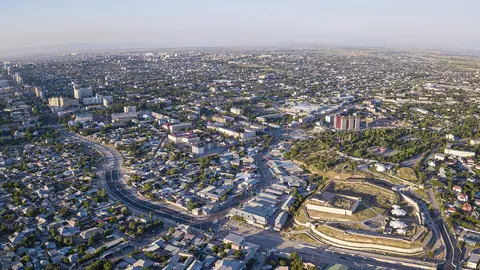 Things to do in Shymkent and how to use it as a base in southern Kazakhstan
- Where to go from Shymkent: shrines, Silk Road ruins, canyons and spas
-
A South Kazakhstan itinerary from Shymkent to Turkistan and Otrar, day by day
- What to see in Turkistan, Kazakhstan: shrines, ruined cities and spas of the Turkistan Region
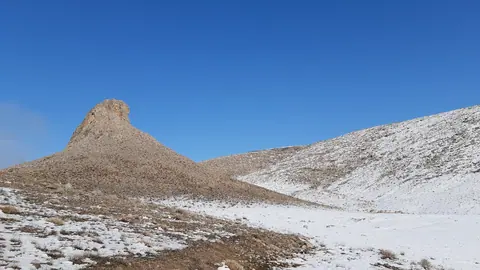 Karatau Reserve: a young mountain sanctuary in southern Kazakhstan
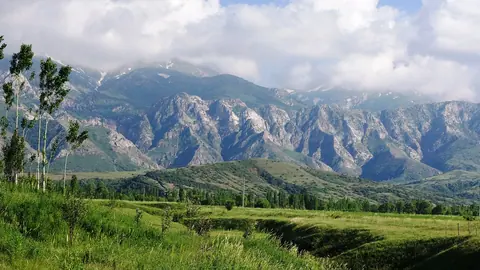 Sayram-Ugam