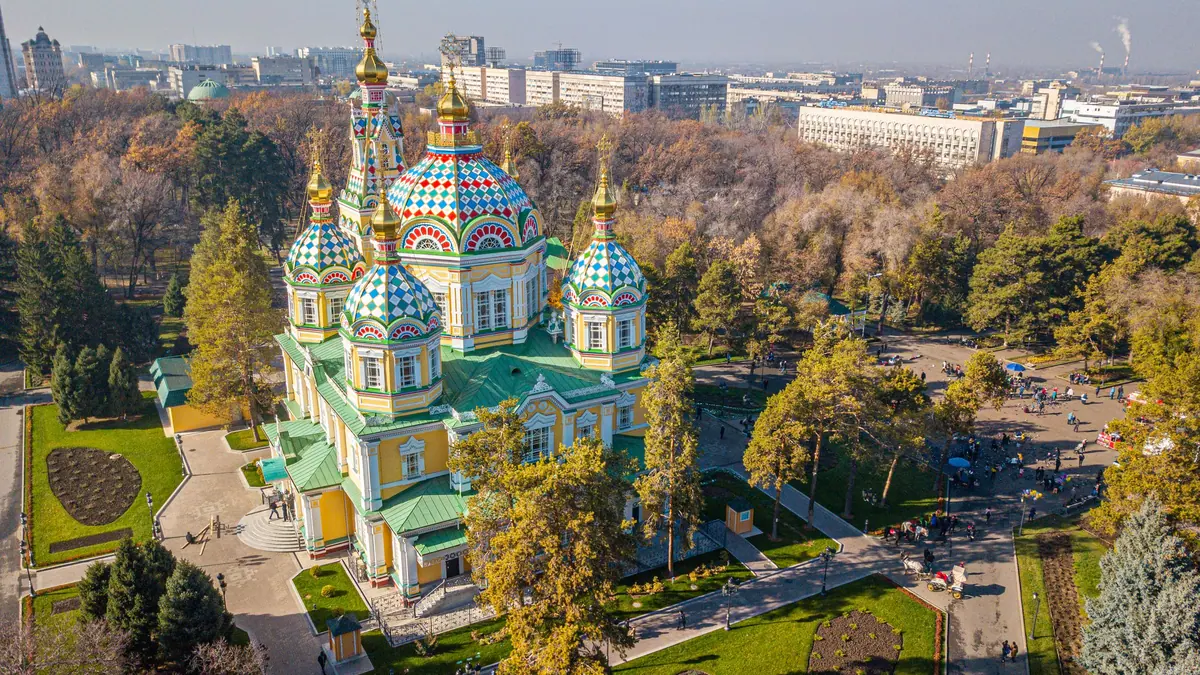
Ascension Cathedral and Panfilov Park in central Almaty: when to go, month by month
- January: possible
- February: possible
- March: possible
- April: good
- May: best time
- June: good
- July: good
- August: good
- September: best time
- October: good
- November: possible
- December: possible
The site is in the city and can be visited all year, but May, June and September give mild days for walking the park, while winter highs hover around freezing.
Ascension Cathedral and Panfilov Park in central Almaty: why go
Ascension Cathedral's timber frame
Built 1904–1907 of Tian Shan blue spruce to a design by Konstantin Borisoglebsky, with engineer Andrei Zenkov in charge of construction.
Ascension Cathedral survived a quake
In the December 1910 earthquake (January 1911 new style), a belfry corner sank slightly, windows broke and a cross bent. The building stood.
Panfilov Park in the city centre
The park is in Almaly district in central Almaty, so it fits into a city day with Kok-Tobe, about 3 km away in a straight line.
Best months for Panfilov Park
May, June and September bring highs of about 21–25°C in the climate normals. July nears 29°C, and January highs stay just below freezing.
A radio mast in the cathedral belfry
After closing in 1927, the cathedral became a museum, and its belfry held the antenna for the first radio broadcasts in Alma-Ata.
Ascension Cathedral and Panfilov Park in central Almaty in photos
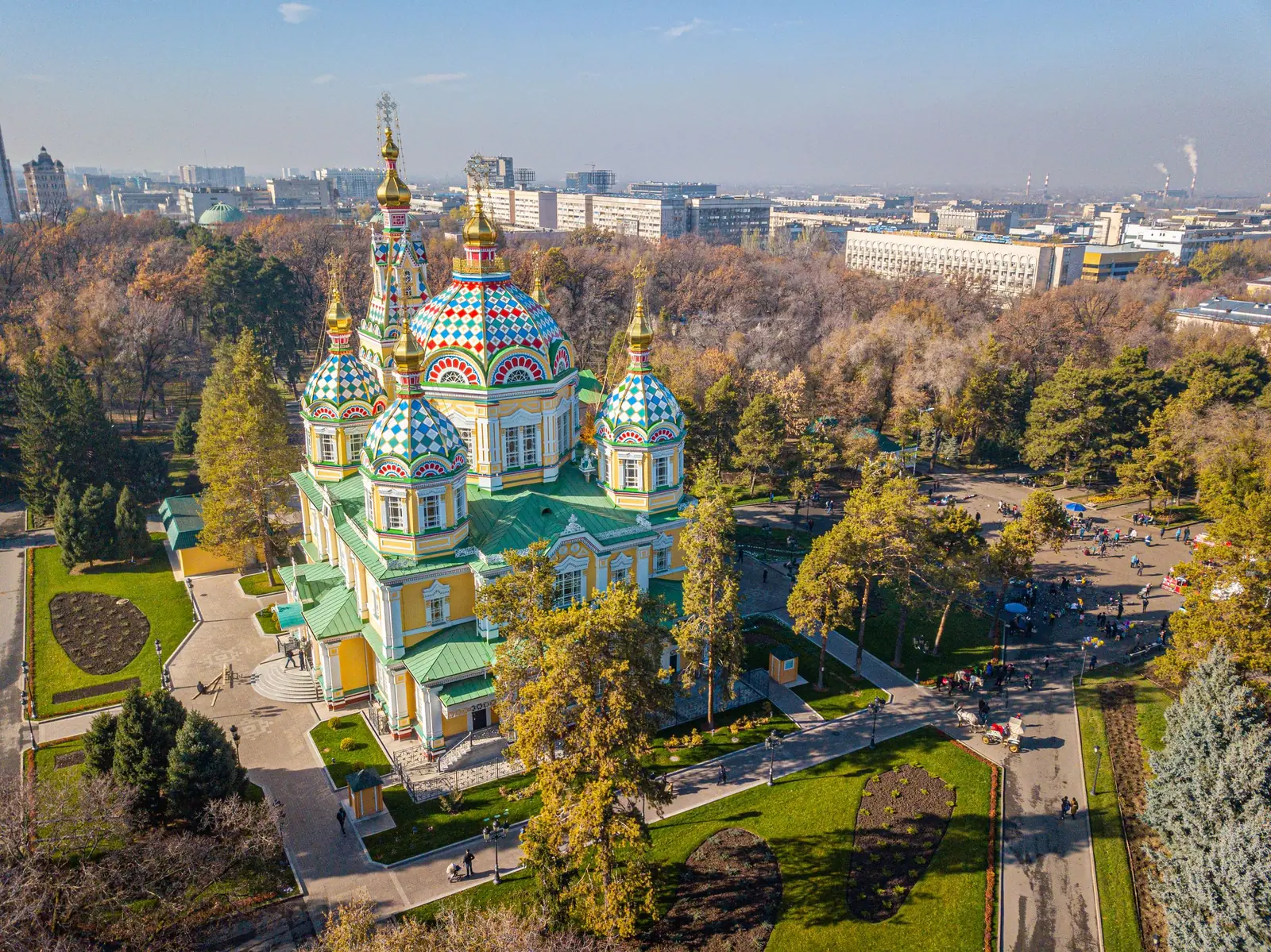
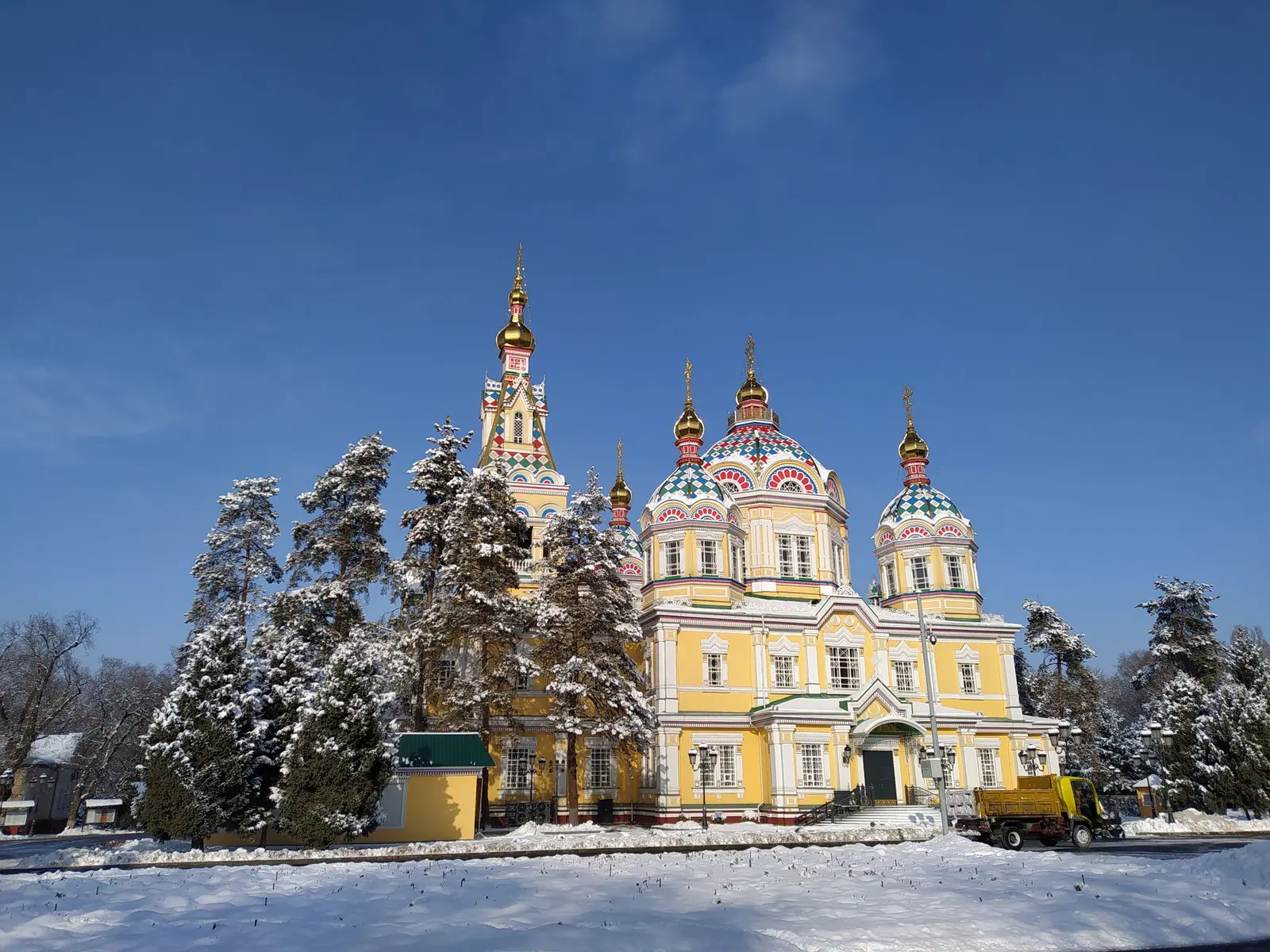
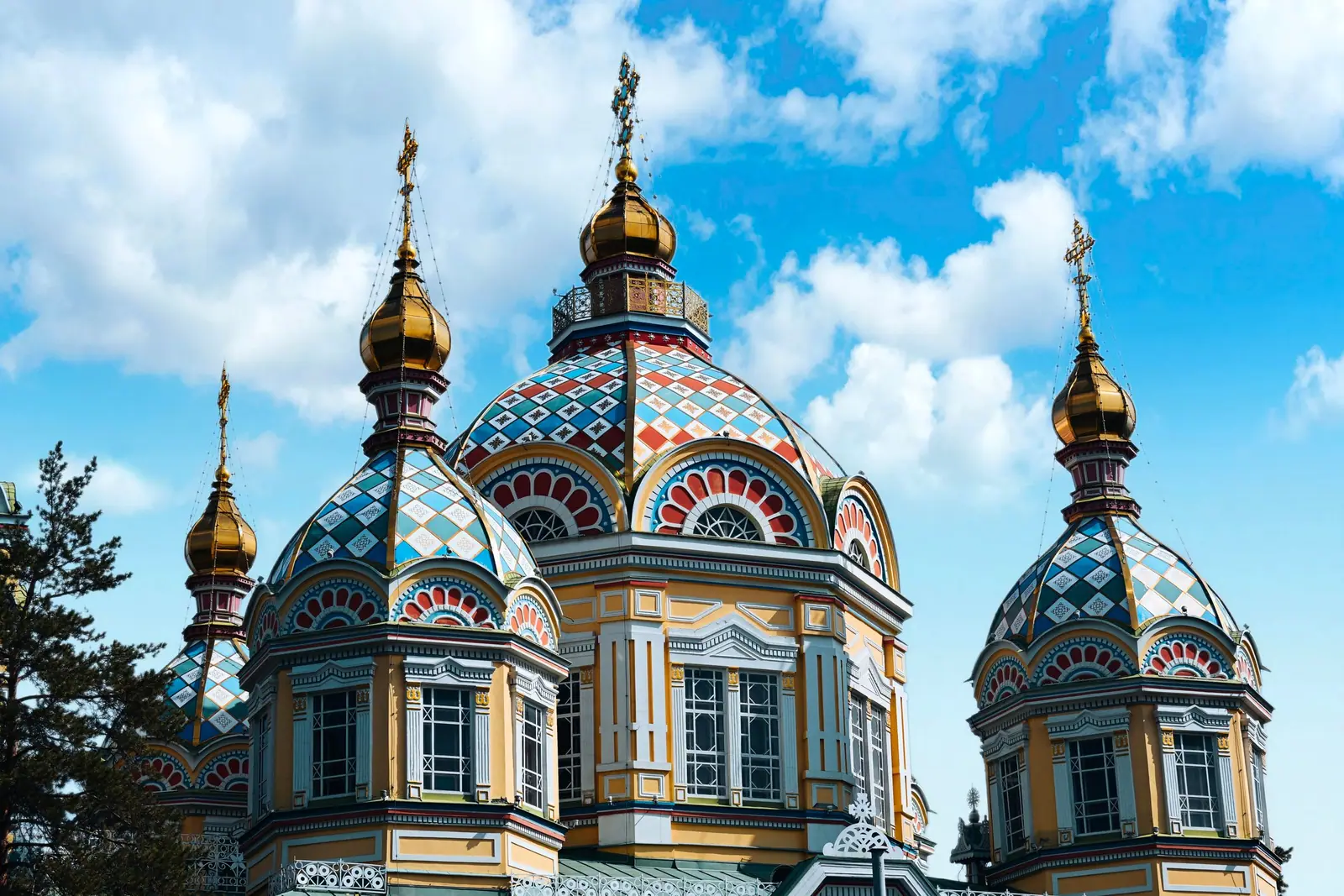
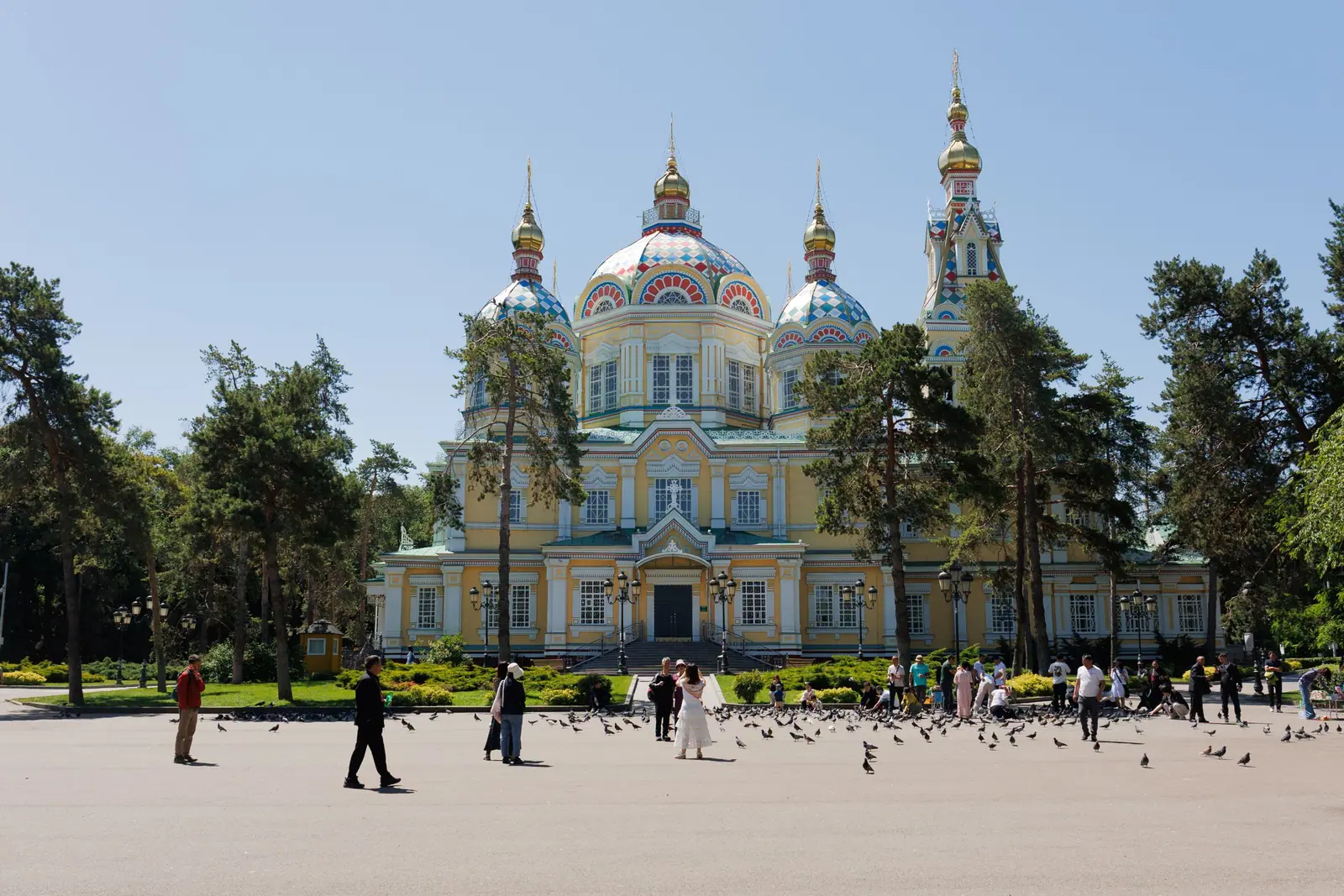
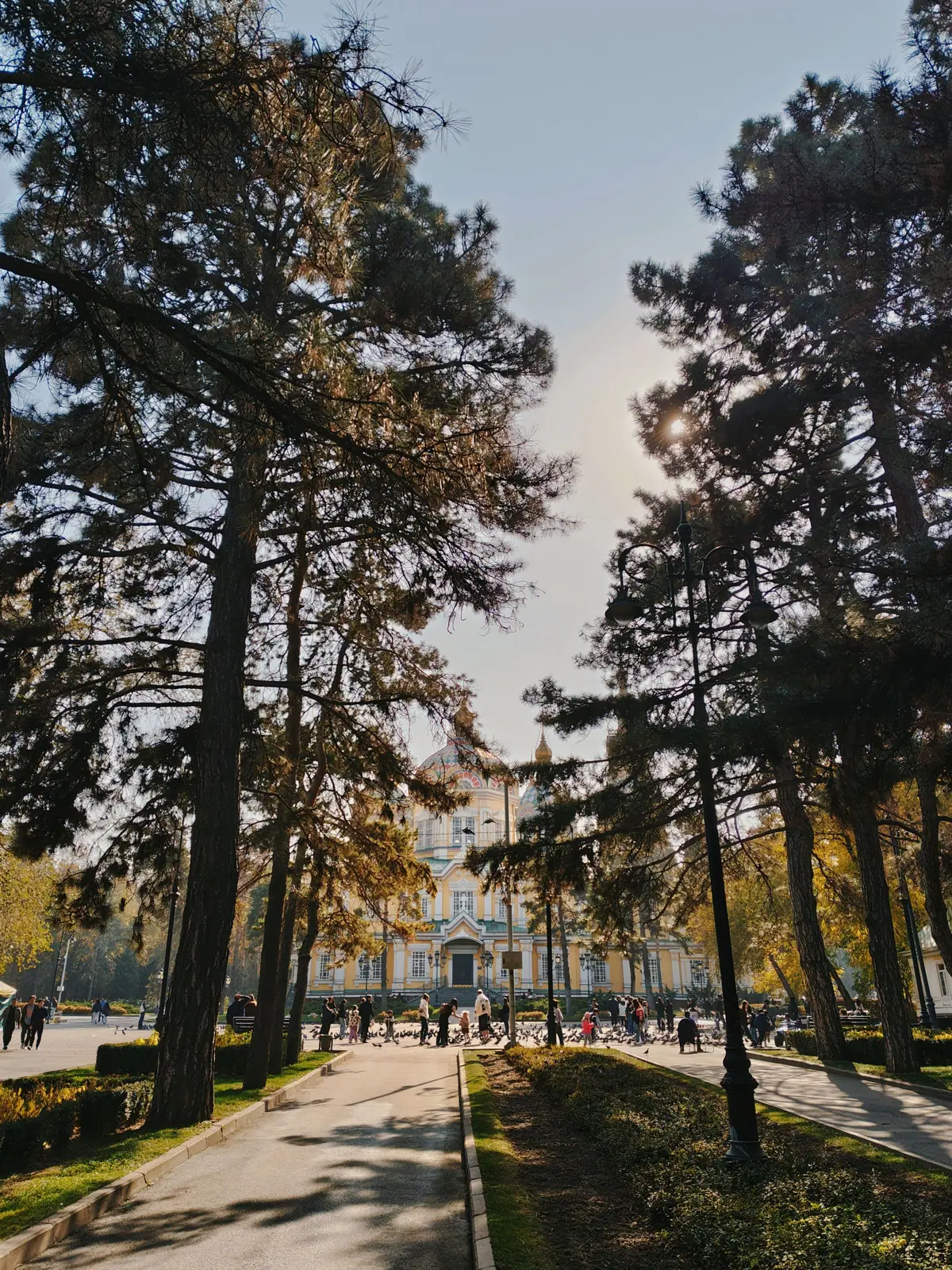
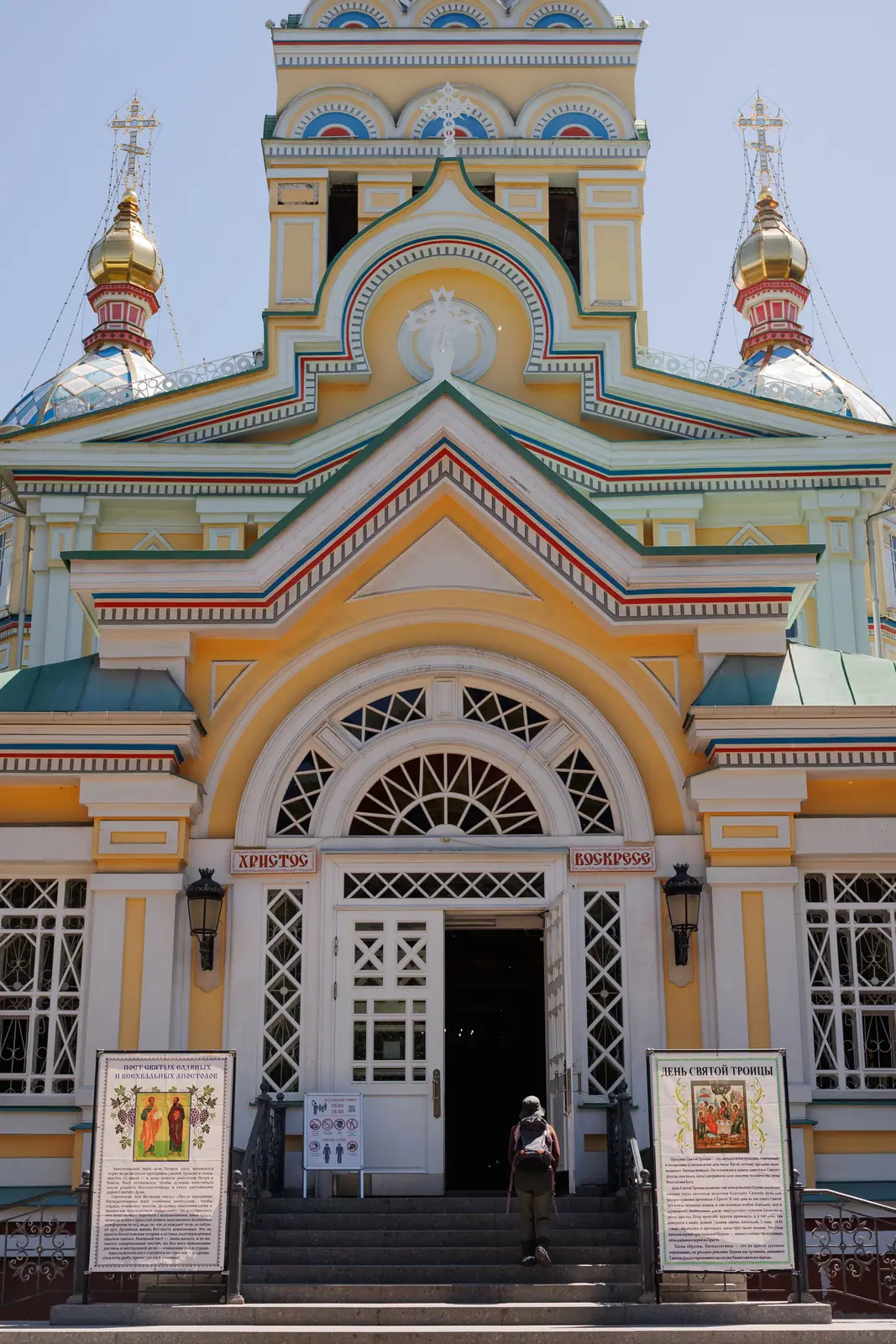
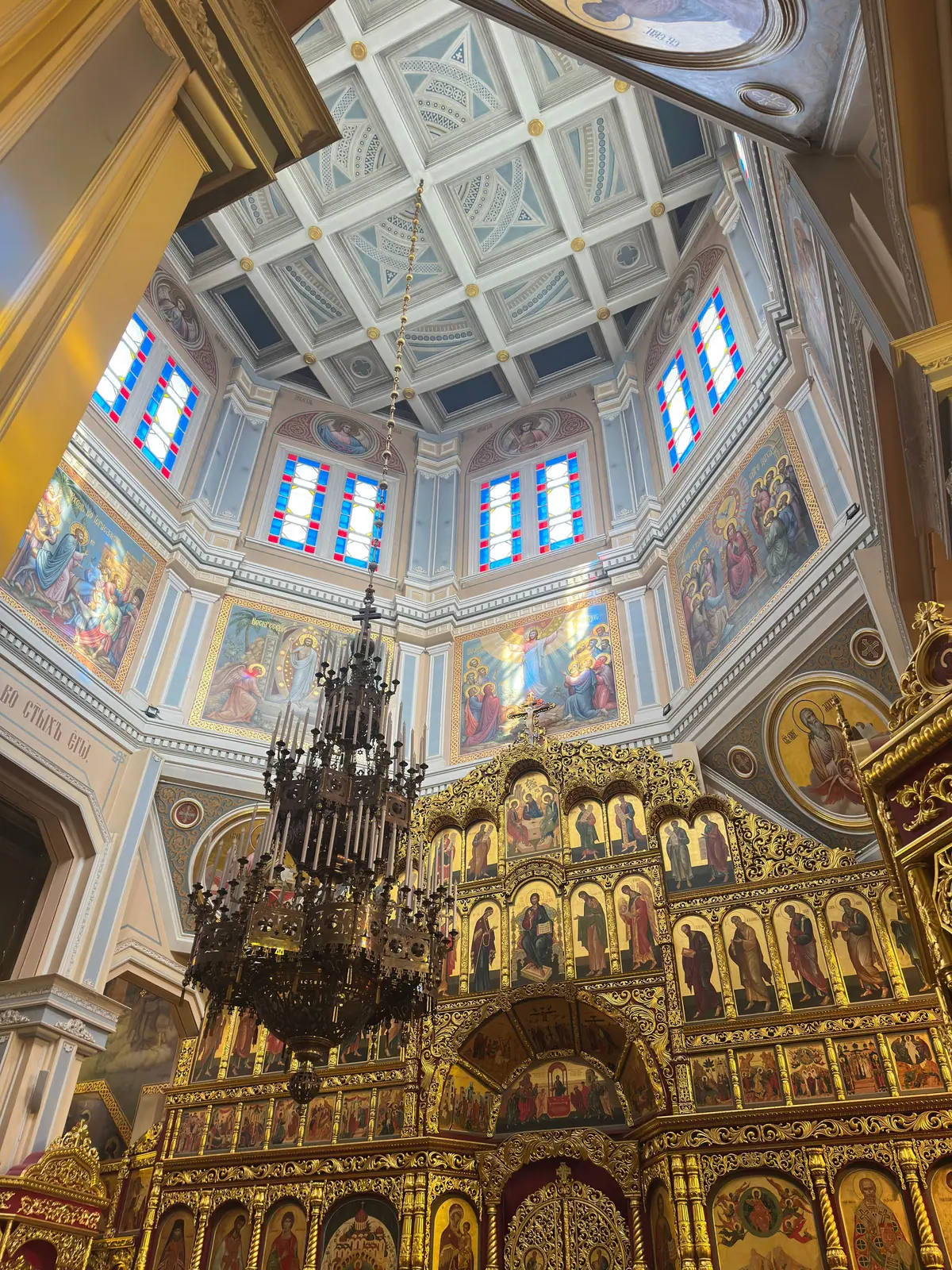
Real photos by travellers (Pexels, Unsplash, Wikimedia Commons); author and licence are given in each caption.
The Ascension Cathedral is a Russian Orthodox church built almost entirely of wood in 1904–1907, standing in Panfilov Park in central Almaty. It is one of the tallest wooden churches anywhere and came through the 1910–11 earthquake with little damage. Since it is in the city, a visit needs no car.
What the Ascension Cathedral is and why people come
It is an active Orthodox cathedral and a listed monument of national importance, and most visitors come for the building itself. English Wikipedia also calls it Zenkov Cathedral, after the engineer Andrei Zenkov who ran the construction to a design by architect Konstantin Borisoglebsky. It was built from Tian Shan blue spruce and is cited as an example of earthquake-resistant design.
The sources disagree on several basic figures, so treat any single number with care:
| Point | Russian Wikipedia | English and Kazakh Wikipedia |
|---|---|---|
| Height | 41.4 m to the belfry orb, 54 m overall | 56 m |
| Ranking | one of the tallest wooden churches in the world | claimed second-tallest wooden church in the world |
| Construction | wooden parts joined with metal fasteners | English: built “without nails”; Kazakh: held by iron fasteners |
| Foundation consecrated | 26 September 1904 | English: 26 September 1903; Kazakh: 26 September 1904 |
The often-repeated “no nails” claim is the shakiest of these. Russian and Kazakh sources both describe metal fasteners, so “built of wood with metal fasteners” is the safer way to put it.
The building survived the earthquake of 1910–11
The cathedral’s fame rests on one event. Almaty, then called Verny, lost almost all its stone buildings in an earthquake in 1887. The quake of December 1910 (January 1911 by the new calendar) hit the new cathedral too, and it came through with a slightly sunken belfry corner, broken windows and a bent cross.
Zenkov wrote that the belfry “swayed and bent like the top of a tall tree” and worked like a flexible beam. The English article adds that some bishops put the survival down to divine intervention. Either way, the sight here is the flexible timber frame, and it is easy to miss if you treat the visit as a quick photo stop.
A cathedral, a museum, a radio mast, then a cathedral again
The building has had several lives, and it was restored more than once.
| Period | Use |
|---|---|
| 1907 | Completed; Kazakh Wikipedia gives 30 July 1907 |
| 1927 | Closed by the Soviet authorities |
| from 1929 | Central museum of Kazakhstan; the belfry carried the antenna for the city’s first radio broadcasts |
| 1930s | Also housed public organisations |
| 1973–1976 | First restoration (Russian Wikipedia gives 1976; English Wikipedia says work ran from 1973 to 1976) |
| from 1985 | Concert and exhibition hall (other data: a city history museum) |
| 1995–1997 | Returned to the Russian Orthodox Church; Russian Wikipedia says services resumed in May 1995, English Wikipedia says it reopened for services in 1997 |
| July 2017 – 28 October 2020 | Large-scale reconstruction |
If you read Russian or find a translation, Yuri Dombrovsky’s novels The Keeper of Antiquities and The Faculty of Useless Knowledge describe the cathedral in the late 1920s and early 1930s.
Panfilov Park around it
The park was laid out as Pushkin Park and now carries the name of the 28 Panfilov Guardsmen. Kazakh Wikipedia describes it as dedicated to heroes of the Second World War, and places it in Almaly district. We could not confirm details of the memorials in the park, its layout or its opening hours, so this page covers the cathedral itself.
The cathedral is a working place of worship. Plan your visit with that in mind, especially during services.
Getting there and fitting it into an Almaty trip
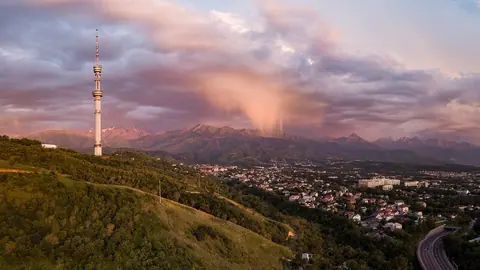
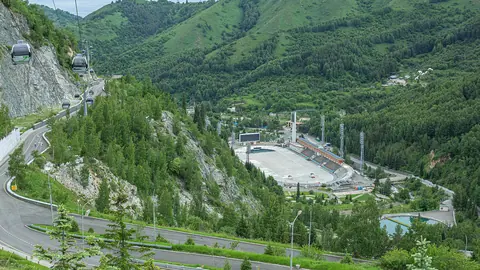
The park is in central Almaty, so no tour or car is needed. We could not confirm which bus, metro or taxi options serve it best. The cathedral pairs naturally with other city sights. Kok-Tobe is about 3 km away in a straight line, and the Medeu valley about 14 km.
For a longer stay, the cathedral is an easy first morning before day trips into the mountains, such as Big Almaty Lake or the other options in nature near Almaty.
The park shares a metro station with Arbat, the walking part of Zhibek Zholy, so the two fit one walk.
When to visit Panfilov Park
A city park and cathedral can be visited all year, but walking outdoors is most pleasant in late spring and early autumn. The figures below are computed normals from the ERA5 reanalysis for 2011–2020 at a grid point at 788 m, not a weather station.
Day high, °C / Night low, °C · Rain/snow, mm
A computed reanalysis normal for these coordinates, not weather station records.
Monthly figures
| Month | Day high, °C | Night low, °C | Rain/snow, mm |
|---|---|---|---|
| Jan | 0.3 | -8 | 24.9 |
| Feb | 2.8 | -5.7 | 36.9 |
| Mar | 10.5 | 1.4 | 79.5 |
| Apr | 17.4 | 7.2 | 146.4 |
| May | 22.1 | 11.2 | 115.4 |
| Jun | 26 | 15.2 | 76.4 |
| Jul | 28.8 | 17.4 | 49.7 |
| Aug | 27.6 | 16.1 | 58.2 |
| Sep | 23.4 | 11.6 | 52.5 |
| Oct | 16.5 | 5.3 | 60.3 |
| Nov | 7 | -1.8 | 55.7 |
| Dec | 1.5 | -6.1 | 30.6 |
May, June and September have daytime highs of about 22–26°C. July is the warmest month, averaging close to 29°C, and August is similar. From December to February, average highs hover around freezing and nights fall to about −7 to −9°C. April is the wettest month at about 146 mm, with May close behind at about 115 mm. Bring a rain layer for a spring visit.
- Current service schedule and visiting hours of the cathedral
- Dress code and photography rules inside the cathedral
- Opening hours of Panfilov Park and details of its memorials
- Best public transport route to the park
Ascension Cathedral and Panfilov Park in central Almaty: tips before you go
- Check the service schedule before going: we could not confirm current times, and services change what a visit inside is like.
- April is the wettest month in the normals at about 128 mm; carry a light rain layer for a spring walk in the park.
- Pair the cathedral with Kok-Tobe, about 3 km away in a straight line, for an easy half-day in central Almaty.
- Wikipedia says a bent cross was the quake's lasting mark; we could not confirm it survived the 2017–2020 reconstruction.
More to see nearby


Frequently asked questions
Is the Ascension Cathedral in Almaty really built without nails?
How tall is the Ascension Cathedral?
What is the service schedule at the Ascension Cathedral in Almaty?
Is the Ascension Cathedral open to visitors?
Who built the Ascension Cathedral?
Sources
Read also
 Almaty Zoo in Kazakhstan: opening hours and how to visit
 Ayusai Gorge, Almaty: visitor centre and waterfall trail
 Gorelnik Gorge above Medeu: waterfalls, trail and season
 Kamenskoe Plateau above Almaty: observatory and trails
 Pervomaiskie Ponds near Almaty: location, swimming, season
 Saty village: base for the Kolsai and Kaindy lakes