Mashkhur Zhusup Mosque: when to go, month by month
- January: possible
- February: possible
- March: possible
- April: good
- May: best time
- June: best time
- July: best time
- August: best time
- September: best time
- October: good
- November: possible
- December: possible
An indoor sight open to visits year-round, but the park is most pleasant from May to September, while winters average well below freezing.
Mashkhur Zhusup Mosque: why go
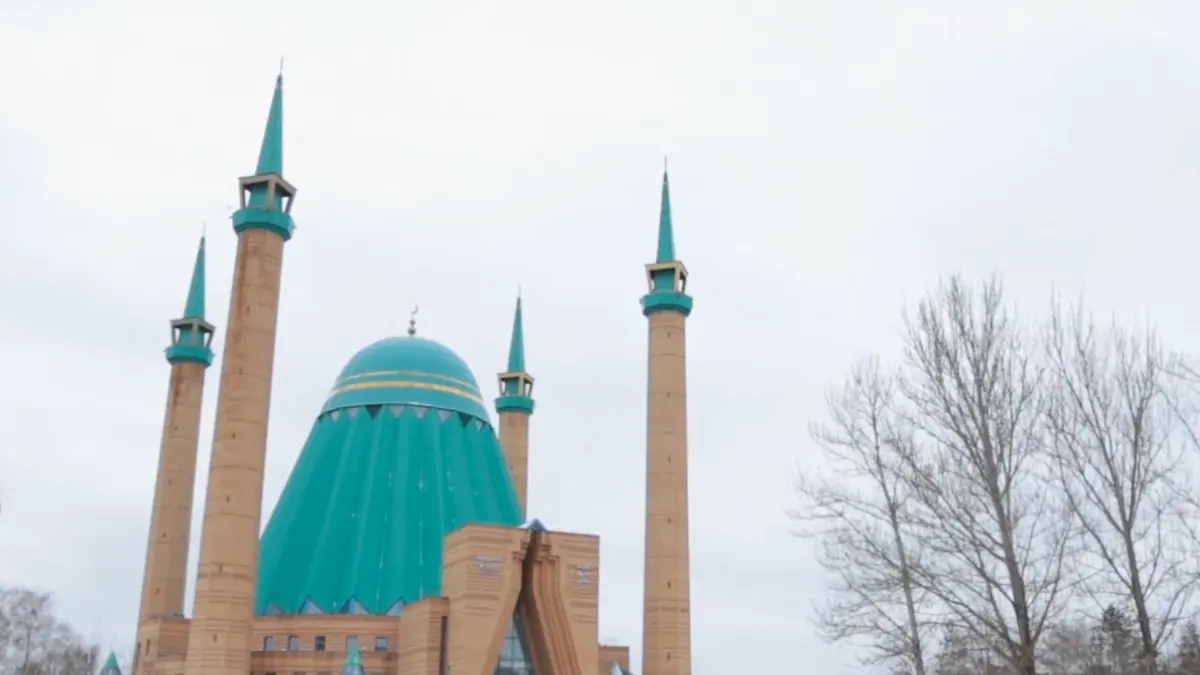
The Mashkhur Zhusup Mosque dome
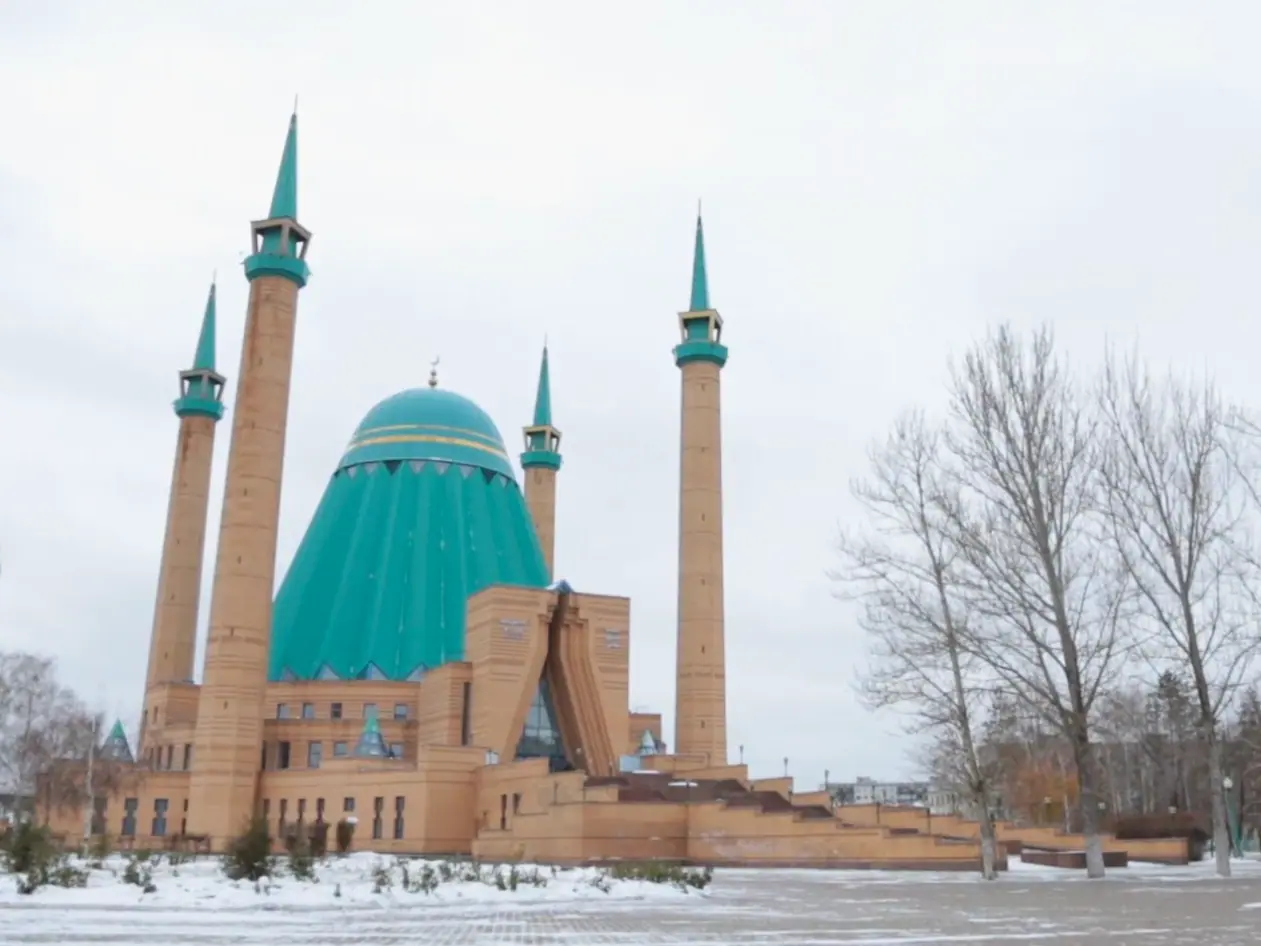
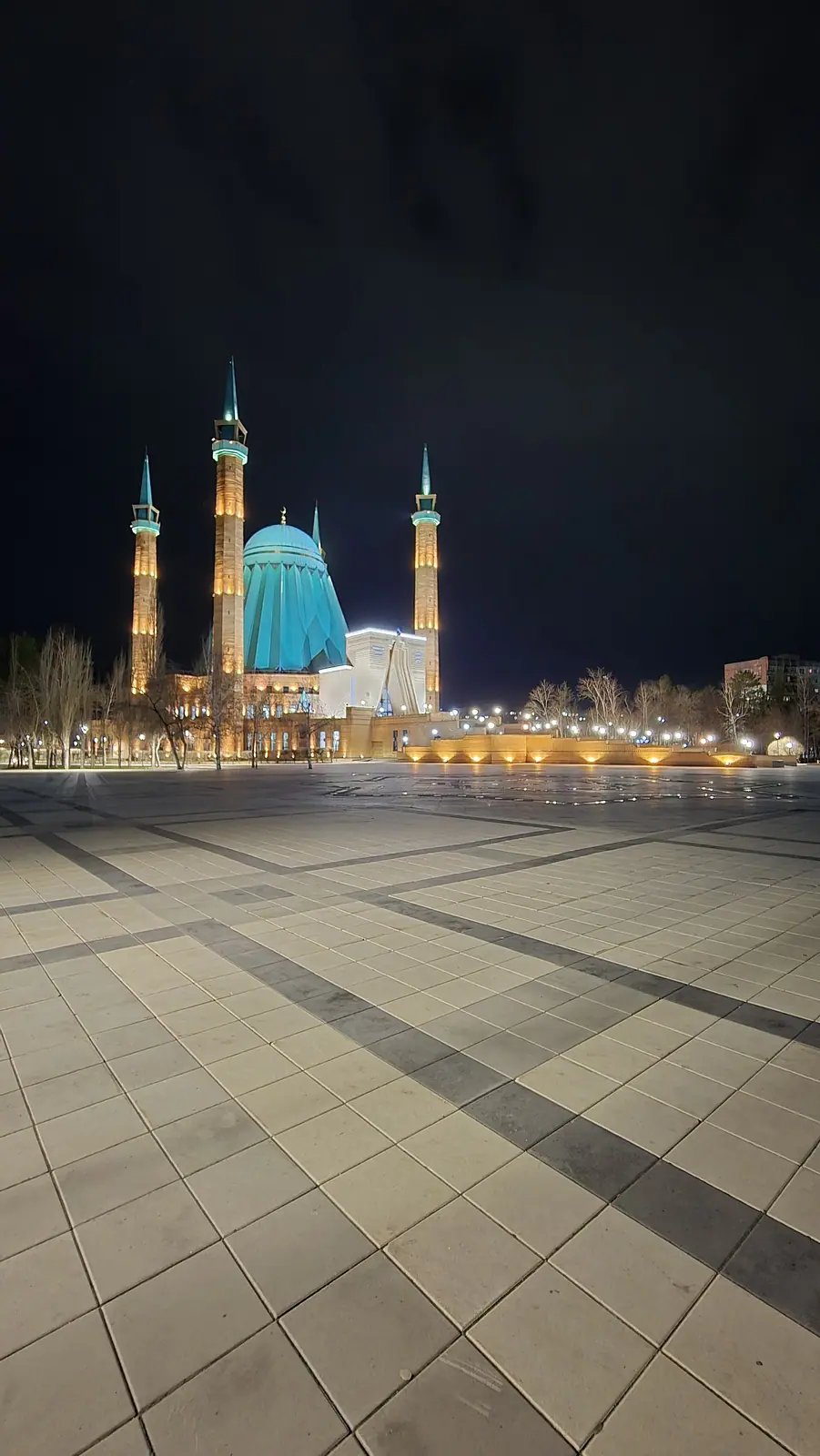
The sky-blue dome copies a yurt's shanyrak and reaches 54 m with its crescent, above a star-shaped plan measuring 48 by 48 metres.
Named after a poet and historian
The mosque honours Mashkhur Zhusup (1858–1931), a Kazakh poet and historian, and opened in Pavlodar in 2001 after work that began in 1999.
Pavlodar in the north-east
Pavlodar lies about 398 km in a straight line from Astana and about 308 km from Semey, so the mosque fits a north-eastern route.
Short warm summer in Pavlodar
June to August averages 25–27 °C by day; winter highs stay below freezing from November to March, with January nights near −20 °C.
A chandelier made in Tashkent
The Zumrad chandelier has 434 lamps and, by Kazakh Wikipedia, weighs 3.5 tonnes; the ring balcony gives a view down onto it.
Mashkhur Zhusup Mosque in photos
Real photos by travellers (Pexels, Unsplash, Wikimedia Commons); author and licence are given in each caption.
The Mashkhur Zhusup Mosque is a working mosque for 1,500 worshippers in the centre of Pavlodar, in north-eastern Kazakhstan. It opened in 2001 and is one of the largest mosques in the country, according to English Wikipedia. It suits a few hours inside a city visit rather than a dedicated trip.
A city mosque worth an hour or two, not a long detour
The mosque stands in central Pavlodar and sits in a landscaped park of about 6 hectares. It is named after Mashkhur Zhusup (1858–1931), a Kazakh poet and historian. The building was designed by the AlmatyGiproGor institute and opened in 2001.
Pavlodar lies about 398 km in a straight line from Astana, about 386 km from Karaganda and about 308 km from Semey. If you are already in north-eastern Kazakhstan, the mosque is an easy stop. Travelling to Pavlodar only for it is a harder case to make unless religious architecture is your main interest.
The building in numbers, and where sources disagree
The plan is an eight-pointed star measuring 48 by 48 metres. The minarets rise 63 metres, a height chosen to match the age of the Prophet Muhammad. The dome takes the form of a shanyrak, the circular opening at the top of a yurt, and is painted sky blue.
| Feature | Figure |
|---|---|
| Total capacity | 1,500 worshippers |
| Footprint | 48 × 48 m, eight-pointed star |
| Minarets | four, 63 m each |
| Dome with crescent | 54 m |
| Men’s hall dome | 33 m high, 30 m across |
| Total floor area | 7,240 m² |
| Park | 6 ha (6.2 ha in Kazakh Wikipedia) |
| Men’s hall | 1,200 places (2,000 in Kazakh Wikipedia) |
| Women’s hall | 300 places (500 in Kazakh Wikipedia) |
| Canteen | 300 places (400 in Kazakh Wikipedia) |
The Russian and English Wikipedia articles agree on most figures. The Kazakh article gives larger capacities for the halls and the canteen, so treat those as a range. The timeline also differs slightly: English Wikipedia says it opened after one year of construction, while Kazakh Wikipedia gives the first stone as 23 October 1999 and the opening as 5 September 2001.
What you find inside
The brick main building has two main floors and a metal dome. The Kazakh article also counts a third level, a ring balcony.
- Ground level: madrasa classrooms, the women’s prayer hall, a wedding hall, a canteen, ablution rooms and cloakrooms. The wedding hall and canteen can be joined into one large space by a movable partition.
- Upper floor: the men’s prayer hall with its balcony, a museum of Islamic culture, a library, a video hall and offices. The main entrance opens directly onto this level, reached by staircases in four wings.
- Balcony level: a gallery looking down over the prayer hall and the chandelier.
The crystal chandelier, called Zumrad, was made in Tashkent and carries 434 lamps. Kazakh Wikipedia gives its weight as 3.5 tonnes, its height as 16.5 m and its width as 6 m. Sermons are given in Kazakh and Russian, by the same source. We could not confirm whether there are any services or guidance in English.
Getting to Pavlodar and finding the mosque
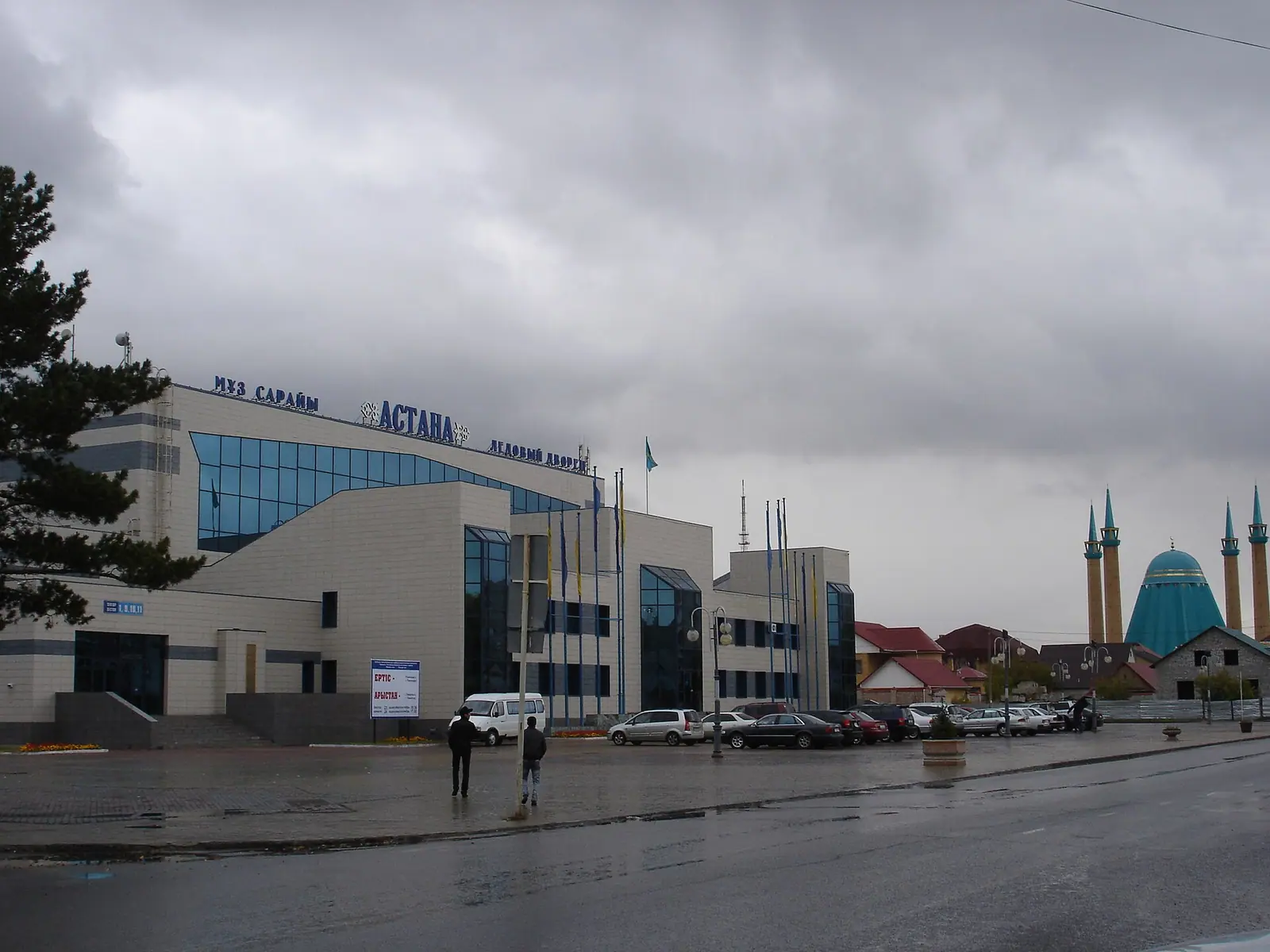
The mosque stands in the city centre. Russian Wikipedia lists the main park entrances from Nazarbayev Avenue, Krivenko Street and Kairbaev Street. Kazakh Wikipedia places the site between Kairbay, Kutuzov, Krivenko and Pakhomov streets.
We could not confirm train, bus or flight connections to Pavlodar, journey times or local transport to the mosque. The distances above are straight lines, not road distances. For a traveller without a car or Russian, check transport from Astana before committing, since we could not confirm how long the journey takes.
When to go: short summers, very cold winters
The mosque is an indoor sight, so it can be visited in any month, but the park and the walk around it depend heavily on the season. The figures below are computed ERA5 reanalysis normals for 2011–2020 at a grid point at 135 m, not weather-station readings.
Day high, °C / Night low, °C · Rain/snow, mm
A computed reanalysis normal for these coordinates, not weather station records.
Monthly figures
| Month | Day high, °C | Night low, °C | Rain/snow, mm |
|---|---|---|---|
| Jan | -13.5 | -21.1 | 8.7 |
| Feb | -10.4 | -18.6 | 8.9 |
| Mar | -0.8 | -9.7 | 17.2 |
| Apr | 14.5 | 1.7 | 16.8 |
| May | 20.5 | 6.9 | 24.3 |
| Jun | 26 | 13.9 | 44.9 |
| Jul | 26.8 | 15.4 | 62.7 |
| Aug | 25.6 | 12.9 | 33.5 |
| Sep | 18.6 | 6.6 | 24.5 |
| Oct | 9.1 | 0 | 26.3 |
| Nov | -2.8 | -9.9 | 19.3 |
| Dec | -9.5 | -17.1 | 16.8 |
June to August is warm, with average highs around 26–27 °C. July is also the wettest month, with about 63 mm of precipitation, so bring a light layer for showers. May and September are milder, with highs of about 21 °C and 19 °C, and suit a slow walk in the park. From November to March average highs stay below freezing, and January runs from about −14 °C by day to −21 °C at night.
| Period | Typical day / night | What it means for a visit |
|---|---|---|
| Dec–Feb | −13 to −9 °C / −20 to −16 °C | Inside only; keep park time short |
| Mar–Apr, Oct–Nov | −3 to 14 °C / −9 to 1 °C | Cold and changeable; warm layers |
| May, Sep | 18–20 °C / 8 °C | Comfortable for park and photos |
| Jun–Aug | 25–27 °C / 15–16 °C | Warm; July has the most rain |
Visiting a working mosque
This is an active place of worship with a madrasa, a wedding hall and rooms for naming ceremonies, so treat the halls with plain respect. We could not confirm visiting hours, a dress code, rules for non-Muslim visitors, photography rules or whether the museum charges entry. Ask at the entrance before going into the prayer halls.
If you are combining Pavlodar with nature in the north, the lake at Zerenda near Kokshetau is the closest of this guide’s other pages, though still far away. The granite hills of Ulytau in central Kazakhstan are a separate, longer trip.
- Visiting hours for non-worshippers and times when the halls are closed to visitors
- Dress code and whether non-Muslim visitors may enter the prayer halls
- Opening hours and any entry fee for the museum of Islamic culture
- Photography rules inside the mosque
- Train, bus or flight connections to Pavlodar from Astana and other cities
Mashkhur Zhusup Mosque: tips before you go
- The main entrance opens onto the upper floor with the men's hall and museum; women's hall and ablution rooms are on the ground level.
- Head for the ring balcony to see the 434-lamp Zumrad chandelier and the prayer hall from above.
- Sermons are in Kazakh and Russian; a translation app helps if you want to ask staff about visiting rules.
- In January highs average about −13 °C, so plan to spend your time indoors and keep the park walk brief.
More to see nearby


Frequently asked questions
Where is the Mashkhur Zhusup Mosque?
When was the Mashkhur Zhusup Mosque built?
How many people does the mosque hold?
Who was Mashkhur Zhusup?
How tall are the minarets?
Sources
Read also
 Almaty Zoo in Kazakhstan: opening hours and how to visit
 Ayusai Gorge, Almaty: visitor centre and waterfall trail
 Gorelnik Gorge above Medeu: waterfalls, trail and season
 Kamenskoe Plateau above Almaty: observatory and trails
 Pervomaiskie Ponds near Almaty: location, swimming, season
 Saty village: base for the Kolsai and Kaindy lakes