Korkyt Ata Memorial, a wind-played monument on the Syr Darya steppe: when to go, month by month
- January: possible
- February: possible
- March: possible
- April: possible
- May: possible
- June: possible
- July: possible
- August: possible
- September: possible
- October: possible
- November: possible
- December: possible
We could not confirm climate figures for the memorial, so every month is marked possible; check the forecast for heat and wind on this exposed steppe site.
Korkyt Ata Memorial, a wind-played monument on the Syr Darya steppe: why go
The singing kobyz of Korkyt Ata
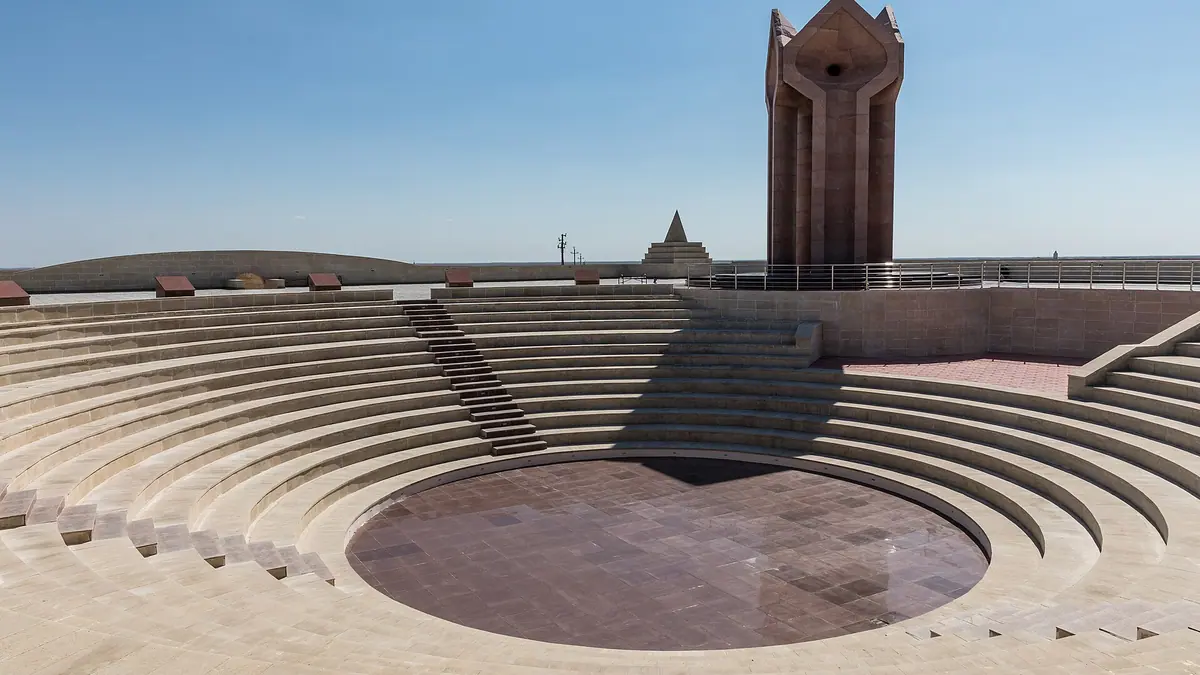
A monument shaped like the bowed kobyz, designed in 1980 with an acoustic physicist so that wind passing through it produces an audible tone.
Korkyt-Tobe, the burial hill
A mausoleum was raised at Korkyt's reputed grave on the Syr Darya around the 10th–11th centuries; it fell to ruin and the site was restored in 1997.
A stop on a transcontinental road
The memorial stands on the Western Europe – Western China highway, about 200 km from Kyzylorda, and is visible from passing Moscow–Tashkent trains.
Festival of the Great Steppe
Since 2006 Kyzylorda has hosted the International Festival "Korkyt and the Music of the Great Steppe"; check its dates and venue before planning around it.
A legend about outrunning death
Korkyt searched the world for eternal life and found his own grave being dug everywhere, so he came home to the Syr Darya and made the kobyz instead.
Korkyt Ata Memorial, a wind-played monument on the Syr Darya steppe in photos
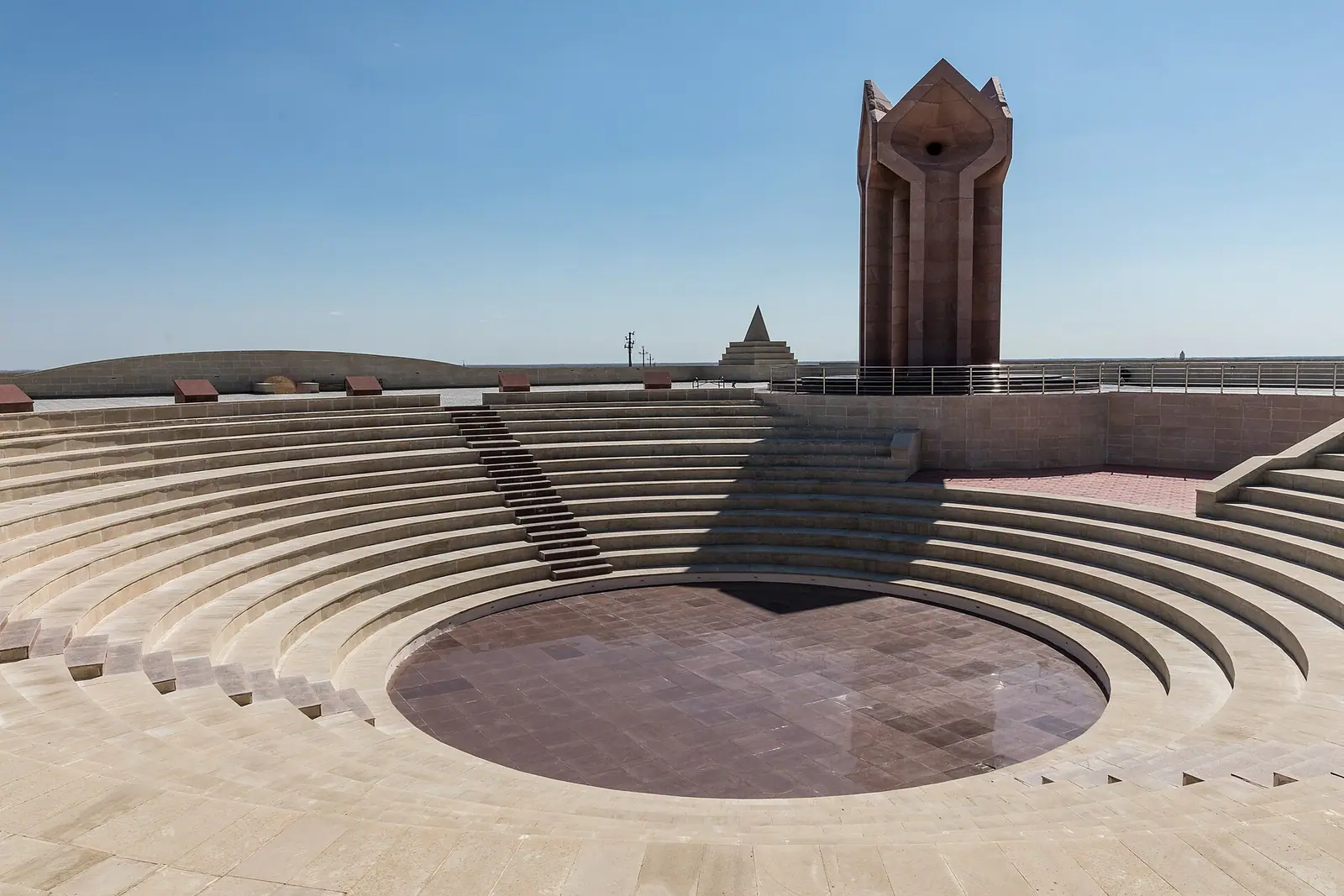
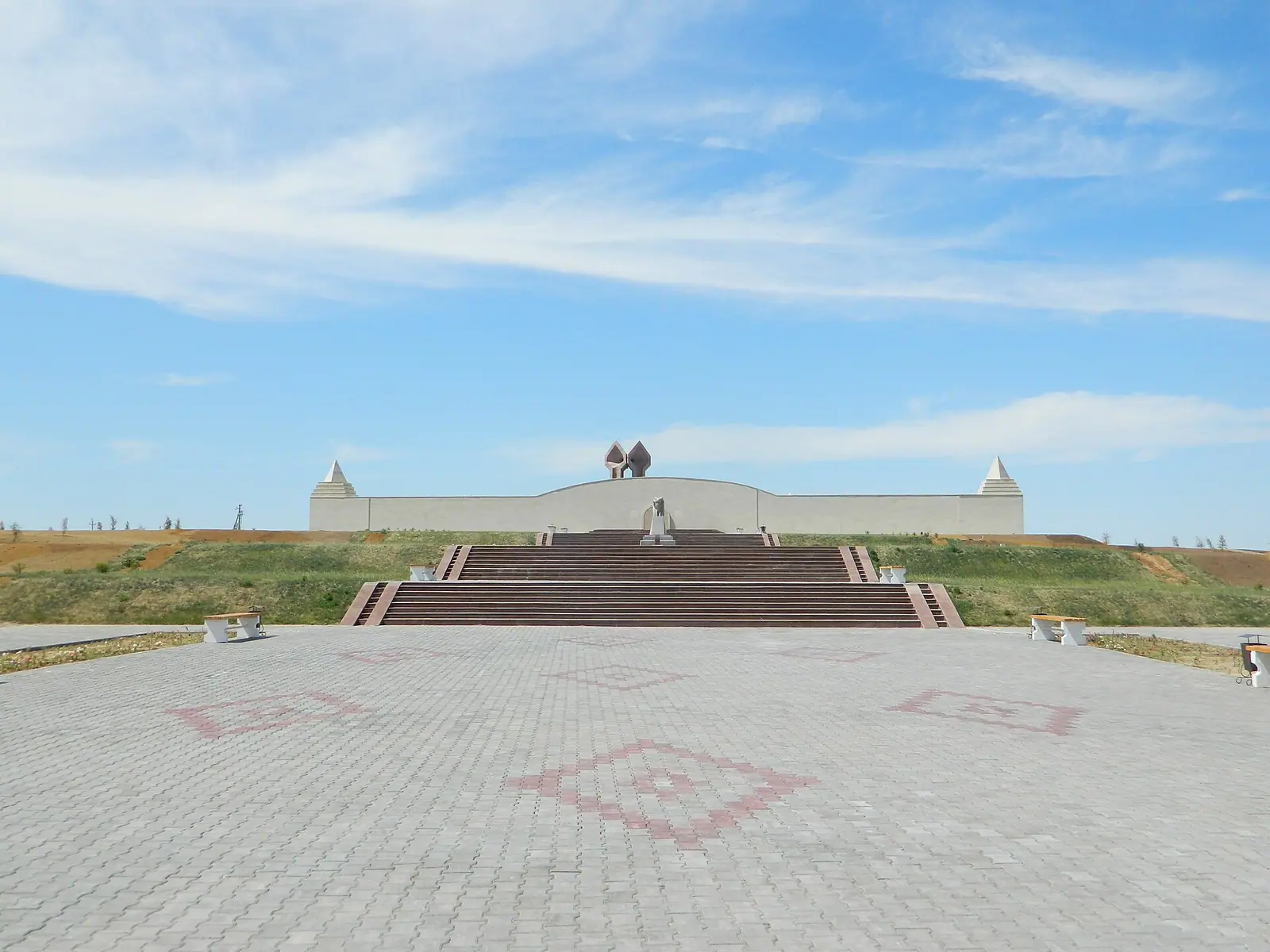
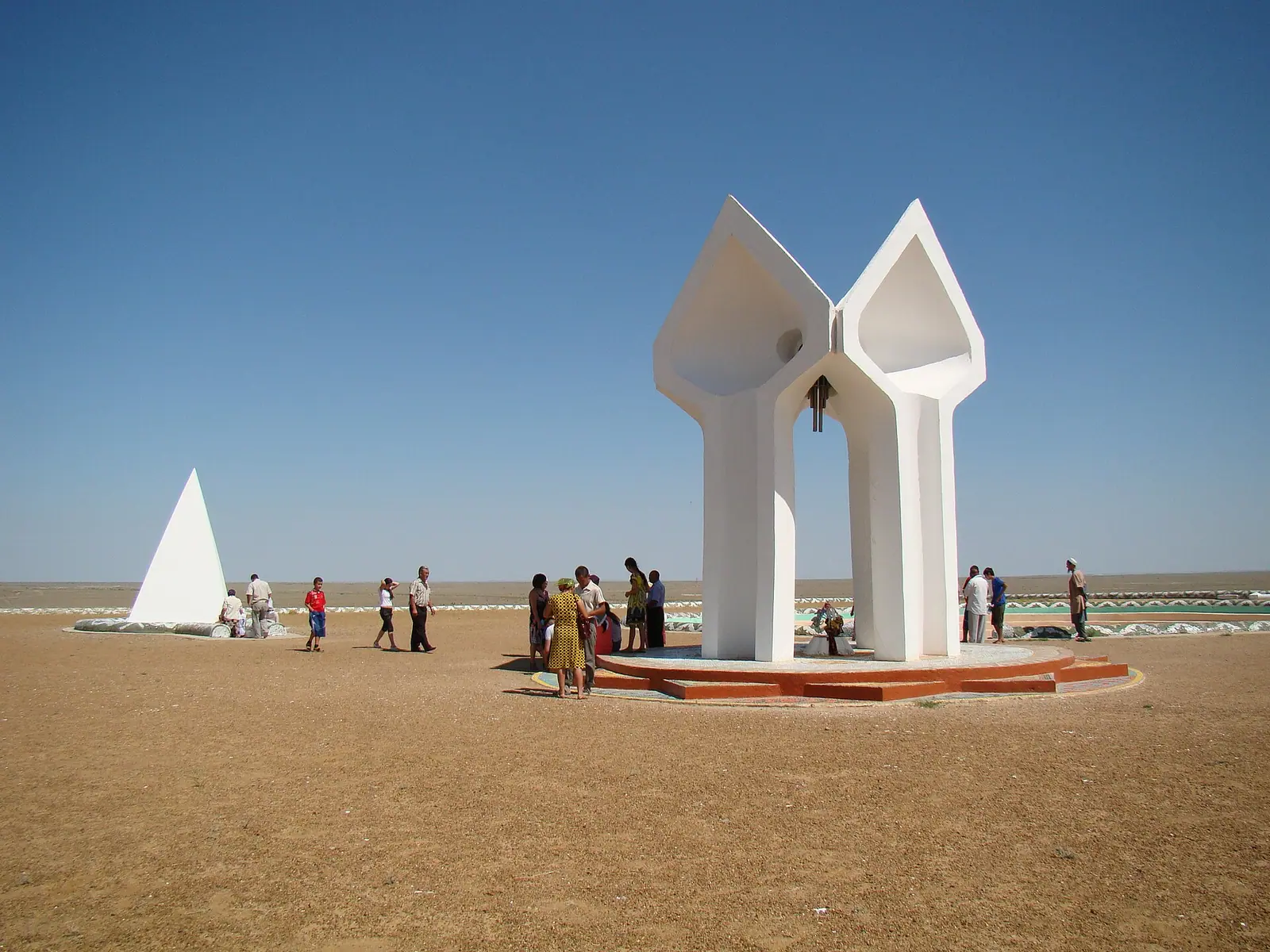
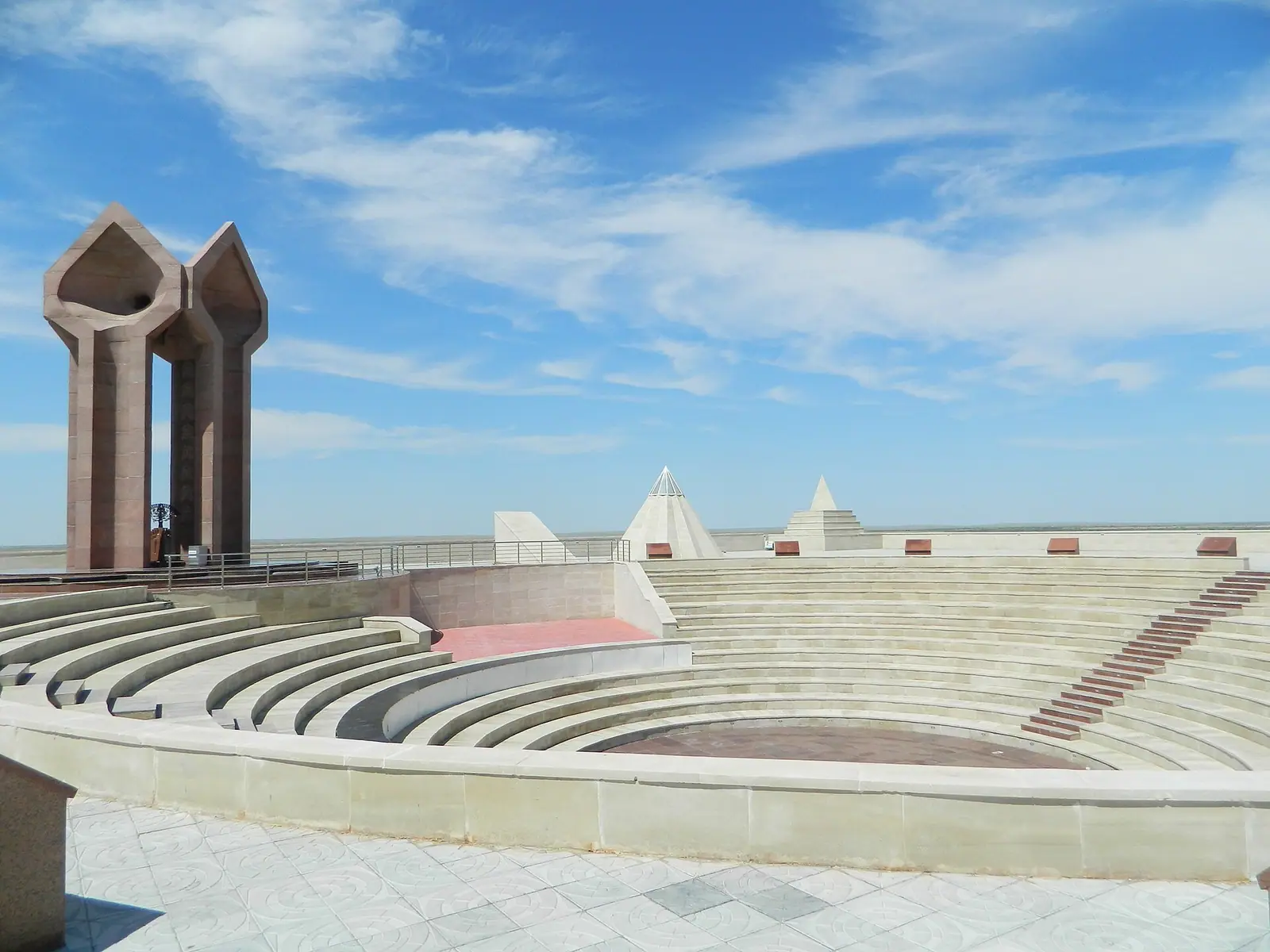
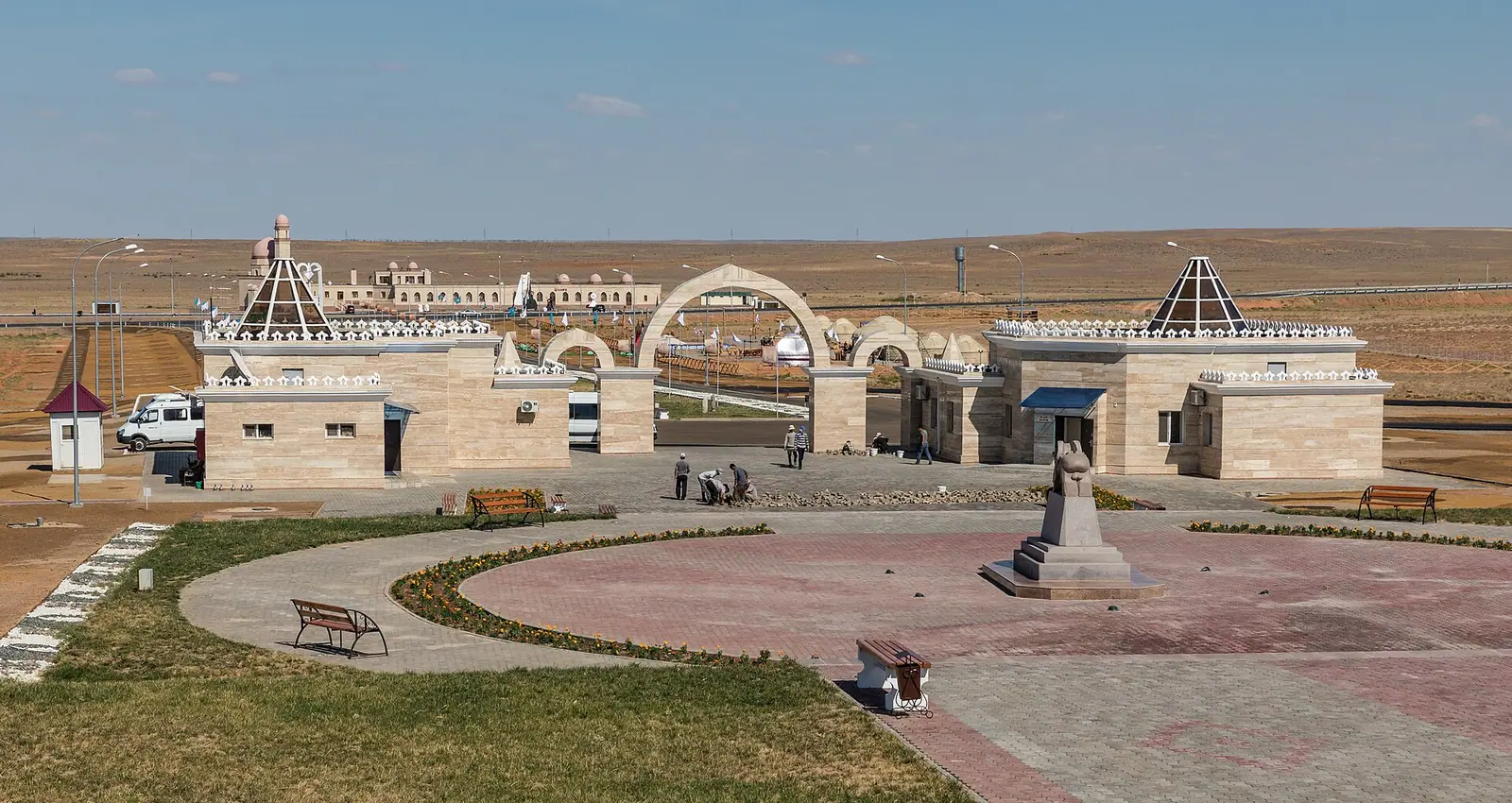
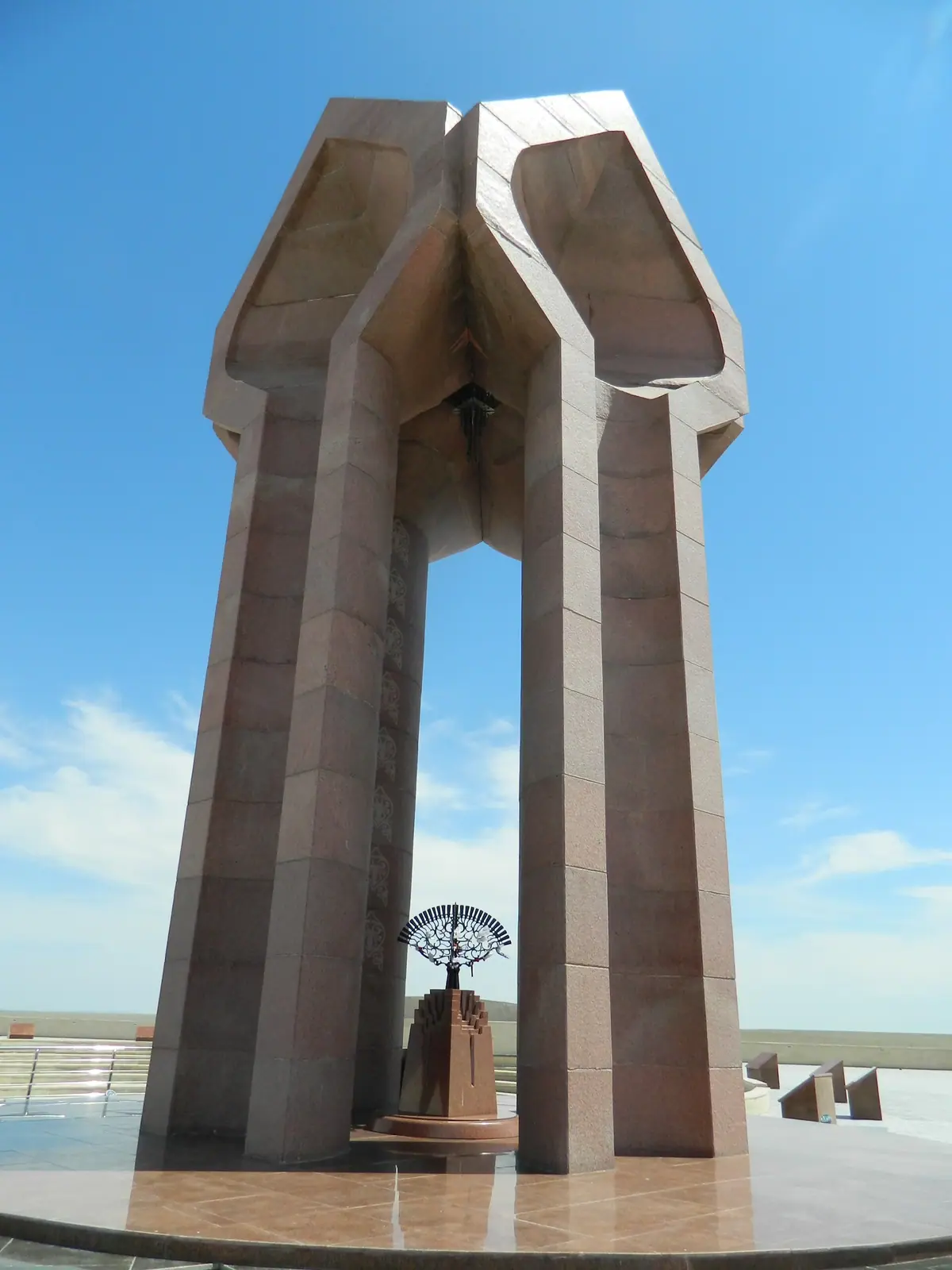
Real photos by travellers (Pexels, Unsplash, Wikimedia Commons); author and licence are given in each caption.
The Korkyt Ata Memorial is a monument and pilgrimage complex in Karmakshy District of Kyzylorda Region, Kazakhstan, honouring Korkyt, the legendary Turkic bard and the creator of the kobyz, a bowed string instrument. Its centrepiece, built in 1980, is shaped like a kobyz and was designed to sound when the wind blows. It sits along the Western Europe – Western China highway, about 200 km from the city of Kyzylorda by Wikipedia’s figure.
What the memorial is and why people come
The memorial is a sound sculpture first and a monument second. Architect B. Ibraev and acoustic physicist S. Isataev designed the kobyz-shaped structure so that gusts of wind produce an audible tone that passers-by can hear. Wikipedia notes it can also be seen from the windows of trains running from Moscow to Tashkent and Almaty.
The idea comes from a legend: at Korkyt’s own request, a kobyz was laid on his grave, and it played softly whenever the wind rose. For many visitors this is also a sacred place, the reputed burial site of a figure revered across the Turkic world, so treat it with the quiet respect you would give any shrine.
| Item | What is known |
|---|---|
| Location | Karmakshy District, Kyzylorda Region, on the Syr Darya |
| Main monument | Kobyz-shaped, built 1980, sounds in the wind |
| Designers | B. Ibraev (architect), S. Isataev (acoustic physicist) |
| Complex | Amphitheatre, museum (since 2000), pilgrimage centre |
| Access | Along the Western Europe – Western China highway, about 200 km from Kyzylorda |
| Visitors | Up to 13,000 a year, by Wikipedia |
Who Korkyt Ata was, and where the sources disagree
Korkyt, also written Korkut or Gorkut, is described as a Turkic poet, storyteller and composer from the steppes along the Syr Darya. Legend credits him with inventing the kobyz and makes him the patron of poets and musicians. He is the central sage in the Book of Dede Korkut, an epic text shared by Turkic peoples.
Scholars do not agree on when he lived. If you read different plaques or guides on site, expect different dates.
| View | Dating |
|---|---|
| Most research (Kazakh Wikipedia) | Born early 10th century, among the Oghuz-Kipchak tribes of the Syr Darya |
| Ä. Qonyratbaev | Died early 11th century |
| Älkey Marğulan | Lived in the 7th–8th centuries |
| Abulghazi’s Turkic genealogy | Died aged 95 |
The best-known legend is about death. Korkyt travelled to the four corners of the world seeking eternal life, and everywhere he found people digging a grave that they said was his. He returned to the Syr Darya and created the kobyz, deciding that art was the only form of immortality. In another version he played on a carpet spread over the river and no death could come while the music lasted, until he fell asleep and a small snake bit him.
What has been built here over the centuries
The site has layers, and not all of them survive. A mausoleum called Korkyt-Tobe, “Korkyt’s Hill”, was raised at the burial place on the bank of the Syr Darya around the 10th–11th centuries and fell into ruin over time.
| Year | Event |
|---|---|
| c. 10th–11th c. | Korkyt-Tobe mausoleum built at the burial site |
| 1980 | Kobyz-shaped monument erected |
| 1997 | Restoration; ensemble with amphitheatre and other buildings created |
| 2000 | Museum opened |
| 2014 | Reconstruction with a pilgrimage centre |
| 2018 | Korkyt Ata heritage added to UNESCO’s intangible cultural heritage list |
One inconsistency: Wikipedia gives 1980 for the monument in one passage and “the 1980s” for the memorial complex in another. The UNESCO listing covers the heritage of Korkyt Ata, the music, stories and traditions, rather than this physical site.
Getting there is the hard part
The memorial is on the international Western Europe – Western China highway. Wikipedia puts it about 200 km from Kyzylorda, the regional capital, whose airport is also named Korkyt Ata.
Beyond that, we could not confirm any public transport to the memorial, whether trains stop nearby, or how long the drive takes. For a traveller with no car and no Russian or Kazakh, the realistic plan is to travel to Kyzylorda, about 200 km away by Wikipedia’s figure, and arrange onward transport there.
When to go
We could not confirm climate figures for the memorial, so we do not mark any month as best. The monument is outdoors on open steppe with little shelter, so check the forecast for heat, wind and dust before a long drive.
The kobyz only sounds when the wind blows, so a still day may leave it silent. Since 2006 the International Festival “Korkyt and the Music of the Great Steppe” has been held by the Ministry of Culture and the Kyzylorda city administration; we could not confirm its dates or whether events take place at the memorial itself.
- Opening hours of the museum and pilgrimage centre, and whether there is an entry fee
- Public transport from Kyzylorda, or whether any train stops near the memorial
- Road travel time from Kyzylorda and the road surface on the final stretch
- Dates and venue of the Korkyt and the Music of the Great Steppe festival
- Climate and the hottest and coldest months at the site
Korkyt Ata Memorial, a wind-played monument on the Syr Darya steppe: tips before you go
- Base yourself in Kyzylorda: its Korkyt Ata Airport is the nearest air link we could confirm, about 200 km from the memorial.
- Arrange a car and driver for the return trip; we could not confirm any bus or train stop at the memorial.
- Go on a breezy day if you can: the kobyz monument only sounds when the wind blows across it.
- This is a pilgrimage site with a pilgrimage centre since 2014; dress modestly and keep voices low near the burial area.
Frequently asked questions
Is Kyzylorda airport named after Korkyt Ata?
Is Korkyt Ata University connected to the memorial?
Does the Korkyt Ata monument really play music?
Is Korkyt Ata on the UNESCO list?
Sources
Read also
 Almaty Zoo in Kazakhstan: opening hours and how to visit
 Ayusai Gorge, Almaty: visitor centre and waterfall trail
 Gorelnik Gorge above Medeu: waterfalls, trail and season
 Kamenskoe Plateau above Almaty: observatory and trails
 Pervomaiskie Ponds near Almaty: location, swimming, season
 Saty village: base for the Kolsai and Kaindy lakes