Karakhan Mausoleum: when to go, month by month
- January: possible
- February: possible
- March: good
- April: best time
- May: best time
- June: good
- July: possible
- August: good
- September: best time
- October: best time
- November: possible
- December: possible
A city site; opening hours are not confirmed, most comfortable in May and September before and after the July heat of about 33.5°C.
Karakhan Mausoleum: why go
Karakhan Mausoleum's tomb
A stepped tombstone survives inside. The grave is laid south to north, and the main facade faces south.
A legend of the first Turkic Muslim
Local tradition links the grave to Karakhan, founder of the Karakhanid dynasty and, by legend, the first Turkic ruler to accept Islam.
Getting to Taraz
The mausoleum sits on the western edge of Taraz, about 159 km from Shymkent and 449 km from Almaty in a straight line.
Taraz in May and September
Daytime highs near 25–26°C in May and September, against 33.5°C in July, by ERA5 normals for 2011–2020 at a 627 m grid point.
A yurt-shaped ceiling
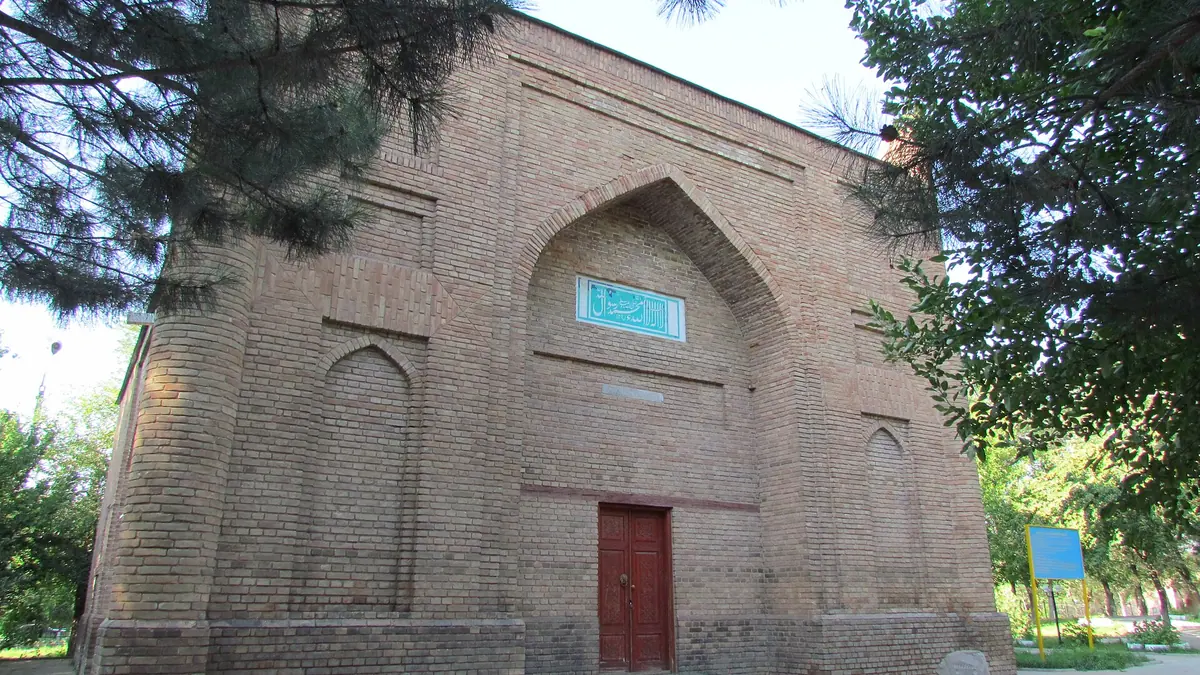
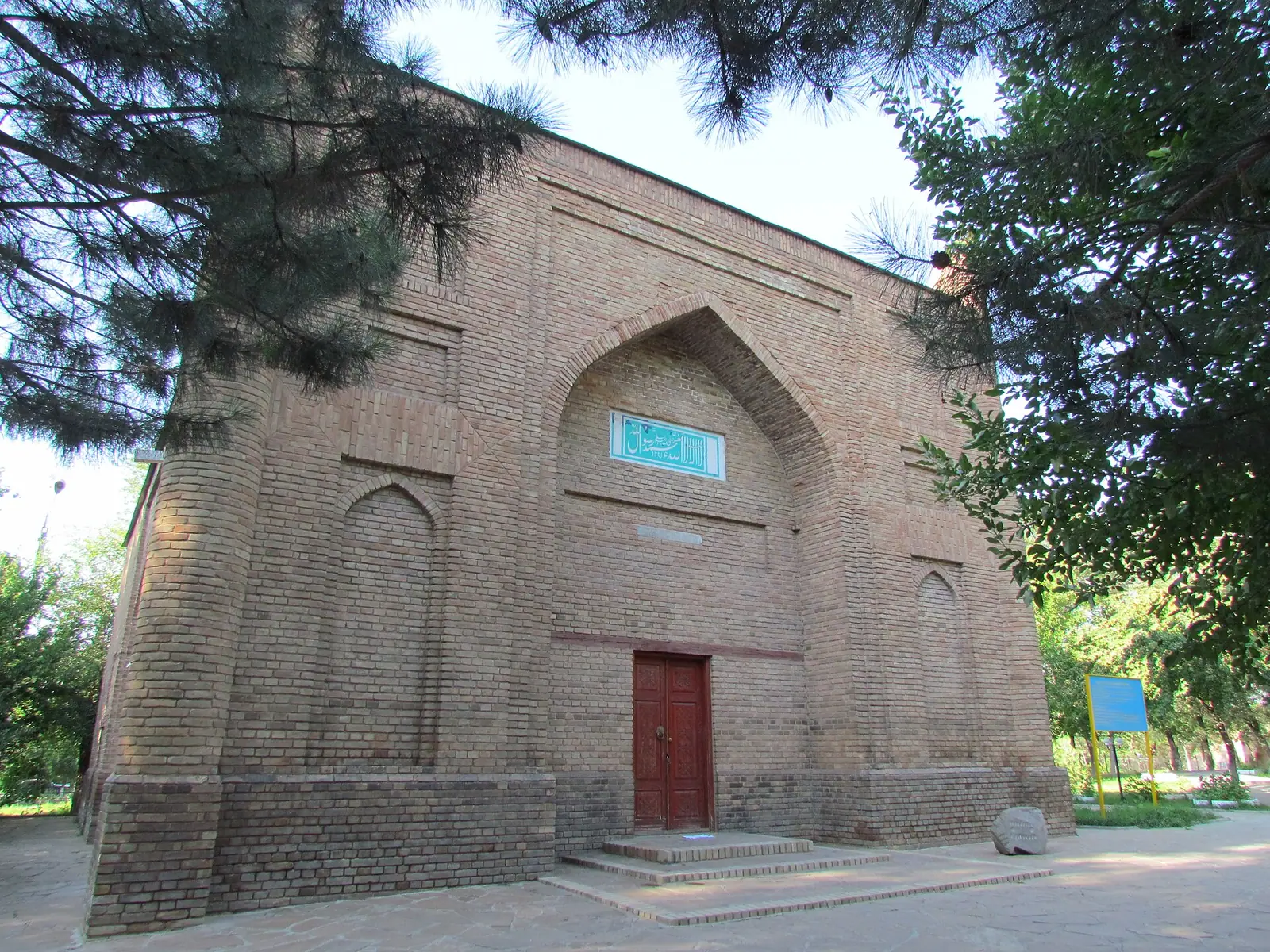
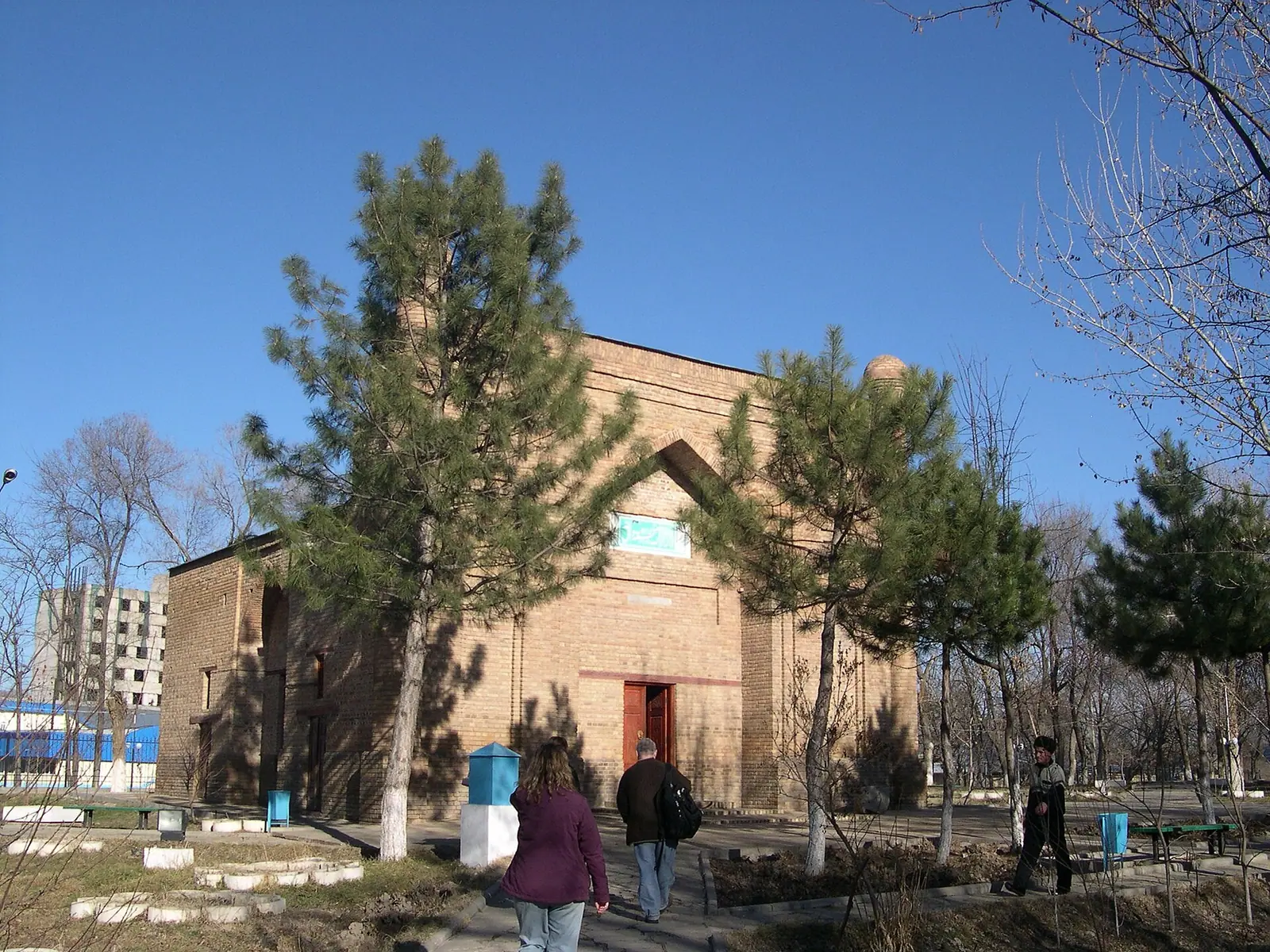
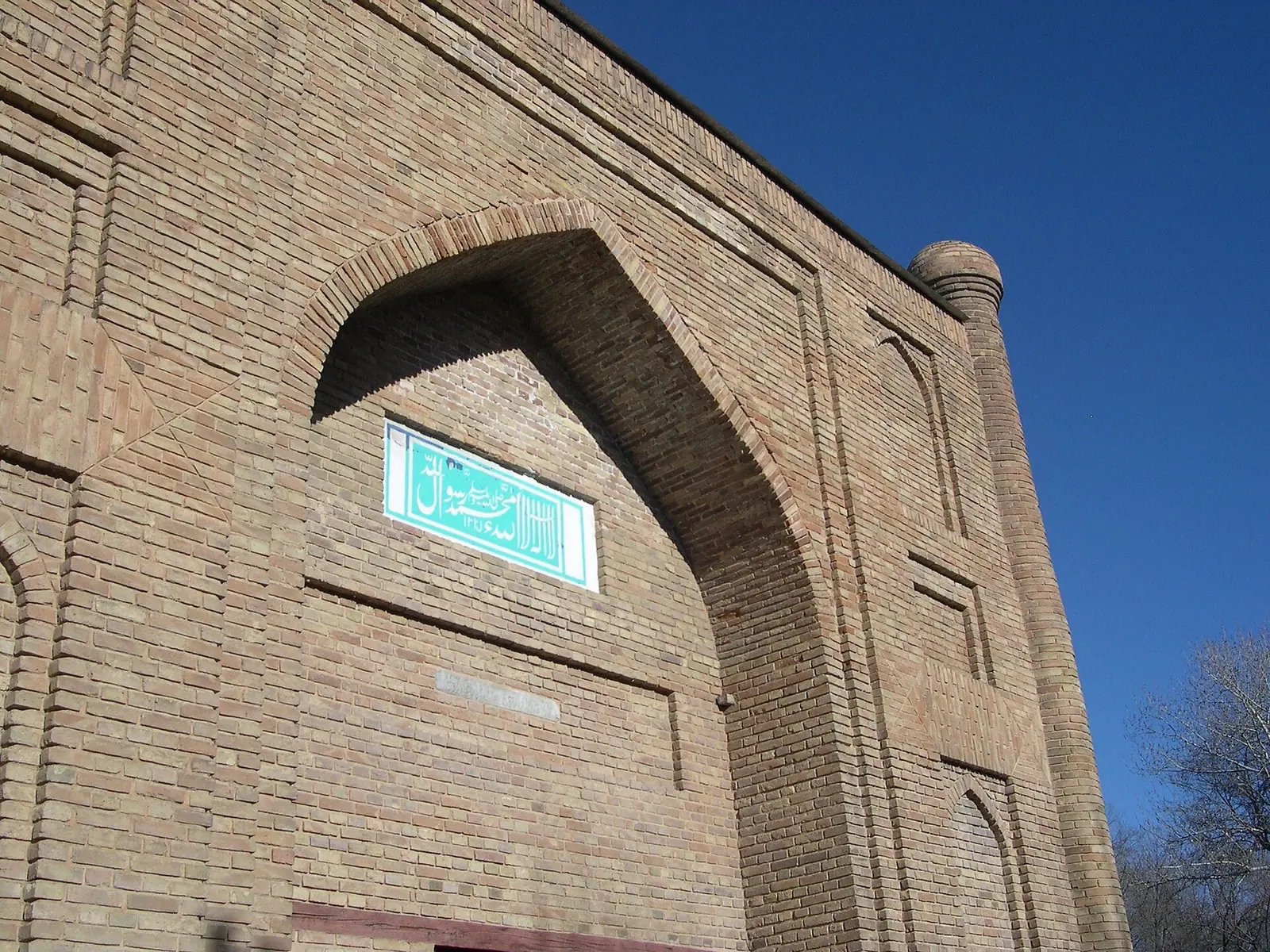
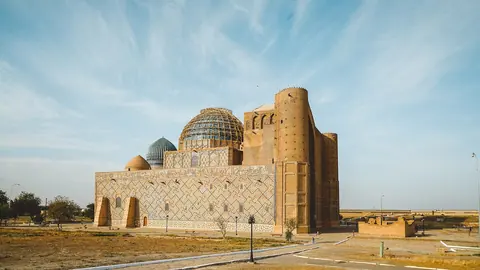
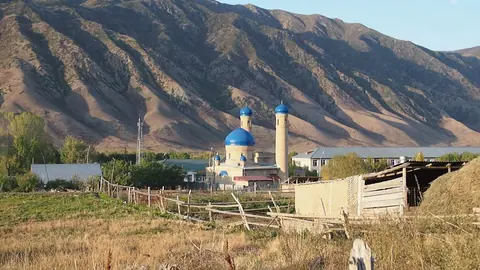
The central room of the 1906 building is roofed to resemble a yurt, while the brickwork outside imitates the Ismail Samani mausoleum in Bukhara.
Karakhan Mausoleum in photos
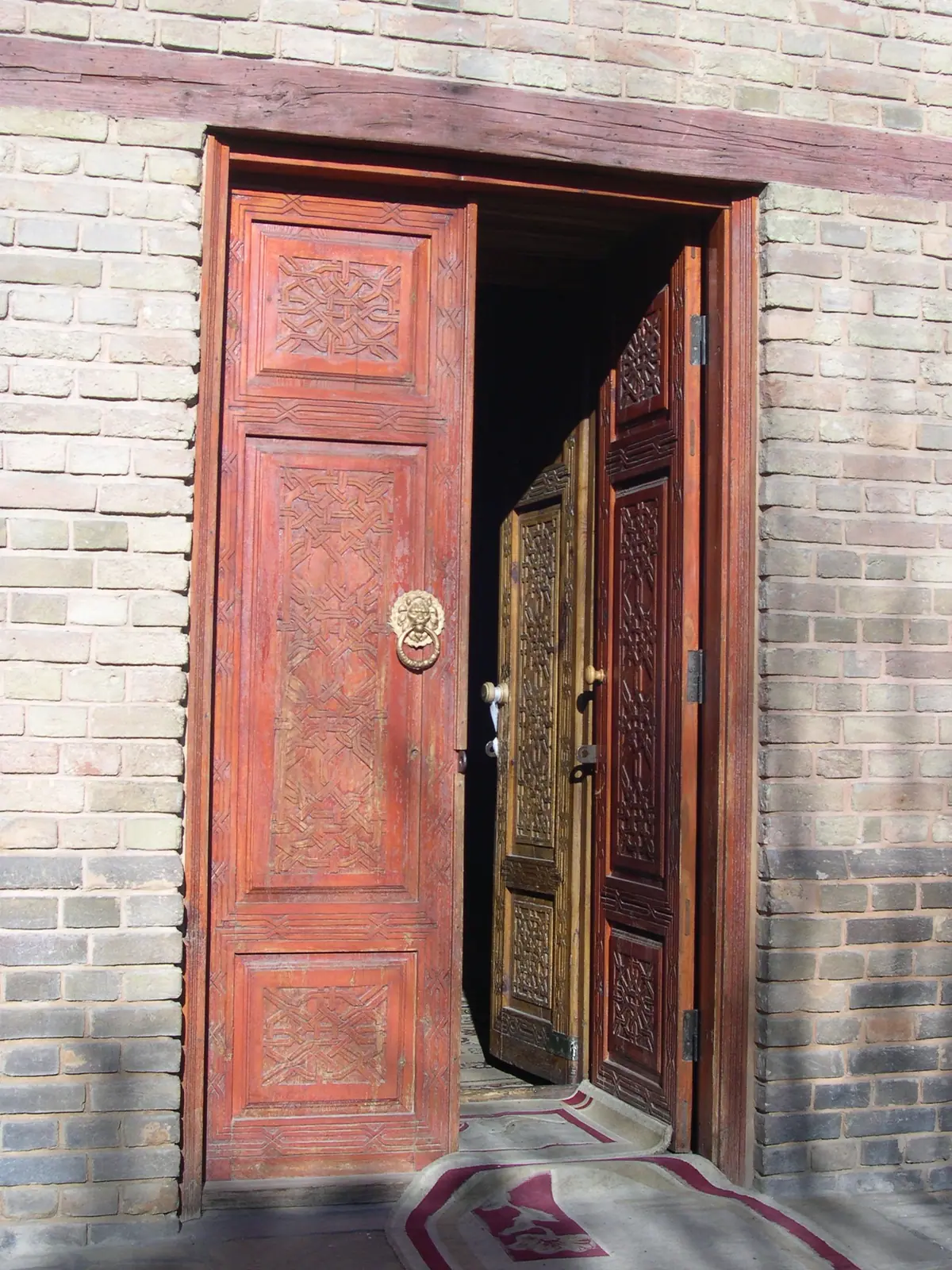
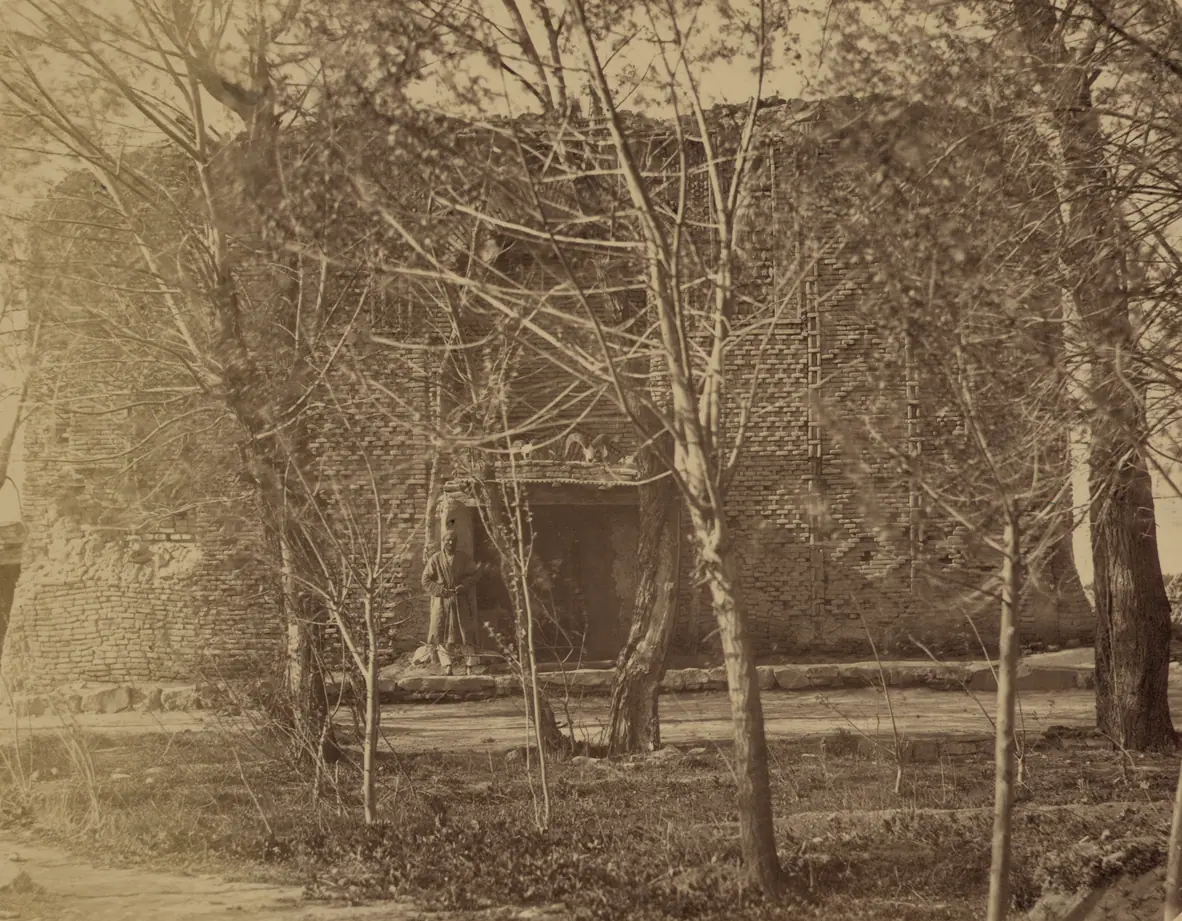
Real photos by travellers (Pexels, Unsplash, Wikimedia Commons); author and licence are given in each caption.
The Karakhan Mausoleum, also called the Aulie-Ata Mausoleum, is an architectural monument from the 11th century on the western edge of Taraz, in Kazakhstan’s Zhambyl Region. It stands over the grave of a member of the Karakhanid dynasty, but the building you see was rebuilt in the early 20th century. It suits a city stop rather than a trip in its own right.
Where it is and what kind of trip it needs
The mausoleum is in Taraz itself, on the western edge of the city by Kazakh Wikipedia, so reaching it is a matter of getting to Taraz. Taraz lies in the far south of Kazakhstan, about 449 km from Almaty and about 159 km from Shymkent, both in a straight line.
| Point | Straight-line distance |
|---|---|
| Taraz city | about 1 km |
| Shymkent | about 159 km |
| Turkistan | about 258 km |
| Almaty | about 449 km |
These are not road distances, and we could not confirm train, bus or flight options to Taraz. For a traveller without a car, the realistic plan is to treat Taraz as a stop on an overland route between Almaty and Shymkent or Turkistan, and to sort out local transport to the mausoleum once in the city.
Who is buried here: legend and the written record
Local oral tradition says the tomb belongs to Karakhan, founder of the Karakhanid dynasty and, by the same tradition, the first Turkic ruler to accept Islam. Russian Wikipedia describes the person more cautiously as one of the dynasty’s representatives. Kazakh Wikipedia names him as Sha-Mahmud Bugra Karakhan.
An old genealogy quoted in Russian Wikipedia places the grave of Aulie-Ata on the Talas river, and mentions a daughter, Bibi-Aisha, buried a short distance from the town of Aulie-Ata. Aulie-Ata is the name the mausoleum also carries. The site is a grave and a place of veneration, so visit it with the same quiet respect you would give any shrine.
What you see is a 1906 rebuild, not the 11th-century original
The original structure did not survive intact. By Kazakh Wikipedia, only the dome had fallen, and the four walls and a pair of minarets decorated with glazed brick stood until the 1890s. The ruined parts were pulled down in 1905 and a new mausoleum went up in 1906, paid for by Said Bakhanov, an ishan from Tashkent. Russian Wikipedia gives the demolition as 1905 or, by other accounts, 1920.
| Original building | Building today | |
|---|---|---|
| Plan | Centric, under a dome | Square: one large central room and three smaller parts |
| Entrance | Gently pointed arch on three-quarter columns of paired brick | Arched niche at the doorway |
| Roof of main room | Dome | Ceiling shaped like a yurt |
| Towers | Twin minarets with glazed brick | Two towers at the back |
| Bricks | Original | Original bricks inside, new bricks outside |
The practical point: come for the site and its story rather than for medieval decoration, which was lost in the rebuilding. Russian Wikipedia notes that the building kept its structural principle but lost its original decorative finish.
Details to look for inside and out
The stepped tombstone inside survived the rebuilding, by Russian Wikipedia. The grave is laid out south to north, and the main facade faces south. On the outside, Kazakh Wikipedia sees a facade similar to the Aisha Bibi mausoleum and patterned brickwork that imitates the medieval Ismail Samani mausoleum in Bukhara.
Much of what is known about the first building comes from a photograph from the 1850s, which archaeologist Taisia Senigova used to describe the original facade. The inner faces of the walls are laid with the old bricks, so the interior is the closest you get to the earlier structure. The mausoleum is on Kazakhstan’s state list of historical and cultural monuments of national significance.
When to go to Taraz
Late spring and early autumn are the most comfortable months; midsummer is hot and winter is cold. The figures below are computed ERA5 reanalysis normals for 2011–2020 at a grid point at 627 m near the mausoleum, not readings from a weather station.
Day high, °C / Night low, °C · Rain/snow, mm
A computed reanalysis normal for these coordinates, not weather station records.
Monthly figures
| Month | Day high, °C | Night low, °C | Rain/snow, mm |
|---|---|---|---|
| Jan | 2.3 | -6.4 | 36 |
| Feb | 3.5 | -6.1 | 36.2 |
| Mar | 12.3 | 1.3 | 58 |
| Apr | 19.3 | 7.4 | 63.2 |
| May | 25.8 | 12.1 | 36.5 |
| Jun | 31.1 | 16.8 | 21.5 |
| Jul | 33.8 | 19 | 6 |
| Aug | 31.9 | 17.2 | 8.3 |
| Sep | 25.9 | 11.3 | 7.4 |
| Oct | 17.6 | 4.7 | 34.5 |
| Nov | 7.1 | -2.9 | 46.1 |
| Dec | 2.6 | -6.2 | 31.6 |
July averages a daytime high of 33.8°C and barely any rain, so plan outdoor sightseeing in the morning or evening. May (25.8°C) and September (25.9°C) are warm without the peak heat. March and April are the wettest months, with April near 63 mm. From December to February daytime highs stay around 2–4°C and nights drop to about −7°C, which is fine for a short city visit if you dress for it.
Combining it with the south Kazakhstan heritage route
Several medieval sites of the south are within reach of Taraz, though none is close. Turkistan is about 258 km away in a straight line, and Otrar and Arystan Bab are each about 250 km away. Russian Wikipedia’s quoted genealogy itself mentions a grave in Otrar, which ties the Karakhan story to that route. The Karakhan Mausoleum works best as one stop among several, given the distances involved.
- Opening hours and whether entry is charged
- Dress code and rules for entering the burial chamber
- Public transport within Taraz to the mausoleum
- Train, bus or flight connections to Taraz from Almaty or Shymkent
- Whether photography is allowed inside
Karakhan Mausoleum: tips before you go
- Visit in May or September: daytime highs are near 25–26°C, versus 33.5°C in July with almost no rain.
- Look at the inner walls: they are laid with the original bricks, while the exterior uses new brick from the 1906 rebuild.
- Pair it with Turkistan or Otrar on one trip; both are about 250 km away in a straight line, so plan a full travel day.
- This is a grave and a place of veneration: keep voices low and check local custom on dress before entering.
More to see nearby
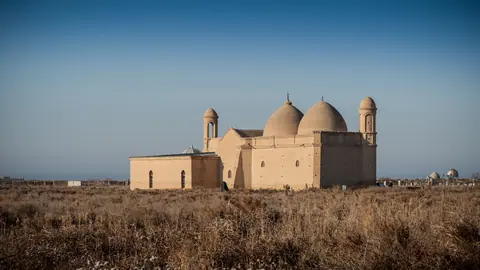
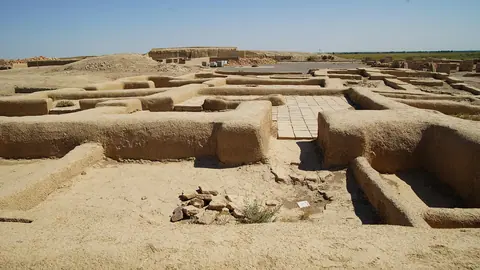


Frequently asked questions
Is the Karakhan Mausoleum really from the 11th century?
Why is it also called the Aulie-Ata Mausoleum?
How far is the Karakhan Mausoleum from Almaty?
Who paid for the rebuilt mausoleum?
Sources
Read also
 Almaty Zoo in Kazakhstan: opening hours and how to visit
 Ayusai Gorge, Almaty: visitor centre and waterfall trail
 Gorelnik Gorge above Medeu: waterfalls, trail and season
 Kamenskoe Plateau above Almaty: observatory and trails
 Pervomaiskie Ponds near Almaty: location, swimming, season
 Saty village: base for the Kolsai and Kaindy lakes