Kapal-Arasan: when to go, month by month
- January: good
- February: good
- March: good
- April: good
- May: good
- June: good
- July: good
- August: good
- September: good
- October: good
- November: good
- December: good
The sanatorium is open year-round, but the mild July average of 19.3 °C makes late spring to early autumn the most comfortable time, while continental winters are colder.
Kapal-Arasan: why go
Kapal-Arasan thermal water
Weakly mineralised chloride-sulphate-sodium water with silicic acid, used in baths, showers and physiotherapy, and also bottled as mineral water.
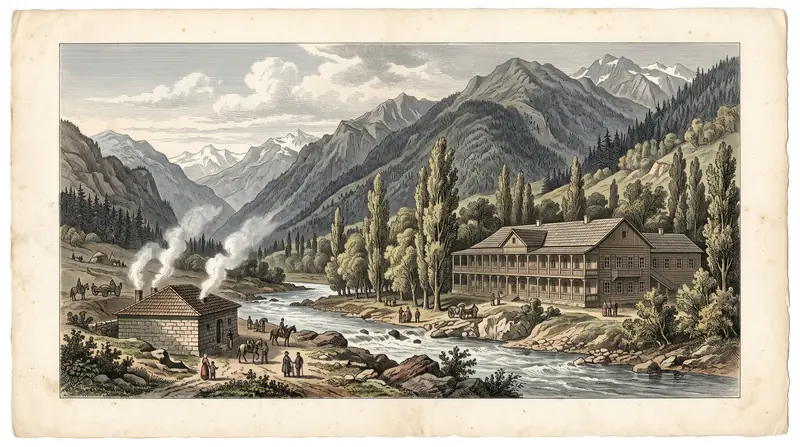
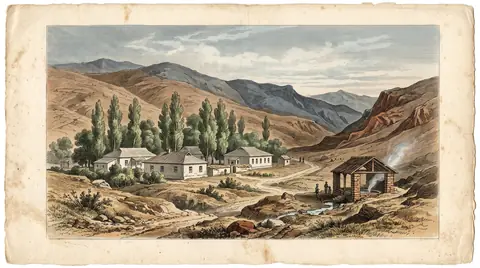
Kapal-Arasan's 19th-century roots
Kazakh Wikipedia dates the first health house to 1850; Russian Wikipedia gives 1886 for the resort's opening and calls it Kazakhstan's oldest.
The road to Arasan village
The sanatorium sits about 100 km from Taldykorgan by Kazakh Wikipedia. We could not confirm buses, so arrange transport before you travel.
Mild summers at 975 m
Russian Wikipedia gives a July average of 19.3 °C and about 350 mm of precipitation a year, so summer here is mild rather than hot.
An old garden at Kapal-Arasan
In 1853 a 53-hectare garden was planted around the first health house, according to Kazakh Wikipedia, a reminder of how long the site has been in use.
Kapal-Arasan in photos
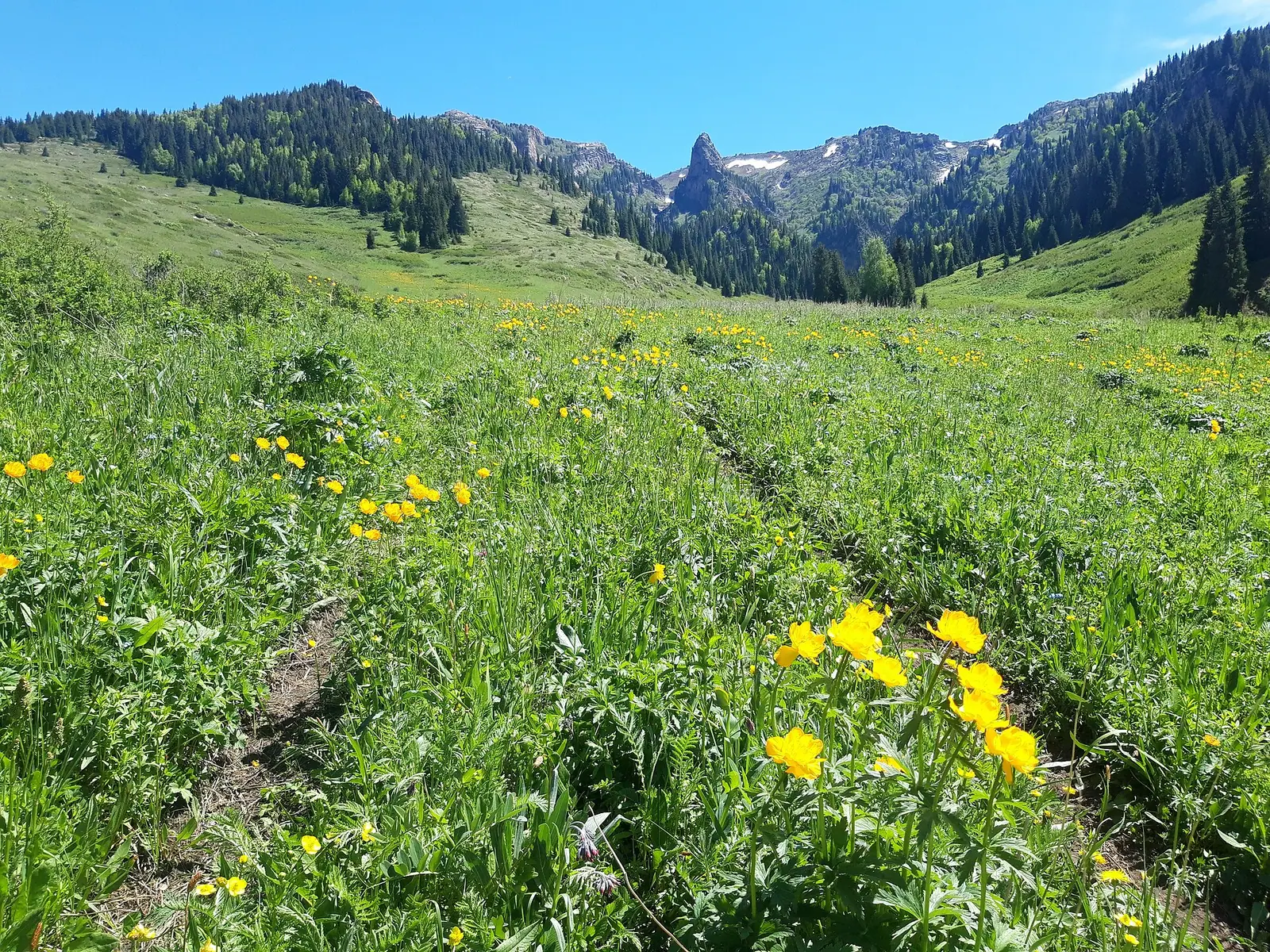
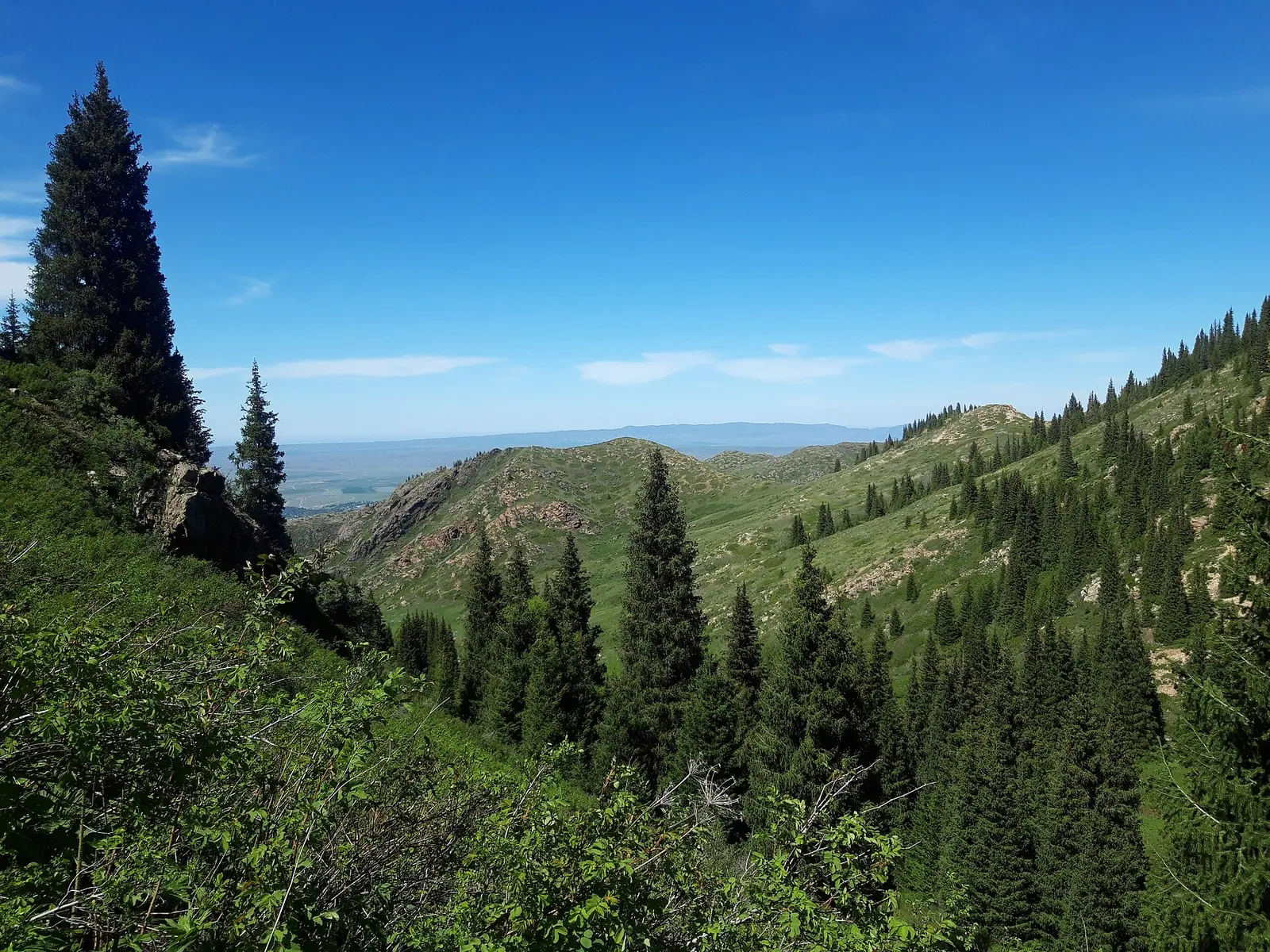
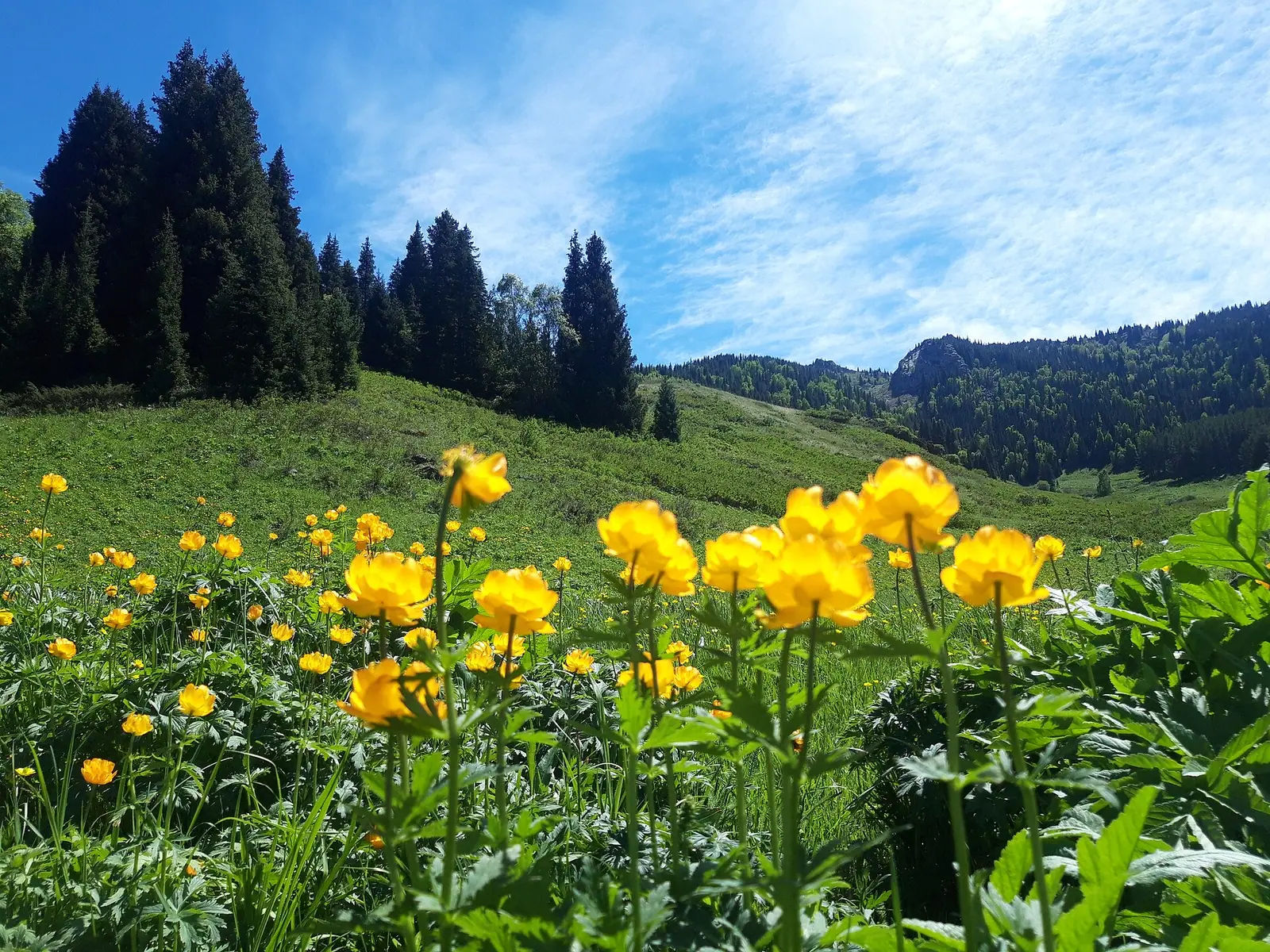
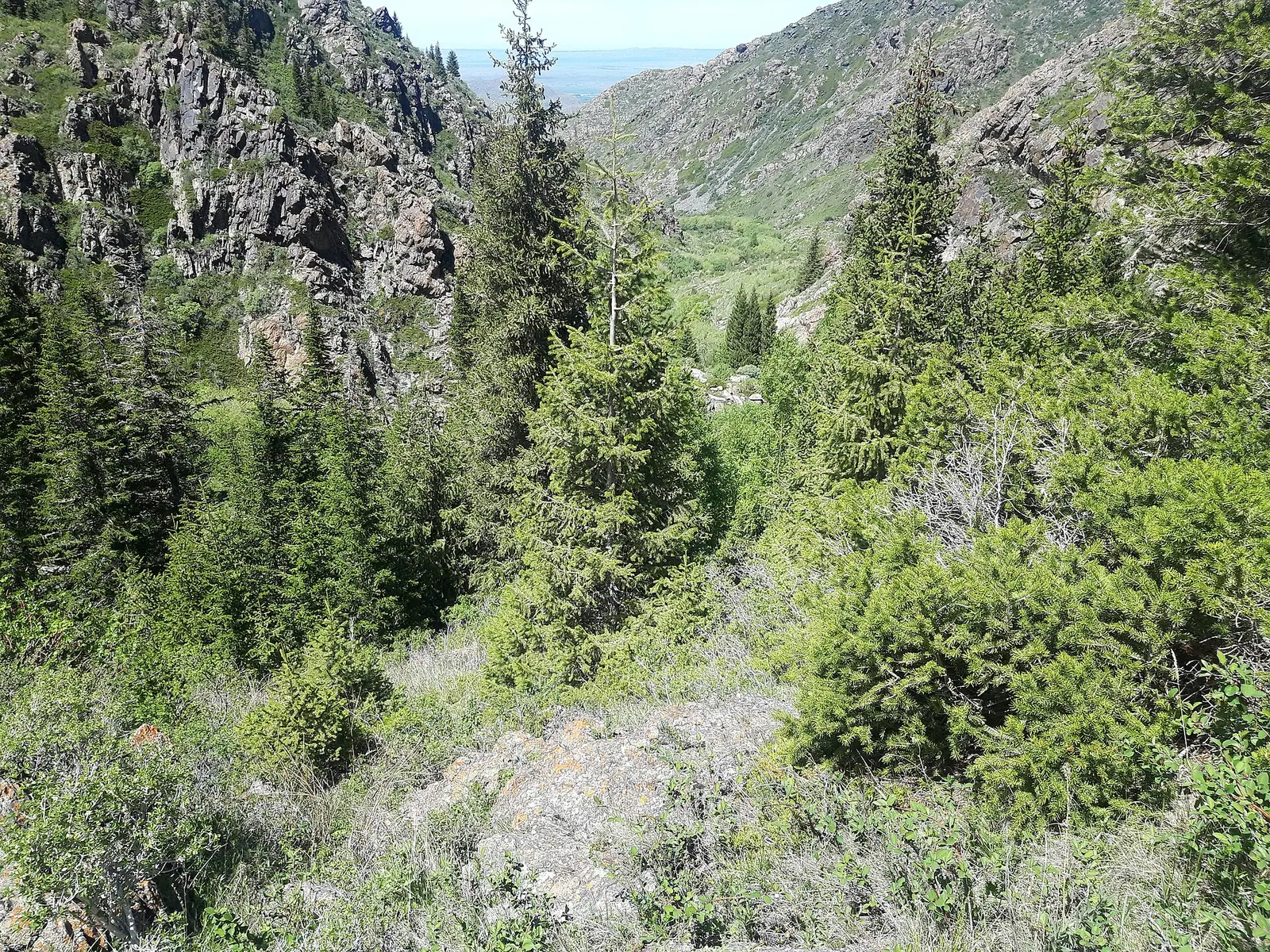
Real photos by travellers (Pexels, Unsplash, Wikimedia Commons); author and licence are given in each caption.
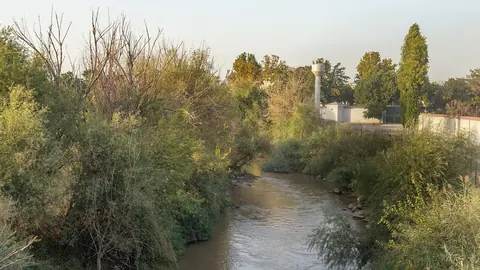
Kapal-Arasan is a balneological sanatorium that uses warm, weakly mineralised spring water, set at 975 m on the left bank of the Biyen River in the village of Arasan, Aksu district, Zhetysu region. People come here for a course of treatment, and it makes a poor sightseeing stop. Kazakh Wikipedia puts it about 100 km from the regional city of Taldykorgan.
What Kapal-Arasan is, and who it suits
Kapal-Arasan is a working medical resort, not a wild hot spring. The sanatorium has treatment baths with mineral water, showers and physiotherapy rooms, alongside massage, mud therapy, paraffin-ozokerite wraps and sunbathing. Russian Wikipedia also lists an express laboratory and a herbal tea bar.
This matters for planning. If you picture a pool in the open mountains, this is a different kind of place: a sanatorium with buildings, a schedule and medical staff. It suits travellers who want a course of spa treatment, and suits a short detour poorly.
| Key data | Detail |
|---|---|
| Type | Balneological (mineral water) sanatorium |
| Location | Village of Arasan, Aksu district, Zhetysu region |
| Setting | Left bank of the Biyen River, between the Karakungey and Bayanzhurek mountains |
| Elevation | 975 m above sea level |
| Distance | About 100 km from Taldykorgan, by Kazakh Wikipedia |
| Operating | Year-round |
| Main building | 5 storeys, 500 places, opened 1982, reconstructed 2000 |
In short, it is a large Soviet-era complex, refurbished in the 2000s, at a moderate altitude where summer heat is not extreme.
What the Kapal-Arasan water treats
The springs are thermal, weakly mineralised, chloride-sulphate-sodium, weakly alkaline and contain silicic acid. The same water is sold separately as Kapal-Arasan mineral water.
Both Wikipedia articles list the conditions the sanatorium works with. They overlap closely:
| Area | Conditions named |
|---|---|
| Digestive system | Diseases of the digestive organs |
| Liver and kidneys | Chronic liver and kidney disease |
| Urinary and reproductive | Urogenital, gynaecological and urological conditions |
| Spine and joints | Osteochondrosis, radiculitis, arthritis, polyarthritis |
This is a list of what the resort says it treats, not medical advice. If you have a chronic condition, talk to your own doctor before booking a course of mineral baths. We could not confirm what medical paperwork, if any, the sanatorium asks foreign guests to bring.
Kazakh Wikipedia contains a garbled line that seems to give a figure of 35 °C. We could not confirm whether it refers to the water temperature or something else.
A resort with a long history
The springs have a long and broken history, and the two Wikipedia articles tell it differently. Russian Wikipedia says the resort opened in 1886 and calls it the oldest resort institution in Kazakhstan. Kazakh Wikipedia gives an earlier and more detailed timeline.
| Year | Event (by Kazakh Wikipedia unless noted) |
|---|---|
| 1840 | Healing properties studied by a Dr Svetaev |
| 1848 | Healing properties of the site become known |
| 1850 | First health house built |
| 1853 | A 53-hectare garden planted around it |
| 1868 | Springs studied by I. Sobolevsky |
| 1886 | Resort opens (Russian Wikipedia) |
| 1899 | Treatment site officially closed |
| 1930–1931 | Expedition from the Pyatigorsk balneology institute; decision to reopen |
| 1959, 1973 | New buildings |
| 1982 | 500-place, five-storey building opens |
| 1992 | A 150-place complex built by the roads ministry |
| 1990s | Sanatorium closes during economic hardship |
| 2000 | Buildings restored and refurbished |
| 2002 | Guests received again |
Note the clash: Kazakh Wikipedia lists 1840 for a study and 1848 for the site becoming known, which reads oddly. It also gives 1951 for a study, after the 1931 reopening decision. Treat the early dates as approximate. Overall, the site has been used for healing for well over a century, with a long gap in the 1990s.
Getting to Kapal-Arasan is the hard part
We could not confirm any public transport to the village of Arasan. The only distance in our sources is about 100 km from Taldykorgan, the regional centre, given by Kazakh Wikipedia without saying whether it is by road.
For a foreign traveller without a car or Russian, this means planning ahead. Ask the sanatorium directly whether it arranges transfers from Taldykorgan, how long the drive takes and what the road is like. Expect that staff and paperwork will mainly be in Russian and Kazakh; we could not confirm whether English is spoken.
When to go to Kapal-Arasan
The sanatorium works year-round, so the choice of season is about comfort, not access. Russian Wikipedia gives a continental climate, an average July air temperature of 19.3 °C and about 350 mm of precipitation a year. That makes summer mild rather than hot at this altitude.
Russian Wikipedia also gives a January average of 10 °C, which looks like a sign error for −10 °C, though we could not confirm it. Plan for a real winter if you go between December and February. Late spring through early autumn is the more comfortable window for time outdoors between treatments.
- Current prices, package contents and minimum course length
- Public transport or transfers from Taldykorgan or Almaty, and road conditions
- Whether day visitors can use the baths without staying
- Medical documents required on arrival and whether staff speak English
- Water temperature at the springs
Kapal-Arasan: tips before you go
- Book a course in advance: Kapal-Arasan is a sanatorium with a 500-place building and medical treatments, not a drop-in hot pool.
- Check with your doctor first if you have kidney, liver or joint conditions, since these are what the mineral baths target.
- Plan transport from Taldykorgan, about 100 km away by Kazakh Wikipedia; we could not confirm any public bus to Arasan.
- Pack for a continental winter if visiting December to February; the published January average looks unreliable.
Frequently asked questions
What does Kapal-Arasan treat?
Is Kapal-Arasan open all year?
How much does a stay at Kapal-Arasan sanatorium cost?
Where exactly is Kapal-Arasan?
What kind of water is at Kapal-Arasan?
Sources
Read also
 Zharkent-Arasan: radon hot springs in the Zhetysu mountains
 Rakhmanov Springs: radon hot springs in the Altai
 Barlyk-Arasan hot springs near Lake Alakol: water, radon and what to ask
 Arasan Spa Almaty: prices, steam rooms and rules at the Arasan Baths
 Saryagash: a mineral water spa town in southern Kazakhstan
- Hot springs in Kazakhstan: how to choose between six thermal spas