Verified: 2026-10
Issyk Lake (Esik): when to go, month by month
- January: off season
- February: off season
- March: off season
- April: possible
- May: good
- June: best time
- July: best time
- August: best time
- September: best time
- October: good
- November: off season
- December: off season
The warm season, when the gorge road is dry; skip it after heavy mountain rain — this is a mudflow gorge.
Issyk Lake (Esik): why go
Issyk's 1963 mudflow
On 7 July 1963 a mudflow broke the natural dam, the lake drained, and the torrent wrecked camps and streets of Issyk on its way to the highway.
Issyk Lake then and now
Before 1963 it was about 1,850 m long and 50–79 m deep. After dam repairs in the early 1990s it regained roughly three quarters of its volume.
Issyk's dam back in state hands
In May 2026 the government cancelled a 49-year trust deal: the operator invested under 5% of its plan and never filed the dam inspection report.
The Golden Man's Issyk kurgan
Excavated in 1969 by Kemal Akishev's team: more than 4,000 gold objects. Around it lie 45 large royal burial mounds.
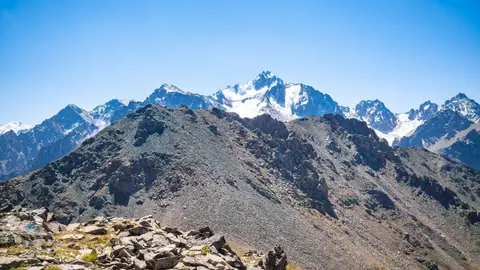
Issyk Lake (Esik) in photos
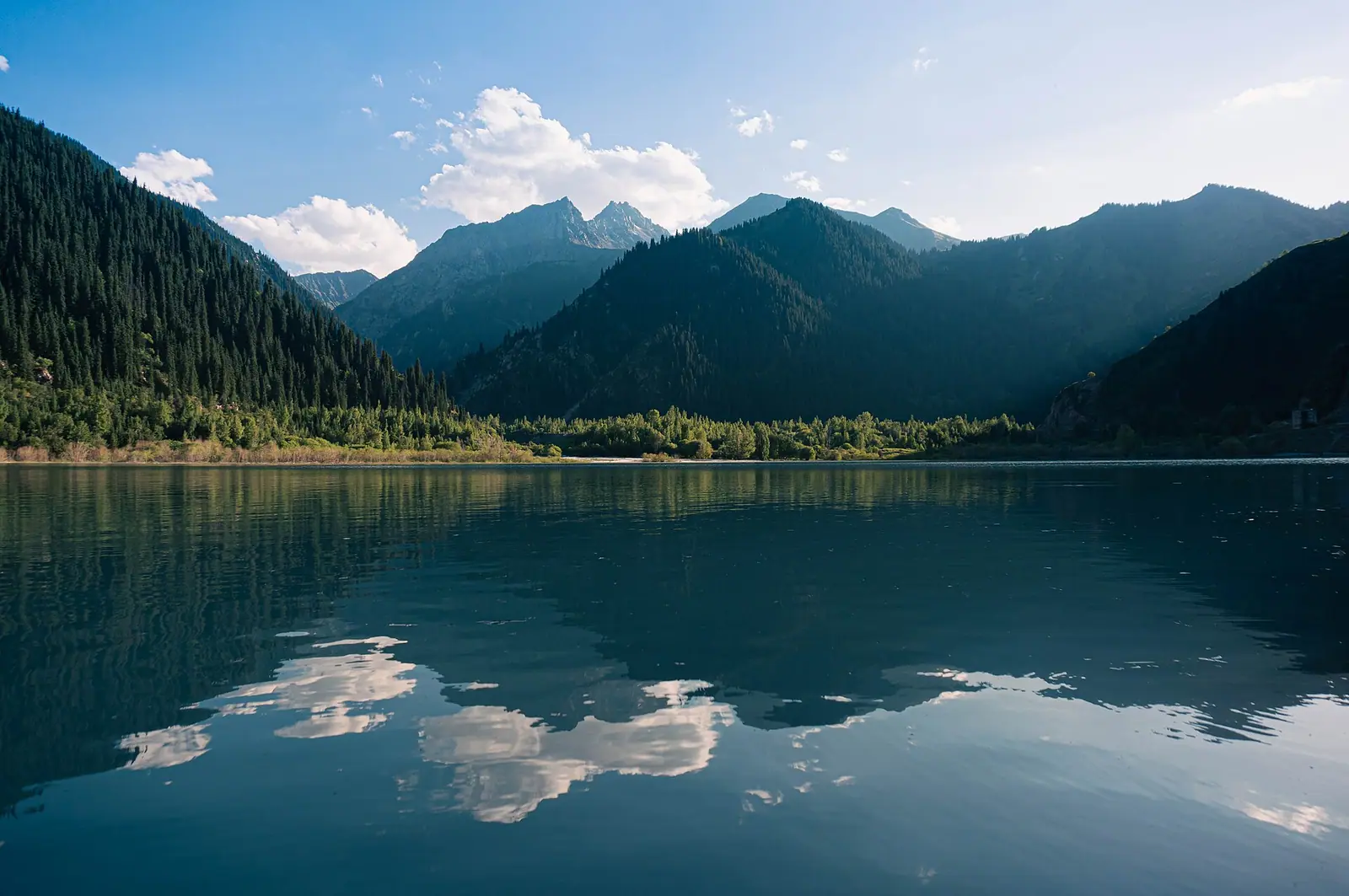
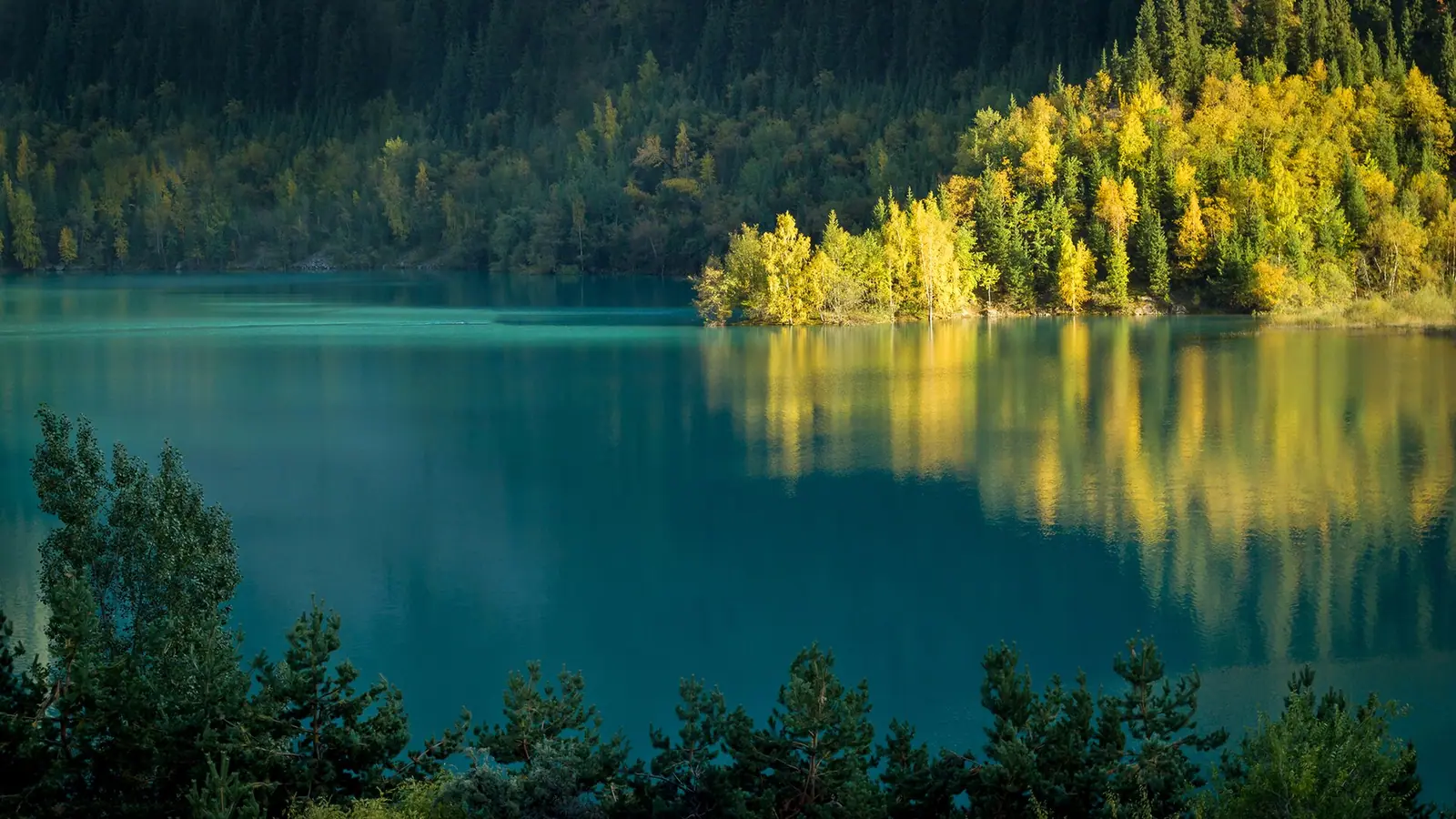
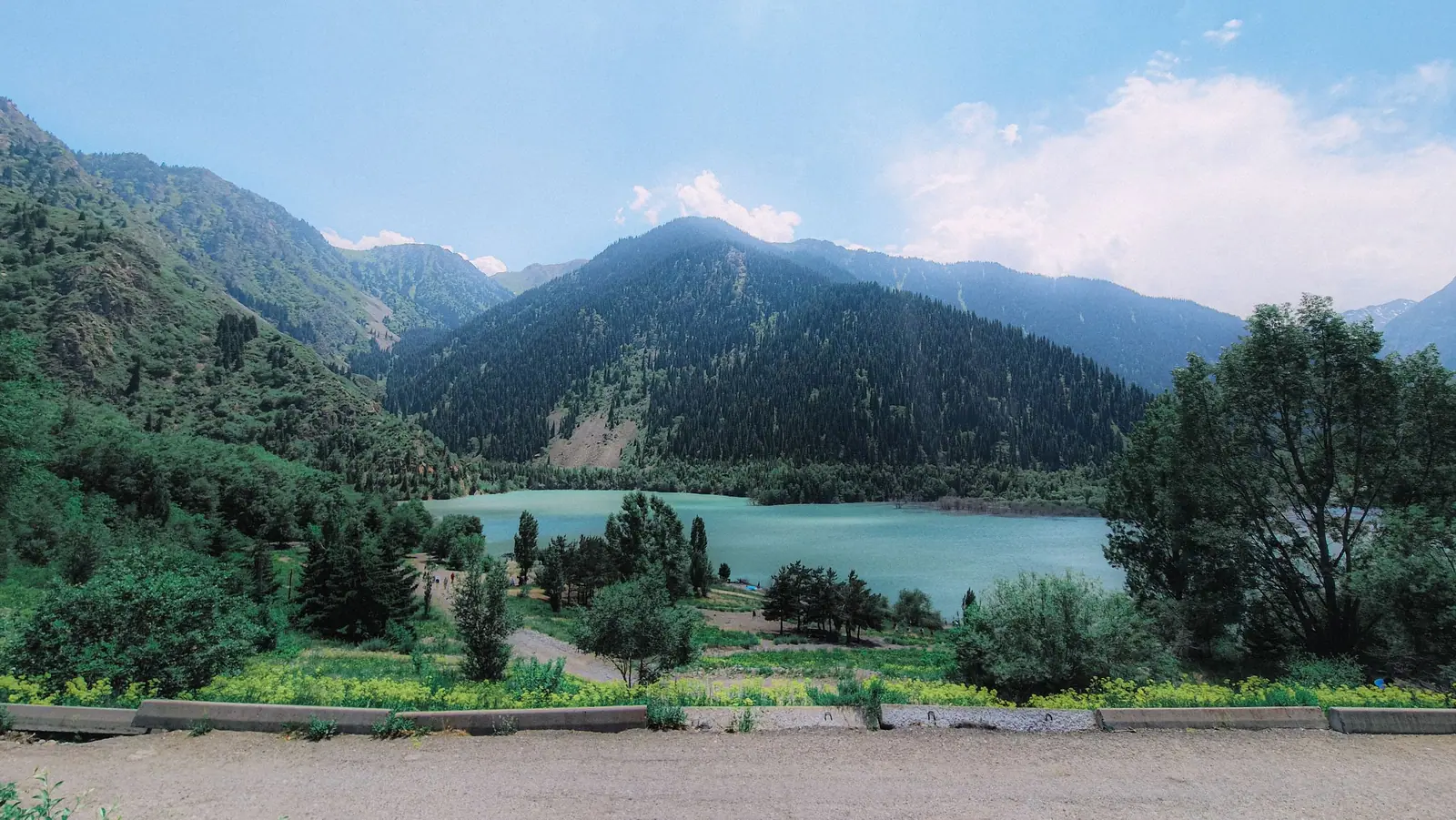
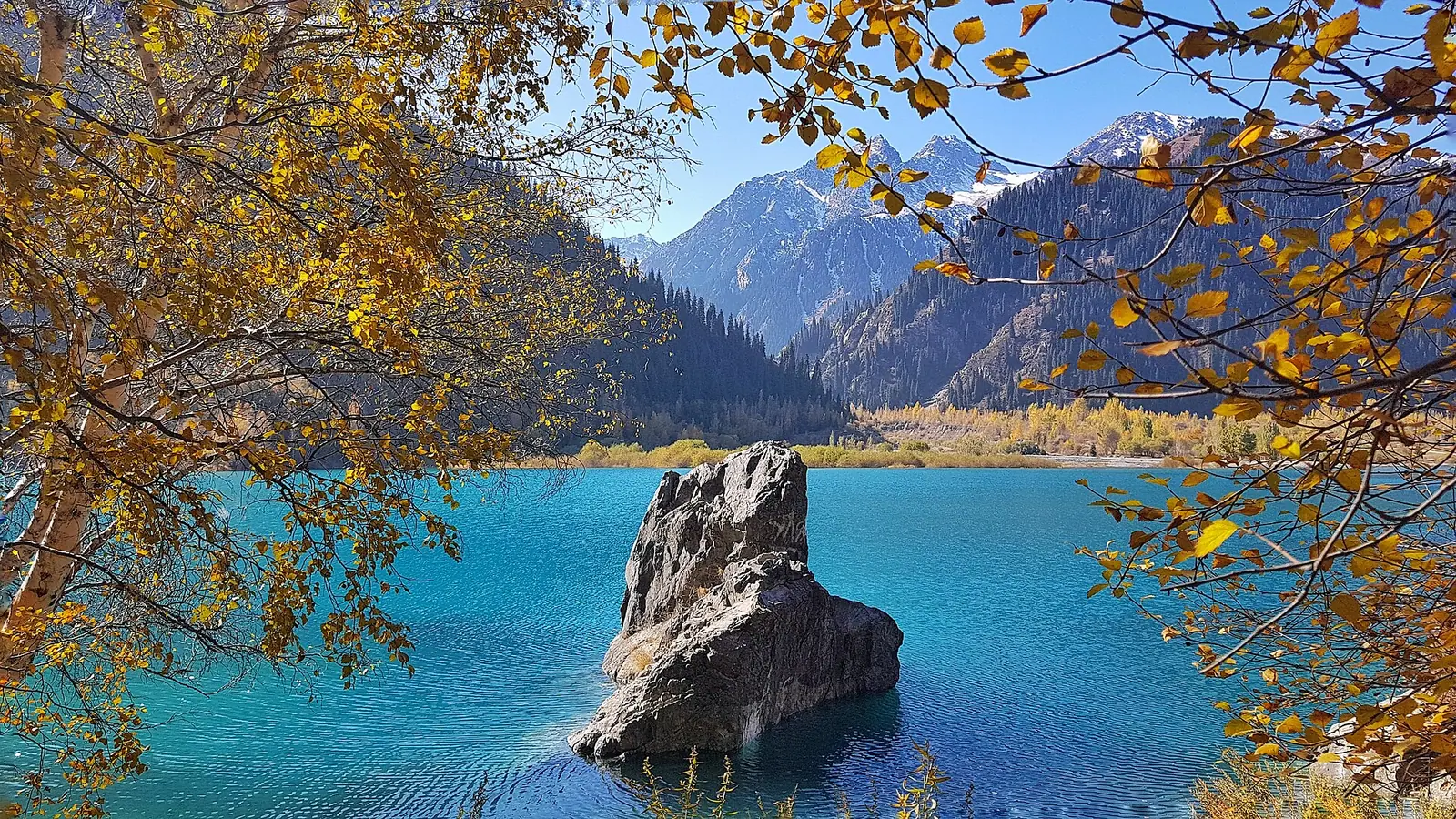
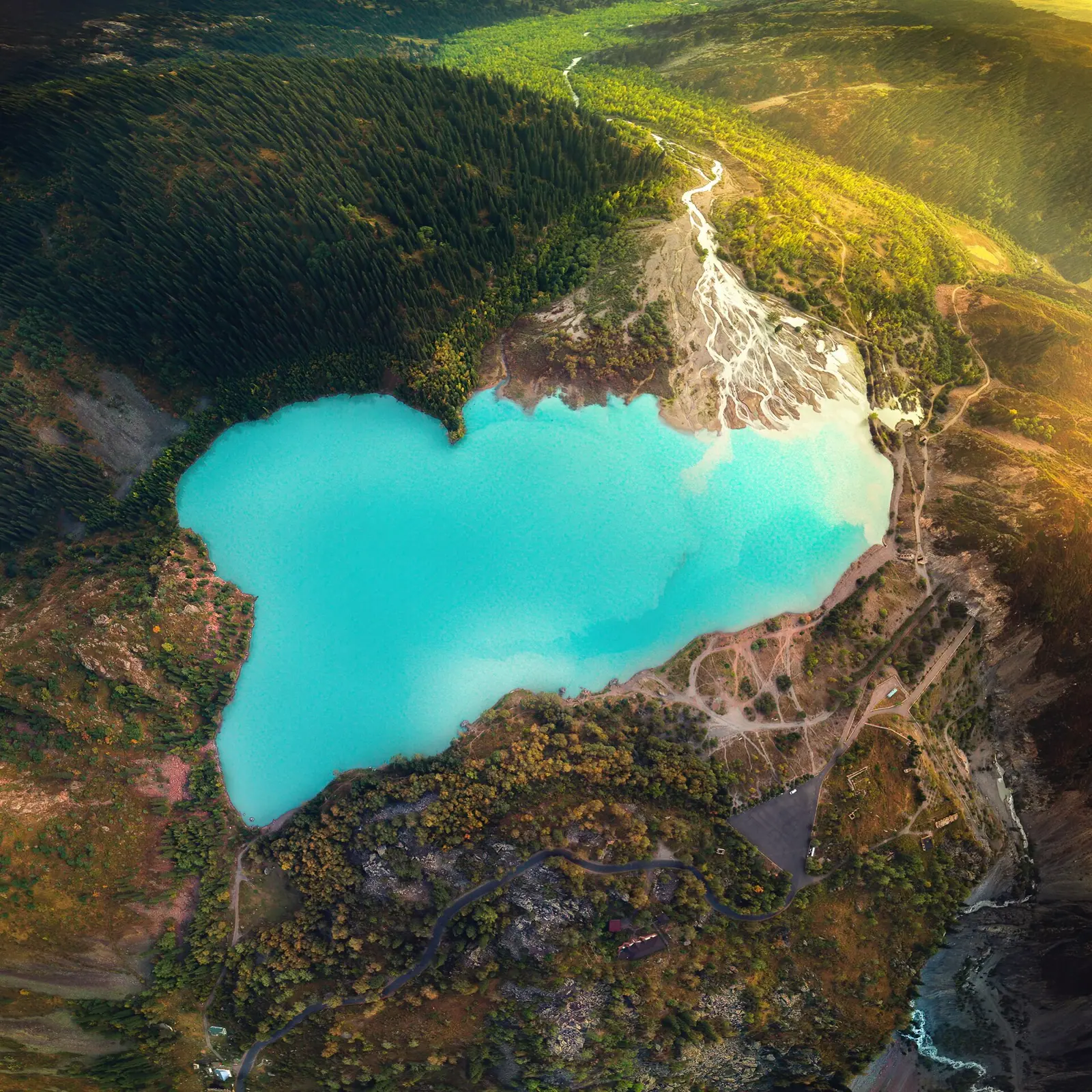
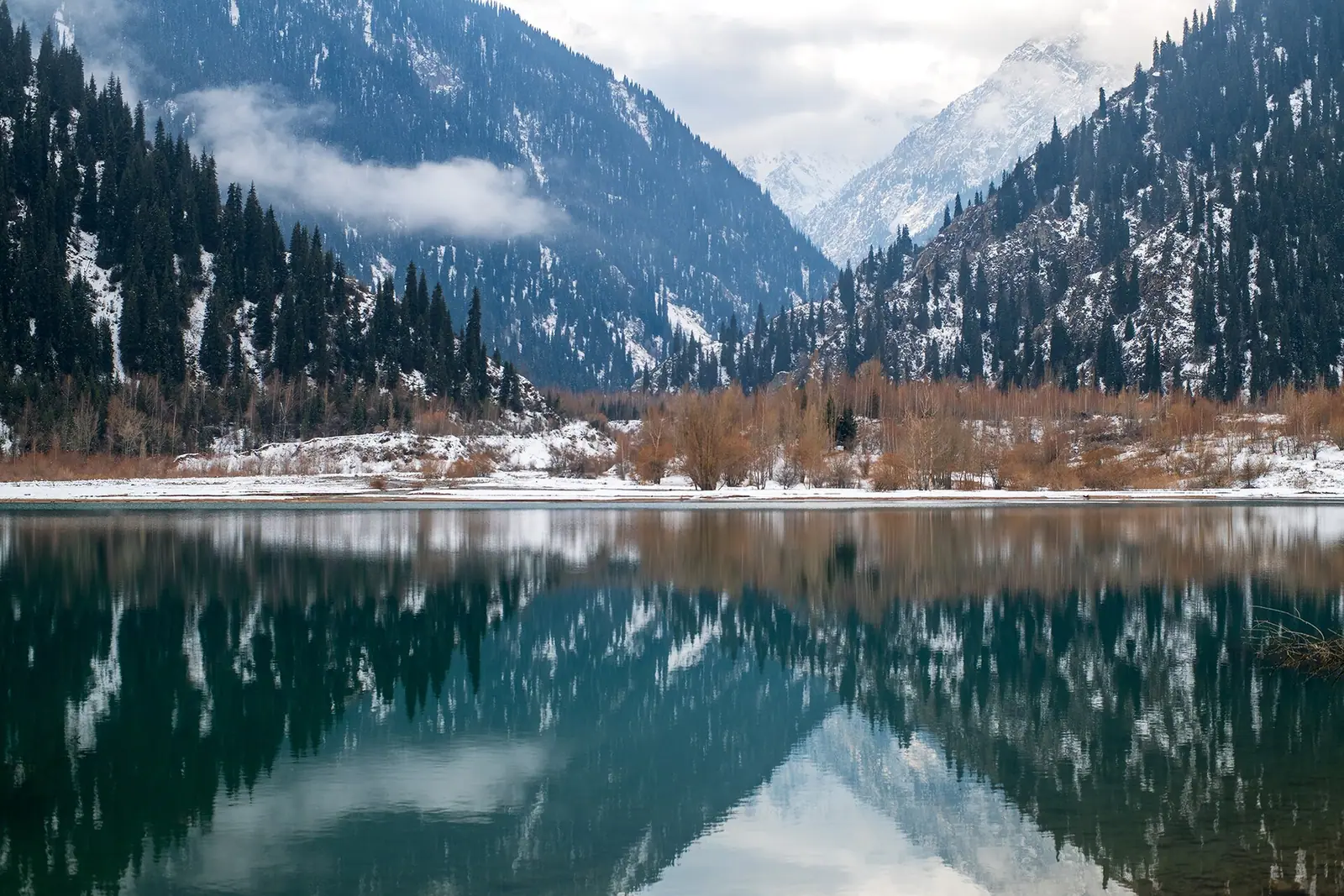
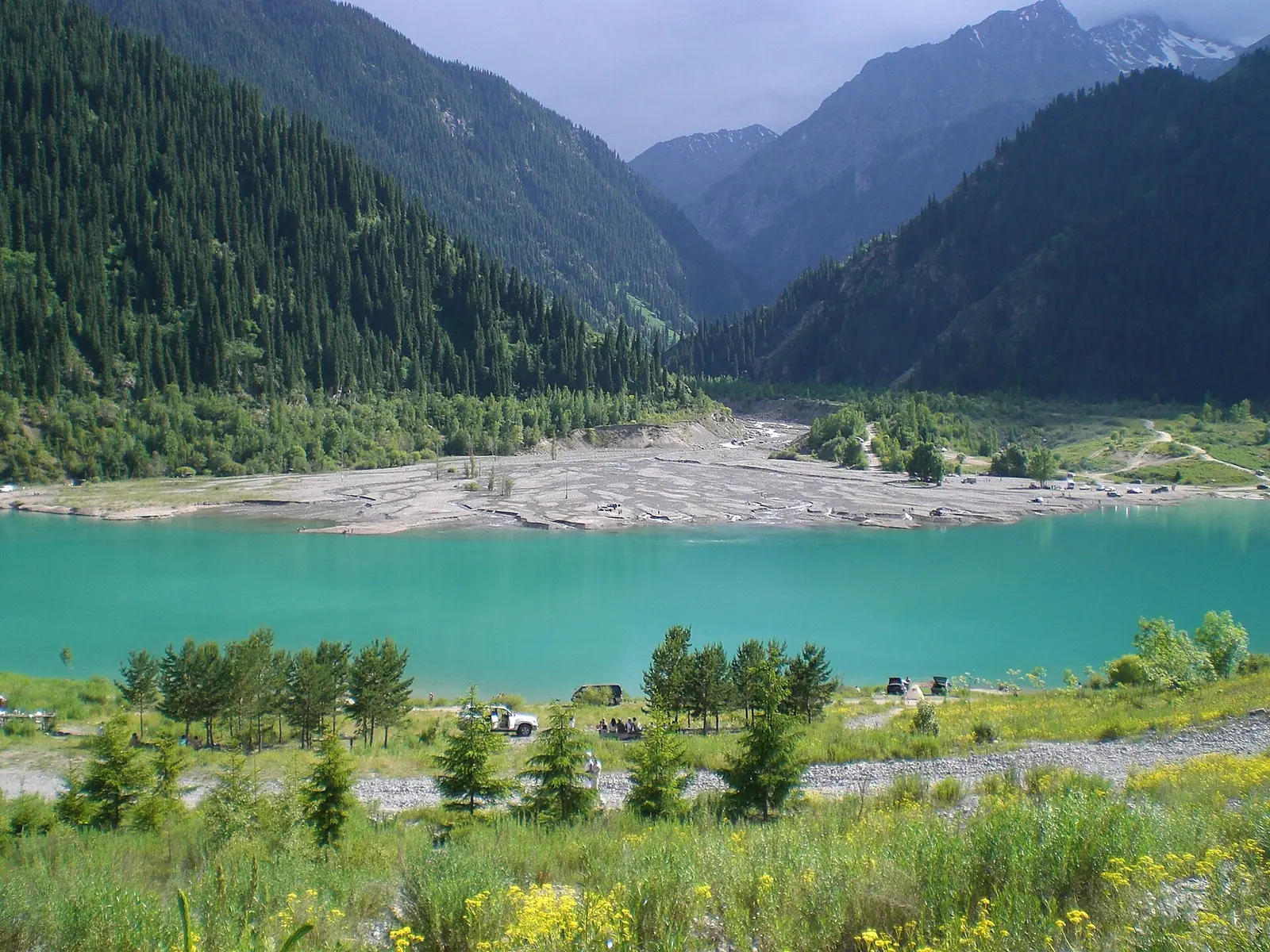
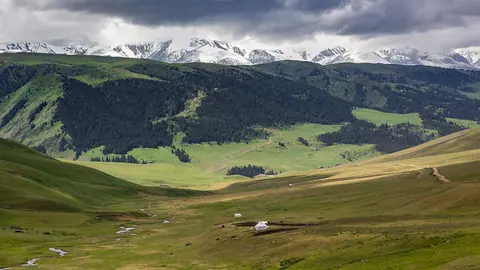
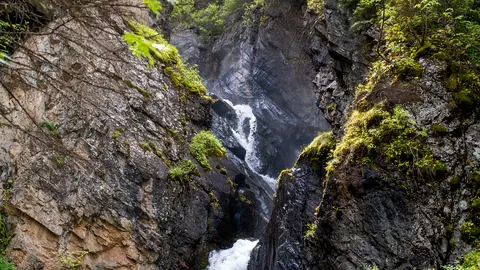
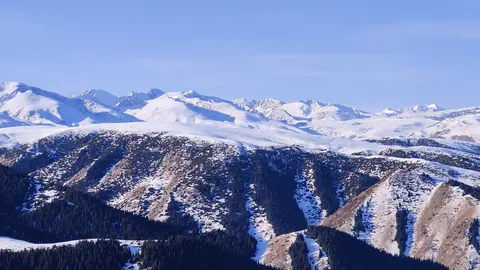
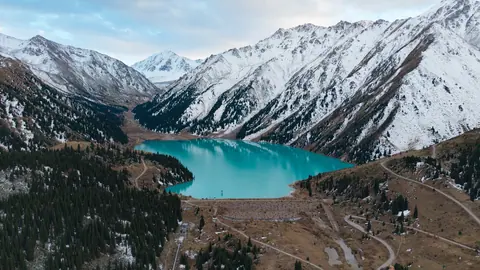
Real photos by travellers (Pexels, Unsplash, Wikimedia Commons); author and licence are given in each caption.
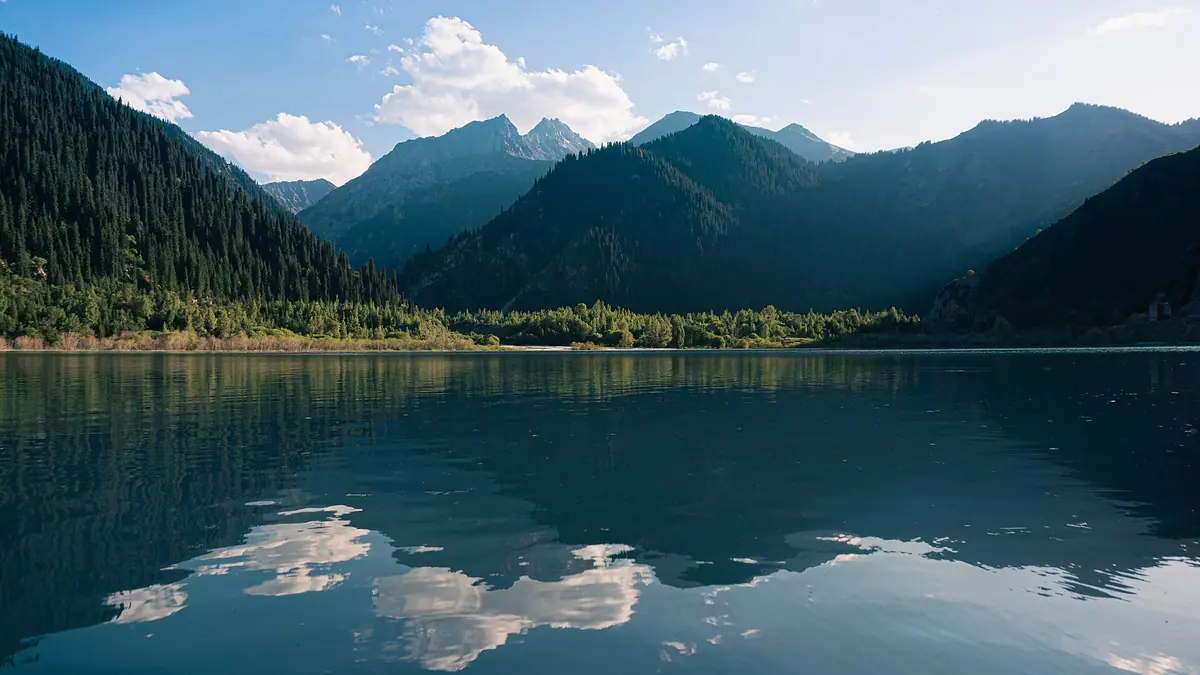
Issyk Lake (Esik in Kazakh) sits in the Issyk gorge of the Trans-Ili Alatau, about 40 km east of Almaty, above the district town of Esik. In Soviet times it was a favourite resort — until 7 July 1963, when a mudflow tore through its natural dam and drained it. The water is back today, but the lake is smaller than it was and its dam needs serious repair. Go by car in the warm season, and on the way stop at the Saka burial mounds near Esik, where the famous Golden Man was found.
The lake before and after 1963
The lake formed 8,000–10,000 years ago, when a rockfall blocked the gorge with a natural dam about 300 m high (Russian Wikipedia). Before 1963 it had a wide paved road, a park, a hotel and a bus station.
| Fact | Before 1963 | Today | Source |
|---|---|---|---|
| Length | about 1,850 m | under 0.85 km (other data: 1.8 km) | Russian Wikipedia |
| Width | about 500 m | under 0.42 km (other data: 0.6 km) | Russian Wikipedia |
| Depth | 50–79 m | not stated | Russian Wikipedia |
| Area | — | about 0.22 km² (other data: 0.86 km²) | Russian Wikipedia |
| Altitude | 1,714.5 m; also 1,706.8 and 1,759 m; Inbusiness ~1,800 m | Wikipedia, Inbusiness |
The spread in today’s figures most likely reflects when they were measured — the water level has swung a lot.
The 1963 mudflow
On 7 July 1963 a mudflow came down from the upper Issyk river near Mount Zharsay. It broke the natural dam at the western end of the lake and the water rushed down the gorge, wiping out pioneer camps and rest homes, wrecking streets of Issyk town and reaching the Kuldja highway. Russian Wikipedia, citing a single source, gives about 1,000 deaths; we found no official toll. Dam repairs and a spillway were completed in the early 1990s, and by the early 2000s the lake held about three quarters of its old volume.
Issyk today: hydropower, operators and a tired dam
Private hydropower plants downstream run on water released from the lake: HPP-2 opened in 2008, HPP-1 at the end of 2019. After HPP-1 started, the level fell almost to the bottom, and in June 2020 residents and ecologists warned of an environmental disaster.
In December 2024 the Almaty regional government handed the dam and more than 140 ha around it to a private company, Khabel, on a 49-year trust. In summer 2025 a barrier appeared at the upper car park with charges per person and per vehicle. NUR.KZ reported that the regional government called this unlawful — vehicle entry fees apply only inside the national park — and the barriers came down on 17 August 2025.
On 8 May 2026 the government cancelled the contract (Zakon.kz): the company had invested under 5% of what it promised in its first year, created none of the promised jobs and never delivered the dam inspection report due by November 2025. The dam goes back to the state, which still has to deal with years of overdue repairs and the mudflow risk to villages below.
Getting there
Drive east from Almaty on the Kuldja highway to Esik (about 55 km, per Inbusiness), then up the Issyk gorge. The Ile-Alatau National Park eco-post on the gorge road collects the park fee — 0.15 MRP per walker and 0.3 MRP per car under Order No. 232. Convert it with our fee calculator.
When to go
Late spring to autumn, when the road is dry. This is a mudflow gorge — after heavy rain in the mountains, choose another day.
The Issyk kurgan and the Golden Man
Below the lake, on the left bank of the Issyk river near Esik, lies the Issyk kurgan. A team led by archaeologist Kemal Akishev excavated it in 1969 and found more than 4,000 gold objects with a burial in golden dress — the “Golden Man”. English Wikipedia describes a Saka youth of about 18 whose sex is not certain.
| Fact | Value | Source |
|---|---|---|
| Excavated | 1969, Kemal Akishev’s team | Wikipedia |
| Date | 5th–4th c. BC (RU Wikipedia); 4th–3rd c. BC (EN Wikipedia) | Wikipedia |
| Mound size | 60 m across, 6 m high | Russian Wikipedia |
| Burial ground | 45 large royal mounds, 30–90 m across and 4–15 m high, over about 3 km² | Russian Wikipedia |
| Finds | 4,000+ gold objects; a silver bowl with an inscription | Wikipedia |
The inscription on the silver bowl has still not been reliably deciphered. The original finds are not in Esik: English Wikipedia names the Museum of Archaeology in Almaty and the Museum of Gold and Precious Metals in Astana. According to Inbusiness, the Issyk museum-reserve stands near the mound, and the town keeps photographs and excavation records. Nearly every mound in the valley was looted in antiquity; the Golden Man survived because the burial lay off-centre.
Nearby
- Assy Plateau and Turgen waterfalls — further east.
- Ile-Alatau National Park
- Big Almaty Lake — another mountain lake near the city.
- Nature near Almaty: 15 day trips.
Issyk Lake (Esik): tips before you go
- Pay only at the Ile-Alatau park eco-post: the regional government ruled the private operator's charges unlawful in 2025.
- No visiting rules have been published since the contract was cancelled in May 2026 — ask at the eco-post.
- The kurgan's original finds are in Almaty and Astana, not Esik; Esik has the Issyk museum-reserve.
More to see nearby


Frequently asked questions
Where is Issyk Lake and how far is it from Almaty?
What happened to Issyk Lake in 1963?
Is there water in the lake now?
Do I have to pay to visit Issyk Lake?
Where is the Golden Man kurgan?
When should I go?
Sources
- Иссык (озеро) — Wikipedia (Russian)
- Иссыкский курган — Wikipedia (Russian)
- Issyk kurgan — Wikipedia
- Is it legal to charge for visiting Issyk Lake? — NUR.KZ, 18.08.2025
- Issyk Lake dam returned to the state after a failed investment project — Zakon.kz, 08.05.2026
- Big opportunities of a small town — Inbusiness.kz, 09.12.2020
- Order of the Minister of Ecology No. 232, 02.10.2024