Green Bazaar Almaty: when to go, month by month
- January: possible
- February: possible
- March: good
- April: good
- May: best time
- June: good
- July: good
- August: good
- September: best time
- October: best time
- November: good
- December: possible
The covered market works in every month, and May, September and October add mild weather for pairing it with outdoor sights.
Green Bazaar Almaty: why go
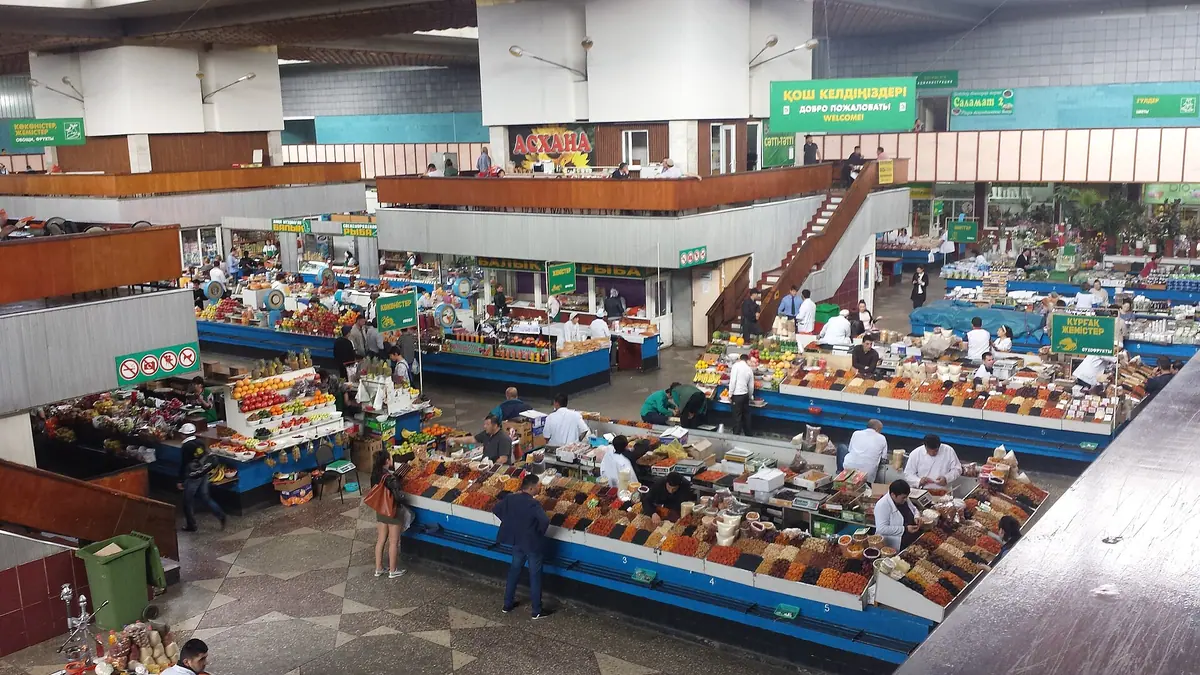
The 1975 Green Bazaar hall
A multi-level covered building by architect Mark Pavlov, designed with an 800-place main pavilion and a 200-place summer market.
From caravan yard to farm market
In 1875 the merchant Sadyk Rafikov funded the Gostiny Dvor here. The 1887 earthquake left almost nothing, and in 1927 it reopened as a collective farm market.
Getting to the Green Bazaar
It stands at the crossroads of Zenkov and Jibek Joly streets in Medeu district, central Almaty, about 4 km in a straight line from Kok-Tobe.
Green Bazaar in an Almaty winter
January averages about -1°C by day and -9°C at night at the nearby grid point, so the covered halls make a sensible cold-weather outing.
Green Bazaar on The Amazing Race
The market appeared in The Amazing Race 13, The Amazing Race Norge 1 and The Amazing Race 32, and in Victor Robert Lee's spy novel Performance Anomalies.
Green Bazaar Almaty in photos
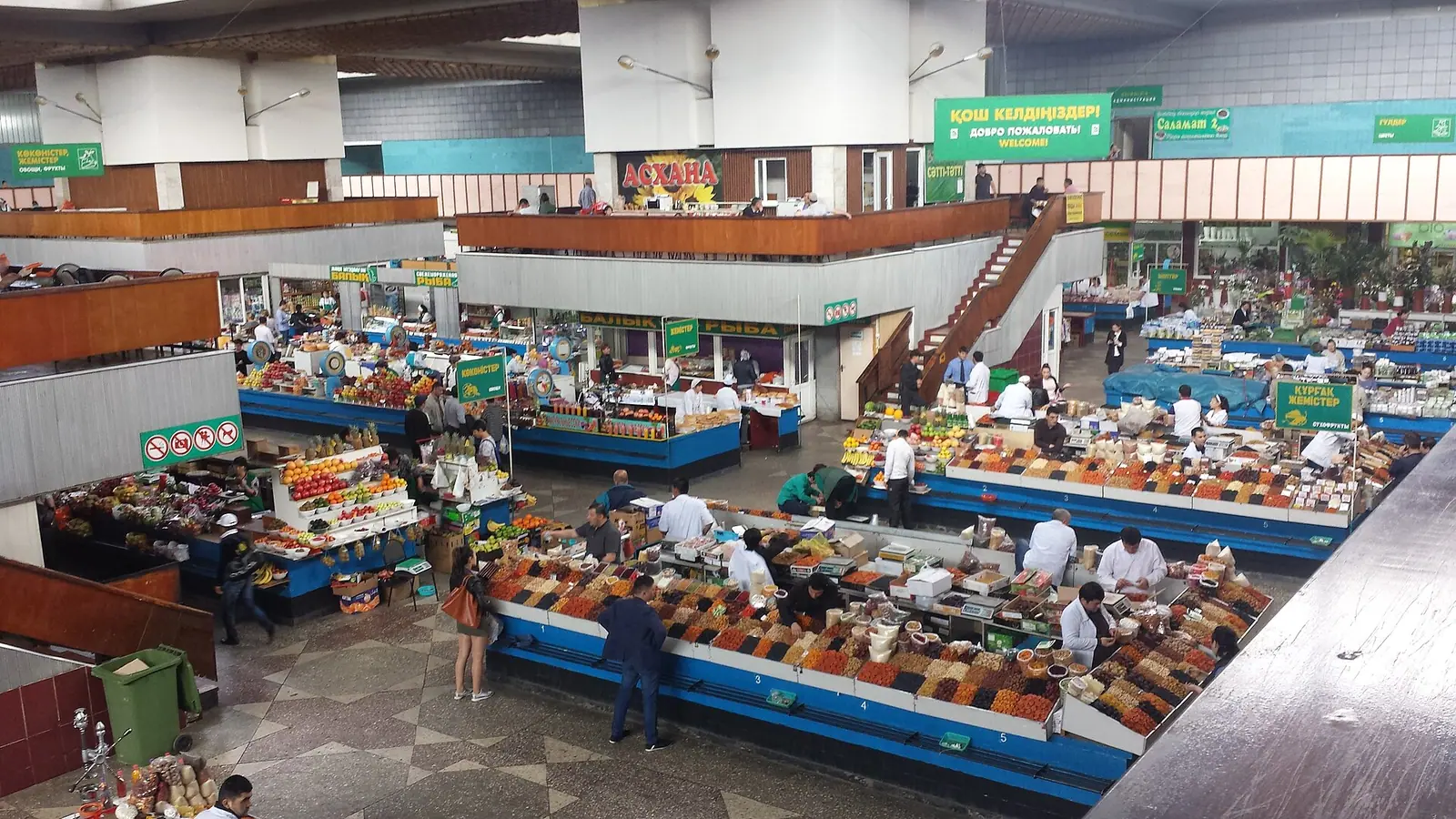
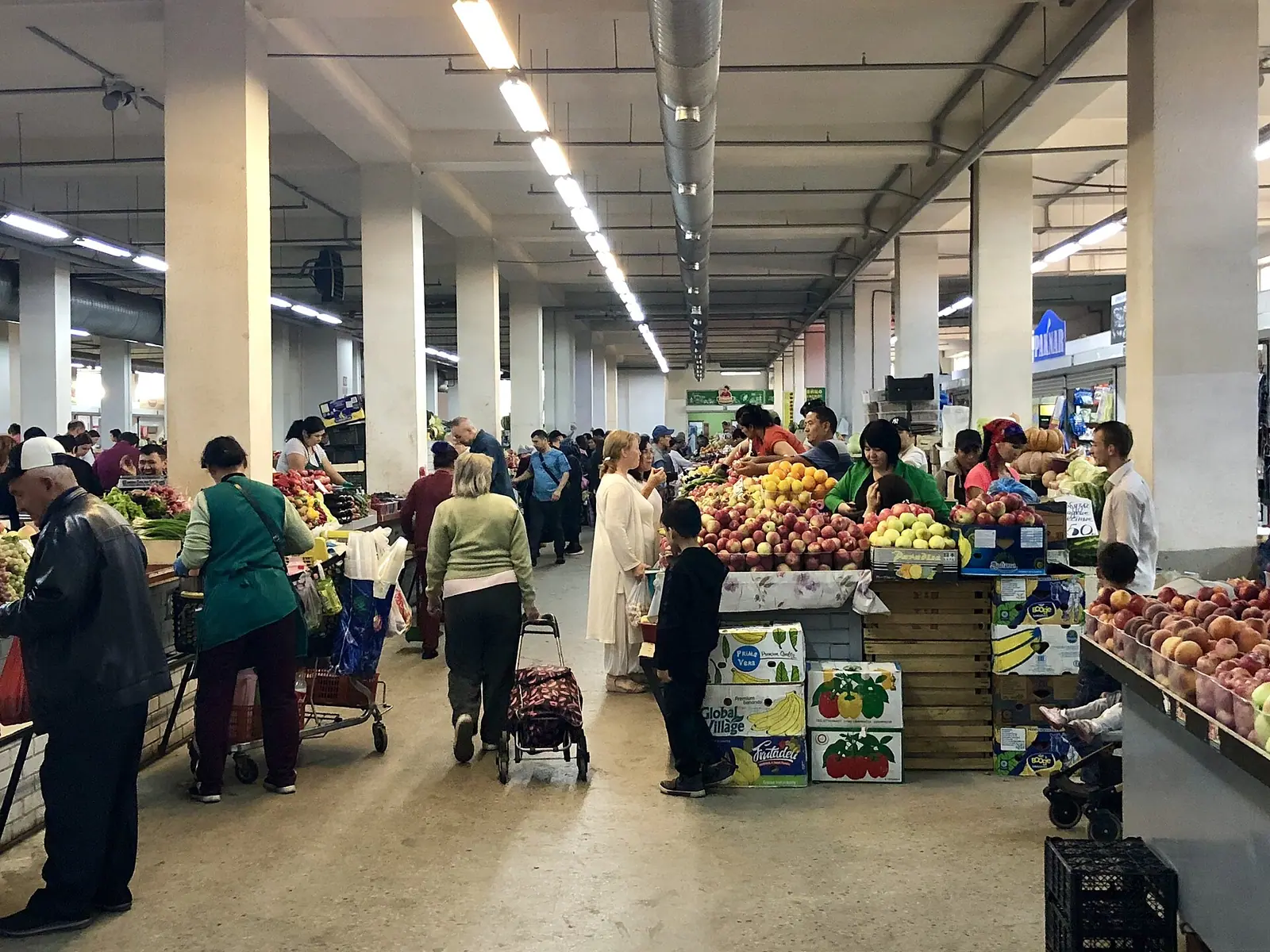
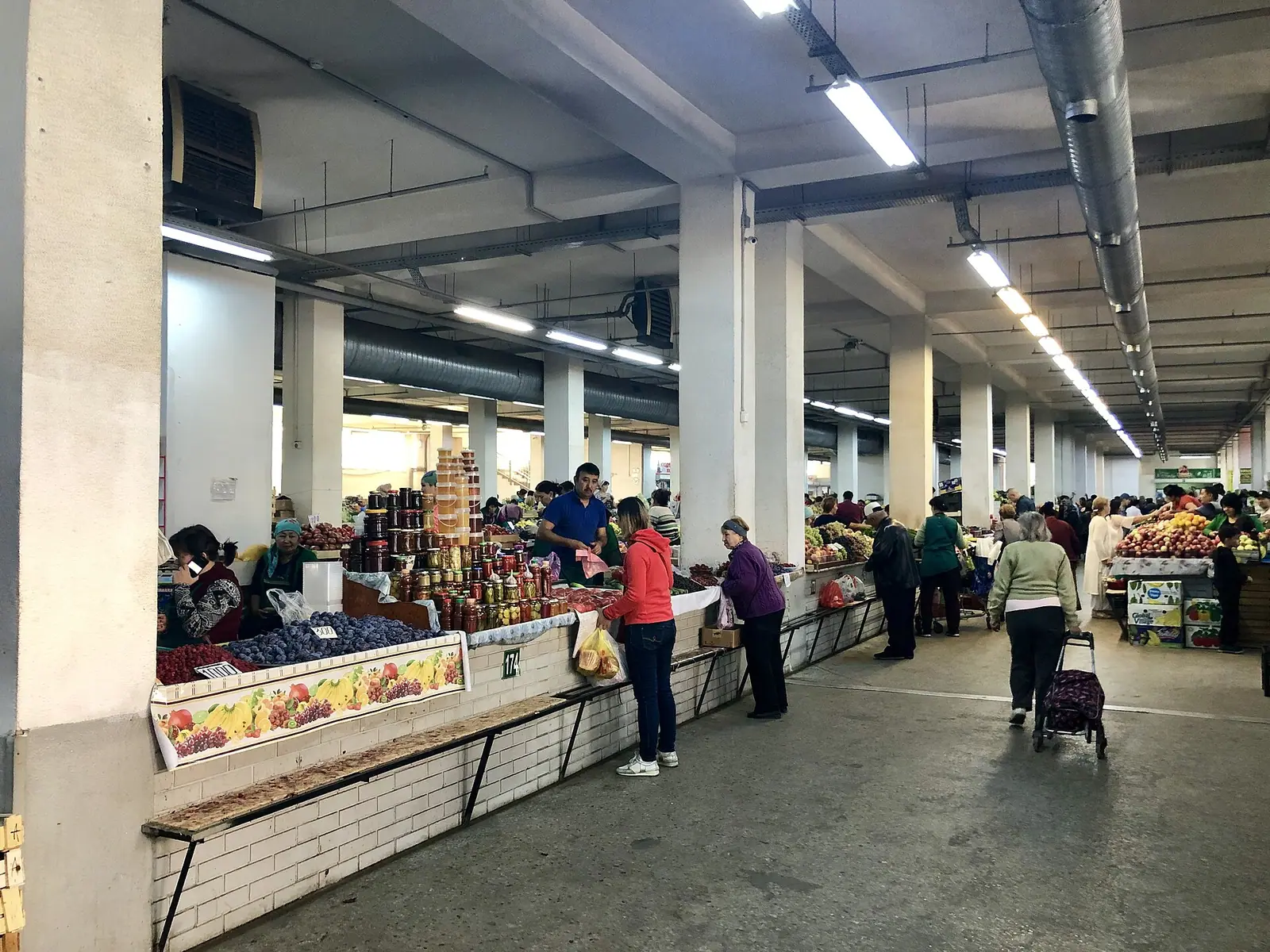
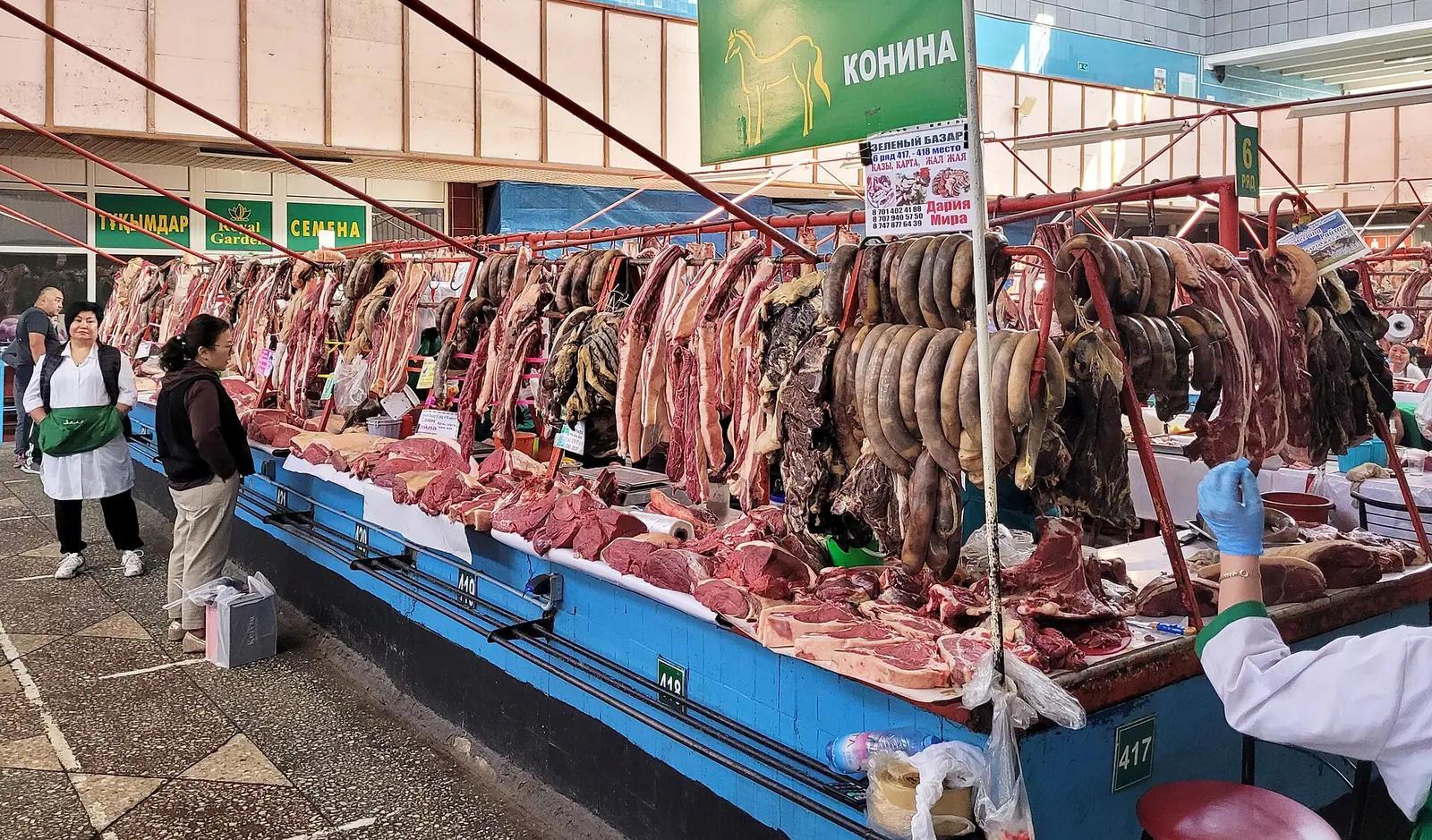
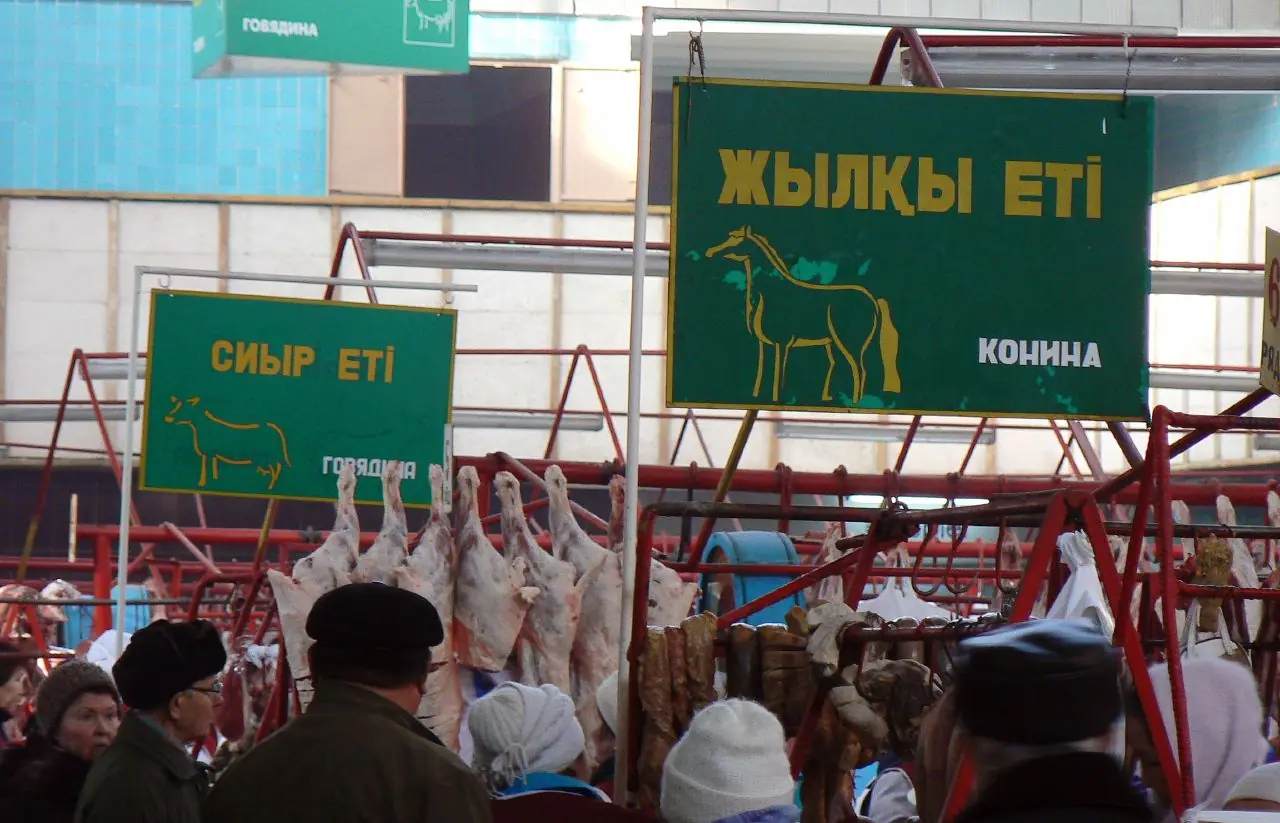
Real photos by travellers (Pexels, Unsplash, Wikimedia Commons); author and licence are given in each caption.
The Green Bazaar in Almaty, known in Kazakh as Kök bazar and in Russian as Zelyony bazar, is a public market in the city centre, at the crossroads of Zenkov and Jibek Joly streets. It sells spices, prepared foods, produce, textiles, furniture and antiques, and English Wikipedia describes it as a major tourist attraction in Almaty. It is a short urban stop rather than a day trip, and it works in any season because the main trading floors are under a roof.
Where the Green Bazaar is and what kind of visit it is
The bazaar stands in Medeu district, in the central part of Almaty, at the crossroads of Zenkov and Jibek Joly streets. For a traveller this means a city visit of a few hours, easy to fit between other sights. Kok-Tobe hill is about 4 km away in a straight line, so the two pair naturally in one day.
The complex has two parts. The main building dates from 1975. A newer pavilion opened in 2017 on land that had been container stalls, open counters and, until the early 2000s, the market’s open car park.
| Key data | Detail |
|---|---|
| Location | Medeu district, central Almaty |
| Address landmark | Crossroads of Zenkov and Jibek Joly streets |
| Trading on this square since | 1868 |
| Main building | 1975, architect Mark Pavlov |
| New pavilion | 2017, about 20,000 m², half of it retail |
| Parking | Two-level car park for 400 cars in the 2017 pavilion |
| Local names | Kök bazar (Kazakh), Zelyony bazar (Russian) |
The table gives you the two names to show a taxi driver and the street corner to aim for. We could not confirm public transport routes to the market, so travellers without Russian should have the address written down.
What the Green Bazaar sells, and where souvenirs fit in
By Wikipedia, the market sells spices, prepared foods, fresh produce, textiles, furniture and a wide range of other goods, including antiques. For a visitor hunting souvenirs, the spices, textiles and antiques are the likely candidates. We could not confirm whether there is a dedicated souvenir section or how large the antiques trade is today.
Food has always been the core. In the 1940s the bazaar sold live cattle, dairy products and Almaty Aport apples, with fruit and vegetables brought in from nearby collective farms. Whether Aport apples are on sale now, and in which months, we could not confirm.
Since February 2021 the market has also housed “social shops” that sell staple foods at reduced prices: potatoes, carrots, onions, cabbage, sugar, buckwheat, sunflower oil, rice, pasta and flour. These are aimed at residents, and they show that this is a working city market, not a market built for tourists.
If the stalls leave you unsure what to order, our guide to Kazakhstan food explains kazy, kurt and kumis.
Opening hours and closing time: what we could not confirm
Sxodim (16 May 2023) lists Tuesday to Sunday, 08:00–19:00, closed Monday. We could not confirm this with the market itself, and neither Wikipedia article gives hours. The 1975 hall and the 2017 pavilion may also keep different schedules, and stalls inside a market often set their own hours.
If you arrive at closing time you lose the visit, and the market is not something you can see properly from outside. Check current hours shortly before you go.
From caravan yard to a 1975 hall: 150 years on one square
The site has been a trading place far longer than the current building has stood, and it shaped how central Almaty grew. According to Russian Wikipedia, the city grew south-west from the bazaar. The two Wikipedia articles give different starting points. The Russian one dates the trading square to 1868, and the English one counts from 1875, when the first market buildings went up.
| Year | What happened |
|---|---|
| 1868 | Trading square laid out in the town of Verny, the old name of Almaty |
| 1875 | Gostiny Dvor built: two low pavilions along Torgovaya Street, designed by Jan Kozell-Poklevsky and funded by the Semipalatinsk merchant Sadyk Rafikov |
| 1887 | Major earthquake; almost nothing of the Gostiny Dvor survived |
| 1927 | Rebuilt and renamed Central Collective Farm Market; the name Green Bazaar stuck instead |
| 1940s | Long rows of wooden stalls under canopies |
| 1975 | Wooden market replaced by a multi-level covered building by Mark Pavlov |
| 2017 | New pavilion with retail space and a 400-car car park |
In its early years the Gostiny Dvor took in traders from across Central Asia and, by the Wikipedia accounts, even from Japan. It had stone shops, storage sheds, flowing irrigation ditches and fountains built for Muslim merchants’ prayers. During the Second World War it was the only place in the city where goods were still sold for money rather than issued on ration cards, though at very high prices.
The sources describe the 1975 building differently: Russian Wikipedia calls it Soviet constructivism, English Wikipedia calls it brutalism. It was designed with an 800-place main pavilion, a 200-place summer market and parking for 400 cars.
When to go to the Green Bazaar
Any month works, because the main trading floors are covered. The weather matters mostly for the walk there and for pairing the market with outdoor sights. The figures below are computed normals from the ERA5 reanalysis for 2011–2020 at a grid point at 788 m, not readings from a weather station.
Day high, °C / Night low, °C · Rain/snow, mm
A computed reanalysis normal for these coordinates, not weather station records.
Monthly figures
| Month | Day high, °C | Night low, °C | Rain/snow, mm |
|---|---|---|---|
| Jan | 0.4 | -7.9 | 24.9 |
| Feb | 2.9 | -5.6 | 36.9 |
| Mar | 10.6 | 1.5 | 79.5 |
| Apr | 17.5 | 7.3 | 146.4 |
| May | 22.2 | 11.3 | 115.4 |
| Jun | 26.1 | 15.3 | 76.4 |
| Jul | 28.9 | 17.5 | 49.7 |
| Aug | 27.7 | 16.2 | 58.2 |
| Sep | 23.5 | 11.7 | 52.5 |
| Oct | 16.6 | 5.4 | 60.3 |
| Nov | 7.1 | -1.7 | 55.7 |
| Dec | 1.6 | -6 | 30.6 |
Winter is cold: January averages about 0°C by day and -8°C at night, which makes an indoor market a sensible outing. July is the warmest month, at about 29°C by day. April is the wettest, at about 146 mm, with May close behind at about 115 mm. May, September and October have mild days, which makes them good months for combining the bazaar with a walk or a trip to the hills.
Pairing the bazaar with Almaty’s hills and gorges
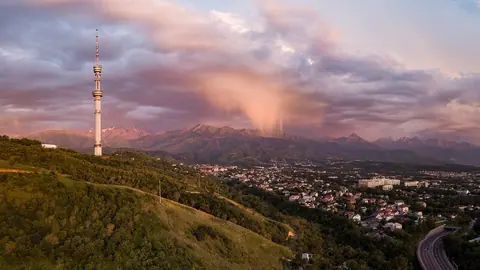
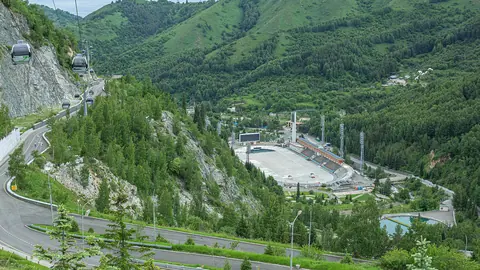
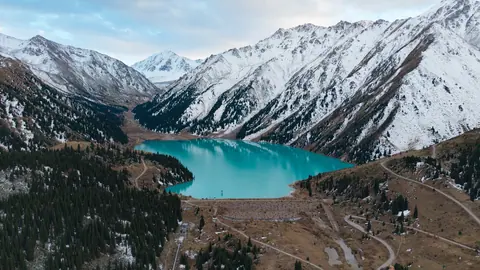
The bazaar fits easily into a day spent in Almaty itself. Kok-Tobe, about 4 km away in a straight line, adds a view over the city. Medeu is about 15 km away in a straight line, and Big Almaty Lake about 24 km. For more ideas, see nature near Almaty. These are mountain trips that need their own half day or full day, so visit the market on the same day only if you start early.
- Whether the hours Sxodim listed in 2023 still apply
- Public transport routes and stops serving the market
- Whether there is a dedicated souvenir or antiques section today
- Whether stalls accept bank cards and whether any traders speak English
- Current parking rules at the 2017 pavilion
Within the city, the bazaar pairs with Arbat on Zhibek Zholy and the Central Mosque, which one guide places about three streets to the north.
Green Bazaar Almaty: tips before you go
- Give drivers the crossroads of Zenkov and Jibek Joly streets, and the local names Kök bazar or Zelyony bazar.
- We could not confirm opening or closing times, so check them shortly before you go rather than arriving late in the day.
- Driving? The 2017 pavilion has a two-level car park for 400 cars, by Wikipedia. We could not confirm current parking rules.
- April is the wettest month, at about 128 mm. The halls are covered, but plan for rain on the walk in and on outdoor stops nearby.
More to see nearby


Frequently asked questions
What are the Green Bazaar Almaty opening hours?
Can you buy souvenirs at the Green Bazaar in Almaty?
How old is the Green Bazaar in Almaty, Kazakhstan?
What is the Green Bazaar called locally?
Is the Green Bazaar known outside Kazakhstan?
Sources
Read also
 Almaty Zoo in Kazakhstan: opening hours and how to visit
 Ayusai Gorge, Almaty: visitor centre and waterfall trail
 Gorelnik Gorge above Medeu: waterfalls, trail and season
 Kamenskoe Plateau above Almaty: observatory and trails
 Pervomaiskie Ponds near Almaty: location, swimming, season
 Saty village: base for the Kolsai and Kaindy lakes