The Caspian seal: when to go, month by month
- January: possible
- February: possible
- March: possible
- April: possible
- May: off season
- June: off season
- July: off season
- August: off season
- September: off season
- October: possible
- November: possible
- December: possible
Seals gather in the north Caspian from late autumn to April, but we could not confirm any way for visitors to see them there, so no month rates higher than possible.
The Caspian seal: why go
The Caspian seal, found in one sea
One of the smallest earless seals, living only in the brackish Caspian, on shorelines, rocky islands and floating ice from the Volga delta south.
Arctic ancestors of the Caspian seal
Its skull links it to the Baikal seal; both seem to descend from the ringed seal and reached their seas by river routes to the Arctic that later vanished.
North in winter, south in summer
In late autumn seals gather on the shallow, freezing north Caspian; from early April females and pups head to the deeper, cooler water further south.
White pups on north Caspian ice
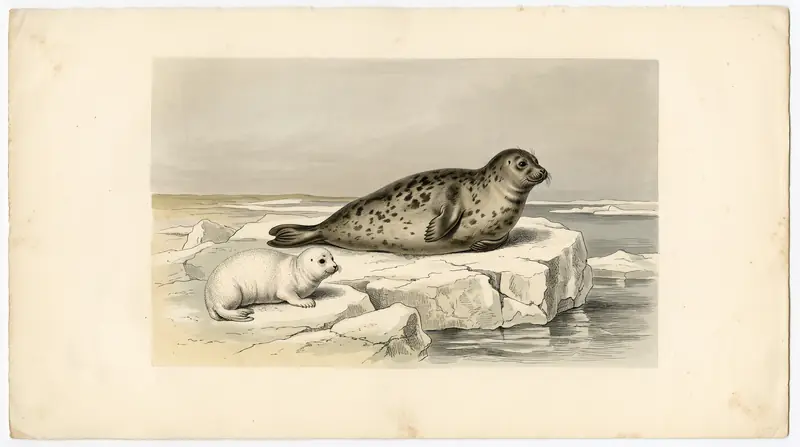
Pups of about 5 kg are born in late January to early February with white fur, are weaned within weeks and moult the white coat at three weeks to a month.
Wolves on the ice near Astrakhan
In three weeks of February 1978, wolves killed an estimated 17–40% of the seals in one area near Astrakhan, and left most of them uneaten.
The Caspian seal in photos
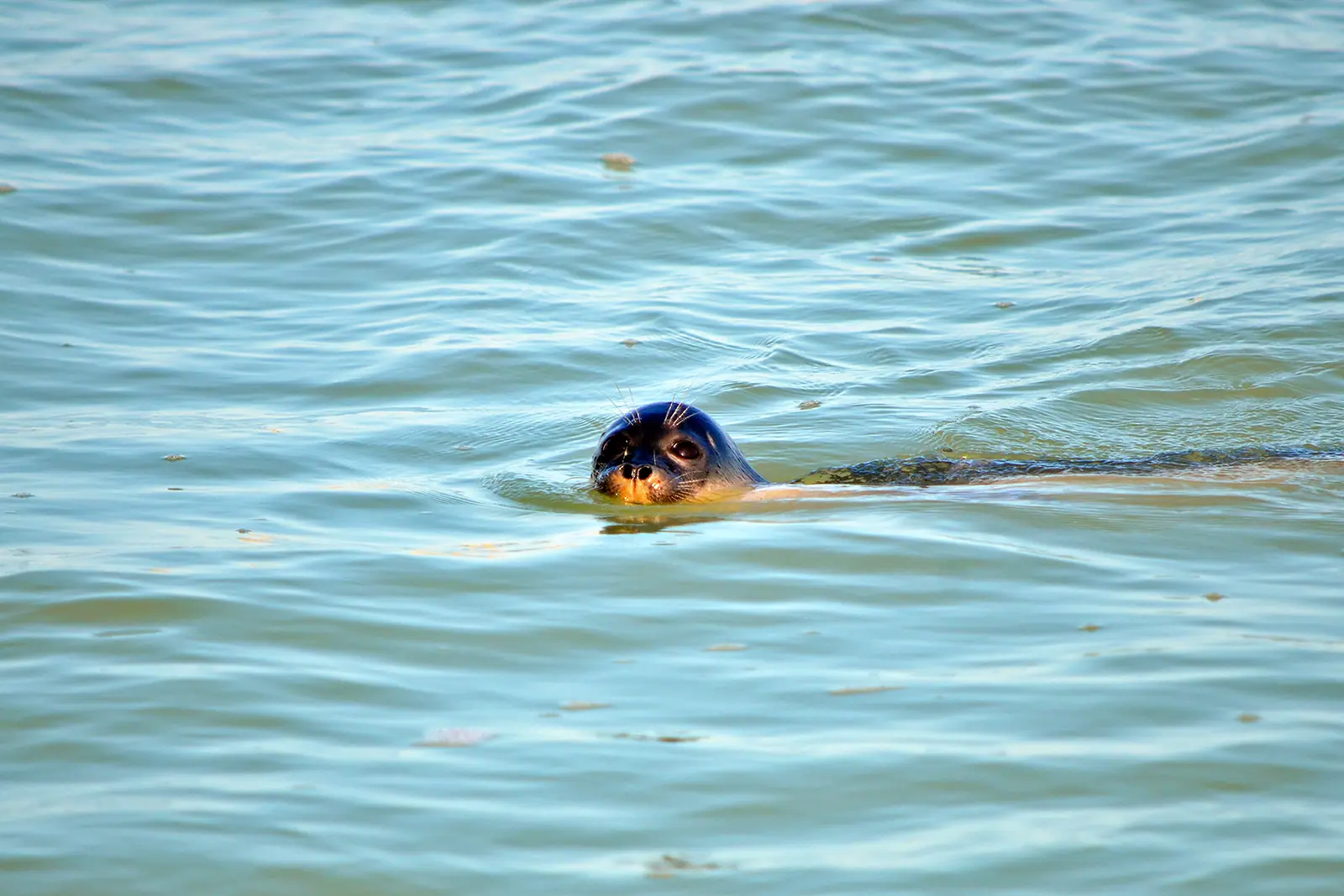
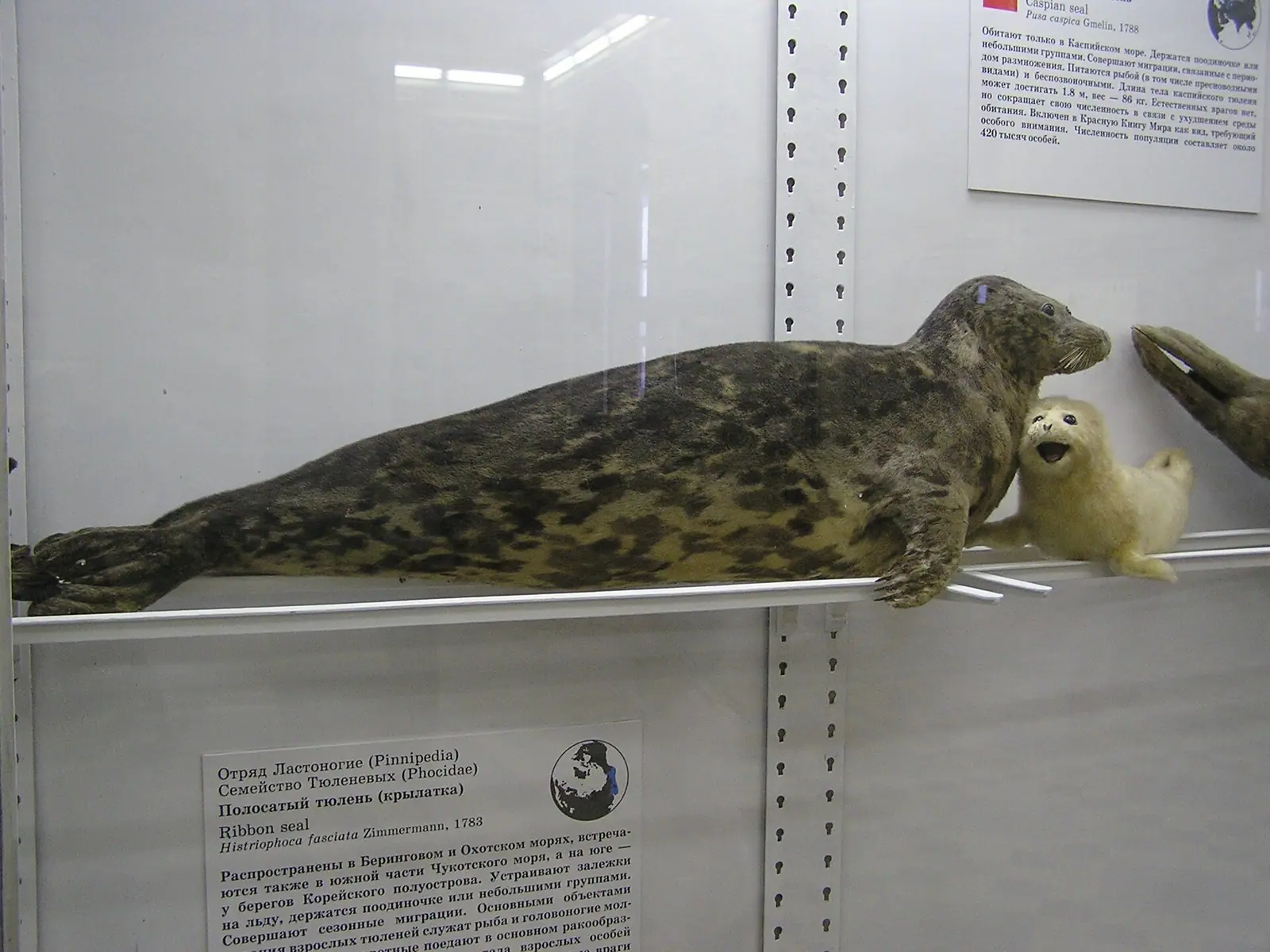
Real photos by travellers (Pexels, Unsplash, Wikimedia Commons); author and licence are given in each caption.
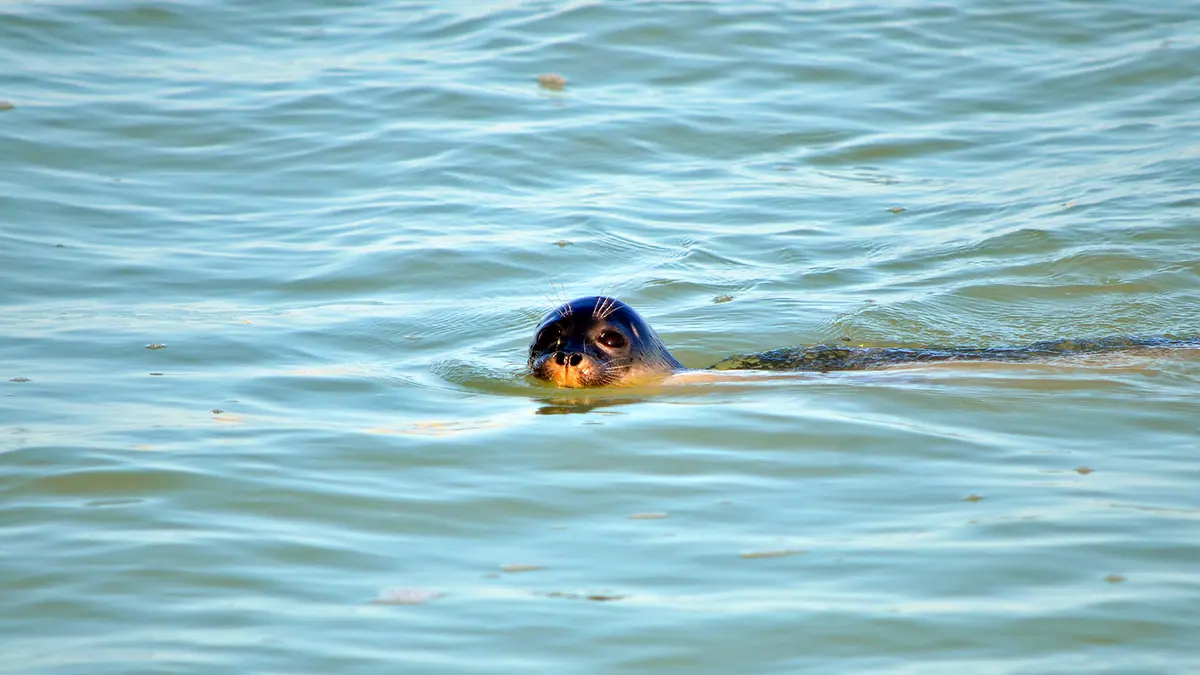
The Caspian seal (Pusa caspica) is a small earless seal found only in the brackish Caspian Sea, which Kazakhstan borders. In winter the population gathers on the ice of the shallow north Caspian to give birth and moult, then moves south as the ice melts.
A small seal from a landlocked sea
The Caspian seal is one of the smallest members of the earless seal family and lives exclusively in the Caspian Sea. By English Wikipedia, its skull points to a close relationship with the Baikal seal, and both appear to descend from the ringed seal, which migrated from larger bodies of water around two million years ago. River links to the Arctic that later disappeared probably allowed the seals in, leaving the population landlocked before the major Pleistocene glaciations.
Size figures differ between sources, so treat any single number loosely:
| Measure | Russian Wikipedia | English Wikipedia | Kazakh Wikipedia |
|---|---|---|---|
| Body length | 120–148 cm | 126–129 cm (adults); max 1.8 m | 125–160 cm |
| Weight | about 50–60 kg | max 86 kg | 65–80 kg |
| Lifespan | up to 50 years | around 40–50 years | not given |
It dives to about 50 m for around a minute, with dives to 80 m recorded, and an adult eats about 2–3 kg of fish a day, mostly small schooling fish such as kilka.
Where the seals are, month by month
The seals move with the ice: north in the cold months, south in the warm ones. In winter and the cooler parts of spring and autumn the main population sits in the north Caspian, where the water is shallow and freezes. In late autumn they travel north, and in autumn some enter the mouths of the Volga and Ural rivers, by Russian Wikipedia up to 200 km up the Ural.
| Period | What the seals do |
|---|---|
| Late autumn | Move to the shallow, freezing north Caspian |
| Late January – early February | Females give birth to one white-coated pup of about 5 kg on the ice |
| Late February – mid March | Breeding, a few weeks after the pups are born |
| Early April | Mature females and pups start migrating south |
| Late April | Seals migrate south after breeding and moulting; mature males stay in the north longer, until moulting is complete |
| Summer | Most seals are in the deeper, cooler middle and south Caspian; some in the Volga and Ural deltas |
The practical point: the period when seals are concentrated in the north is also the period of ice, newborn pups and nursing mothers. Pups are weaned after a few weeks and shed their white coat at three weeks to a month. This is the stage most easily harmed by disturbance, and English Wikipedia notes that icebreaker routes have passed through areas with high pup concentrations.
Seeing Caspian seals in Kazakhstan: what we could not confirm
We could not confirm any established, legal way for a visitor to watch Caspian seals in Kazakhstan. The sources describe the animal and its range, not viewing sites, boat trips, access to the ice or rules for approaching seals. Kazakhstan’s coast is part of that range: the 2000 die-off was first reported near the mouth of the Ural River in Kazakhstan and spread south to the Mangystau region.
The north Caspian ice where seals gather is a remote winter habitat, not a visitor site, and we have no information on transport, permits or guides. If you are already on the Mangystau coast, treat any sighting as chance rather than something to plan a trip around.
In summer, seals use aggressive snorts or flipper waving to warn other seals off. If an animal does this towards you, you are too close.
A population that has fallen by more than 90%
The Caspian seal is listed as endangered on the IUCN Red List, and in July 2020 Kazakhstan added it to its national Red Book after cases of cruelty to seals in Mangystau. Population estimates vary widely, and the older ones disagree:
| Year | Estimate | Note |
|---|---|---|
| Early 1900s | up to 1 million (Russian Wikipedia) or 1.5 million (English Wikipedia) | Sources disagree |
| 1989 | 400,000 | |
| 2005 | 110,000 or 104,000 | Sources disagree |
| 2008 | 100,000 | |
| 2019 | 43,000–66,000 | |
| 2022 | under 70,000 to 168,000 | Two research bodies disagree |
Kazakh Wikipedia gives 400,000–450,000 with no date, which looks like an old figure. English Wikipedia puts the decline at 3–4% a year, mainly from fisheries bycatch of over 17,000 seals in 2019. Other listed threats are disease, pollution, habitat encroachment, climate change and hunting. The pregnancy rate has dropped to about 30%, against a normal 40–70%. Russian Wikipedia reports Kazakh ecologists saying that protection plans have been drafted but not put into practice.
Mass die-offs on the coast
Large numbers of dead seals washing ashore have been recorded several times. In 2000, canine distemper virus killed more than 10,000 seals along the Kazakhstan coast by the end of May, with further deaths in Azerbaijan and Turkmenistan. Earlier distemper deaths were reported in 1997 and later ones in 2001.
In late 2022, more than 1,700 dead seals were found in Dagestan, Russia, a figure later revised to about 2,500. English Wikipedia says the cause is unknown; Russian officials and scientists quoted by Russian Wikipedia suggested natural gas or methane release, but this was not established. From 24 October 2024, dead seals again began appearing on the Caspian coast: 1,034 by 14 November, some with mechanical injuries, and 60% of the dead females were pregnant. We could not confirm what that investigation concluded.
If you walk a Caspian beach and find a carcass, do not touch it: past die-offs involved viruses and several bacterial infections.
The seal is number 197 on the national list: Kazakhstan’s Red Book.
The spit at Kenderli Bay, according to Wikipedia, is the seal’s only habitat in the mid-Caspian.
- Whether any legal, organised seal-watching exists anywhere on Kazakhstan’s Caspian coast
- Access rules or permits for the north Caspian ice and islands where seals breed
- Which authority to contact about a dead, injured or harassed seal on the Mangystau coast
- Spots on the Mangystau shore where seals come close to land, and in which months
- The findings of the investigation into the 2024 die-off
The Caspian seal: tips before you go
- Pups are born on the ice in late January to early February; nursing mothers fast, so disturbance in this period costs them more.
- If a seal snorts or waves a flipper at you, it is warning you off: in summer seals use these signals to keep others away.
- Do not touch dead or sick seals on the shore: die-offs in 1997–2001 were linked to canine distemper virus and several bacteria.
- The seal has been in Kazakhstan's Red Book since July 2020; cruelty cases in Mangystau prompted the listing.
Frequently asked questions
Is the Caspian seal endangered?
How big is a Caspian seal?
When are Caspian seal pups born?
What do Caspian seals eat?
Where do Caspian seals go in summer?
Sources
Read also
 Almaty Zoo in Kazakhstan: opening hours and how to visit
 Ayusai Gorge, Almaty: visitor centre and waterfall trail
 Gorelnik Gorge above Medeu: waterfalls, trail and season
 Kamenskoe Plateau above Almaty: observatory and trails
 Pervomaiskie Ponds near Almaty: location, swimming, season
 Saty village: base for the Kolsai and Kaindy lakes