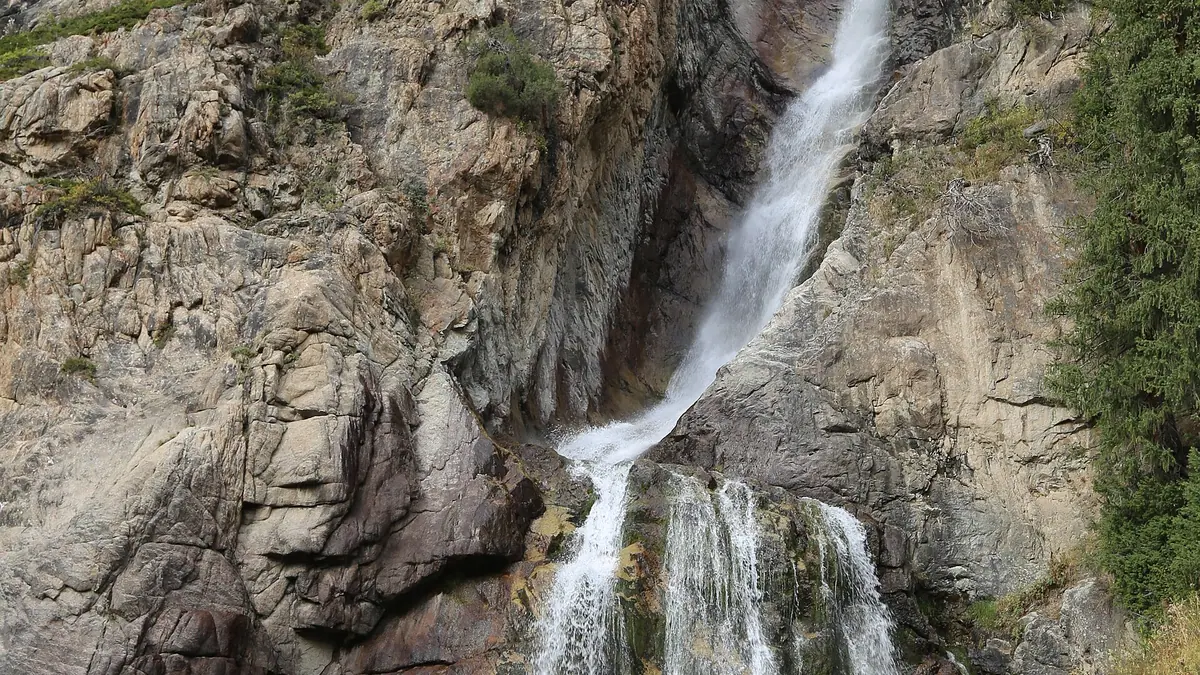
Burkhan-Bulak Waterfall, the tallest waterfall in Kazakhstan: when to go, month by month
- January: off season
- February: off season
- March: off season
- April: possible
- May: possible
- June: good
- July: best time
- August: best time
- September: good
- October: possible
- November: off season
- December: off season
July and August are the warmest months, with nights around 7–8°C at the grid point, June is good but the wettest month, and from November to March days stay at or below 0°C.
Burkhan-Bulak Waterfall, the tallest waterfall in Kazakhstan: why go
Burkhan-Bulak's four cascades
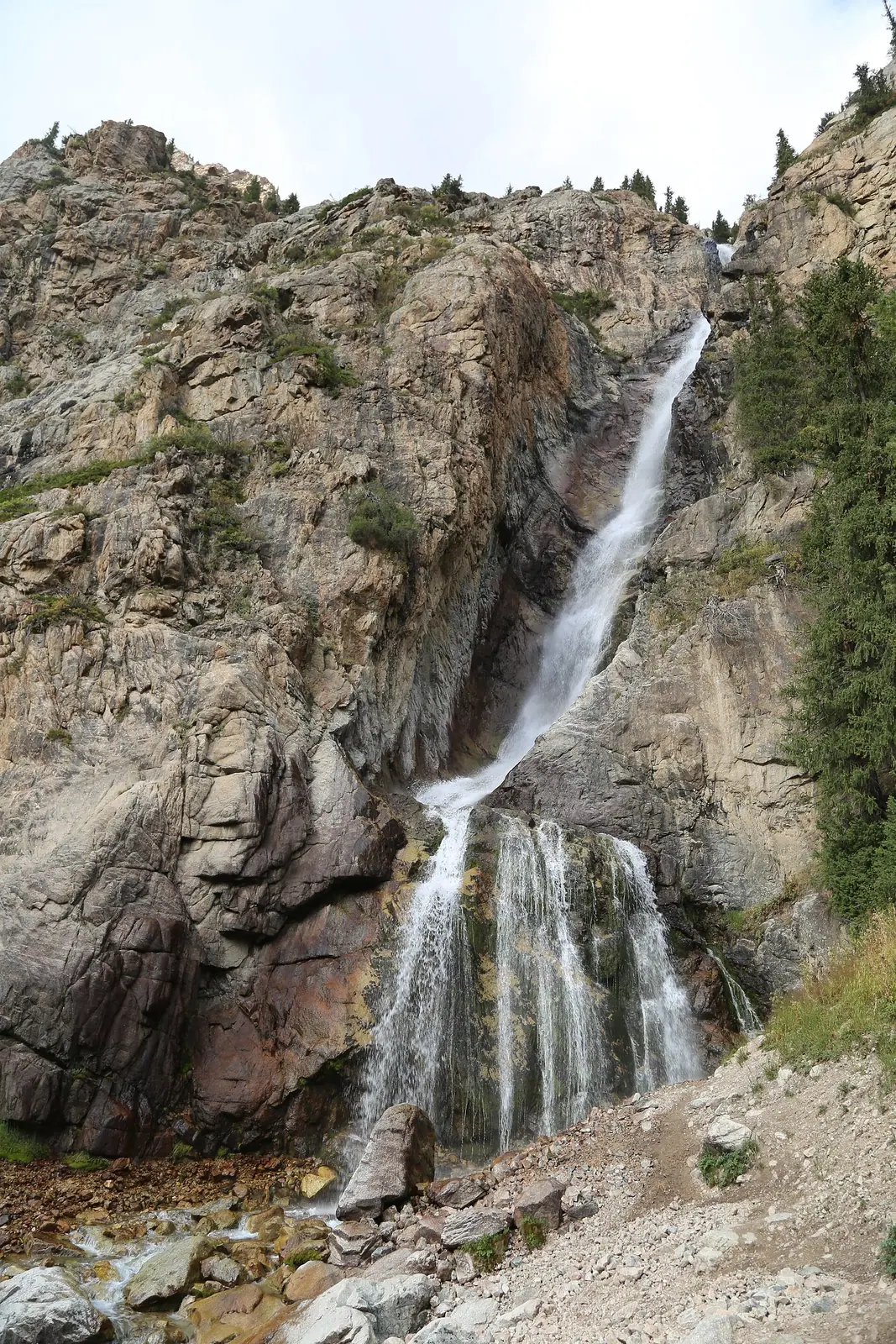
Four steps add up to 168 m, but only the lower three, about 114 m together, can be seen. Spray off the granite wall forms rainbows, says Kazakh Wikipedia.
A sacred waterfall with a legend
Considered sacred before Soviet times. The legend of Burkhan and Kora explains the river's name and a nearby stream called Mother's Tears.
Up the Kora gorge from Tekeli
The falls lie in the Kora River gorge above Tekeli, 130 km from Taldykorgan by Wikipedia and about 66 km from it in a straight line.
A short summer window
At the 2279 m grid point, July and August average highs of 16–17°C and nights of 7–8°C; from November to March days stay at or below freezing.
Kazakhstan or all Central Asia
Russian and English Wikipedia call Burkhan-Bulak Kazakhstan's tallest waterfall; the Kazakh article claims it is the highest in Central Asia.
Burkhan-Bulak Waterfall, the tallest waterfall in Kazakhstan in photos
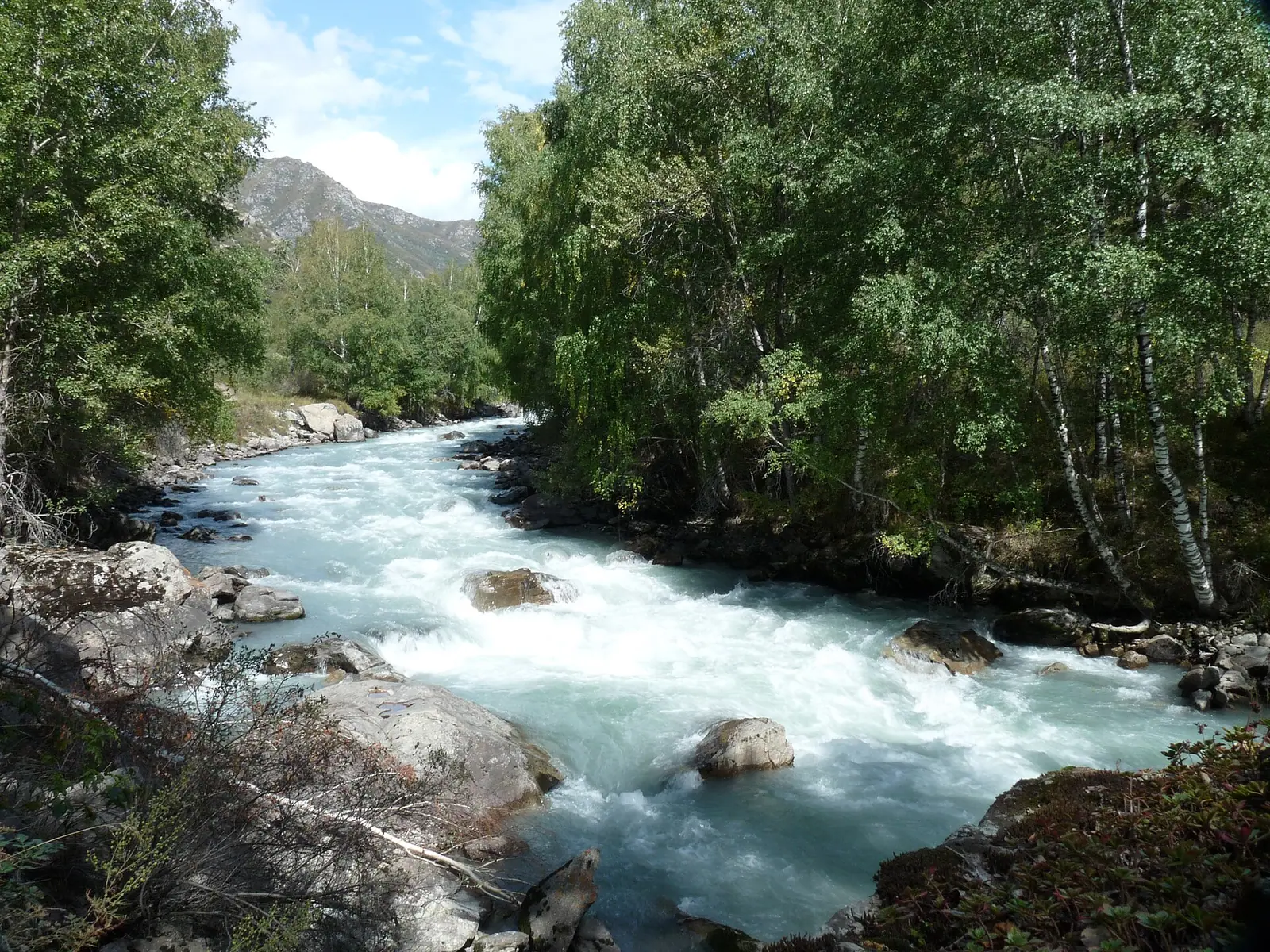
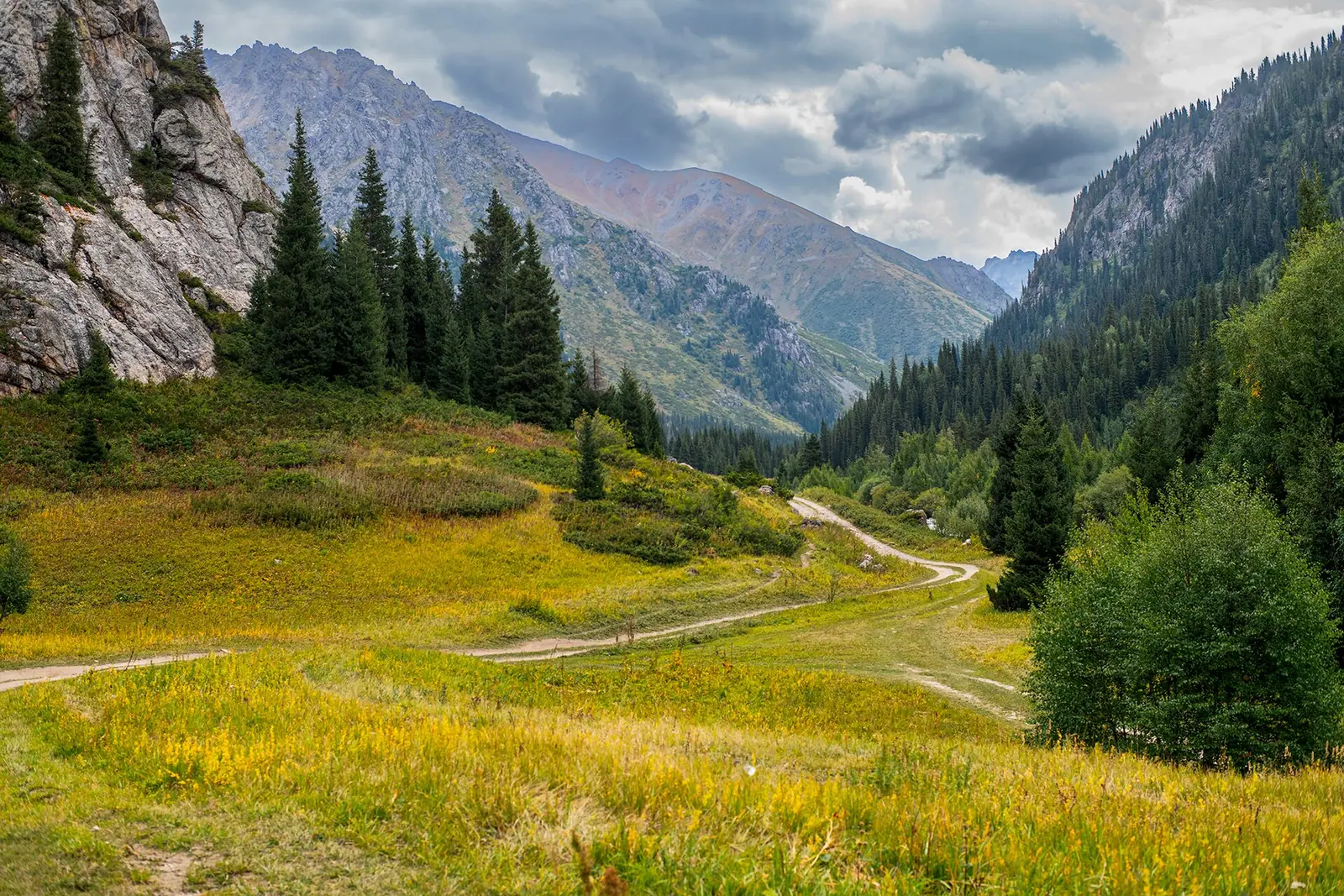
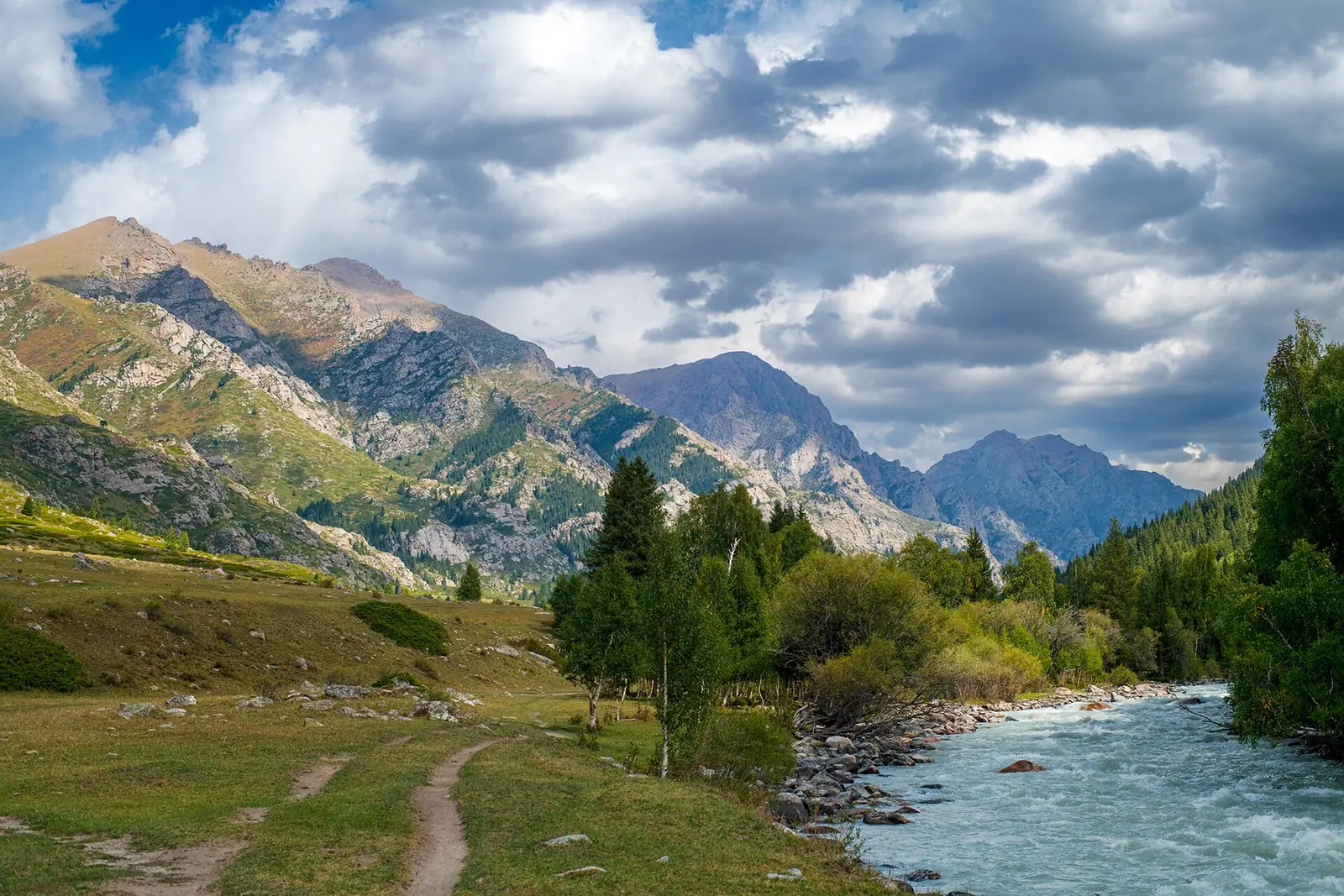
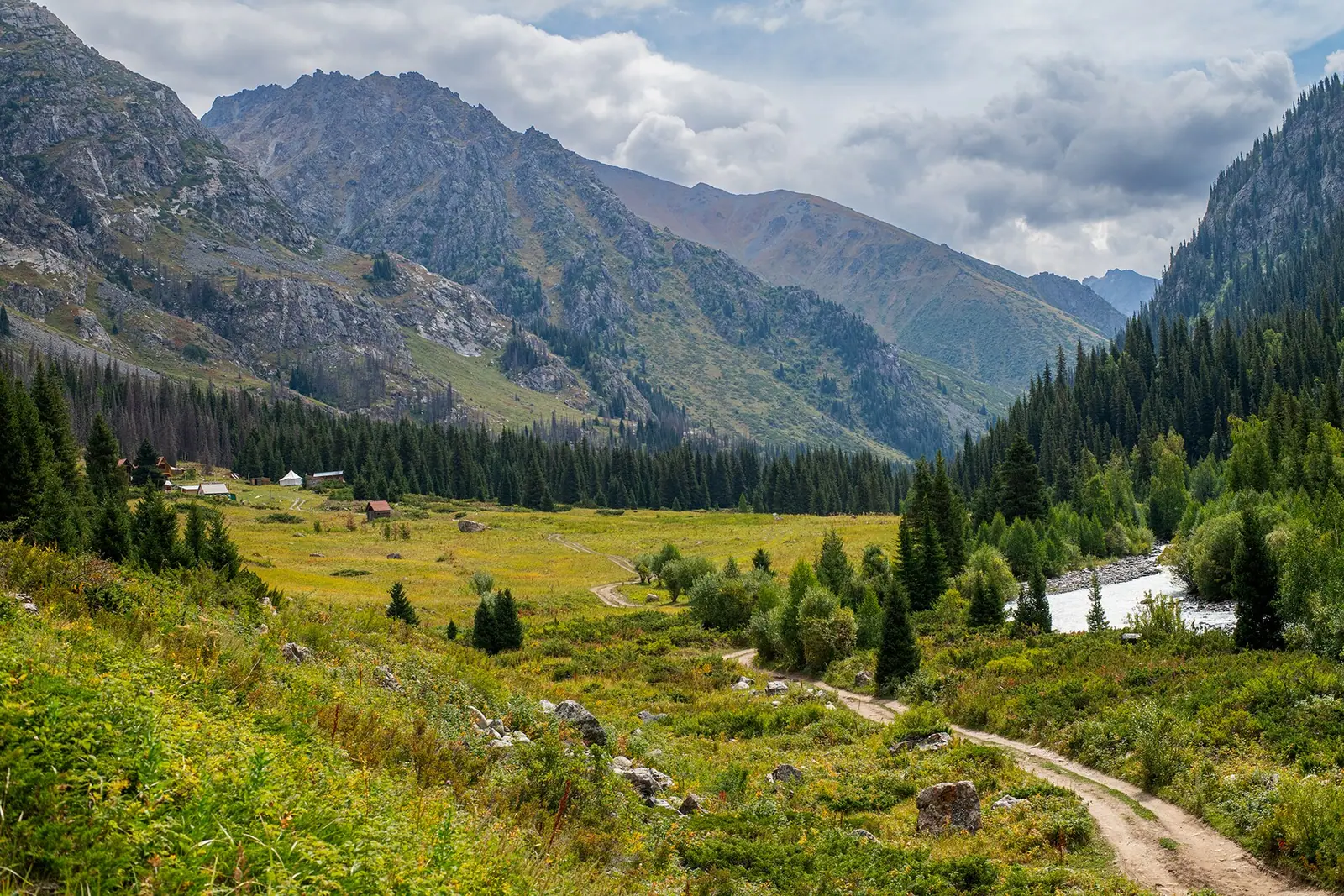
Real photos by travellers (Pexels, Unsplash, Wikimedia Commons); author and licence are given in each caption.
Burkhan-Bulak Waterfall is the tallest waterfall in Kazakhstan: four cascades with a combined height of 168 m in the Kora River gorge of the Dzungarian Alatau. It lies above the town of Tekeli in Zhetysu region, about 66 km in a straight line from Taldykorgan and about 270 km from Almaty. It is a mountain trip for summer, and the practical details of getting there are the part you will have to confirm locally.
Where Burkhan-Bulak is and what kind of trip it is
The waterfall is in the Eskeldi district of Zhetysu region, in the Kora River gorge upstream of Tekeli. Russian Wikipedia puts it 130 km from Taldykorgan, the regional capital; the straight-line distance is about 66 km, so the two figures differ; we could not confirm the road distance. From Almaty it is about 270 km in a straight line.
That makes Burkhan-Bulak a trip built around Taldykorgan and Tekeli rather than a day out from Almaty. English Wikipedia gives an altitude of about 2000 m. We could not confirm the road condition up the gorge, the length of any walk to the falls, or whether public transport goes beyond Tekeli. For a visitor without a car or Russian, plan on arranging a driver in Taldykorgan or Tekeli; we could not confirm what is available on site.
How tall the waterfall is: 168 m, 125 m or 114 m
The figure depends on what is counted. The waterfall is a cascade type with four steps totalling 168 m, and only the lower three, about 114 m together, are visible. Kazakh Wikipedia adds that the water falls about 125 m from an untrodden cliff top, and calls it the highest waterfall in Central Asia, while Russian and English Wikipedia limit the claim to Kazakhstan.
| Measure | Figure |
|---|---|
| Total height, four cascades | 168 m |
| Visible part, three lower cascades | 114 m |
| Single drop from the cliff (Kazakh Wikipedia) | about 125 m |
| Altitude (English Wikipedia) | about 2000 m |
| River | Kora |
| Range | Dzungarian (Jongar) Alatau |
For the visitor this means you will not see the full 168 m from one point: expect the lower three steps. Kazakh Wikipedia describes dark granite walls, green moss and heavy spray in which rainbows form along the fall.
A sacred place with a legend about the Kora River
Before the Soviet period the waterfall was considered sacred. The legend tells of a mother who wanted her only son, Burkhan, to marry a quiet, obedient girl. He fell in love with Kora, a proud and self-willed beauty, and his mother locked him in a castle in the rock.
Burkhan broke free and joined Kora forever, which in the story is the Kora River itself. The mother still weeps over her son’s choice, and her grief is a small stream near the waterfall known as Mother’s Tears.
When to go to Burkhan-Bulak
July and August are the warmest months, with nights averaging about 7–8°C at the grid point.
Day high, °C / Night low, °C · Rain/snow, mm
A computed reanalysis normal, not weather station records. Temperature is from ERA5-Land (about 9 km grid); precipitation is from ERA5, a value for a cell about 25 km wide rather than a mountain station, so it may miss extra mountain precipitation.
Monthly figures
| Month | Day high, °C | Night low, °C | Rain/snow, mm |
|---|---|---|---|
| Jan | -8.6 | -15 | 32.7 |
| Feb | -5.5 | -13.2 | 27.7 |
| Mar | 0.2 | -7.8 | 44.4 |
| Apr | 6 | -3.2 | 83.1 |
| May | 11 | 0.7 | 109.6 |
| Jun | 14.7 | 5.3 | 122.6 |
| Jul | 17 | 7.7 | 96.6 |
| Aug | 16.4 | 6.9 | 78.6 |
| Sep | 12.1 | 2.2 | 66.2 |
| Oct | 5.4 | -5.4 | 57.9 |
| Nov | -2.8 | -12 | 68.1 |
| Dec | -7.3 | -13.8 | 39.4 |
Source: Open-Meteo: ERA5-Land (temperature) and ERA5 (precipitation), 2011–2020
These are computed ERA5 normals for 2011–2020 at a grid point at 2279 m, a little higher than the roughly 2000 m given for the falls, so the waterfall itself is likely slightly milder. Even so, summer is cool: July days average about 17°C and nights about 8°C. From November to March daytime highs stay at or below freezing, and in January nights average about −15°C.
The mountains here are wet. Precipitation rises from April and peaks in June at about 123 mm, with May and July also near or above 100 mm, so a rain shell matters more than sun cream.
| Period | What to expect at the grid point | Verdict |
|---|---|---|
| Nov–Mar | Highs −8 to 0°C, nights average −14 to −7°C | Not sensible without local winter knowledge |
| Apr–May | Highs 6–10°C, nights near or below 0°C, wet | Possible, cold |
| Jun | Highs about 14°C, wettest month | Good, pack for rain |
| Jul–Aug | Highs 16–17°C, nights 7–8°C | Best |
| Sep–Oct | Highs fall from 12 to 5°C, frost returns in October | Possible early, risky later |
Combining it with other places in Zhetysu
Burkhan-Bulak sits in the north of the region, far from the usual Almaty circuit, so pairings are limited. The radon hot springs of Zharkent-Arasan are about 88 km away in a straight line, and the Singing Dune in Altyn-Emel about 137 km. Charyn Canyon is about 181 km in a straight line, which in practice means a separate leg of the trip rather than the same day.
- Road condition up the Kora gorge beyond Tekeli and whether a normal car can make it
- Whether any public transport runs from Taldykorgan or Tekeli towards the falls
- Length and difficulty of any walk from the road to the viewing point
- Whether an entry fee, permit or protected-area rules apply
- Whether the area is reachable at all outside summer
Burkhan-Bulak Waterfall, the tallest waterfall in Kazakhstan: tips before you go
- Base yourself in Taldykorgan or Tekeli: the falls are 130 km from Taldykorgan by Wikipedia, too far for a day trip from Almaty.
- June is the wettest month at about 120 mm of precipitation; carry a waterproof layer even in summer.
- July nights average about 8°C at the grid point near 2279 m, so bring a warm layer for an early start or late return.
- Expect to see the lower three cascades, about 114 m, not the full 168 m.
More to see nearby
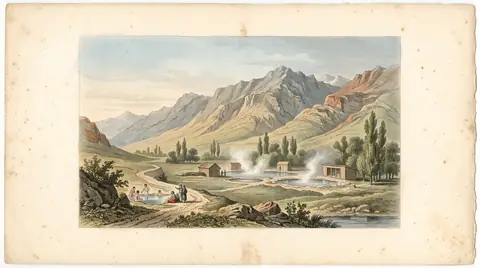
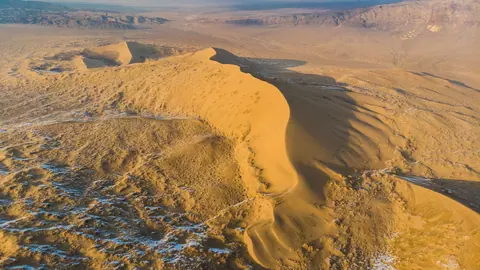


Frequently asked questions
Is Burkhan-Bulak the tallest waterfall in Kazakhstan?
How far is Burkhan-Bulak from Almaty?
Can you see the whole 168 m?
What is the legend of Burkhan-Bulak?
Sources
Read also
 Butakovka waterfall and gorge
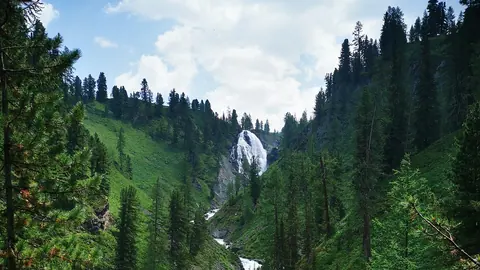 Kokkol waterfall in the Kazakh Altai: the walk, the season and how to get there
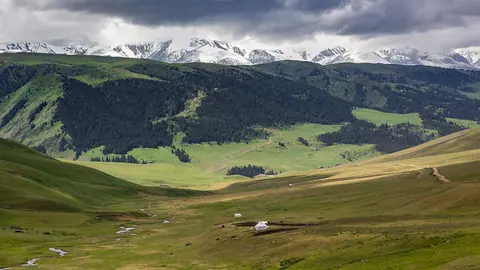 Assy Plateau: summer pastures above Turgen and the Assy-Turgen Observatory
- Turgen waterfall, Burkhan-Bulak and Butakovka: choosing a waterfall in Kazakhstan
- Waterfalls near Almaty: how to choose between Turgen and Butakovka
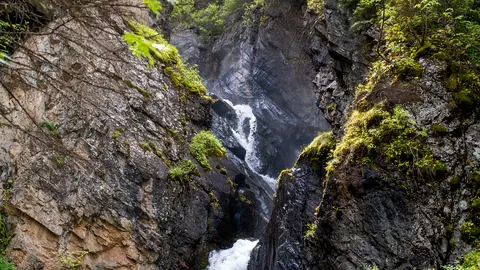 Turgen gorge waterfalls