Berel Kurgans, the frozen burial mounds of the Kazakh Altai: when to go, month by month
- January: off season
- February: off season
- March: off season
- April: possible
- May: good
- June: best time
- July: best time
- August: best time
- September: good
- October: possible
- November: off season
- December: off season
Only June to August bring daytime highs above 20 °C and nights well above freezing at 1,120 m; winter highs stay below zero.
Berel Kurgans, the frozen burial mounds of the Kazakh Altai: why go
The Berel kurgan field
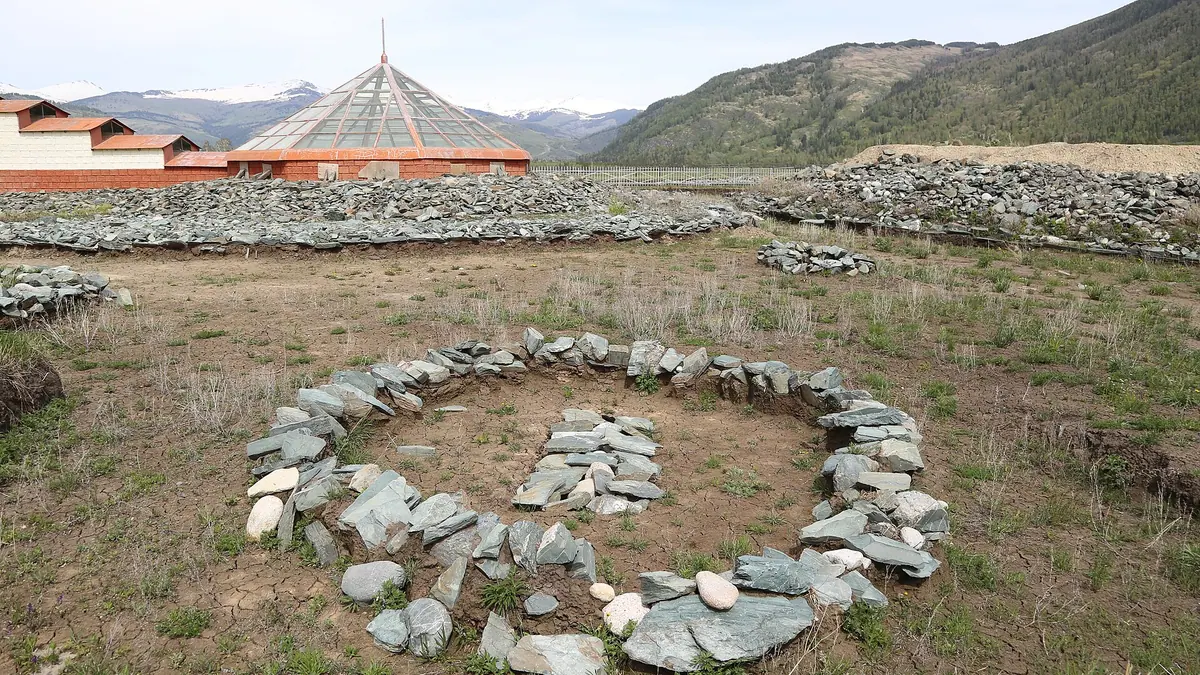
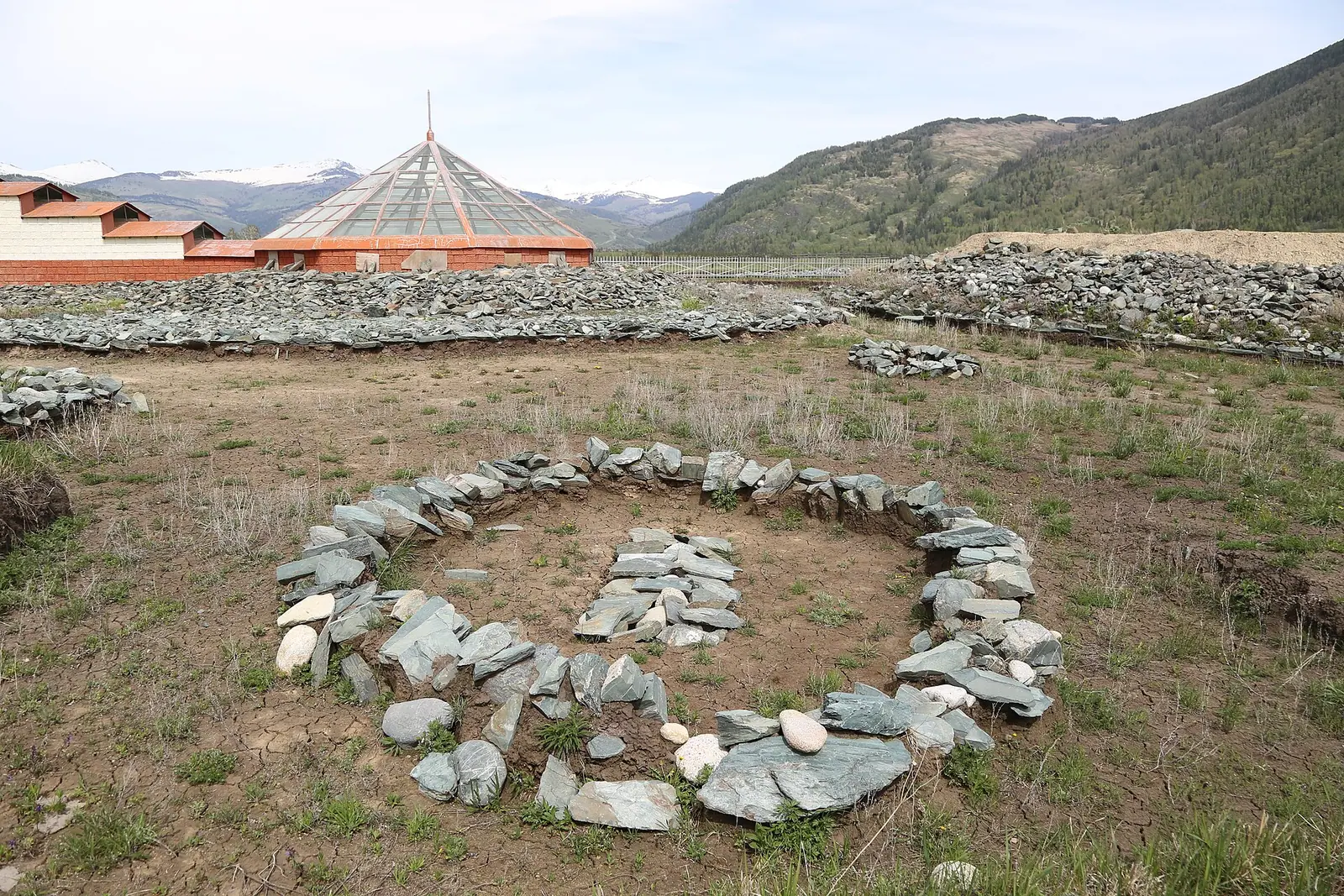
Chains of stone mounds stretch northwest to southeast across a terrace about 4,000 by 1,000 m on the right bank of the Bukhtarma river.
Permafrost under the Berel mounds
Frozen ground kept felt, leather, wood, textiles and horse remains intact, finds that usually rot away in Iron Age graves.
A long road into the Altai
Berel sits about 278 km in a straight line from Oskemen; we found no public transport details, so plan a driver and several days.
Summer at Berel
June to August highs of about 20–22 °C make the open terrace walkable, but July is also the wettest month at around 106 mm.
Horses with grass still inside
Kurgan No. 11 held a man, an older woman and 16 horses; remains of ancient grass were found in the horses' stomachs.
Berel Kurgans, the frozen burial mounds of the Kazakh Altai in photos
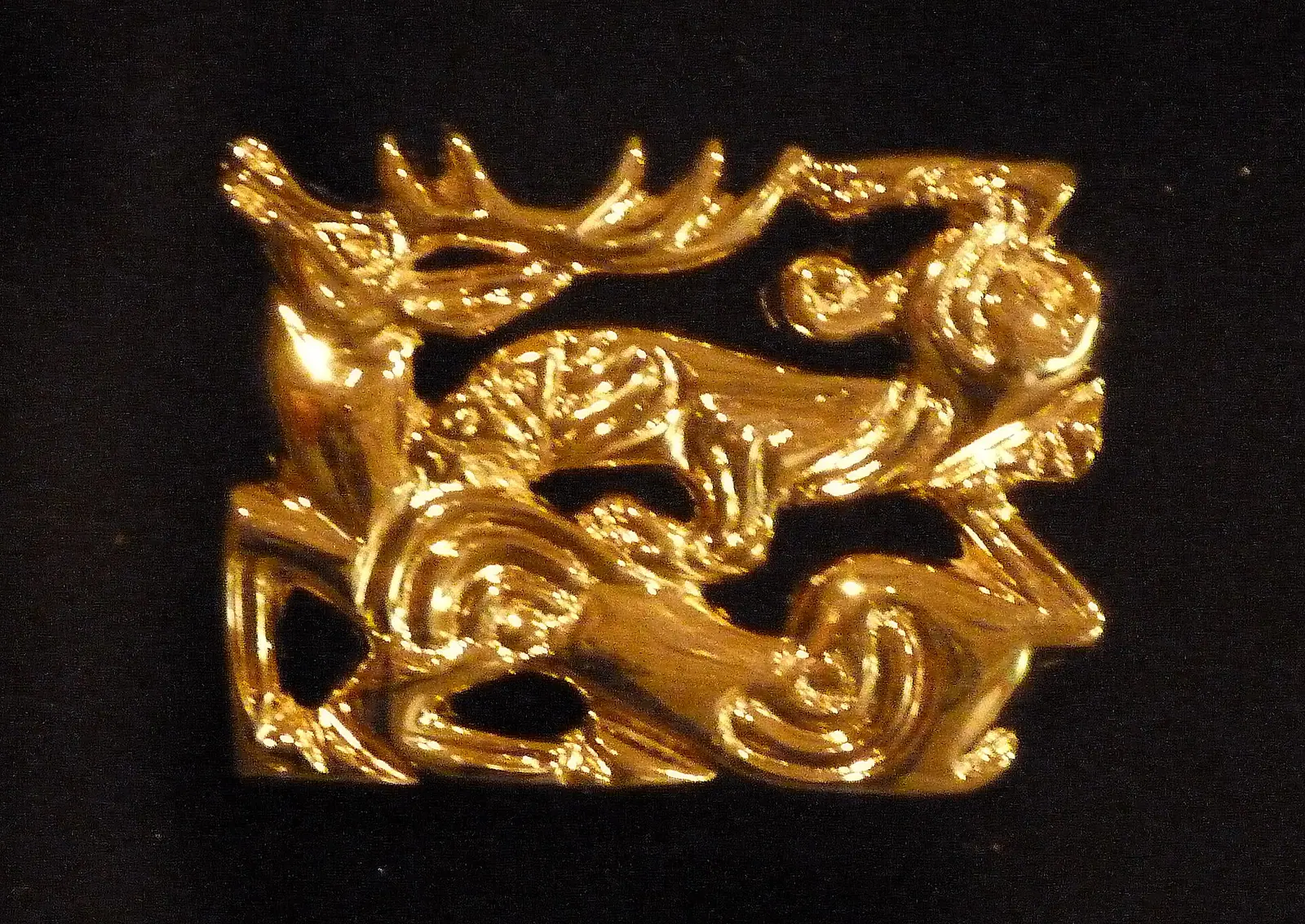
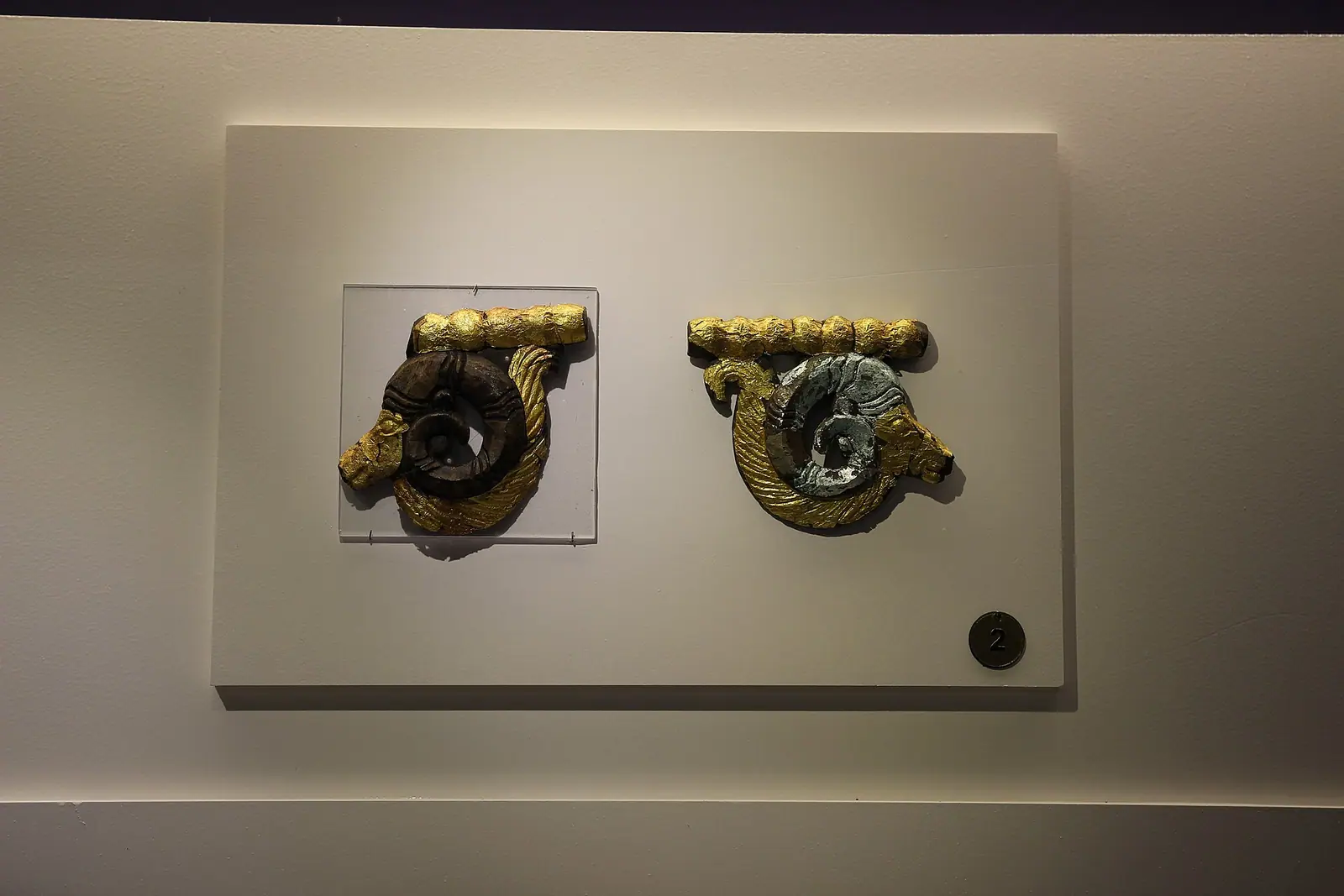
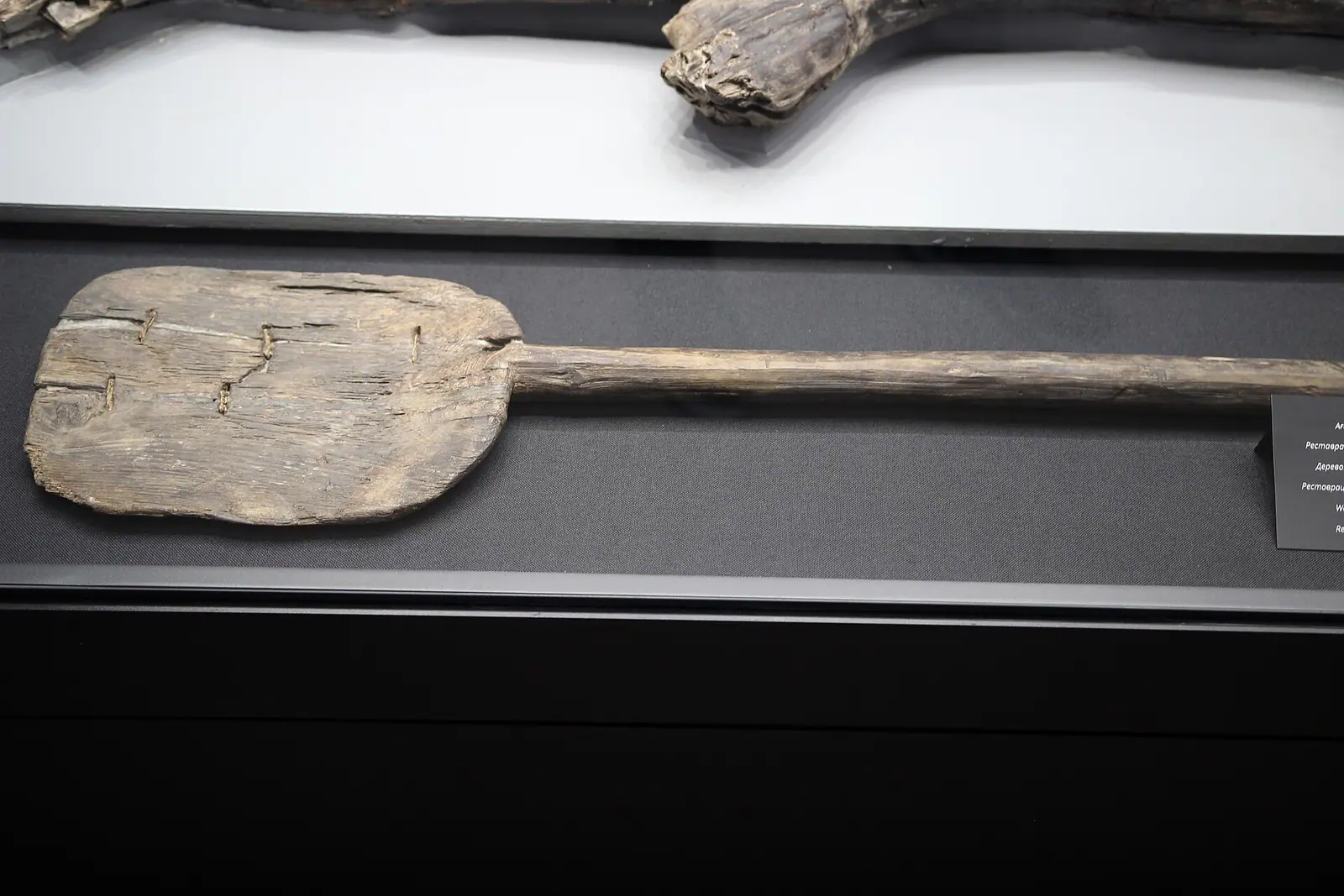
Real photos by travellers (Pexels, Unsplash, Wikimedia Commons); author and licence are given in each caption.
The Berel Kurgans are a cemetery of more than 100 stone burial mounds in the Katon-Karagay district of East Kazakhstan, about 7 km southwest of the village of Berel. They are known because a lens of permafrost under some mounds preserved wood, textiles, leather and horse remains from the 5th–4th centuries BCE. Getting there is a long trip into the Altai, about 278 km in a straight line from Oskemen, and best planned for summer.
What the Berel Kurgans are and why archaeologists care
Berel is a burial ground of early nomads, used for elite burials of the Pazyryk culture. Most Iron Age graves keep only metal, bone and pottery. At Berel, frozen ground under the stone mounds preserved clothing, saddles and horse harness, wooden vessels, felt and leather, and Russian Wikipedia calls it the only site in Kazakhstan with surviving organic finds.
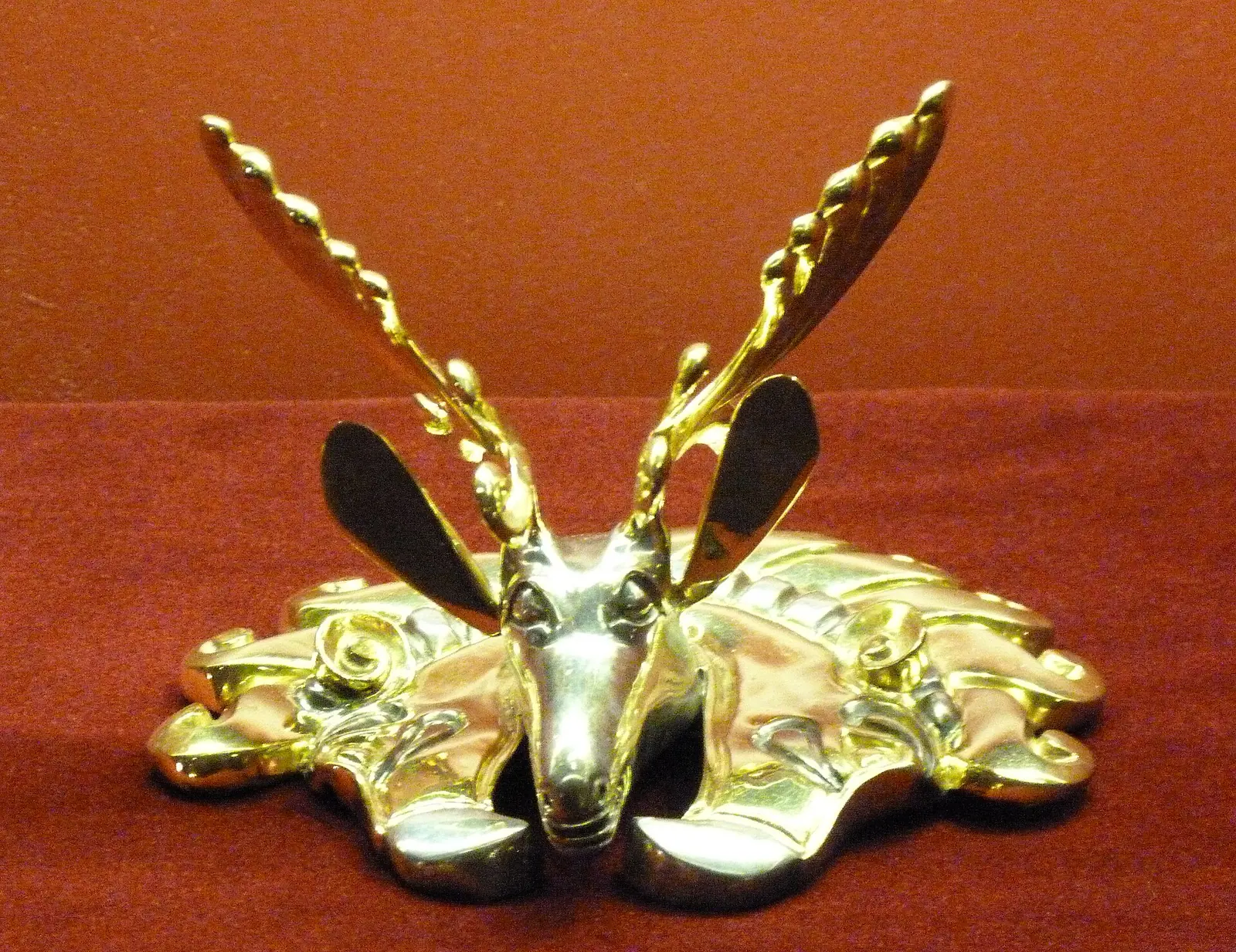
The objects are made in the Scytho-Siberian animal style, and English Wikipedia says their sophistication is prompting a reassessment of the nomadic cultures of the 5th–3rd centuries BCE. Horses were buried next to their owners, richly decorated. In kurgan No. 11, excavated in 1998–1999, archaeologists found a man aged 35–40, an older woman and 16 horses, with remains of ancient grass still in the horses’ stomachs.
Since 4 July 2008, by a government decree, the site has been protected as the Berel state historical and cultural museum-reserve. The Kazakh Wikipedia also lists it among the country’s national sacred sites, so treat the mounds as graves, not as a playground.
Key facts at a glance
The sources do not fully agree on the number of mounds or their dates, so the table gives ranges where they differ. For a visitor the practical point is simple: this is a large open field of mounds, several kilometres long, not a single monument.
| Item | Detail |
|---|---|
| Location | Katon-Karagay district, East Kazakhstan; 7–8 km SW of Berel village |
| Setting | Terrace on the right bank of the Bukhtarma river, about 1,120 m above sea level |
| Size of field | About 4,000 × 1,000 m |
| Number of mounds | Over 100 (Russian Wikipedia) or over 70 (Kazakh Wikipedia) |
| Main period | 5th–4th c. BCE; English Wikipedia gives 5th–3rd c. BCE |
| Latest burials | Old Turkic period, 7th–8th c. CE |
| Protection | State museum-reserve since 2008 |
The mounds are piled from river pebbles mixed with mountain rock and sit in several parallel chains running northwest to southeast. The Big Berel Kurgan, dug by Radlov, forms its own group with the small mounds around it.
A century and a half of digging
Berel was first excavated in 1865, and the work has continued in waves ever since. Knowing this history helps set expectations: many of the finest objects are not at the site but in museums far away.
| Year | Event |
|---|---|
| 1865 | Vasily Radlov digs the Big Berel Kurgan, already looted in antiquity; he finds a log coffin and 17 sacrificed horses |
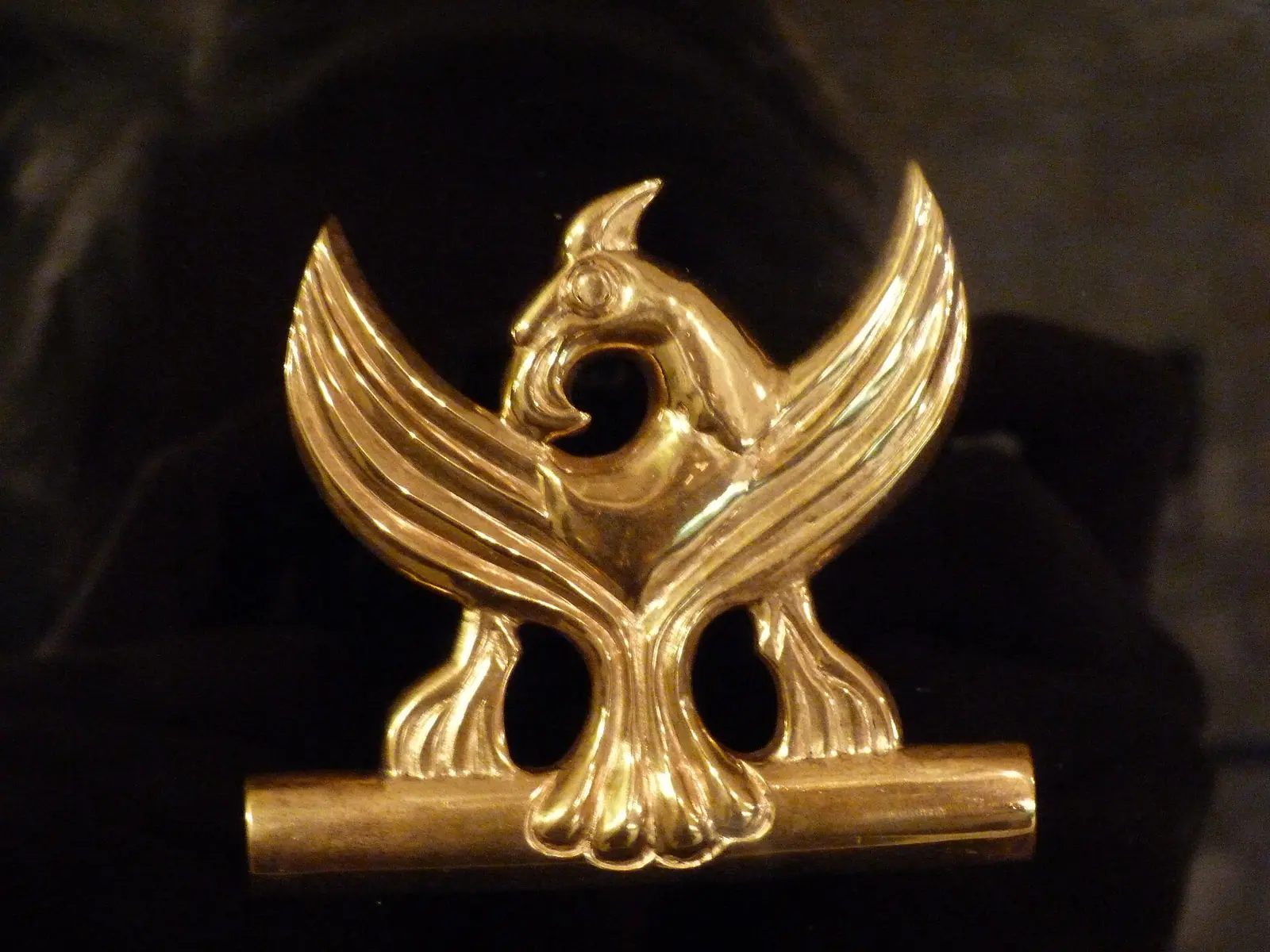
| 1959 | Sergei Sorokin re-examines the Big Kurgan and records a larch coffin wrapped in birch bark, with bronze bird figures at the corners |
| 1998–1999 | International (Kazakh-French) expedition led by Zainolla Samashev excavates several mounds |
| 1997 onward | 20 monuments studied; frozen graves found in kurgans 4, 9, 10 and 11 |
| 2008 | Berel museum-reserve created |
Radlov’s finds ended up in the State Historical Museum in Moscow, and Sorokin noted that many items in Radlov’s diary never reached the museum. Other gold objects from neighbouring mounds are, by Russian Wikipedia, mostly in the Hermitage.
Where Berel is and how hard it is to reach
Berel lies in the far east of Kazakhstan, in the Altai mountains, a long way from both Almaty and Astana. In a straight line it is about 278 km from Oskemen, 456 km from Semey and 772 km from Taldykorgan; road distances will be longer.
We could not confirm any public transport to Berel village or the condition of the road, so a traveller without a car and without Russian should plan on a private driver or an organised trip from Oskemen and confirm details locally. Budget at least a multi-day trip to the Katon-Karagay area rather than a day out.
The Rakhmanov Springs are about 24 km away in a straight line and are the natural pairing in the same mountain area. Lake Zaysan, about 229 km away, can fit the same eastern loop.
When to go: a short mountain summer
June to August is the realistic window for Berel; the rest of the year is cold, and winter is severe. The figures below are ERA5 reanalysis normals for 2011–2020 at a grid point of 1,114 m, almost exactly the height of the site, not readings from a weather station.
Day high, °C / Night low, °C · Rain/snow, mm
A computed reanalysis normal for these coordinates, not weather station records.
Monthly figures
| Month | Day high, °C | Night low, °C | Rain/snow, mm |
|---|---|---|---|
| Jan | -13.6 | -22 | 26.9 |
| Feb | -8.3 | -18.7 | 29.9 |
| Mar | 0.9 | -9.8 | 55.6 |
| Apr | 9.8 | -0.5 | 70.4 |
| May | 14.2 | 3.6 | 93.9 |
| Jun | 21 | 9.7 | 103.1 |
| Jul | 22.4 | 11.5 | 133.6 |
| Aug | 21.7 | 9.3 | 110.6 |
| Sep | 15.5 | 2.1 | 98.1 |
| Oct | 5.9 | -5.5 | 112 |
| Nov | -5.3 | -13.8 | 82.6 |
| Dec | -12 | -19.2 | 44.1 |
June to August days reach about 21–22 °C, with nights around 10–12 °C, so pack a warm layer even in July. May and September give highs near 14 °C but nights close to freezing. From November to February daytime highs stay below freezing, and January nights average about −22 °C.
Summer is also the wettest time: July brings about 134 mm of precipitation, the peak of the year, and October is nearly as wet at about 112 mm. Expect showers on an open terrace with little shelter, and allow slack in the schedule.
What you will and will not see
At the site itself you will see the landscape of stone mounds on the river terrace with mountains on both sides. The famous frozen finds, gold ornaments and horse equipment are held in museums, and some items from Radlov’s dig are lost.
Russian Wikipedia links Berel with the reconstruction of Kazakhstan’s third “Golden Man”, put on display in 2013 at the state museum of gold and precious metals in Astana, though the same article ties that find to the Shilikty valley. We could not confirm which site the costume came from, so check before travelling to Astana for it. We also could not confirm what the museum-reserve shows on site or when it is open.
- Whether the Berel museum-reserve is open to visitors, its hours and any entry fee
- Road condition and driving route from Oskemen to Berel village
- Any public transport to Berel or the Katon-Karagay district
- Whether any permit is needed to travel in the area
- Whether guided tours or English-speaking guides are available at the site
Berel Kurgans, the frozen burial mounds of the Kazakh Altai: tips before you go
- Pack a warm layer even in July: ERA5 normals put summer nights at Berel around 9–12 °C.
- Bring rain gear in summer; July is the wettest month, with about 106 mm of precipitation.
- Pair the trip with the Rakhmanov Springs, about 24 km away in a straight line in the same Altai area.
- The mounds are graves and a listed sacred site; stay off the stone piles and leave every pebble where it is.
More to see nearby


Frequently asked questions
How old are the Berel Kurgans?
Why were things preserved at Berel?
Where is Berel?
What is the weather like in Berel?
Can I see the Berel finds in a museum?
Sources
Read also
 Lake Yazevoe in the Kazakh Altai: road, altitude and the permit question
 Rakhmanov Springs: radon hot springs in the Altai
 Tarbagatai
 Kiin-Kerish, the Burning Cliffs near Lake Zaysan, and what a trip there takes
 Lake Zaysan in Kazakhstan: an ancient lake on the Irtysh, now part of a reservoir
- What to see in East Kazakhstan Region and when to go