Verified: 2026-10
Beket-Ata underground mosque at Oglandy: when to go, month by month
- January: possible
- February: possible
- March: possible
- April: best time
- May: best time
- June: good
- July: possible
- August: possible
- September: best time
- October: good
- November: possible
- December: possible
Mid-April to May and the second half of September; summer tops +40 °C, and winter road data is lacking.
Beket-Ata underground mosque at Oglandy: why go
The Beket-Ata underground mosque
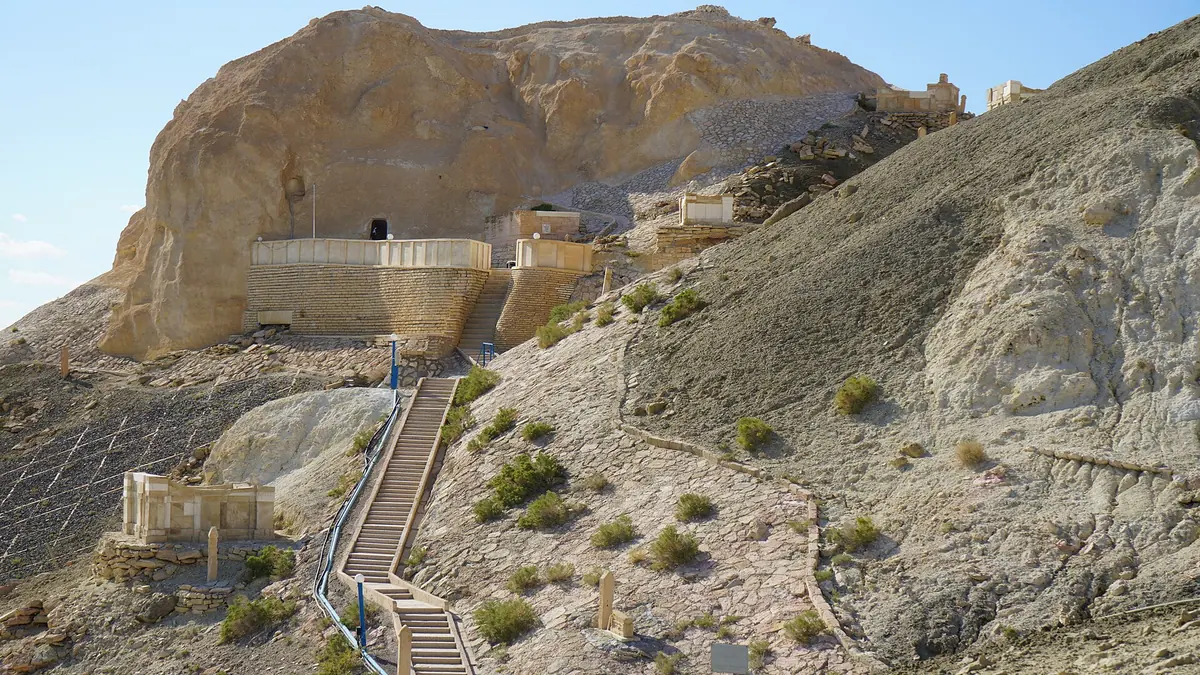
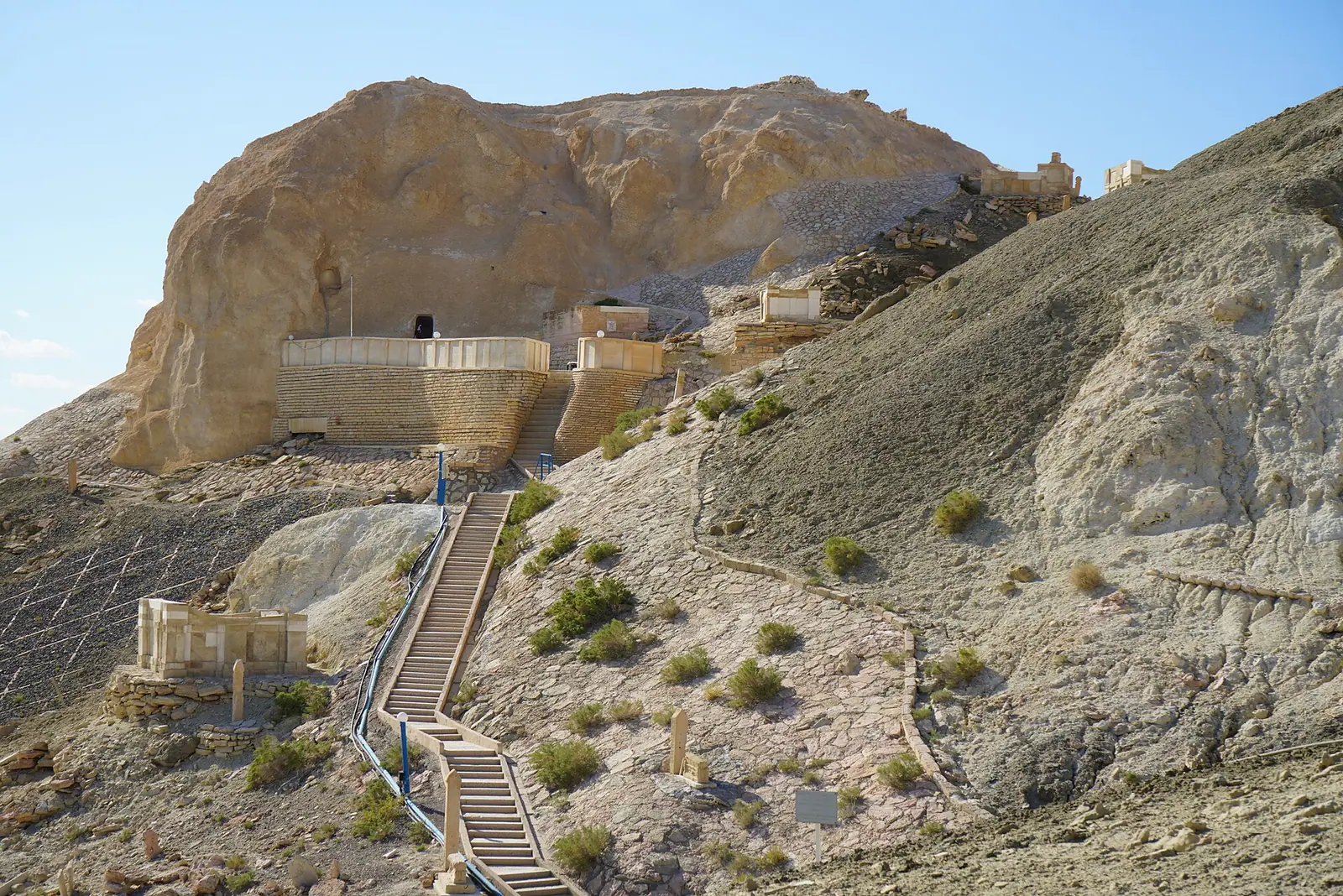
Five rounded chambers cut into the chalk cliff at Oglandy; Beket-Ata himself is buried in a niche of the northern chamber.
The way via Shopan-Ata
By custom pilgrims first stop at the Kuyeutam mausoleum and at Shopan-Ata, Beket-Ata's teacher, before driving on to Oglandy.
Mangystau's rock mosques, UNESCO
Since July 2026 Beket-Ata has been one of five World Heritage components, with Shopan-Ata, Karaman-Ata, Shakpak-Ata and Sultan-Epe.
The spring by Beket-Ata
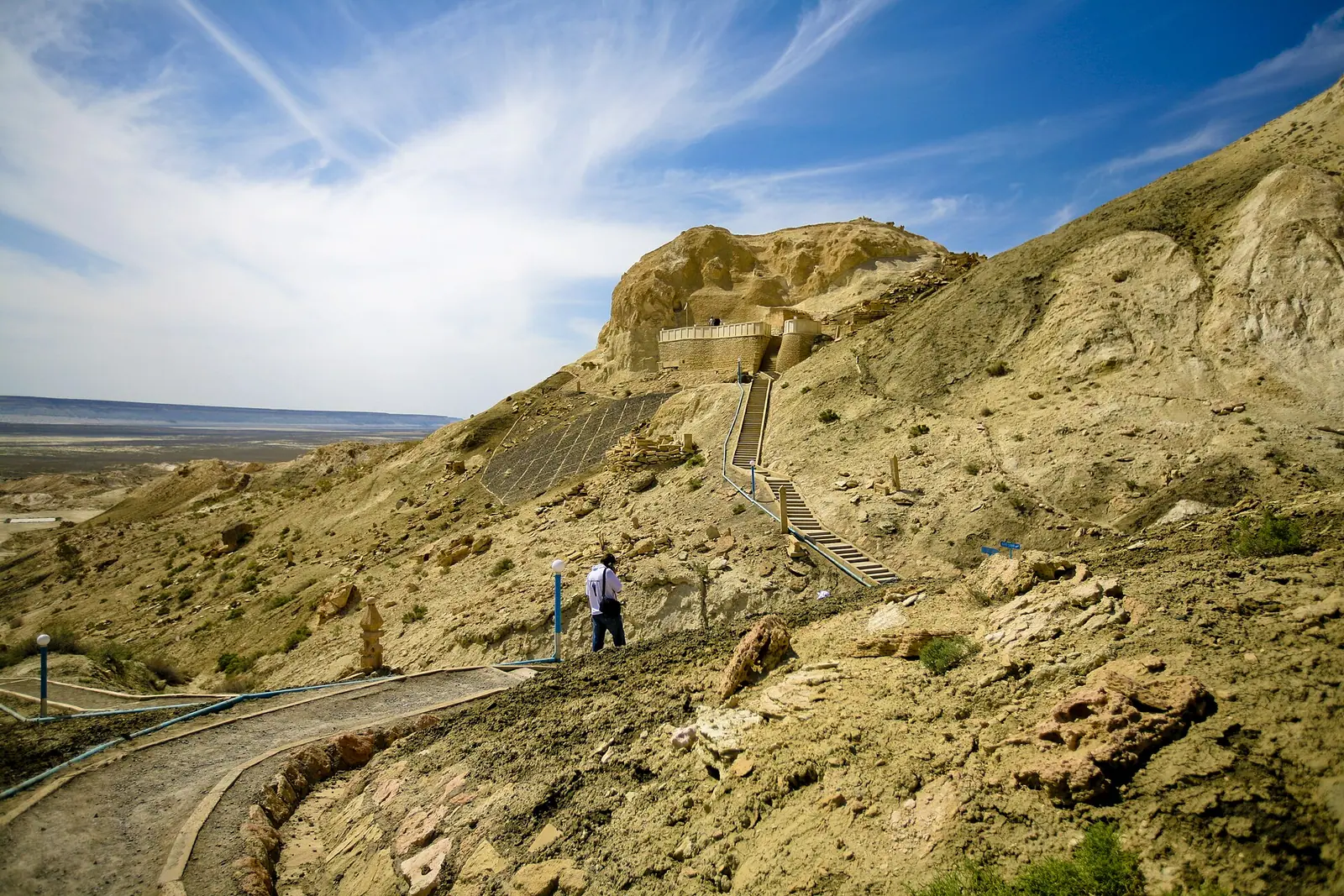
A long, winding staircase leads down the cliff to the mosque, and beside it is a spring whose water pilgrims regard as healing.
A night in the pilgrims' house
The guesthouse has separate rooms for men and women — a resting place, not a hotel; Euronews reports sleeping and meals are free.
Beket-Ata underground mosque at Oglandy in photos
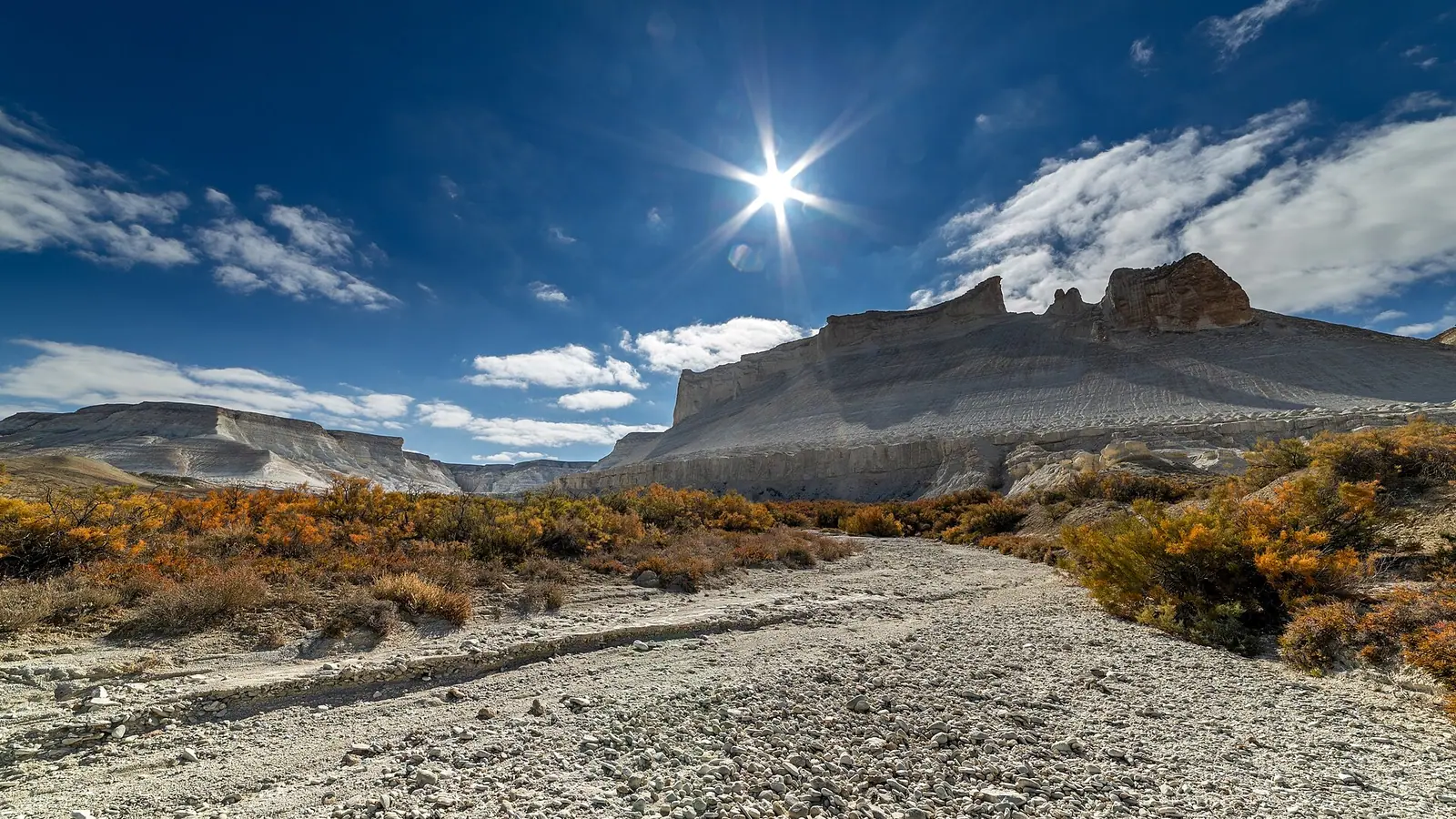
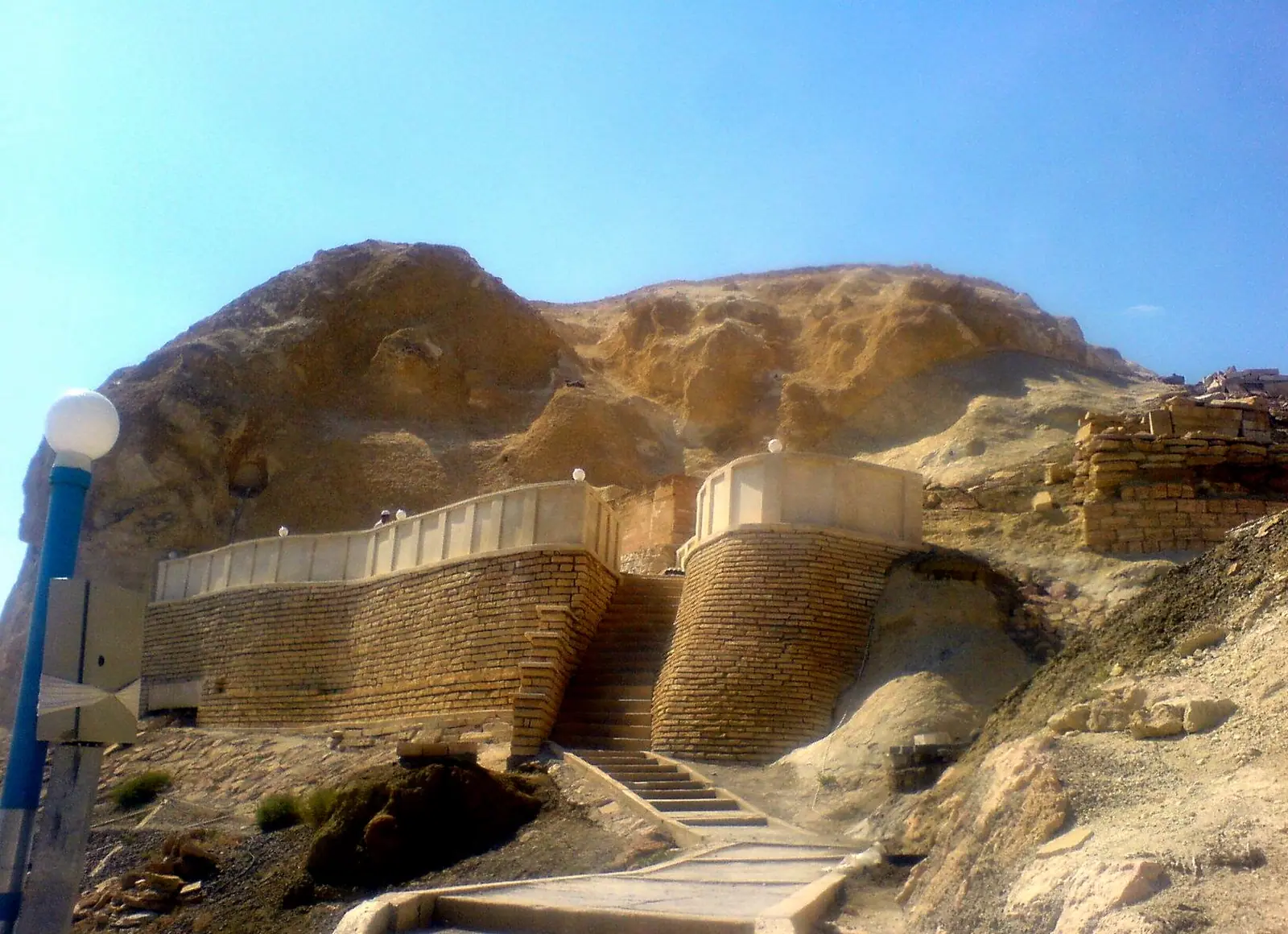
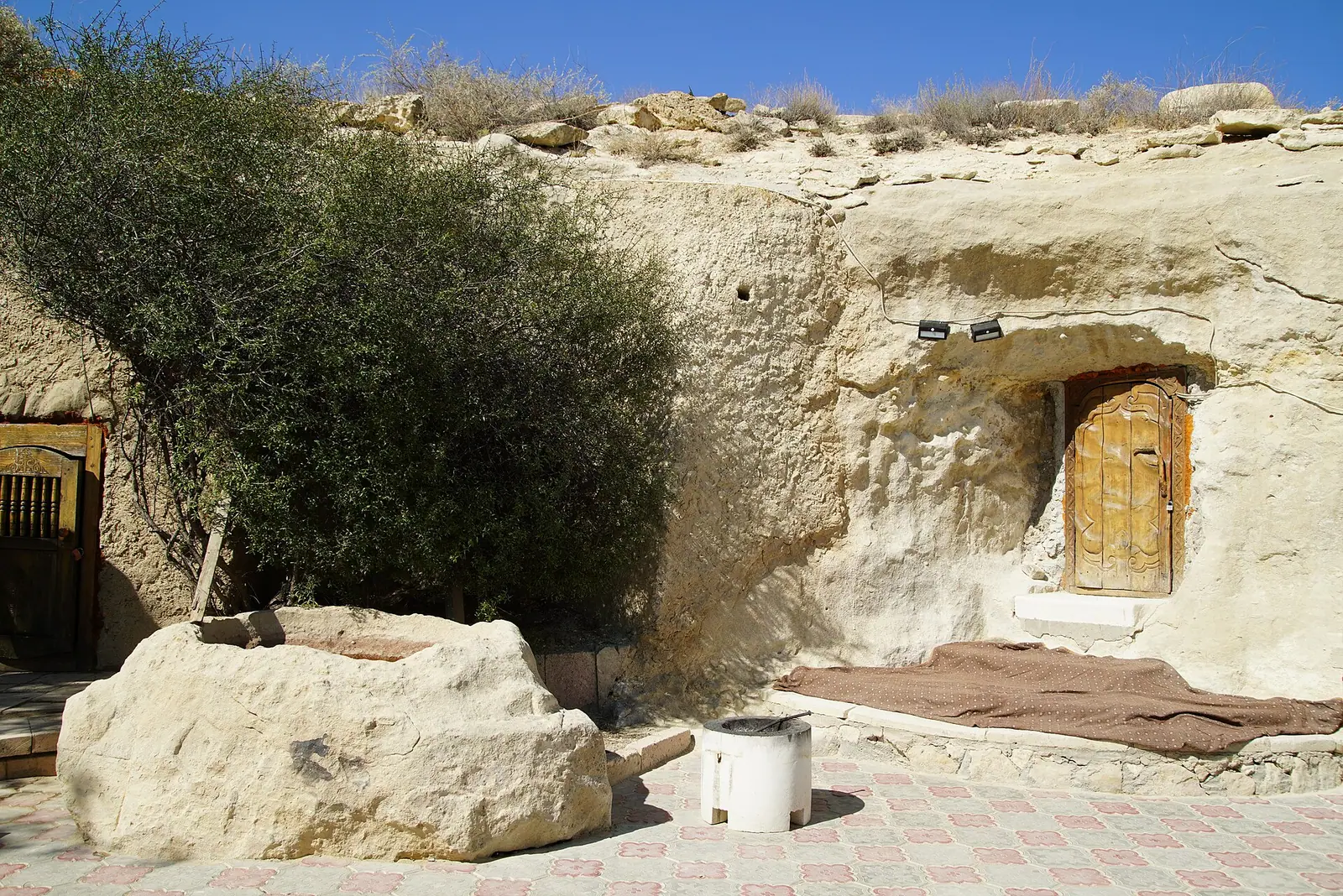
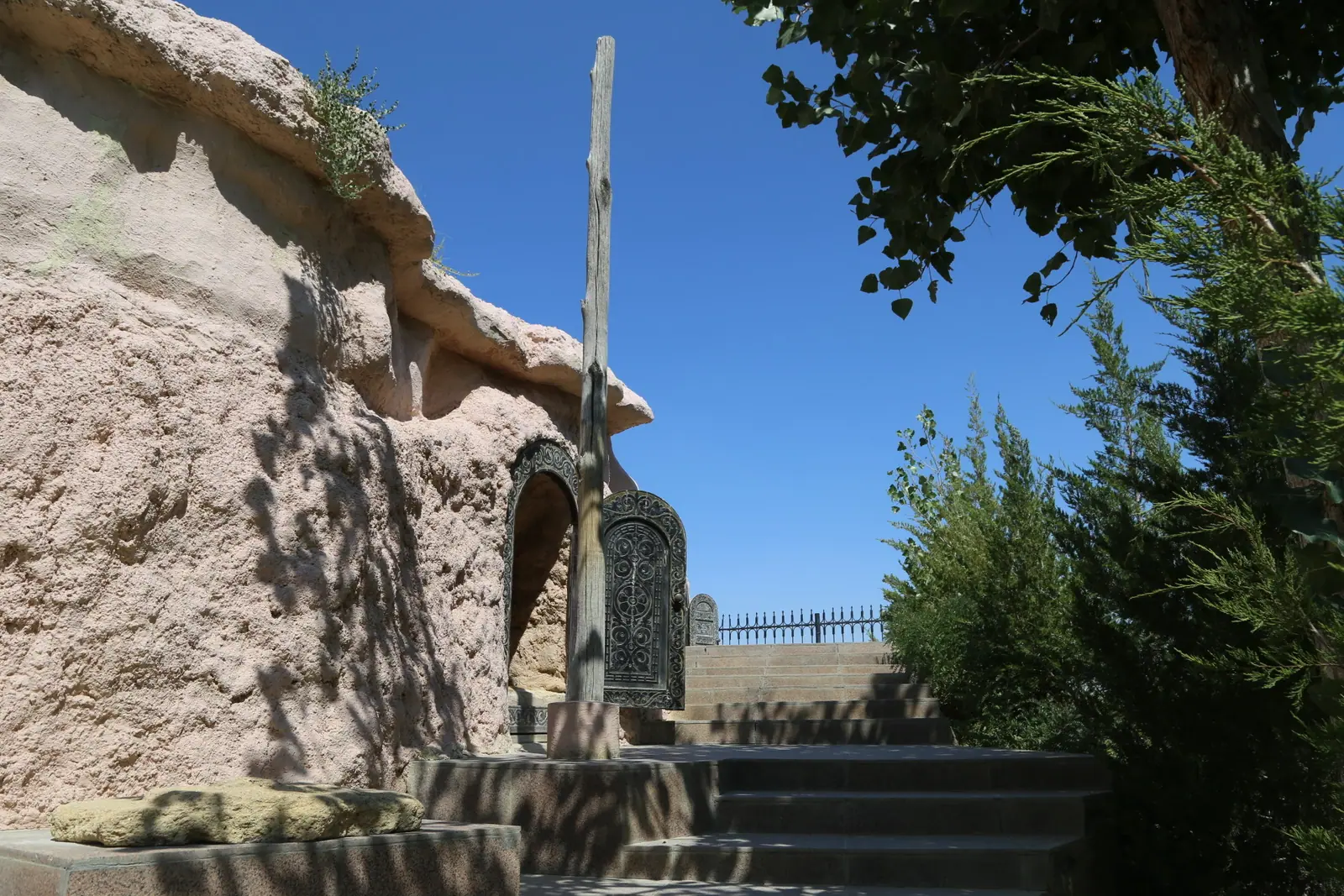
Real photos by travellers (Pexels, Unsplash, Wikimedia Commons); author and licence are given in each caption.
Beket-Ata is an underground mosque carved into a chalk cliff at Oglandy, on the Ustyurt plateau in Mangystau Region, western Kazakhstan. It holds the grave of the Sufi teacher Beket Myrzagululy and is one of the country’s most important pilgrimage sites. From Aktau it is about 280–285 km and four to five hours by road via Zhanaozen; by custom, pilgrims stop on the way at the underground mosque of Shopan-Ata. In July 2026 both shrines became part of a UNESCO World Heritage site. Spring and September are the comfortable months, and you can sleep at the pilgrims’ guesthouse beside the mosque.
This is a working shrine, not a sightseeing stop. Come prepared to follow local custom.
Who was Beket-Ata
Beket Myrzagululy was a Sufi, teacher and batyr of the Adai clan, venerated as a saint and also called Pir Beket. Russian Wikipedia gives his dates as 1750–1813 but treats them as conventional: one version derives his 63-year lifespan from the tradition that he lived as long as the Prophet Muhammad.
Legend has it that at 14 his father sent him to spend the night at the grave of Shopan-Ata, who told him in a dream to go and study in Khiva; he spent seven years there in a madrasa. Tradition and most researchers credit him with four underground mosques — Akmeshit, Old Beyneu, Oglandy and Tobykty. He is buried at Oglandy. A saying quoted by Wikipedia puts him in high company: in Medina, Muhammad; in Turkestan, Khoja Ahmed Yasawi; in Mangystau, Beket.
Inside the Oglandy mosque
According to Wikipedia, the mosque has five rounded chambers: a mihrab in the south-western one, light openings in the dome of the northern one, and Beket-Ata’s grave in a niche of that northern chamber. Tengrinews (2020) describes a room set aside for pilgrims’ prayer and another holding the remains of Akkuash, the saint’s sister, which only women enter to ask for help.
A long, winding staircase leads down the cliff to the mosque. Next to it is a spring, and pilgrims fill bottles with water they consider healing (WeProject, 2026).
| Fact | Value | Source |
|---|---|---|
| Location | Oglandy, Ustyurt plateau, Mangystau Region | Wikipedia |
| From Aktau | about 280 km; about 285 km | WeProject 2026; Tengrinews 2020 |
| Drive from Aktau | 4+ hours; about 5 hours | WeProject 2026; Tengrinews 2020 |
| Via Shopan-Ata | Aktau–Zhanaozen 150 km, Zhanaozen–Shopan-Ata 90 km, Shopan-Ata–Beket-Ata 130 km | Tengrinews 2022 |
| Chambers | 5 | Wikipedia |
| UNESCO | since July 2026, criteria ii, iii, vi | The Times of Central Asia, DKNews |
A trip to the Beket-Ata underground mosque, in a vlog by Yura Drozd (in Russian):
Getting to Beket-Ata from Aktau and Zhanaozen
Drive from Aktau to Zhanaozen via Zhetybai, about 150 km, then on through Kyzylsay following the signs (WeProject, 2026). It is the same Zhanaozen–Beket-Ata road that leads towards Bozzhyra — see our Mangystau guide for the wider region.
Distances vary by source. WeProject gives 280 km straight to the mosque; Tengrinews (2020) says about 285 km and five hours. Adding the Shopan-Ata stop makes it longer: Tengrinews (2022) counts 150 + 90 + 130 km, roughly 370 km from Aktau.
WeProject (2026) calls the road paved, and Tengrinews noted back in 2020 that a new road let cars and pilgrim buses get through. Fuel is only available in Aktau, Zhanaozen and Shetpe (Tengri Auto), so carry spare fuel and plenty of water.
The Shopan-Ata route
Pilgrims do not drive straight to Beket-Ata. WeProject (2026) describes the sequence: first the mausoleum of Kuyeutam, Beket-Ata’s son-in-law; then the Shopan-Ata mosque; and only then Oglandy — skipping these stops “is not done”. Tengrinews (2022) adds that many also visit the grave of Ogylandy-Ata, whom locals likewise regard as a saint.
Shopan-Ata is an underground mosque with a large necropolis. Researchers quoted by Tengrinews place the saint in the 13th–14th centuries; Euronews (2026) calls him a 12th-century mystic. Tradition makes him a disciple of Khoja Ahmed Yasawi and the protector of shepherds and their flocks. The complex has the underground mosque, necropolis, a well, a guesthouse, a canteen and a newer mosque (Tengrinews, 2022).
Etiquette for visitors
- Dress. Modest and covering. Everyone covers their head: a headscarf for women, a cap or hood for men (WeProject 2026; Euronews 2026).
- Shoes. Sturdy ones — the descent is steep.
- Cameras. No photos or video inside the mosque (Tengrinews, 2020).
- Behaviour. Leave the chambers backwards, without turning your back (WeProject). Keep quiet and do not disturb people at prayer. The women’s room is for women only.
- Wildlife. By legend Beket-Ata banned hunting here; leave the animals near the spring alone (Tengrinews, 2020).
Staying overnight
The mosque has a guesthouse with separate rooms for men and women. WeProject stresses that it is a resting place for pilgrims, not a hotel. People share a common dastarkhan, each bringing food if they can. Euronews (2026) says every Mangystau shrine offers free basic sleeping and meals, with donations going to upkeep. Shopan-Ata also has a guesthouse and canteen (Tengrinews, 2022).
We found no other lodging at the mosque. If you want a proper hotel room, stay in Zhanaozen or Aktau and set off early.
When to go
For a long desert drive, Tengrinews recommends mid-April to the end of May and the second half of September for trips around Mangystau. Summer heat easily passes +40 °C, and nights can be 20–30 degrees colder. We found no reliable information on winter road conditions.
UNESCO status
In July 2026, at the 48th session of the World Heritage Committee in Busan, the Rock Mosques and Associated Sacred Sites of Mangystau were inscribed under criteria ii, iii and vi (DKNews) — Kazakhstan’s seventh World Heritage property (The Times of Central Asia). The five components are Beket-Ata, Shopan-Ata, Karaman-Ata, Shakpak-Ata and Sultan-Epe. See all of the country’s sites on our UNESCO page.
The peninsula’s natural sights lie in another direction from Aktau, via Shetpe: Sherkala mountain and the stone balls of Torysh. Before any desert trip, check our before-you-go list.
Beket-Ata underground mosque at Oglandy: tips before you go
- Everyone covers their head: a headscarf for women, a cap or hood for men.
- Do not take photos or video inside the mosque.
- Fuel is only sold in Aktau, Zhanaozen and Shetpe — carry spare fuel and water.
- Wear sturdy shoes: the stairs down to the mosque are steep.
More to see nearby
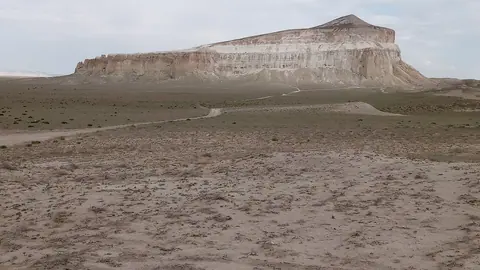
- Torysh Valley of Balls A tract at the northern end of the Western Karatau hills where stone concretions from 10–15 cm …


Frequently asked questions
How far is Beket-Ata from Aktau?
How do I get to the Beket-Ata mosque?
Why do pilgrims stop at Shopan-Ata first?
What should I wear to Beket-Ata?
Can I take photos inside Beket-Ata?
Can I stay overnight at Beket-Ata?
Is Beket-Ata a UNESCO World Heritage Site?
Sources
- Бекет-Ата — Russian Wikipedia
- A place not everyone can reach: the Beket-Ata underground mosque — Tengrinews, 20.05.2020 (in Russian)
- The necropolises of Mangystau — Tengrinews, 15.04.2022 (in Russian)
- Sacred underground mosques of Mangystau: route, history and etiquette — WeProject, 24.06.2026 (in Russian)
- UNESCO adds Mangystau rock mosques to World Heritage List — The Times of Central Asia, 27.07.2026
- Mangystau Sacred Sites Join UNESCO World Heritage List — DKNews, 26.07.2026
- Inside Kazakhstan's historic rock-hewn mosques now recognised by UNESCO — Euronews, 07.10.2026