Baikonur Cosmodrome in Kazakhstan: when to go, month by month
- January: possible
- February: possible
- March: possible
- April: good
- May: best time
- June: good
- July: possible
- August: possible
- September: best time
- October: good
- November: possible
- December: possible
May and September bring highs of about 24–26°C, while July averages 33°C and winter days stay below freezing.
Baikonur Cosmodrome in Kazakhstan: why go
Gagarin's Start at Baikonur
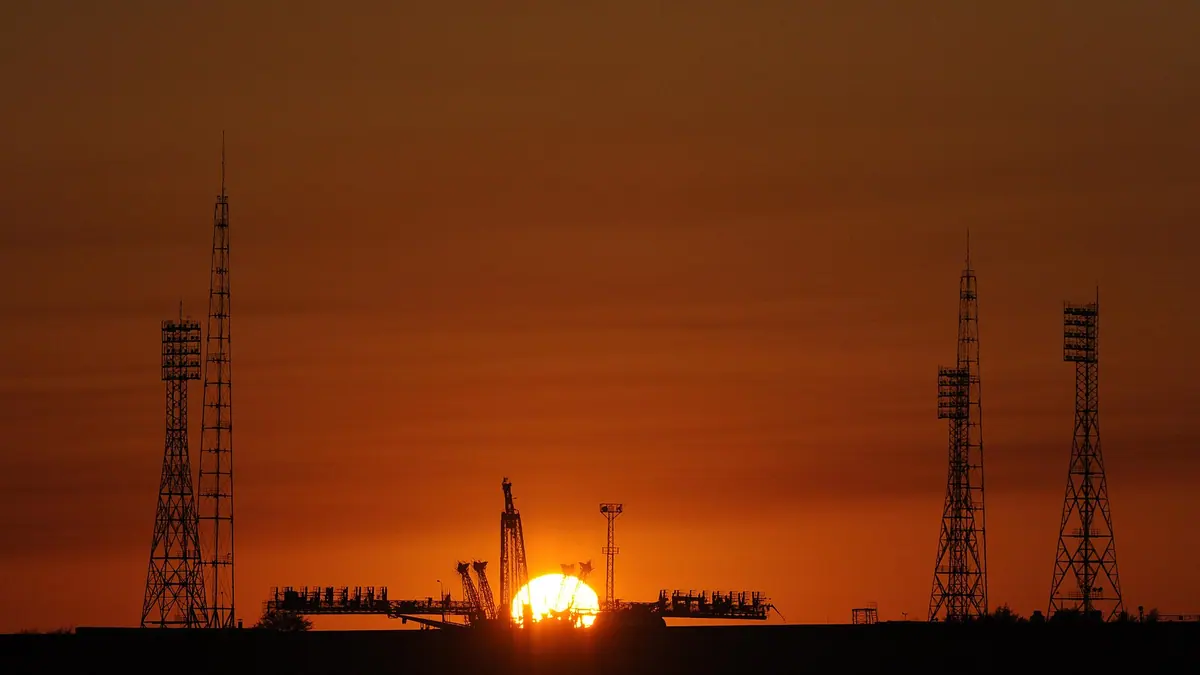
Pad 1/5 sent Sputnik 1 up in 1957 and Yuri Gagarin in 1961. Its last launch was in September 2019, and a museum was announced in 2023.
A missile range turned spaceport
Baikonur began in 1955 as Test Range No. 5 for the R-7 missile. A US U-2 spy plane first photographed it on 5 August 1957.
Getting to Baikonur's steppe
The site lies near Töretam station on the Trans-Aral Railway, about 210 km in a straight line from Kyzylorda and roughly 1,120 km from Almaty.
Baikonur heat and cold
July highs average about 33°C, January nights about -11°C. May and September, with highs near 26°C and 24°C, are the milder months.
NASA astronauts' view in 1975
Before Apollo-Soyuz, US astronauts toured the site and saw pad lights for over 15 minutes from the air. Thomas Stafford said it made Cape Kennedy look small.
Baikonur Cosmodrome in Kazakhstan in photos
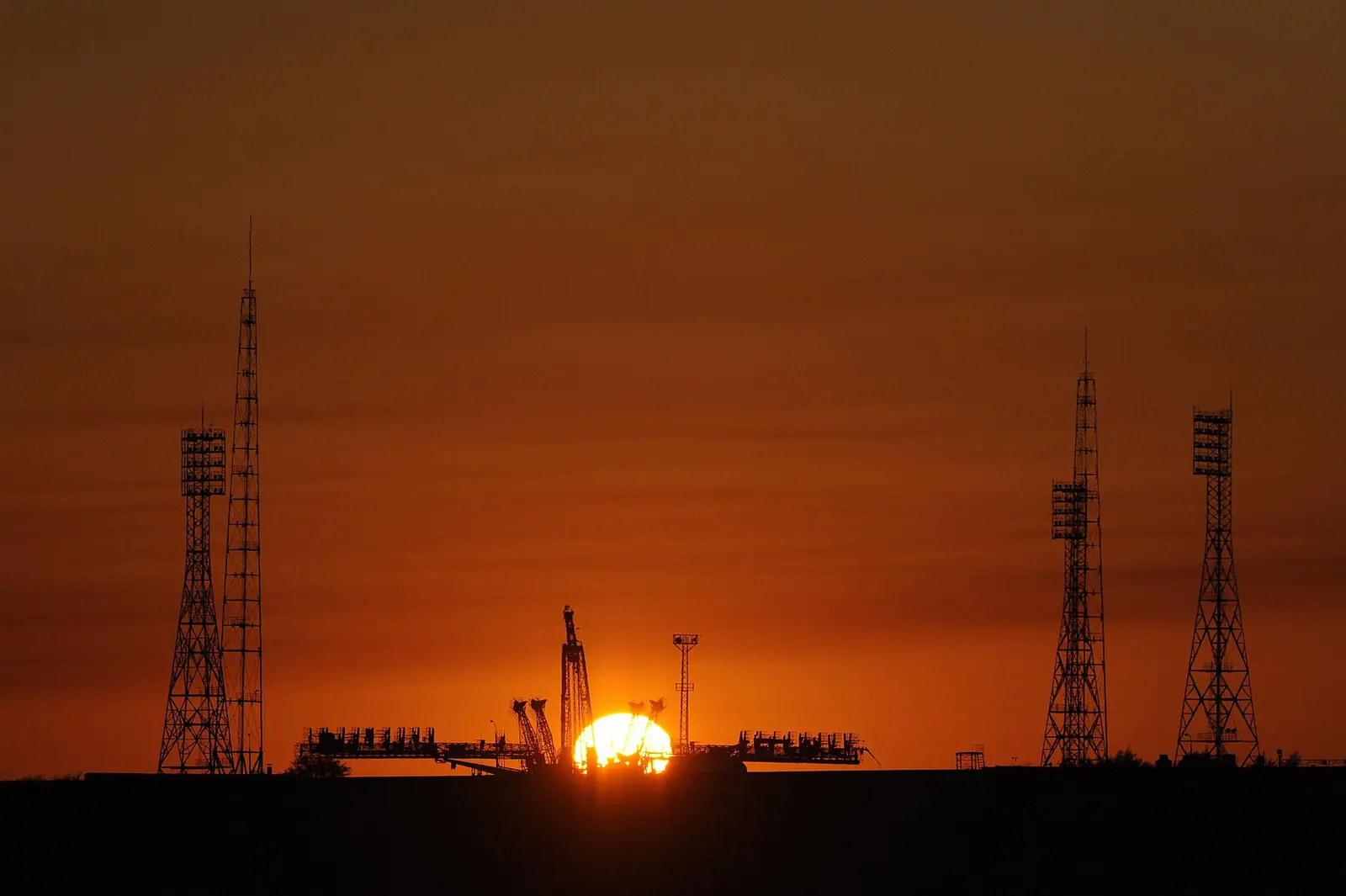
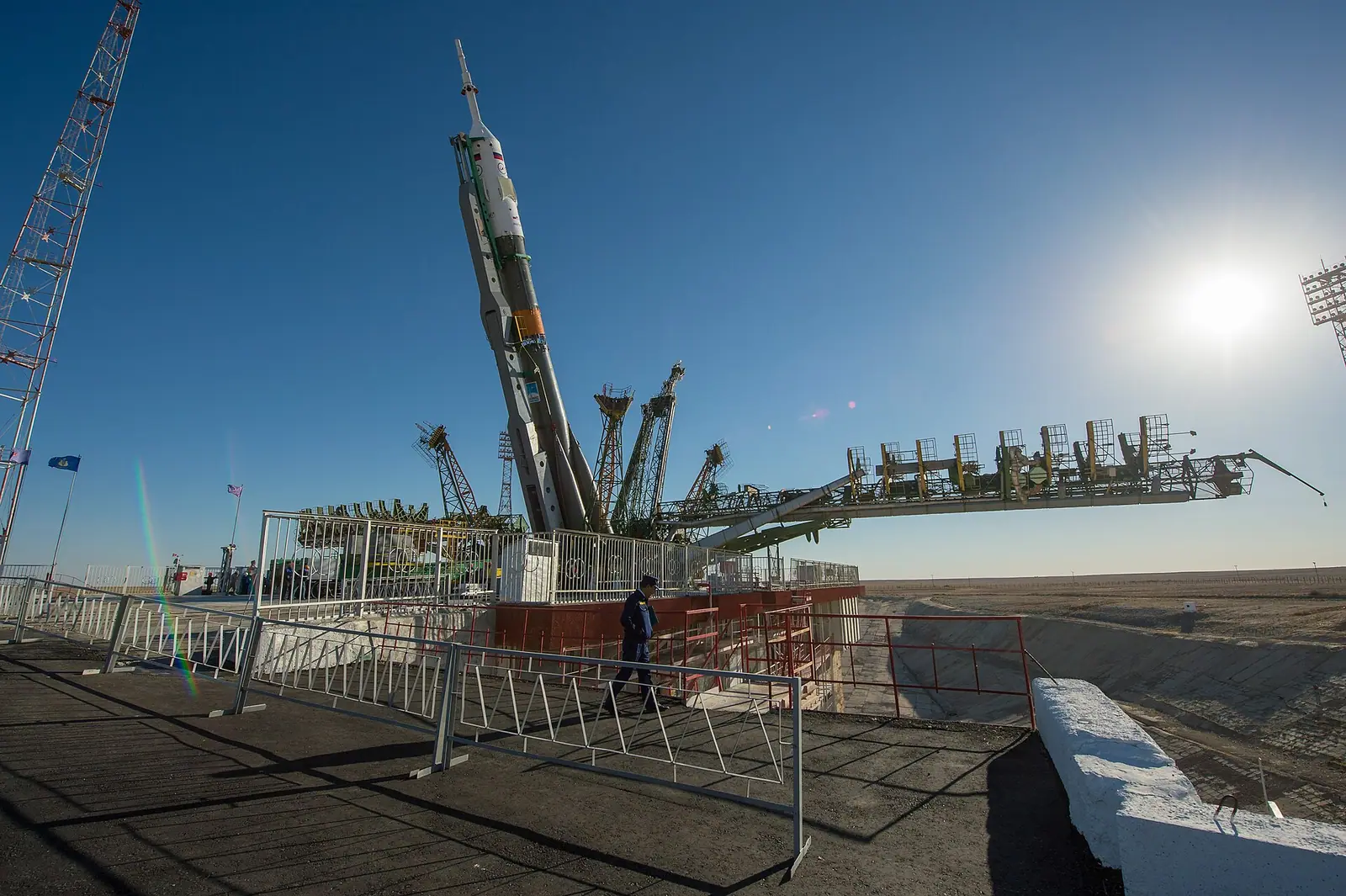
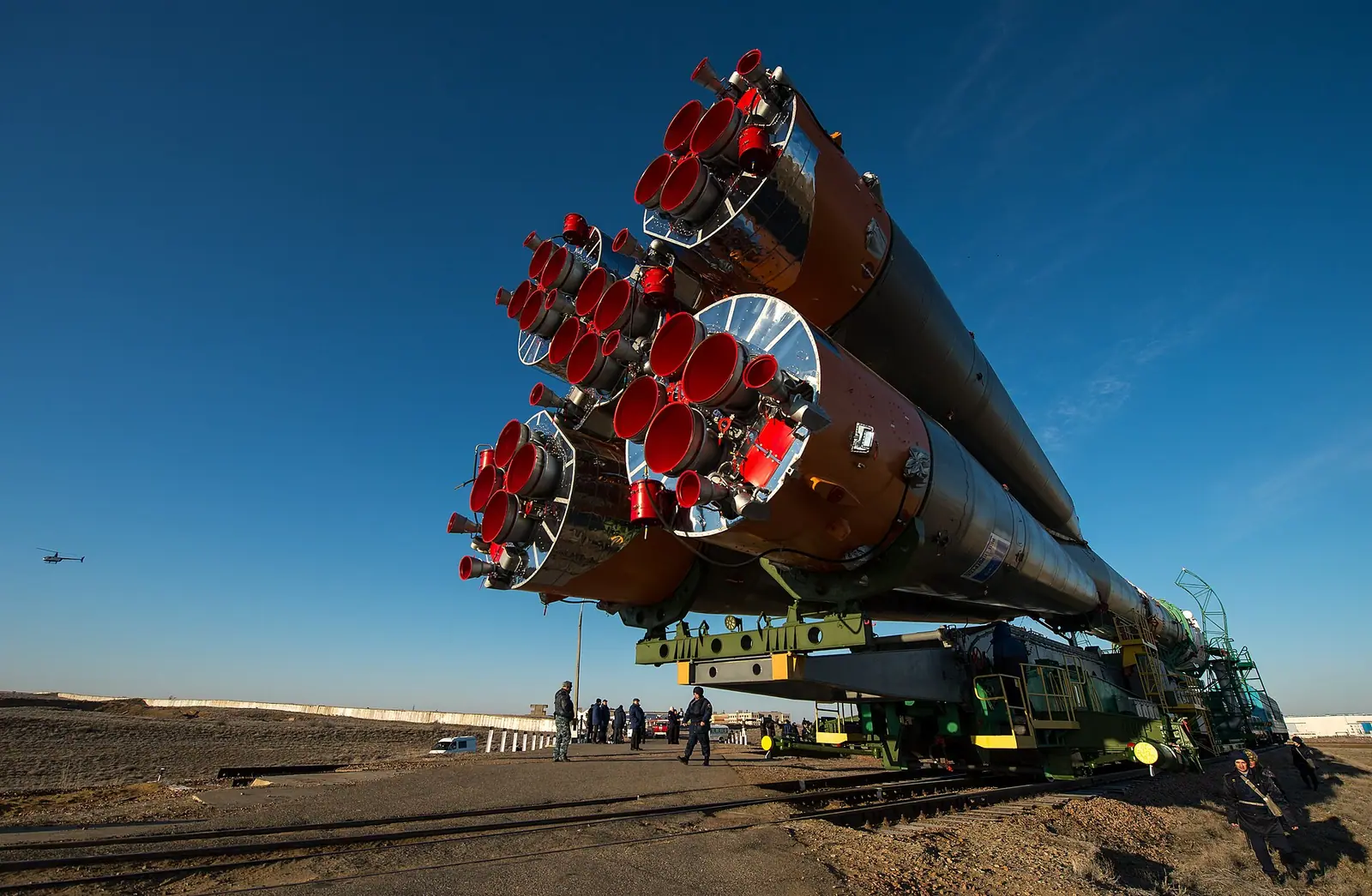
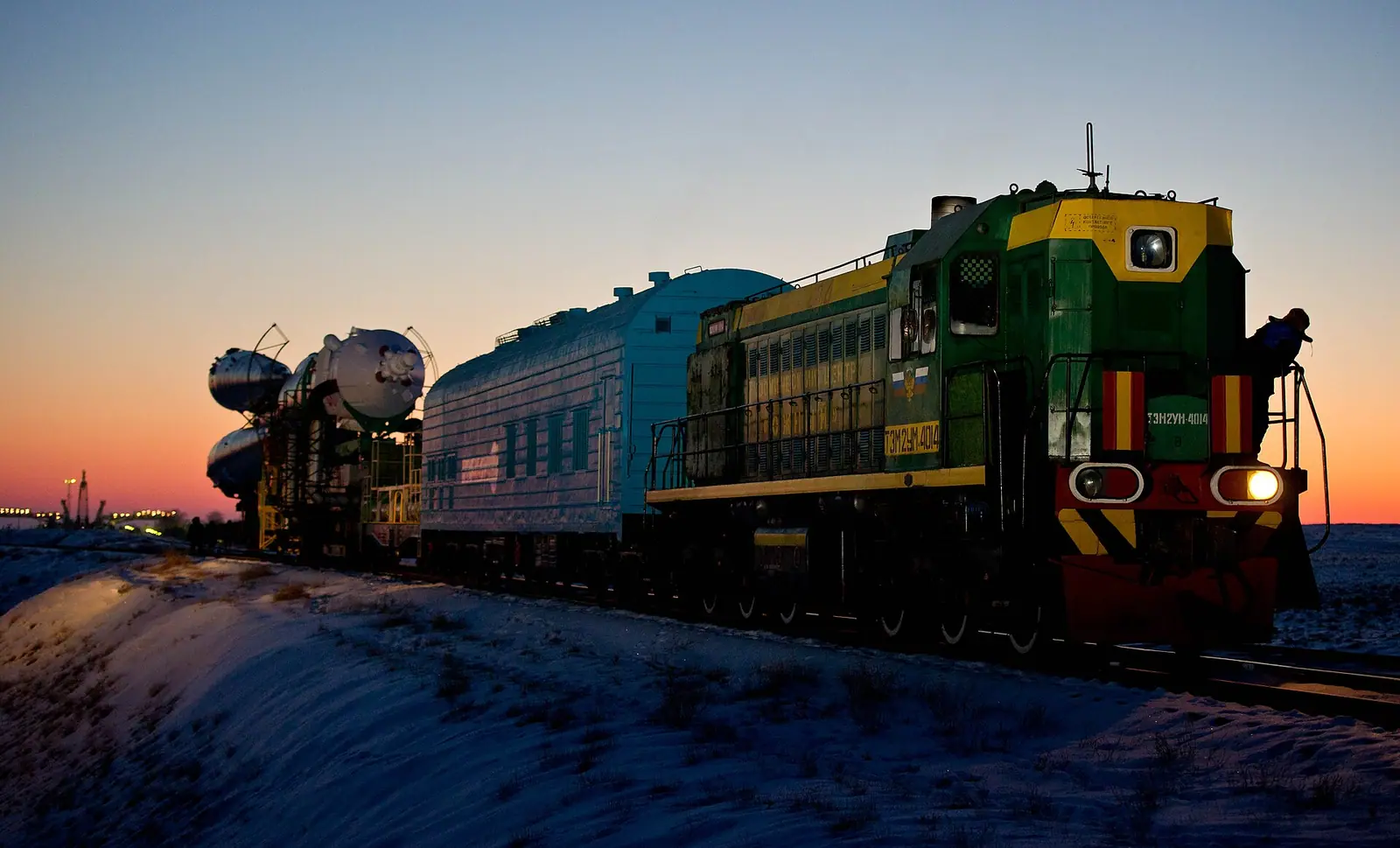
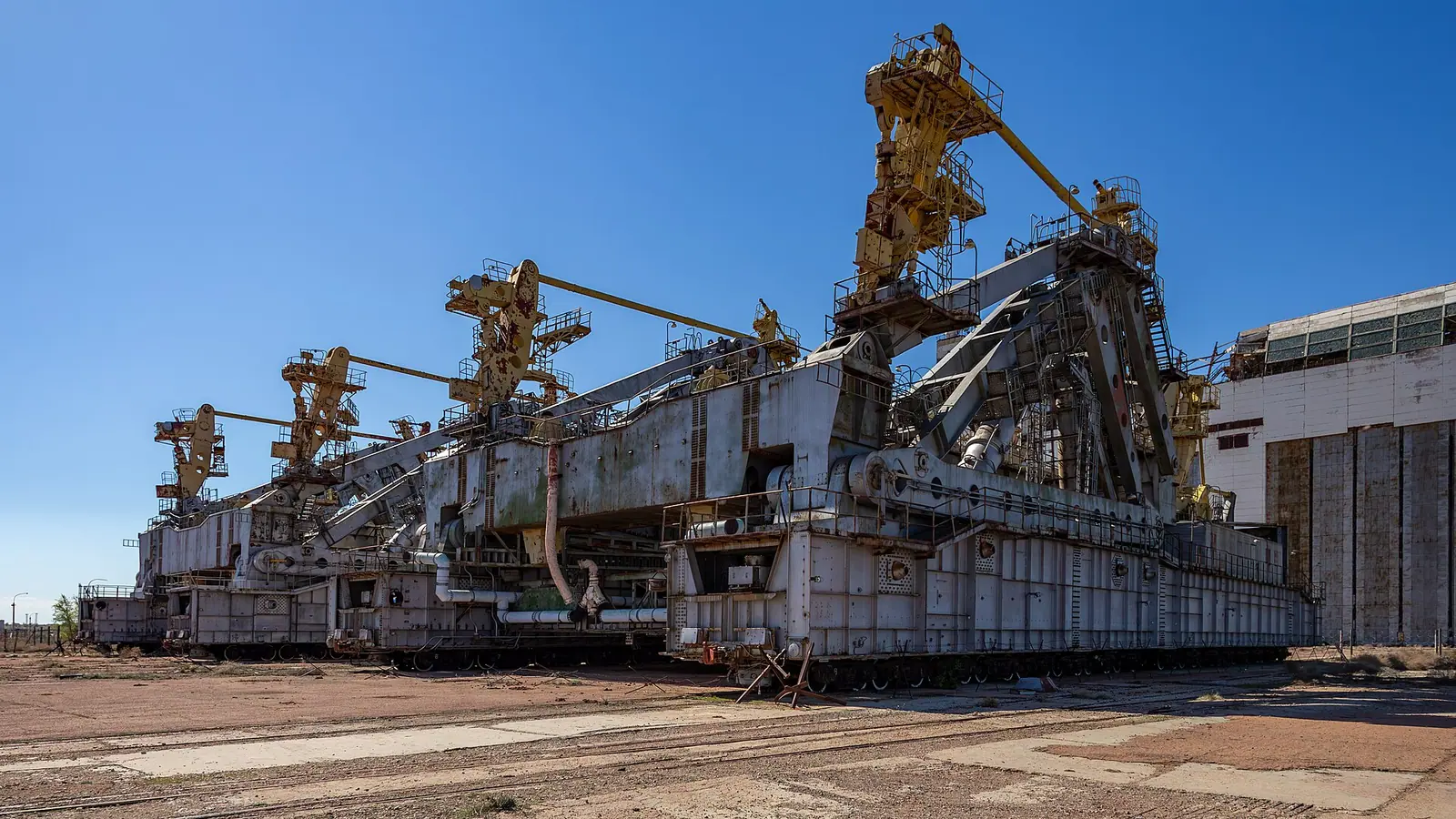
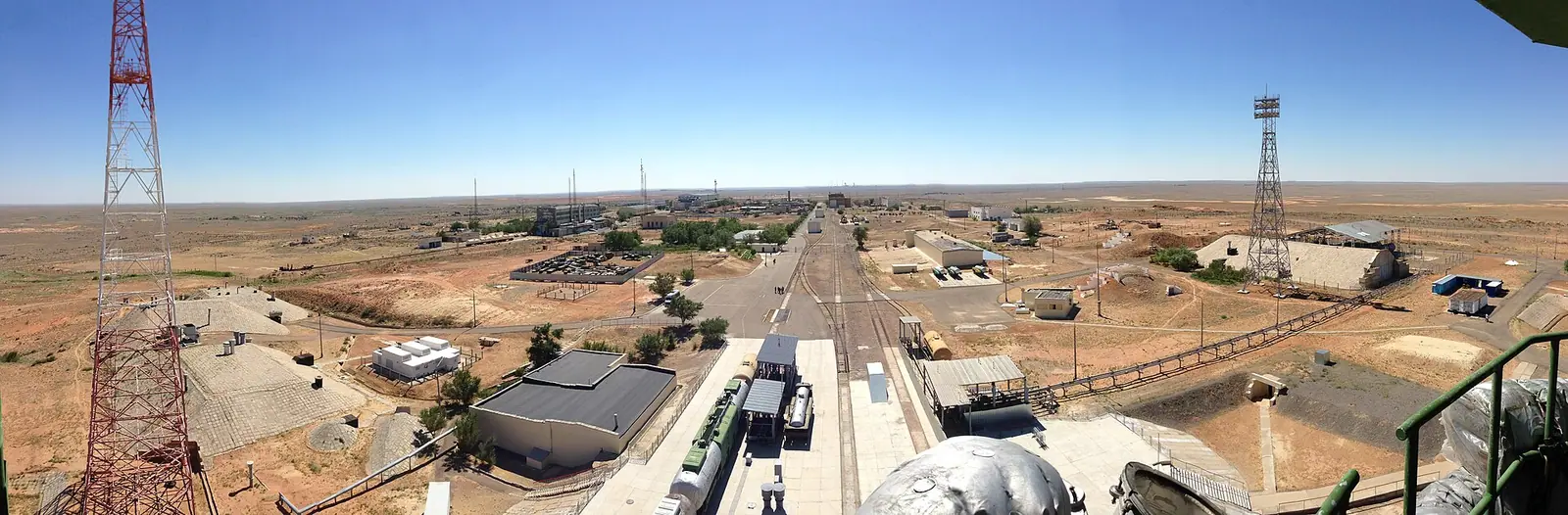
Real photos by travellers (Pexels, Unsplash, Wikimedia Commons); author and licence are given in each caption.
Baikonur Cosmodrome is a spaceport in the Kyzylorda Region of southern Kazakhstan, near the railway station of Töretam, operated by Russia under a lease that runs to 2050. It launched the first satellite in 1957 and the first human spaceflight in 1961, and Russian crews still fly from here. This page covers where it is, what each famous site is, the 2025 launch pad damage and what you need to check before planning a trip.
Where is Baikonur Cosmodrome
Baikonur lies in the Kazakh steppe in Kyzylorda Region, between the towns of Kazaly and Zhosaly, close to Töretam station on the Trans-Aral Railway. By Wikipedia it is about 200 km east of the Aral Sea and 33 km north of the Syr Darya river, at roughly 90 m above sea level.
For a foreign traveller this is a long way from anywhere you are likely to start. Kyzylorda is about 210 km in a straight line, Turkistan about 490 km, and the Almaty sights roughly 1,120 km. Road distances will be longer, and we could not confirm road conditions or transport times.
| Key fact | Figure |
|---|---|
| Region | Kyzylorda Region, Kazakhstan |
| Nearest station | Töretam (formerly Tyura-Tam) |
| Area | 6,717 km² |
| Elevation | about 90 m |
| Founded | 1955 |
| Operator | Roscosmos with the Russian Aerospace Forces |
| Lease | Russia leases it from Kazakhstan until 2050 |
The area figure matters: the cosmodrome is a spread of dozens of launch sites across open desert, not one building. A map of it looks like scattered numbered sites linked by roads and rail, which is why pads are called by site numbers such as 1, 31 or 81.
What launched from Baikonur, in dates
Most of the early milestones of spaceflight left from this patch of desert. The site was chosen in 1954–55 because it was flat, thinly populated, had a railway and fresh water from the Syr Darya, and was relatively close to the equator.
| Date | Event |
|---|---|
| 12 Jan 1955 | First military builders arrive at Tyura-Tam |
| 2 Jun 1955 | Date now marked as the founding of the range |
| 15 May 1957 | First R-7 launch (failed) |
| 4 Oct 1957 | Sputnik 1, the first artificial satellite |
| 12 Apr 1961 | Vostok 1: Yuri Gagarin, first human in space |
| 16 Jun 1963 | Valentina Tereshkova, first woman in space |
| 18 Mar 1965 | Voskhod 2: Alexei Leonov, first spacewalk |
| 20 Feb 1986 | Core module of the Mir station |
| 15 Nov 1988 | Energia rocket with the Buran orbiter |
| 2 Oct 1991 | Toktar Aubakirov, first Kazakh cosmonaut |
| 1 Feb 1999 | Zarya, first block of the International Space Station |
The history has a dark page too. On 24 October 1960 an R-16 missile caught fire on the pad. Russian Wikipedia gives 76 and, elsewhere in the same article, 78 dead, including Marshal Mitrofan Nedelin; English Wikipedia says over 100. The true figure is disputed in the sources.
The name itself is contested. Most sources say “Baikonur” was borrowed from a mining settlement about 320 km to the northeast to mislead foreign intelligence; NASA’s history of the Apollo-Soyuz project says it was the old name of the Tyuratam area. In Kazakh, Baiqoñyr is translated as “rich valley”.
Gagarin’s Start, Site 31 and Site 81: the launch pads people search for
Three sites draw most of the interest, and their status has changed recently. Gagarin’s Start (Pad 1/5) launched both Sputnik 1 and Vostok 1. Its last launch was on 25 September 2019; modernisation for the Soyuz-2 rocket was not funded, and in 2023 plans were announced to retire it as a launch pad and turn it into a museum. We could not confirm whether that museum is open.
Site 31 (Pad 31/6) is the Soyuz pad that carried the Soyuz MS-28 crew in 2025. On 27 November 2025 it was significantly damaged after the launch of Soyuz MS-28 carrying three cosmonauts to the ISS. On 3 March 2026 Roscosmos announced the restoration of the damaged pad.
| Site | Rockets | Status by Wikipedia |
|---|---|---|
| 1/5 Gagarin’s Start | R-7, Vostok, Soyuz | Inactive since 2019, museum planned |
| 31/6 | Soyuz, Soyuz-2 | Damaged 2025, reported restored 2026 |
| 81/23 | Proton-K | Inactive after 2004 |
| 81/24 | Proton-K, Proton-M | Listed without an end date |
| 110/37 | N1, Energia-Buran | Inactive after 1988 |
| 41/3 | R-16 | Destroyed in the 1960 explosion |
Searches for an “abandoned Baikonur” usually lead to these retired sites, such as the Energia-Buran pad at Site 110. The cosmodrome as a whole is not abandoned: it remains the only launch site for Russian missions to the ISS.
Baikonur city is not the same as the cosmodrome
The town that serves the spaceport is a separate place, built from 1955 for workers and raised to city status in 1966 as Leninsk. It was renamed Baikonur on 20 December 1995. Russian Wikipedia credits a decree of the President of Kazakhstan; English Wikipedia credits Boris Yeltsin.
English Wikipedia describes Leninsk as a closed city, and the city is part of the leased Baikonur complex. A mock-up of a Soyuz rocket was installed in the city centre in 1980, and a street and monuments honour G. M. Shubnikov, the general who led construction. If you see listings for local football (FK Baikonur) or city services, they refer to the town, not the launch sites.
Can you visit Baikonur Cosmodrome
We could not confirm how a foreign visitor gets access, whether permits are needed, or who arranges entry. The cosmodrome is a working spaceport run by Russian agencies inside Kazakhstan, and the city was built as a closed town, so do not assume you can simply arrive at Töretam and walk in.
What this means for planning: treat Baikonur as a trip you arrange well in advance, not a side stop. If access is confirmed, Töretam station on the Trans-Aral Railway is the natural arrival point, but we could not confirm train times.
There are also environmental warnings in the record. The rocket fuel UDMH is highly toxic, and a researcher at the Kazmechanobr institute, quoted by Wikipedia, reported 11,000 tonnes of contaminated rocket scrap on the impact grounds. Stay away from any debris you might see in the steppe.
When to go: hot, dry summers and freezing winters
Spring and early autumn are the comfortable windows. The figures below are computed ERA5 reanalysis normals for 1991–2020 at a grid point at 101 m, close to the cosmodrome’s own elevation, not readings from a weather station.
Day high, °C / Night low, °C · Rain/snow, mm
A computed reanalysis normal for these coordinates, not weather station records.
Monthly figures
| Month | Day high, °C | Night low, °C | Rain/snow, mm |
|---|---|---|---|
| Jan | -5.1 | -11.9 | 10.5 |
| Feb | -3.3 | -12 | 8.8 |
| Mar | 8.4 | -2.1 | 23 |
| Apr | 19.3 | 6.9 | 18 |
| May | 27.5 | 13.5 | 15 |
| Jun | 32.6 | 18.6 | 5.2 |
| Jul | 34.6 | 20.8 | 5 |
| Aug | 32.1 | 18.6 | 5.5 |
| Sep | 24.9 | 11.6 | 5.4 |
| Oct | 15.3 | 3 | 7.6 |
| Nov | 3.5 | -5.1 | 11.8 |
| Dec | -3.9 | -10.8 | 15.5 |
July days average about 35°C and nights stay above 20°C, which is hard going on shadeless steppe. January days stay below freezing at around -5°C, with nights near -11°C. May and September sit between, with average highs of about 28°C and 25°C. It is very dry all year: the wettest months bring under 20 mm, so rain will rarely spoil plans, but sun and dust will. If your interest is a launch, the date is set by the mission, not the weather, and the season advice matters less.
- Whether foreign visitors need a permit to enter Baikonur city or the cosmodrome, and who issues it
- Whether the planned museum at Gagarin’s Start has opened, and its hours
- Train schedules to Töretam and road conditions from Kyzylorda
- Whether launches can be watched by the public and from where
- Whether Site 31 resumed crewed launches after the 2026 restoration
Baikonur Cosmodrome in Kazakhstan: tips before you go
- Pad names are site numbers: Gagarin's Start is 1/5, the crewed Soyuz pad is 31/6, Proton pads are at Site 81 and 200.
- Avoid July: average highs reach about 33°C with nights above 20°C on open, dry steppe.
- The city and the spaceport are leased as one complex; confirm entry rules for both before booking any travel.
- Do not touch rocket debris in the steppe: the fuel UDMH is highly toxic and contaminated scrap lies on the impact grounds.
More to see nearby


Frequently asked questions
Is Baikonur in Russia or Kazakhstan?
Is there a Baikonur Cosmodrome museum?
What happened to the Baikonur launch pad in 2025?
Why was Baikonur built in the Kazakh steppe?
What does the name Baikonur mean?
Sources
Read also
 Almaty Zoo in Kazakhstan: opening hours and how to visit
 Ayusai Gorge, Almaty: visitor centre and waterfall trail
 Gorelnik Gorge above Medeu: waterfalls, trail and season
 Kamenskoe Plateau above Almaty: observatory and trails
 Pervomaiskie Ponds near Almaty: location, swimming, season
 Saty village: base for the Kolsai and Kaindy lakes