- Getting there
- ~75 km from Almaty
- Fee
- ≈ $1.40 (649 ₸) 0.15 MRP per walker · MCI 4,325 ₸ in 2026 · at 450 ₸ to $1 · MCI calculator
- When
- Jun–Augbest timeNow: off season
- Time
- 2–2.5 hours each way
- Altitude
- 2,200–2,750 m up
- Transport
- SUV or crossover
Assy Plateau: when to go, month by month
November · now- January: off season
- February: off season
- March: off season
- April: off season
- May: good
- June: best time
- July: best time
- August: best time
- September: good
- October: possible
- November: off season
- December: off season
Late spring and summer bring green pastures and flowers; autumn is quieter. No official winter road closure date — ask at the eco-post.
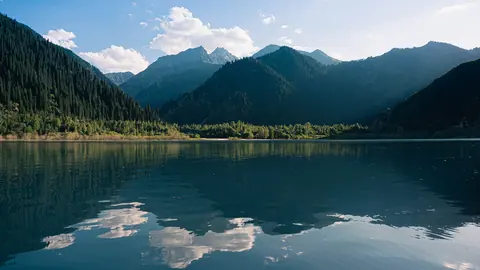
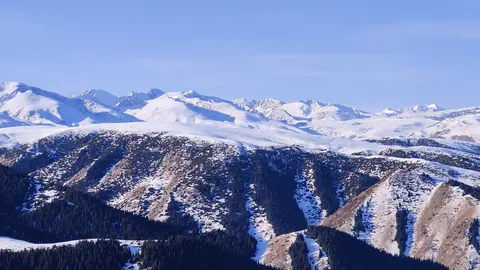
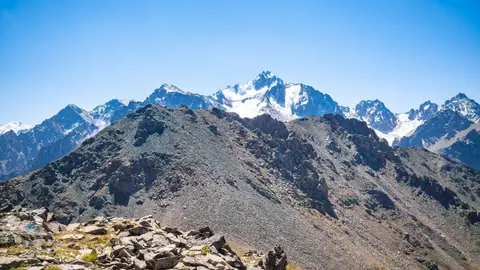
Assy Plateau in photos
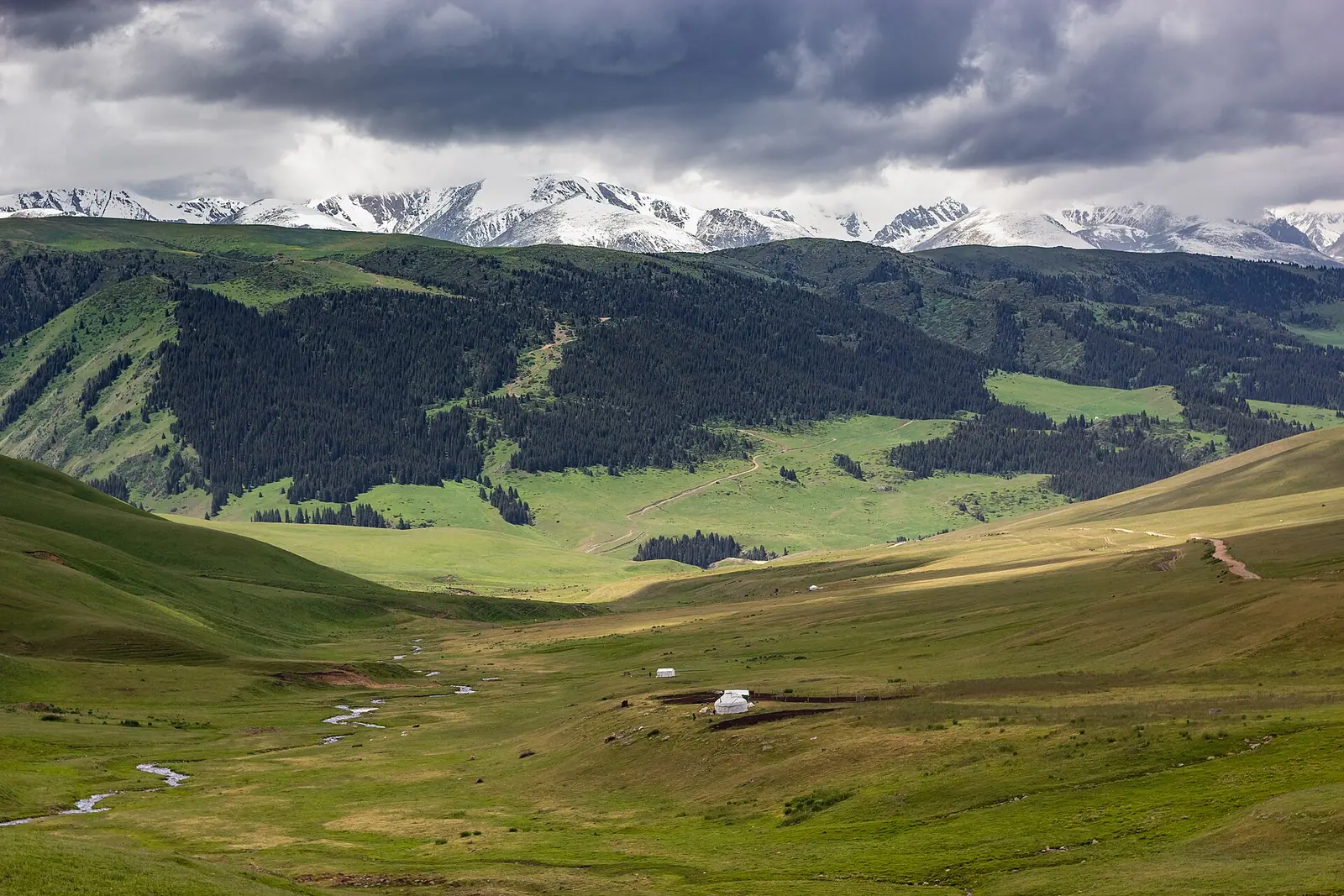
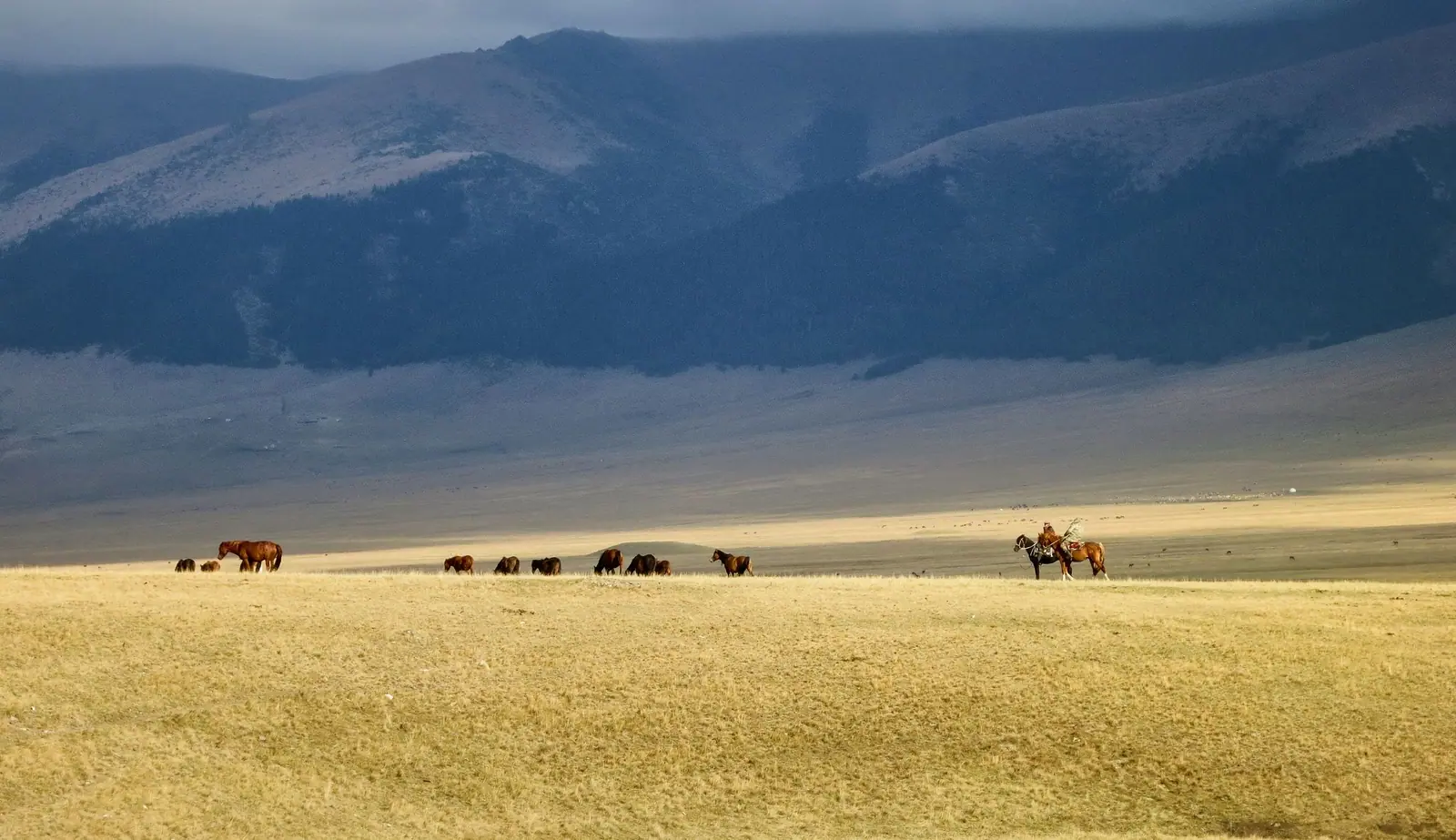
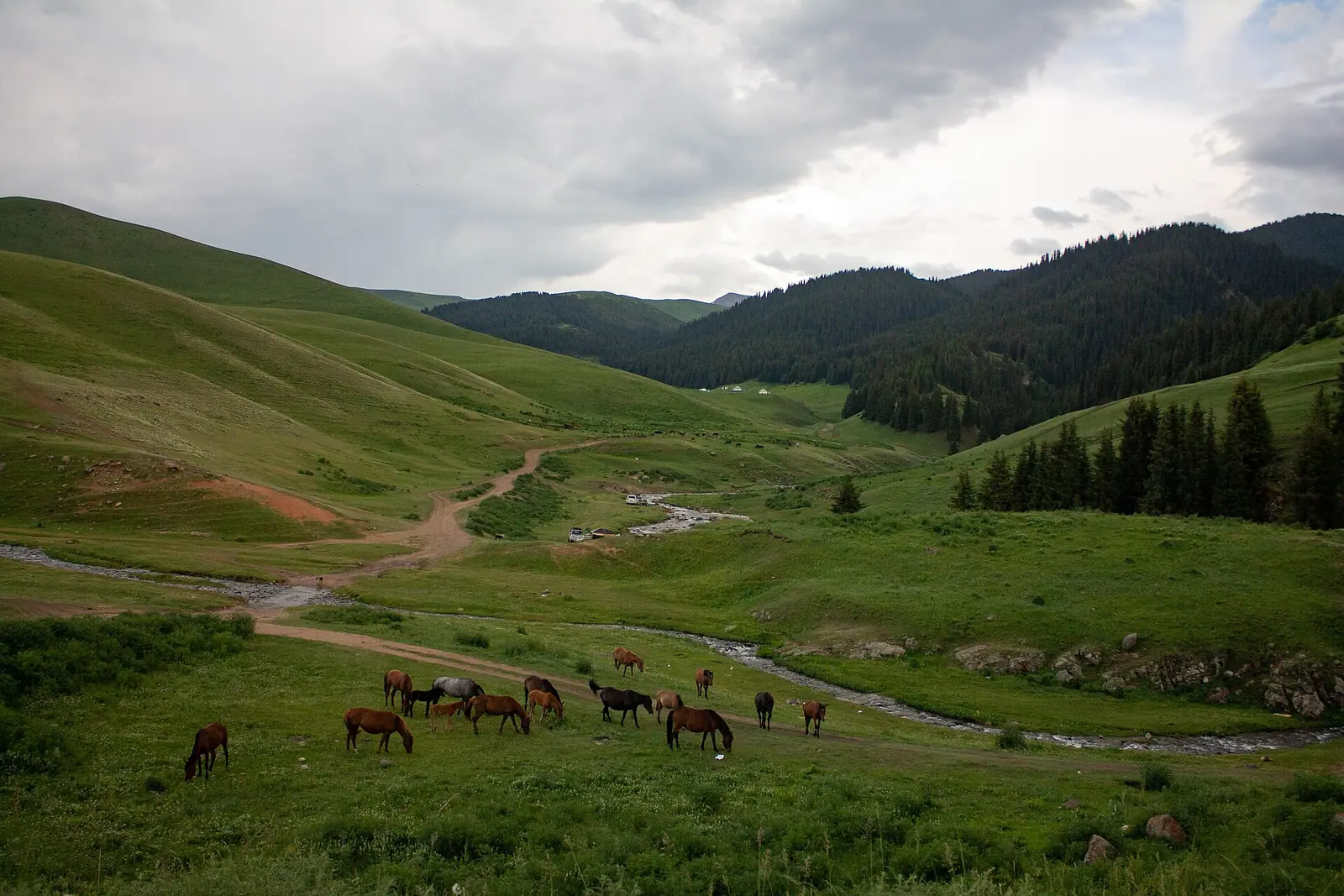
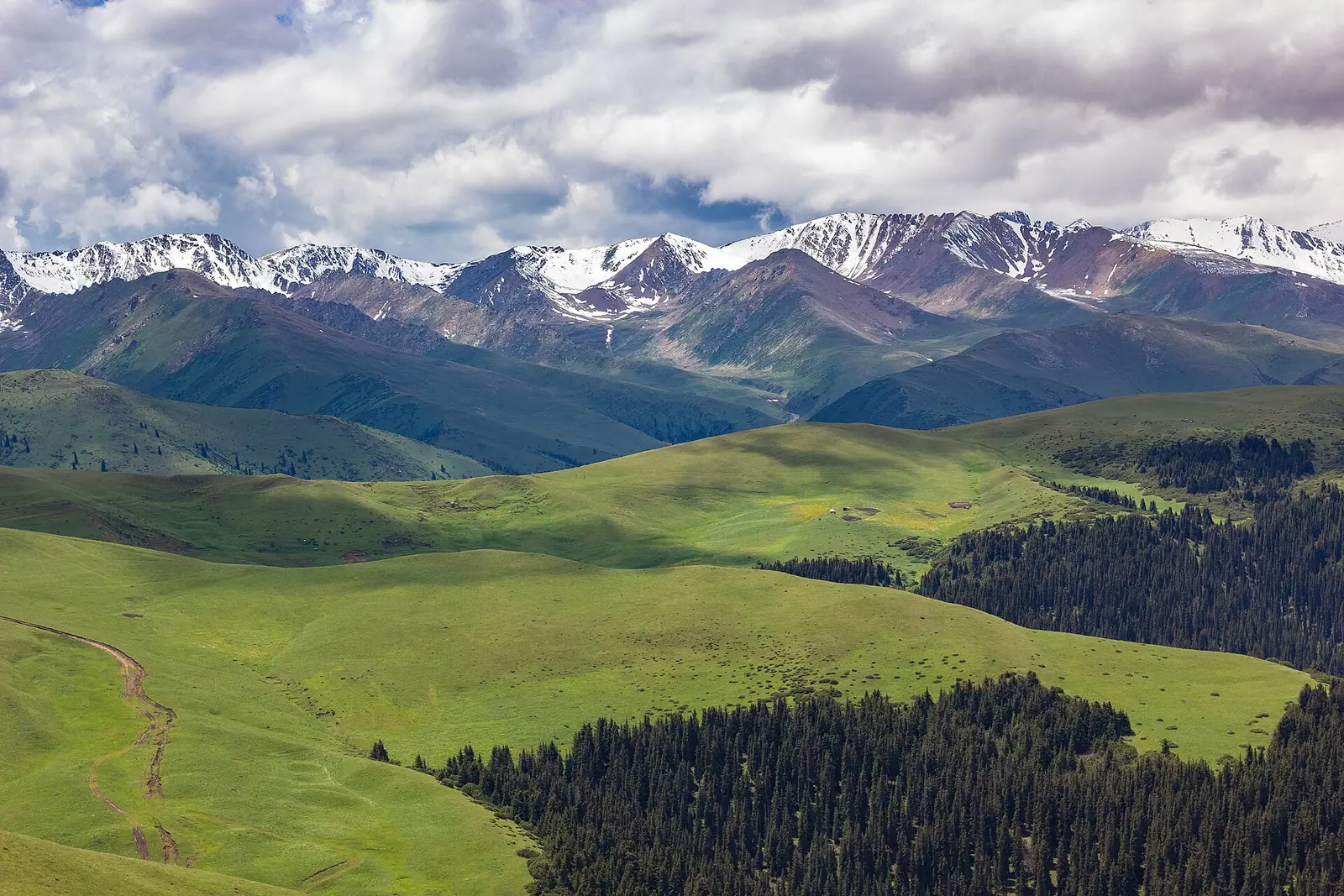
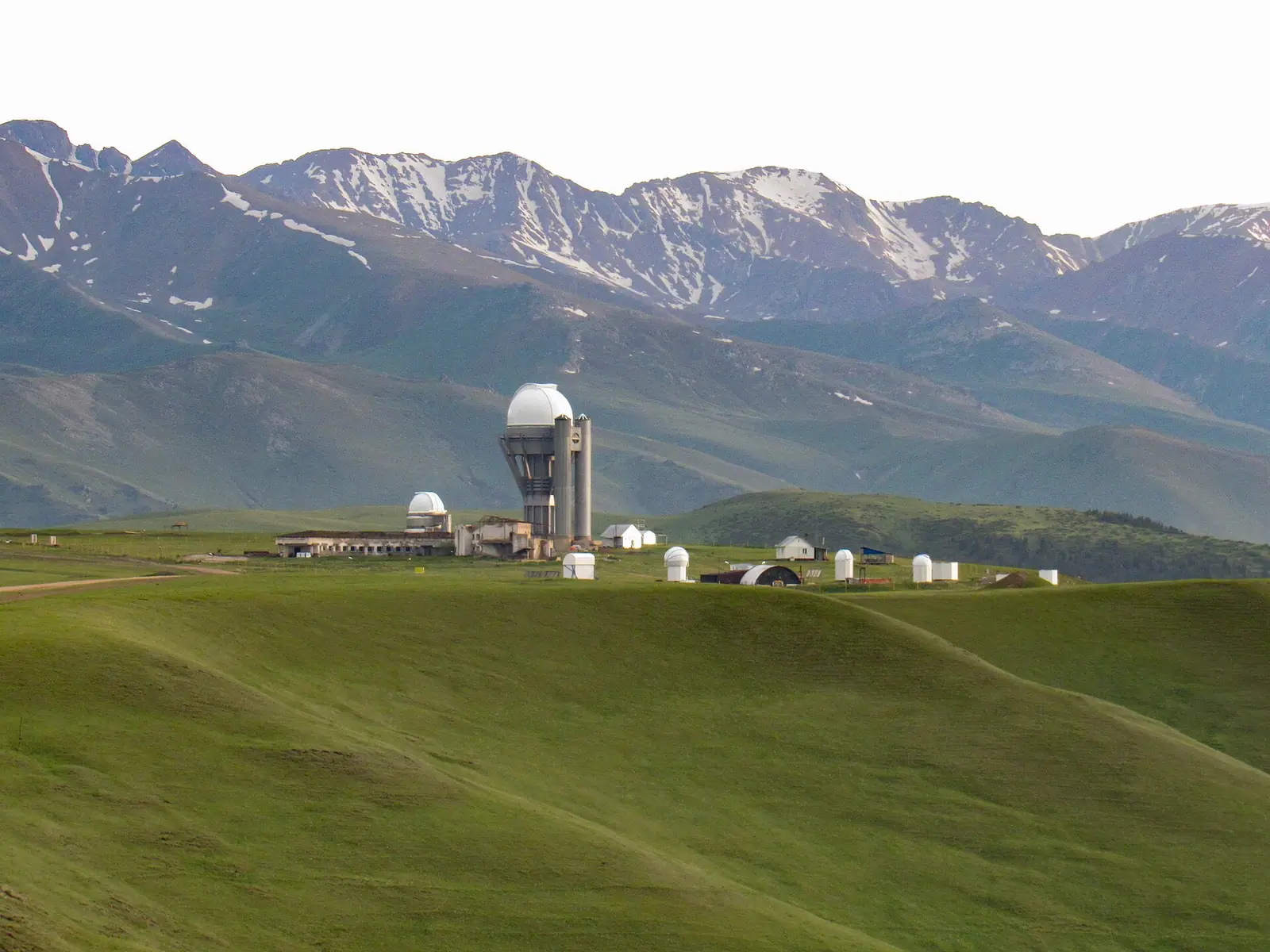
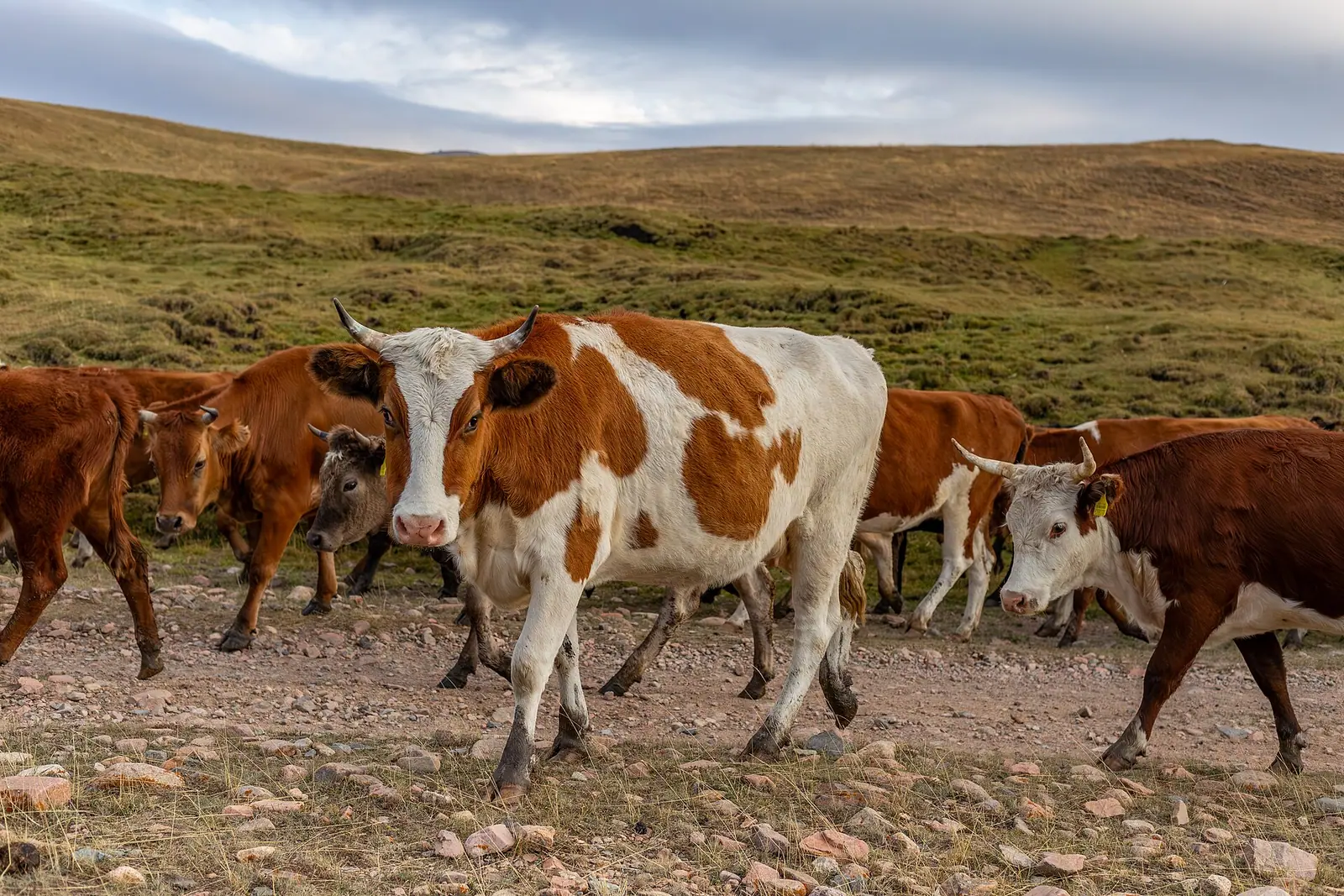
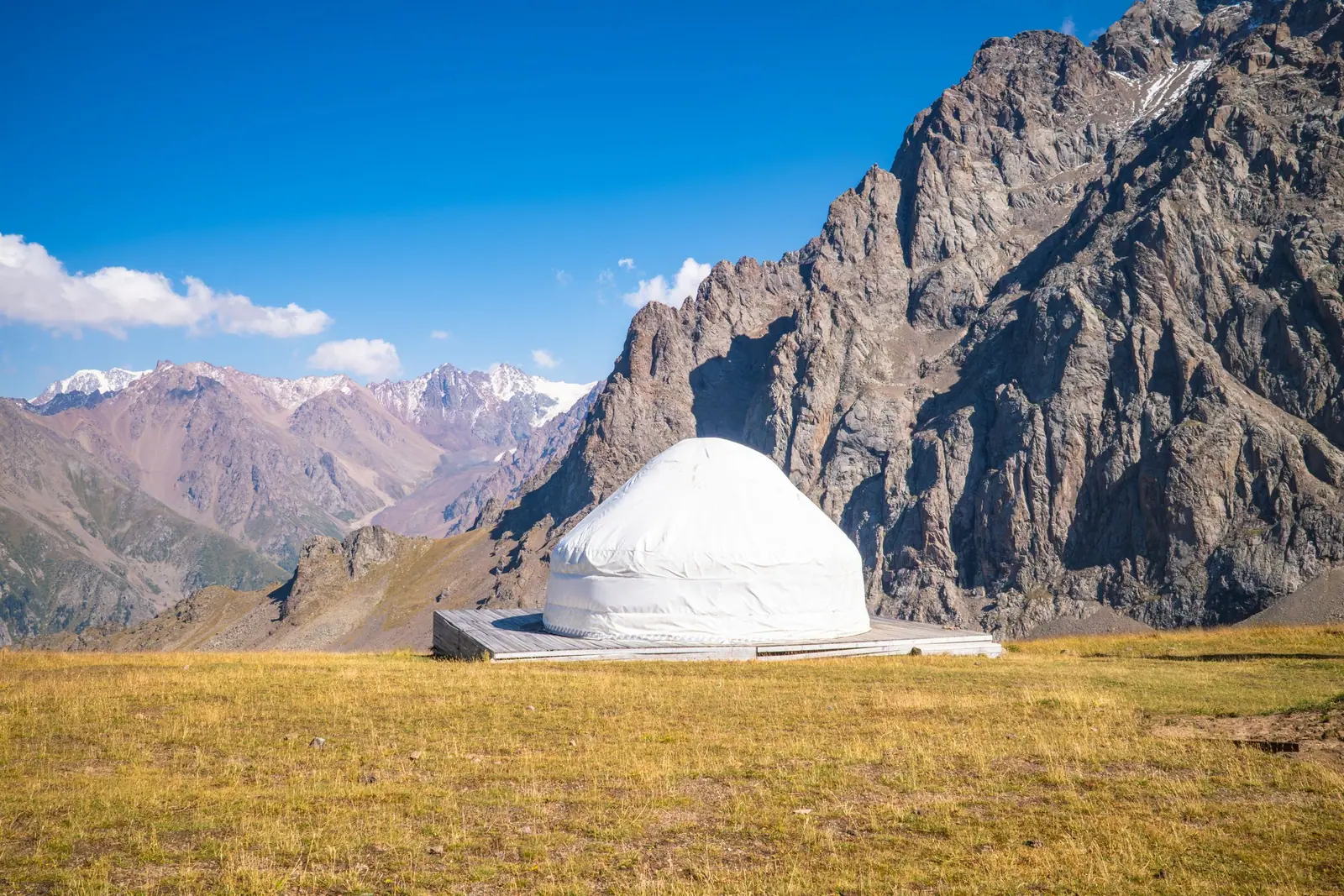
Real photos by travellers (Pexels, Unsplash, Wikimedia Commons); author and licence are given in each caption.
Assy Plateau: why go
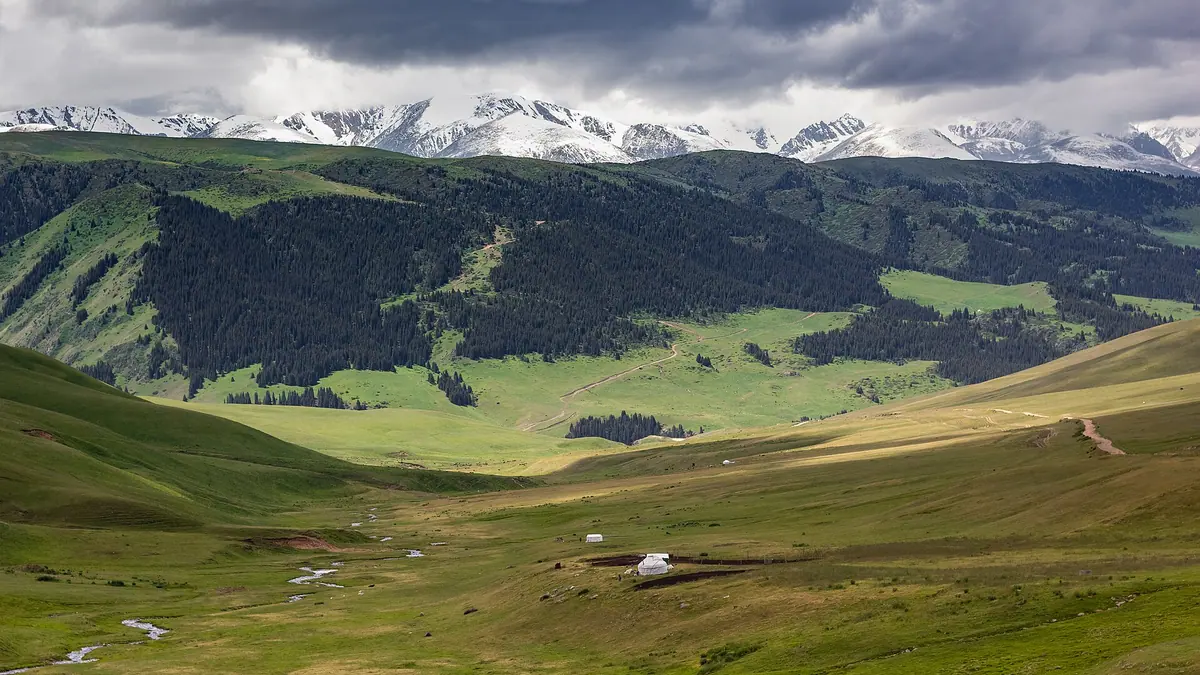
The Assy summer pastures
A traditional summer pasture up to 40 km long, where flocks of sheep and herds of horses still graze along the Asy river.
The Assy-Turgen Observatory
The «lollipop» dome on the western rim has been observing since 1981 and houses the 1.5 m AZT-20, called Kazakhstan's largest telescope.
The road to Assy via Turgen
Up the Turgen gorge past birch groves, spruce and rock outcrops; asphalt alternates with dirt, and the dirt has deep potholes.
Low clouds over Assy
Clouds sit very low over the plateau. A photographer quoted by Tengrinews likes to arrive just after a summer thunderstorm, or before one.
Assy's altitude: 2,200–2,750 m
Sources differ by almost 500 m; 2,750 m is also the observatory's altitude, so the pasture floor itself is probably lower.
The Assy Plateau (Asy Zhailauy in Kazakh, also written Assy Zhailau) is a wide high pasture on an eastern spur of the Trans-Ili Alatau, about 75 km east of Almaty, reached by driving up the Turgen gorge in 2–2.5 hours each way (Tengrinews). In summer, flocks of sheep and herds of horses graze along the Asy river, and the white dome of the Assy-Turgen Observatory stands on the western rim. Plan for late spring or summer and take an SUV or a sturdy crossover.
| Almaty to the Assy Plateau | |
|---|---|
| Distance | about 75 km east of Almaty |
| Time | 2–2.5 hours each way (Tengrinews) |
| Road | tarmac alternating with dirt and potholes, up the Turgen gorge |
| Vehicle | a 4x4 or a good crossover |
| Fee | the rate at the Ile-Alatau park eco-post |
Assy Plateau at a glance: where it is and how high
The plateau lies in Enbekshikazakh district of Almaty Region and is part of Ile-Alatau National Park. To the north it is bounded by the Karach ridge and the Bokaidyntau mountains, and to the south by the Sarytau ridge, according to Russian Wikipedia. The Kazakh article names them the Karash, Bakai and Sary-Tau mountains. In the west the plateau drops into the Turgen gorge, and in the east into the valley of the Bartogay reservoir on the Chilik river.
The table gives the basic numbers. Where sources disagree, both figures are shown, so read altitude and length as ranges rather than single values.
| Fact | Value |
|---|---|
| From Almaty | about 75 km east; about 85 km to the observatory (Tengrinews) |
| Drive time | 2–2.5 hours each way |
| Length | about 40 km (Russian Wikipedia, Tengrinews) or 15–17 km (Kazakh Wikipedia) |
| Width | about 7–8 km |
| Altitude | about 2,200 m (Russian Wikipedia); 2,380–2,410 m (Kazakh Wikipedia); 2,750 m (Tengrinews) |
| Status | Ile-Alatau National Park |
| Park fee | 0.15 MRP (≈ $1.44 / 648.8 ₸) per walker, 0.3 MRP (≈ $2.88 / 1,297.5 ₸) per car (Order No. 232) |
The altitude figures differ by about 500 m. The highest, 2,750 m, is also the altitude Tengrinews gave for the observatory in 2017, which sits on the western rim. We could not confirm which point each source measured, or whether the length figures cover the whole stretch to Bartogay or only the open pasture.
How to get to the Assy Plateau from Almaty
There is one way up: east on the Kuldja highway, turn off for Turgen, then climb the Turgen gorge past waterfalls and trout farms. Tengrinews (2020) describes the road as alternating asphalt and dirt with several deep potholes. Birch groves give way to dense spruce and sharp rock outcrops as you gain height. Day groups, per Tengrinews (2021), stop where the Kishi Turgen and Shin Turgen rivers meet, then drive on up to the plateau viewpoints.
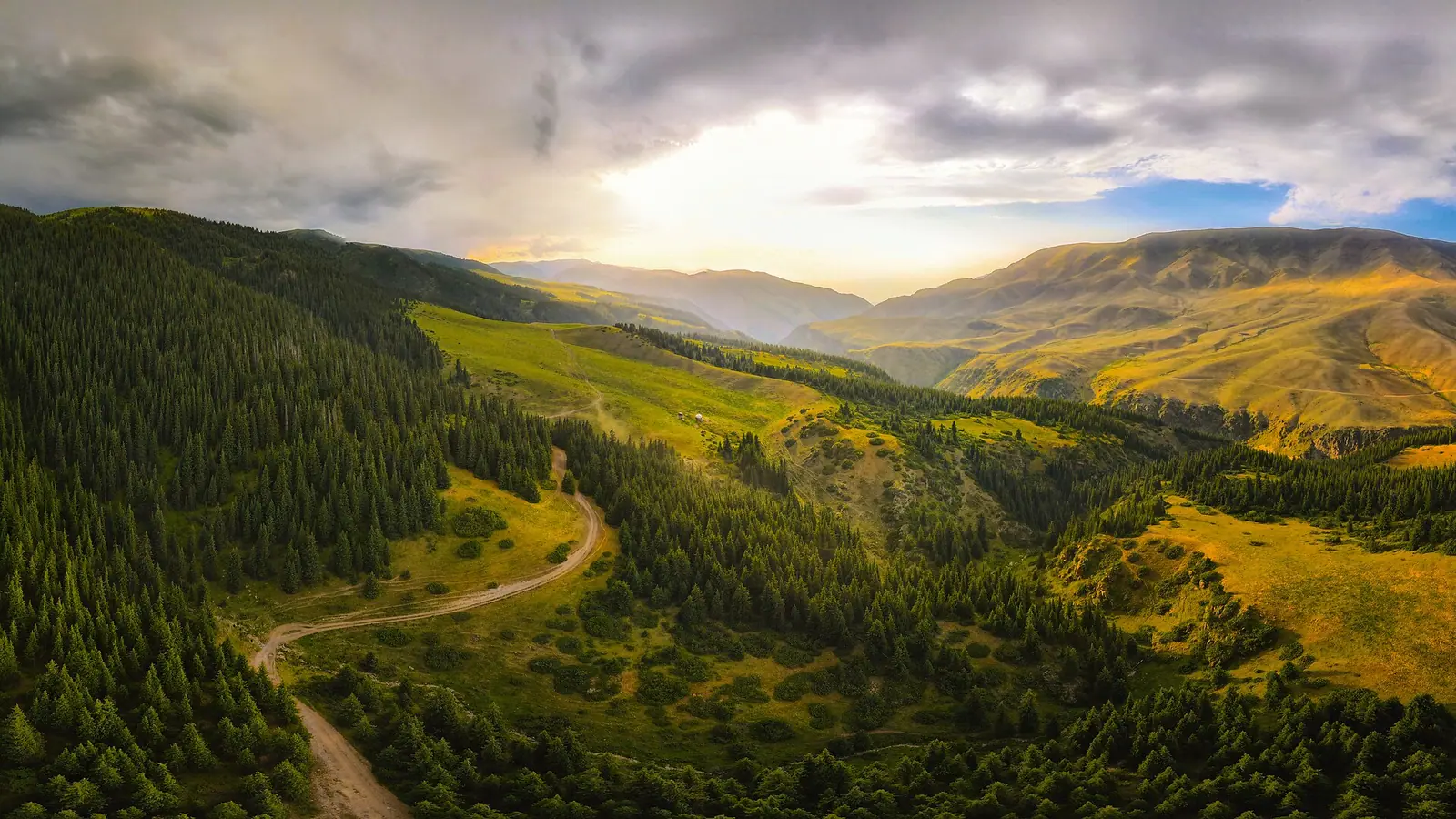
Car. Tengrinews recommends an SUV or at least a good crossover because of the dirt stretches and potholes.
Registration and permits. Russian Wikipedia notes that visitors register at the park office in Turgen village, and that fishing and mushroom picking need a separate permit. The national park eco-post at the gorge entrance collects the fee.
Further east. From the plateau an off-road track continues down to the Bartogay reservoir on the Chilik river, with fords and two passes. Tengrinews suggests allowing an extra day for it.
Best time to visit: late spring and summer
The scenery is at its most vivid in late spring and summer, according to Tengrinews: the pastures turn green, the grass flowers, and some flowers grow straight out of the rocks. Autumn is quieter and still attractive. The plateau is known for low-hanging cloud, and photographer Pavel Fedorov, quoted by Tengrinews, advises arriving right after a heavy summer thunderstorm, or about two hours before one, for the light and the clouds.
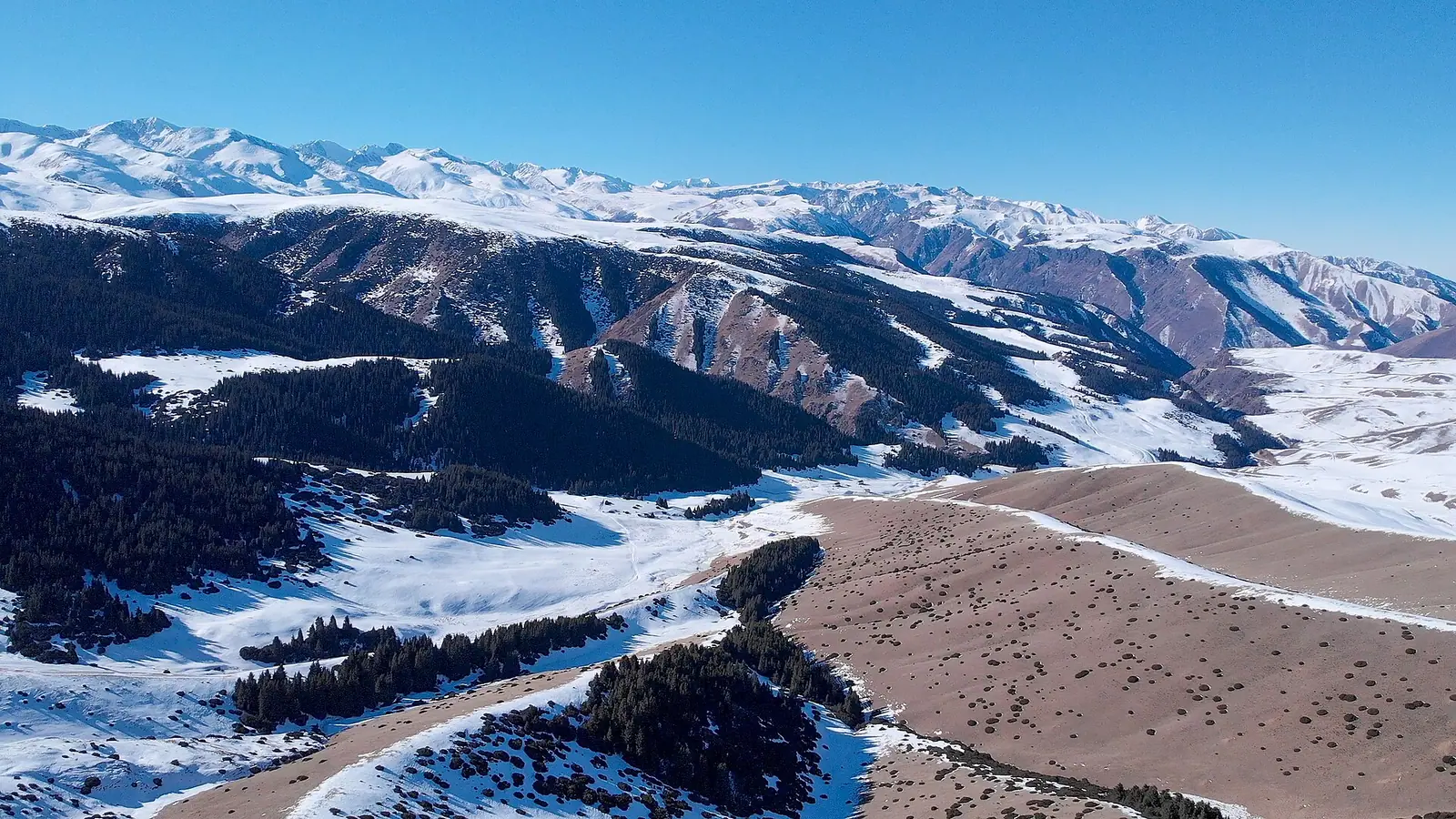
This is what each season means for a visit, based on what we could confirm.
| Season | What to expect | Decision |
|---|---|---|
| Late spring | Green pastures, flowering grass | Good; ask about the road first |
| Summer | Flowers, working herds, storms and low cloud | The main season; watch the forecast |
| Autumn | Calmer, still scenic | Possible; check the road in late autumn |
| Winter | No confirmed closure dates | We could not confirm access |
Assy Plateau weather by month
The chart shows a computed normal for a point at about 2,390 m, from 2011–2020 ERA5 reanalysis rather than a weather station. Even in July the plateau averages only 17.0 °C by day and 7.5 °C at night, so bring a warm layer in summer. June and July are also the wettest months, with 179–183 mm each, which is why the forecast matters most in the main season. October averages 6 °C by day and -3.6 °C at night.
Day high, °C / Night low, °C · Rain/snow, mm
A computed reanalysis normal, not weather station records. Temperature is from ERA5-Land (about 9 km grid); precipitation is from ERA5, a value for a cell about 25 km wide rather than a mountain station, so it may miss extra mountain precipitation.
Monthly figures
| Month | Day high, °C | Night low, °C | Rain/snow, mm |
|---|---|---|---|
| Jan | -7.5 | -14.3 | 29.8 |
| Feb | -5.5 | -12.6 | 34.3 |
| Mar | 0.7 | -7.4 | 60.1 |
| Apr | 6.3 | -2.3 | 117.5 |
| May | 11 | 1.1 | 129.1 |
| Jun | 14.4 | 5 | 179.4 |
| Jul | 17 | 7.5 | 183.4 |
| Aug | 16 | 6.8 | 171.2 |
| Sep | 12.2 | 2.9 | 132.5 |
| Oct | 5.7 | -3.6 | 84.3 |
| Nov | -1.8 | -9.7 | 60.7 |
| Dec | -5.8 | -12.6 | 38 |
Source: Open-Meteo: ERA5-Land (temperature) and ERA5 (precipitation), 2011–2020
The Assy-Turgen Observatory on the western rim
The white dome that tourists have nicknamed the “lollipop” is the astronomical observatory of the Fesenkov Astrophysical Institute. According to Tengrinews (2017), the site was chosen in the 1970s when Almaty’s city glow began to spoil observations at the older Kamenskoe Plateau station. Construction began in 1975, and regular observations started in 1981 with a one-metre Zeiss telescope, which the institute’s site now lists as under reconstruction. The observatory was renamed Assy in 2009.
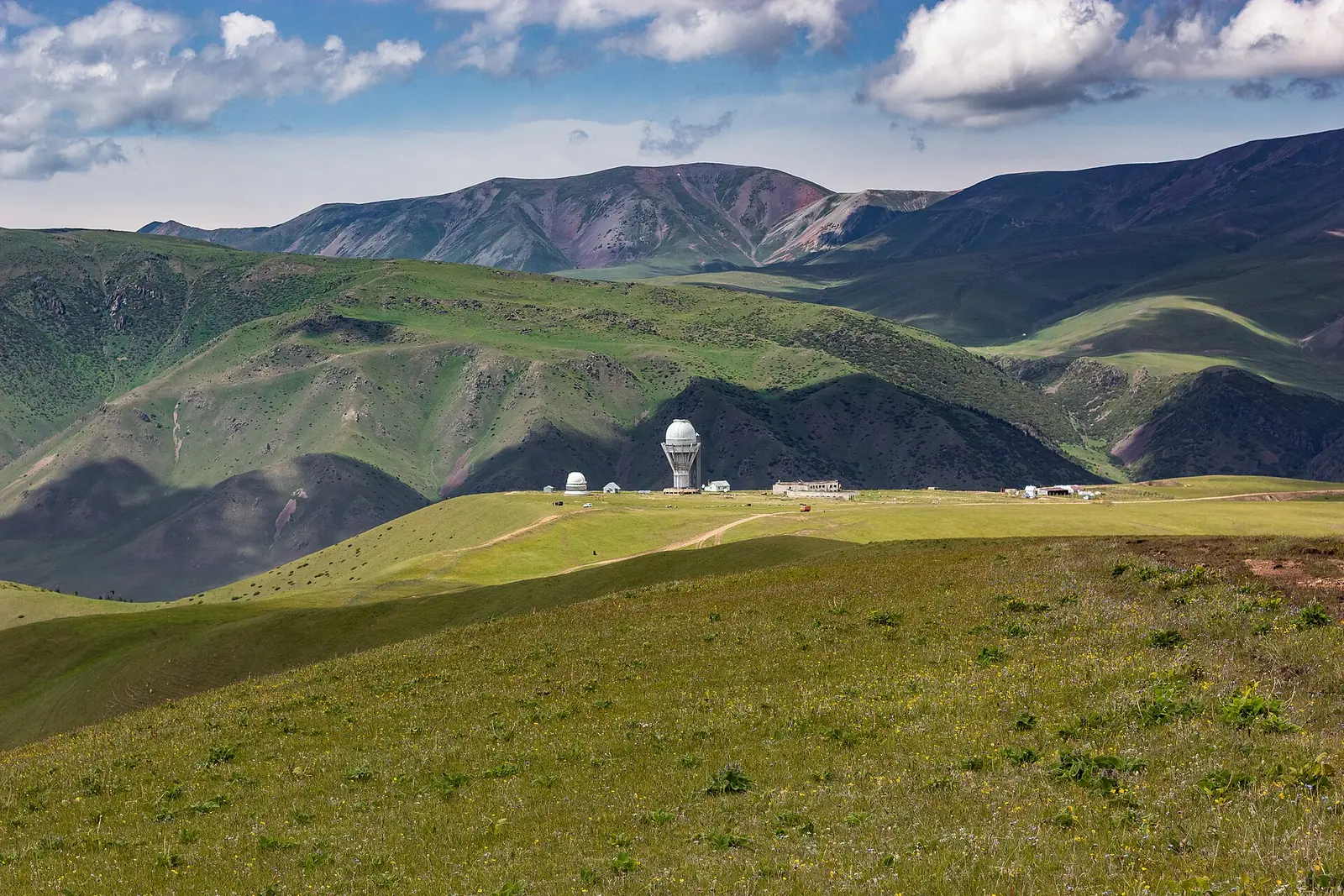
The main instrument is a 1.5 m AZT-20 reflector. Its tower was finished just before the Soviet collapse, after which the telescope spent about 25 years in storage; since it was commissioned it has been described as the largest in Kazakhstan. A 50 cm system with a CCD camera watches geostationary orbit, including the KazSat-2 and KazSat-3 satellites. The site was picked for its clear air, little light pollution and low atmospheric turbulence.
We found no public visiting arrangement for the observatory. It is a working science site, so plan to see it from outside. For dark-sky spots near Almaty and the dates of meteor showers, see our stargazing calendar.
What else to see on the plateau and on the way up
The plateau itself is the main reason to come: open pasture, a river and working herds rather than a set of marked sights.
- The zhailau. Assy is a traditional summer pasture, and the flocks and herds here are real working animals, not a backdrop.
- The Asy river runs the length of the plateau.
- Turgen’s waterfalls on the way up. Bear Waterfall is right by the road; details are in our guide to the Turgen waterfalls.
Planning the day: timing, storms and an overnight option
A day trip works, but it is a long one. Day groups, per Tengrinews, leave Almaty at 7–8 a.m. and are back around 4 p.m.; the 2–2.5 hours of driving each way take up half the day.
- Pair it with Turgen. The gorge on the way is a 1–2 day outing in its own right. To see both the waterfalls and the plateau without rushing, plan a night.
- Watch the sky. Summer storms roll over the plateau and cloud sits low. Check the forecast before taking the dirt road up.
- Going further east? The off-road track to Bartogay has fords and two passes; budget another day.
A night in tents on the Assy Plateau, in a vlog by the cute potato channel (in Russian):
Park fee for the Assy Plateau
Assy is part of Ile-Alatau National Park, so the park fee under Order No. 232 applies: 0.15 MRP (≈ $1.44 / 648.8 ₸) per walker and 0.3 MRP (≈ $2.88 / 1,297.5 ₸) per car. The tenge amount depends on the current year, so convert it with our fee calculator. It also helps to read what to check before a park visit.
Nearby places
- Turgen waterfalls: on the way up.
- Ile-Alatau National Park: rules and checkpoints.
- Issyk Lake: a gorge further west, above Esik town.
- Nature near Almaty: 15 day trips.
Assy Plateau: tips before you go
- Take an SUV or a solid crossover — the dirt stretches have deep potholes.
- Register at the park office in Turgen; fishing and mushroom picking need a separate permit.
- The observatory is a working research site — admire it from outside.
More to see nearby


Frequently asked questions
How do I get to the Assy Plateau from Almaty?
What kind of car do I need?
How high is the Assy Plateau?
When should I visit the Assy Plateau?
Can I visit the Assy-Turgen Observatory?
Is there an entry fee?
Are there burial mounds and petroglyphs on Assy?
Is it cold on the Assy Plateau in summer?
Is the Assy Plateau worth visiting in autumn?
Do I need to register to visit the Assy Plateau?
Sources
- Fesenkov Astrophysical Institute: Assy-Turgen Observatory
- Асы (плато) — Wikipedia (Russian)
- Асы жайлауы — Wikipedia (Kazakh)
- Where clouds hug the ground: secrets of the Assy plateau — Tengrinews, 26.09.2020
- Day trips offered in Almaty region — Tengrinews, 17.11.2021
- Closer to the stars — Tengrinews, 02.08.2017
- Order of the Minister of Ecology No. 232, 02.10.2024
- Open-Meteo: historical weather API, ERA5 reanalysis
Read also
-
Turgen gorge waterfalls
- Day trips from Almaty, Kazakhstan: lakes, peaks, kurgans and ski slopes within a day
-
Issyk Lake (Esik): the 1963 mudflow and the lake today
 Things to do in Almaty: 10 places, a one-day plan and three days without a car
- Turgen waterfall, Burkhan-Bulak and Butakovka: choosing a waterfall in Kazakhstan
 Where to go from Almaty for a day or a weekend