Arystan Bab Mausoleum, the pilgrim stop before Turkistan: when to go, month by month
- January: possible
- February: possible
- March: good
- April: best time
- May: best time
- June: good
- July: possible
- August: possible
- September: best time
- October: best time
- November: good
- December: possible
April and October have mild days near 20-22 °C, while June to August average 34-37 °C with almost no rain and winter nights drop below freezing.
Arystan Bab Mausoleum, the pilgrim stop before Turkistan: why go
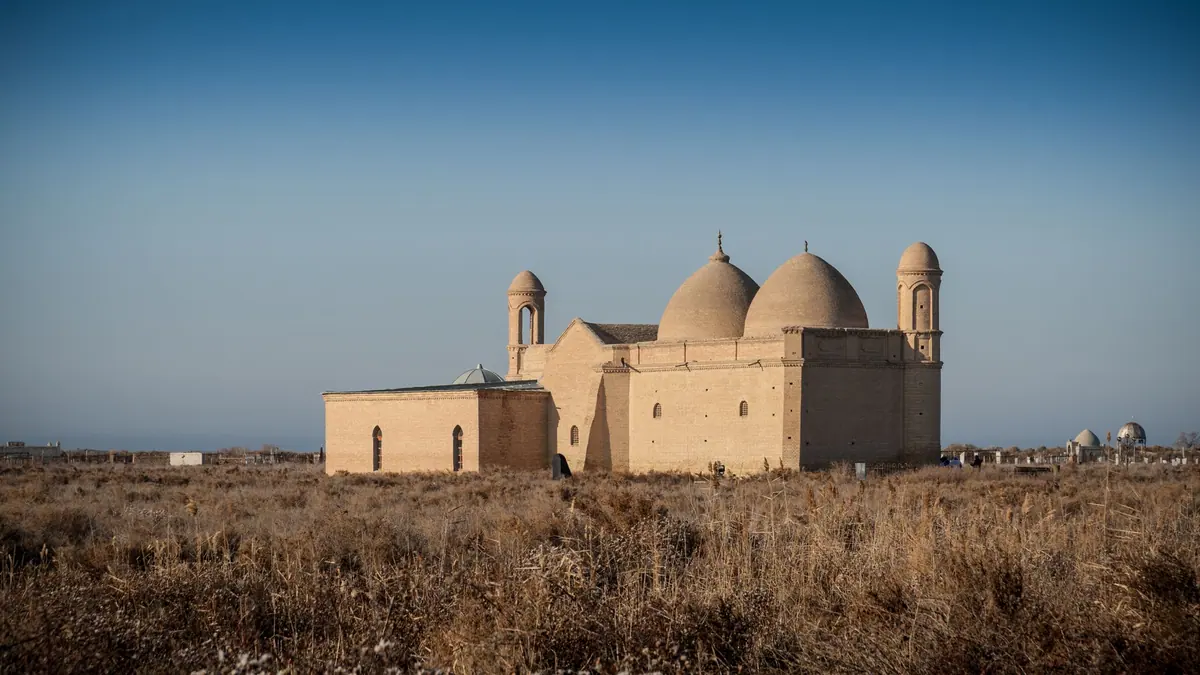
The Arystan Bab tomb chambers
Two chambers under twin domes: one with the very large gravestone of Arystan Bab, the other with graves of his followers Hermet-Azyr, Karga-Baba and Lashyn-Baba.
The legend of the date
Tradition says Arystan Bab lived for centuries to deliver a date from the Prophet Muhammad to the orphaned seven-year-old Ahmad Yasawi in Sayram.
From Turkistan to Arystan Bab
About 50 km in a straight line from Turkistan and 122 km from Shymkent, near the Otrar ruins. We could not confirm public transport, so plan for a driver.
Arystan Bab in spring and autumn
April and October bring daytime highs near 21 °C. July averages about 36.6 °C with almost no rain, which makes midday visits hard going.
A portal unlike Central Asia's
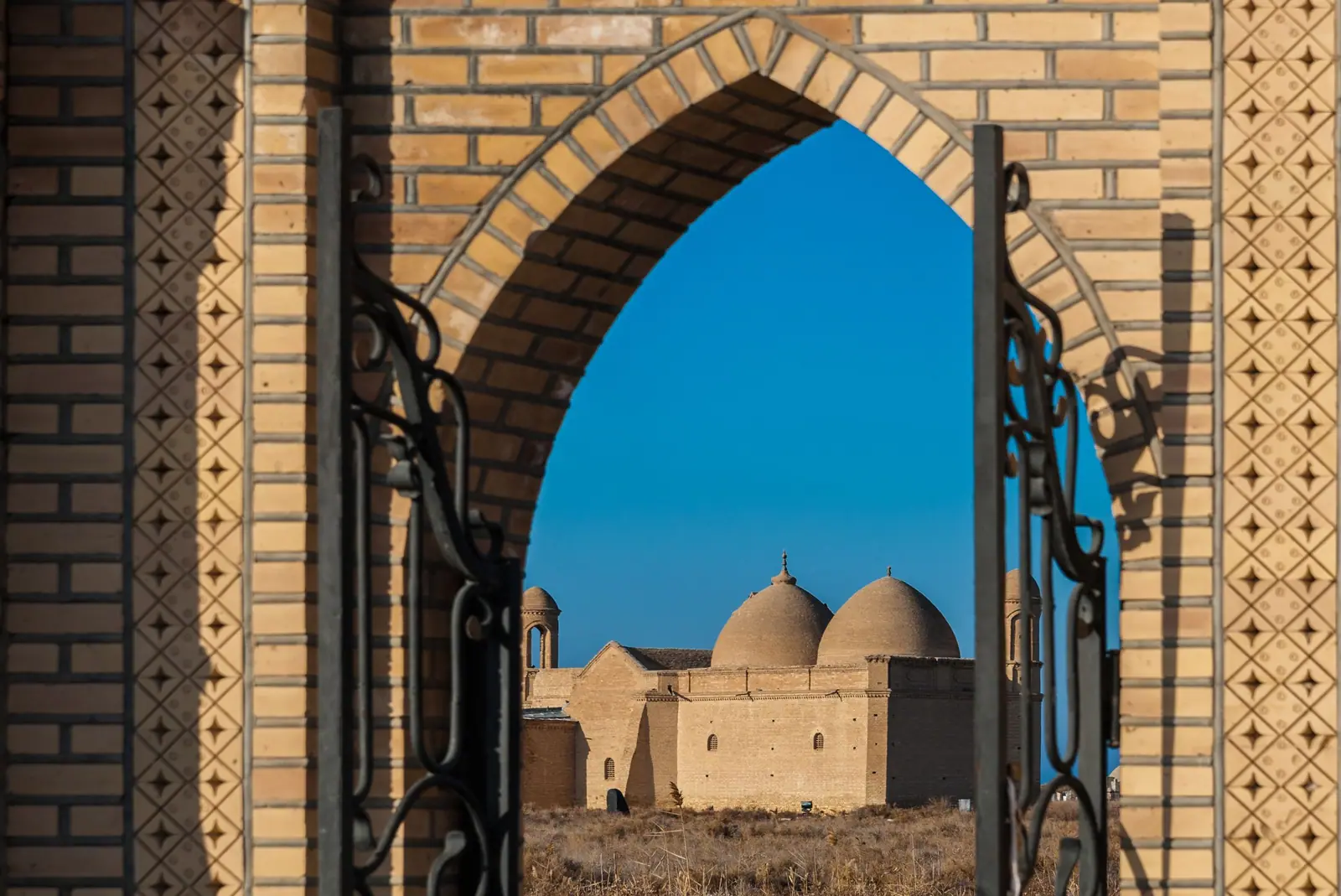
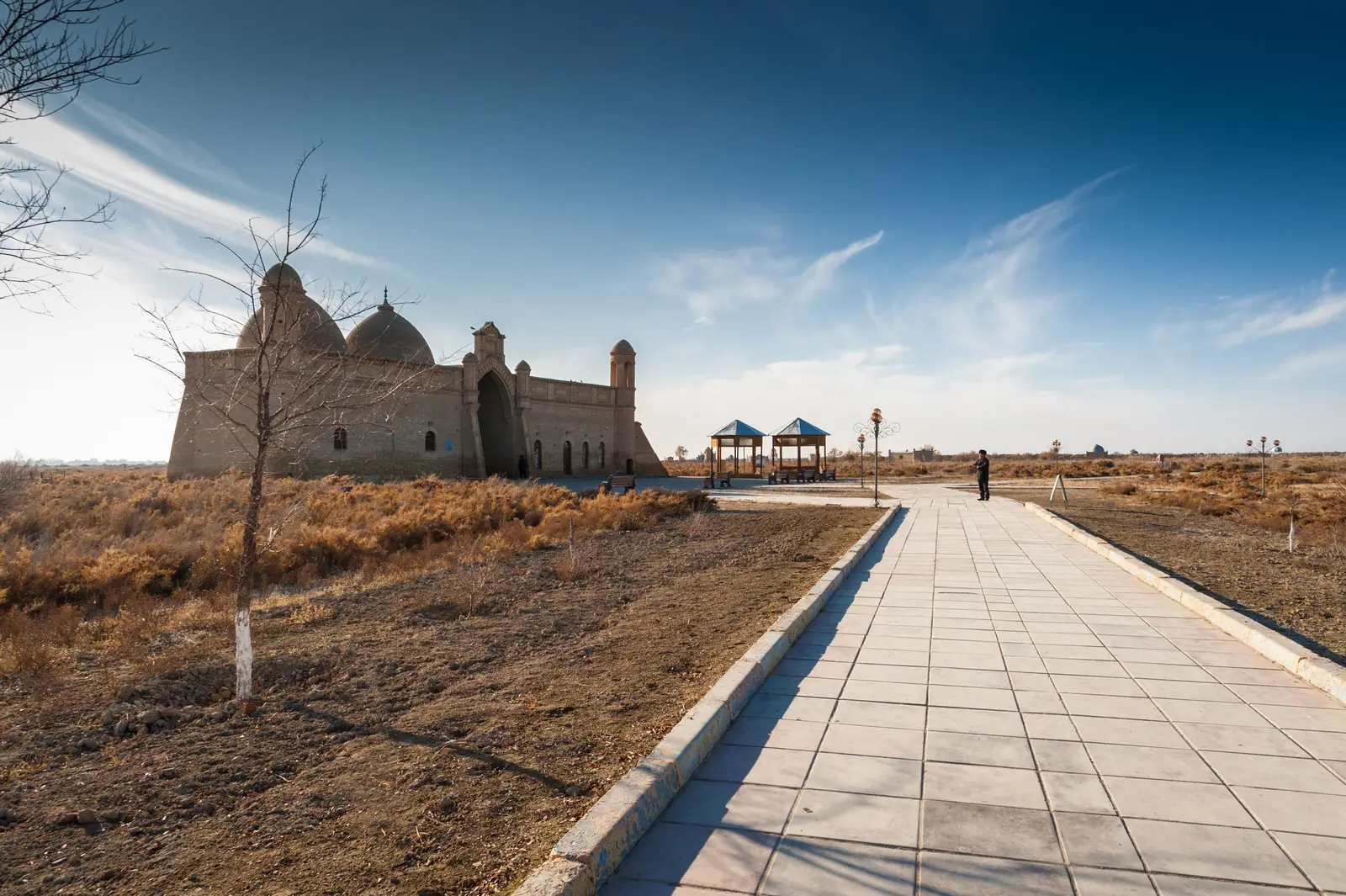
The arched entrance borrows 19th-century European and Russian decorative forms instead of the usual pishtaq frame, a clear contrast with the Yasawi mausoleum.
Arystan Bab Mausoleum, the pilgrim stop before Turkistan in photos
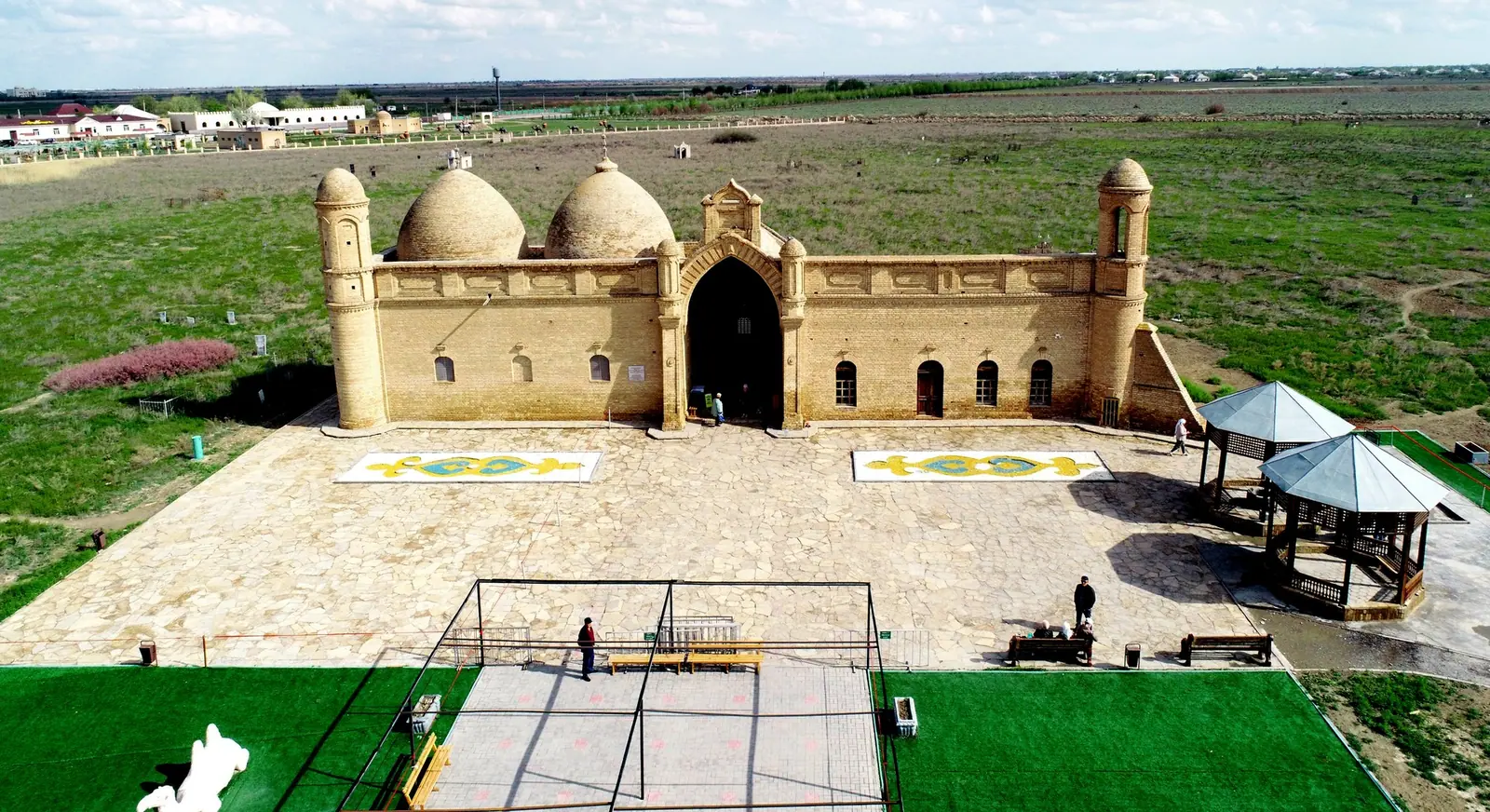
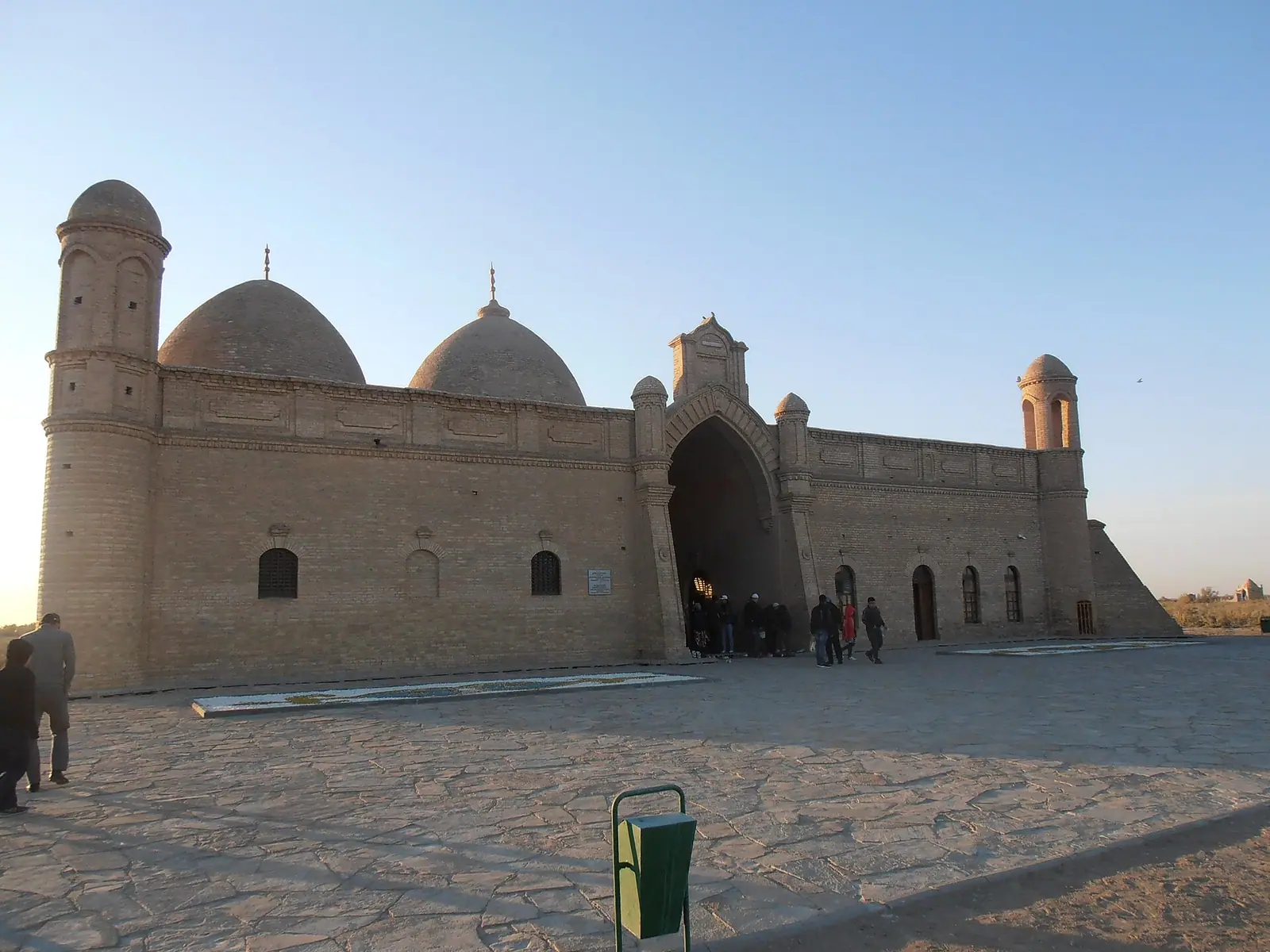
Real photos by travellers (Pexels, Unsplash, Wikimedia Commons); author and licence are given in each caption.
The Arystan Bab Mausoleum is a working shrine and memorial mosque over the grave of Arystan Bab, revered as the spiritual teacher of Khoja Ahmed Yasawi. It stands near the ruins of Otrar in Turkistan Region, about 50 km in a straight line from Turkistan, and it is usually visited as part of a Turkistan trip rather than on its own. The building you see dates mostly from the early 20th century, but the grave and the legend behind it go back to the 12th.
Where the mausoleum is, and what kind of trip it takes
The mausoleum is in Otyrar District of Turkistan Region, in the far south of Kazakhstan, close to the ancient city of Otrar. Russian Wikipedia places it near the village of Shaulder and about 150 km from Shymkent; English Wikipedia says it is close to the village of Kogam and the Otrartobe site. In a straight line it is about 50 km from Turkistan and about 122 km from Shymkent.
For a visitor from abroad, the realistic plan is to base yourself in Turkistan or Shymkent and make a day trip. Almaty is roughly 700 km away in a straight line, so this is not an excursion from Almaty. We could not confirm any public transport to the site, so without a car and without Russian or Kazakh you should plan on arranging a driver before you leave town.
Why pilgrims come here before Turkistan
Local tradition says a visit to the grave of Khoja Ahmed Yasawi in Turkistan should be preceded by a visit to his teacher. The legend runs that Timur ordered a building over Yasawi’s grave, but every attempt failed: in one version a storm knocked the walls down, in another a green bull destroyed them. The saint then appeared to Timur in a dream and told him to build over the grave of Arystan Bab first.
That order is still followed. If you are visiting Turkistan for the Yasawi mausoleum, coming here on the same trip puts your route in line with how pilgrims themselves move. This is an active sacred place, so treat it as a mosque and a grave first and a monument second.
Who Arystan Bab was, according to legend
His birth and death dates are unknown, and he appears in sources under several names: Baba Arslan, Arslan Baba or Arap Arslan Baba. Tradition holds that he died and was buried near Otrar in the 12th century.
The best-known story concerns a date. In the Yasawi sagas, the Prophet Muhammad and his companions were given a plate of dates from heaven; one fell to the ground, and it was said to belong to Ahmad Yasawi, who was not yet born. Arslan Baba took on the task of delivering it and, by the legend, lived for centuries to do so: English Wikipedia cites four hundred to seven hundred years, while the Kazakh telling has him asking for four hundred. He found the orphaned seven-year-old Ahmad in Sayram, gave him the date and became his teacher. Kazakh Wikipedia gives Yasawi’s own dates as 1103 to 1166.
What stands at the site today
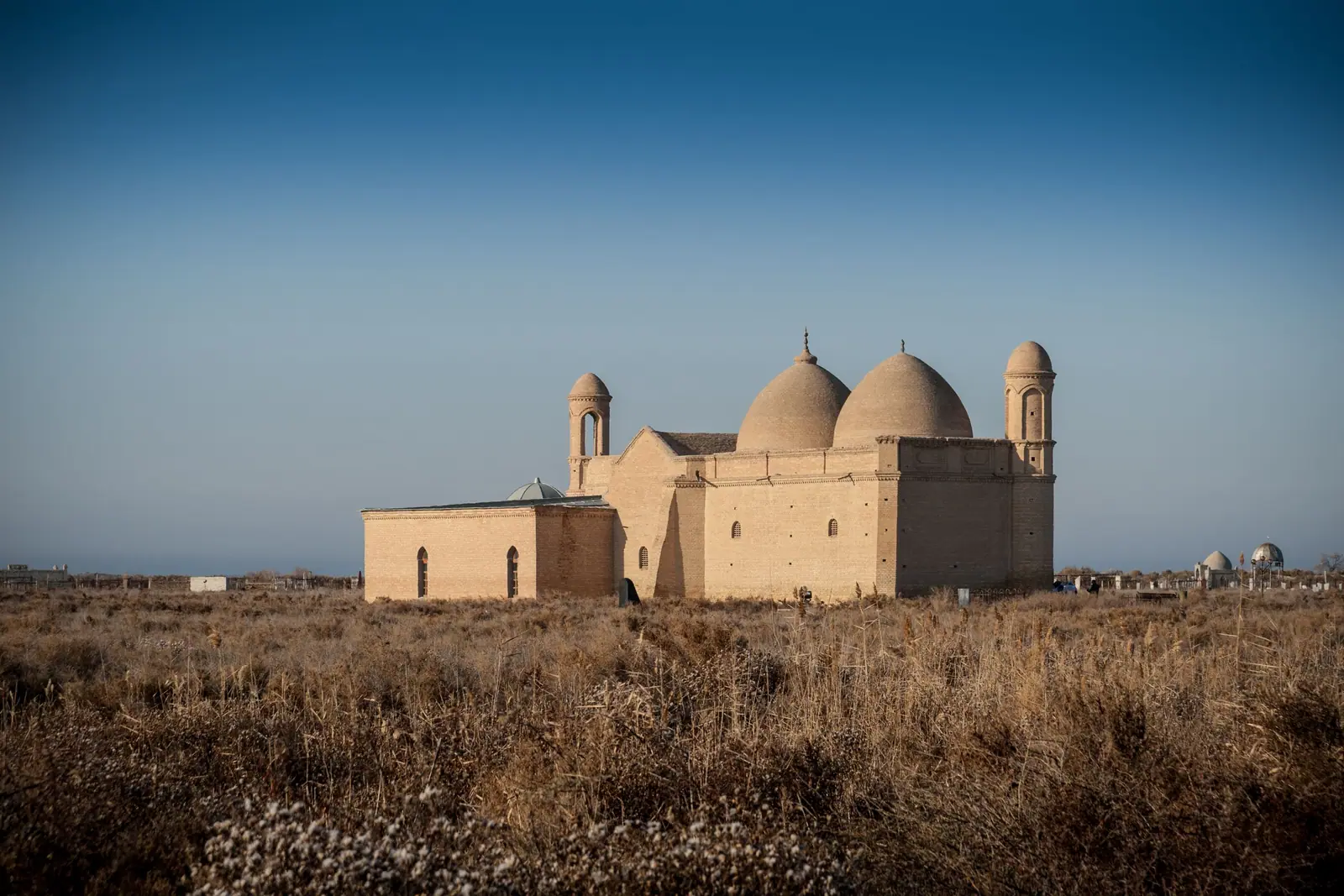
Today’s building is a long brick complex made of two parts: a two-chamber tomb (gurkhana) and a memorial mosque, joined by a large vaulted corridor. The front facade has a minaret at each end and two tall domes over the tomb. The first chamber holds the very large gravestone of Arystan Bab; the second holds the graves of his followers Hermet-Azyr, Karga-Baba and Lashyn-Baba.
| Feature | What to look for |
|---|---|
| Footprint | 35 × 12 m by Russian and Kazakh Wikipedia; Kazakh Wikipedia also gives 30 × 13 m elsewhere |
| Height | 12 m (Kazakh Wikipedia) |
| Material | Fired brick on alabaster mortar, with patterned brickwork |
| Oldest surviving piece | A pair of carved wooden columns, dated to the 14th-15th centuries |
| Relic | A Quran with medieval calligraphy, shown under glass |
| Portal | Pointed vault, decoration drawn from 19th-century European and Russian architecture |
| Other rooms | Mosque, auxiliary rooms and a museum |
Russian Wikipedia calls the portal the most expressive element of the architecture. Instead of the usual Central Asian pishtaq, a niche in a rectangular frame, it borrows decorative forms from 19th-century European and Russian building. If you have already seen the Yasawi mausoleum, this is the clearest visual contrast between the two.
A building rebuilt again and again
Almost nothing here is as old as the grave, and the sources are open about it. Each rebuilding replaced what came before, so expect an early 20th-century shrine with a few older fragments, not a medieval monument.
| Period | What happened |
|---|---|
| 12th century | Arystan Bab buried near Otrar; an early shrine is likely but undocumented |
| 13th century | Fate unknown after Jochi’s army destroyed Otrar following a seven-month siege |
| 14th century | New building on Timur’s order, now lost |
| 14th-15th centuries | First known rebuilding; its carved wooden columns survive |
| 18th century | After an earthquake, a two-domed building with a columned porch replaced the old shrine |
| 1909 | Rebuilt again, per an inscription on the frieze; Kazakh Wikipedia cites a marble plaque dated 1327 AH |
| 1971 | Mosque demolished because of high groundwater and rebuilt with local money |
| 1982 | Placed under state protection |
The first scholarly description appeared in 1898, in I. T. Poslavsky’s article on the ruins of Otrar. A 1903 report by A. Cherkasov already remarked on the size of the gravestone, which the sheikh said matched the saint’s height.
When to go: spring and autumn, not high summer
The climate figures below are computed normals from the ERA5 reanalysis for a grid point at 196 m, not readings from a local weather station.
Day high, °C / Night low, °C · Rain/snow, mm
A computed reanalysis normal for these coordinates, not weather station records.
Monthly figures
| Month | Day high, °C | Night low, °C | Rain/snow, mm |
|---|---|---|---|
| Jan | 4 | -3.6 | 29.9 |
| Feb | 5.8 | -3.6 | 28.1 |
| Mar | 15.1 | 4.3 | 39.3 |
| Apr | 23 | 10.9 | 26.1 |
| May | 30.6 | 17.2 | 15 |
| Jun | 35.6 | 21.3 | 6.3 |
| Jul | 37.8 | 23.6 | 1.7 |
| Aug | 35.9 | 22.1 | 1.6 |
| Sep | 29.5 | 15.7 | 1.6 |
| Oct | 20.2 | 7.9 | 15.9 |
| Nov | 9.5 | 0.1 | 27.5 |
| Dec | 3.9 | -3.6 | 25.7 |
This is hot, dry lowland country. July averages a daytime high of about 37.8 °C and August about 35.9 °C, with almost no rain from June to September, so a midday visit in summer means strong heat. April (around 23.0 °C by day) and October (around 20.2 °C) are the comfortable months; May and September are warm but workable, with highs near 28.8 °C. Winter is cold rather than harsh, with January nights near -4 °C, and most of the year’s modest rain falls between November and April.
Fitting it into a south Kazakhstan trip
The mausoleum works best as one stop on a loop that also covers Turkistan and, if your driver can manage it, the Otrar ruins nearby. Our Turkistan page covers the Yasawi mausoleum, Sauran and Otrar together, which is the natural pairing. Travellers heading back towards Shymkent can add Saryagash, about 171 km in a straight line from here.
The practical obstacles are transport and language, not distance on the map. Fix the return journey before you go out, and agree in advance how long you will stay at each stop.
- Public transport, if any, from Turkistan or Shymkent to the mausoleum
- Opening hours of the mausoleum and its museum
- Whether there is an entry fee and how it is paid
- Dress code and rules for visitors at the mosque and tomb
- Road conditions on the final stretch to the site
Arystan Bab Mausoleum, the pilgrim stop before Turkistan: tips before you go
- Visit before the Yasawi mausoleum in Turkistan: pilgrims follow this order, and it keeps your route in step with theirs.
- Avoid midday from June to August: average highs run 34-37 °C and rainfall is near zero, so heat is the main hazard.
- Look for the carved wooden columns: they are the oldest surviving part, dated to the 14th-15th centuries.
- Arrange a return ride before leaving Turkistan or Shymkent: we could not confirm any bus or taxi service at the site.
More to see nearby


Frequently asked questions
Where is the Arystan Bab Mausoleum?
Who was Arystan Bab?
Why visit Arystan Bab before the Yasawi mausoleum in Turkistan?
Is any of the original building left?
What is inside the mausoleum?
Sources
Read also
- Ancient cities of Kazakhstan: nine sites and what is left to see
- The Silk Road in Kazakhstan: three corridors and where to see them
 Akyrtas: the unfinished red stone palace east of Taraz
 Otrar, the Silk Road city in southern Kazakhstan that fell to Genghis Khan
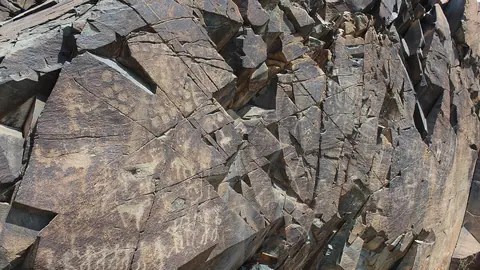 Tamgaly (Tanbaly) petroglyphs
- Tamgaly petroglyphs and the other rock art sites of Kazakhstan