Visiting the ALZHIR Memorial, the former Gulag camp for wives near Astana: when to go, month by month
- January: possible
- February: possible
- March: possible
- April: good
- May: best time
- June: best time
- July: good
- August: best time
- September: best time
- October: good
- November: possible
- December: possible
The museum is indoors, but the monuments stand on open steppe where winter highs stay below freezing, so May to September is the easiest time.
Visiting the ALZHIR Memorial, the former Gulag camp for wives near Astana: why go
ALZHIR Memorial and museum
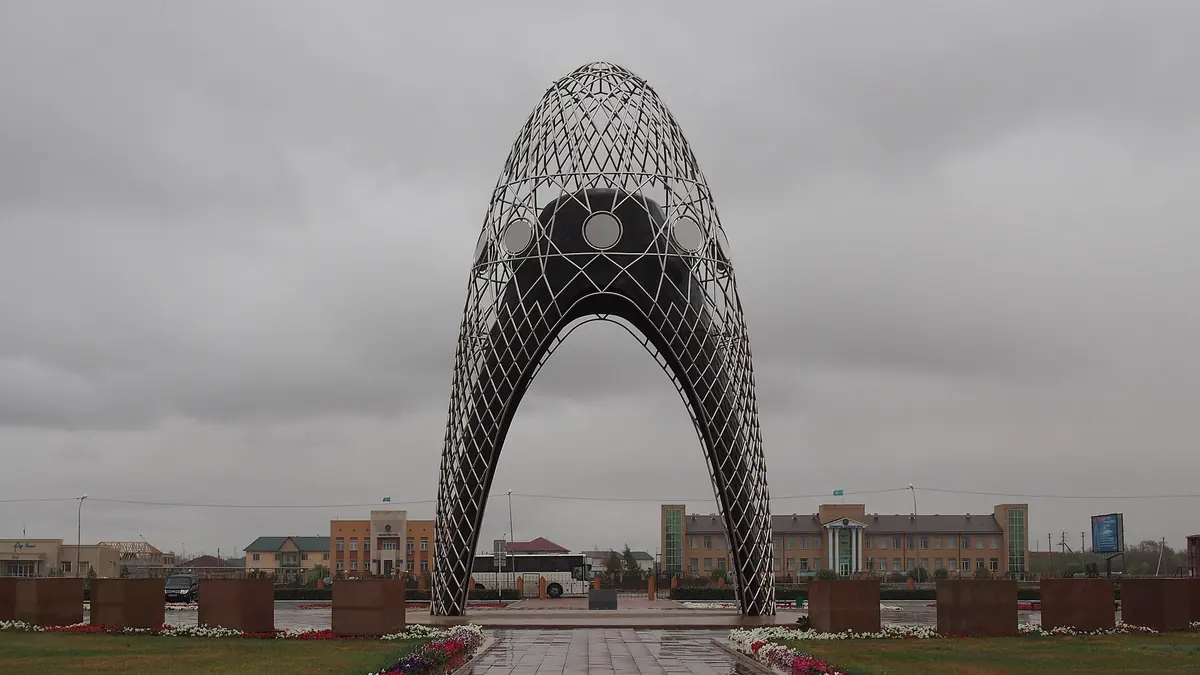
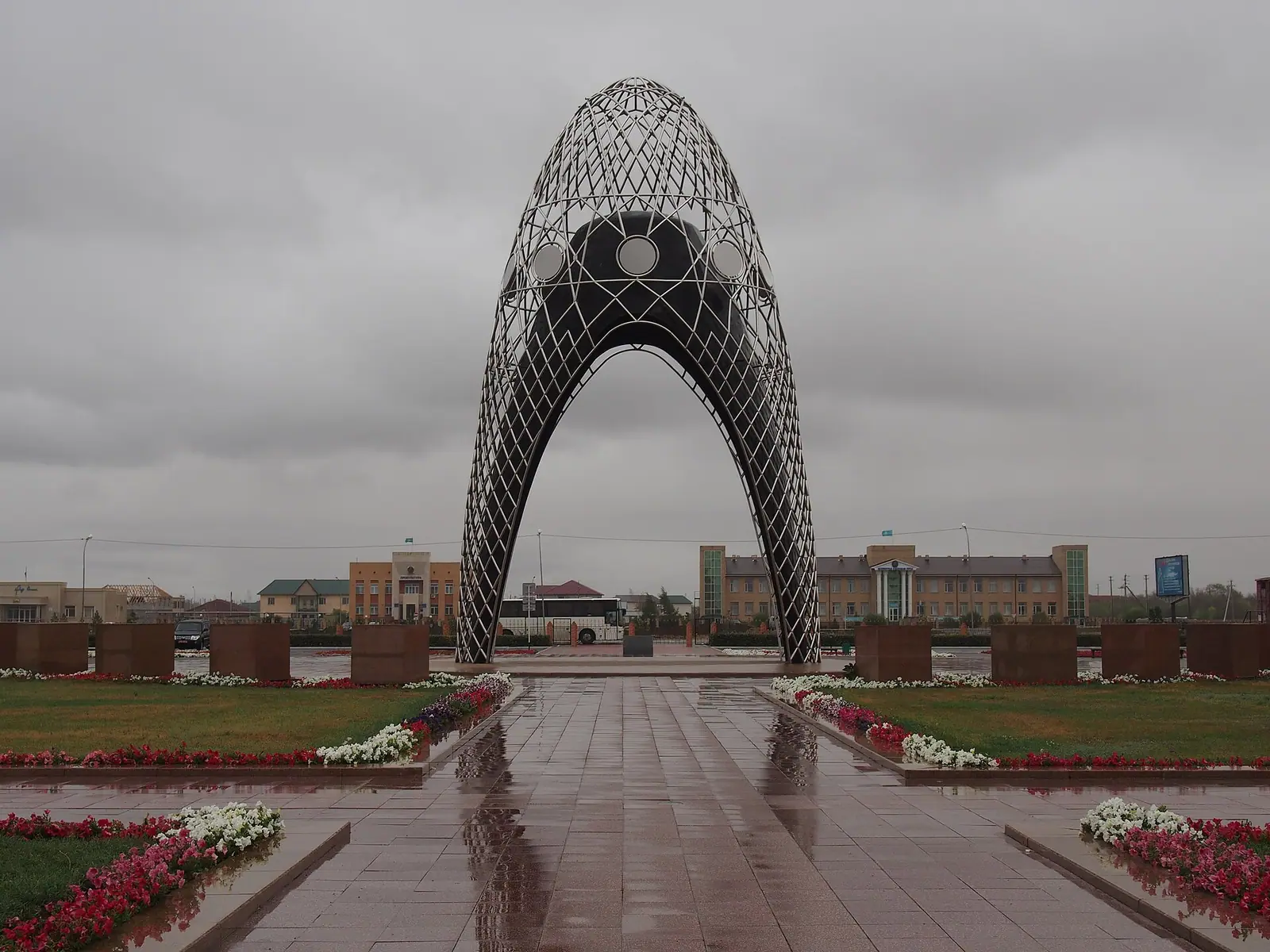
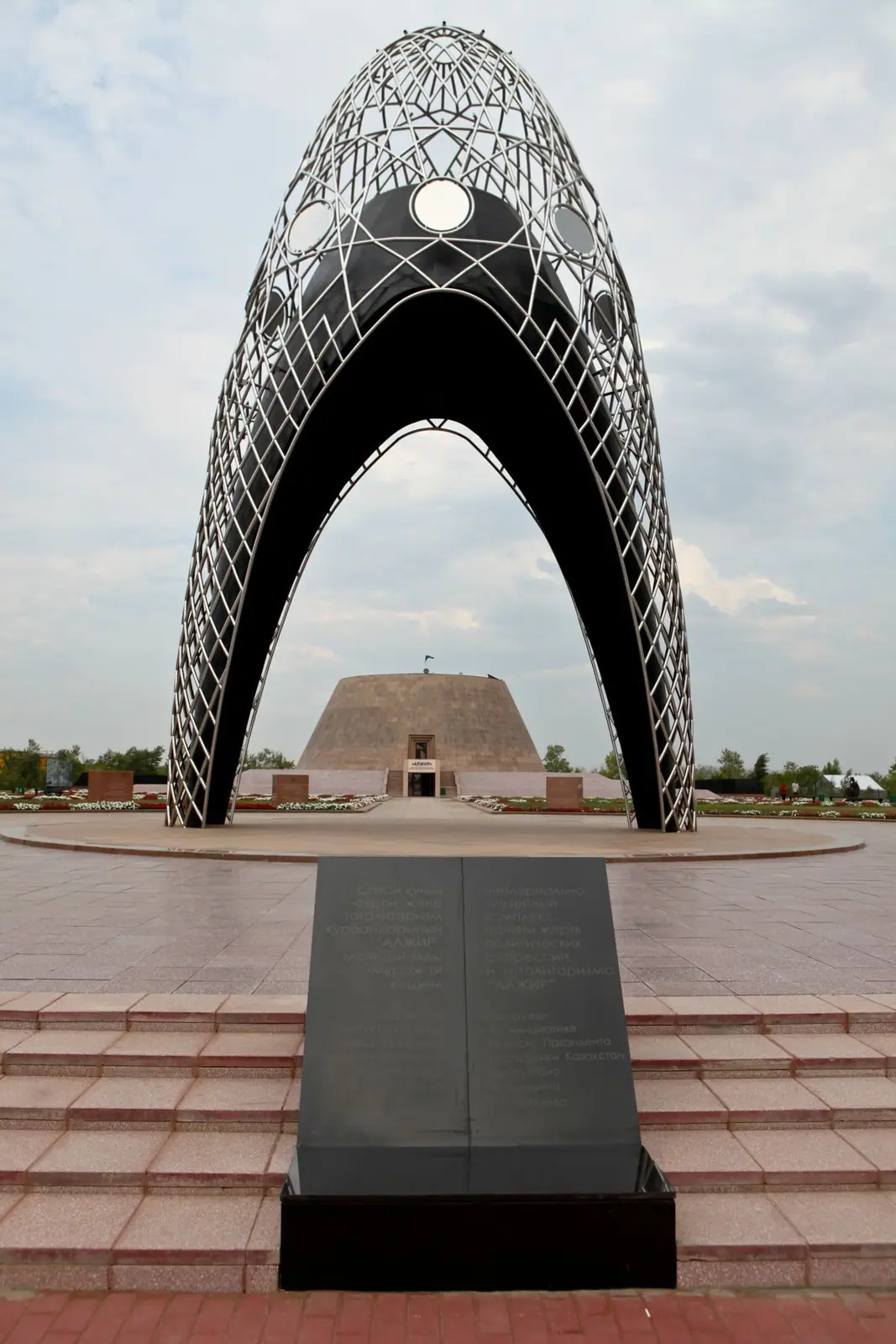
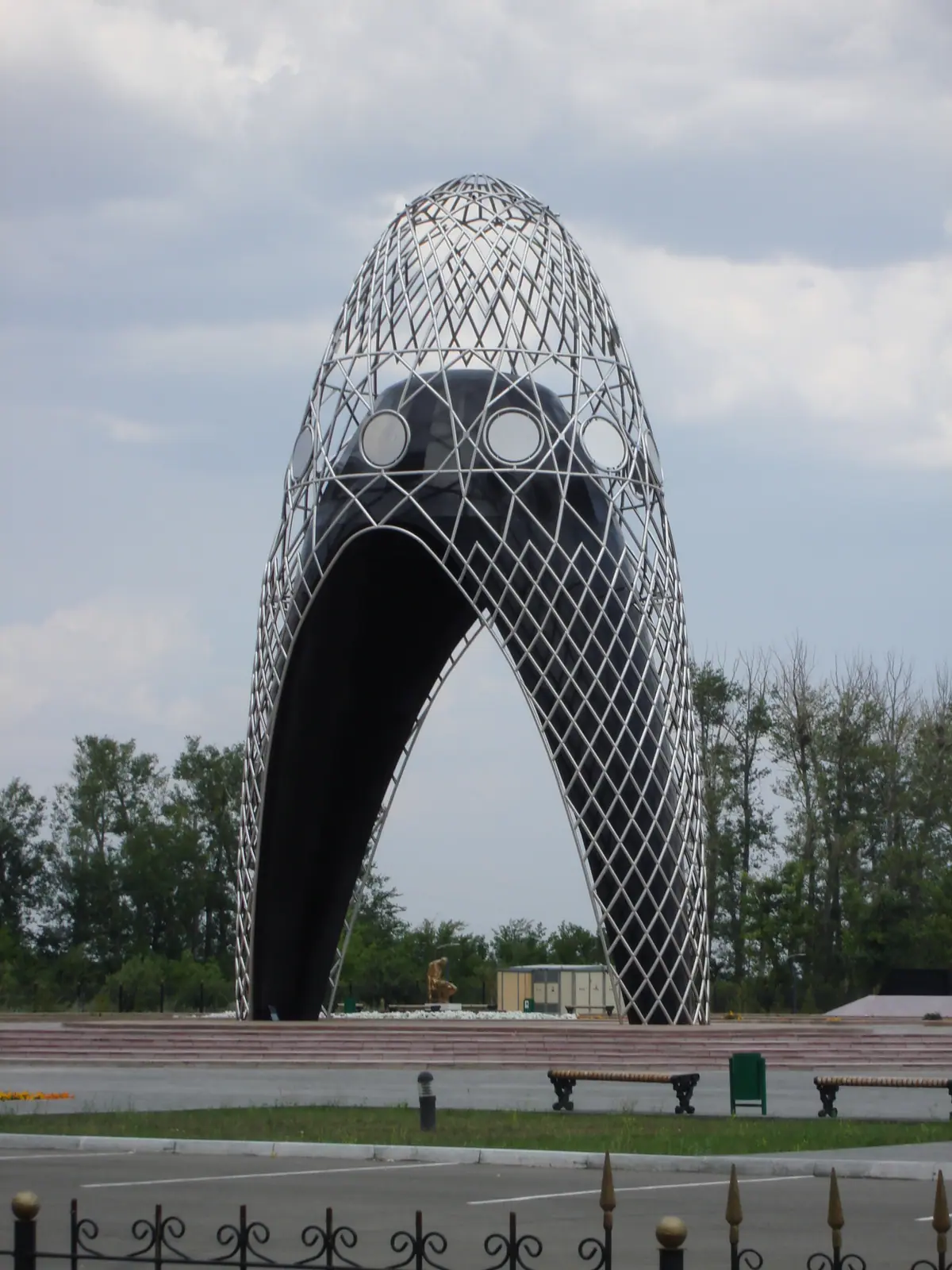
Opened 31 May 2007 on the site of 'Point 26', with the Gates of Sorrow monument, two sculptural groups, a Wall of Remembrance and a museum of documents.
Women jailed for their husbands
Most prisoners were sentenced as relatives of 'traitors' under NKVD Order 00486; children were taken to orphanages at about three years old.
A short trip from Astana
Akmol village lies about 38 km in a straight line southwest of the capital. We could not confirm buses, so plan transport in Astana before going.
Steppe weather at ALZHIR
January highs average about -11°C on the open steppe; May to September brings highs of 18–26°C, the easiest months for the outdoor monuments.
The kurt thrown over the wire
Local Kazakhs threw hard balls of dried curd to the prisoners, and guards took them for stones. A poem, 'Kurt, a Precious Stone', tells the story.
Visiting the ALZHIR Memorial, the former Gulag camp for wives near Astana in photos
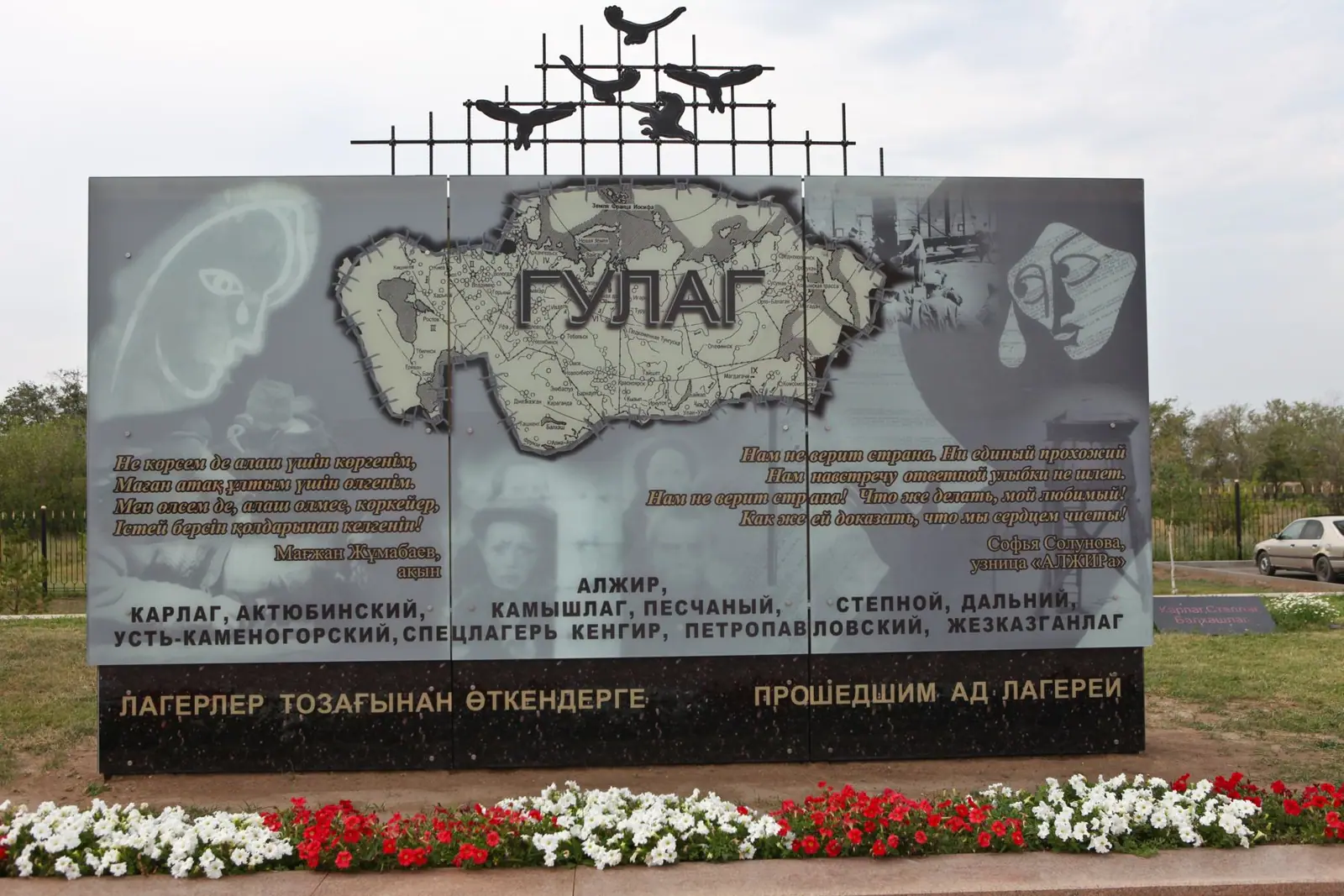
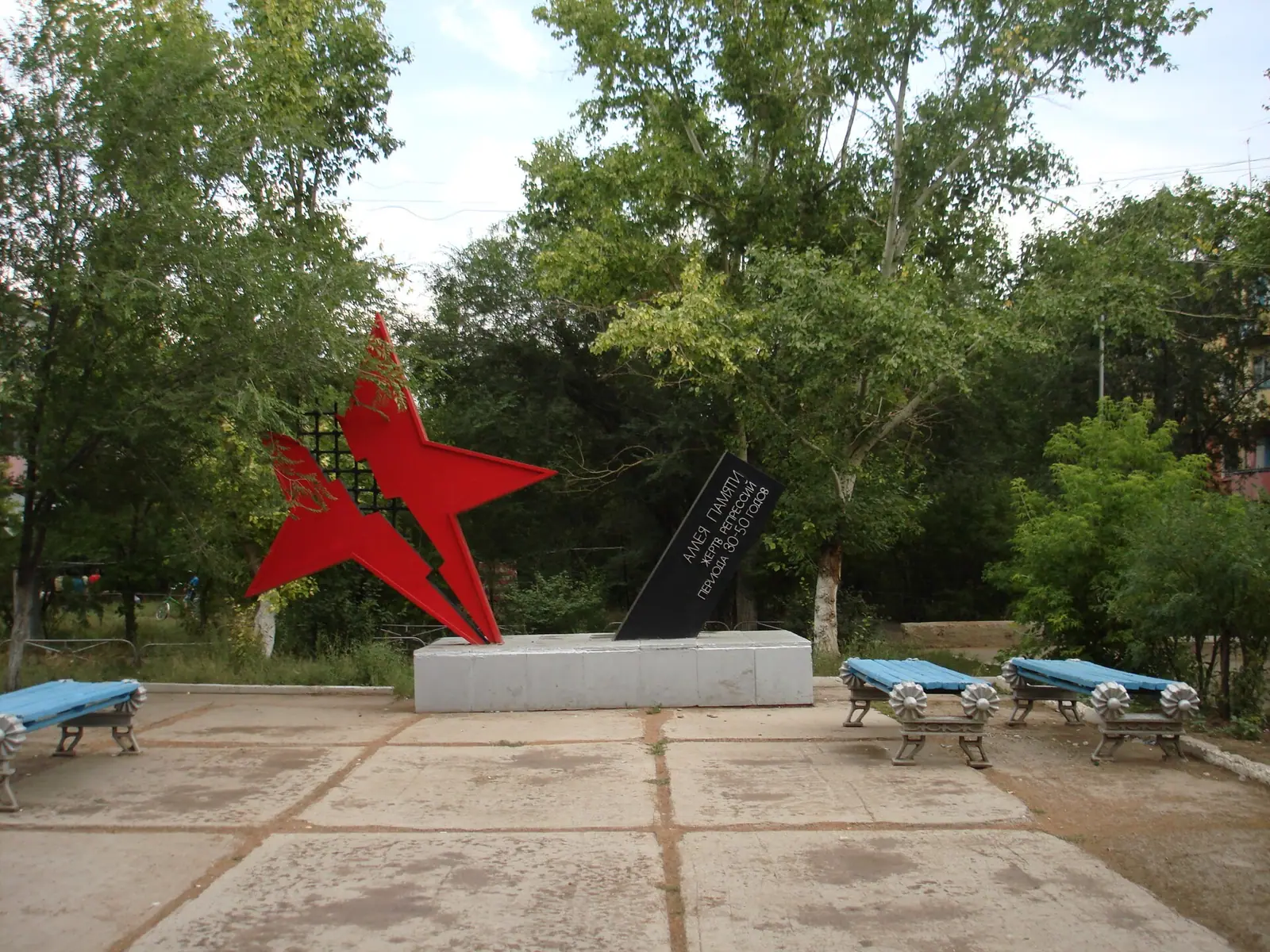
Real photos by travellers (Pexels, Unsplash, Wikimedia Commons); author and licence are given in each caption.
The ALZHIR Memorial is a museum and memorial complex in the village of Akmol, about 38 km in a straight line southwest of Astana, built where the largest Soviet camp for women stood from 1938. Most prisoners were jailed only for being the wives, sisters or daughters of men declared ’traitors to the Motherland’. For a visitor based in Astana it is the nearest serious history site, and a sombre one.
ALZHIR was a Gulag camp for the families of ’traitors'
ALZHIR was the informal name of the 17th special women’s section of Karlag, the Karaganda labour camp within the Soviet Gulag system. The letters stand for the Russian ‘Akmolinsk Camp of Wives of Traitors to the Motherland’. By English Wikipedia, the name was a bitter joke among the inmates, because ‘Alzhir’ is the Russian word for Algeria. It was also called ‘Point 26’, after the labour settlement No. 26 on which it was built.
The women were sentenced under NKVD Order No. 00486 of 1937 as ChSIR, ‘members of families of traitors to the Motherland’. A 1934 decree set the penalty for such relatives at 5 to 10 years of imprisonment or 5 years of exile. Trains of prisoners began arriving on 10 January 1938, and within six months the camp was so overcrowded that a second special section for these women was opened at Spassk.
The sources agree on the story but not on every figure. The table shows where they differ, which matters if you are quoting numbers or planning research.
| Point | What the sources say |
|---|---|
| Order date | 15 August 1937 (Russian and English Wikipedia); 5 August 1937 (Kazakh Wikipedia) |
| Prisoners | About 8,000 in 1938, 4,500 of them ChSIR; over 18,000 passed through in total (English Wikipedia); up to 20,000 (Kazakh Wikipedia) |
| Area | 30 ha (Russian Wikipedia); 30,000 ha (English and Kazakh Wikipedia) |
| Closure | Camp liquidated early 1950; the 17th section closed in 1953 |
| Village | Akmol, formerly Malinovka (Russian Wikipedia); Tonkeris, formerly Malinovka (English Wikipedia) |
| Children born | 1,507 |
Freedom did not end at release. Until rehabilitation in 1958, former prisoners were not allowed to return to their previous homes; the Kazakh article places the start of rehabilitation in 1956–57.
Life in the camp: wire, reeds and children taken at three
Unlike most Karlag sections, this one was ringed with several rows of barbed wire and guard towers. A reed-choked lake lay inside the camp, and the reeds were cut to heat the barracks in winter and to build in summer. For the first year and a half the ‘special section’ regime banned letters and parcels.
Women with skills the camp needed worked in their trades. Musicians, poets and teachers judged fit for heavy labour worked in the fields and on building sites, while the sick, the old and the children worked in embroidery and sewing shops.
Babies lived in a separate barrack, the ‘mothers’ house’, looked after by a prisoner nanny; mothers could see them after work. At about three years old (two to three by the Kazakh article) the children were sent to orphanages. The Kazakh article says most of the 1,507 babies born there died of hunger and cold, and English Wikipedia reports that many were born as a result of rape by guards. From 24 April 1951 pregnant women and mothers with children in the camp began to be released.
The kurt that guards mistook for stones
The best-known story of the camp concerns local Kazakhs who could not openly feed the prisoners and instead threw them kurt, hard balls of dried curd, which the guards took for stones. The poet Raisa Golubeva later wrote ‘Kurt, a Precious Stone’ from the account of prisoner Gertruda Platais.
The camp also cost local people dearly. Land for it was taken from several Kazakh auls and seven villages, in total 4,861 households with 21,979 people, who were resettled elsewhere in Karaganda region, and part of their livestock was seized for the camp.
Who was held at ALZHIR
The camp held the wives and relatives of executed or arrested party leaders, commanders, writers and officials from across the USSR, and memorial signs from 14 countries now stand at the entrance. Among them were the sister of Marshal Mikhail Tukhachevsky, the wife and daughter of Avel Enukidze, and the wives of the Kazakh figures Saken Seifullin, Beimbet Mailin, T. Ryskulov and T. Zhurgenov.
Other names a visitor may recognise:
- Rachel Messerer-Plisetskaya, film actress and mother of the ballerina Maya Plisetskaya, held with her son Azary
- Natalia Sats, theatre director
- Ashkhen Nalbandyan, mother of Bulat Okudzhava
- Anna Larina, wife of Nikolai Bukharin
- Shukriyya Akhundzada, wife of the Azerbaijani poet Ahmad Javad
- Kira Andronikashvili, actress and film director, wife of the writer Boris Pilnyak
By English Wikipedia, several hundred inmates were ethnic Koreans of the Koryo-saram community, and a monument to them with text in Korean and Cyrillic stands at the site.
In August 2000 the Russian Orthodox Church canonised twelve prisoners of the camp, most of them peasant women, shot after a 1942 sentence in the Akmolinsk section, as the Akmolinsk New Martyrs.
What the memorial complex contains
The Museum and Memorial Complex of Victims of Political Repression and Totalitarianism ‘ALZHIR’ opened on 31 May 2007 in Akmol, Tselinograd district, on the site of the old ‘Point 26’. The date marks the national day of remembrance for victims of political repression, set in 1997. The architect was S. Zh. Narynov.
By Kazakh Wikipedia, the complex consists of:
| Element | What it is |
|---|---|
| Gates of Sorrow | Monument |
| ‘Struggle and Hope’ | Sculptural composition |
| ‘Despair and Helplessness’ | Sculptural composition |
| Wall of Remembrance | Memorial wall |
| Museum | Documents on the history of repression and how the punitive system worked |
| Memorial signs | From 14 countries: Poland, France, Germany, Hungary, Israel, Korea, Belarus, Georgia, Armenia, Ukraine, Estonia, Lithuania, Latvia, Azerbaijan |
If you have a family or national link to one of those countries, look for its sign before you go in. We could not confirm whether the exhibition labels or guided tours are available in English, which affects how much a visitor without Russian or Kazakh will take from the museum.
Getting there from Astana
Akmol lies about 38 km in a straight line southwest of Astana, so the trip is short by Kazakh standards; road distance will be longer. Karaganda is about 207 km and Kokshetau about 269 km away in a straight line, so the memorial is best seen from Astana rather than as a stop between other cities.
We could not confirm any bus route, taxi arrangement, opening hours or ticket price. For a traveller without a car or Russian, the practical route is to arrange transport in Astana before setting out and to confirm the museum is open that day. If you are heading north afterwards, the pine-and-lake country of Zerenda near Kokshetau is the closest nature trip on this site; the granite hills of Ulytau lie much further southwest.
When to visit: steppe winters are harsh
The museum is indoors, but the monuments and memorial signs are spread outdoors on open steppe, so the weather decides how long you will want to stay outside. The figures below are computed ERA5 reanalysis normals for 2011–2020 at a grid point at 349 m, not readings from a weather station.
Day high, °C / Night low, °C · Rain/snow, mm
A computed reanalysis normal for these coordinates, not weather station records.
Monthly figures
| Month | Day high, °C | Night low, °C | Rain/snow, mm |
|---|---|---|---|
| Jan | -11.2 | -18.8 | 16.2 |
| Feb | -9.3 | -17.6 | 15.1 |
| Mar | -0.8 | -9.3 | 24.1 |
| Apr | 13.2 | 1.5 | 27.2 |
| May | 20.5 | 7.1 | 29.5 |
| Jun | 25.4 | 12.9 | 40.5 |
| Jul | 26.2 | 14.5 | 58.5 |
| Aug | 25.4 | 12.6 | 27.3 |
| Sep | 18.6 | 6.5 | 22.4 |
| Oct | 9 | -0 | 31.6 |
| Nov | -3 | -9.7 | 29.9 |
| Dec | -8.7 | -15.9 | 23.4 |
From November to February average daytime highs stay below freezing, with March about -1°C, dropping to about -11°C in January with nights near -19°C; walking between the outdoor monuments then needs full winter clothing. May to September is the comfortable window, with highs of about 19–26°C. July is the warmest month and also the wettest, with about 59 mm of rain on average, so pack a light rain layer.
The memorial opened on 31 May, the day of remembrance for victims of political repression. We could not confirm what events take place or how crowded it gets.
| Period | What to expect outdoors |
|---|---|
| Dec–Feb | Highs about -8 to -11°C, nights to -18°C |
| Mar, Nov | Around freezing by day, hard frost at night |
| Apr, Oct | Highs about 9–13°C, nights near 0°C |
| May–Sep | Highs about 18–26°C, the easiest time to walk the grounds |
To see where ALZHIR fits among other camps, read our table of the Gulag in Kazakhstan.
- Opening hours and closing days of the museum
- Admission fees and whether guided tours are offered
- Public transport or taxi options from Astana to Akmol
- Whether exhibition labels or guides are available in English
- Rules on photography inside the museum
Visiting the ALZHIR Memorial, the former Gulag camp for wives near Astana: tips before you go
- Look for the memorial signs from 14 countries, which stand before the entrance, and the Korean-Cyrillic monument on the site if you have a family link to them.
- From November to February daytime highs are below freezing, down to about -11°C in January: dress for wind on open steppe.
- 31 May is the day of remembrance for repression victims and the museum's opening date; confirm in advance what happens there that day.
- Confirm opening hours and arrange return transport in Astana first: we could not verify buses to Akmol, about 38 km away in a straight line.
More to see nearby


Frequently asked questions
Why is the camp called ALZHIR?
How far is the ALZHIR museum from Astana?
When did the ALZHIR museum open?
How many women were held at ALZHIR?
Who were the most famous prisoners of ALZHIR?
Sources
Read also
 Almaty Zoo in Kazakhstan: opening hours and how to visit
 Ayusai Gorge, Almaty: visitor centre and waterfall trail
 Gorelnik Gorge above Medeu: waterfalls, trail and season
 Kamenskoe Plateau above Almaty: observatory and trails
 Pervomaiskie Ponds near Almaty: location, swimming, season
 Saty village: base for the Kolsai and Kaindy lakes