Abat-Baitak Mausoleum and its necropolis in the steppe south of Aktobe: when to go, month by month
- January: off season
- February: off season
- March: possible
- April: good
- May: best time
- June: best time
- July: good
- August: good
- September: best time
- October: good
- November: possible
- December: off season
Computed normals show highs near or below freezing from November to March and highs near 31 °C in July, so May and September are the comfortable months for a long drive and time in the open.
Abat-Baitak Mausoleum and its necropolis in the steppe south of Aktobe: why go
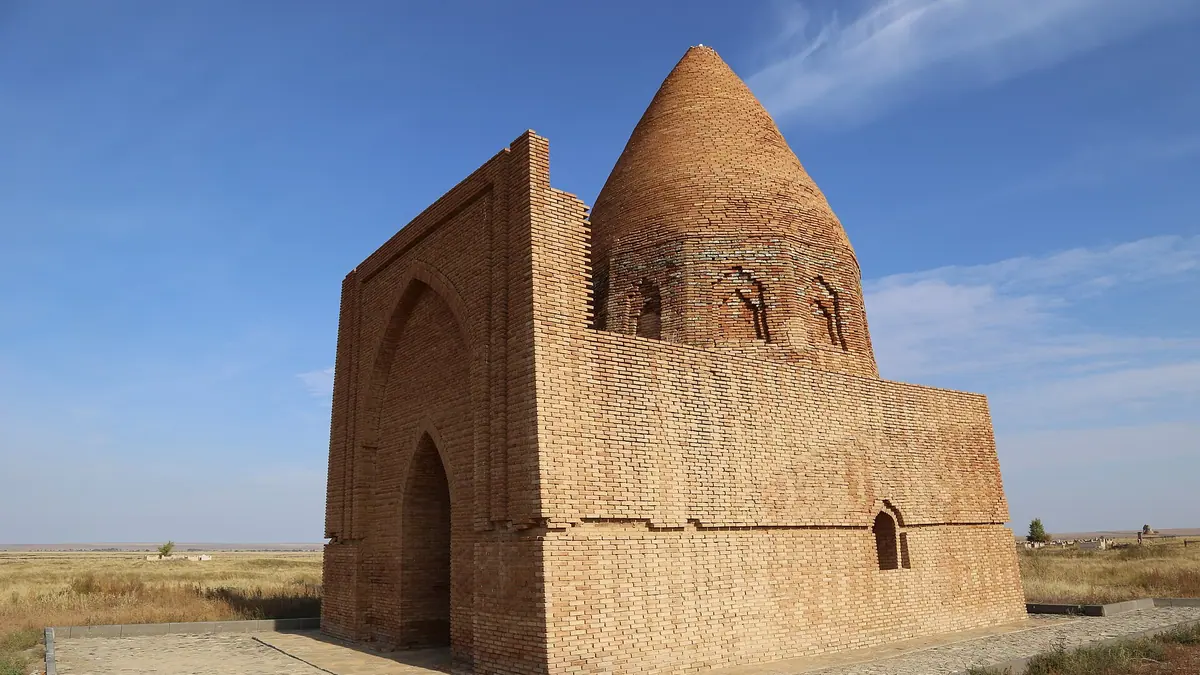
The Abat-Baitak Mausoleum
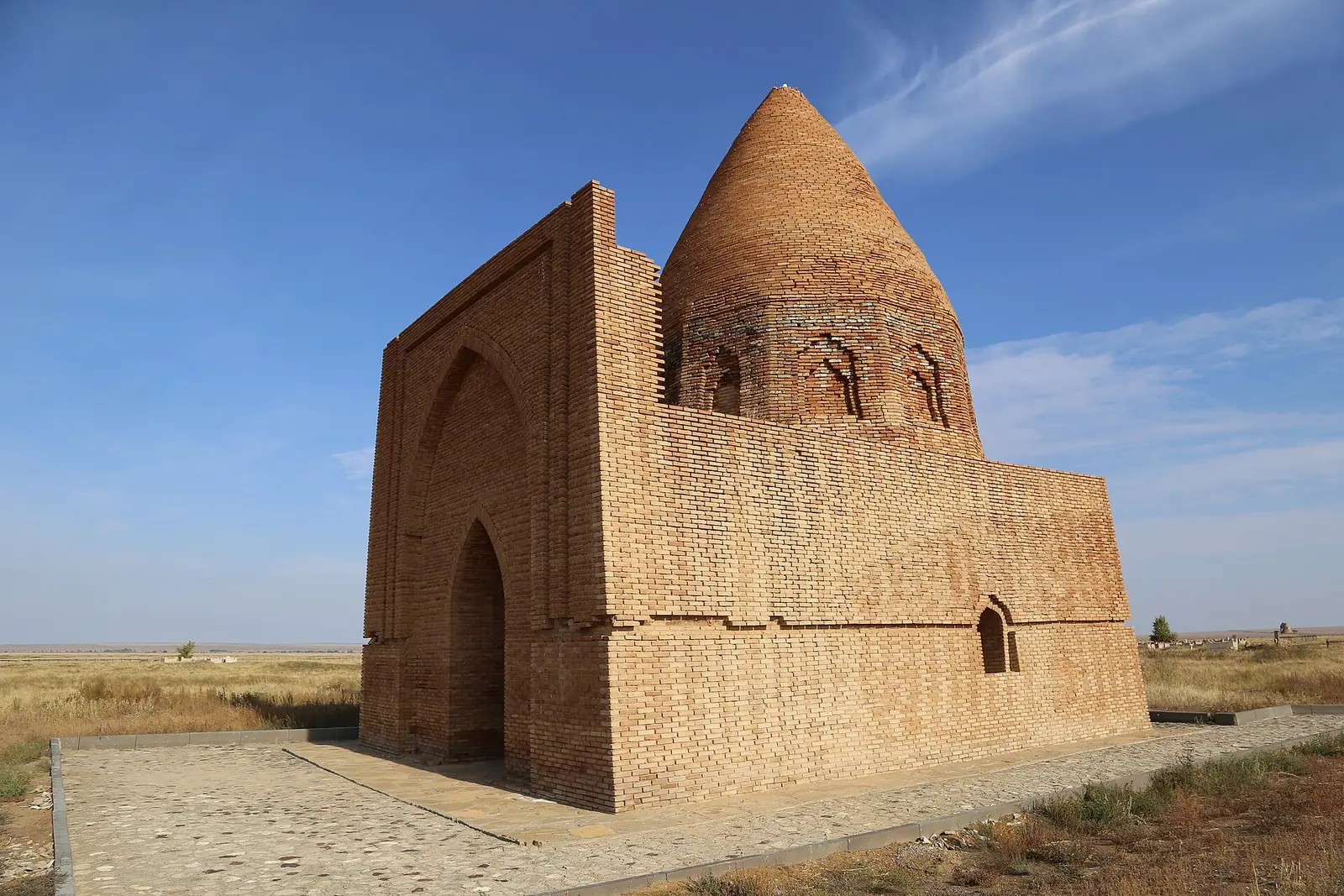
A fired-brick tomb of 9.52 × 9.8 m crowned by an 11-sided drum and a conical dome, standing at the centre of a 14th–early 20th century necropolis.
Kulpytas field west of the tomb
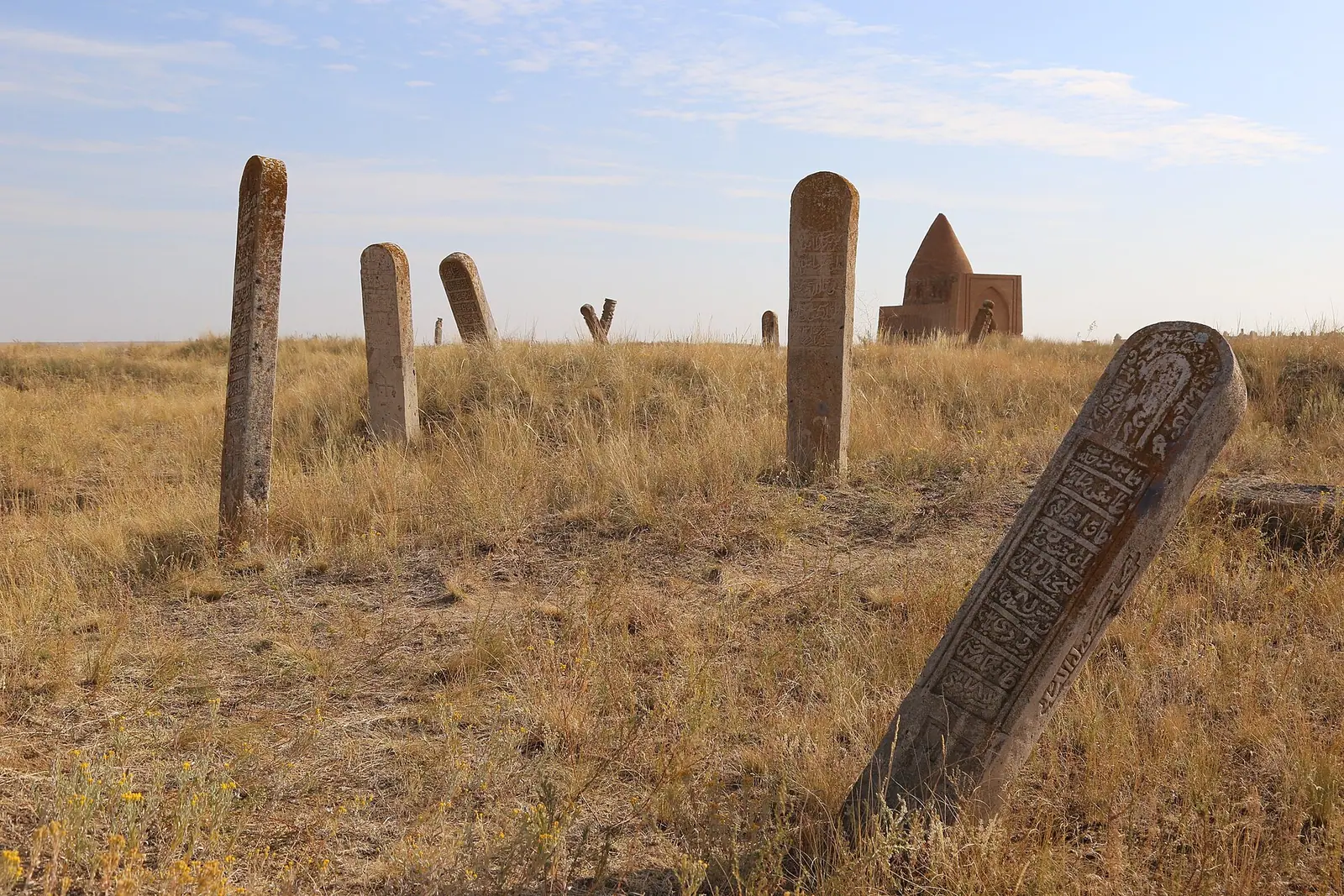
More than 200 carved stelae from the 18th–20th century with Kazakh epitaphs in Arabic script and tamgas of Junior Zhuz clans such as the Tabyn and Alshyn.
A day out from Aktobe
The site lies about 92 km from Aktobe in a straight line and 12 km south of Taldysai; we found no public transport, so plan on a hired driver.
Abat-Baitak in May or September
Computed normals give about 23 °C by day in May and 21 °C in September, against winter highs near −8 °C and July highs around 31 °C.
A tomb rebuilt with 32,000 bricks
Restorers fired 32,000 new bricks in a kiln built specially for the project; inside, a metal mace was found, possibly the staff of a Sufi missionary.
Abat-Baitak Mausoleum and its necropolis in the steppe south of Aktobe in photos
Real photos by travellers (Pexels, Unsplash, Wikimedia Commons); author and licence are given in each caption.
The Abat-Baitak Mausoleum is the centrepiece of a necropolis in western Kazakhstan, about 12 km south of the village of Taldysai in the Khobda district of Aktobe region. The cemetery was in use from the 14th to the early 20th century and holds the restored mausoleum, a smaller mud-brick tomb and more than 200 carved stone gravestones. It is a place of pilgrimage, so expect a quiet sacred site rather than a visitor attraction.
What you will see at Abat-Baitak
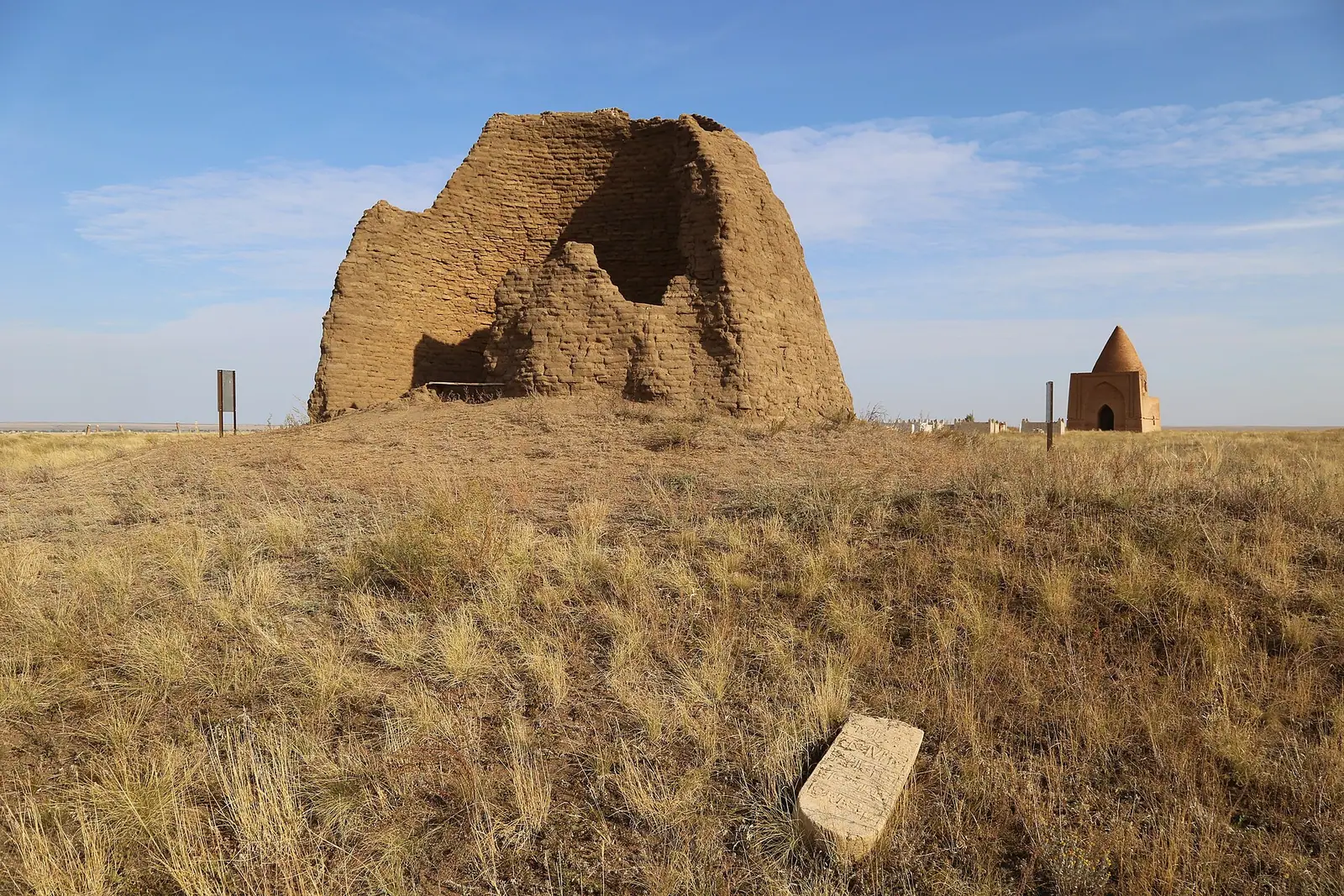
The main sight is the mausoleum itself, measuring 9.52 × 9.8 m, built of square fired brick and topped by an 11-sided drum and a conical dome. Nearby stands a second, smaller mausoleum of unfired mud brick, built in the 18th century in imitation of the first; locals call it Kyz moly or Kyz auliye, the Holy Maiden.
West of the mausoleum lies the field of kulpytas, carved stone stelae dating from the 18th to the 20th century. They carry Kazakh epitaphs in Arabic script and tamgas, the clan marks of families of the Junior Zhuz such as the Tabyn, Kete, Alshyn and Baibakty. Two stones stand out in the descriptions: one from 1848 noted for the fineness of its carving, and a rare type from 1893 cut from a single sandstone block. Some decorative elements copy the techniques of woodcarving.
| Feature | Detail |
|---|---|
| Main mausoleum | 9.52 × 9.8 m, 11-sided drum, conical dome |
| Brick | Fired square brick 24×24×6 cm; rectangular 24×12×6 cm in the arches; mud brick in inner layers |
| Second mausoleum | Kyz moly / Kyz auliye, unfired mud brick, 18th century |
| Gravestones | 200 or more kulpytas, 18th–20th century |
| Protected status | Monument of republican significance since 1982 |
Two legends behind the name
The name is explained by more than one legend, and neither can be checked. The most widespread says the warrior Abat, a son of the philosopher Asan Kaigy, is buried here. He defended his people against Kalmyk raids, defeated a Kalmyk khan in fair combat and won back part of the lost land. After his death, the story goes, people built the mausoleum on the spot in just three days, and so it gained the epithet Baitak, meaning belonging to the whole people.
A second legend, written down in the 19th century, ties the tomb to a Mongol commander named Baitak. When locals spoke to the 18th-century engineer Alexander Rigelman, they called the person buried there Baitan.
| Version | Who is buried | Recorded |
|---|---|---|
| Popular legend | Abat, son of Asan Kaigy, warrior against the Kalmyks | Oral tradition |
| Second legend | Baitak, a Mongol commander | 19th century |
| Rigelman’s informants | Noble people, one named Baitan | 1750 |
From a drawing in 1750 to a rebuilt dome
The site has been recorded for almost three centuries, and much of what stands today is the result of restoration. In 1750 Alexander Rigelman found and sketched stone structures “like pyramids” at the point where the Karasu river flows into the Bolshaya Khobda, as reported by the historian Pyotr Rychkov. Locals told him a town had once stood there.
In the late 19th century Derbisali Berkimbayev and Ya. Ya. Polferov described the monument, and Joseph-Antoine Castagné published the first drawings in the early 20th century. By 1947, when the engineer G. Gerasimov may have made the first measurements, the mausoleum was already half-ruined. The fullest architectural study came in 1979–1980 under the archaeologist Serik Adzhigaliev, who showed through excavation that the building originally had a portal on the south side.
The necropolis came under state protection in 1982. When Yerbol Smagulov’s expedition began wider research in 2004, the graves had already been looted. Inside the mausoleum the team found five burials (a middle-aged man, a woman, a teenager and two children), remains of wooden coffins, clothing and a metal mace that Russian Wikipedia describes as possibly the staff of a Sufi missionary. The restoration that followed, under the Cultural Heritage programme, needed 32,000 newly made bricks and a purpose-built kiln to fire them.
Sources differ on a few details
The Russian and Kazakh Wikipedia articles mostly agree, but not on everything. The Russian text dates the Kyz moly tomb to the late 18th century, the Kazakh one simply to the 18th. Russian Wikipedia counts more than 200 gravestones, the Kazakh article gives 200. The Kazakh text also says the site was practically lost to science before Adzhigaliev’s work in the early 1980s, while the Russian text lists Gerasimov’s 1947 measurements. None of this changes a visit, but it is worth knowing if you are writing about the place.
Getting there: a trip built around Aktobe
The necropolis is about 92 km in a straight line from Aktobe, the regional capital, and it lies 12 km south of the village of Taldysai. For comparison, Oral is about 344 km in a straight line and Atyrau about 444 km. Rigelman’s 1750 account places the structures at the confluence of the Karasu and the Bolshaya Khobda rivers.
We could not confirm the road from Aktobe or Taldysai, its condition, or any bus or shared-taxi service. Without a car and without Russian or Kazakh, the practical approach is to arrange a driver in Aktobe and agree the route in advance.
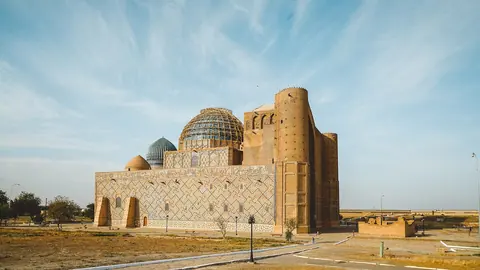
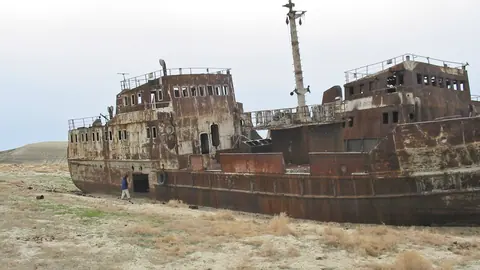
Abat-Baitak does not combine easily with other sights on this site. The nearest are hundreds of kilometres away: the Aral Sea is about 650 km in a straight line, and the Mausoleum of Khoja Ahmed Yasawi in Turkestan is about 1,200 km.
When to go to Abat-Baitak
Late spring and early autumn are the sensible windows. The figures below are computed ERA5 reanalysis normals for 2011–2020 at a grid point at 161 m, not readings from a weather station.
Day high, °C / Night low, °C · Rain/snow, mm
A computed reanalysis normal for these coordinates, not weather station records.
Monthly figures
| Month | Day high, °C | Night low, °C | Rain/snow, mm |
|---|---|---|---|
| Jan | -8.1 | -14.6 | 22.5 |
| Feb | -7.3 | -14.7 | 19.1 |
| Mar | 1 | -7 | 36.9 |
| Apr | 15 | 3.3 | 29 |
| May | 24.1 | 10.8 | 25.3 |
| Jun | 28.6 | 15.1 | 15.2 |
| Jul | 31.1 | 17.8 | 21.5 |
| Aug | 29.7 | 16.5 | 14 |
| Sep | 21.5 | 9.4 | 22.9 |
| Oct | 12.1 | 2 | 29.8 |
| Nov | 1.2 | -5.5 | 22.6 |
| Dec | -5.6 | -11.6 | 31.4 |
Winter is hard: from December to February daytime highs stay around −5 to −8 °C and nights fall to about −15 °C, and March barely rises above freezing. May averages about 24 °C by day and 11 °C at night, and September about 22 °C and 9 °C, which suits a long drive and time outdoors among the stones. July is the hottest month at around 31 °C by day. The steppe here is dry, with roughly 15–37 mm of precipitation a month, and June and August are the driest.
Visiting a pilgrimage site
Abat-Baitak is an active place of pilgrimage, and the graves belong to clans whose descendants still live in the region. Behave as you would in any cemetery: keep quiet, ask before photographing people at prayer, and do not touch or climb on the gravestones. We could not confirm any dress code or rules for entering the mausoleum, so modest clothing that covers shoulders and knees is the safe choice.
- The road from Aktobe or Taldysai to the necropolis and its condition in spring and autumn.
- Whether any bus, shared taxi or organised transport reaches Taldysai or the site.
- Access hours, any rules for entering the mausoleum and any dress code.
- Whether there are toilets, water, shade or a caretaker on site.
- The current state of the restored mausoleum and any ongoing works.
Abat-Baitak Mausoleum and its necropolis in the steppe south of Aktobe: tips before you go
- Base yourself in Aktobe: it is the closest city, about 92 km in a straight line from the necropolis.
- Aim for May or September, when computed daytime highs are about 21–23 °C instead of −8 °C in January or 31 °C in July.
- Spend time west of the mausoleum: look for the finely carved kulpytas of 1848 and the rare sandstone-block stone of 1893.
- This is a pilgrimage site: dress modestly, keep quiet and do not climb or lean on the gravestones.
More to see nearby


Frequently asked questions
Where is the Abat-Baitak Mausoleum?
How old is Abat-Baitak?
Who is buried in the Abat-Baitak Mausoleum?
Is Abat-Baitak the original building?
Is Abat-Baitak protected?
Sources
Read also
 Almaty Zoo in Kazakhstan: opening hours and how to visit
 Ayusai Gorge, Almaty: visitor centre and waterfall trail
 Gorelnik Gorge above Medeu: waterfalls, trail and season
 Kamenskoe Plateau above Almaty: observatory and trails
 Pervomaiskie Ponds near Almaty: location, swimming, season
 Saty village: base for the Kolsai and Kaindy lakes