- Fee
- ≈ $1.40 (649 ₸) Entry 0.15 / car 0.3 MCI · MCI 4,325 ₸ in 2026 · at 450 ₸ to $1 · MCI calculator
- Size
- Area 450,253 ha
- History
- Reserve since 2018
- Highlight
- Tigress released in 2026
- Where
- Ili delta and Balkhash
- Note
- Visits arranged in advance
Ile-Balkhash: when to go, month by month
November · now- January: possible
- February: possible
- March: possible
- April: possible
- May: possible
- June: possible
- July: possible
- August: possible
- September: possible
- October: possible
- November: possible
- December: possible
Whatever the month, the date, route and escort are agreed in advance with the reserve administration in Bakanas.
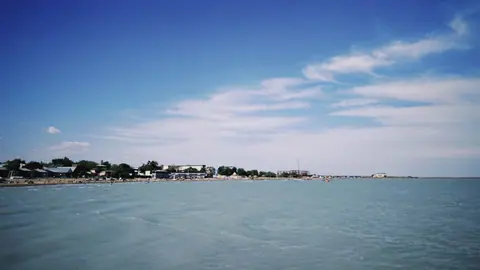
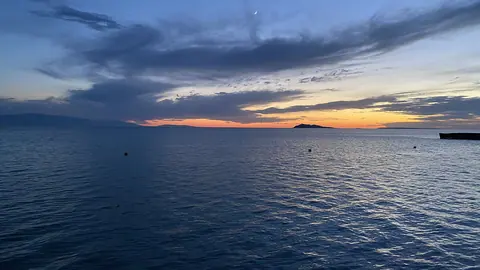
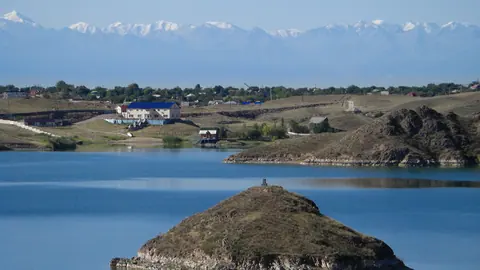
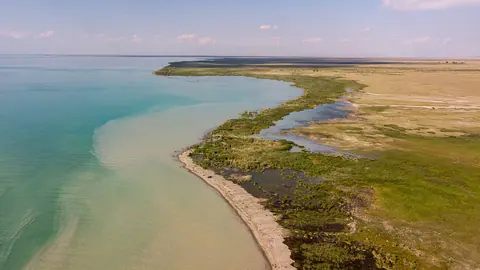
Ile-Balkhash in photos
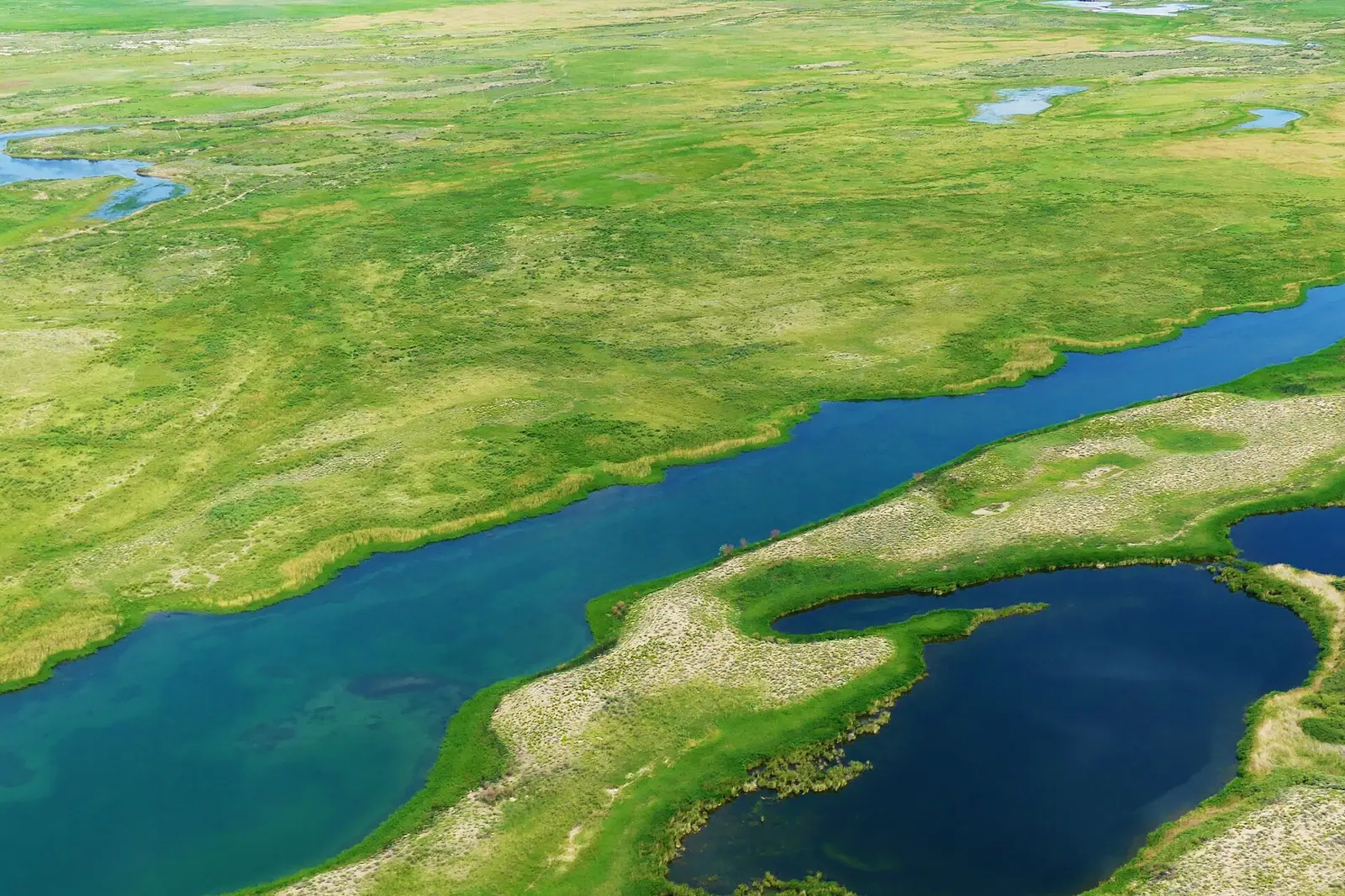
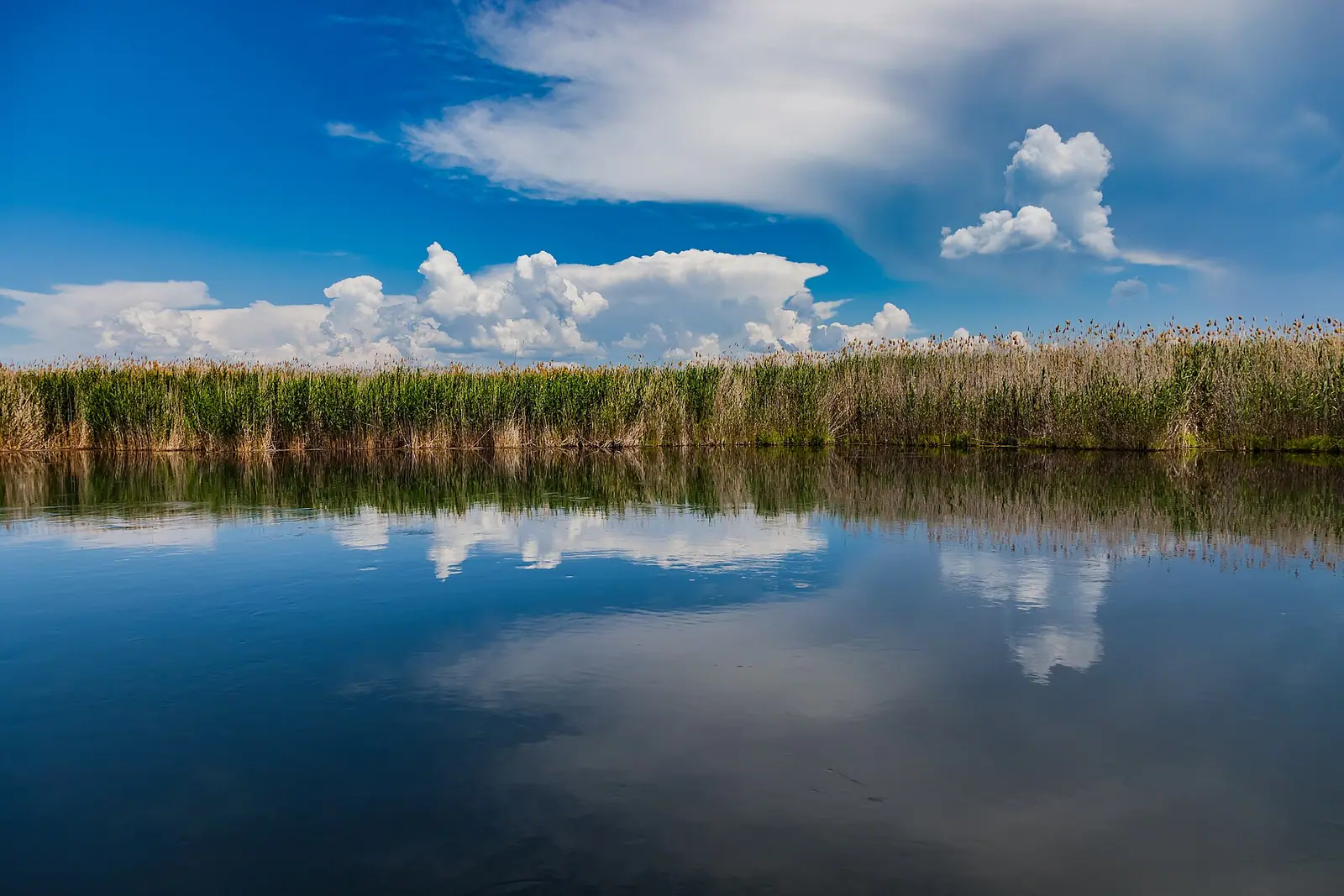
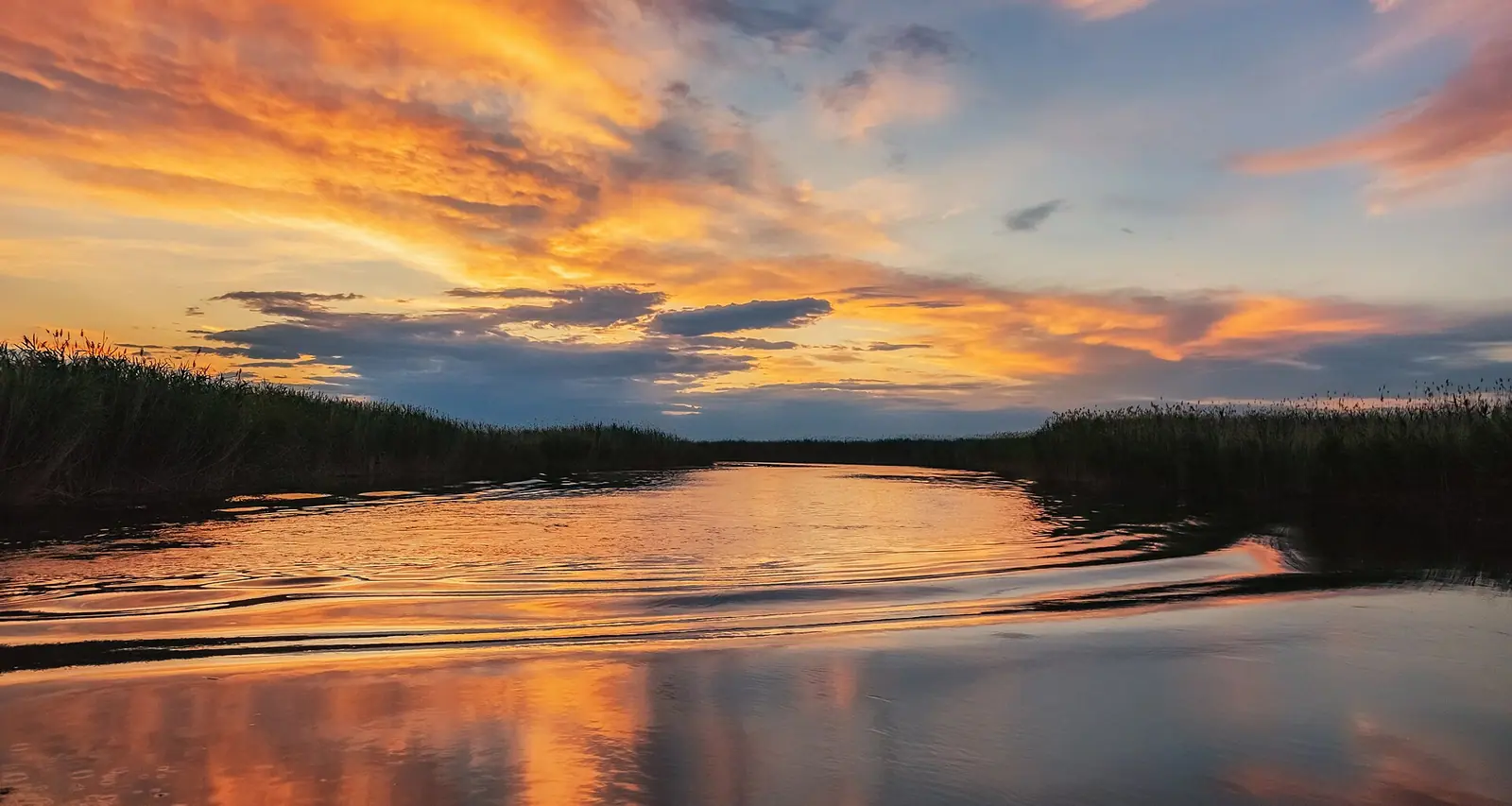
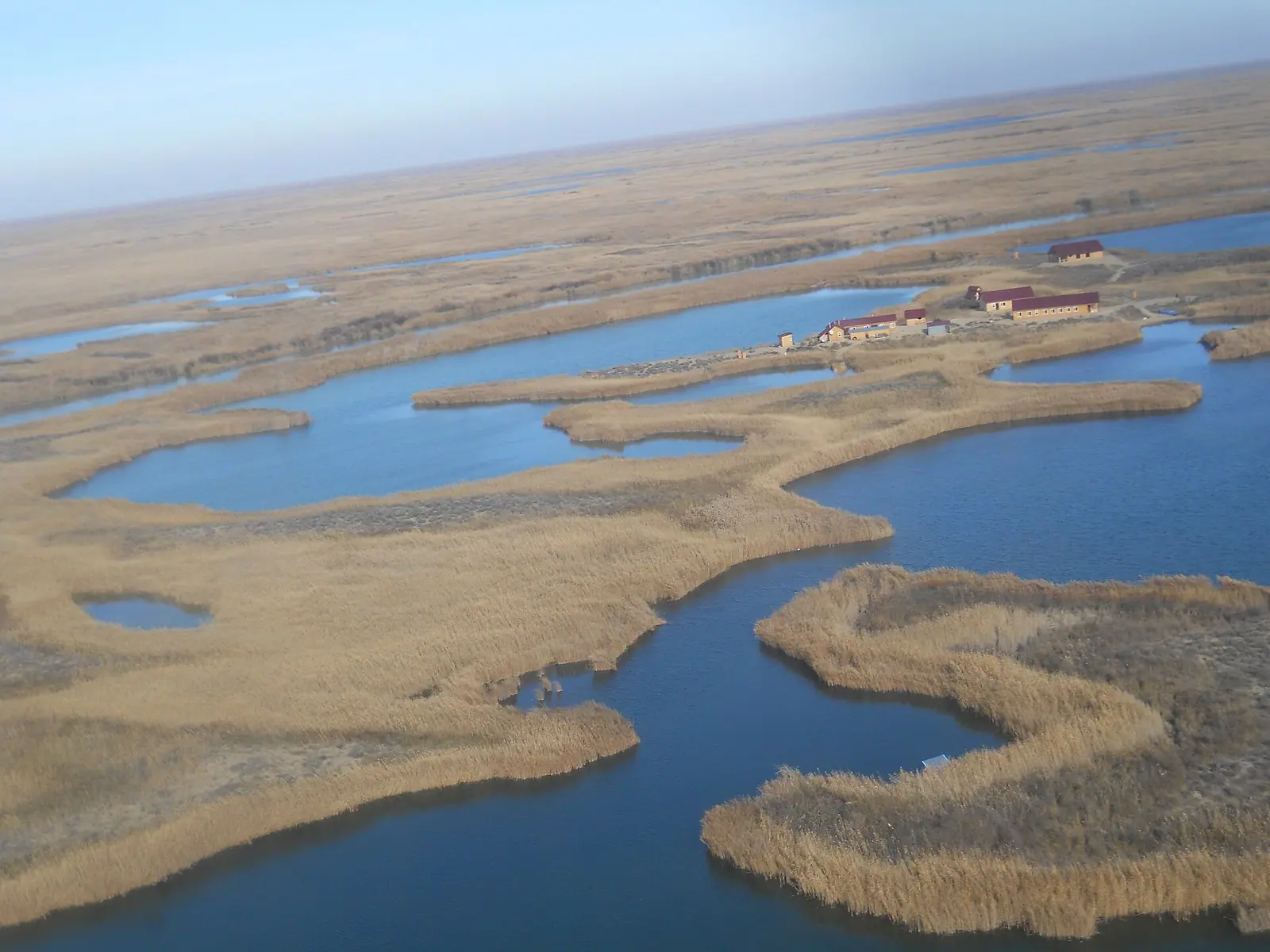
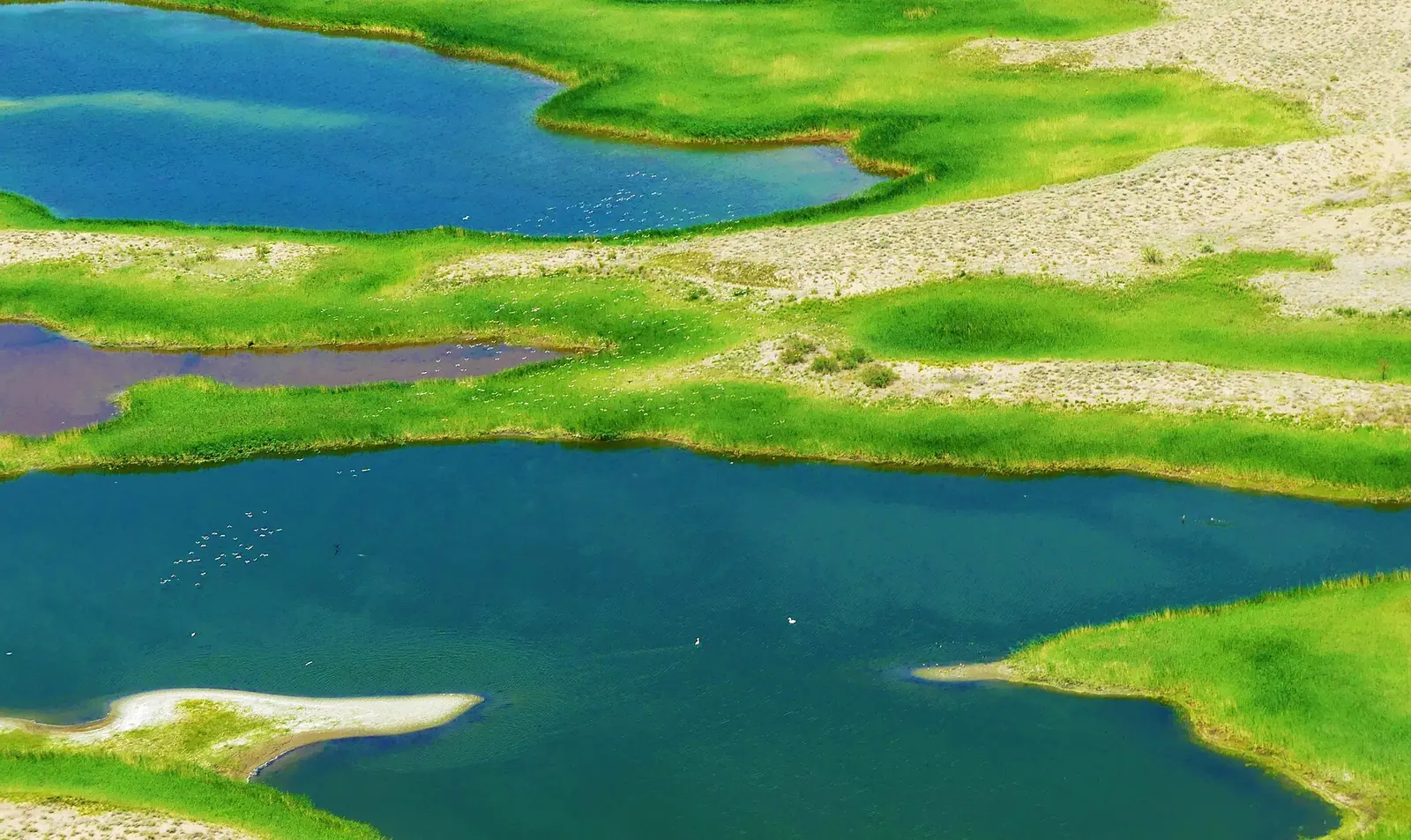
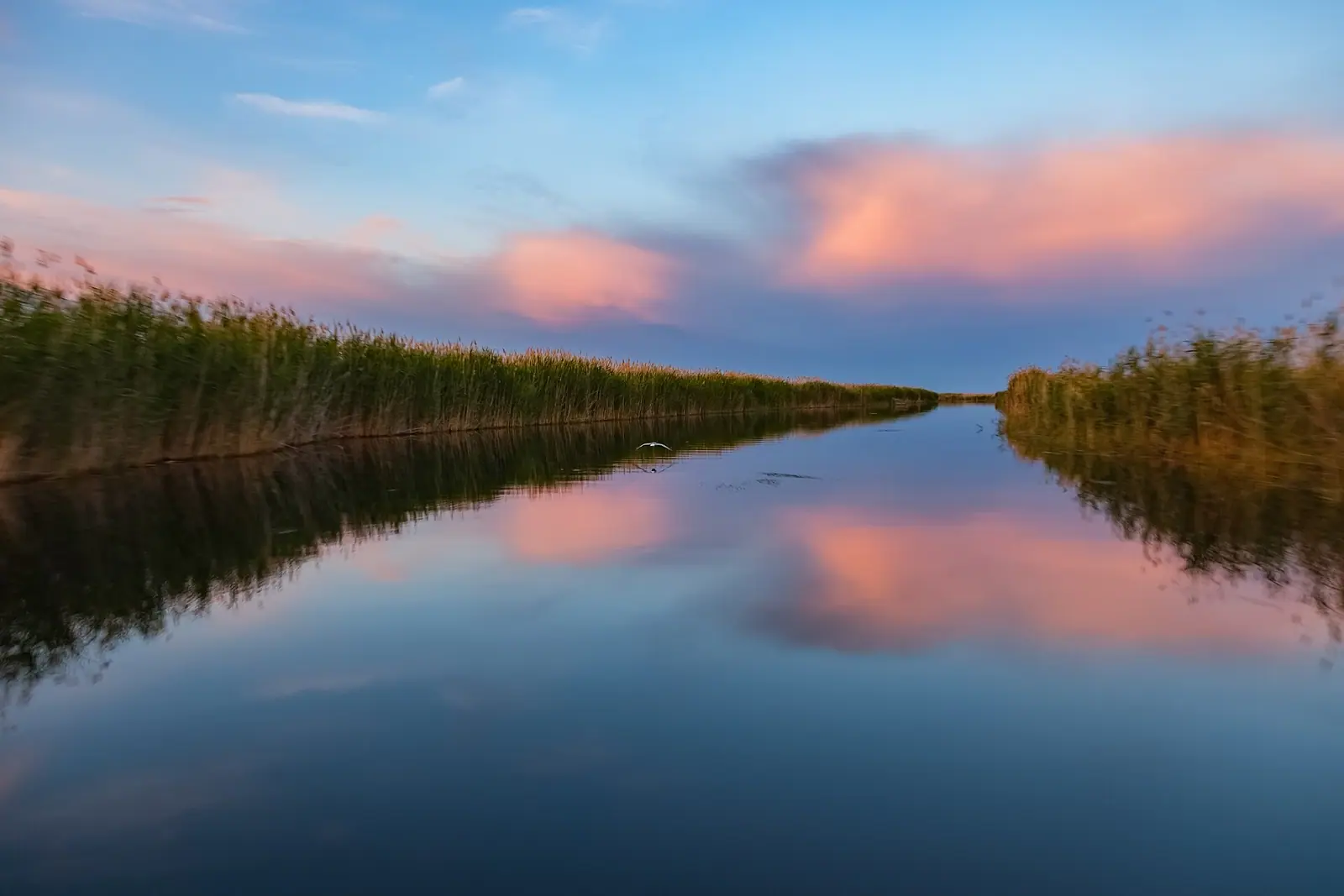
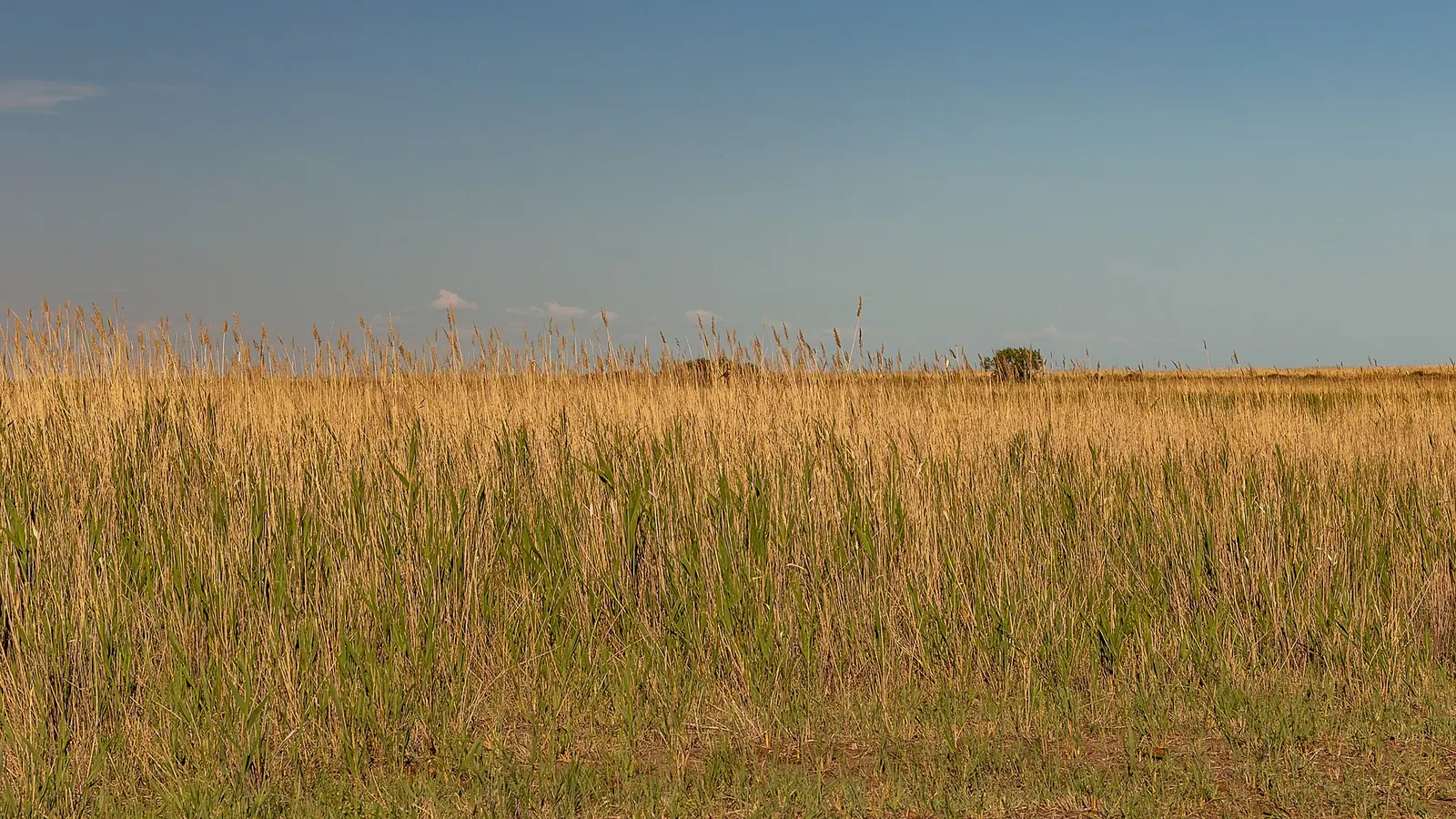
Real photos by travellers (Pexels, Unsplash, Wikimedia Commons); author and licence are given in each caption.
Ile-Balkhash: why go
Umit, the first tigress set free
Released on 31 July 2026, the first in more than 70 years, Umit wears a GPS collar and keeps to the green zone near the Balkhash shore.
The tiger return project
Tigers died out in Kazakhstan in 1948. Since 2024 Amur tigers have been brought here from the Netherlands and Russia; some still live in enclosures.
Tugai forests of the Ili delta
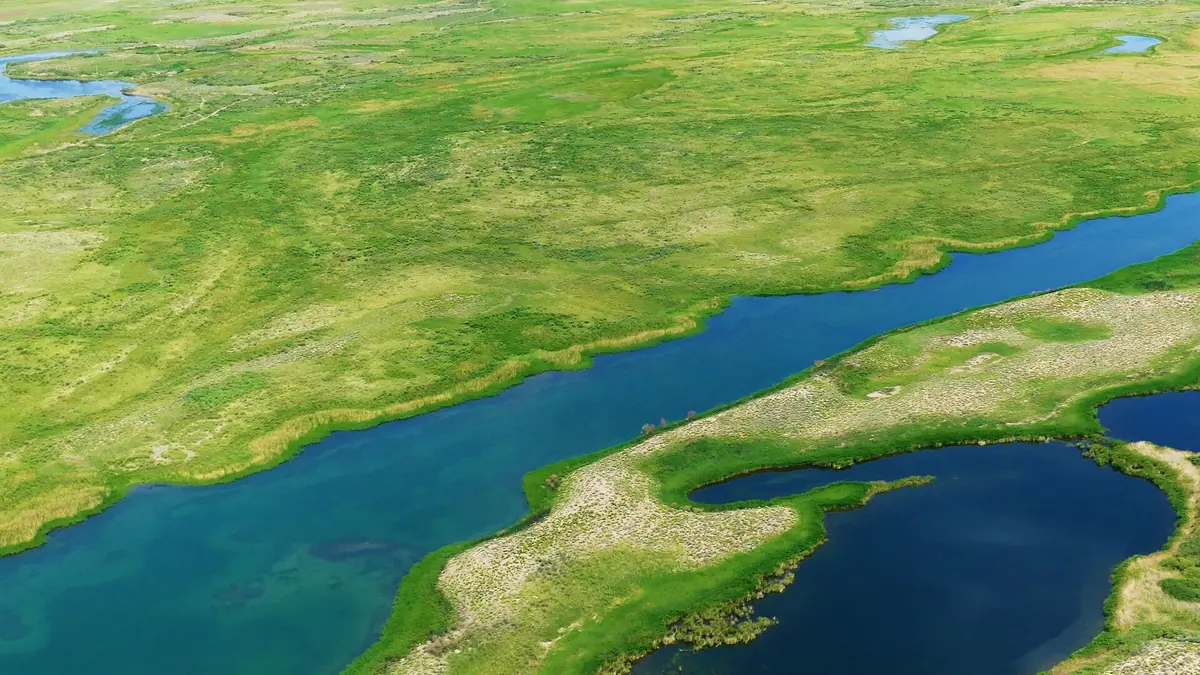
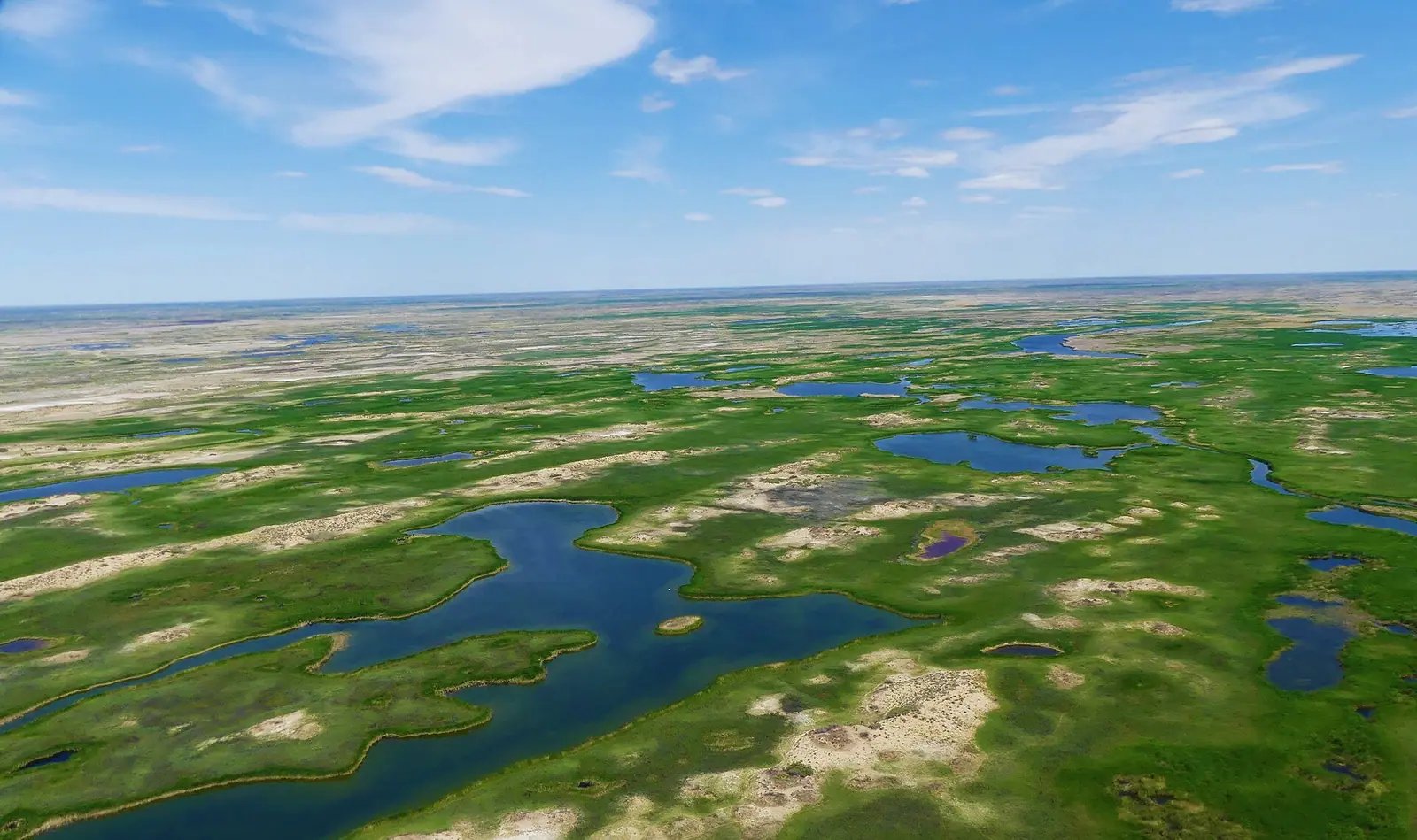
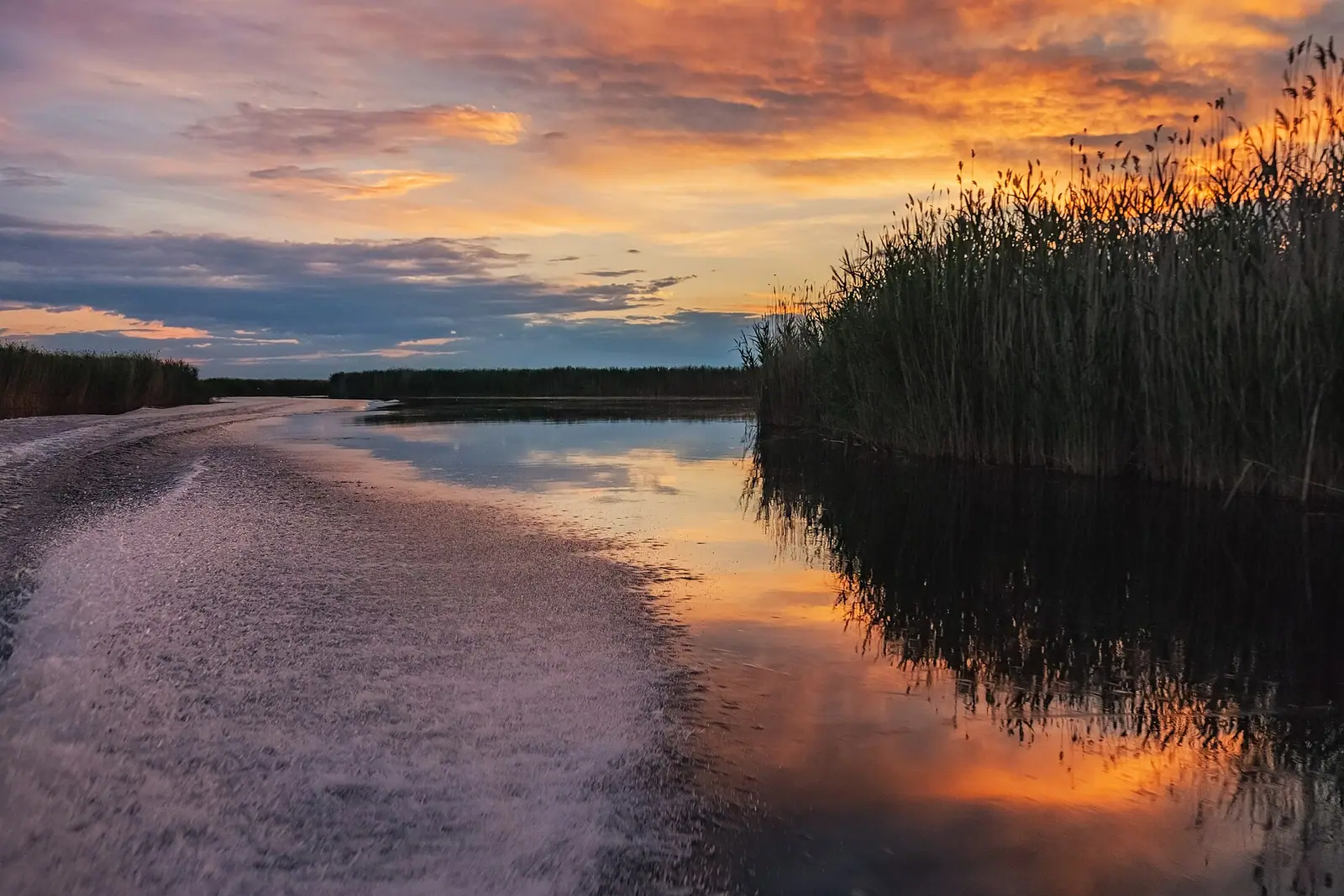
The reserve protects tugai forest along the Ili, the delta wetlands and desert. The delta and the southern Balkhash shore are Ramsar wetlands.
Bukhara deer and kulan
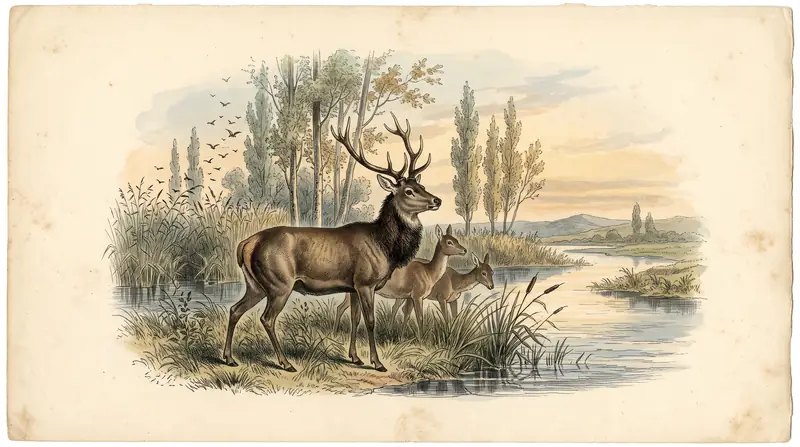
Deer were released in 2019–2022 and now number over 150. Kulan came from Altyn-Emel in 2022 and 2024 as a future prey base for tigers.
The 2026 expansion
On 27 January 2026 the reserve grew by 35,088 ha, taking in the Sary-Esik peninsula, the Uzynaral and Korzhyn islands and coastal wetlands.
Ile-Balkhash is the state nature reserve in the Ili river delta, on the southern shore of Lake Balkhash, where Kazakhstan is bringing the tiger back more than 70 years after it died out. On 31 July 2026 the tigress Ümit became the first tiger released into the wild there, and on 31 October 2026 the male Amur followed her, fitted with a satellite collar. You can visit the reserve, about 3 hours 15 minutes by car from Almaty, but only by arrangement with its office in Bakanas, and seeing a tiger is not part of any published visit.
- What: a state nature reserve (rezervat) of about 450,000 ha, created on 27 June 2018 for tiger reintroduction.
- Tigers now: two living free (Ümit and Amur), two cubs still under observation, as of November 2026.
- From Almaty: about 3 h 15 min by car to Bakanas; no public transport to the reserve we could confirm.
- Cost: ≈ $1.44 (648.8 ₸) on foot and ≈ $2.88 (1,297.5 ₸) per car, in 2026.
- Permission: excursions agreed in advance with the office in Bakanas, on set routes with a guide or ranger.
- Season: no official one; May, September and early October are the mildest months.
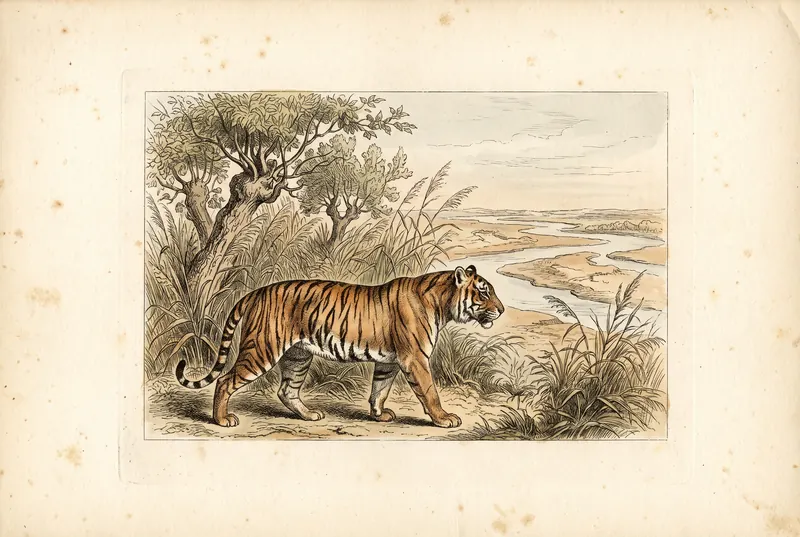
Ile-Balkhash at a glance
Visits are arranged through the reserve administration in Bakanas.
| Full name | State Nature Reserve ‘Ile-Balkhash’ |
| Category | State nature reserve (rezervat) |
| Area | 450,252.6747 ha |
| Region | Almaty Region, Balkhash District |
| Created | 27 June 2018 |
| Administration | village of Bakanas |
| Fee | 0.15 MCI (≈ $1.44 / 648.8 ₸) per pedestrian, 0.3 MCI (≈ $2.88 / 1,297.5 ₸) per car |
What people come for:
- tugai floodplain forest along the Ili
- the Ili delta and its wetlands
- the tiger reintroduction project
A rezervat has a mixed regime. The territory is zoned: part of it is closed, part is open by permit. See zapovednik, park, rezervat: where you will be let in for how this differs from a national park.
Where the Ile-Balkhash nature reserve is, and how to reach Bakanas
The Ile-Balkhash State Nature Reserve lies in Balkhash District of Almaty Region, on the lower Ili and the south shore of Lake Balkhash. Think of it as a wedge of wetland between two deserts. The reserve’s website gives the Sary-Ishikotrau sands to the north-east, the Taukum sands to the south-west and the waters of Balkhash to the north.
For a visitor there is one way in: the reserve office in Bakanas, a district centre on the Ili. Everything else, including which part of the delta you see, is decided by that office.
| What | Figure | Source |
|---|---|---|
| Almaty to Bakanas by car | about 3 h 15 min without stops | Google Maps, calculated 6 November 2026 |
| Reserve office | Ryskulov Street 57A, Bakanas | reserve website |
| Office phone | +7 72773 91-827 (local format 8 72773 91-827) | reserve website |
| Bakanas population | 4,135 (2019) | Wikipedia |
We could not check whether the office has English-speaking staff. If you do not speak Russian or Kazakh, have someone in Almaty make the call before you set off. Arriving unannounced may cost you the trip, because excursions are agreed in advance.
Why the reserve exists: the Ili delta and the tiger
Ile-Balkhash was set up on 27 June 2018 with one main goal: to return the tiger to Kazakhstan. According to Wikipedia, tigers died out in the country in 1948.
The reserve protects tugai forest along the Ili, the wetlands of the delta and stretches of desert. The southern Balkhash shore and the Ili delta are recognised as key bird areas and as Ramsar wetlands of international importance.
On 27 January 2026 the government enlarged the reserve by 35,088.47 ha. The addition takes in the Sary-Esik peninsula, the Uzynaral and Korzhyn islands, and coastal wetlands that were previously part of the Karaoy sanctuary.
The river fans out here into three main arms, named on the reserve’s site as Zhideli, Ili and Topar. The reserve covers more than 450,000 ha, so “visiting Ile-Balkhash” can mean very different places. Ask the office which section they can actually take you to.
Tigers in Ile-Balkhash: Ümit, Amur and the two cubs
By November 2026 two tigers were living free in the reserve: the tigress Ümit (also written Umit; the name means “hope” in Kazakh) and the male Amur. Two cubs were still under specialist observation. Kazakhstan’s Ministry of Ecology calls Amur the second tiger returned to the wild in the country under the reintroduction programme. The timeline below is built from dated reports.
| Date | Event |
|---|---|
| December 2018 | first 5 Bukhara deer brought in |
| October 2022 | 60 kulan moved from Altyn-Emel |
| September 2024 | first two Amur tigers arrive from the Netherlands |
| May 2026 | four tigers caught in the wild in Khabarovsk Krai, Russia: two adults, two cubs (Ministry of Ecology) |
| 31 July 2026 | tigress Ümit released into the wild (Ecogosfond.kz, Sputnik) |
| September 2026 | 30 more kulan moved from Altyn-Emel as prey (Ministry of Ecology) |
| 31 October 2026 | male Amur released into the wild (Ministry of Ecology, 24.kz) |
Sputnik Kazakhstan reported on 18 August 2026 that Ümit wears a GPS collar and was keeping to the green (safe) zone near the Balkhash shore, hunting on her own. At that point the male from the Russian group and the two orphaned cubs were still in enclosures; the cubs were to stay there until roughly 1.5 to 2 years old.
On 31 October 2026 the male, named Amur, left the adaptation enclosure. According to the ministry’s notice of 2 November, he had passed veterinary checks and tests of his hunting skills and his reaction to people, and he was fitted with a satellite collar to follow his movements. The cubs will be released once they are old enough and pass the same tests. The pair from the Netherlands had not yet produced cubs, which specialists attributed to the stress of transport and adaptation.
The project partners named by the ministry are its Russian counterpart, the Amur Tiger Center, WWF, and the Freedom Holding and Freedom Shapagat fund. Some Russian outlets describe Amur as a gift from President Putin; the ministry’s own notice speaks only of tigers caught in the wild in Khabarovsk Krai.
The release of Amur, in a 1-minute report by Anadolu:
The reserve is not fenced. Residents of nearby villages get phone alerts when the tigress approaches, and if she moves into the red zone the plan is to scare her off or temporarily sedate and relocate her. The ministry says an anti-conflict team in the reserve tracks the tigers’ movements and works with local residents.
Deer and kulan: the reintroduced prey base
The reserve’s own website names the Bukhara (tugai) deer as its main attraction, not the tiger. Hoofed animals were brought back as a future prey base for the big cats.
Bukhara deer were released between 2019 and 2022, and Wikipedia puts their number at over 150. Kulan, the Asiatic wild ass, came from Altyn-Emel in 2022 and 2024. Every release date since 2017 is in our rewilding timeline.
Ile-Balkhash nature reserve: visiting rules and the fee in MCI
You need proof of paying the protected-area fee, and any excursion or hike has to be agreed with the administration beforehand.
The fee is 0.15 MCI (≈ $1.44 / 648.8 ₸) per pedestrian and 0.3 MCI (≈ $2.88 / 1,297.5 ₸) per car. The calculator converts it to tenge. It is set by appendix 26 to Order No. 232 of 2 October 2024. Because it is fixed in MCI units rather than tenge, the amount changes with each January budget; the fee calculator gives the current figure.
| Activity | Rule |
|---|---|
| Entry | carry proof of fee payment |
| Excursions and hikes | agreed in advance, set routes, with a guide or ranger |
| Boating, sports events | only with the reserve’s approval |
| Tents and fires | designated sites only |
| Driving and parking | no leaving established roads, no parking outside set places |
| Fishing | recreational only, in designated places, with legal gear |
In practice this means a visit is not spontaneous: excursions and hikes are agreed with the reserve in advance and follow set routes with a guide or ranger. When last checked, the Services section of the reserve’s website was marked as under development, so visitor infrastructure is still being built. The administration is in Bakanas, Balkhash District. For the rest of your preparation, see what to check before visiting a national park.
Other bans on the reserve’s rules page are worth reading before you pack. You may not feed or scare animals, wash vehicles near water, use a motorboat without agreement, or exceed permitted noise levels. Keep the payment document until you leave. Photography and video are listed among permitted activities, which is useful to know if you carry a long lens.
Ile-Balkhash month by month
The reserve announces no tourist season, so this table shows weather only: a computed point at 345 m, ERA5 reanalysis, 2011–2020.
| Month | Day, °C | Night, °C | Rain and snow, mm | What it means |
|---|---|---|---|---|
| January | −7 | −15 | 12 | freezing even by day |
| February | −4 | −14 | 11 | freezing even by day |
| March | +7 | −4 | 15 | cold, night frost |
| April | +18 | +6 | 10 | warm |
| May | +24 | +13 | 14 | warm |
| June | +30 | +19 | 13 | hot |
| July | +32 | +21 | 9 | hot |
| August | +30 | +19 | 6 | hot |
| September | +23 | +12 | 5 | warm |
| October | +13 | +4 | 14 | cool |
| November | +2 | −5 | 16 | cold, night frost |
| December | −4 | −11 | 14 | freezing even by day |
The comfortable window is short. From May to early October days pass +13 °C, and from June to August they approach +30 °C. The reserve’s site gives extremes of about +44 °C in June and July and about −44 °C in February, with only some 140 mm of precipitation a year. Snow settles between mid-November and early December, and in some years hardly at all. Spring is unstable, with returning frosts. The site names April and May as the wettest months, while the computed point spreads precipitation more evenly.
Ile-Balkhash in November and winter
November averages about +2 °C by day and −5 °C at night on the computed point, and December stays below freezing even by day. Snow usually settles from mid-November. Nothing we found closes the reserve in winter, but the dirt tracks into the delta and short daylight shrink what an excursion can cover: Almaty’s sunset averages 16:30 in November (solarwatch.app), and the drive to Bakanas alone takes over three hours. Ask the office whether a winter visit is possible before you leave.
A day at Ile-Balkhash, planned around the office
There is no published standard route, so this is the frame a visit has to fit into rather than a timetable.
| Step | What to do |
|---|---|
| A week or more ahead | Call the office in Bakanas (+7 72773 91-827) or have a Russian or Kazakh speaker do it; agree the date, the section and the guide or ranger |
| Day of the visit, 06:00 | Leave Almaty; about 3 h 15 min to Bakanas by car |
| Morning | Reserve office, Ryskulov Street 57A: pay the fee and keep the receipt |
| Late morning to afternoon | The agreed route in the tugai or the delta, on set tracks only |
| Evening | Drive back to Almaty, or stay in Bakanas and use a second morning for birds on the water |
Without a car, we could not confirm any bus to Bakanas or onward into the reserve, so the realistic options are a hired driver from Almaty or an excursion organised with the office.
What it costs in park fees:
| Item | MCI | ≈ USD (tenge), 2026 |
|---|---|---|
| Visitor on foot | 0.15 | ≈ $1.44 (648.8 ₸) |
| Car | 0.3 | ≈ $2.88 (1,297.5 ₸) |
| Two people in a car | 0.6 | ≈ $5.77 (2,595 ₸) |
Guide, boat or transport charges inside the reserve are not published, so ask for them when you call.
What we could not confirm about Ile-Balkhash
- Set routes: the rules mention them, but no list with lengths or prices is published. The Services section of the site was marked as under development.
- Foreign visitors: we found no special rule or English-language service.
- Tiger-related closures: no published list of closed sections.
- Season dates: no official opening or closing dates.
Ile-Balkhash: tips before you go
- Arrange excursions in advance with the administration in Bakanas: they follow set routes with a guide or ranger.
- Carry proof that you paid the protected-area fee: the visitor rules require it.
- Tents and fires only in designated spots; driving off the roads outside set routes is banned.
- Don't count on seeing a tiger: there are no tiger excursions, and the free tigress is tracked by GPS.
- No visitor rules about the tigers have been published, so ask the administration which areas are closed.
More to see nearby


Frequently asked questions
Are there tigers in the Ile-Balkhash nature reserve?
Can visitors see the tigers?
Do I need a permit to visit Ile-Balkhash?
Where is the Ile-Balkhash reserve?
Can I camp or fish in the reserve?
How long does it take to drive from Almaty to the Ile-Balkhash reserve?
When is the best time to visit Ile-Balkhash nature reserve?
Is Ile-Balkhash a national park?
Sources
- Ile-Balkhash (reserve) — Russian Wikipedia
- Visiting rules — Ile-Balkhash reserve website
- First tiger in over 70 years released into its historic range — Ecogosfond.kz, 3 August 2026
- How the tigress Umit hunts on Balkhash — Sputnik Kazakhstan, 18 August 2026
- Ile-Balkhash: the largest expansion of protected land on Balkhash — Informburo.kz, 12 February 2026
- Physical and geographical conditions, Ile-Balkhash reserve website
- Bakanas (Almaty Region), Russian Wikipedia
- Almaty to Bakanas route, Google Maps, 6 Nov 2026
- Second tiger released into the wild in Kazakhstan — 24.kz, 2 November 2026
- Second tiger released into the wild in Kazakhstan — Azattyq Rýhy, 2 November 2026
- Ili River — Wikipedia
- Ministry of Ecology of Kazakhstan: second tiger, Amur, released into the wild, 2 November 2026 (in Russian)
- Sunrise, sunset and day length in Almaty by month (solarwatch.app)