Astana weather by month: how cold it gets, wind and frost
Astana's airport station logged 52 nights a year at −20 °C (−4 °F) or colder from 2015 to 2024, and 9 at −30 °C. The lowest was −41 °C. An average wind of 4 to 5 m/s makes −20 °C feel like about −30 °C.
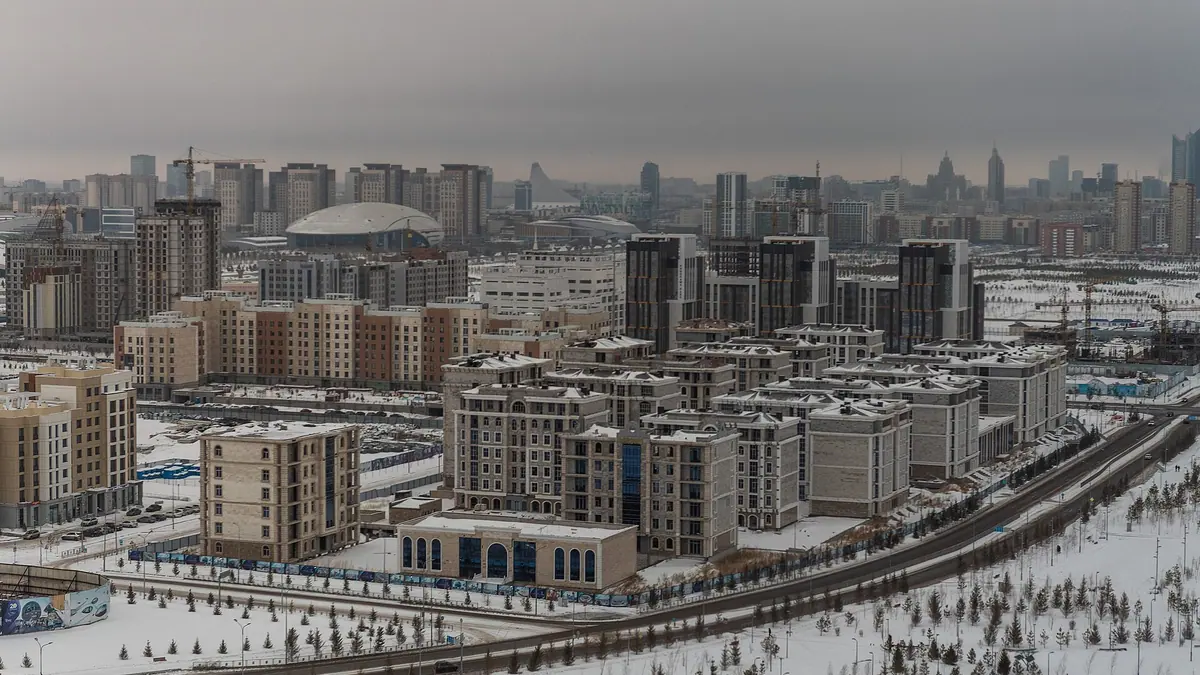
Astana is cold and windy in winter, warm and bright in summer. The station normal is −10.3 °C by day and −18.7 °C at night in January, and 26.6 °C and 14.9 °C in July. For a winter trip the key number is 52: that is how many nights a year reach −20 °C or colder, although some winters have three times as many as others.
The widget shows a computed ERA5 normal. Frost, wind and snow figures below come from daily reports at the weather station at the airport, at 355 m.
How cold does Astana get?
Plan for −20 °C as ordinary and −30 °C as possible. In a typical year from 2015 to 2024, Astana had 188 frost nights, 117 days when the temperature stayed at or below zero all day, 52 nights at −20 °C or colder and 9 nights at −30 °C or colder.
Every one of the last ten winters reached at least −30 °C. The coldest of them hit −41 °C (−42 °F) on 22 January 2018. In the wider 2011 to 2025 record, the low was −43 °C on 16 and 17 December 2012, and the all-time record of −51.6 °C dates from January 1893. Wikipedia calls Astana the second coldest capital in the world after Ulaanbaatar. We did not verify that ranking.
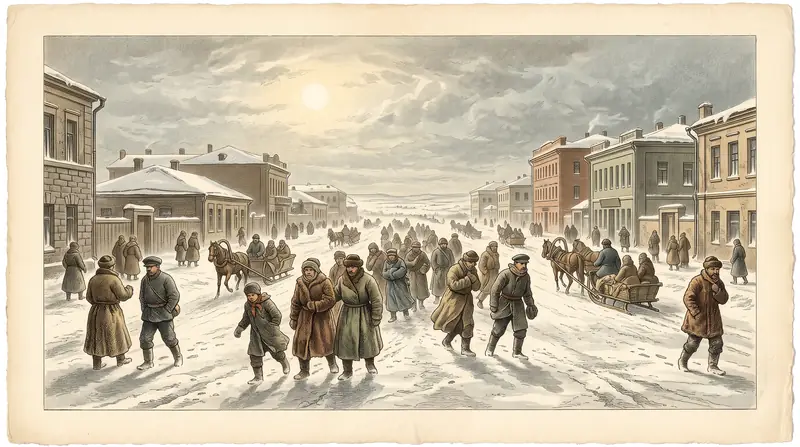
Astana temperature by month
Day and night temperatures are the 1991 to 2020 station normals. We counted the other columns ourselves from NOAA daily reports for 2015 to 2024, averaged per year. “Days below zero” means the daily high stayed at or under 0 °C.
| Month | Day, °C | Night, °C | Nights to −20 °C | Nights to −30 °C | Days below zero | Wind, m/s | Snow days |
|---|---|---|---|---|---|---|---|
| January | −10.3 | −18.7 | 18.0 | 4.1 | 29.1 | 5.1 | 20.1 |
| February | −8.8 | −18.0 | 13.8 | 1.9 | 24.8 | 4.9 | 17.7 |
| March | −1.5 | −10.4 | 3.7 | 0 | 15.8 | 5.4 | 15.4 |
| April | 12.2 | 1.2 | 0.1 | 0 | 1.1 | 4.8 | 2.8 |
| May | 20.9 | 8.2 | 0 | 0 | 0 | 4.9 | 0.3 |
| June | 25.8 | 13.4 | 0 | 0 | 0 | 4.5 | 0 |
| July | 26.6 | 14.9 | 0 | 0 | 0 | 4.2 | 0 |
| August | 25.5 | 13.0 | 0 | 0 | 0 | 4.0 | 0 |
| September | 18.9 | 6.8 | 0 | 0 | 0 | 4.0 | 0.6 |
| October | 10.4 | 0.5 | 0 | 0 | 1.8 | 4.6 | 7.8 |
| November | −1.3 | −8.7 | 5.2 | 1.2 | 17.8 | 5.2 | 18.3 |
| December | −8.0 | −16.0 | 11.1 | 2.0 | 26.7 | 5.2 | 20.5 |
What this means: for a visitor, winter starts in November, when 5 nights already reach −20 °C. March is the deceptive month. The daily norm is close to freezing, yet nearly 4 nights still hit −20 °C.
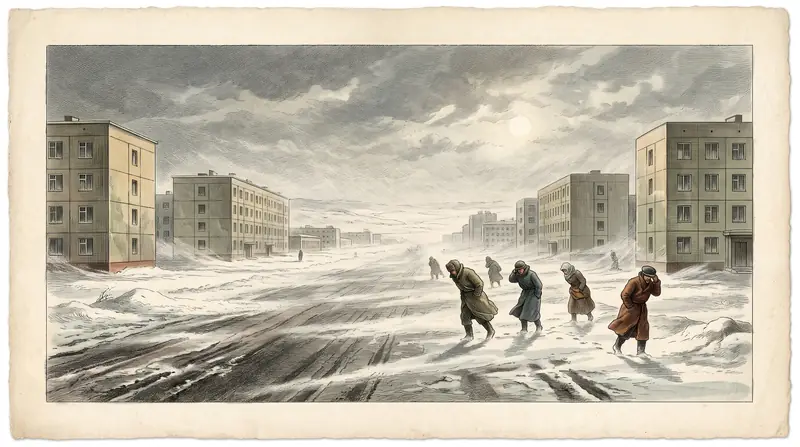
The last ten winters: how different they can be
January carries about a third of all nights at −20 °C or colder.
NOAA, daily reports for Astana station 35188
The average hides a lot. Winter 2024/25 had 21 such nights and 2017/18 had 71, so last year’s trip report may say little about yours.
| Winter | Lowest, °C | Date | Nights to −20 °C | Nights to −30 °C |
|---|---|---|---|---|
| 2015/16 | −30 | 21 Nov 2015 | 47 | 5 |
| 2016/17 | −35 | 11 Feb 2017 | 52 | 14 |
| 2017/18 | −41 | 22 Jan 2018 | 71 | 12 |
| 2018/19 | −37 | 7 Feb 2019 | 56 | 16 |
| 2019/20 | −30 | 29 Jan 2020 | 33 | 3 |
| 2020/21 | −35 | 3 Jan 2021 | 70 | 13 |
| 2021/22 | −31 | 30 Dec 2021 | 50 | 2 |
| 2022/23 | −35 | 27 Nov 2022 | 63 | 9 |
| 2023/24 | −34 | 11 Dec 2023 | 40 | 13 |
| 2024/25 | −35 | 24 Jan 2025 | 21 | 2 |
Note the dates. The low of winter 2022/23 came on 27 November, so a November trip is no guarantee of mild weather. Pack the same clothes for December and January. Wikipedia describes −30 to −35 °C as common from mid December to early March. The station’s count of about 9 nights a year is calmer than that wording suggests, so treat such a night as a possibility and not as the whole trip. To see how Astana compares with other cities, our Kazakhstan cold map shows that from 1991 to 2025 its station logged −40 °C or lower in 5 of 35 winters, against 12 of 18 in Oskemen.
January nights in these recent reports average colder than the 1991 to 2020 normal (−20.8 °C against −18.7 °C). The sources and periods differ, so we draw no trend from that.
Wind: why −20 °C can feel like −30 °C
Astana is far windier than Almaty, with an average of 4.0 to 5.4 m/s against 0.7 to 1.0 m/s at the Almaty station. March, November and December are the windiest months. Maximum sustained wind reaches 10 m/s on about 70 days a year, and the strongest gust in the 2011 to 2025 reports was 30 m/s on 11 January 2018.
We calculated felt temperature with the Environment Canada wind chill formula, using each day’s mean temperature and mean wind. At −20 °C with a 5 m/s wind, the result is about −30 °C. Values of −27 °C or below come up on about 23 days a year, and −35 °C or below on about 6 days.
One detail is easy to miss. The coldest days are usually calmer: wind averages 3.5 m/s on days with a mean of −20 °C or lower, against 5.2 m/s on days between −5 and −15 °C. A milder-looking day with wind can feel no better than a harder frost in still air. Wikipedia specifically mentions strong winds on the open Left Bank. Cover your face, keep a hood ready and plan long walks with the wind in mind.
When Astana has no frost
Only June to August are reliably frost-free. April averages 14.4 frost nights, May 2.5 and September 4.5. Over the last ten winters, the final frost fell between 17 April (2020) and 28 May (2018), and the first between 9 September (2020) and 3 October (2023).
Summer itself is warm and light. July averages 26.6 °C, and there are about 30 days a year at 30 °C or above, 11 of them in July, peaking at 39 °C on 18 July 2015. July is also the wettest month at 55.8 mm, and rain is reported on about every second day, yet June and July still get 336 hours of sun each. December gets 94.
The comfortable window for walking and trips out of town runs from late May to early September. Korgalzhyn, with park routes from May to October, and Burabay, at 23 °C by day in July, both fit it.
Snow, ice and light
Average snow depth is 4 cm in November, 13 cm in December, 23 cm in February and about 1 cm in April. Wikipedia says the river usually stays frozen from the second week of November until early April. Snow is reported on about 104 days a year, but in small amounts: December brings 24.8 mm of precipitation and January 17.8 mm. Humidity is about 78 to 80% from November to January and 53% in June.
Astana climate by season
Spring, April and May. April changes the city quickly, with a 12.2 °C norm by day, while half of its nights still freeze. May is warm at 20.9 °C and 8.2 °C, and it is the windiest of the warm months, with about 8 days of sustained wind at 10 m/s or more.
Summer, June to August. Expect about 26 °C by day and 13 to 15 °C at night, with 5 to 8 days of meaningful rain a month.
Autumn, September and October. September is short and pleasant, at 18.9 °C and 6.8 °C with only 4.3 days of meaningful rain. October falls to about 10 °C, with about 20 frost nights and snow on nearly 8 days.
Astana or Almaty in winter
The computed January gap is about 12 °C by day and 11 °C at night, and wind makes it feel larger.
From 2015 to 2024 Almaty averaged little more than one night a year at −20 °C. Astana averaged 52. If your trip includes both, pack for Astana. The Almaty weather page has that city’s detail, and Kazakhstan weather by region compares the rest of the country.
What to pack and how to get around in winter
| Months | Temperature | What to bring |
|---|---|---|
| December to February | up to −10 °C by day, down to −30 °C and below at night | long down coat, warm hat, scarf or balaclava, mittens, thermal layer, thick shoes with grip |
| November, March | about zero by day, −9 to −10 °C at night | winter jacket and hat, waterproof shoes |
| April, October | 10 to 12 °C by day, about 0 °C at night | warm jacket, sweater, windproof layer |
| May, September | 19 to 21 °C by day, 7 to 8 °C at night | light jacket and sweater; night frost is possible |
| June to August | 26 °C by day, 13 to 15 °C at night | light clothes, umbrella, jacket for evenings |
Plan winter days as short walks between buildings. Khan Shatyr, a 150 m indoor centre, is an obvious stop. We could not confirm opening hours for the main sights from their operators, so check before you go.
Weather in Astana for the next 10 days
This page shows what usually happens and cannot tell you about specific dates. For current temperature and a 10-day forecast, use Kazhydromet, the national weather service, or a weather app. Look at the felt temperature as well as the air temperature, since wind here can add around 10 degrees of chill.
Where the numbers come from
Station normals and records come from the Wikipedia climate table, which cites Pogoda.ru.net. We counted nights, wind and snow from NOAA daily reports for station 35188 for 2015 to 2024, covering 3,639 of 3,653 days, so the gaps barely affect the result. A “winter” in the table runs from August to June. The widget and the comparison with Almaty use ERA5 for 2011 to 2020 at a point at 349 m.
So January appears three ways: −10.3 °C by day in the station normal, −11.6 °C in ERA5 and −9.0 °C in the last decade of reports. For deciding what to wear, it is the same winter.
Frequently asked questions
What is the lowest temperature ever recorded in Astana?
Is Astana the coldest capital in the world?
How long does snow last in Astana?
Does Astana get hot in summer?
When is Astana free of frost?
Sources
- NOAA NCEI, Global Summary of the Day: Astana station 35188, 2011-2025
- NOAA NCEI: Global Summary of the Day field descriptions
- Astana, Wikipedia: climate and table 1991-2020 (Pogoda.ru.net, NOAA)
- Wind chill, Wikipedia: Environment Canada formula
- Open-Meteo, ERA5 reanalysis, 2011-2020
- Khan Shatyr: about the centre
- Kazhydromet: national weather service
Read also
 Aktau, Kazakhstan: what to do in the Caspian port city and the desert around it
 Aktobe, Kazakhstan: what to see, the weather by month and trips into the steppe
 Almaty weather by month: temperature, rain, snow and what to pack
 Atyrau, Kazakhstan: weather, sights and what the city works for as a base
 Karaganda, Kazakhstan: what to see in the coal city and when to come
 Pavlodar, Kazakhstan: weather, things to do and the Irtysh river city as a base