Verified: 2026-10
Charyn in winter in photos
Real photos by travellers (Pexels, Unsplash, Wikimedia Commons); author and licence are given in each caption.
Winter is the most overlooked season at Charyn, for a straightforward visual reason. The short version: the canyon is open year-round, January averages around −10 °C, you get about nine hours of daylight, and the drive from Almaty takes 3–4 hours each way, with the last 10 km or so unpaved. It suits people who have already seen the canyon in summer, and photographers.
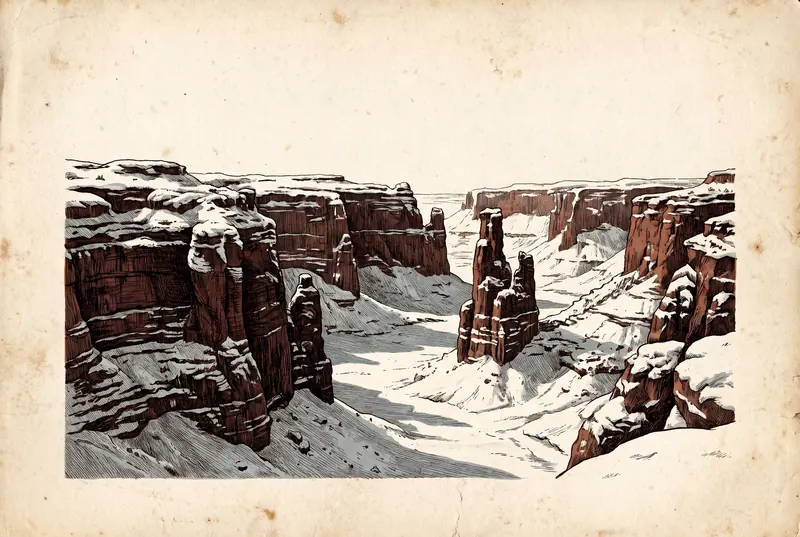
How it looks
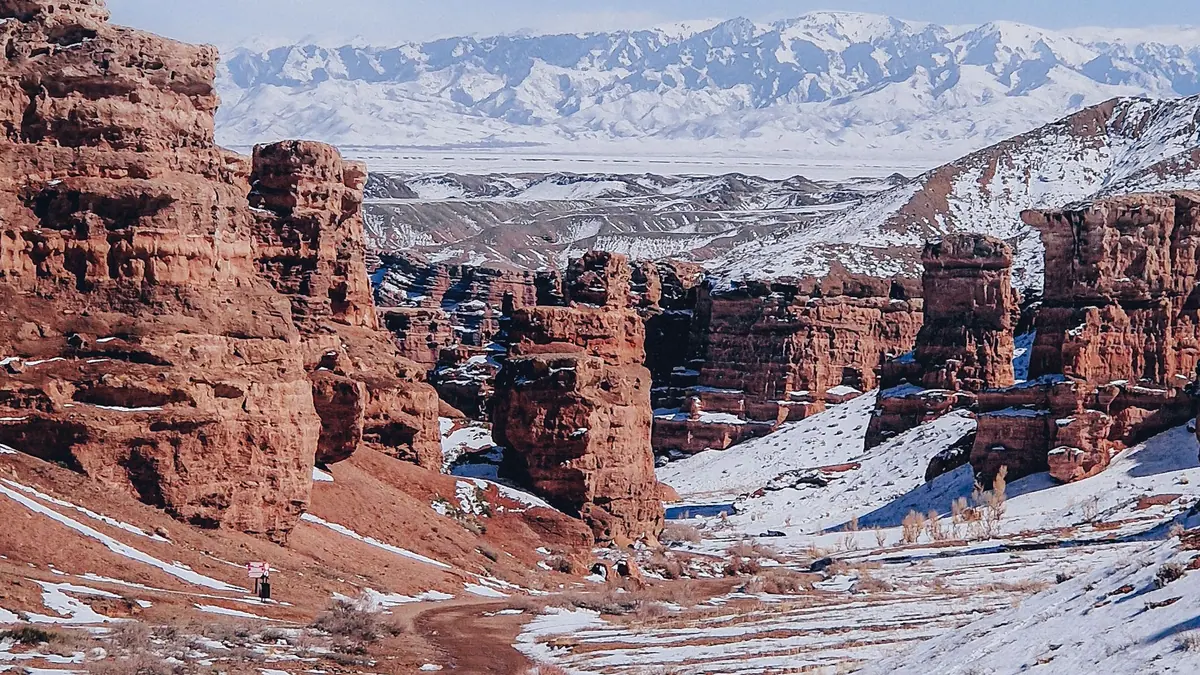
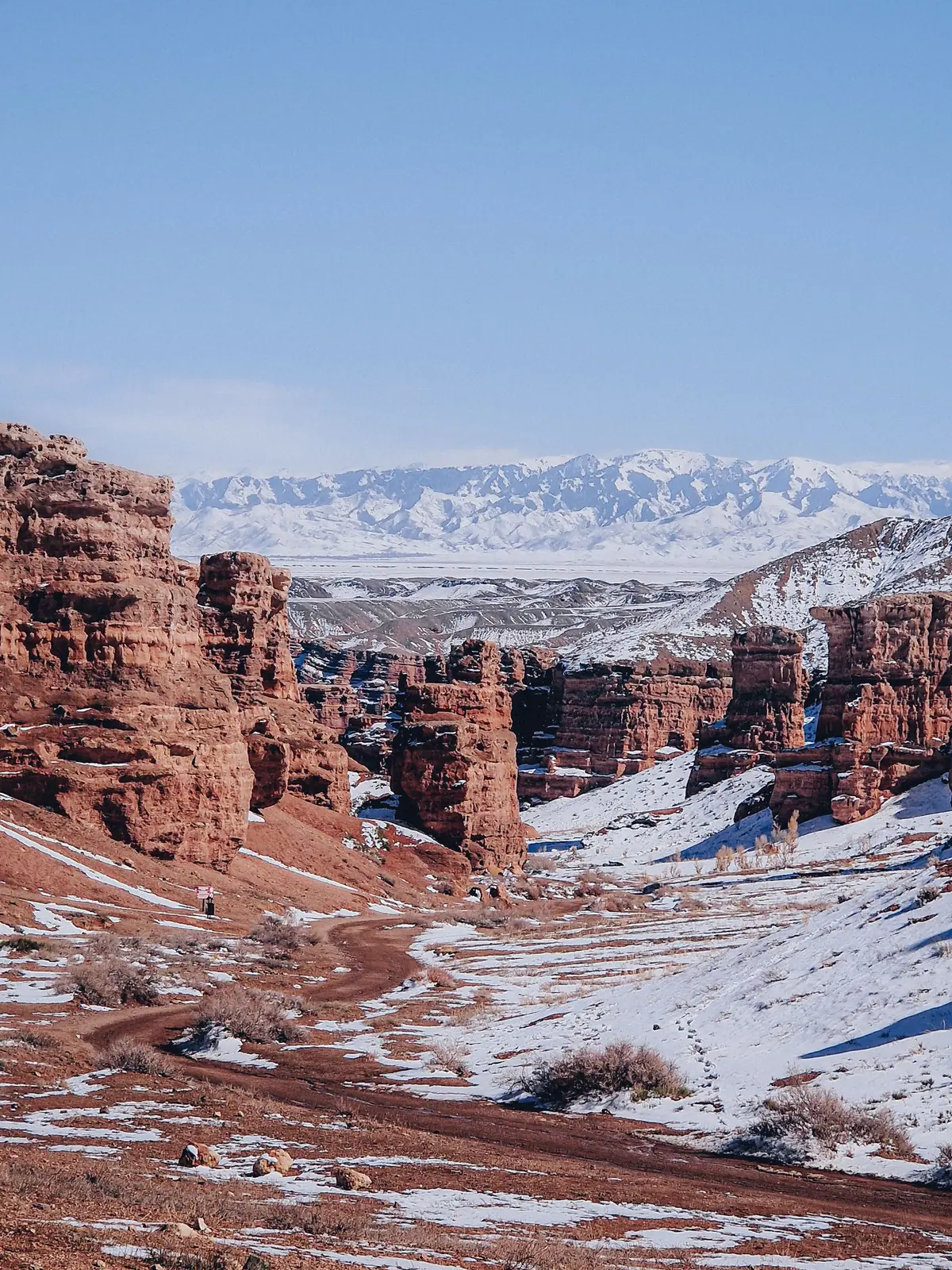
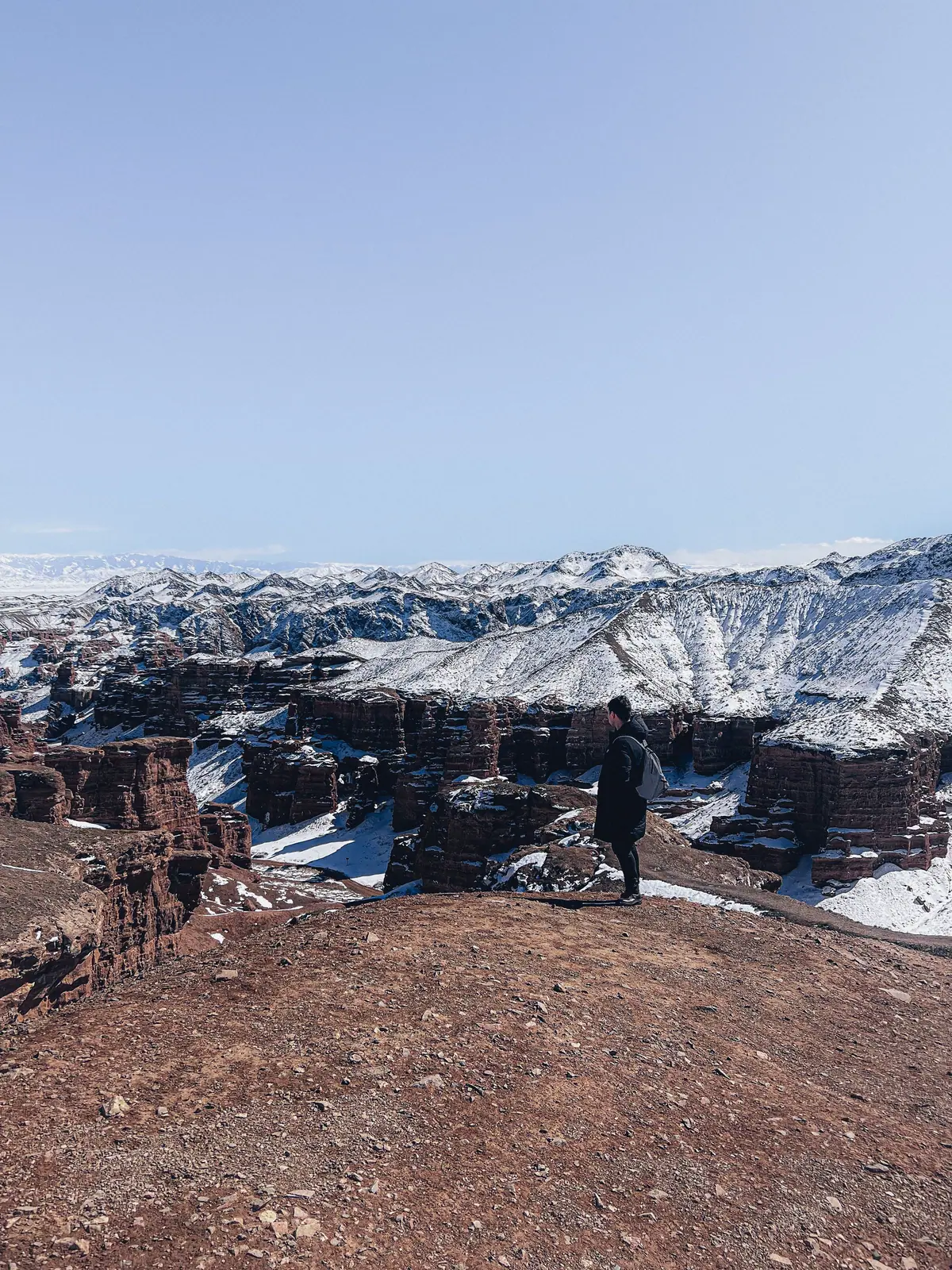
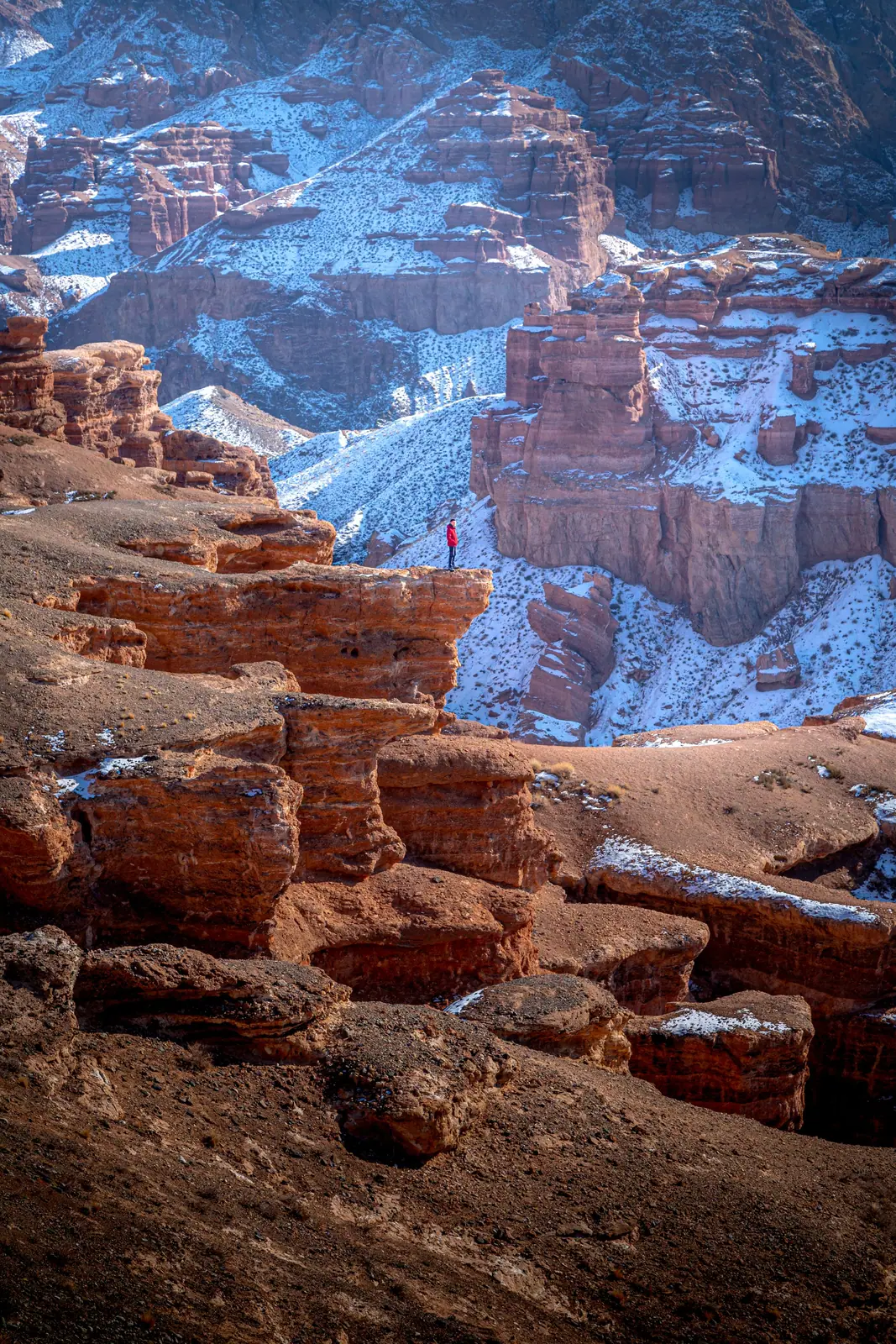
Snow settles on everything horizontal: the plateau above, the ledges, the terraces, the flat tops of the pillars. The sheer walls stay red — snow simply does not hold on them.
The result is a contrast available in no other season: white shelves and red rock between them, emphasising exactly the bedding that gives the canyon its shape.
Winter shadows are long and cool-toned, and the sun stays low, so the light works on the relief all day rather than only at dawn and dusk.
What the weather is like in winter
The climate is cold semi-arid: dry summers, cold winters, about 312 mm of precipitation a year — and most of it falls in summer, not winter. The practical upshot is that snow cover in the canyon is usually thin, and you will not get the snowy shot on every visit.
| Indicator | Value | Source |
|---|---|---|
| January mean (upper Charyn) | −10.7 °C | Wikipedia, citing GlobalSpecies |
| July mean (same) | +19.5 °C | same |
| Winter temperature, rough guide | about −10 °C | Kazakh Tourism |
| Annual precipitation | about 312 mm, peaking in summer | Wikipedia |
| Climate type | cold semi-arid (BSk) | Wikipedia, Max Planck Institute |
Averages say nothing about wind. On the open steppe and the plateau it bites harder than the thermometer suggests, and it is usually the wind, not the frost, that cuts a winter walk short. For a current forecast before you leave, see Charyn Canyon weather.
Daylight is the real constraint
In winter, the sun rather than the weather decides how long you get on site. Almaty reference times (the canyon lies further east, so dawn and dusk come slightly earlier there):
| Month | Sunrise | Sunset | Daylight |
|---|---|---|---|
| November | 6:46 | 16:30 | 9 h 44 min |
| December | 7:18 | 16:18 | 9 h 00 min |
| January | 7:23 | 16:42 | 9 h 19 min |
| February | 6:52 | 17:23 | 10 h 31 min |
| For comparison: June | 4:13 | 19:35 | 15 h 22 min |
Monthly averages, source: solarwatch.app.
The arithmetic is simple. Kazakh Tourism puts the drive at 3–4 hours each way. Leave Almaty at sunrise and you reach the canyon close to noon, with sunset already pushing you back onto the road. So in winter people leave before dawn — that leaves a few hours of light for the descent, a walk through the Valley of Castles and the climb out, with the unpaved stretch driven in daylight.
The second argument is emptiness
The main flow of visitors comes in summer. In winter the canyon is nearly deserted. For a place whose value lies in silence and scale, that changes the experience more than any weather.
What entry costs in winter
Charyn has no seasonal tariffs. Appendix 14 of Order No. 232 has one per-person line for the whole year — 0.2 MCI per day — plus 0.7 MCI per passenger-car entry and 0.2 MCI per seat, one way, for the park’s transport down into the canyon. The national park fee calculator converts that into local currency for the current year: the MCI changes every January, so a winter trip early in the year already falls under the new figure.
What to weigh
Short daylight. You need an early start, and there is noticeably less time to look around than in summer.
The road. The final 10 km are unpaved. We have not verified how that surface behaves in winter — snow, ice and frozen ruts are three different conditions. The route and the key junction are covered in getting to Charyn Canyon from Almaty.
The descent. Kazakh Tourism specifically recommends non-slip footwear in winter. The path down runs over loose ground, and ice there is more dangerous than on flat tarmac.
Clothing. Wind on the open steppe and the plateau bites harder than the thermometer suggests.
Batteries. Phones and cameras drain faster in the cold, and there are no sockets on the route. Keep a spare battery in an inside pocket.
Cash. You pay at the checkpoint, and we have not confirmed which payment methods work there in winter.
Fires, tents and staying overnight in winter
In winter the temptation is to light a fire by the car to warm up. The park’s visiting rules prohibit it: fires and barbecues only in specially equipped places, tents only where designated. The requirement applies all year; the cold season makes no exceptions.
If you plan a winter night for the sunrise shot, sort it out in advance rather than on site in the dark. What is known about tent pitches, yurts and guest houses on the territory, and how they are charged, is in camping and overnight stays at Charyn. The park’s accommodation tariffs in Order No. 232 are not split into summer and winter rates, but we have not checked whether the facilities operate in winter.
A winter night on the steppe means sub-zero temperatures and wind, and the nearest infrastructure lies outside the canyon. Sleeping in the car without preparation is a bad idea: it is simpler to leave before dawn and return the same day.
Who it suits
Those who have already been in summer and want to see a different place. Photographers: snow on red rock appears in only a handful of frames, because almost nobody comes then. Anyone for whom the absence of crowds matters more than comfort.
First-time visitors without preparation are better served by April–May or September–October.
A winter day, step by step
- Leave Almaty before dawn with a full tank and warm clothes in the cabin, not the boot.
- Turn off at the sign, drive the unpaved stretch, pay at the checkpoint and keep the receipt.
- Walk down into the Valley of Castles, or take the park’s transport if it is running.
- Walk the floor of the tract west to east and back while the sun is still above the rim.
- Climb out and get back onto tarmac before sunset.
Shoot as soon as you arrive. In winter the sun stays low even at noon, so the flat midday light that ruins summer photographs is rarely a problem.
Video
Frequently asked questions
Is Charyn Canyon open in winter?
What makes the canyon interesting in winter?
How cold is Charyn Canyon in winter?
How many hours of daylight are there in winter?
Can I do Charyn Canyon as a winter day trip from Almaty?
Does entry cost less in winter?
What should I pack for Charyn in winter?
Sources
- Materials of the Charyn National Park administration
- Charyn National Park — Wikipedia: climate, January mean −10.7 °C, 312 mm annual precipitation
- Kazakh Tourism: Charyn Canyon — seasons, winter about −10 °C, 3–4 hour drive
- Almaty sunrise and sunset by month (solarwatch.app)
- Order of the Minister of Ecology and Natural Resources No. 232 of 2 October 2024, appendix 14
- Max Planck Institute for Chemistry: Charyn Canyon — semi-arid climate, 2021