Verified: 2026-10
How Charyn Canyon was formed in photos
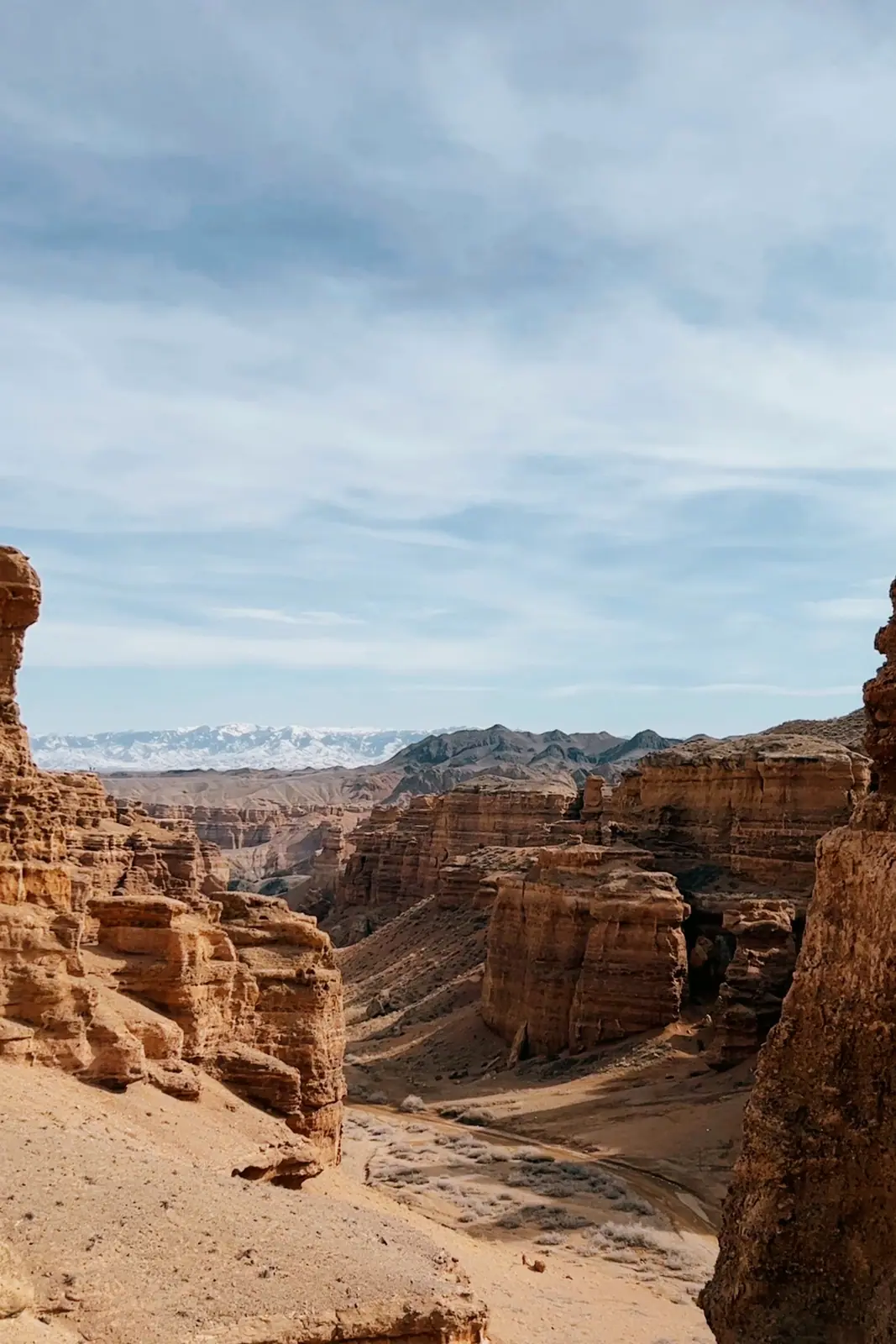
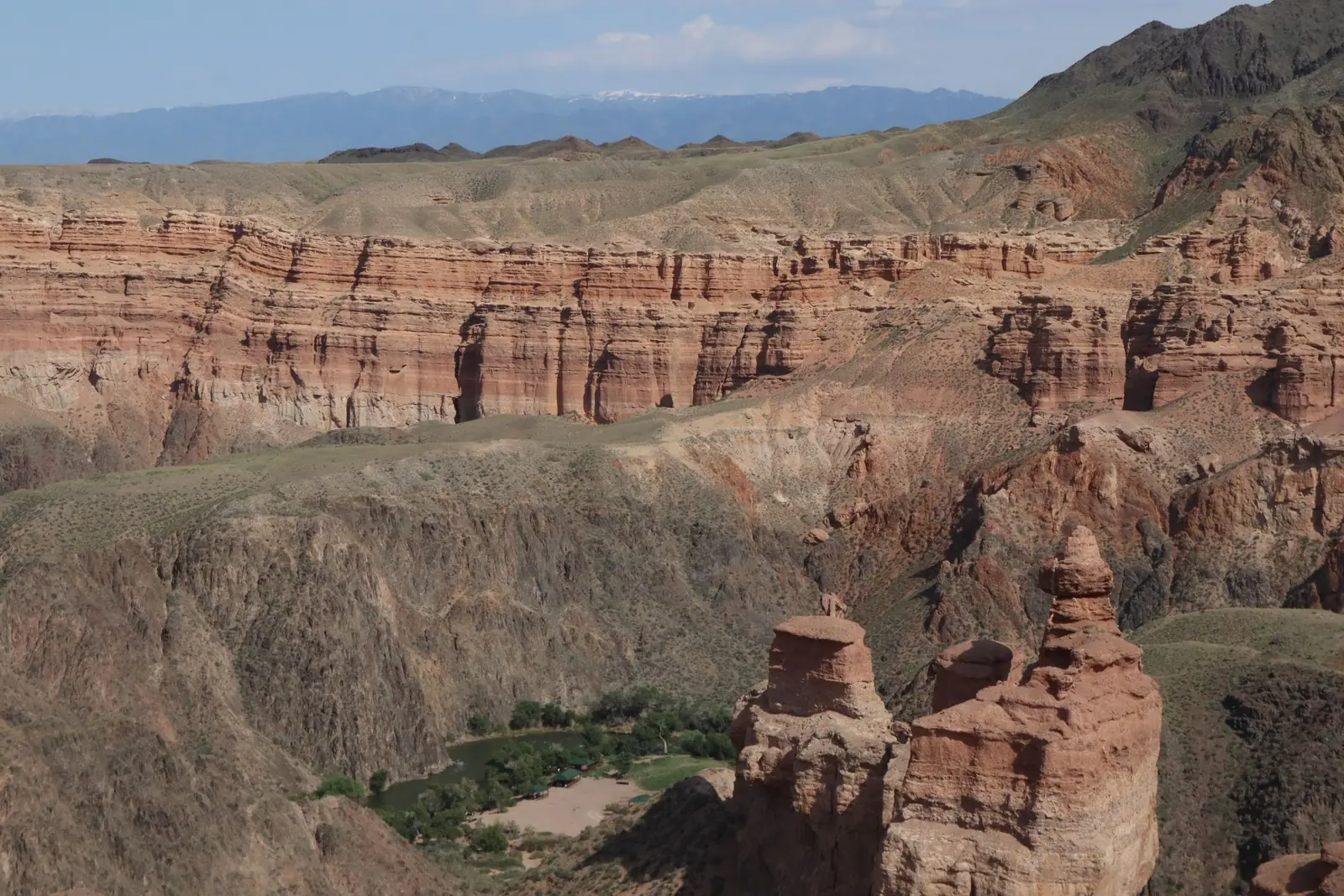
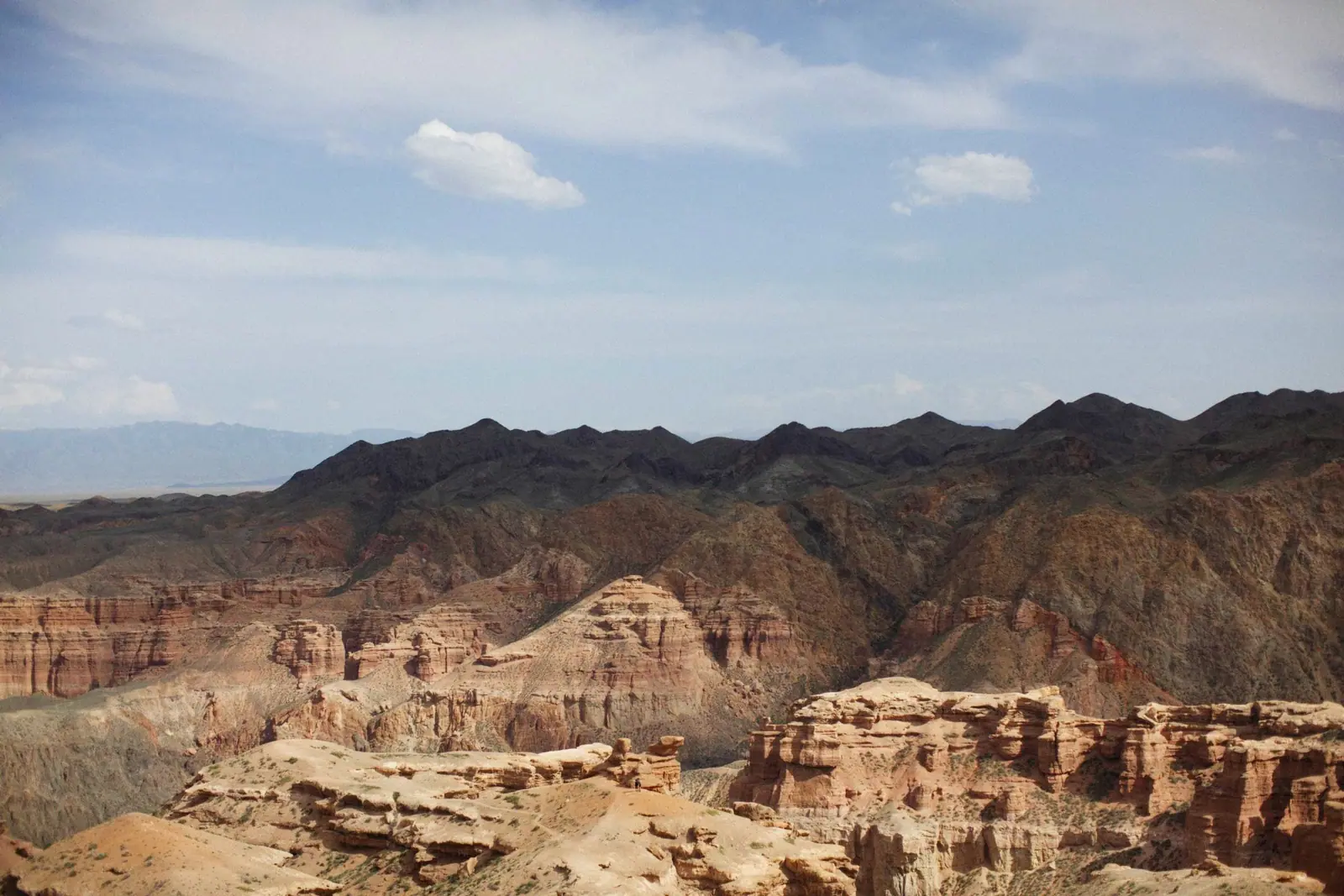
Real photos by travellers (Pexels, Unsplash, Wikimedia Commons); author and licence are given in each caption.
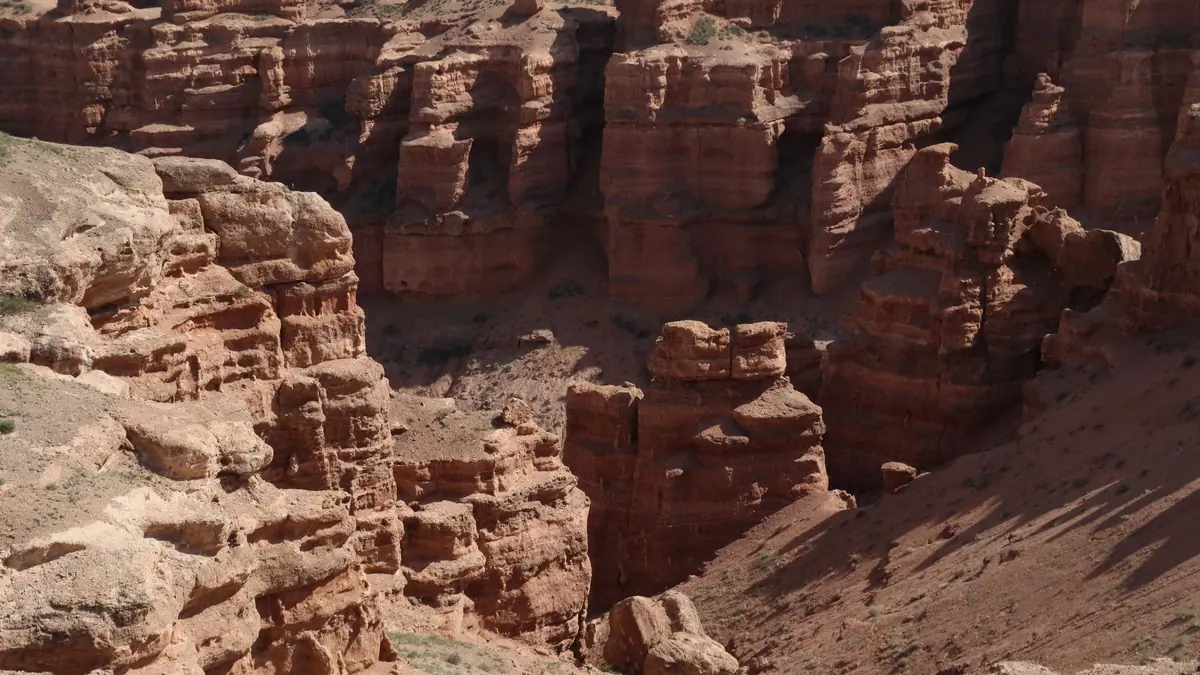
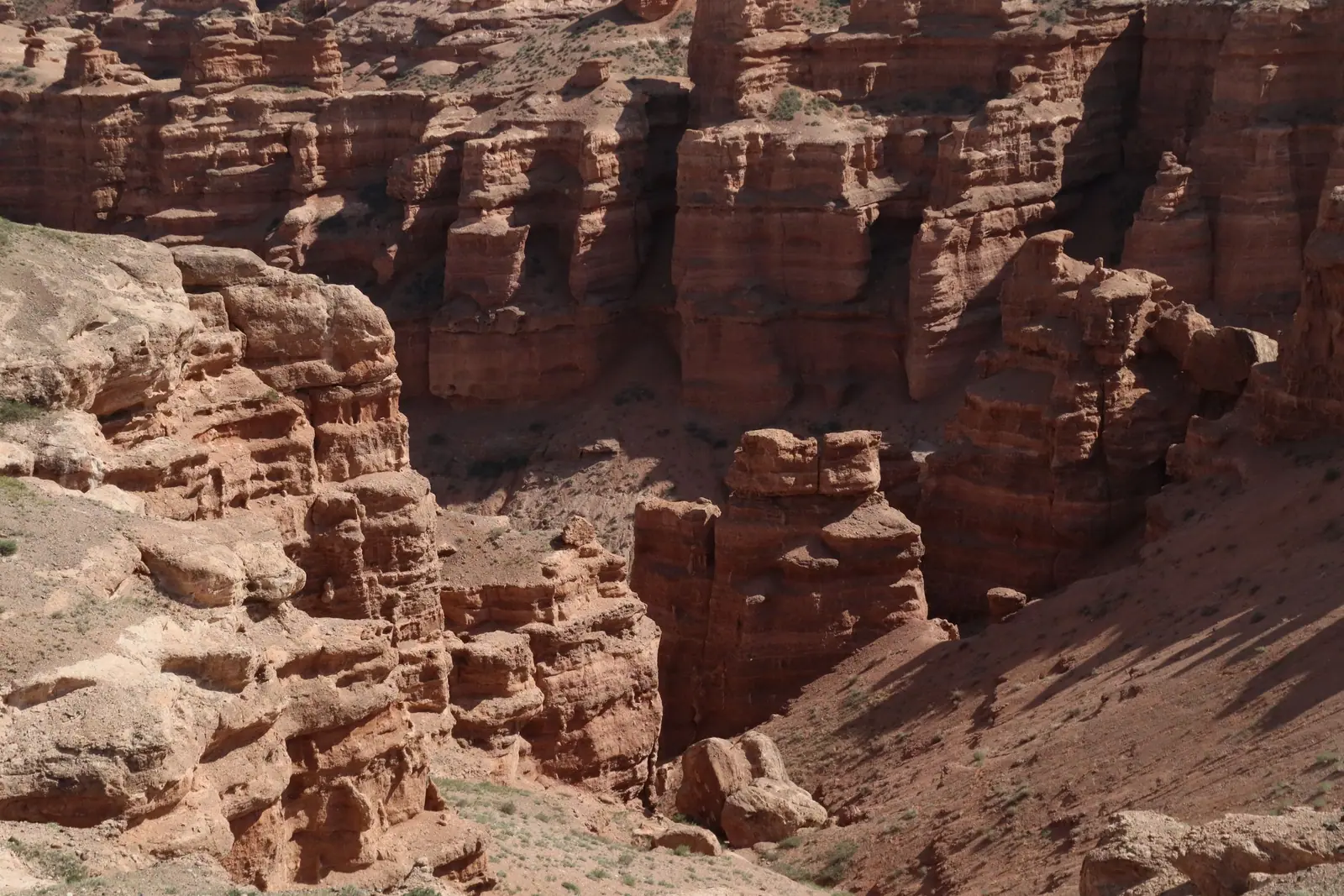
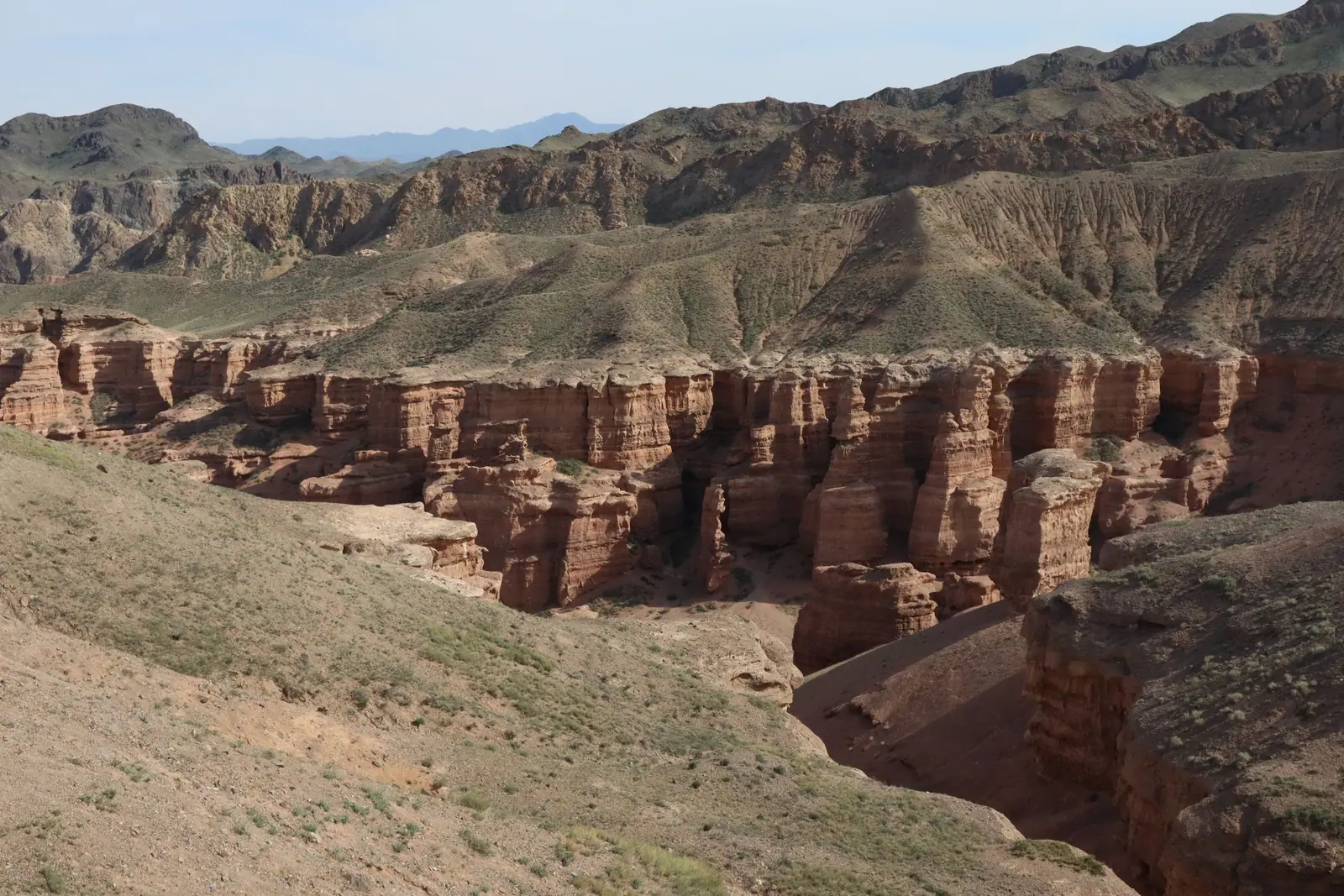
The canyon is built of red sedimentary sandstone. The gorge took its present form about a million years ago; the rock itself is considerably older — Russian Wikipedia puts it at about 12 million years. The shape comes from two forces: a river that cut down into the sequence, and weathering that strips the walls back layer by layer.
How old is it? Why the numbers differ
You will find at least three different “ages” for Charyn, and they do not contradict each other, because they answer different questions.
| What is being dated | Estimate | Source |
|---|---|---|
| Age of the sedimentary rock | about 12 million years | Russian Wikipedia |
| Start of the canyon’s formation | about 25 million years ago | P. I. Marikovsky’s version, cited by Wikipedia |
| Continuous climate record in the sequence | about 5 million years | Max Planck Institute for Chemistry, 2021 |
| Present shape of the gorge | about 1 million years | English Wikipedia — in the section on the Temirlik gorge |
The last row is easy to miss. Both English and Russian Wikipedia give “about a million years” for the Temirlik tract, one canyon of the system, and guidebooks tend to apply it to Charyn as a whole. We found no separate date for the shape of the Valley of Castles.
The age of the rock and the age of the landscape are different things. The sand was laid down millions of years ago; the “castles” you see are the product of much later exposure by the river and by weathering.
Three stages
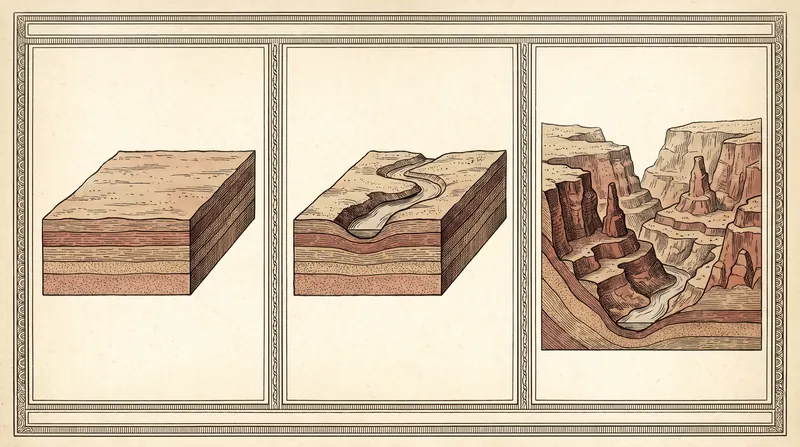
First came a flat sedimentary sequence — sand laid down horizontally over a long period. The beds ended up with different hardness, depending on the sediment and the conditions under which it compacted.
Then the river began cutting into that sequence, removing it layer by layer.
After that weathering took over, and it is weathering that determined how the canyon looks.
Russian Wikipedia’s article on the Kurtogay tract adds the river’s own history: the Charyn once flowed into Lake Ili, and when the lake retreated it began to flow into the Ili River, cutting its canyon through the former lakebed. On the slopes of that tract Pliocene deposits form ledges, pillars and niches — the same repertoire of shapes as in the Valley of Castles.
Why towers form
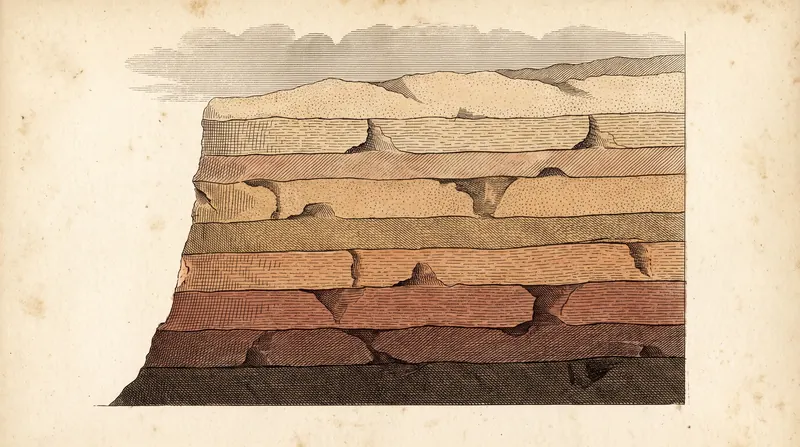
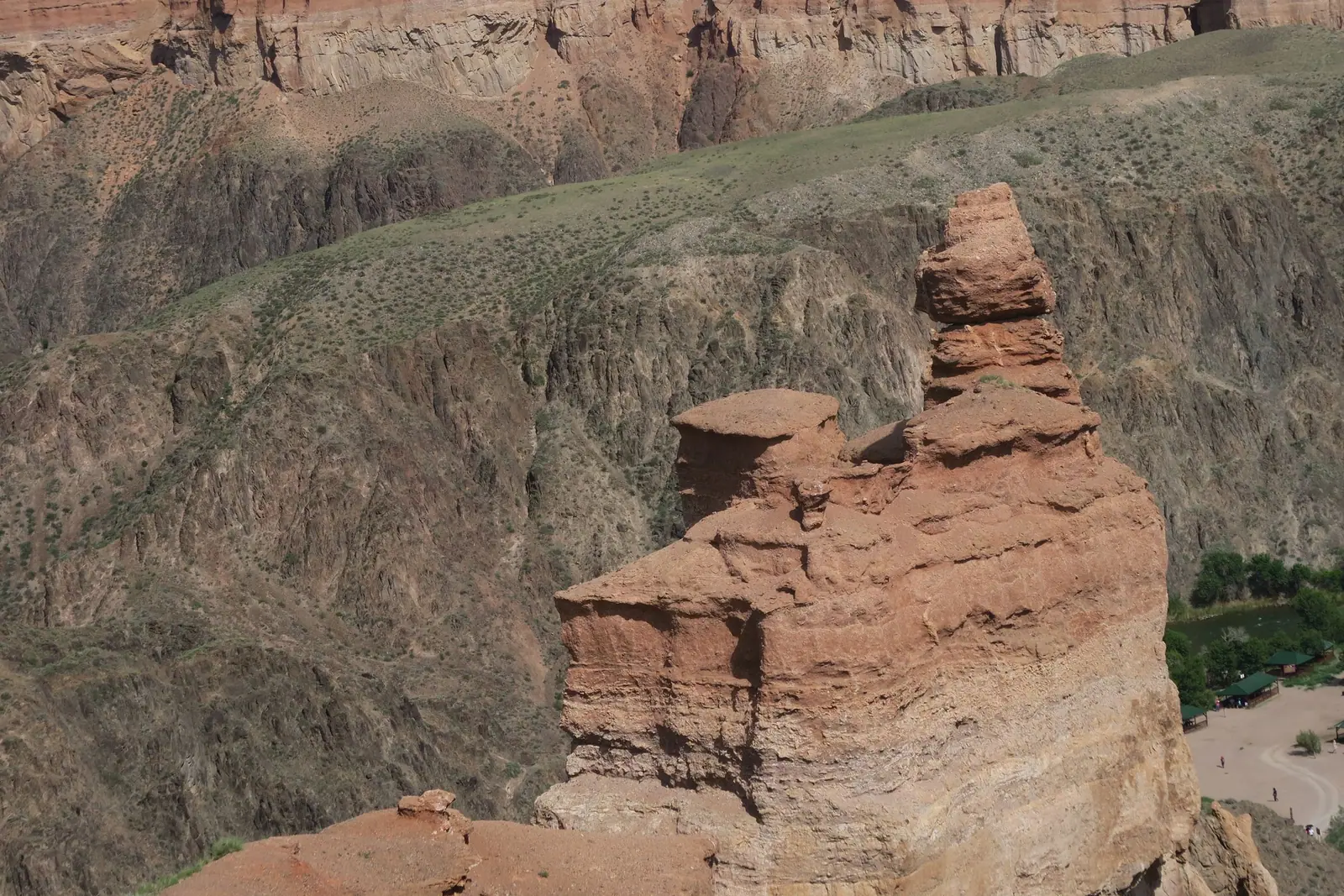
Softer beds erode faster than hard ones. The wall retreats in steps rather than as a plane: hard layers remain as ledges, soft ones are hollowed out beneath them.
When a ledge loses its support it collapses, and the wall retreats further. More resistant sections of the massif are left standing as remnant pillars — the “castles” and “towers” of the Valley of Castles.
You can see the evidence on site: horizontal bedding lines run continuously from one column to the next. They were one layer.
The dry climate helps the shapes survive. This is cold semi-arid country, where meltwater and rain work in episodes rather than continuously — flushing out dry gorges such as the Valley of Castles, which Russian Wikipedia describes as exactly that: a dry gorge cut by meltwater.
Dimensions
| Attribute | Value |
|---|---|
| Total length | 154 km |
| Canyon section | about 80 km (sources vary; 90 km is also cited) |
| Depth | 150–300 m; up to 370 m per the Forestry Committee |
| Floor elevation | about 300 m above sea level (English Wikipedia infobox; its national park article gives about 1,100 m — the figures conflict) |
| Charyn river length | 393 km |
What hundreds of metres mean in familiar terms is shown on how deep Charyn Canyon is, compared with Baiterek and the Eiffel Tower.
The canyon as a climate archive
The most interesting recent finding came not from geomorphologists but from climate scientists. In June 2021 a team led by the Max Planck Institute for Chemistry in Mainz published a study in Communications Earth & Environment on an 80-metre sedimentary sequence in Charyn Canyon.
The sequence is made of alternating dust and soil layers and, in the authors’ words, provides a virtually continuous record of five million years of climate change — rare on land. Using isotopes in soil carbonates, the researchers reconstructed how moisture and aridity in Central Asia changed over time, focusing on the Pliocene, when atmospheric CO₂ was close to today’s level of around 400 parts per million.
For a visitor, the takeaway is simple: the banding on the walls is not just a pattern but a calendar of alternating drier and wetter epochs.
Palaeontology
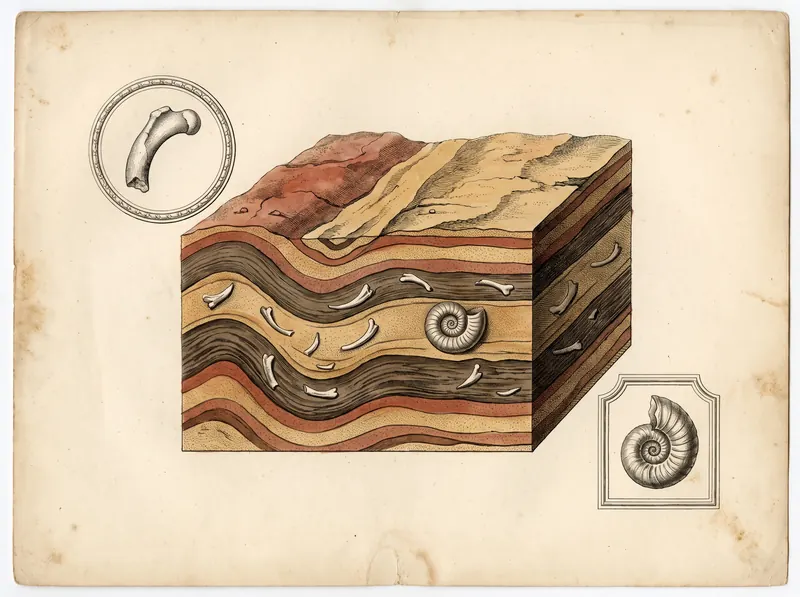
Park materials record palaeontological finds on the territory, including fossil fauna. This was among the grounds for listing the canyon as a geological site of special scientific value.
Russian Wikipedia also mentions remains of prehistoric flora and fauna in the Temirlik tract — more on it and the other quiet parts of the system in the canyons without crowds.
Which species the finds represent, where exactly they were made, and whether any are visible from the trail.
There is also no confirmed date for the shape of the Valley of Castles itself: Wikipedia’s “about a million years” refers to the Temirlik tract.
Frequently asked questions
How old is Charyn Canyon?
What is the canyon made of?
How old are the rocks of Charyn Canyon?
How did the pillars of the Valley of Castles form?
What have scientists found in Charyn's sediments?
How deep is Charyn Canyon?
Sources
- Charyn Canyon — Wikipedia
- Чарынский каньон — Russian Wikipedia (12 million years; Marikovsky's 25 million)
- Max Planck Institute for Chemistry: Five million years of climate change preserved in one place (Charyn Canyon), 2021
- Урочище Куртогай — Russian Wikipedia (Pliocene deposits, river history)
- Урочище Темирлик — Russian Wikipedia
- Committee for Forestry and Wildlife of Kazakhstan: Charyn park overview, 18 June 2026
- Government Resolution No. 657 of 30 June 2005